
The Ypres Salient: WWI Sites and Battlefields to Visit
The Ypres Salient explained: the battles of 1914 to 1918 and the cemeteries, museums and memorials that mark the old front line around Ypres (Ieper) today.
On this page
The Ypres Salient was a bulge of Allied-held ground around Ypres (Ieper) in West Flanders, surrounded on three sides by higher German positions. That shape explains almost everything about the fighting here between 1914 and 1918, and it also explains why the memorials and cemeteries are scattered across farmland in several directions from the town rather than gathered in one place. This guide covers what the Salient was, the battles that defined it, and how to group today's sites into a one-day or three-day visit from Ypres, whether you drive yourself or join one of the Ypres Battlefield Tours.
What the Ypres Salient was and why the front curved around the town
A salient is a piece of front line that juts into enemy territory, and the one at Ypres was exposed on three sides. British and Allied forces held the low ground around the town while German forces occupied the higher ridges to the east and south, which gave them observation over much of the Allied position. Ypres itself was never meant to be held for its own sake; it anchored a line that covered the Channel ports behind it.
The result for a visitor is a landscape where distance is deceptive. Places that look like short hops on a map sit on opposite sides of what was no-man's-land, so a route that jumps between them without a plan spends a lot of time in the car. Grouping sites by direction from Ypres, rather than by fame, is the single most useful planning decision you can make.
The battles of Ypres and the Passchendaele offensive
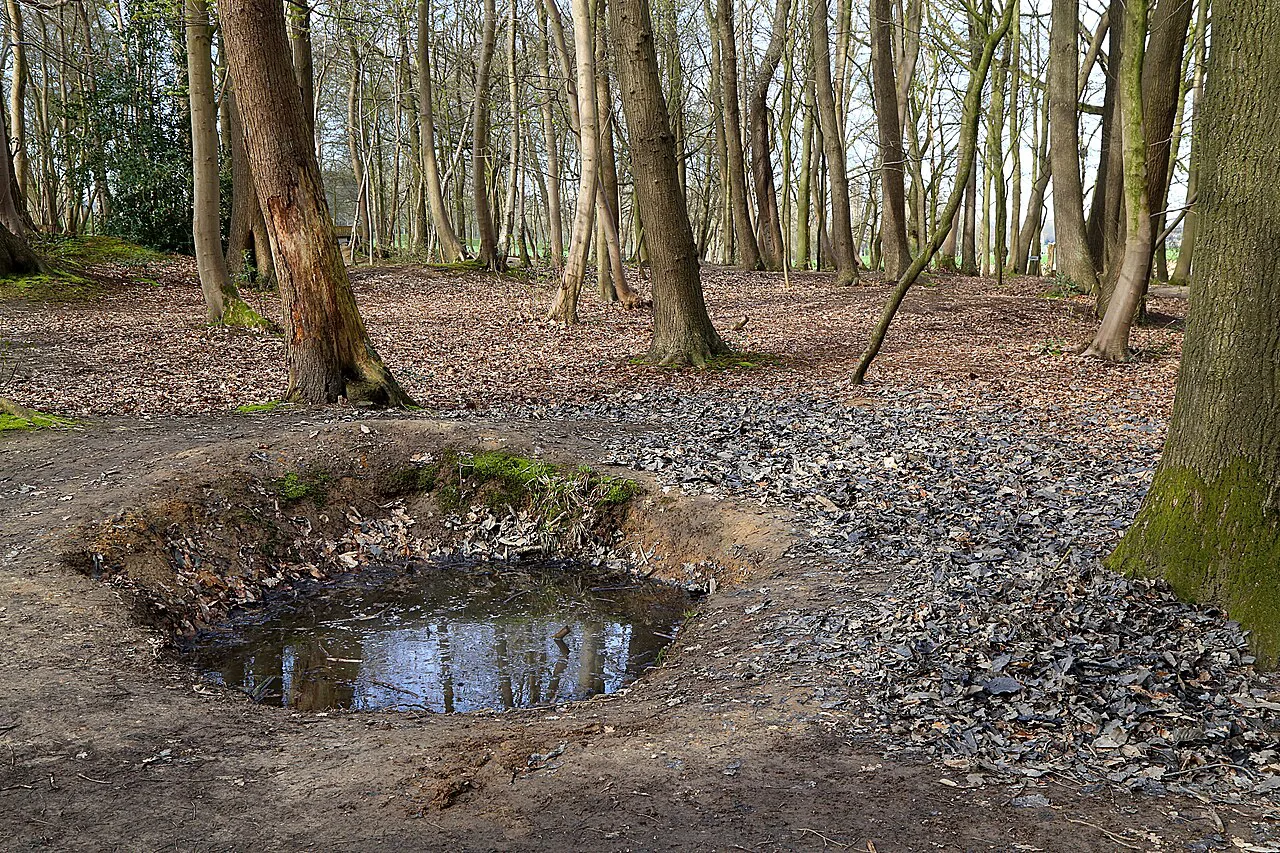
Three major battles were fought for the Salient. First Ypres ran from October to November 1914, and Second Ypres from April to May 1915, when the Salient was tested again and the front was shortened. The third is the long Passchendaele offensive of 1917, which pushed the line forward towards the village of Passchendaele at a cost that has made the name a byword for mud and attrition. The Battles of Ypres are worth reading up on before you go, so the ground makes sense on arrival.
For planning purposes, the battles matter because they explain where things are. The 1917 fighting north-east of Ypres is why the great sites cluster around Zonnebeke and Passchendaele, while the earlier fighting left its mark closer to the town and to the ridges south and east. Reading the sequence before you drive makes the plaques and cemetery layouts far easier to follow.
The Menin Gate and the Lakenhalle in Ypres itself
Start in the town. The Menin Gate (Menenpoort) stands on the eastern exit from Ypres, on the road the armies used towards the front, and it carries the names of the missing from the Salient. The Lakenhalle (Cloth Hall) on the Grote Markt was rebuilt after the war and houses the In Flanders Fields Museum, which is the natural place to get your bearings before heading into the countryside.
Both are in easy walking distance of each other in the compact centre, so they fit into an afternoon even if you spend the morning on the battlefield loop. Treat the museum as the orientation session rather than an optional extra: it gives context to the cemeteries and trenches you will see later, when there is no interpretation board to help.
Tyne Cot and the Memorial Museum Passchendaele 1917 at Zonnebeke
North-east of Ypres, the village of Zonnebeke holds the Memorial Museum Passchendaele 1917, which sets out the lead-up to the offensive, the conditions men fought in, and a dug-out showing how British troops lived underground in 1917. It also includes reconstructed German and British trenches, which makes it the best single stop for understanding how the ground was fought over.
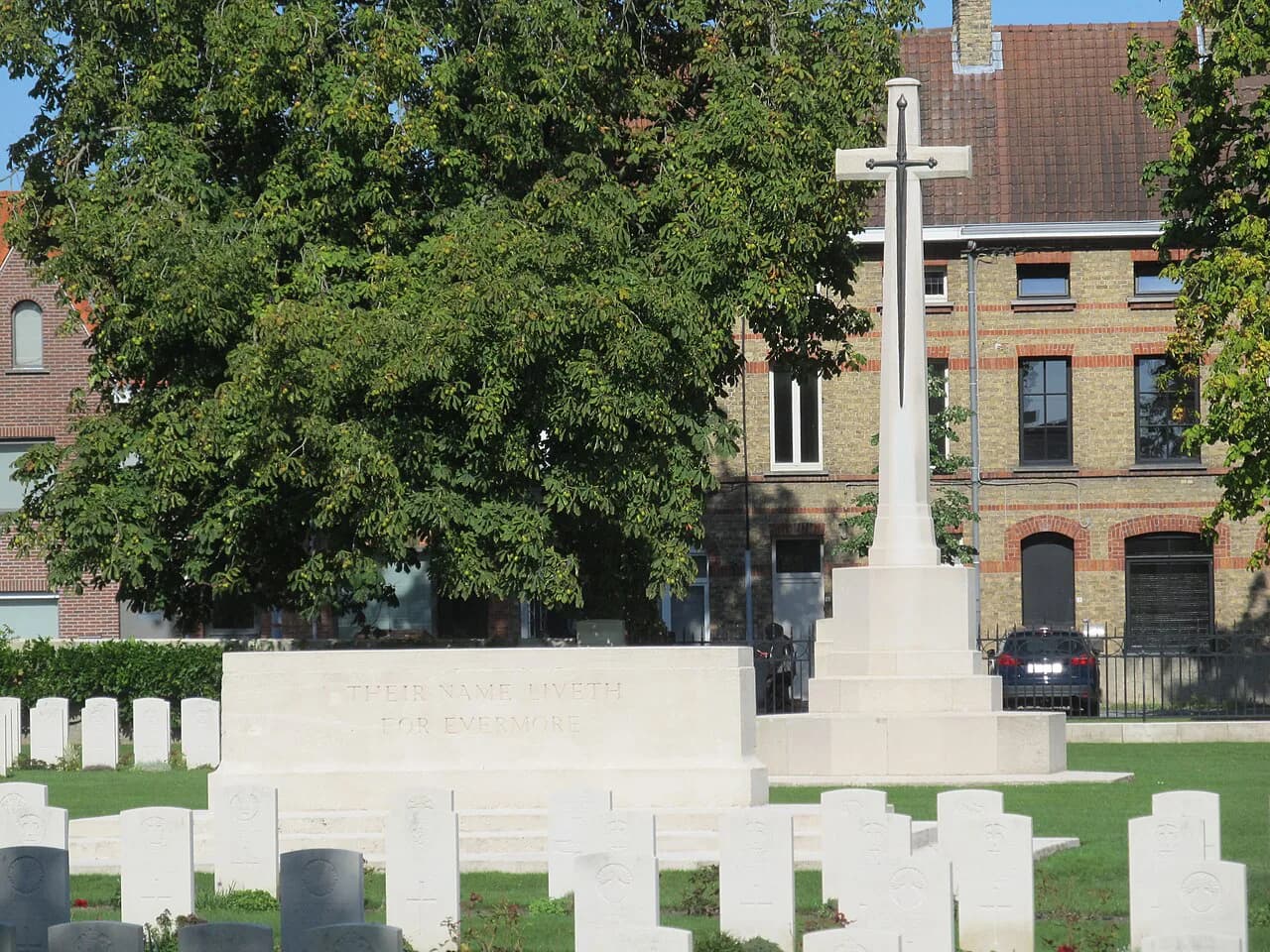
Nearby, Tyne Cot Cemetery holds close to 12,000 graves, of which only about 3,800 mark identified bodies. The wall behind the cemetery lists the names of some 35,000 soldiers with no known grave. Give it time and quiet rather than treating it as a photo stop on the way to the next site.
Talbot House in Poperinge
West of Ypres, in Poperinge, Talbot House is the counterweight to the cemeteries. It was opened in 1915 by the army chaplain known as Tubby Clayton and by Neville Talbot in memory of Neville's brother Gilbert, killed earlier that year, as a club house where soldiers could rest away from the line. The house and the chapel in the eaves have been left untouched since 1918, and the garden remains a quiet place.
Poperinge sits roughly half an hour's drive from Zonnebeke, so it pairs well with a morning at the Passchendaele sites rather than with the Menin Gate end of town. If you are building a two-day visit, putting Talbot House on the western day keeps the driving sensible.
Hill 62, Sanctuary Wood and the preserved trenches
South-east of Ypres, Hill 62 carries the Canadian Memorial and stands next to Sanctuary Wood Museum, where preserved trenches give you a sense of the scale of a front-line position in a way that photographs cannot. These are the sites to visit if you want to see earthworks rather than read about them, and they sit close enough together to combine in a single morning.
Walking a preserved trench is uneven and often muddy underfoot, so sturdy shoes matter more here than anywhere else on the loop. Allow more time than the map suggests: the point of these sites is in looking slowly at how little ground separated the opposing lines.
How to see the Salient: self-drive, cycling or a guided tour
The trade-off is straightforward. Driving gives you the widest spread of sites in a day but puts the navigation and the reading on you; cycling suits the flat farmland around Ypres and lets you link nearby cemeteries at a human pace, though it limits your range; a guided minibus tour removes the logistics and adds interpretation. Salient Tours, which describes itself as Ypres' oldest independent tour company, operating since 1993, runs air-conditioned minibuses and can incorporate other sites or a relative's grave by arrangement.
If you have a family connection, say so when you book: operators can often build a route around a specific cemetery or memorial, which is far harder to do yourself if you are short of time. If you prefer to drive, plan the loop by direction, west to Poperinge, north-east to Zonnebeke and Tyne Cot, or south-east to Hill 62, and do one group per half-day.
How long you need: one day versus two or three
One full day covers the essentials: the Menin Gate and In Flanders Fields Museum in Ypres, then either Tyne Cot and the Memorial Museum Passchendaele 1917 or Hill 62 and Sanctuary Wood. It is a full day, and adding Talbot House makes it tight. Two days is the comfortable minimum, letting you split east and west and spend proper time at the cemeteries instead of hurrying.
Three days opens up the wider front, including the Messines ridge to the south and the flat ground towards Ploegsteert, both of which reward a slower pace. If you are coming for a single long weekend, two days in the Salient plus a day in Ypres itself is a good balance.
The archaeology of the Salient today
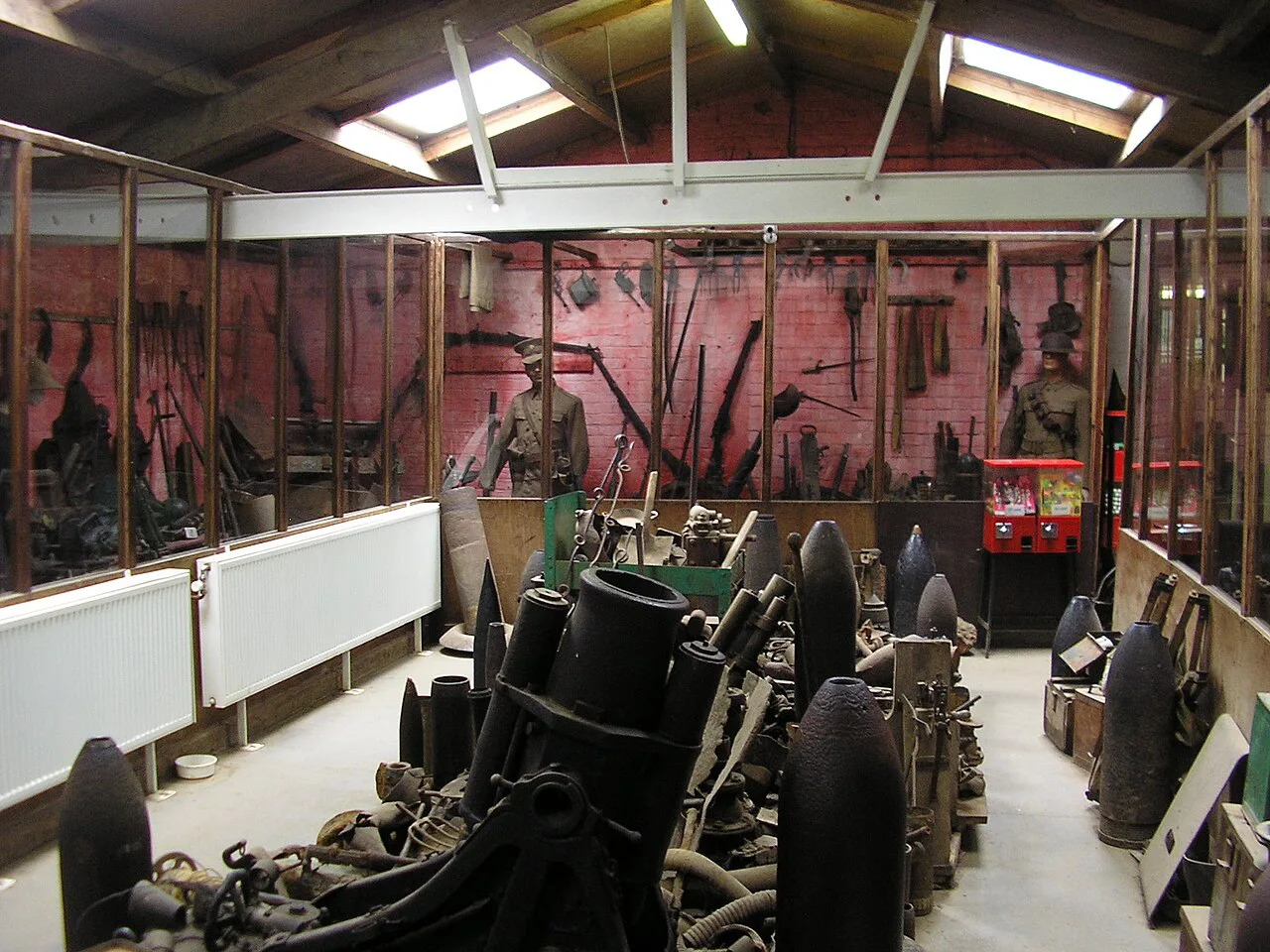
This is not only a historical landscape. Live artillery shells are still unearthed from the farmland around Ypres every year, which is why farmers leave them at the roadside for collection and why you should never pick anything metallic out of a field. Walking the sites means staying on paths and tracks, and treating the fields as working land.
The practical rule is simple: look, photograph from the path, and leave anything you find where it is. If you want to understand what is under the fields, the collections at the Memorial Museum Passchendaele 1917 and In Flanders Fields Museum tell that story safely.
Getting there: Ypres as a base and Antwerp as a port of arrival
Ypres (Ieper) is the natural base, with the Menin Gate and the museum in the centre and the battlefield loop radiating out from the town. If you arrive by ferry or cruise into Antwerp (Antwerpen), Ypres is a straightforward onward drive west across Flanders, and Antwerp's Grote Markt and cathedral make a reasonable first or last stop on the trip.
From Ypres, the Salient sites lie in a rough arc to the west, north-east and south-east, so a base in the town centre means you can be in open farmland within minutes. Keep your days grouped so you are not crossing the town repeatedly.
Which day in the Salient should you book first?
If you are booking only one day, take the guided minibus: it handles the distances and the interpretation, and it can be shaped around a relative's grave if you ask when booking. If you prefer to drive, build your own loop by direction, leaving the Menin Gate and the museum for the evening and a quieter hour.
Whichever you choose, end at the Menin Gate and at Tyne Cot with time to stand still. The Salient rewards patience more than it rewards a long list of stops.
Explore more Belgium guides
Frequently Asked Questions
What is Ypres called now?
The town is Ypres in French and Ieper in Flemish, and both names are used on signs and maps. English-speaking visitors generally say Ypres, while the town's own council and many local businesses use Ieper.
Which World War I sites near Ypres can you visit in one day?
A single day comfortably covers the Menin Gate and In Flanders Fields Museum in Ypres, plus Tyne Cot Cemetery and the Memorial Museum Passchendaele 1917 at Zonnebeke. Hill 62 and Sanctuary Wood make an alternative to the Zonnebeke pair rather than an addition.
Can you visit a relative's grave in the Ypres Salient?
Salient Tours can incorporate visits to other sites, including a relative's grave, by arrangement when you book. Tell the operator the name and cemetery in advance so the route can be planned around it.
Sources
Useful notes for your next trip
Optional updates to our guides.
You might also like



Continue reading
More guides you'll find useful





