
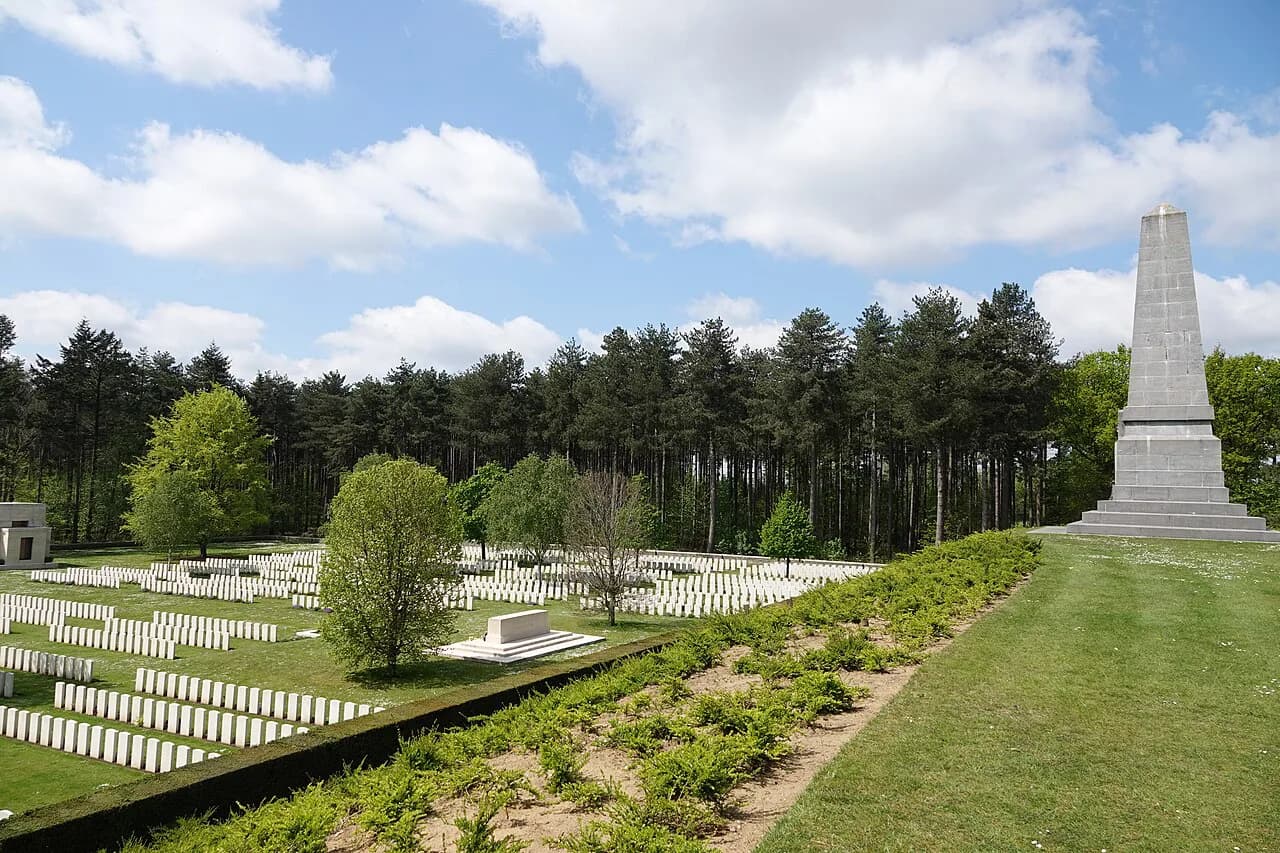
WW1 Cemeteries in Belgium: Where They Are and How to Visit
A guide to the WW1 cemeteries of Flanders Fields, from Tyne Cot and Lijssenthoek to Langemark and Vladslo, with what each one is and how to find a grave.
On this page
The WW1 cemeteries in Belgium cluster in Flanders Fields, the ground around Ypres (Ieper) in West Flanders where the Salient fighting left 247 cemeteries, large and small, across the landscape. Tyne Cot is the largest Commonwealth cemetery in the world, Lijssenthoek is the second largest in Belgium, and the German grounds at Langemark and Vladslo sit within the same area.
This guide sorts the burial grounds by type, explains the difference between a cemetery and a Memorial to the Missing, names the sites that justify the detour and sets out how to find a grave before leaving home. It also covers the Menin Gate ceremony, the travel between sites and the etiquette that matters in a working landscape of memorials.
What the WW1 cemeteries in Belgium are and where Flanders Fields lies
Flanders Fields is not a single site but a band of commemoration stretching from the Flemish coastline past Ypres to the French border, with the densest concentration in the Ypres salient. Four kinds of burial ground sit side by side there: Commonwealth cemeteries maintained by the Commonwealth War Graves Commission, German military cemeteries, and French and Belgian plots, plus the memorials to soldiers who have no known grave. That mix is what makes a visit here different from a single battlefield park: you can stand in a British plot, a German Comrades Grave and a village churchyard within a short drive, and the wider WW1 Sites in Belgium guide maps the surrounding ground.
Most travellers base themselves in Ypres, which puts Tyne Cot, Lijssenthoek, Essex Farm and the Menin Gate within easy reach by car or bike. Nearly all of the villages named here are small, so you plan around a handful of sites rather than ticking off a long list.
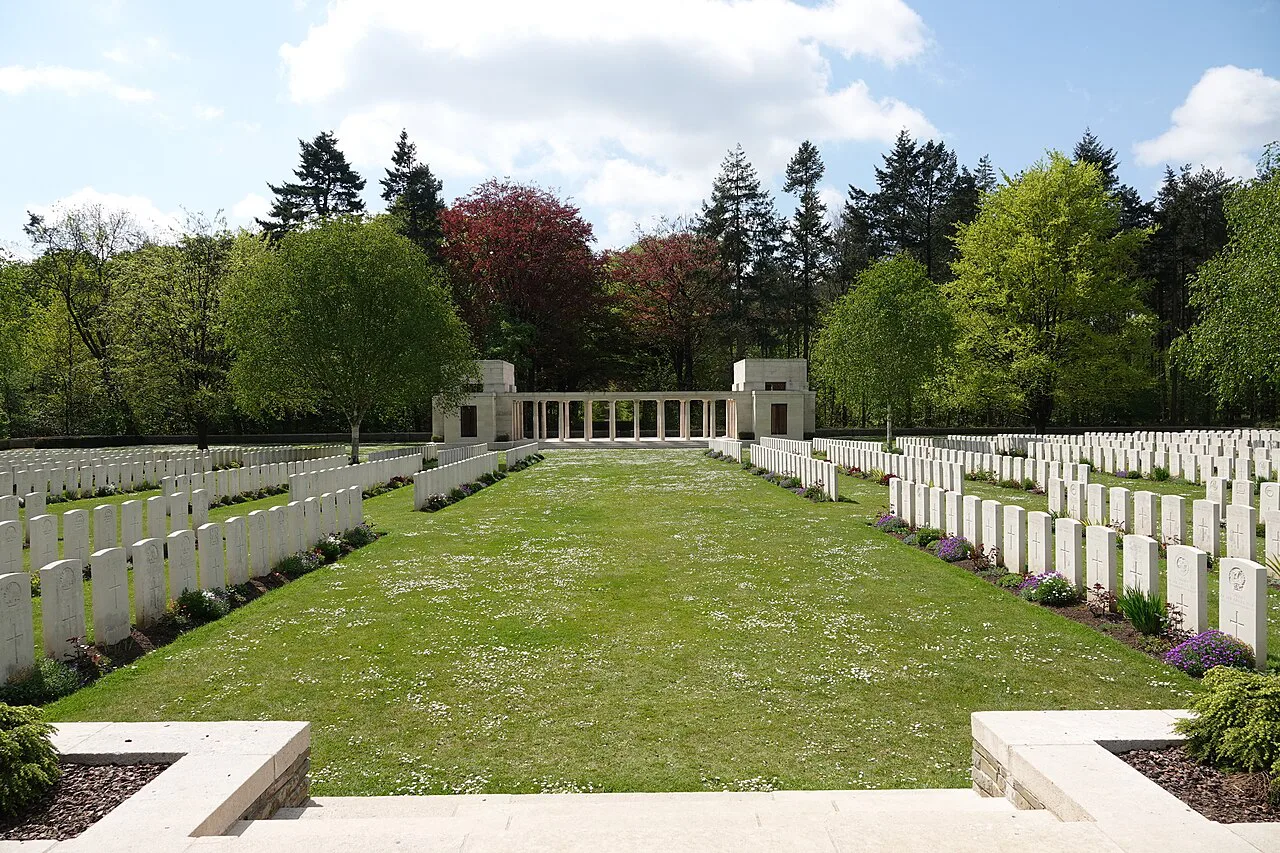
Tyne Cot Cemetery and Memorial to the Missing: the largest Commonwealth cemetery in the world
Tyne Cot, near Zonnebeke and Passchendaele, is the largest Commonwealth cemetery in the world, and it carries a second role as a Memorial to the Missing. Because the Menin Gate could not hold every name of the missing from the Commonwealth forces, the Tyne Cot Memorial records an additional 35,000 soldiers with no known grave.
What the WW1 cemeteries in Belgium are and where Flanders Fields lies. Flanders Fields is not a single site but a band of commemoration stretching from the Flemish coastline past Ypres to the French border, with the densest concentration in the Ypres salient.
Tyne Cot Cemetery and Memorial to the Missing: the largest Commonwealth cemetery in the world. Tyne Cot, near Zonnebeke and Passchendaele, is the largest Commonwealth cemetery in the world, and it carries a second role as a Memorial to the Missing.
Lijssenthoek Military Cemetery: the second largest Commonwealth cemetery in Belgium. Lijssenthoek Military Cemetery lies about 12 kilometres west of Ieper town centre and is the second largest Commonwealth cemetery in Belgium.
Visit Tyne Cot for scale and for the Passchendaele story: the nearby Passchendaele Museum in Zonnebeke focuses on the Third Battle of Ypres and holds replica trenches and a dugout, because so many original trenches were filled in as farmers reclaimed their fields. Allow time to walk the rows rather than treating it as a photo stop.
Lijssenthoek Military Cemetery: the second largest Commonwealth cemetery in Belgium
Lijssenthoek Military Cemetery lies about 12 kilometres west of Ieper town centre and is the second largest Commonwealth cemetery in Belgium. It grew around casualty clearing stations and is closely associated with the medical chain behind the front, which gives it a different character from the battle-line cemeteries.
If you are tracing a medical officer, a nurse or a soldier who died of wounds rather than in action, Lijssenthoek should be high on your list. It sits on the western side of Ypres, so pair it with a stop in the town rather than with the Passchendaele sites to the east.
Essex Farm Cemetery and the writing of In Flanders Fields
John McCrae wrote his poem at Essex Farm Cemetery after burying his friend and brother-in-arms Alexis Helmer. The cemetery sits on the Ypres canal bank close to the town, which makes it one of the easiest sites to add to a short break.
Read the poem before you go, because the link between a dressing station, a burial and the most quoted lines of the war lands harder when you know the sequence. The site is small; twenty minutes is enough for the graves and the McCrae connection.
Other Commonwealth cemeteries worth knowing: Buttes New British Cemetery, Messines Ridge British Cemetery and New Irish Farm Cemetery
Buttes New British Cemetery, Messines Ridge British Cemetery and New Irish Farm Cemetery are significant in size and each anchors a different part of the salient. New Zealand soldiers are listed on their own memorials at Buttes New British Cemetery and Messines Ridge British Cemetery, as well as at Tyne Cot.
Messines Ridge suits anyone following the June 1917 offensive south of Ypres, while Buttes New British Cemetery sits in the Polygon Wood area to the east. Choose by the battle or the unit you are following rather than by size alone, because the drive between them adds up.
The Menin Gate and the nightly Last Post Ceremony at 8pm
The Menin Gate Memorial to the Missing in Ypres commemorates over 54,000 soldiers with no known grave, more than 6,000 of them Australian. Volunteers from the local fire brigade sound the Last Post there every night at 8pm, a short ceremony held under the arch.
Arrive well before 8pm if you want to stand under the arch rather than on the approach road, and treat the ceremony as a memorial rather than an attraction. Because it happens daily, it fits almost any itinerary, even if you reach Ypres in the late afternoon.
German cemeteries: Langemark German Military Cemetery and its Comrades Grave
Langemark German Military Cemetery is the burial place of more than 44,000 soldiers, 25,000 of them in a single Comrades Grave. The arrangement is deliberately different from the Commonwealth rows, and that contrast is the reason to include it in a day of cemetery visiting.
Langemark sits north of Ypres, close to the Passchendaele side of the salient, so it pairs naturally with Tyne Cot and the Zonnebeke museums. Bring the same quiet you would at any burial ground; the atmosphere is part of what the site communicates.
Vladslo German Military Cemetery and Käthe Kollwitz's Grieving Parents
Vladslo German Military Cemetery is home to the Grieving Parents sculpture by Käthe Kollwitz, one of the most affecting pieces of memorial art in Flanders. The figures sit in the cemetery itself rather than in a museum, so the sculpture is experienced in the open among the graves.
Vladslo lies further west, outside the usual Ypres circuit, and that detour is exactly why it stays quieter than Tyne Cot. Budget half a day if you want to combine it with Lijssenthoek and Diksmuide rather than driving back and forth.
How the cemeteries are laid out and what you will see at each
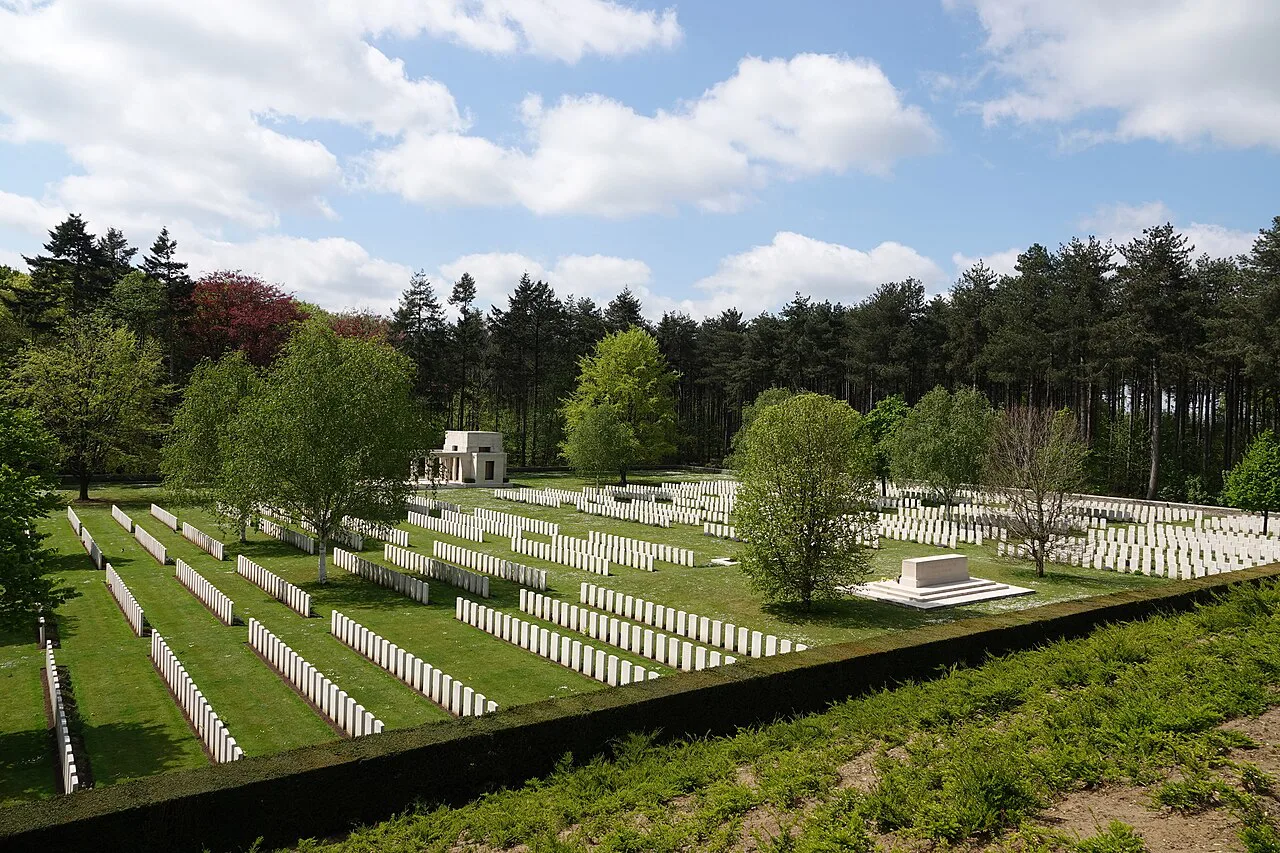
Commonwealth cemeteries follow a recognisable pattern of uniform headstones, with registers kept at the site, and the larger grounds carry a separate Memorial to the Missing alongside the graves. German cemeteries read differently: darker stone, group graves and, at Langemark, the massed Comrades Grave. Knowing this helps you read a site quickly instead of wandering.
A cemetery holds the dead who were identified or whose remains were found; a Memorial to the Missing, such as the Menin Gate or the Tyne Cot Memorial, names those with no known grave. Some sites, Tyne Cot among them, combine both functions, so check the register before assuming a name will appear on a headstone.
How to find a First World War grave before you travel
Start with the Commonwealth War Graves Commission's online records, which let you search by name, regiment, date and cemetery and give the grave or panel reference you need on the ground. Note the reference before you travel, because the registers at smaller sites may be in a locked box or held elsewhere.
German casualties are recorded through the Volksbund, and French and Belgian graves through their own national records, so a single search will not cover every burial ground. If a relative's grave is not in the Commonwealth records, establish which army they served with before you set out.
How to travel between the cemeteries around Ypres
The cemeteries spread across the countryside around Ypres and Zonnebeke, so a car or a bike is the practical way to link several in one day. Lijssenthoek is about 12 kilometres west of Ieper town centre, while Tyne Cot and Langemark lie on the eastern and north-eastern side.
Group sites by side of town: Lijssenthoek and Vladslo to the west, Tyne Cot, Passchendaele and Langemark to the east and north-east, Essex Farm on the canal close to Ypres. That single decision saves more time than any other part of the planning.
How many days you need to cover the cemeteries properly
One full day covers Tyne Cot, Langemark and the Menin Gate ceremony comfortably if you start in the morning and base yourself in Ypres. Add a second day for Lijssenthoek, Vladslo and Essex Farm, and a third if you want the In Flanders Fields Museum, the Passchendaele Museum and the southern sites at Messines.
With 247 cemeteries in the salient alone, trying to see them all is the wrong approach; a short list built around a family connection or a particular battle produces a better visit. A one-day stop works for travellers passing through Ypres, but two days is the realistic minimum for the major grounds.
Visiting etiquette at the memorials and cemeteries
These are active burial grounds and places of family grief, so keep voices low, stay on the paths between rows and do not move flowers, crosses or photographs left at a headstone. At the Menin Gate, stand clear of the roadway during the ceremony and follow the marshals.
School groups and coach parties arrive at Tyne Cot through the middle of the day, so an early or late slot gives you quieter rows. Photography is fine, but treat picnics, drone flights and posed group shots among the graves as things to avoid.
Which cemeteries should you choose?
Build your visit around one anchor: Tyne Cot if you want scale, Lijssenthoek if your interest is medical or you are tracing a name, Langemark and Vladslo if you want the German side of the war. Add Essex Farm because it is close to Ypres, and finish at the Menin Gate for the 8pm ceremony.
Two days in and around Ypres covers the main sites without rushing, and a car or bike turns the scattered cemeteries into a workable circuit. Find the grave references before you leave home, then let the landscape do the rest.
Explore more Belgium guides
Sources
Useful notes for your next trip
Optional updates to our guides.
You might also like



Continue reading
More guides you'll find useful





