Talbot House, Poperinge: The Soldiers' Club of Toc H
Talbot House in Poperinge was the First World War soldiers' club where rank was left at the door. What the house and museum hold, and how to visit or stay.
On this page
Talbot House is the First World War soldiers' club at No. 43 Gasthuisstraat in Poperinge, opened in December 1915, and the house that gave the Toc H movement its name. Allow an hour or more for the museum rooms and the garden, and consider the guesthouse if you want to sleep inside the building. This guide covers what each room was used for, the no-rank rule that shaped the house, and how it fits into a wider tour of the Salient.
A club behind the Ypres Salient
Poperinge sat a short distance west of the Ypres Salient, close enough to hear the guns and far enough back to serve as a rest town for British troops. Thousands passed through, and the town's cafés and estaminets did brisk trade with men just out of the line. Talbot House was set up as a sober alternative to those other clubs, a place to sit, read and drink tea rather than anything stronger.
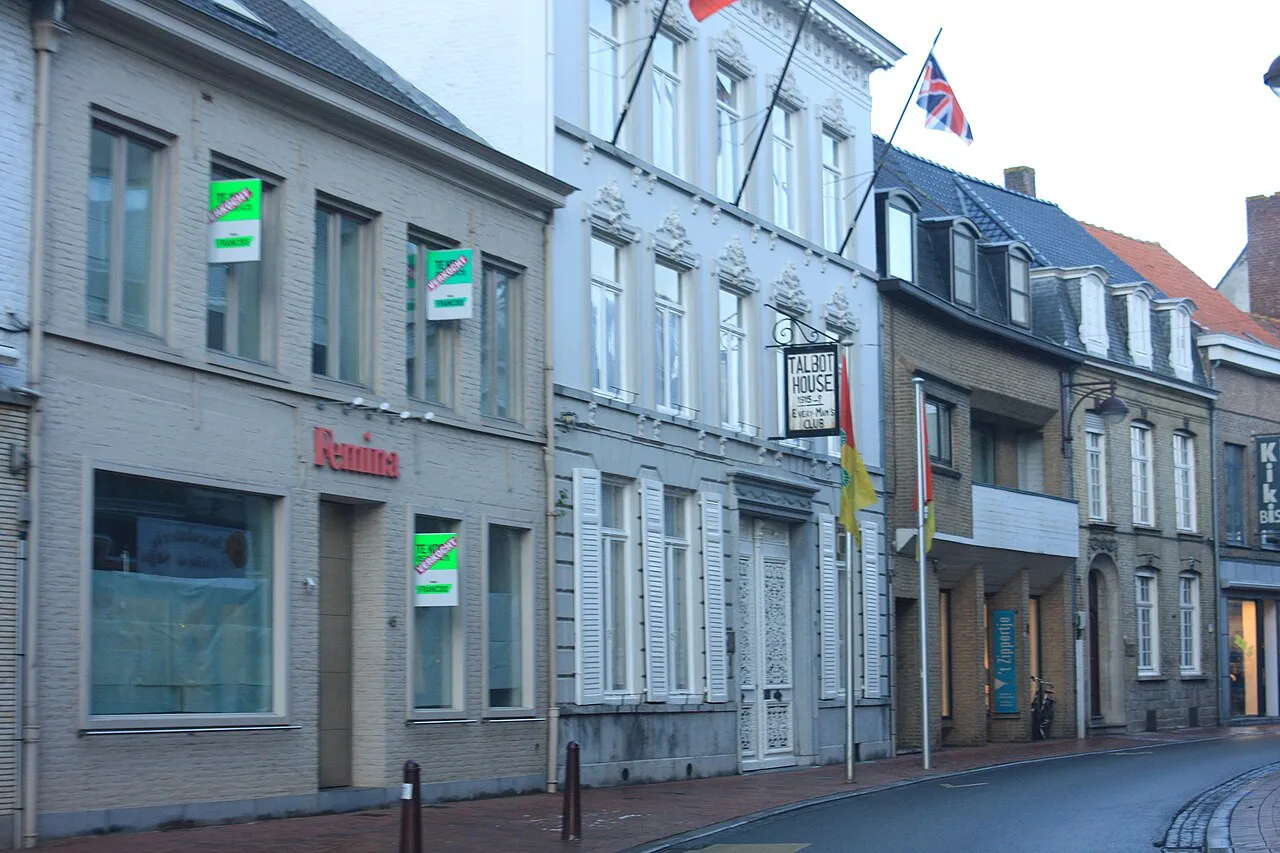
The house was built in the early eighteenth century by a family of hop traders, just off the main square, and was owned by a local banker when war broke out in 1914. After a German shell struck the building in 1915, the banker and his family left, and the British Army rented the house. Neville Talbot, Senior Chaplain to 6th Division, procured it and told Chaplain Philip Clayton to organise it as a soldiers' club.
That setting matters when you plan a route: Poperinge works as a base for the northern half of the Salient, with Ypres a short hop away and the hop fields of the Westhoek around the town. Talbot House sits within easy reach of the town hall and main square.
Why the house is called Talbot House
The name honours Gilbert Talbot, Neville Talbot's brother, who was killed on 30 July 1915. The house was originally going to be called Church House, until a visiting colonel objected that the name would choke anyone off, and Talbot House was chosen instead.
Toc H, the movement that grew out of the house, takes its name from the initials T.H. for Talbot House. The house was never a formal charity during the war; it was a club run by chaplains, and its post-war afterlife as a movement came later.
The rooms soldiers knew
Soldiers entered from the front, and the first room on the left served as Tubby Clayton's parlour when the house opened, then became a tea-bar in 1916, and briefly held the library late in the war. A portrait of Clayton now hangs over the fireplace. Beyond it, the dining room shifted between shop, card room and a narrow space for billiards.
The room immediately to the right of the back entrance once held the canteen and a small shop where men could buy toothpaste, soap and cigarettes. The original Talbot House piano still stands there. The welcome board in the hall mentioned a visitor's book, and the original book, not on display, holds around 1,300 signatures.
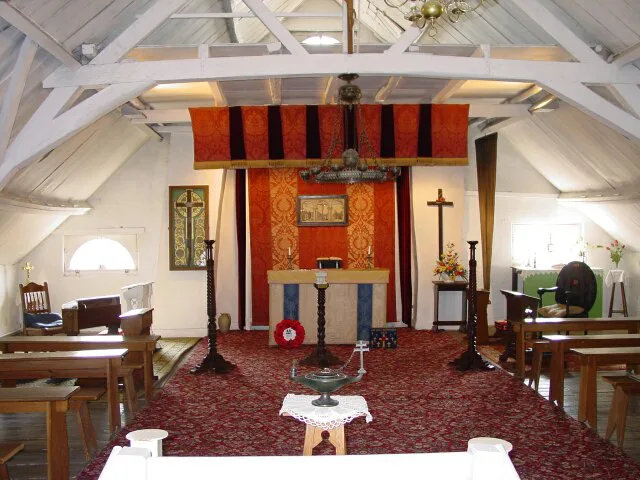
Upstairs were bedrooms with stretcher beds and blankets, the library, and the Chaplain's room, which Clayton treated as the centre of the house. The stairwell gongs, the Cadenza Chimes, were struck in the order of the Westminster Chimes to call worshippers to the chapel above.
The Upper Room and the rule of no rank
The chapel in the roof is the heart of the house for many visitors, and the rule attached to the building was blunt: all rank abandon ye who enter here. Clayton insisted that everyone crossing the threshold would be treated the same. Several deserters gave themselves up in his room, hoping he could undo what they had done.
The no-rank rule has a physical trace in the guest rooms, where the General's room is a single and deliberately the smallest in the house. Officers on leave were put there, and anyone who tried to profit from a higher rank got the smallest room rather than the best.
Visiting the house and museum
Visitors today come in through a back door down a side street rather than the front door the soldiers used, and Talbot House can be visited from 10:00 to 17:30. Inside are a small museum and a conservatory, and beyond them the garden, which is part of the visit.
The garden is the peaceful part of the visit, and the house sits close to the main square and the town hall, so it slots easily into a morning or afternoon in Poperinge. Among the WW1 sites in Belgium it is one of the most personal stops, and it pairs naturally with the cemeteries and museums around Ypres.
Sleeping in the house
Talbot House runs a guesthouse in the Old House, with seven historic rooms in the old building and three more in the Garden House. In 2026 the guide prices are 90 EUR for a single, 125 EUR for a double, 150 EUR for a family room for two, 184 EUR for three and 220 EUR for four, with a 10% discount for stays of at least two nights; these vary by season. Check-in runs from 16:00 to 21:00 and check-out is by 10:00, with a 1.70 EUR per person per night tourist tax included and a 10 EUR cash deposit per key.
Breakfast and museum entry are included in the room rate, and guests also get access to Talbot House and its garden. Each room has a washbasin with hot and cold water, and showers and toilets are in shared sanitary areas cleaned daily. Cancellation terms are strict: a 20% administration cost applies after confirmation, rising to 50% within 90 days of arrival and 100% within 14 days.
The rooms are named for people and episodes in the house's history, which gives each one a story to read on arrival. The Berat room, known as the Bullet Room, honours the caretakers René and Alida Berat, who kept the house's valuables from the German occupier during the Second World War. The Duinkerke room, once the British Army Liberation Room, housed soldiers during the 1940 retreat to Dunkirk.
Talbot House on a Salient itinerary
Poperinge makes a sensible base if you want to see the northern Salient without staying in Ypres itself. The town is compact, the house is central, and the surrounding hop fields and flat roads suit a day on foot or by bike. The house's own site points to local walking and cycling networks, including routes through Heuvelland and towards Kemmelberg.
For a fuller day, Lijssenthoek military cemetery lies close to Poperinge on the road to Ypres, and it is the largest Commonwealth War Graves Commission cemetery in the Salient after Tyne Cot. A morning at Talbot House followed by an afternoon among the graves gives a good balance between the living war and its costs.
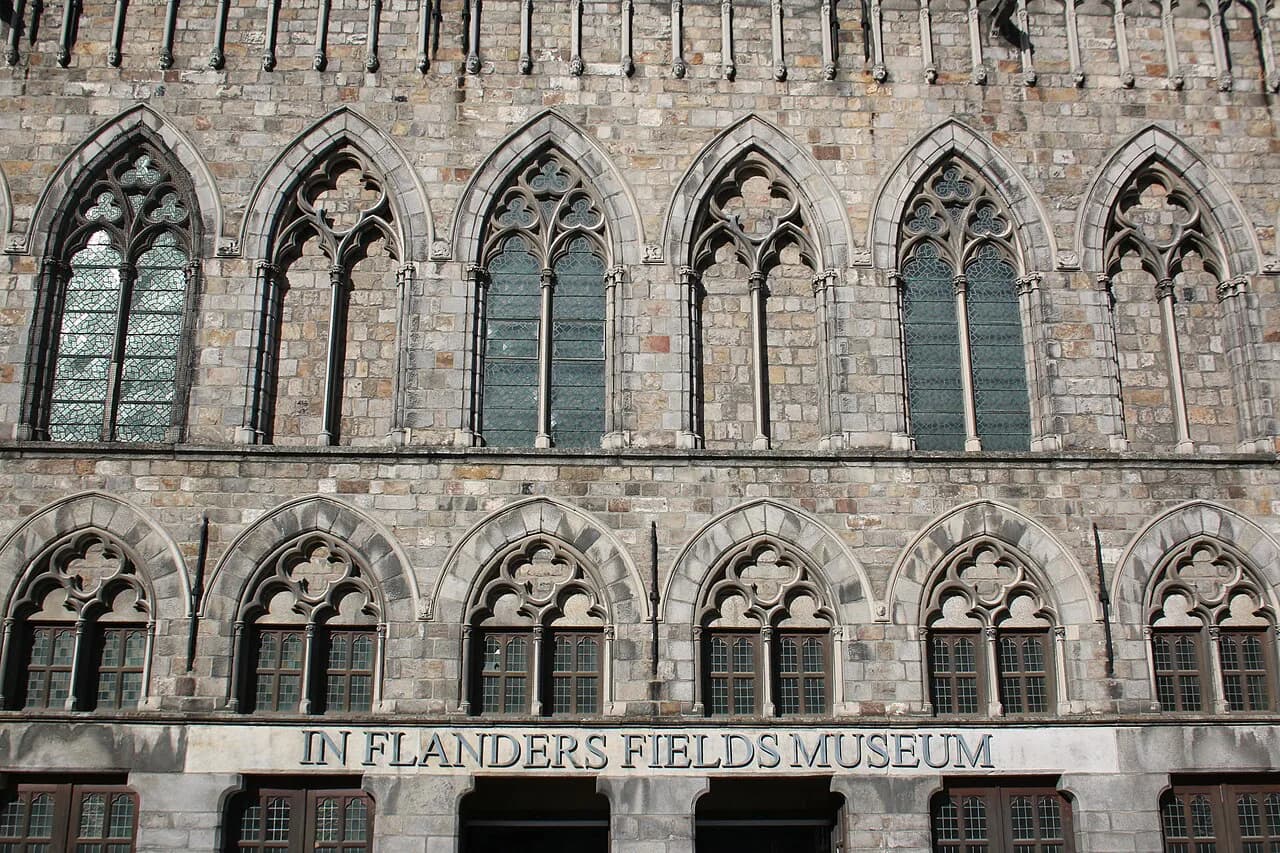
Ypres itself holds the In Flanders Fields Museum in the Lakenhalle, and the Menin Gate ceremony is a short drive or train ride from Poperinge. If you are following the Canadian story, Essex Farm cemetery, where John McCrae wrote In Flanders Fields, sits on the canal side north of Ypres. Each can be worked into a two- or three-day route with Talbot House as the anchor.
Should you add Talbot House to your route?
Yes, if you want one place that explains how the British Army lived behind the line rather than how it died at it. The house is compact, the museum rooms and garden reward an unhurried hour, and the guesthouse lets you stay inside the building if you book well ahead. Build it into a Poperinge or Ypres day and leave room for the cemeteries nearby.
Explore more Belgium guides
Frequently Asked Questions
What does Toc H stand for?
Toc H comes from the initials T.H. for Talbot House, the soldiers' club in Poperinge. The house opened in December 1915 and gave its name to the movement that followed.
What is the history of Talbot House in Poperinge?
The house at No. 43 Gasthuisstraat was built in the early eighteenth century by a family of hop traders. After a German shell struck it in 1915, the banker who owned it and his family left, and the British Army rented the house. Neville Talbot, Senior Chaplain to 6th Division, procured it, and Philip Clayton ran it as a soldiers' club where rank was left at the door. It opened in December 1915 and was named for Talbot's brother Gilbert, killed in July 1915.
Sources
Useful notes for your next trip
Optional updates to our guides.
You might also like
Continue reading
More guides you'll find useful