Things to Do in Leuven: A City Break Guide for 1–3 Days
Plan a short break in Leuven with the Grote Markt, the Ladeuzeplein, Park Abbey and city walks, plus an honest view on how many days the city needs.
On this page
One full day is enough to see the heart of Leuven, and a second day rewards anyone willing to leave the ring of streets around the Grote Markt. The city works as a compact walking day built around two set pieces, the town hall on the Grote Markt and the library tower on the Ladeuzeplein, with Park Abbey and the provincial walking network as the counterweight outside the centre. This guide groups the city by area so you can drop stops without losing the shape of the day, then looks at how many days the city actually needs and where it fits beside Bruges, Ghent and Antwerp.
What to see in Leuven in a day: the short answer
Start on the Grote Markt, walk the short hop to the Ladeuzeplein to see the library tower, then decide whether to spend the afternoon in the old centre or out at Park Abbey. That order keeps the two defining sights of the centre together in the morning and leaves the afternoon flexible. Leuven is small enough that this plan involves no transport at all until you head for the abbey, which is the practical advantage of using the city as a short break.
A self-guided route through the centre covers the squares and streets in a couple of hours at an unhurried pace, and this Leuven Walking Tour outline is a sensible spine to follow if you would rather not plan the order yourself. Treat it as a frame: add the library tower on the Ladeuzeplein and the Fonske beside the town hall, and keep the afternoon open for whichever of the abbey or the riverside you prefer.
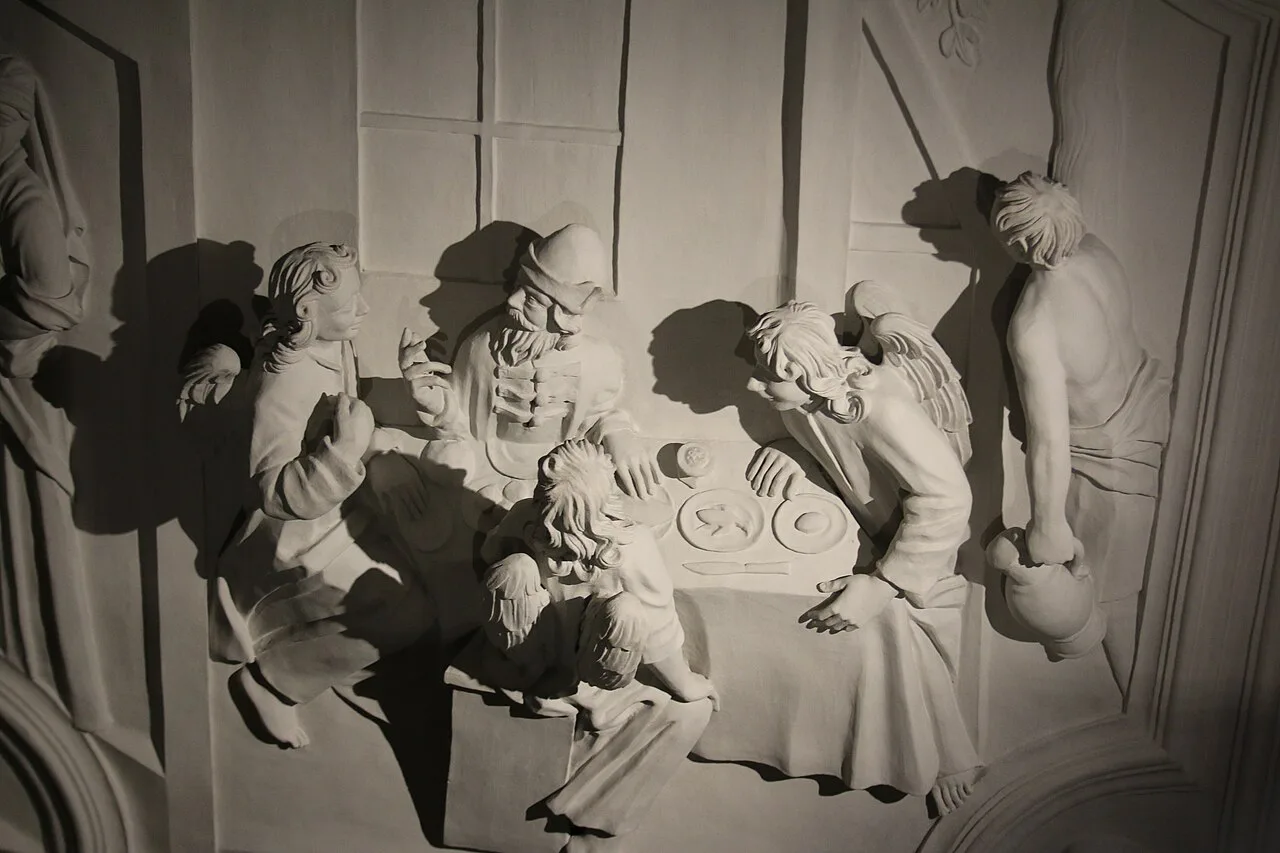
The old centre on foot: the Grote Markt and the town hall
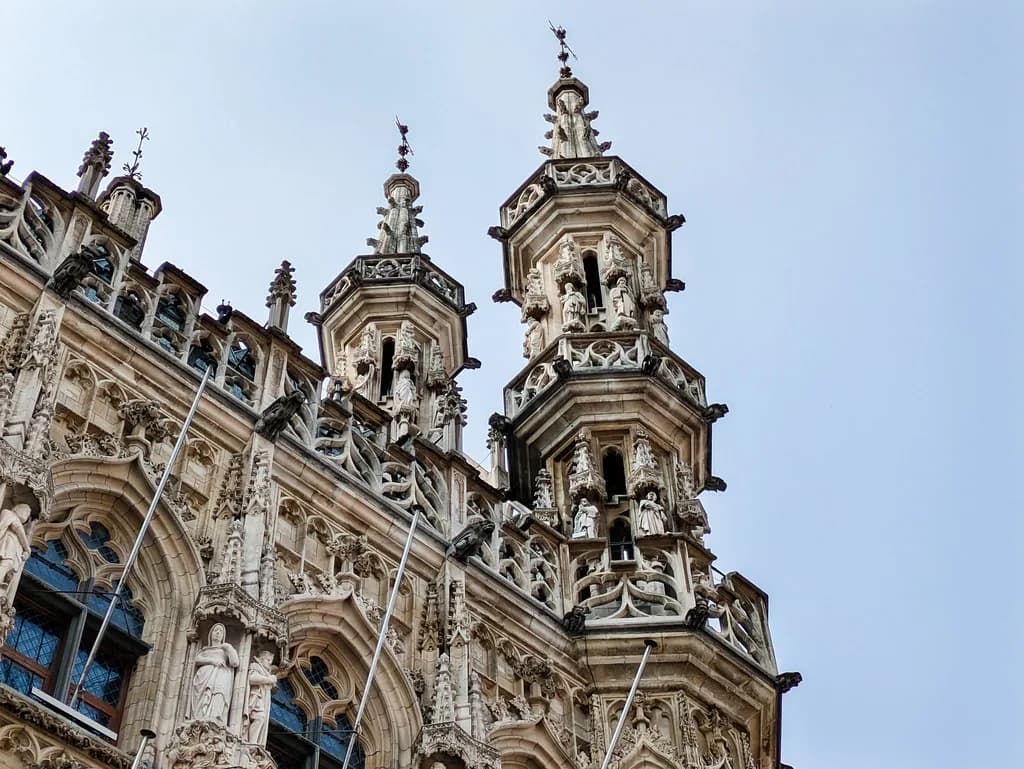
The Grote Markt is the civic stage of the city, and the town hall (Stadhuis) is the building that makes it worth more than a photograph. Its ornate Gothic facade fills one side of the square, and the detail is the point: stand back before you move on, and the square is short enough to cross twice.
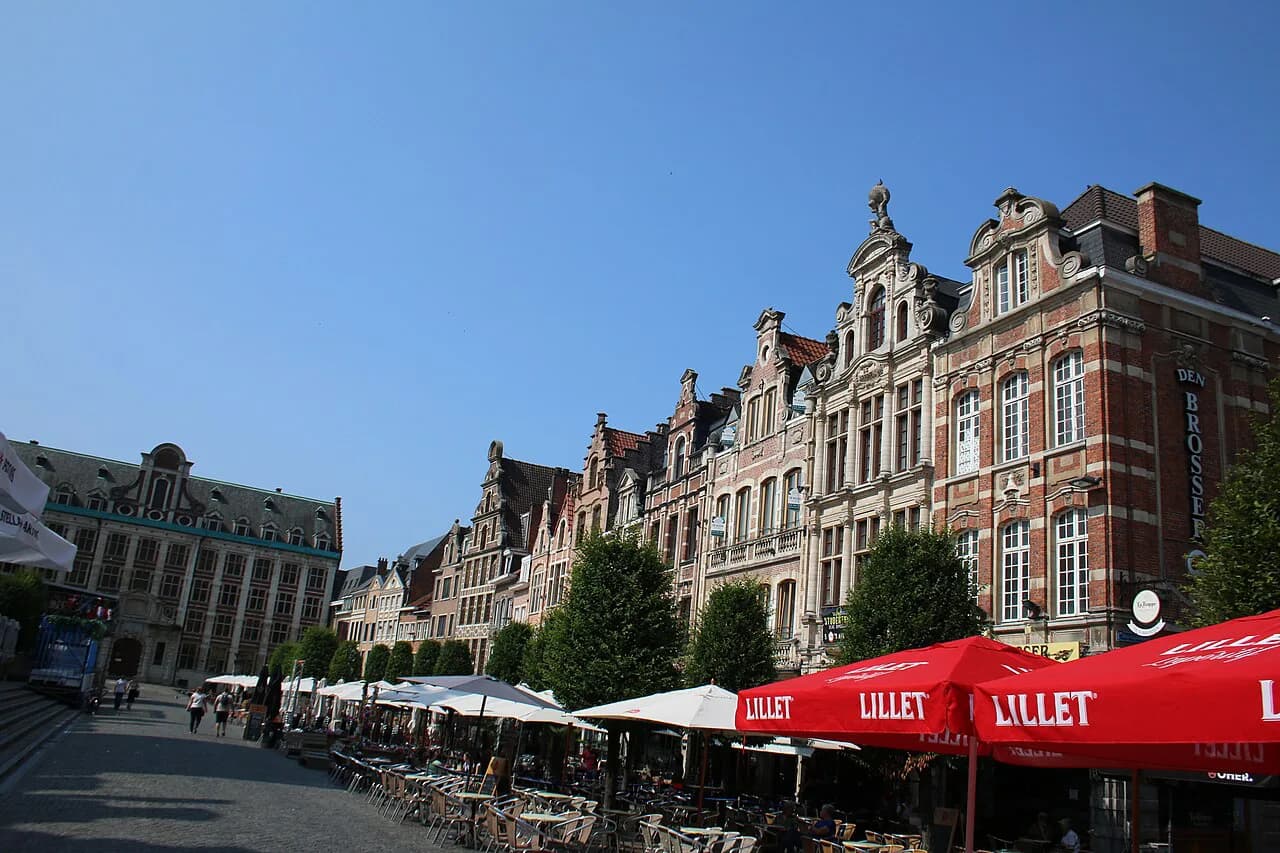
From the Grote Markt the old town lanes lead easily to the Oude Markt and the university streets, so the centre is best treated as one continuous walk rather than a list of separate stops. The Leuven Old Town guide maps that core, which helps if you want to loop back to the Grote Markt at the end of the afternoon. Budget the morning for this half of the city and resist the urge to rush it.
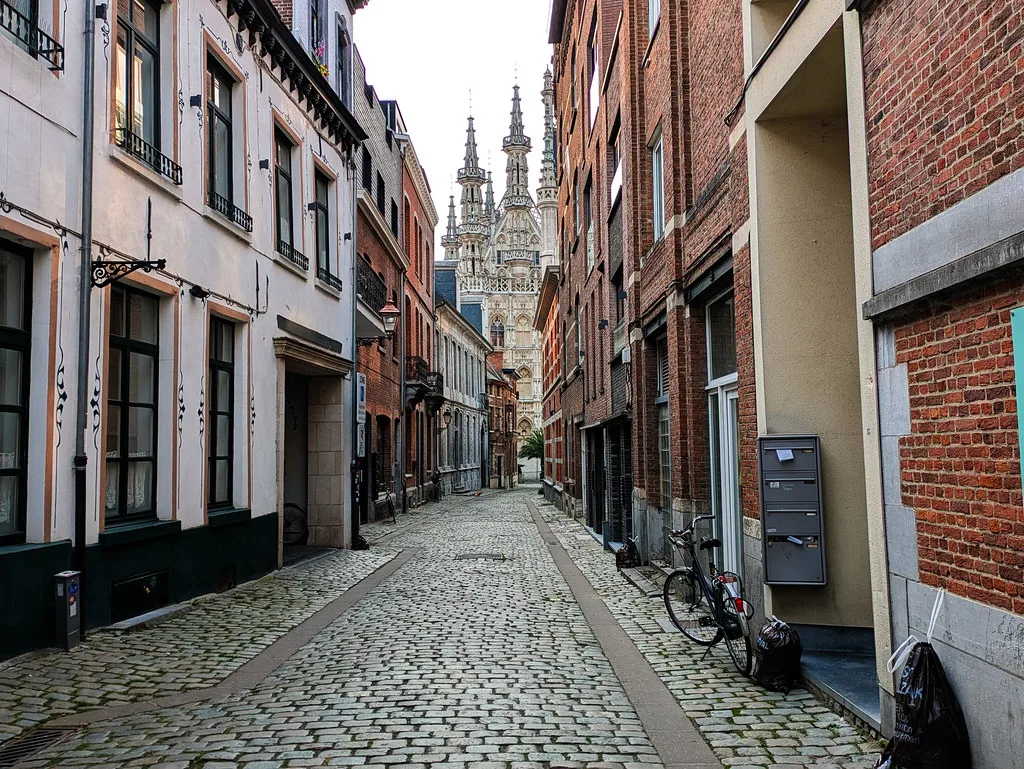
The Ladeuzeplein, the library tower and the Fonske statue
The Ladeuzeplein is the second square that defines a day in Leuven, and the library tower (Universiteitsbibliotheek) is its landmark. A one-day Leuven itinerary opens here at the Ladeuzeplein and climbs the library tower before moving on to the Fonske statue and the town hall, which makes the square the natural start of a second loop. Whether you go up the tower is a separate decision from seeing it, so plan the square into the morning and treat any climb as an extra rather than the reason to go.
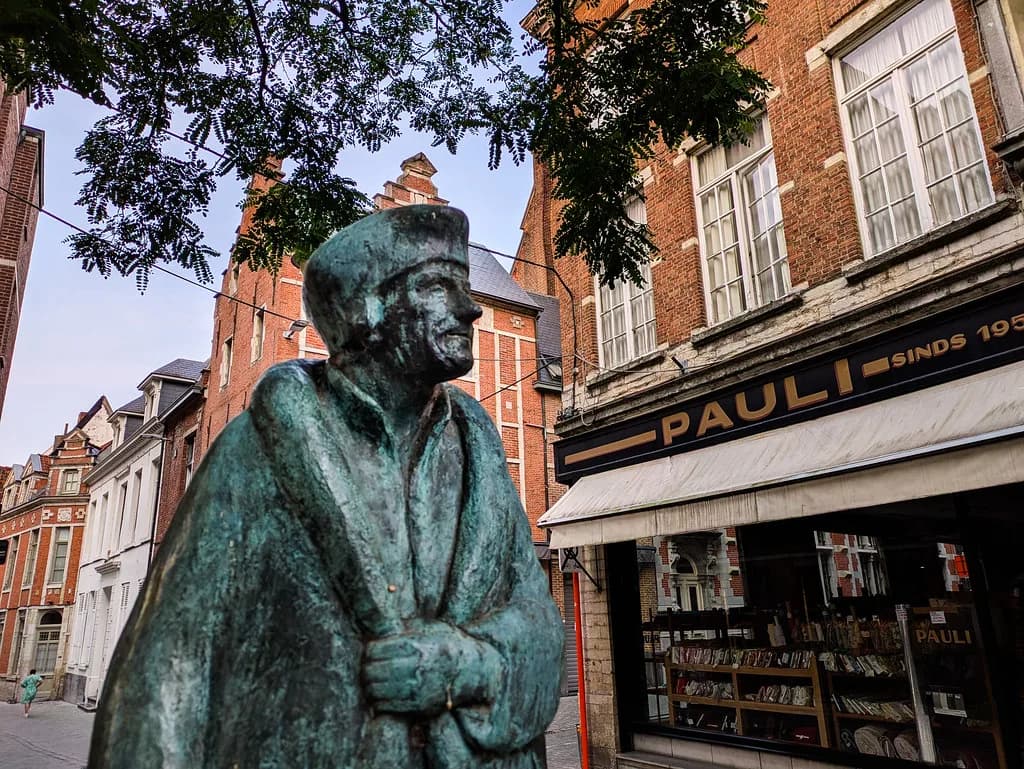
The Fonske statue sits near the town hall and is the city's small, easily missed stop after the library tower. It takes minutes, not an hour, so pair it with the walk between the two squares rather than making it a destination. That way, as outlined in this weekend in Leuven, the walk back towards the Grote Markt closes the morning loop without any doubling back.
Park Abbey and the green edge of the city
Park Abbey (Abdij van Park) is the reason to give Leuven a second day, and it is a place to explore rather than a single building to tick off. It sits outside the compact centre, so reaching it is a deliberate trip rather than something you pass on a city walk. Build the afternoon around it and let the centre go for those hours; trying to do both properly in one day leaves the abbey thin.
The same green edge of the city supports the walking and cycling that the province promotes. If a half-day at the abbey appeals more than a museum afternoon, this is where Leuven stops feeling like a small old town and starts behaving like a provincial capital with countryside attached.
Walking and cycling around Leuven
Flemish Brabant is promoted as the most walkable province, with a signposted network you can use to follow trails or set up your own hike, and Visit Leuven publishes five city walks for getting to know Leuven on foot. Cycling routes are suggested through the provincial tourism body too, so a bike is a genuine alternative to walking rather than a specialist option. The trade-off is planning time: the networks reward a little homework before you leave the centre.
For a short break, walking is the simpler choice because the centre and the abbey both work on foot. Cycling makes more sense if you want to string together the green spaces beyond the ring, which is the part of Leuven most one-day visitors skip. Either way, use the signposted network rather than inventing a route from a map.
How many days does Leuven need?
One day covers the Grote Markt, the town hall, the Ladeuzeplein, the library tower and the Fonske without hurrying. Two days let you add Park Abbey and a proper walk or cycle on the provincial network, which is where the city opens up. Three days is a comfortable stay for anyone who wants both the centre and the green edge, plus time to revisit the squares in different light.
If you only have an afternoon, cut the abbey first and keep the two squares. The centre is compact enough that an afternoon gives you the town hall, the library tower and a walk between them. Longer than three days starts to strain what Leuven offers a first-time visitor, unless you are using it as a base for the wider province.
Where Leuven fits on a Belgian city break
Leuven is the small, walkable counterpoint to the bigger Belgian names. Bruges and Ghent offer canals and a denser historic core, Antwerp a larger-scale Grote Markt and fashion-city energy, and Leuven a compact university centre that fits neatly into a day or two between them. If you are weighing things to do in Antwerp against a Leuven stop, Leuven is the quieter, shorter visit, and it works well as a pause on a multi-city route.
For anyone building a trip around Bruges and Ghent, Leuven is the third or fourth stop rather than the anchor. That is not a criticism: it is a smaller city, and treating it as a short stay keeps expectations honest. If you are deciding whether it earns a slot at all, the case for is Leuven worth visiting is worth reading before you fix the route.
Is Leuven worth the stop on your route?
Leuven earns a place on a Belgian trip when you want a compact, walkable city that does not demand three days. Give it a full day for the Grote Markt, the town hall, the Ladeuzeplein and the library tower, and a second day if Park Abbey and the provincial walking network appeal. If your itinerary is already full of canals in Bruges and Ghent, cut Leuven rather than squeezing it into an afternoon.
Explore more Leuven guides
- Is Leuven Worth Visiting?
- Leuven Breweries
- Leuven Old Town
- A Weekend in Leuven
- Best Chocolate in Leuven
- Is Leuven Expensive? A Practical Cost Guide for a Short Break
- Leuven Bike Rental
- Leuven Events and Festivals
- Leuven Markets
- Leuven University Library
- Leuven Walking Tour
- London to Leuven
- One Day in Leuven
- Parks in Leuven
- Shopping in Leuven
Frequently Asked Questions
Is Leuven worth visiting as a short break?
Yes, for a day or two. The Grote Markt and town hall, the Ladeuzeplein with the library tower, and the Fonske statue fill a comfortable morning, and Park Abbey plus the Flemish Brabant walking network give a second day. Leuven is quieter than Bruges, Ghent or Antwerp, so it suits a shorter stay rather than a long one.
What is Leuven best known for?
Leuven is a university city whose centre is built around two squares: the Grote Markt with its ornate Gothic town hall, and the Ladeuzeplein with the library tower, with the Fonske statue close to the town hall. Beyond the centre, Park Abbey is the main reason to give the city a second day.
Sources
Useful notes for your next trip
Optional updates to our guides.
You might also like
Continue reading
More guides you'll find useful