Things to Do in Ghent: What to See, by Area and Theme
Plan a city break in Ghent with named sights, the belfry, museums, canals and a beer stop, arranged in walkable order with honest trade-offs.
On this page
Ghent needs one full day for the historic centre and two to three if you want the museums and the districts beyond the ring. Almost everything on the postcard circuit sits inside a few hundred metres of Korenmarkt, which means you can walk from the Belfort to Gravensteen to the Graslei quays without touching a tram, then spend a second day on the Dr. Guislain Museum, the industrial collections and the monumental cemetery at Sint-Amandsberg. This guide groups the sights by walking order rather than by theme, so you can build a day on foot and decide honestly what deserves your time.
What to see in Ghent in one to three days
Day one is the medieval core: the Belfort, the two cathedrals, Gravensteen and the Graslei and Korenlei, all within a loop of roughly two kilometres. Day two takes in the Ghent Altarpiece properly, then the Dr. Guislain Museum on the northern edge and the Industrie Museum in its former cotton mill. Day three is for the eastern side, with the Camposanto cemetery at Sint-Amandsberg, a beer tasting at Brouwbar and the Herbert Foundation or Nucleo's Blanco showroom if contemporary art is your reason for coming.
The geography is simple once you fix two anchors. Korenmarkt is the open square where the Belfry and Sint-Niklaaskerk stand almost side by side, and the Graslei and Korenlei are the two quays running either side of the Leie a short walk south. Everything else in the centre is measured from those two points.
The old centre on foot: Korenmarkt, Graslei and Korenlei
Start at Korenmarkt, the wide square at the heart of the shopping district, and use it as your orientation point for the day. The former Post office building on the square now houses a shopping centre, which makes a useful landmark when you are finding your bearings again after a morning of wandering.
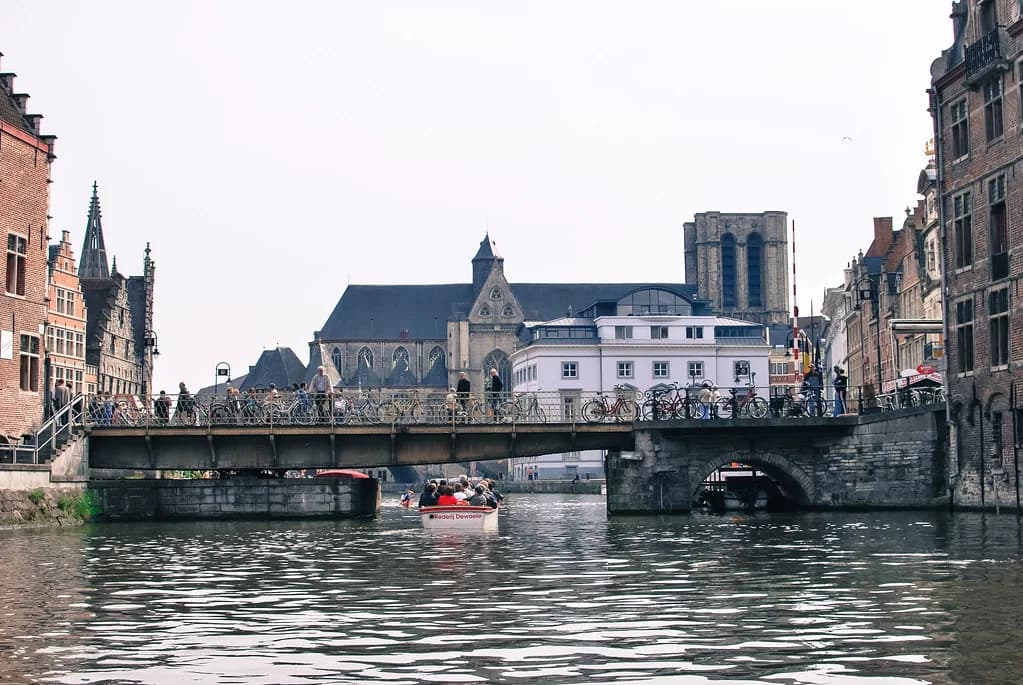
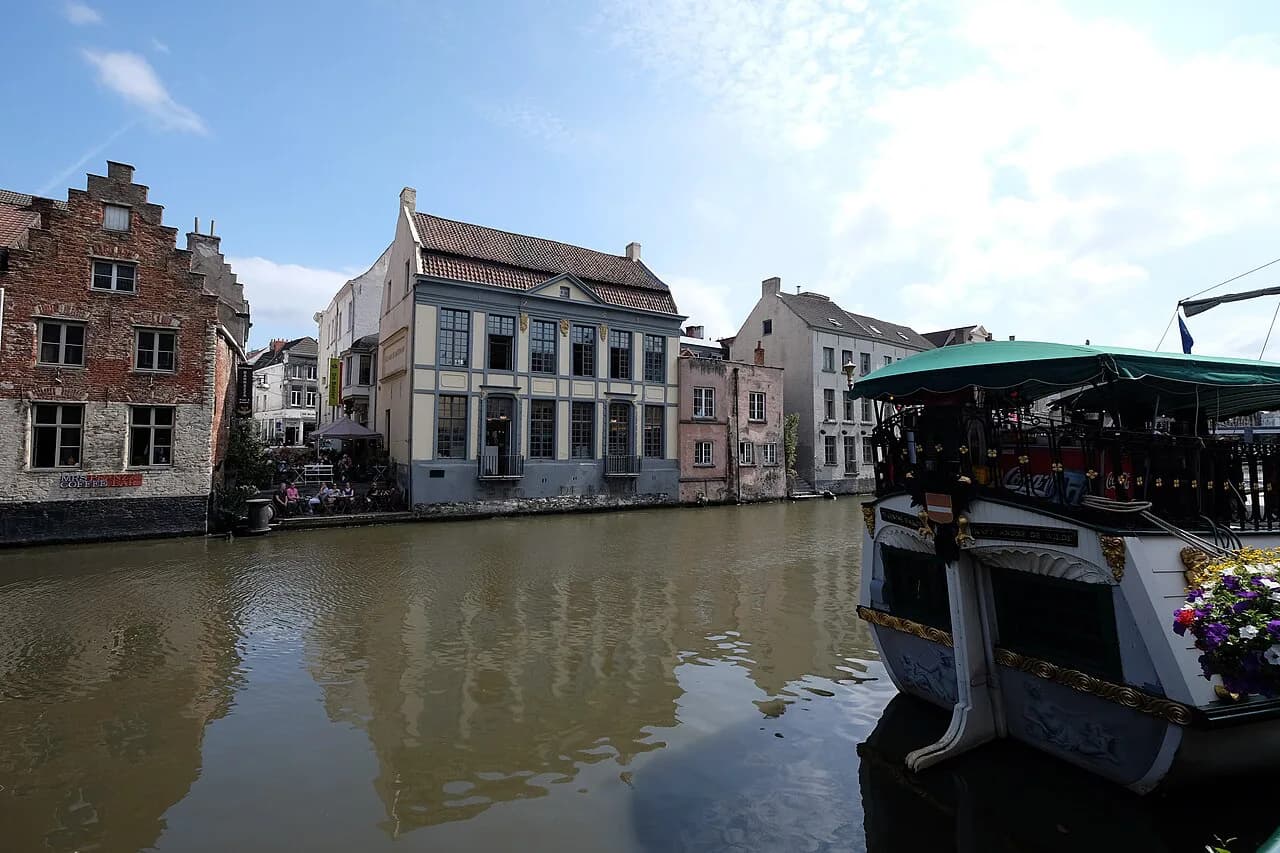
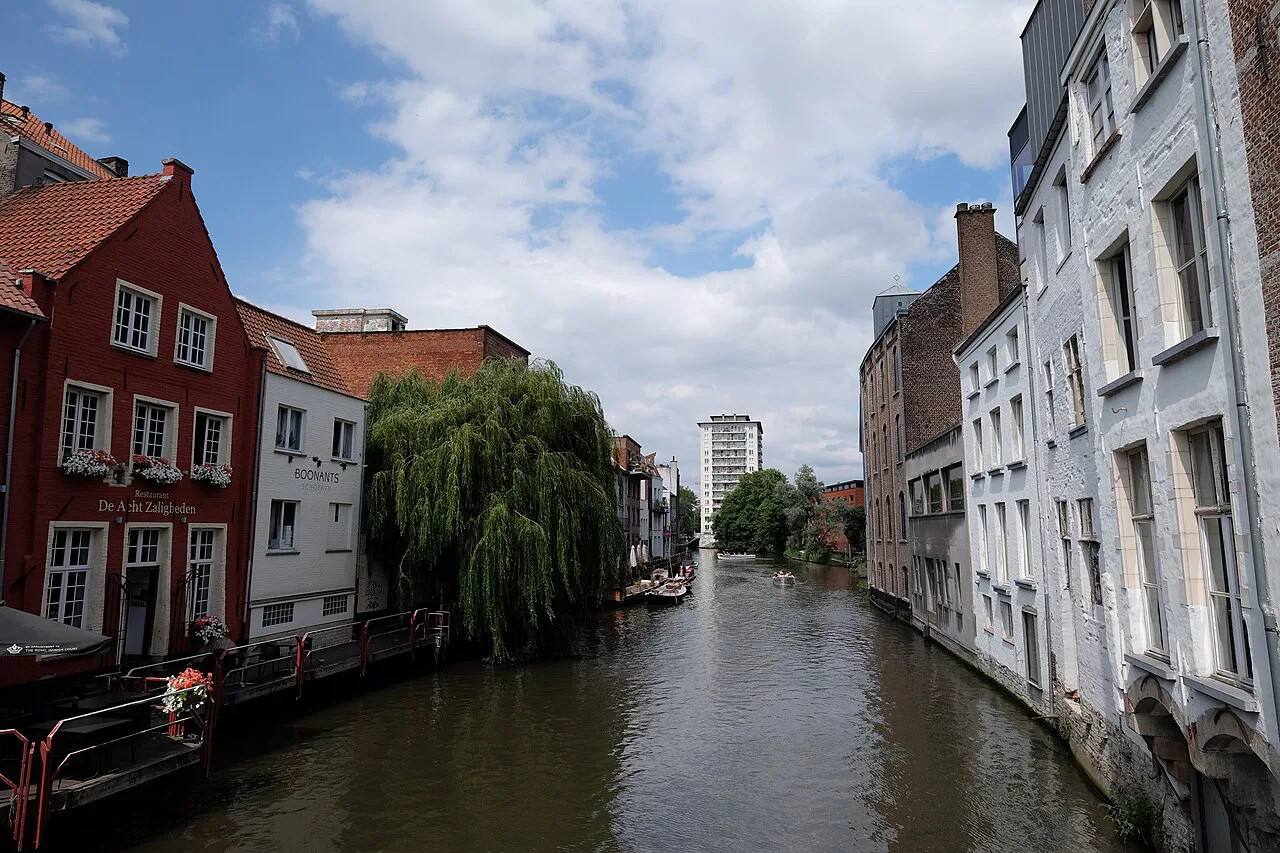
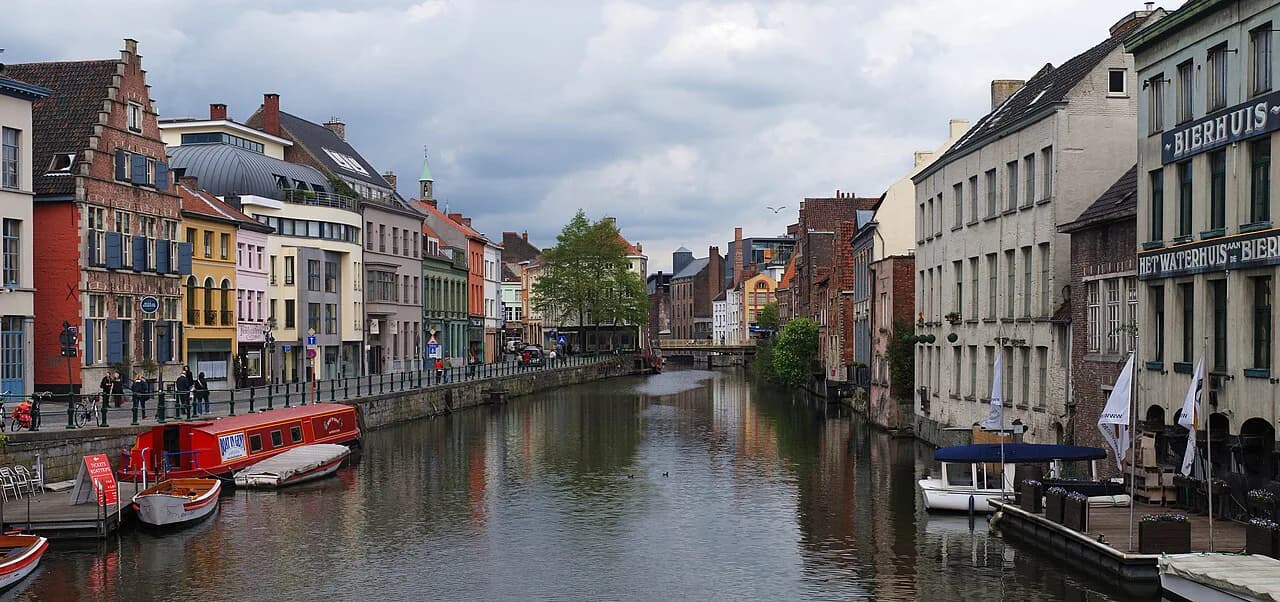
From there, walk south for five minutes to the Graslei and Korenlei, the quays on both banks of the Leie lined with step-gabled guildhouses. This stretch is the most photographed corner of the city and the natural place to sit with a coffee before tackling the next sight. Boat tours leave from this stretch of water, so it doubles as the starting point for a canal loop.
If you would rather follow a route than improvise, our Ghent Walking Tour links these squares in order and adds St Michael's Bridge, where you get the classic view back across the rooftops. Allow half a day for the centre at a relaxed pace, or a couple of hours if you keep moving.
The Belfry of Ghent (Belfort) and its views
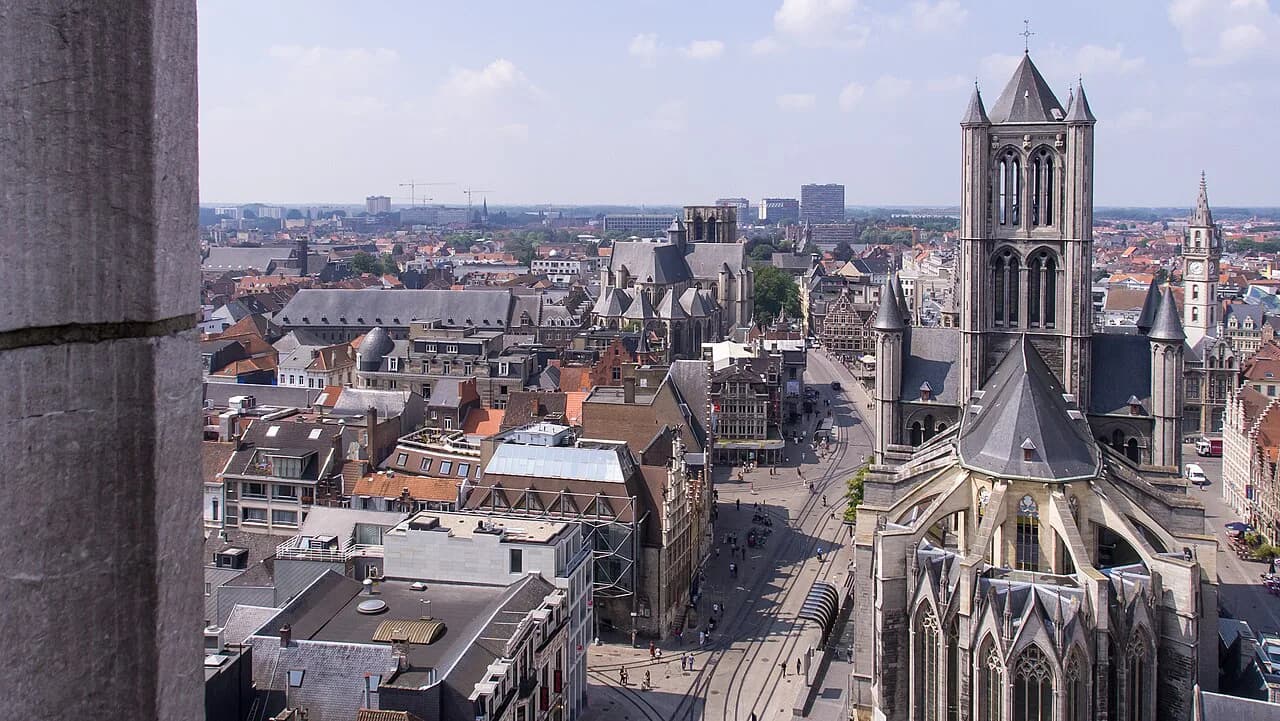
The Belfort is the one tower to climb. It gives you a 360-degree view over the city, and from the top you can pick out Sint-Niklaaskerk to the west and Sint-Baafskathedraal to the east, which is the fastest way to understand how compact the centre is. An elevator takes you up if you would rather not tackle the stairs.
The trade-off is straightforward. Such towers often cap the number of people inside at once, so go early in the day if you want the climb without a queue. For other rooftops and high points around the city, our guide to the best views in Ghent sets out the alternatives.
Gravensteen Castle and the armoury collection
Gravensteen sits right in the middle of the old centre, a stone castle with a moat around it. Inside you get an armoury collection, former torture chambers and views back over the rooftops, which makes it a good complement to the Belfort rather than a substitute for it. Read more in our guide to Gravensteen.
It is also the sight most likely to eat an hour more than you expect, particularly with children in tow. If your time in Ghent is a single day, decide between the castle interior and the cathedral altarpiece and accept that doing both properly means a long morning.
Sint-Baafskathedraal and the Ghent Altarpiece
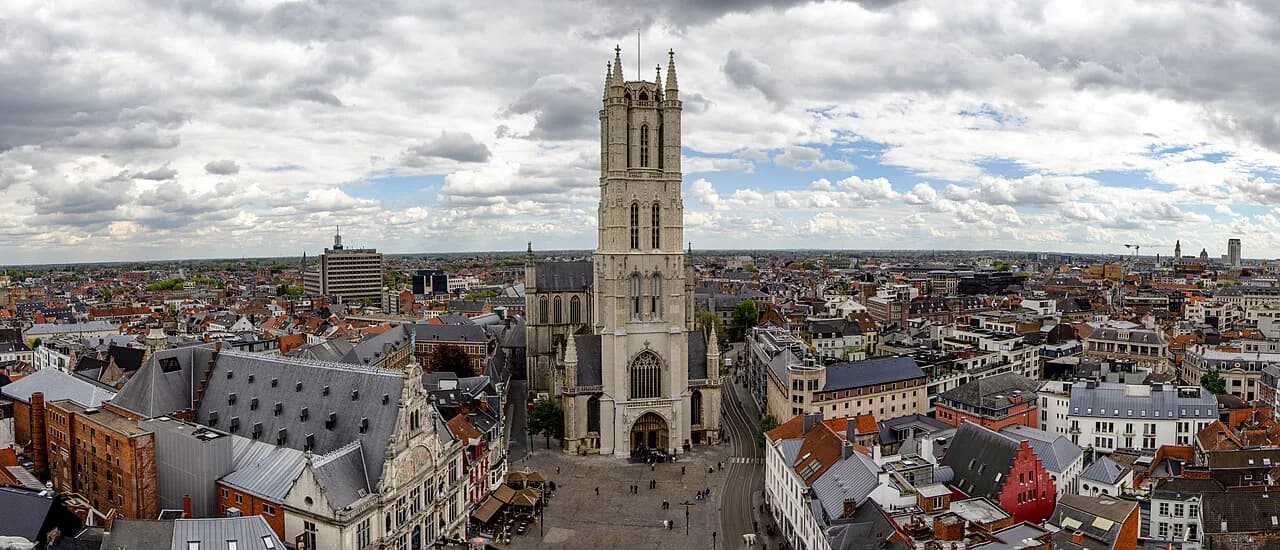
Sint-Baafskathedraal holds the Ghent Altarpiece, the van Eyck polyptych also called The Adoration of the Mystic Lamb, and seeing it is the single best reason to give Ghent a second day. The cathedral is the one to go inside for, and the altarpiece rewards time rather than a quick glance on the way past. Our Ghent Old Town guide places it in the surrounding streets.
Pair it with our Ghent old town guide, which sets the cathedral in the context of the surrounding streets and squares, so the visit fits into a morning rather than standing alone. Free things to do in Ghent is worth reading alongside it if you would rather spend your budget on beer and chocolate than on tickets.
Sint-Niklaaskerk and the walk between the three towers
Sint-Niklaaskerk faces the Belfort across Korenmarkt, and the short walk between the two is the densest concentration of medieval architecture in the city. From the top of the Belfort, Sint-Niklaaskerk lies to the west and Sint-Baafskathedraal to the east, which gives you a simple way to orientate yourself before walking the route at street level.
The three towers, the Belfort, Sint-Niklaaskerk and Sint-Baafskathedraal, stand close together and you can see them all on a single short walk without stopping. Do it once on arrival to get your bearings, then return to whichever one you want to enter properly.
Canals by boat from the Graslei and Korenlei
Canal tours leave from the Graslei and Korenlei, and a boat gives you the history of the city with a view from the water that you cannot get on foot. It is the obvious choice on a warm afternoon or when your legs have had enough of cobbles.
If you would rather move under your own power, cycling in Ghent covers the routes out along the canals towards Portus Ganda and beyond the ring. Either way, the waterways are what separate Ghent from a city you can only admire from pavement level.
Dr. Guislain Museum on the northern edge
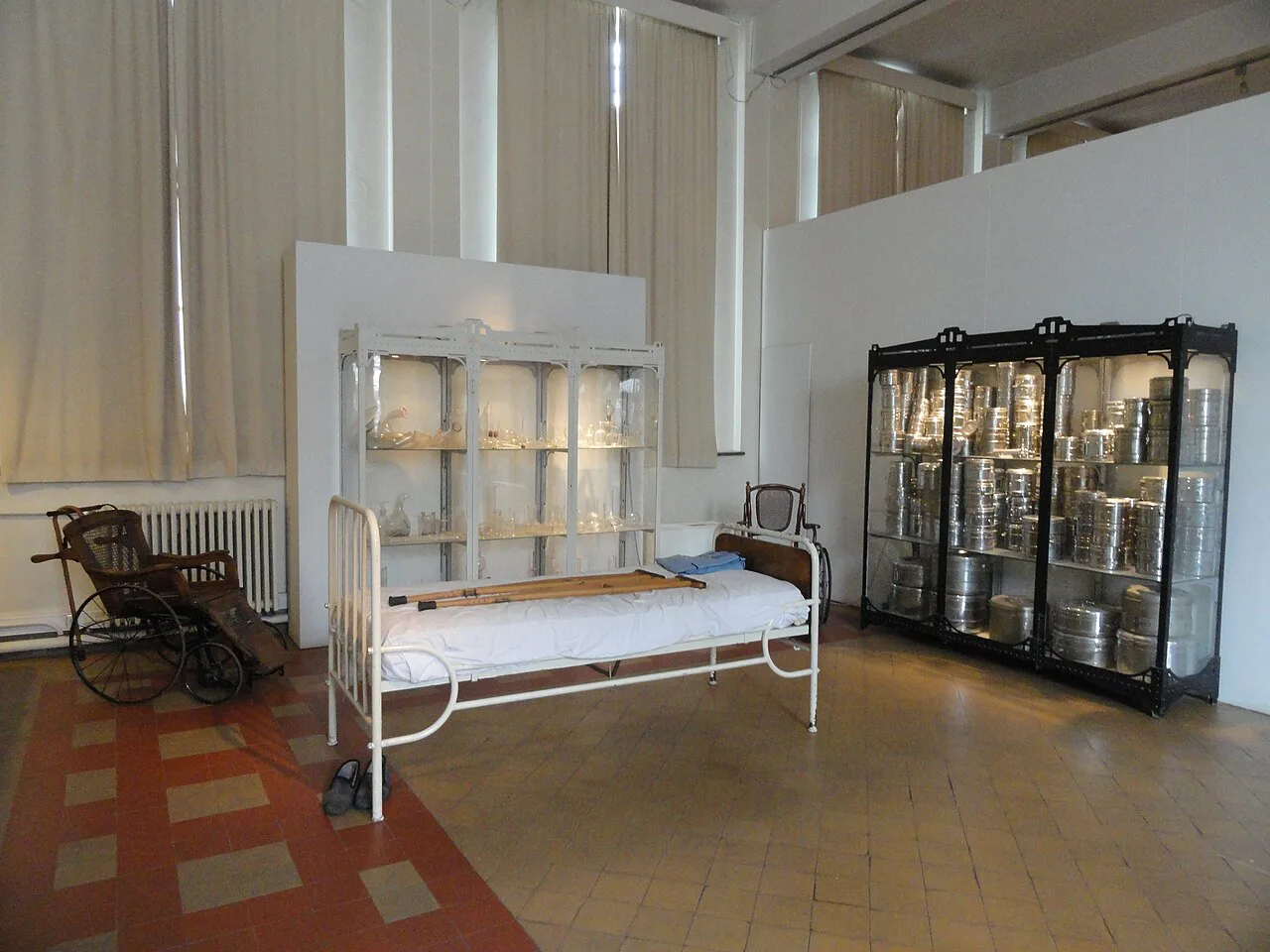
The Dr. Guislain Museum is the best reason to leave the postcard circuit. It opened in 1986 inside a former mental asylum in the northern outskirts, in a building that mixes Ghent's yellow brick with the red brick of East Flanders, and it now combines a collection on the history of psychiatry with temporary exhibitions on subjects such as fear, trauma and body weight.
Budget half a day for it including the tram ride north, and go on a day when you have the appetite for something heavier than the old centre offers. It is not a substitute for the Belfry and the Graslei, it is the counterweight to them.
The Industrie Museum in the former cotton mill
Ghent was the first place on the continent where the industrial revolution took hold, after the United Kingdom, and the Industrie Museum tells that story inside the city's former cotton mill. The building alone justifies the trip; the collection traces industrial society in a city that sat at the centre of the Flanders textile region.
The display is heavily interactive, with games aimed at younger visitors alongside the old machines, so come for the building and the machinery rather than for quiet reading. It is a good wet-weather stop and pairs neatly with the Dr. Guislain Museum on the same northern run.
Camposanto, Ghent's monumental cemetery at Sint-Amandsberg
Camposanto is Ghent's monumental cemetery, set on a hilltop in Sint-Amandsberg to the north-east of the centre. It is a Catholic burial ground and the resting place of Flemish writers, painters, musicians, politicians and scientists, laid out in a Neo-Gothic design by prominent local artists and architects.
Treat it as a quiet walk rather than a sight to tick off: grey stone, unusual statues and a view back over the city. It sits on the far side of the centre from the Dr. Guislain Museum, so pair it with a different half-day.
Craft beer: a tasting at Brouwbar
Brouwbar is the place to taste Belgian beer in Ghent when you want a guided flight rather than a bar stool. A local guide to the city's less obvious addresses names it for a Belgian beer tasting, which makes it a good late-afternoon stop after the museums close.
If you would rather see where the beer is made, our guide to Ghent breweries covers the city's brewing side, including the tradition behind Gruut City Brewery. Book a tasting into your second or third day, not your arrival evening, when a long day of travel makes an early night the better choice.
Chocolate is the other half of the eating story, and the city has specialists worth a deliberate stop rather than an airport purchase. Our guide to chocolate shops in Ghent sets out where to buy, and the same advice applies: buy on your last morning so it survives the journey home.
Off-centre art at Nucleo's Blanco showroom and the Herbert Foundation
Nucleo turns empty buildings in Ghent into artists' studios and workspaces, and its Veeartsenij site, a former veterinary school, now holds eighteen ateliers and a co-working space. The showcase venue Blanco lets visitors see work by the resident artists.
The Herbert Foundation sits at the opposite side of the city and is best approached as a private collection rather than a conventional modern art museum. Both reward a little planning before you set out, so look up the current visiting arrangements the day before rather than turning up on spec.
If street art is your interest, the Graffiti Street in Ghent (Werregarenstraat) is a short walk from the centre and takes ten minutes. Our Ghent graffiti street guide explains how the lane works and why the paint changes so often.
Ghent as a student city and how that shapes a visit
Ghent is a university city, and that is the main reason it feels less polished and less crowded than Bruges. The student population supports the kind of addresses that would struggle in a town built entirely around tourism: the art spaces, the breweries and the cultural centre Kapow.
That character shows up in small ways. Locals describe the city as proud of a rebellious streak, and you feel it in the graffiti lane, the artist-run buildings and the general refusal to curate the centre too tightly. Come expecting a working city rather than an open-air museum.
How many days Ghent needs
The historic centre is covered in half a day and the headline sights in a full day. The second day is for the Ghent Altarpiece seen properly, the Dr. Guislain Museum and the Industrie Museum. A third day adds Camposanto, a beer tasting and one of the off-centre art spaces without any rushing.
If you have only a day, choose two of the Belfry, Gravensteen and the cathedral, add the Graslei on foot and finish with a beer. Trying to add the museums outside the ring will leave you on trams rather than in the city.
Ghent or Bruges: an honest comparison
Bruges is smaller, more uniformly medieval and easier to see in a day; Ghent is larger, has a working student population and gives you more to do when the weather turns. If you have three days in Belgium, Ghent rewards the extra time better, and the two cities are close enough by train to combine.
Bruges still wins on the single unbroken canal view and on the density of chocolatiers and lace shops in the centre. If your priority is the picture-postcard version of Flanders, go to Bruges; if it is museums, beer and a city with a pulse, Ghent is the better base.
Antwerp is the other comparison worth making: bigger again, with fashion and a cathedral square that dwarfs anything in Ghent. Our guide to things to do in Antwerp is the place to start if you are weighing up a second Belgian city.
Which day in Ghent to book first
Book the Belfry and the cathedral into your first morning, while the centre is still quiet and your legs are fresh, and leave the museums for the following day. If you are in Ghent for one day only, take the Belfort view, the Graslei walk and one of Gravensteen or the Ghent Altarpiece, then stop.
One practical note before you commit: many museums in Belgium close on Mondays, so plan the cathedral and the Belfort for a day you know is open. Ghent also runs a light festival, the Ghent Light Festival (Lichtfestival), in some years, and our guide explains how the dates are announced in advance.
If you have a spare afternoon and good weather, the parks give you a green alternative to one more museum. Our guide to Parks in Ghent lists the ones people actually use, and Citadel Park is the obvious first choice.
Explore more Ghent guides
Frequently Asked Questions
Is Ghent worth visiting?
Yes, provided you give it more than a few hours. The old centre is compact and the Belfort, Gravensteen, the two cathedrals and the Graslei quays sit within walking distance of one another, while the museums outside the ring and the beer scene reward a second day. If you want a city that is small enough to walk but large enough to fill two or three days, Ghent fits.
How do I spend a day in Ghent?
Start at Korenmarkt and climb the Belfort for the view, walk south to the Graslei and Korenlei, then choose between Gravensteen and the Ghent Altarpiece in Sint-Baafskathedraal for your indoor sight. Finish with a beer or a canal boat. Trying to add the Dr. Guislain Museum or the Industrie Museum on the same day will leave you moving between trams rather than seeing the city.
Sources
Useful notes for your next trip
Optional updates to our guides.
You might also like
Continue reading
More guides you'll find useful