Ghent Light Festival (Lichtfestival): What to Expect
Ghent Light Festival lights up the city centre after dark with a free walking route of light artworks. Here is what the event involves and how to plan around it.
On this page
The Ghent Light Festival is a free evening walk through the city centre, where light artworks are placed along a set route and viewed on foot after dark. It is not a seated show or a single venue: you follow the route and see the city's squares, streets and waterside quays in their winter setting.
This guide covers what the event is, how an evening on the route works, the landmarks that form its backdrop and how to fit it into a longer Ghent break. It also separates the festival from the permanent five-kilometre light-plan walk that you can follow on any visit; start with the wider list of things to do in Ghent if you are still shaping the trip.
What the Ghent Light Festival (Lichtfestival) is
The Lichtfestival is organised by the City of Ghent and took over the centre for a run of evenings in 2024, with visitors following a published route past illuminated artworks. That last edition ran from Wednesday 31 January to Sunday 4 February 2024, and the city's own page states plainly that no date is yet known for a possible next festival.
Treat any future edition as unconfirmed until Ghent publishes one, and read the 2024 dates as history rather than a plan. The city sets out the arrangements on its own festival page each time, so it is worth checking the current edition there before you travel.
Artists and technical partners build pieces for the event, and the city supports installations with specialist lighting work. The 019 art collective's 'Neighbor', a structure of eight digits like a digital clock, is one documented example from the 2024 edition.
Why it happens in winter after dark
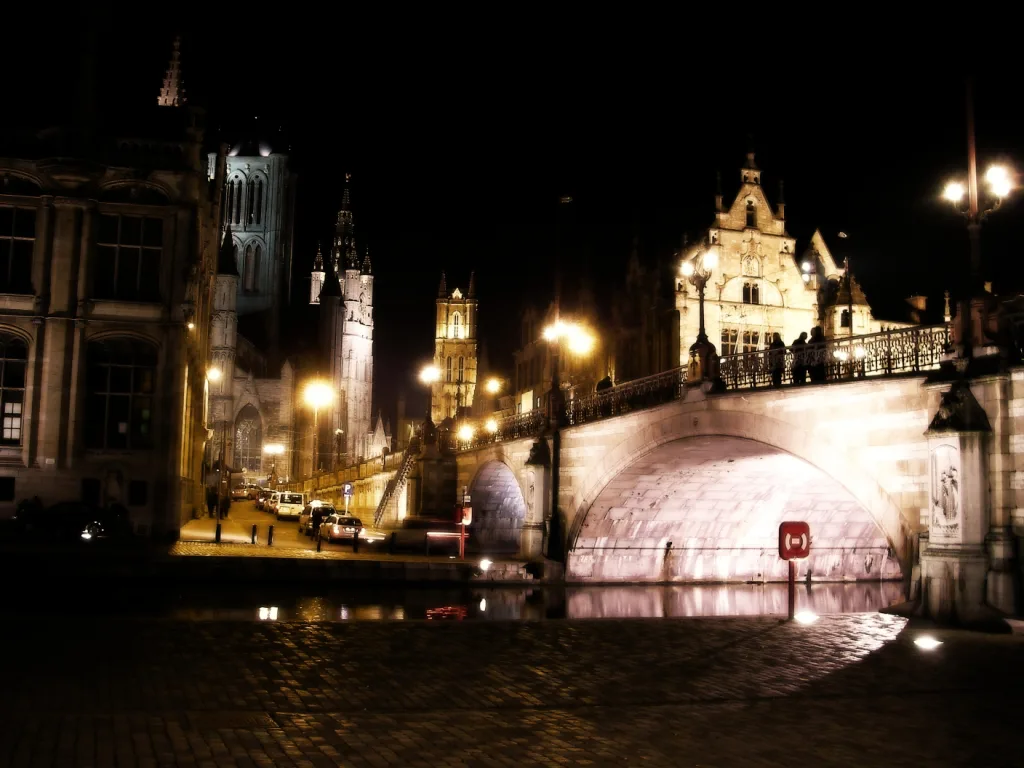
Late January and early February give Ghent the long dark evenings that make projected and lit artworks read clearly in the street, and that timing sets the whole character of the visit: you are outdoors, in a Belgian winter, at night. In 2024 the evening window ran from 19:00 to midnight across the festival days, as a local venue's listing recorded at the time.
The city's own record of 2024 notes a last day that started earlier, at 18:00 on the Sunday. Treat any such timing as part of a specific edition's plan rather than a fixed rule, and expect to spend the evening standing and walking rather than sitting indoors.
The route through the city centre and how long it takes
The festival is built as a route through the centre, so your evening is a continuous walk with stops at each work rather than a single site. The artworks sit among the squares, streets and waterside quays of the old town, which means the walk doubles as a night-time tour of the city's core.
Plan for a couple of hours at least if you stop at most pieces, and longer on a busy night when the crowd slows you down. Because you are moving between locations rather than staying in one place, wear footwear you would choose for a normal city walk and keep your hands free.
Check the route map that Ghent publishes with any edition before you set out, and use it to fix a start and finish point near your evening plans. A route that begins near the centre lets you walk back through lit streets at the end rather than hunting for transport in a crowd.
How busy it gets and how to pace the evening
Crowds are the practical trade-off. The city counted 600,000 visitors across the five days of the 2024 edition, which is a large number for the compact centre and a good reason to expect slow moving at popular points.
If you dislike shuffling along with a crowd, go early in the evening window on a weekday rather than at the weekend or on the final night. Walking the route in the opposite direction to the main flow, where the layout allows it, gives you more breathing room at each piece.
Pace yourself by treating the walk as the main event of the evening rather than a quick prelude. A warm drink and a sit-down midway breaks the cold and keeps the second half enjoyable, and it is easier to find a table early than at peak hours.
Seeing Ghent's landmarks lit up: the belfry, churches and canals
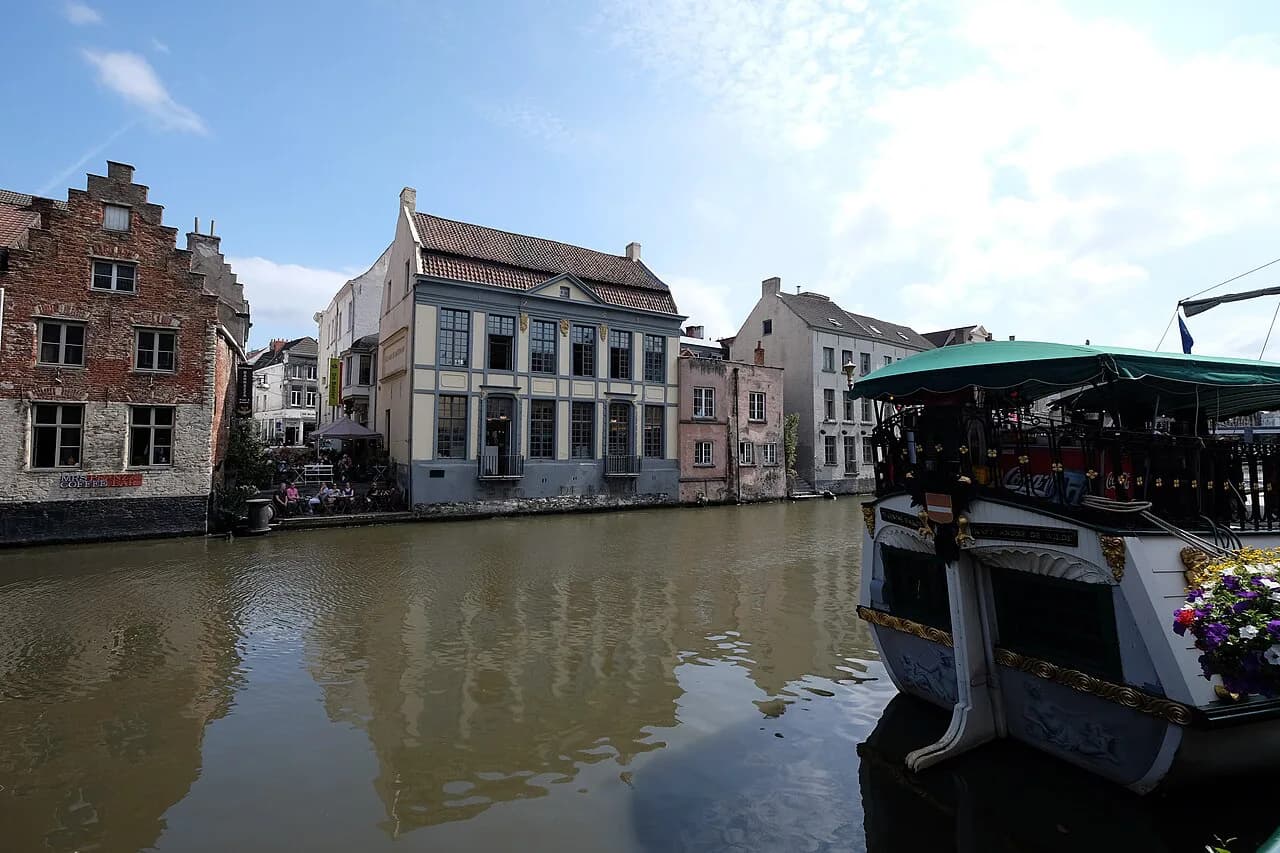
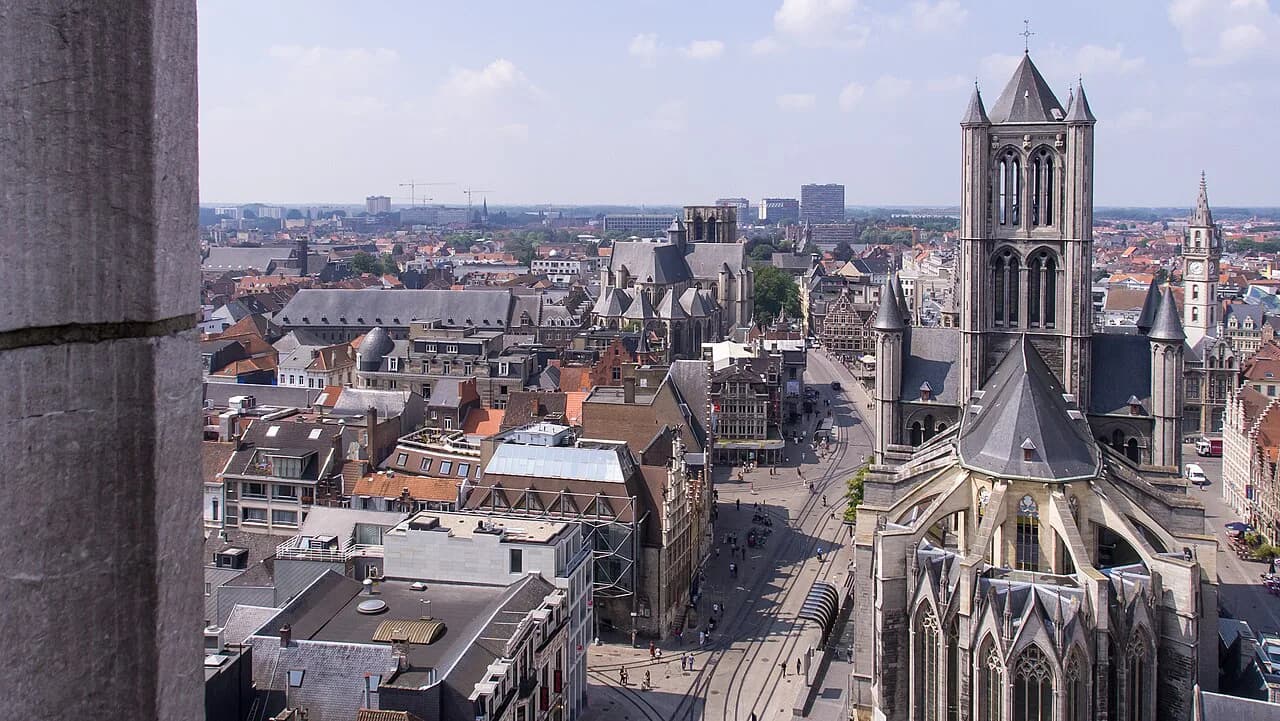
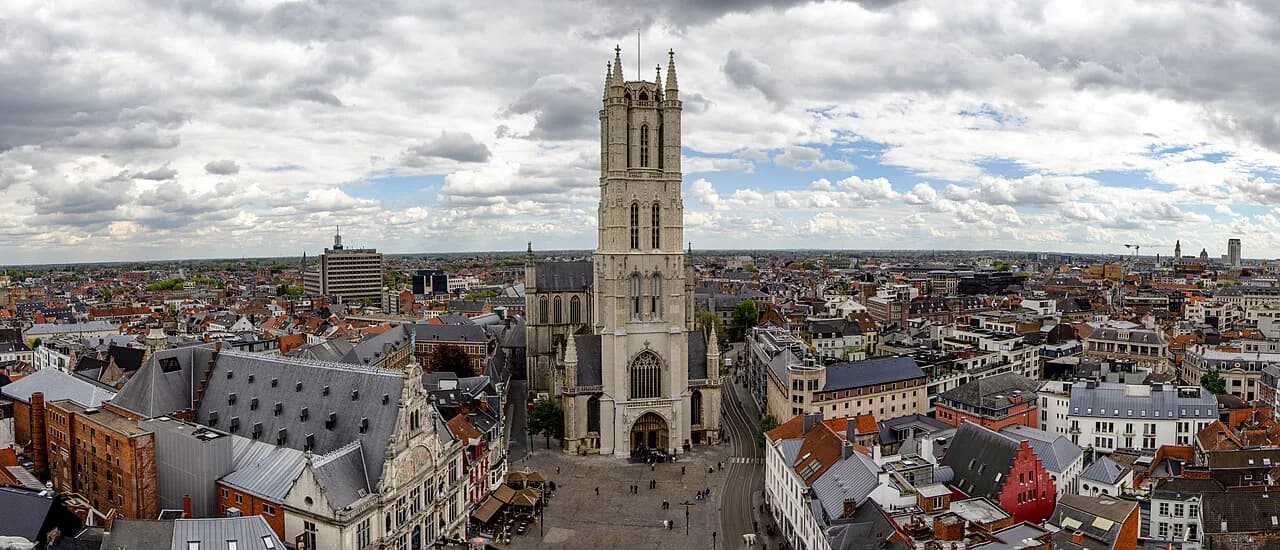
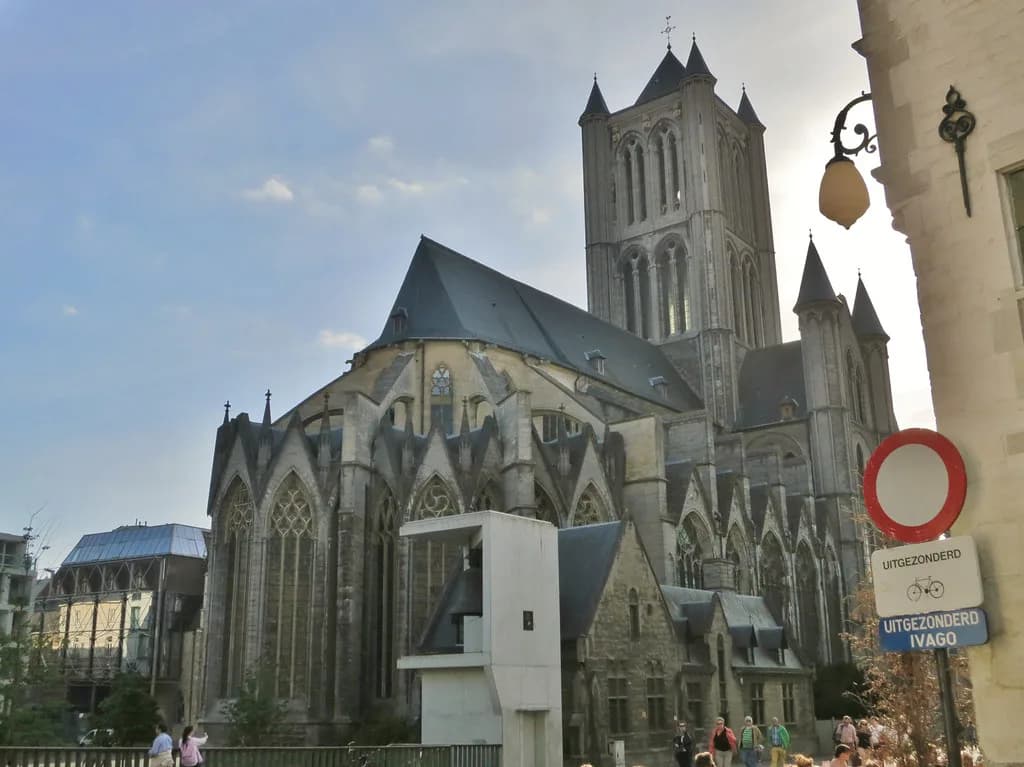
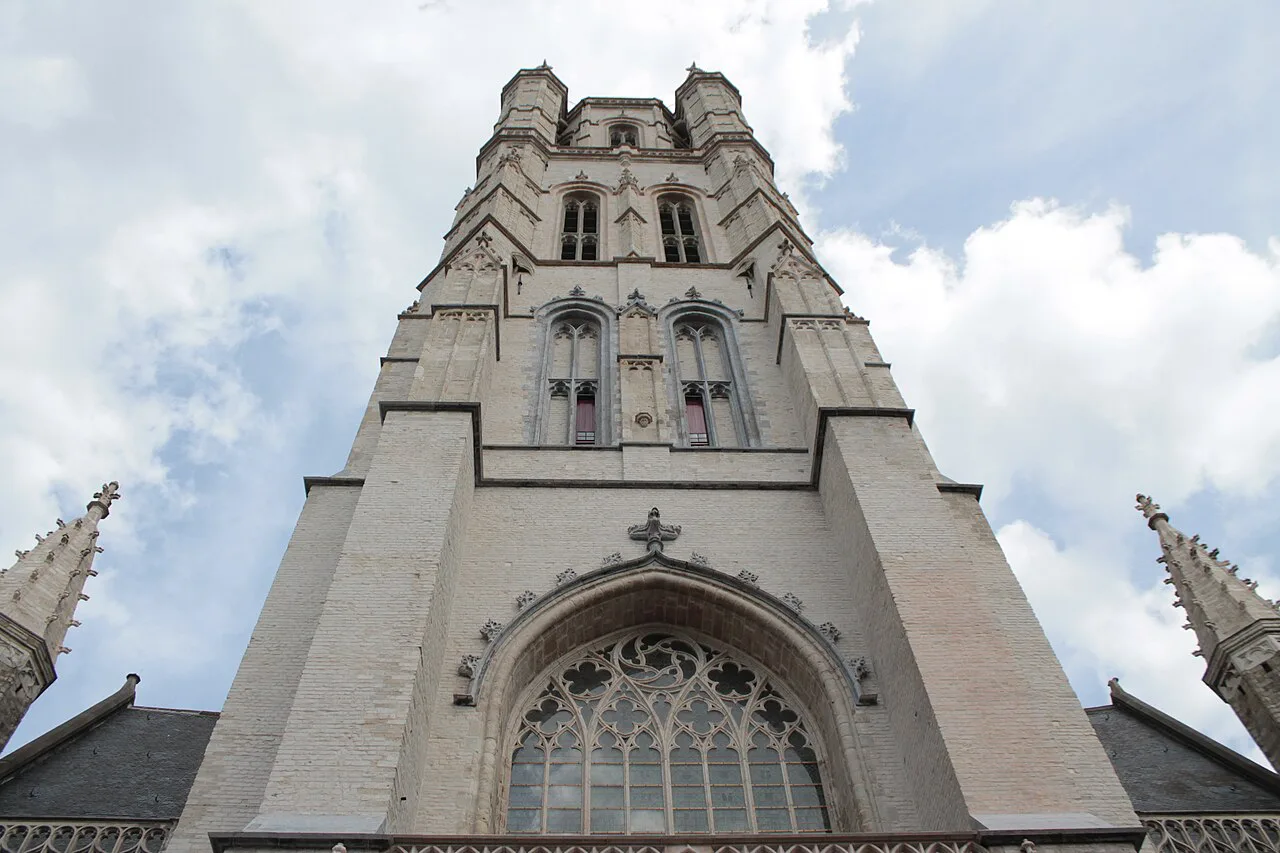
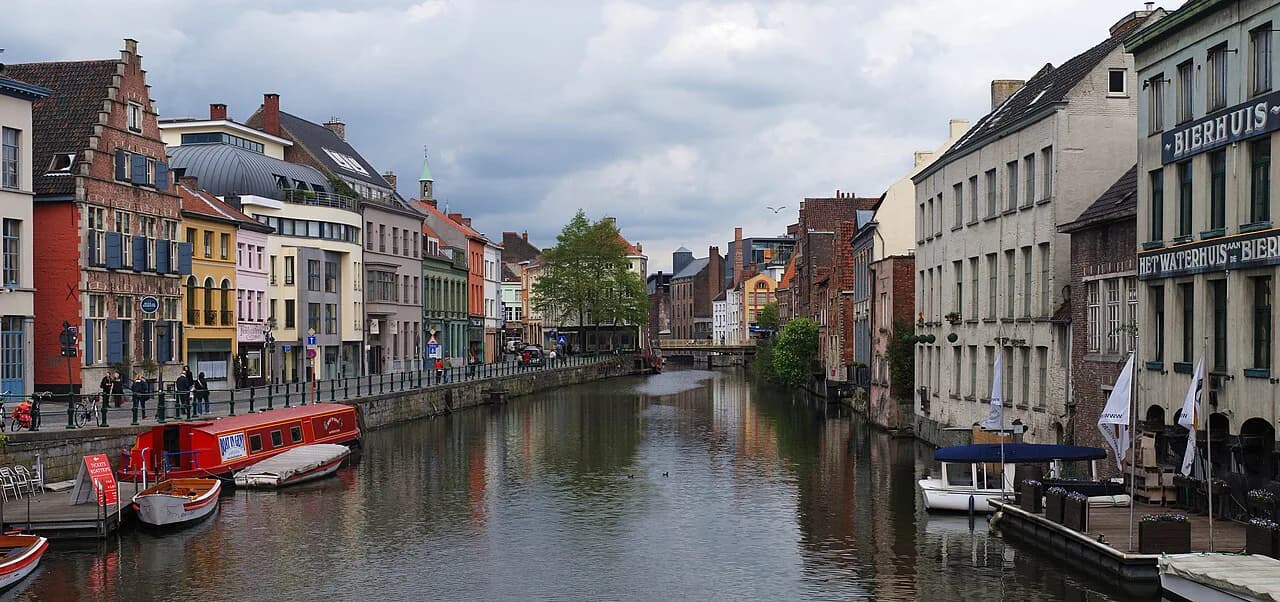
The festival's backdrop is the reason it works: the Belfry of Ghent (Belfort), the churches and the canal banks of Graslei and Korenlei carry the city's silhouette into the dark, and the artworks play against them. Ghent Old Town holds these landmarks within a short walk of one another, which is why the route feels like a tour rather than a trail.
For a night-time view over the centre, plan where you will be when darkness is full and choose a vantage point near the end of your walk. The castle and the bridges are natural pauses on the way, and a short detour to a higher point frames the whole route; the best views in Ghent are worth mapping before you go.
The waterside is the most atmospheric section for most visitors, and the reflections do much of the work. Seeing the same stretch of water in daylight on an earlier day makes the evening walk easier to follow.
The free five-kilometre Ghent light plan walk
Separate from the festival, Ghent has a light plan walk: a free five-kilometre route through the inner city, taking about two hours, showing what light does to a city. The city publishes it as an open self-guided walk, and it is not the festival route.
It is the better choice if you are in Ghent outside festival dates or want a lighter version of the same idea without crowds. Start it before dusk so you see the transition, and finish at one of the squares where you can eat or drink afterwards; a self-guided walking tour of the centre covers similar ground in daylight.
Where the festival fits into a one- to four-day Ghent break
On a short break, give the light festival one evening and keep the rest of the day for the centre. Ghent packs well into two or three days: a morning of churches and museums, an afternoon on the water or in the streets, then the light route after dark.
Plan the festival evening around what is open in the daytime rather than the reverse. If you want the city's headline painting, go early in the day, and use the evening purely for the walk, so a long queue or a busy route does not eat into the rest of your visit.
Days can be filled with beer and chocolate as easily as with art: a tasting at one of the local breweries or a stop at a chocolatier makes a good afternoon before an evening outside. Keep the evening simple so the walk stays the highlight.
What to wear on a cold evening on foot
This is a winter outdoor event, so dress for standing still in damp air as well as walking. Layers, a windproof outer layer and something warm on your head and hands matter more than style, and waterproof shoes beat anything with a smooth sole on wet cobbles.
Bring a phone with enough charge for a map and a torch, and carry cash or a card for a drink stop; budget on the day rather than from old posts. If you are joining the route with a group, agree a meeting point in case the crowd splits you up.
Cold hands make photos hard, so plan a few set pieces rather than shooting everything. The belfry and the canal banks are the obvious frames, and a moment spent warming up in a doorway often produces better pictures than a hurried snap.
Is the light festival worth an evening of your trip?
Yes, if you are in Ghent while an edition is running and want the city at its most theatrical without buying a ticket. It suits a first evening, when the walk gives you the shape of the centre, and it works as a second evening too if your days are already full.
Skip the busiest block if crowds wear you down, and take the permanent five-kilometre light plan walk instead on a quieter night. Either way, the point is the city after dark, so build the evening around the walk rather than around a single installation.
Explore more Ghent guides
Sources
Useful notes for your next trip
Optional updates to our guides.
You might also like
Continue reading
More guides you'll find useful