Best Views in Ghent: Belfry, Castle and Bridge Viewpoints
The best views in Ghent, from the Belfry and Gravensteen to Sint-Michielsbrug and the Graslei quays, with what each viewpoint shows and which to pick first.
On this page
The best view in Ghent is from Sint-Michielsbrug, where the Belfry, Sint-Niklaaskerk and Sint-Baafskathedraal line up above the Leie in a single frame. Come back at sunrise and the water holds the towers as a mirror while the quays are still empty. This guide ranks the city's viewpoints by what each one actually shows you, then puts them in walking order so you can link them without wasting steps.
Ghent is a low city, which is why its views work differently from Bruges. There is no single panorama that takes in everything; instead you get a tower view of rooftops and two river views of medieval facades. The old centre sits inside a ring road where traffic has been reorganised, so the practical way to move between viewpoints is on foot.
Why Ghent rewards looking up
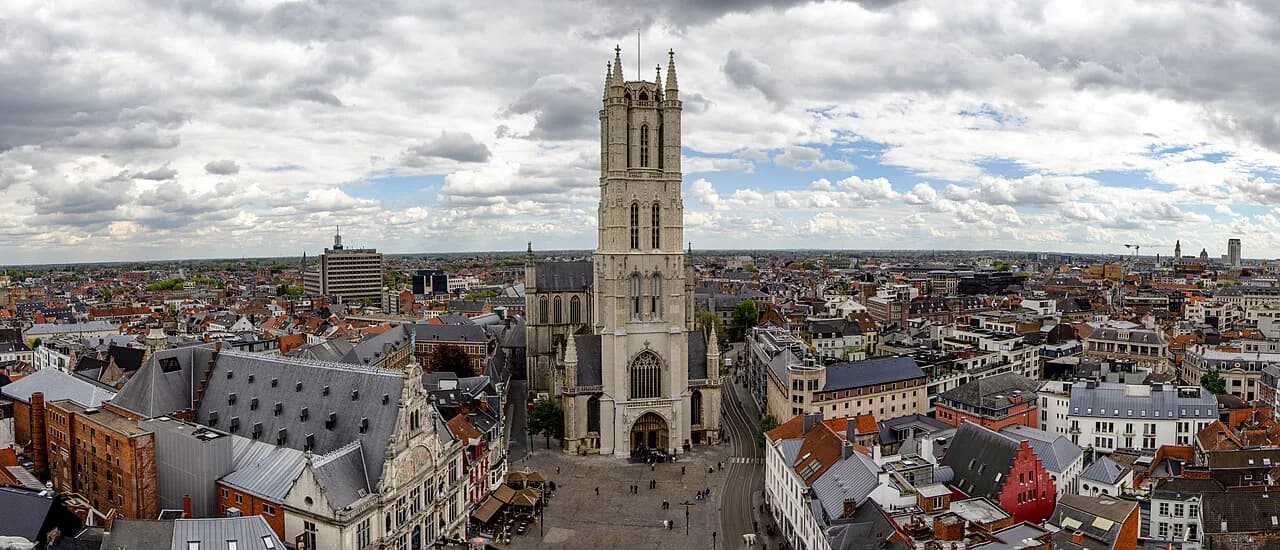
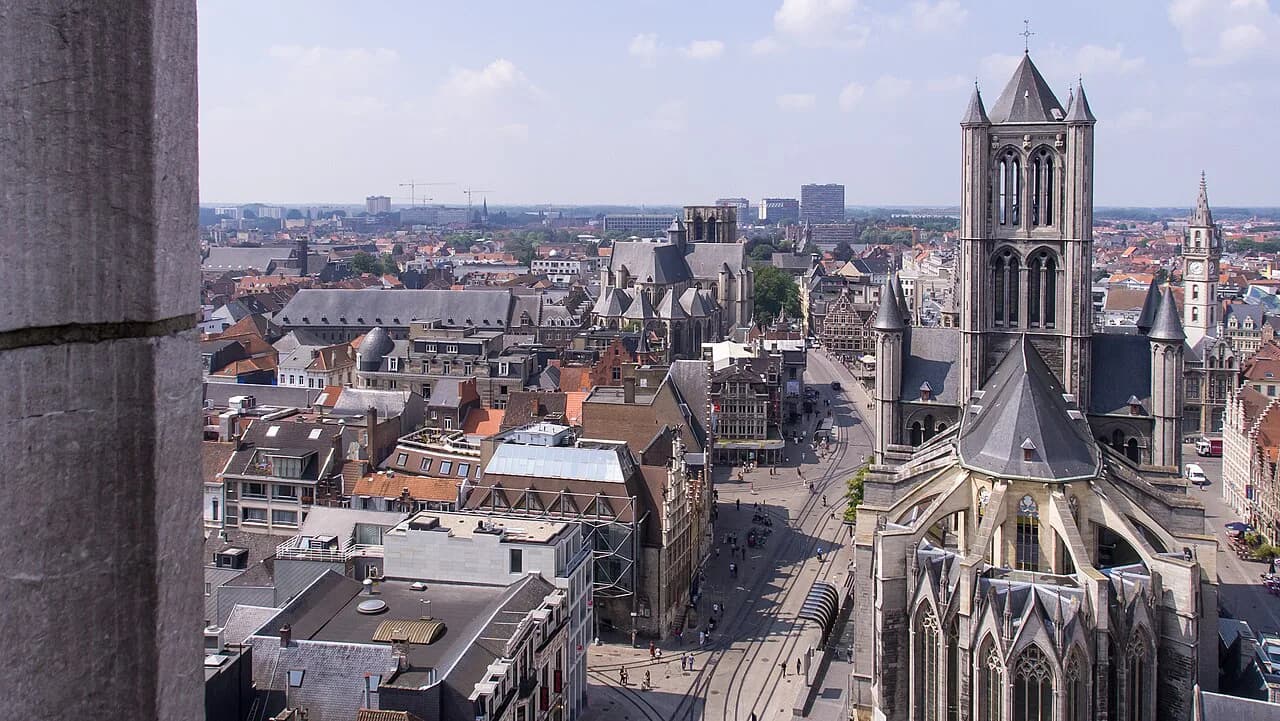
Three medieval towers stand within a few hundred metres of each other: the Belfry (Belfort), Sint-Niklaaskerk and Sint-Baafskathedraal. From street level they crowd each other, but from the opposite bank of the Leie or from a castle wall they separate into a skyline. That compression is what makes Ghent's views distinctive — you are never looking at a single monument, always at a cluster.
The city is also built around water. The Leie runs through the middle, the Graslei and Korenlei face each other across it, and the old harbour frontage is intact. A viewpoint here is as much about the reflection as the building, which is why time of day matters more in Ghent than the height you climb to.
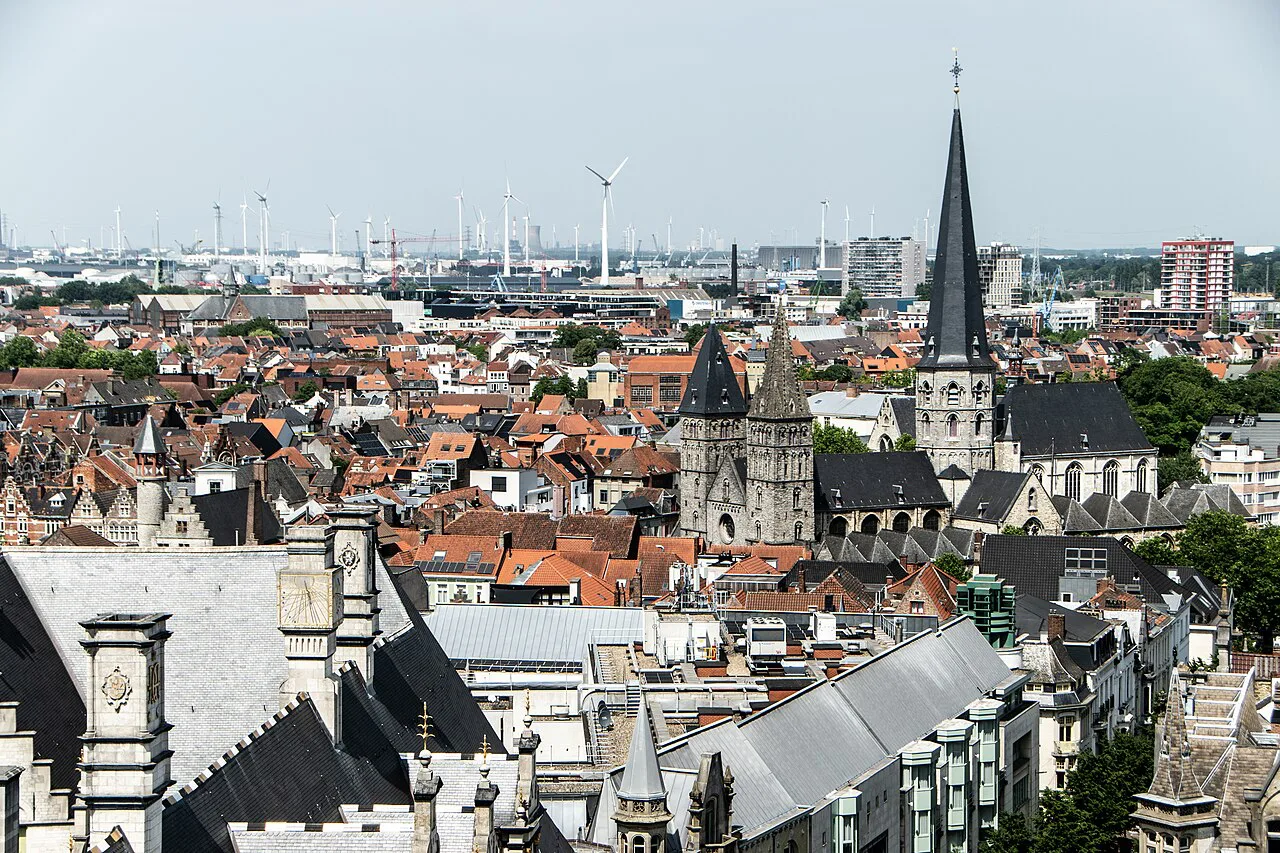
Ghent Belfry (Belfort): the highest climb in the centre
The Belfry is Ghent's landmark and forms part of the UNESCO World Heritage listing of belfries in Belgium and France. It features first on Visit Gent's list of the city's panoramic viewpoints, which places it among the best-known places to look out over the old centre.
Visit Gent lists the Belfry first among the city's panoramic viewpoints, alongside the Castle of the Counts, the Museum of Industry, De Krook, the Booktower and the UGent Armand Pien Public Observatory. That list is the spine of any tower-hopping day: each entry is a different height and a different angle on the same skyline.
The Belfry is a climb rather than an elevator ride, and it sits directly on the Markt, so it slots naturally into a morning before the square fills. Pair it with the square itself rather than treating it as a detour.
Gravensteen: the castle roof and the view back over the old town
Gravensteen is a moated castle standing in the middle of the old town. The castle itself appears on Visit Gent's list of panoramic viewpoints. Even without climbing, its walls and moat give a good sense of standing inside the medieval street plan, with the Kraanlei frontage close by.
Because the castle sits among the streets rather than above them, the view is intimate: chimneys, gables and the Kraanlei frontage rather than a wide panorama. Come here for texture and for the sense of standing inside the medieval city, and go to the Belfry for the wide shot.
Sint-Michielsbrug: the classic three-towers view
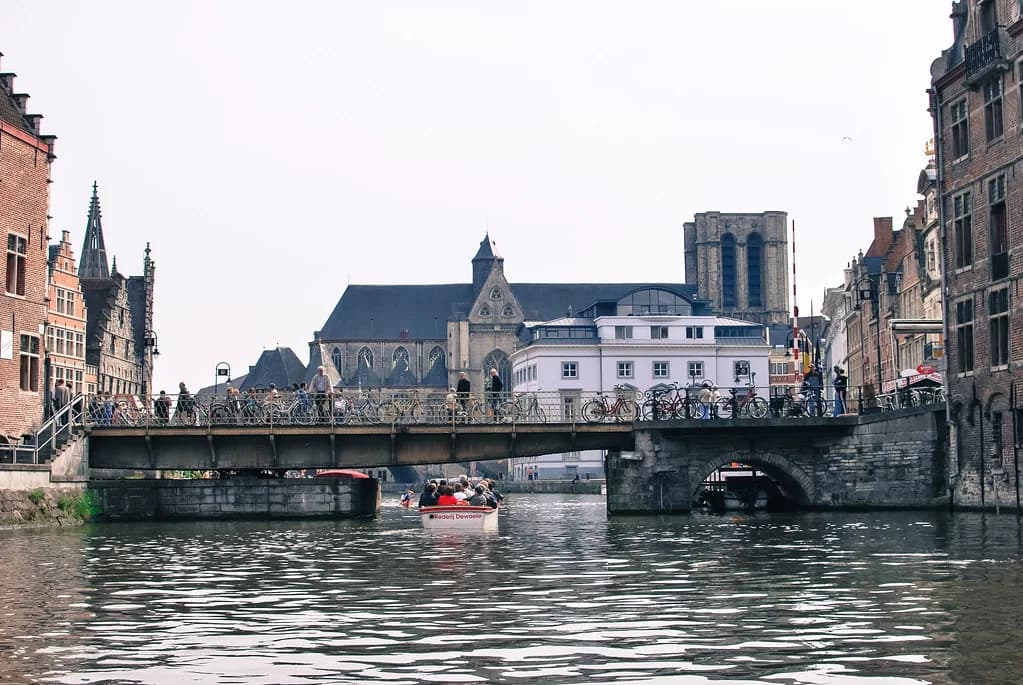
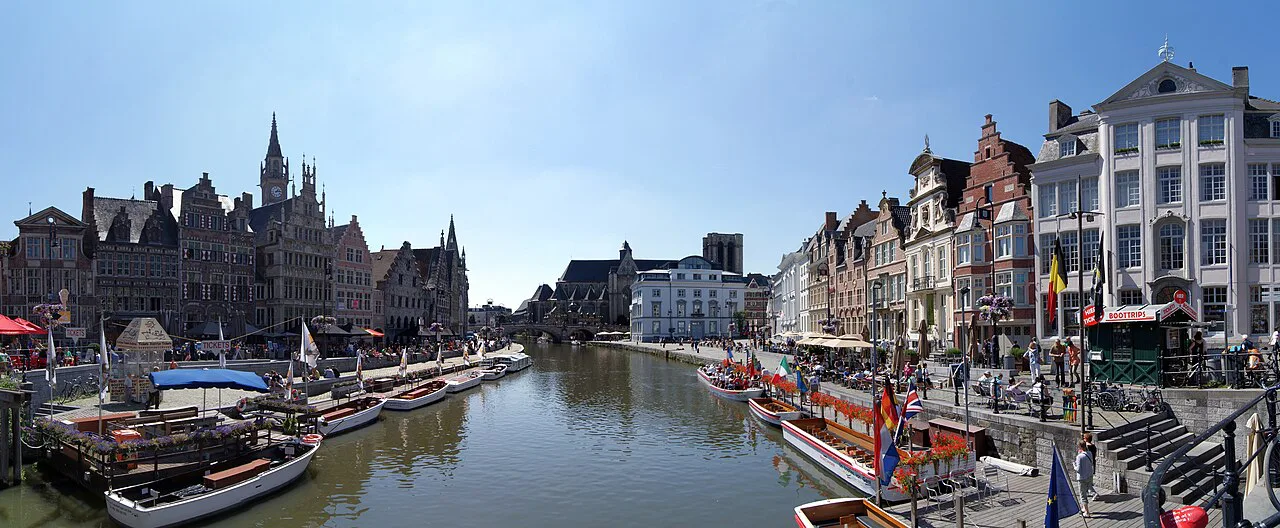
Sint-Michielsbrug is the postcard. From the bridge the three towers align above the Leie, the guild houses of the Graslei catch the light from the east, and the water doubles the whole composition. Photographers rate it the city's best sunrise location precisely because the canal is still and the bridge is quiet early in the day.
The bridge is also the most convenient viewpoint in Ghent: it is an open public crossing with no ticket, and a two-minute walk from the Markt. Treat it as the anchor of a walking route rather than a stop, since everything else in the centre radiates from it.
Late afternoon is the second window worth planning around. The stone guild houses along the Graslei hold warm light in a way that makes the bridge view genuinely different from the morning version, so a city-break itinerary can reasonably use the same spot twice in one day.
Graslei and Korenlei: the view along the water rather than over it
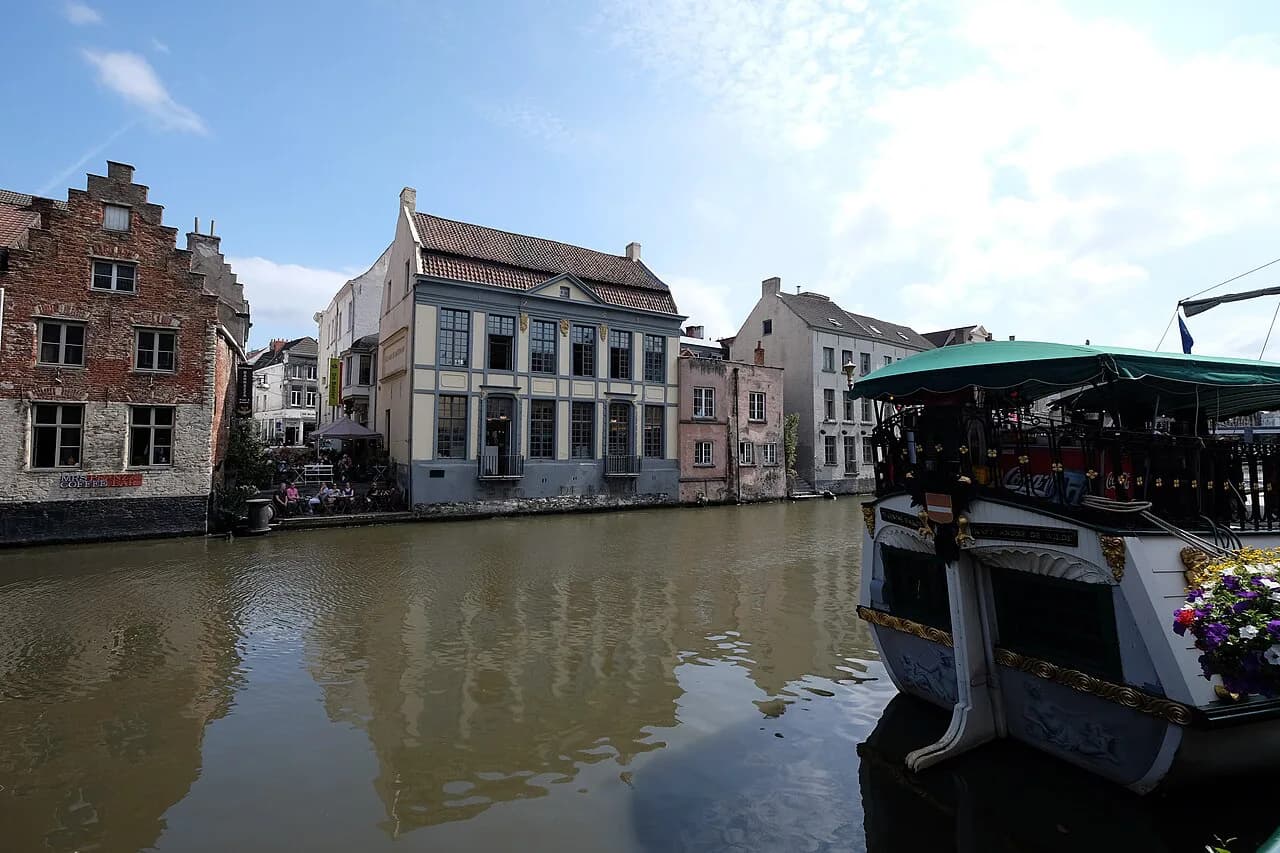
The Graslei and Korenlei are the two quays facing each other across the Leie, lined with medieval guild houses and warehouses. The view here is horizontal: you look along the water at stepped gables, not down from a height. Walking the length of both banks gives you the facades from every angle without climbing anything.
This is where a boat trip earns its place. Seeing the quays from the water puts the guild houses in the order they were built to be seen, and the low angle shows the river frontage as a continuous wall rather than a series of separate stops.
Other rooftops and towers worth knowing
Beyond the Belfry and the castle, Visit Gent lists the Museum of Industry, the De Krook library and the Booktower among Ghent's panoramic viewpoints. These are modern and civic rather than medieval, and each gives a different cross-section of the city. They suit a second visit or a longer stay more than a first afternoon.
The UGent Armand Pien Public Observatory is on the same list, which makes it the odd one out: an astronomical facility rather than a rooftop terrace. Check its own programme before building a day around it, since public access follows its own arrangements rather than the city's.
Which view to choose if you only have time for one
Take Sint-Michielsbrug. It costs nothing, needs no planning, takes five minutes, and delivers the image most travellers came to Ghent for. If you have more time, add the Belfry for the rooftop version of the same skyline, and Gravensteen for a closer look at the medieval street plan.
Skip the tower climb if the weather is closed in. A grey day flattens the rooftop view but leaves the bridge and quays largely intact, because the reflection and the facades do the work. Save the Belfry for a clear morning and spend the dull hours in the museums instead.
How the viewpoints fit into a one-day and a two-day visit
On a one-day visit, walk it in this order: Sint-Michielsbrug first, then along the Graslei and Korenlei, then up to Gravensteen, finishing on the Markt under the Belfry. Everything sits within the old centre, so the whole circuit is a gentle half-day on foot with stops. That leaves the afternoon free for Sint-Baafskathedraal and the Ghent Altarpiece.
With two days, climb the Belfry on the morning of day one and keep the bridge for sunrise on day two, when you already know the route and can be there before the light changes. Use the second afternoon for one of the modern viewpoints on the Visit Gent list, which sit outside the medieval core.
Sunrise, daytime or evening: matching each viewpoint to the light
Sunrise belongs to Sint-Michielsbrug, where the canal acts as a mirror and the east light turns the guild houses gold. Spring and autumn are the sweet spots: mild weather, thinner crowds and low sun at a civilised hour.
Midday suits the Belfry and Gravensteen, when hard light picks out roof tiles and stonework and the long views stay clear. Late afternoon returns to the Graslei, where the quays hold warm light along their length. Evening is for the quayside walk rather than a climb, since the towers close long before the sky does.
Getting between the viewpoints on foot
Every viewpoint in this guide sits inside the ring road, and the centre's circulation plan has pushed through-traffic out, so walking is the default way to link them. Sint-Michielsbrug to the Graslei is a couple of minutes; the Graslei to Gravensteen is a short walk north through the streets. Allow a comfortable half-day for the full circuit with stops.
Arrive by train and the centre is a straightforward walk from the station, but the climb up the Belfry is the only real exertion of the day. Wear shoes you can take up a narrow spiral staircase and leave the heavy bag behind.
Practical limits at Ghent's sights
Two of the viewpoints here are ticketed attractions with their own access arrangements: the Belfry and Gravensteen. Build the bridge and quays into the plan regardless, since they need no ticket and are open as public spaces.
The bridge, the Graslei and the Korenlei can be enjoyed as public thoroughfares, which is why they work as the fixed points of any viewpoint day. If a tower is full or closed when you arrive, the classic three-towers view is still there waiting.
Which Ghent viewpoint should you climb?
Climb the Belfry if you want the city laid out below you, and walk Gravensteen's walls if you want to feel the medieval streets around you. Both are worth an hour; neither replaces Sint-Michielsbrug, which gives you the view Ghent is known for without a ticket or a staircase.
Build the day around light rather than height: bridge at sunrise, tower at midday, quays in the late afternoon. That order uses the city's layout instead of fighting it, and it leaves room for the Ghent Altarpiece and a beer in between.
Explore more Ghent guides
Frequently Asked Questions
What is the most beautiful view in Ghent?
Sint-Michielsbrug, where the Belfry, Sint-Niklaaskerk and Sint-Baafskathedraal stand above the Leie and the water reflects them. It is the composition most travellers associate with the city, and it needs no ticket.
Is the Ghent Belfry climb worth it?
If you want to see the medieval centre from above and the three towers close up, the Belfry is the obvious choice: Visit Gent lists it first among the city's panoramic viewpoints. It is a climb rather than a lift ride, and the view depends on clear weather.
Is Ghent nicer than Bruges?
They offer different things. Bruges is more polished and immediately picturesque; Ghent is a working university city with graffiti around the corner from Gothic churches and a livelier everyday feel around the same medieval core. Many travellers do both, as they are close together.
How long do the Ghent viewpoints take?
The bridge, the Graslei and the Korenlei together take under an hour on foot. Allow extra time for the Belfry and Gravensteen, plus the walk between them, so a half-day covers the main views without rushing.
Sources
Useful notes for your next trip
Optional updates to our guides.
You might also like
Continue reading
More guides you'll find useful