Ghent Old Town: What to See in the Historic Centre
Walk Ghent's old town on one loop: the three towers, the Ghent Altarpiece, St Michael's Bridge, the Graslei and Korenlei quays, Gravensteen and Patershol.
On this page
Ghent's old town is compact enough to walk in a day, and the historic heart holds the three towers, the Ghent Altarpiece, the quays and Gravensteen within easy reach of each other. The route below starts on the Korenmarkt and works through the monuments to St Michael's Bridge, then follows the river to the castle and the Patershol lanes. It is a walking order, not a checklist. For a wider set of stops, see Things to Do in Ghent.
The pedestrian shopping streets and monuments around the Korenmarkt form the historic heart of Ghent, and the old town reads as a loose triangle of towers, bridges and quays along the Leie. A single loop keeps you from doubling back. If you only have a few hours, St Bavo's Cathedral and St Michael's Bridge give the best return for the time.
What the old town covers and how it fits together
Ghent's centre sits at the rivers of the Scheldt and Leie, and the old town spreads out from the Korenmarkt. The monuments cluster tightly: the three towers stand within a few minutes of each other, the Graslei and Korenlei quays are the historic waterfront, and Gravensteen stands a short walk away.
Treat the centre as three connected zones rather than a single square. The tower zone around the Korenmarkt and the Emile Braunplein holds the Belfry, St Nicholas's Church and St Bavo's Cathedral; the quay zone along the Graslei and Korenlei gives the classic waterfront view; and the castle zone around Gravensteen sits beside the Patershol lanes. Walking between the far ends takes well under half an hour, so the whole old town is a single morning's walk.
Getting your bearings on the ground is easier than on a map, because the three towers act as a compass from almost anywhere in the centre. Look up, find the towers, and you know which way the Korenmarkt lies.
Start at the Korenmarkt and the three towers
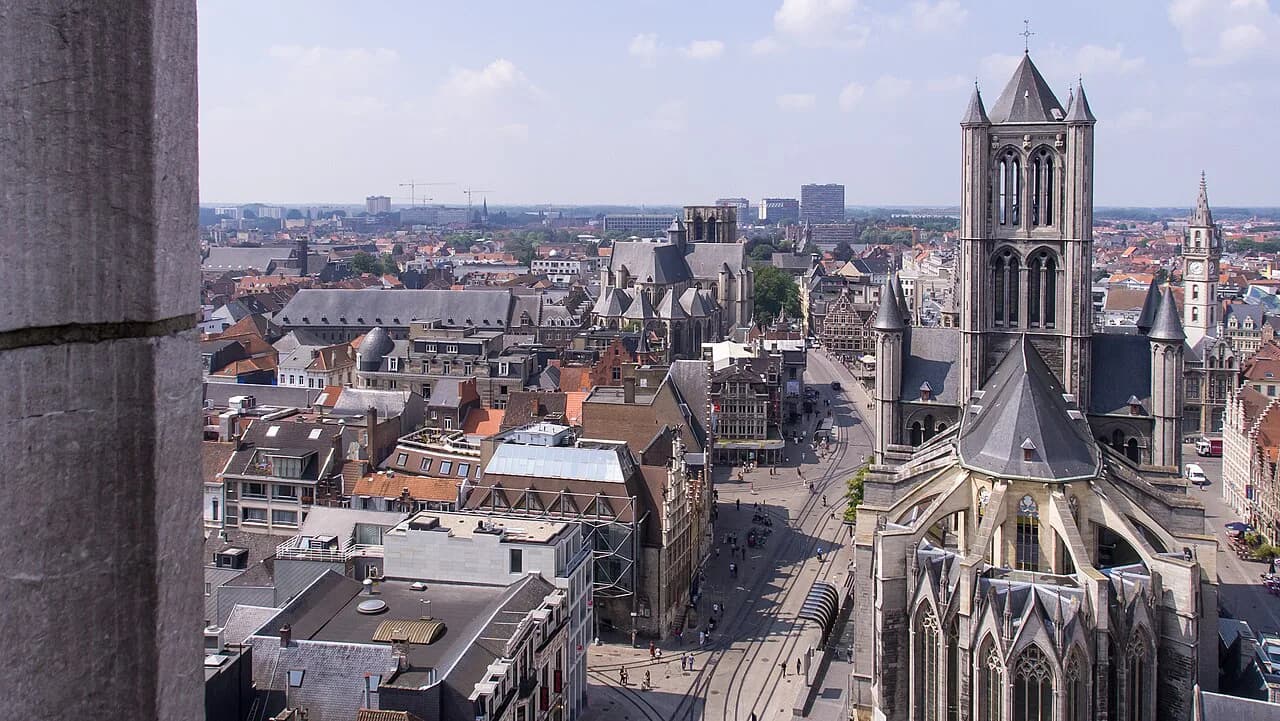
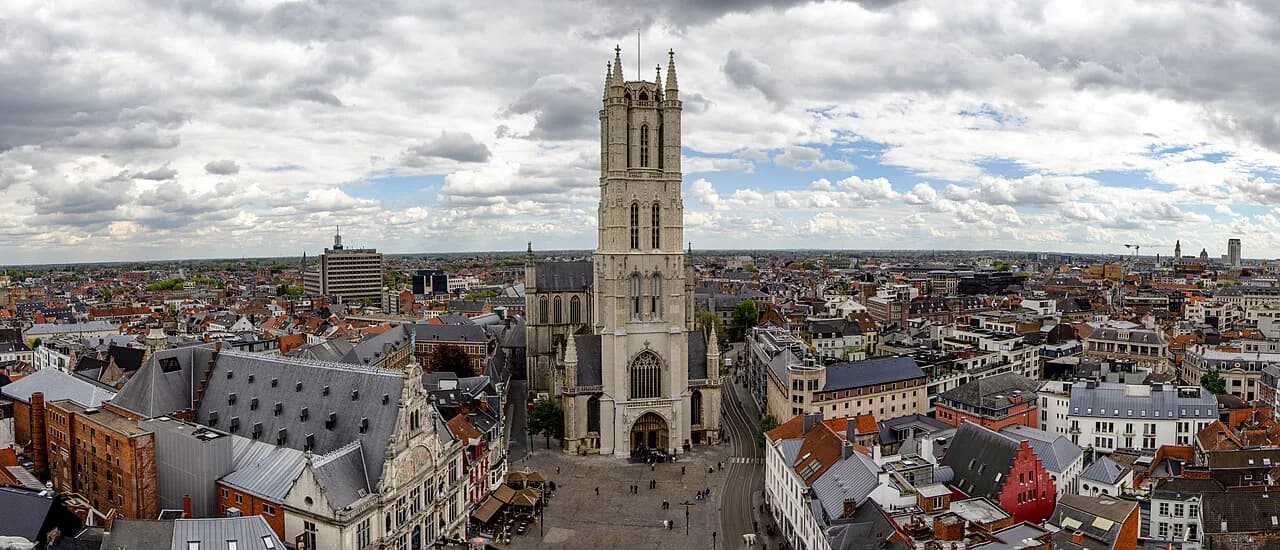
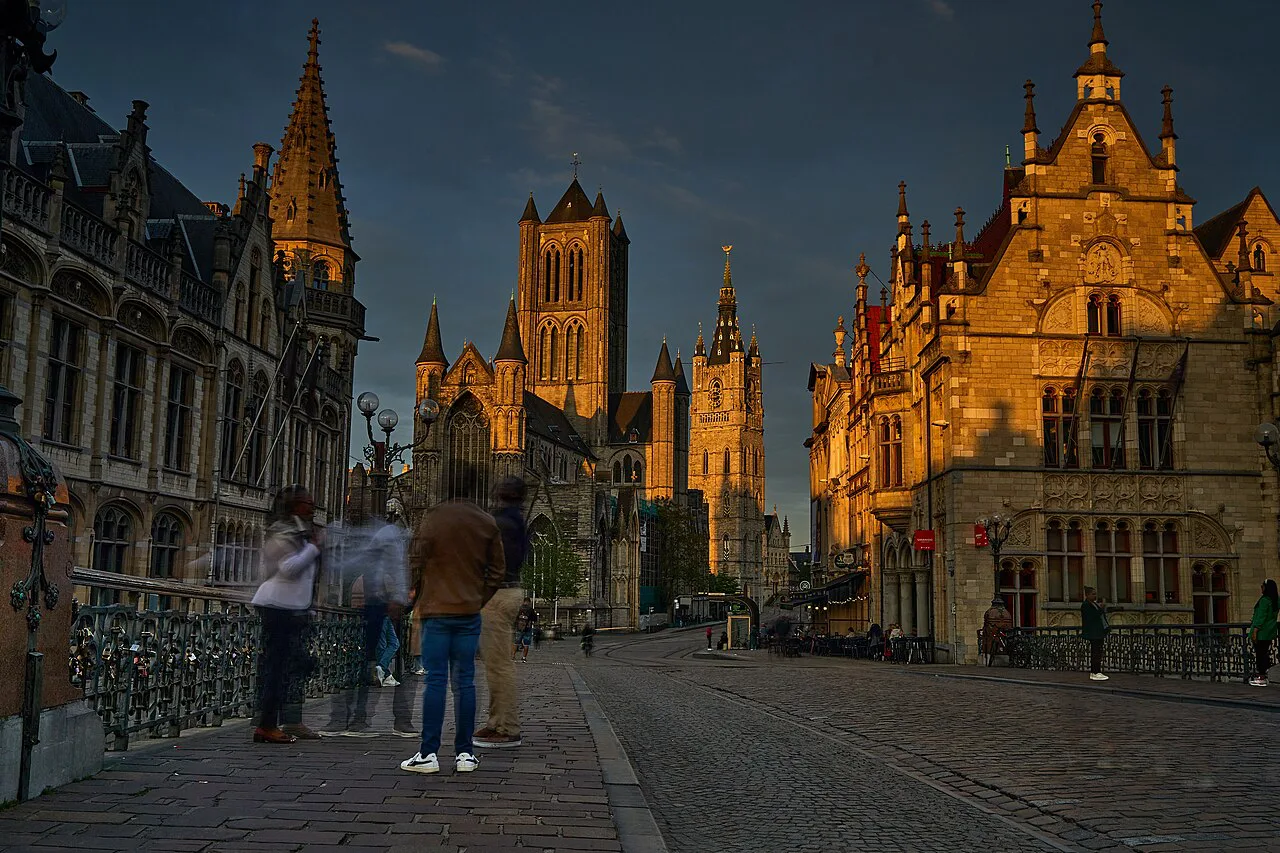
Begin on the Korenmarkt, the historic square of old buildings, cafés and shops that anchors the pedestrian core of the centre. The Saint Nicholas Church, the Belfry and Saint Bavo's Cathedral stand close together and are known as the three towers of Ghent, the trio that defines the skyline.
Give the square ten minutes, then walk the short distance to the Belfry and the cathedral on the same side of the centre. Keep the tower visits for the cooler part of the morning, because the Belfry climb uses the same legs you will want later at Gravensteen.
Sint-Baafskathedraal and the Ghent Altarpiece
St Bavo's Cathedral (Sint-Baafskathedraal) is the home of Jan van Eyck's Ghent Altarpiece, completed in 1432 and given a place in the cathedral on completion. It is still there nearly six centuries later — or, more accurately, there again, since the altarpiece has the most turbulent theft history of any artwork. A meticulous restoration has brought back its colours, and the cathedral's visitor centre tells the story behind it.
Build in time to sit with the altarpiece rather than photographing and moving on: the restored colours are the draw for anyone who knows the work only from reproductions.
If you prefer a guided route that handles the order for you, a Ghent Walking Tour can cover the cathedral and the surrounding lanes in one go.
Climbing the Belfry for the skyline view
The Belfry (Belfort) has symbolised the city's prosperity and independence since the Middle Ages, and its spiral staircases lead to a wide view over the centre. The climb is worth it for the perspective on the towers you have just visited, but it costs time and energy, so take it early and skip it if the castle is your priority.
The square itself and the surrounding streets give good upward views of the Belfry without the stairs. Save the climb for a clear morning, since the point of it is the skyline.
Sint-Niklaaskerk and the walk to St Michael's Bridge
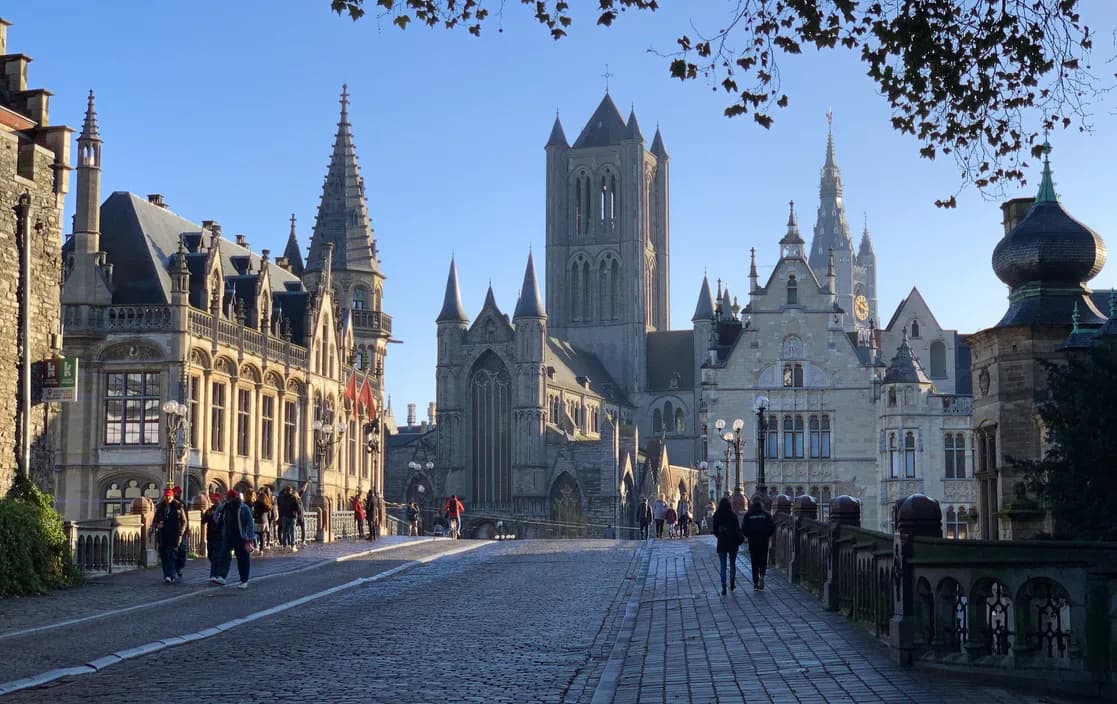
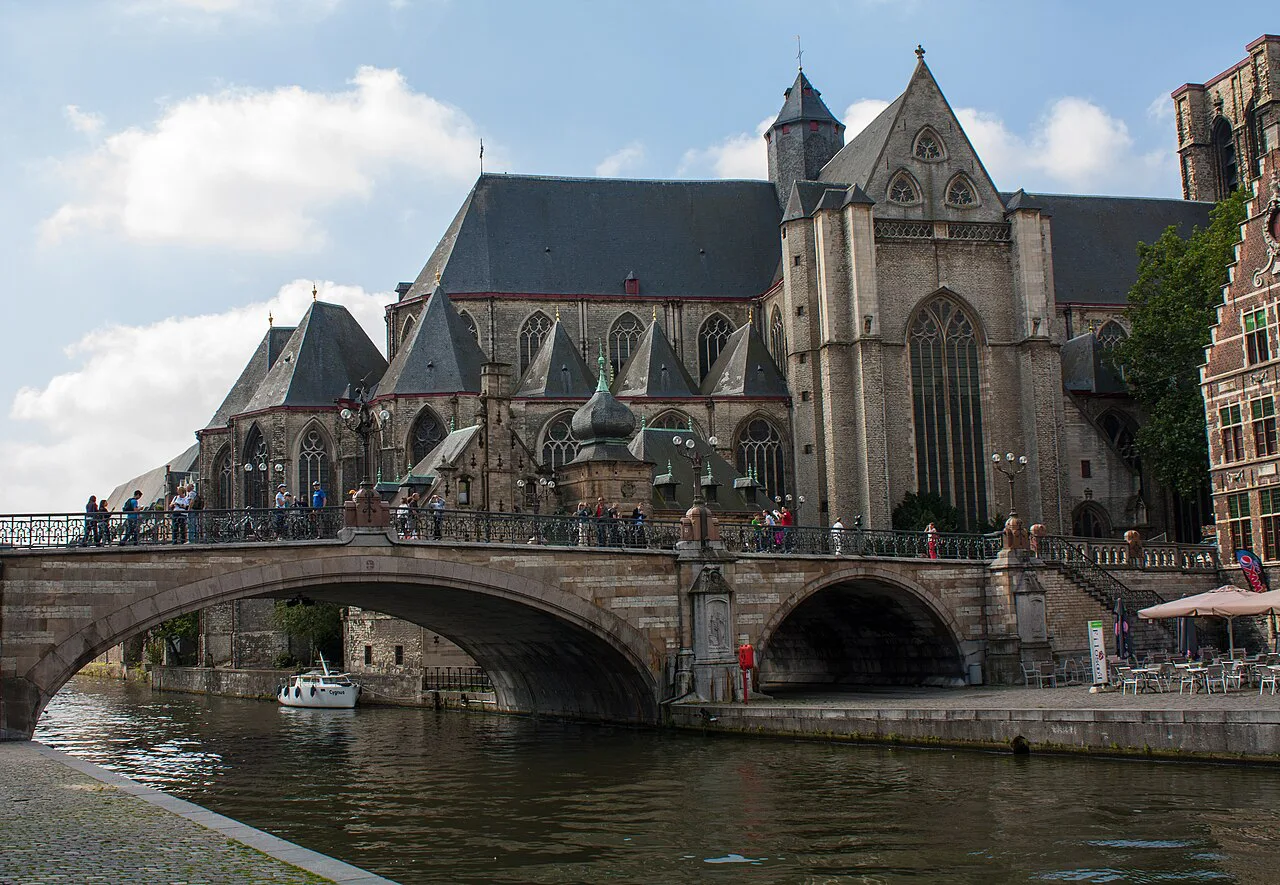
St Nicholas's Church (Sint-Niklaaskerk) completes the trio beside the Belfry, and the City Pavilion stands nearby as a modern open structure set against the spires. From here, walk south-west through the lanes towards the Leie and St Michael's Bridge, which gives the classic view down the river to the quays.
The bridge view is the classic one, looking down the Leie to the quays. From the bridge, the Graslei and Korenlei are a couple of minutes downstream, which is why the route crosses here rather than at the next bridge along.
The Graslei and Korenlei quays
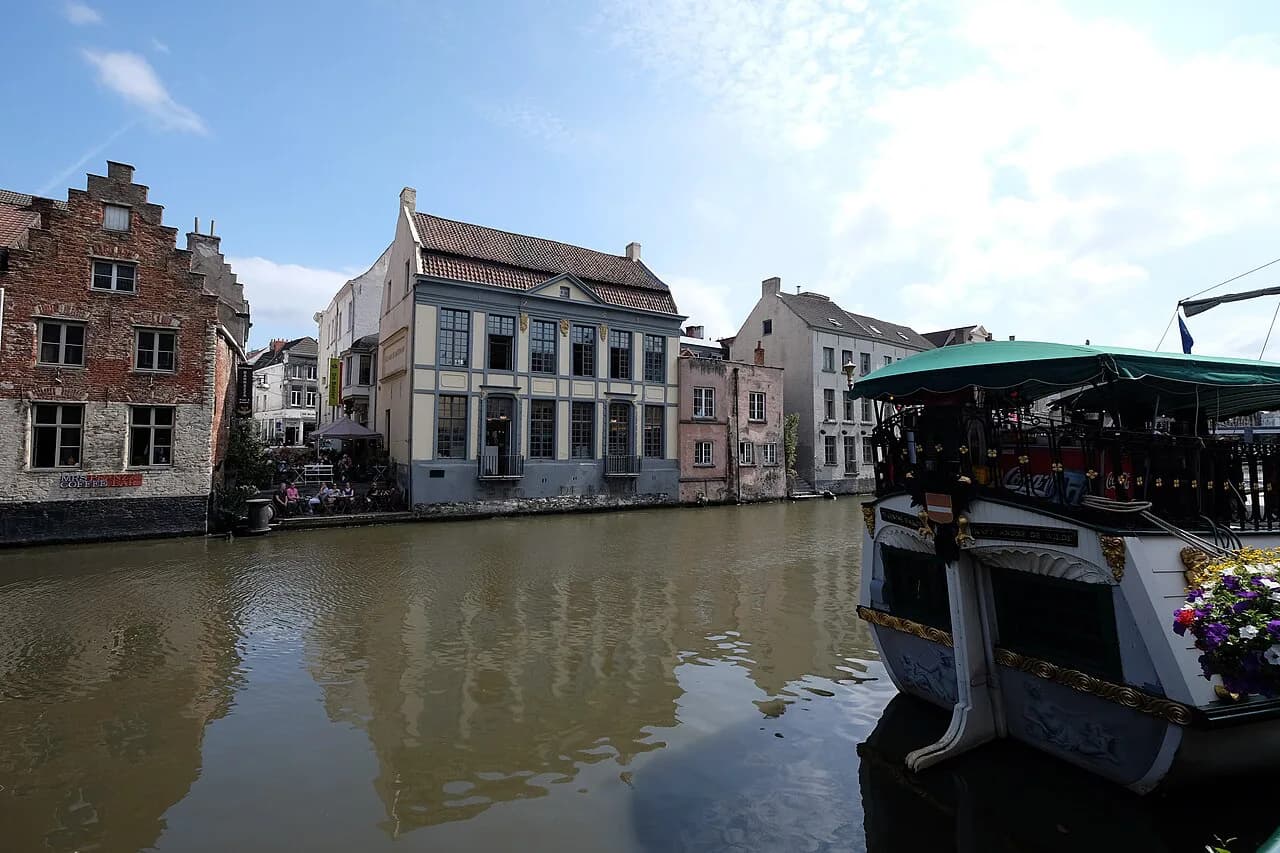
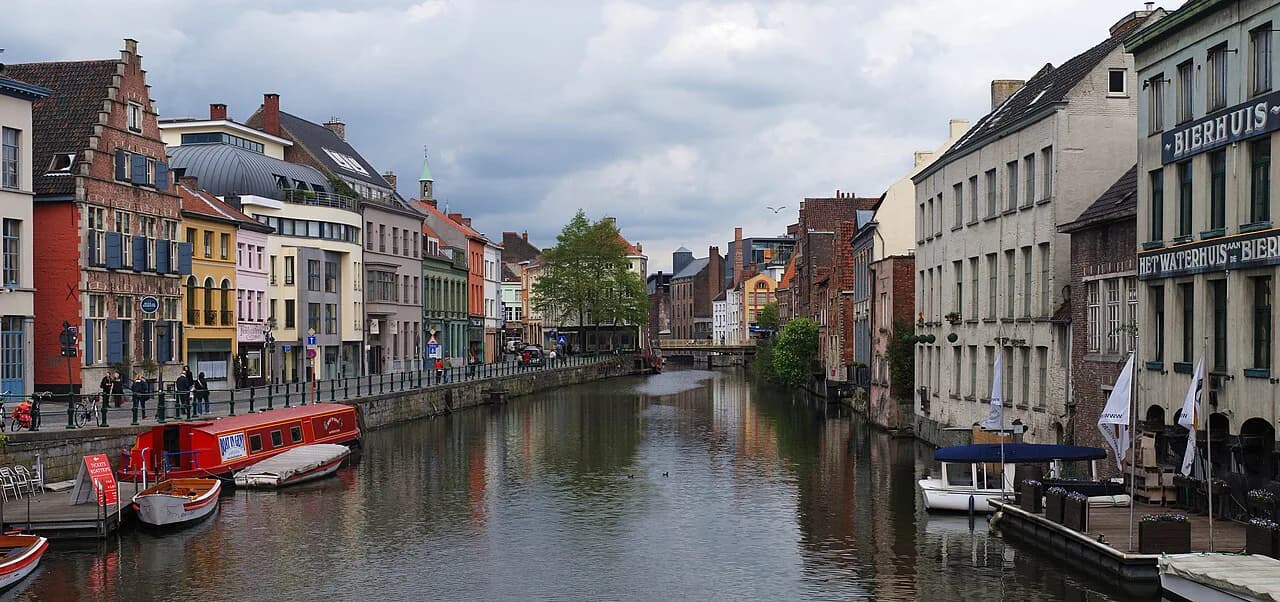
The Graslei and Korenlei are the twin quays on either side of the Leie, lined with old guildhalls that now hold cafés and terraces. Walking one bank and crossing back on a bridge gives you the best of the waterfront in twenty minutes, and the quays lead naturally towards Gravensteen.
If you want the water at eye level, boat tours run from the quays and cover the canals. That is a fair trade against walking time if you still have the castle and Patershol ahead of you.
Gravensteen, the Castle of the Counts
Gravensteen, the Castle of the Counts, was modelled by Count Philip of Alsace on fortresses he had seen on crusade, and it later served as a court and then a prison. Inside you see knights' armour, weapons and a torture chamber, and the battlements give a view back over the city.
Be honest with yourself about the interior: it suits anyone drawn to armour and prison history more than those hoping for furnished rooms. The walls and the view are the reward either way.
Patershol: cobbled lanes behind the castle
Patershol sits behind Gravensteen, an old working-class neighbourhood of winding alleys and cobbled streets with a slightly bohemian atmosphere. It is the natural place to wander after the castle, when the main sights are behind you and you have the afternoon's energy for streets rather than stairs.
The lanes loop back towards the centre in fifteen to twenty minutes, so you can end the walk at the castle without retracing the whole route. If you have time spare, the surrounding streets are the quietest part of the loop.
Cuberdons and the Werregarenstraatje graffiti alley
Around the Korenmarkt, cuberdon sellers work from distinctive carts, selling cone-shaped purple sweets that are a local Ghent delicacy. They make an easy stop between the big sights, and worth buying before you start the cathedral queue rather than after.
A few minutes away, the Werregarenstraatje is known as the graffiti alley, where young street artists are free to display their work. It takes only a few minutes, which makes it easy to fit between the cathedral and the bridge.
How long the old town needs and a walking order for one day
One full day covers the old town comfortably, and two days let you add the museums and a slower pace. The walking order that avoids doubling back is Korenmarkt and the three towers first, St Michael's Bridge and the quays second, Gravensteen and Patershol third, and the city centre streets last.
If the day runs short, drop the Belfry climb first and keep the Ghent Altarpiece and St Michael's Bridge, because those two carry the most of Ghent's character for the least time.
Where the old town sits relative to the rest of Ghent
The old town is the core of Ghent, and the city around it fills with students, museums and newer quarters that are a short walk or tram ride away. Heavy pedestrianisation around the Korenmarkt makes it a natural place to shop and to walk without traffic.
For a change of scene, the parks lie just outside the historic core, and the cycling routes along the water make an easy extension of the walk.
Which order to walk the old town
Walk the old town on a single loop in one day: Korenmarkt and the three towers, then St Michael's Bridge and the quays, then Gravensteen and Patershol. That order connects the highlights without retracing, and lets you drop the Belfry climb if time or energy runs short.
Keep the Ghent Altarpiece and the bridge view as your priorities, and treat the cuberdons and the graffiti alley as free stops between them.
Explore more Ghent guides
Sources
Useful notes for your next trip
Optional updates to our guides.
You might also like
Continue reading
More guides you'll find useful