Things to Do in Ypres: Menin Gate, Cloth Hall and the Salient
Plan a short break in Ypres with the Cloth Hall and In Flanders Fields Museum, St Martin's Cathedral, the Menin Gate and the WWI memorials of the salient.
On this page
Two days is the right allowance for Ypres (Ieper): one for the compact rebuilt centre and its WWI museum, one for the memorials and cemeteries spread across the surrounding battlefields. The town itself is small enough to cross on foot in minutes, but the salient beyond it needs wheels or an organised tour.
This guide separates the two: the Cloth Hall (Lakenhalle), St Martin's Cathedral and the Menin Gate (Menenpoort) in town, then Ypres Reservoir Cemetery, Memorial Museum Passchendaele and Tyne Cot Cemetery out in the salient. It also covers Bellewaerde Park for a break from war history, and how the centre's streets fit together.
What to see in Ypres in one, two or three days
One day gives you the Cloth Hall and In Flanders Fields Museum, a walk through the rebuilt streets, St Martin's Cathedral, and the Menin Gate in the evening. That is a full day if you give the museum two hours rather than skimming it.
Two days add the salient: Ypres Reservoir Cemetery on the edge of town, Memorial Museum Passchendaele at Zonnebeke and Tyne Cot Cemetery. Distances between these sites are too great to walk comfortably, so plan on a car, a taxi or an organised battlefield tour.
Three days let you slow down: a second museum visit, more time at Tyne Cot, or a half-day at Bellewaerde Park. It also gives room for the town's beer and chocolate stops without squeezing them into a packed afternoon.
The old centre: the Cloth Hall (Lakenhalle) and the rebuilt town
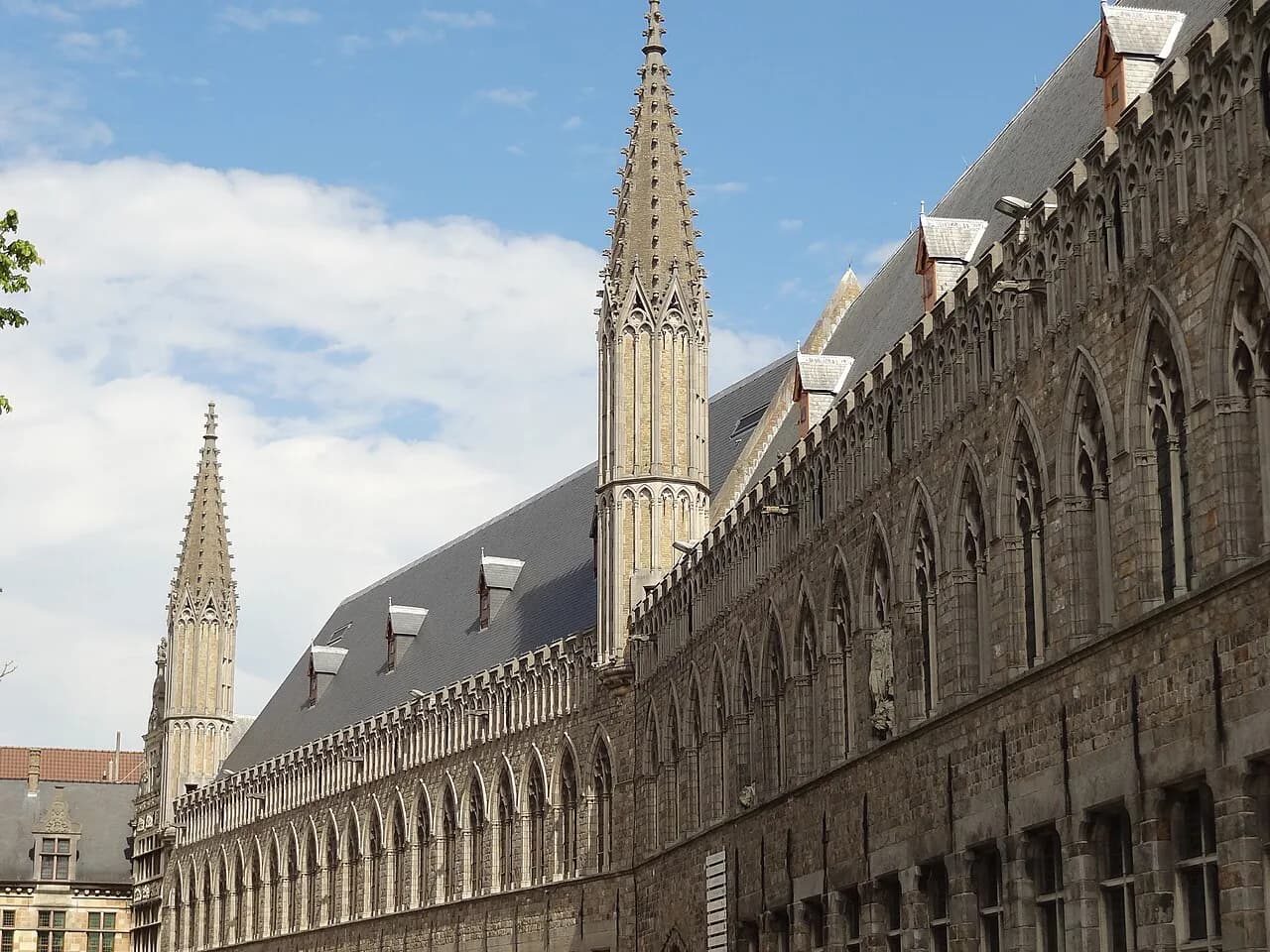
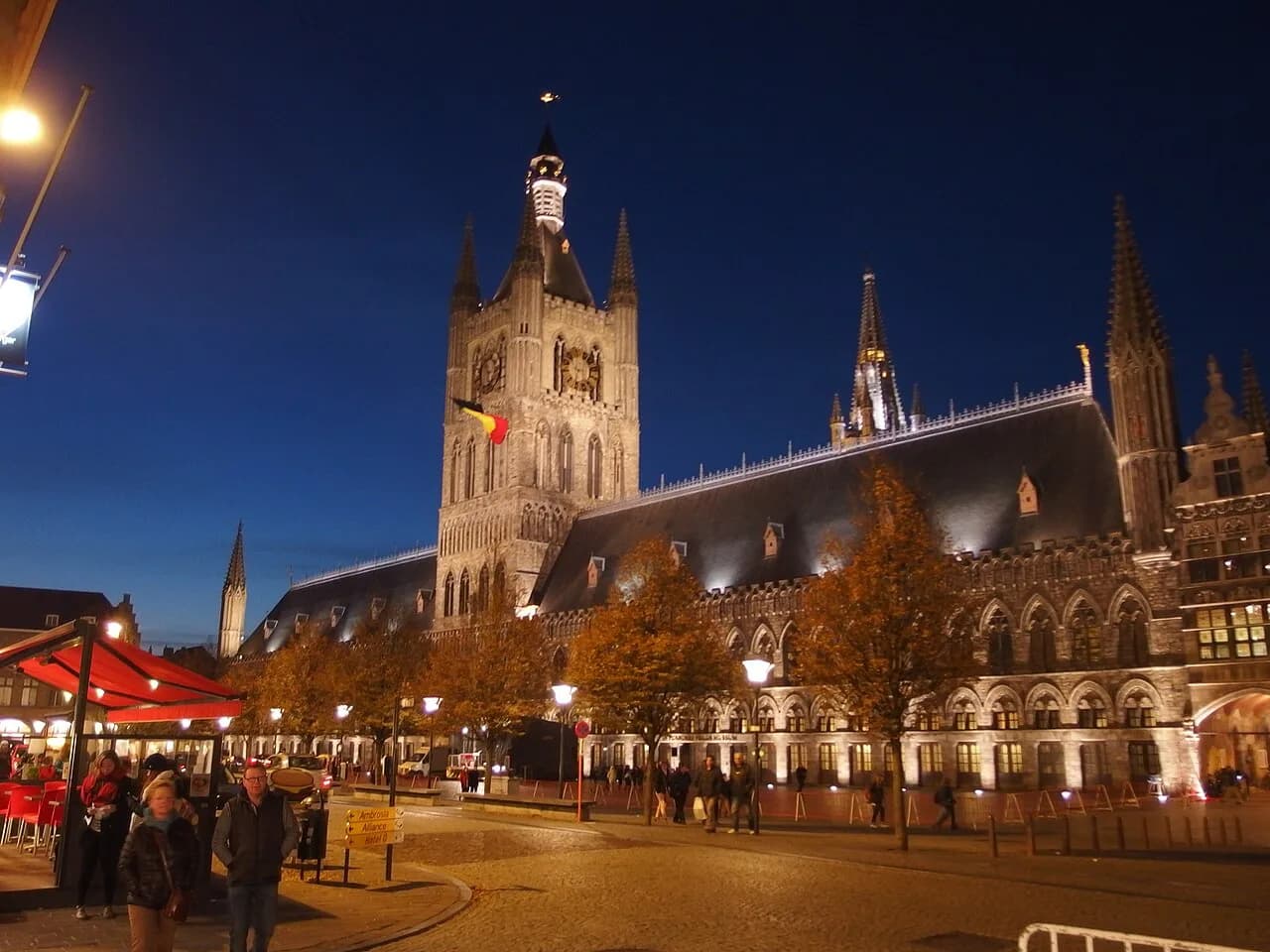
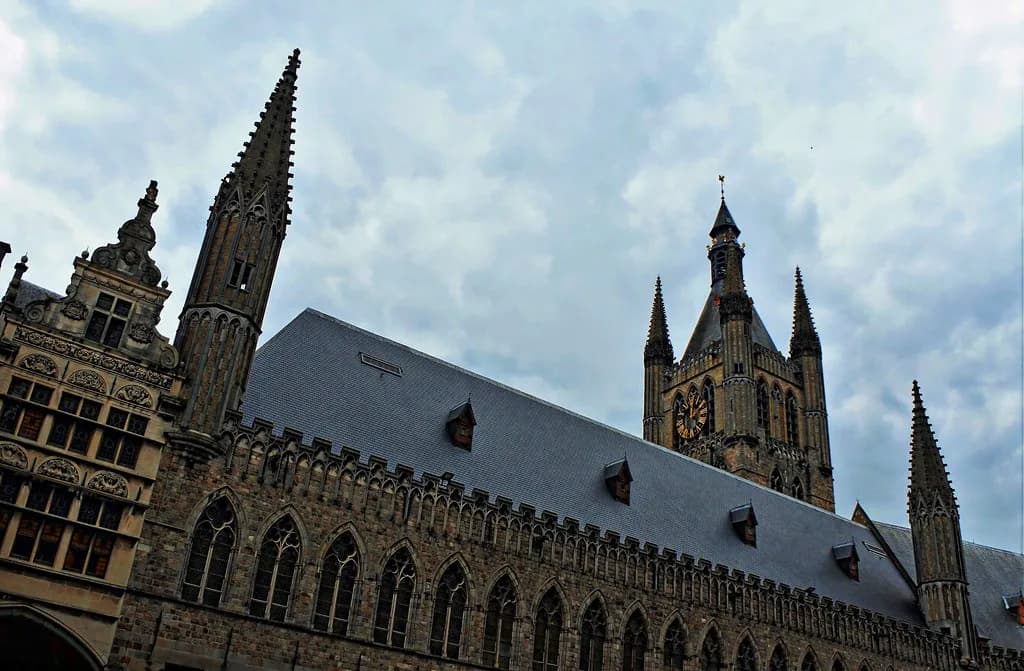
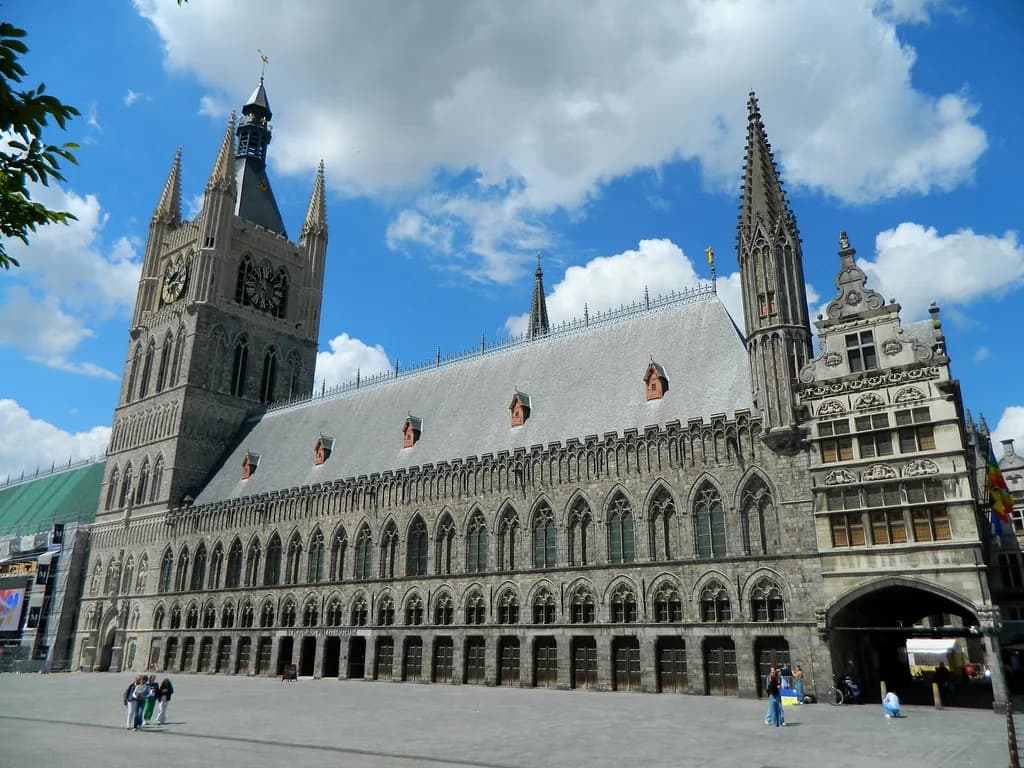
The Cloth Hall is the anchor of the centre, a vast medieval commercial hall that was left in ruins in the Great War and painstakingly rebuilt between 1933 and 1967. It faces the Grote Markt, the square where the town's civic life concentrates, and the belfry tower rises above it.
Almost everything you see in the centre is reconstruction, and that is the point: the town was rebuilt to its medieval footprint rather than replaced with modern blocks. Walk the lanes around the Grote Markt and between the square and the cathedral to see how tightly the old street pattern survives.
Start a Ypres Walking Tour at the Grote Markt, take in the Cloth Hall facade, then work outward to the cathedral and the Menin Gate. The whole circuit is short, so the constraint is museum time rather than distance.
In Flanders Fields Museum in the Cloth Hall
In Flanders Fields Museum occupies the Cloth Hall, which means one building covers both the architecture and the interpretation of the war. Exhibits use technology to tell individual human stories rather than only troop movements, and visitors are given a poppy wristband that can be loaded with personal details to unlock related testimonies.
Give it at least two hours, and treat it as the first thing you do in town: the context it provides makes the cemeteries and memorials outside Ypres legible. If you have only one day, this is the museum to choose.
Other collections in and around town fill out the picture, including Memorial Museum Passchendaele at Zonnebeke, which focuses on the battle of 1917. The range of Museums in Ypres suits different interests, from military detail to civilian experience.
St Martin's Cathedral (Sint-Maartenskathedraal) and its spire
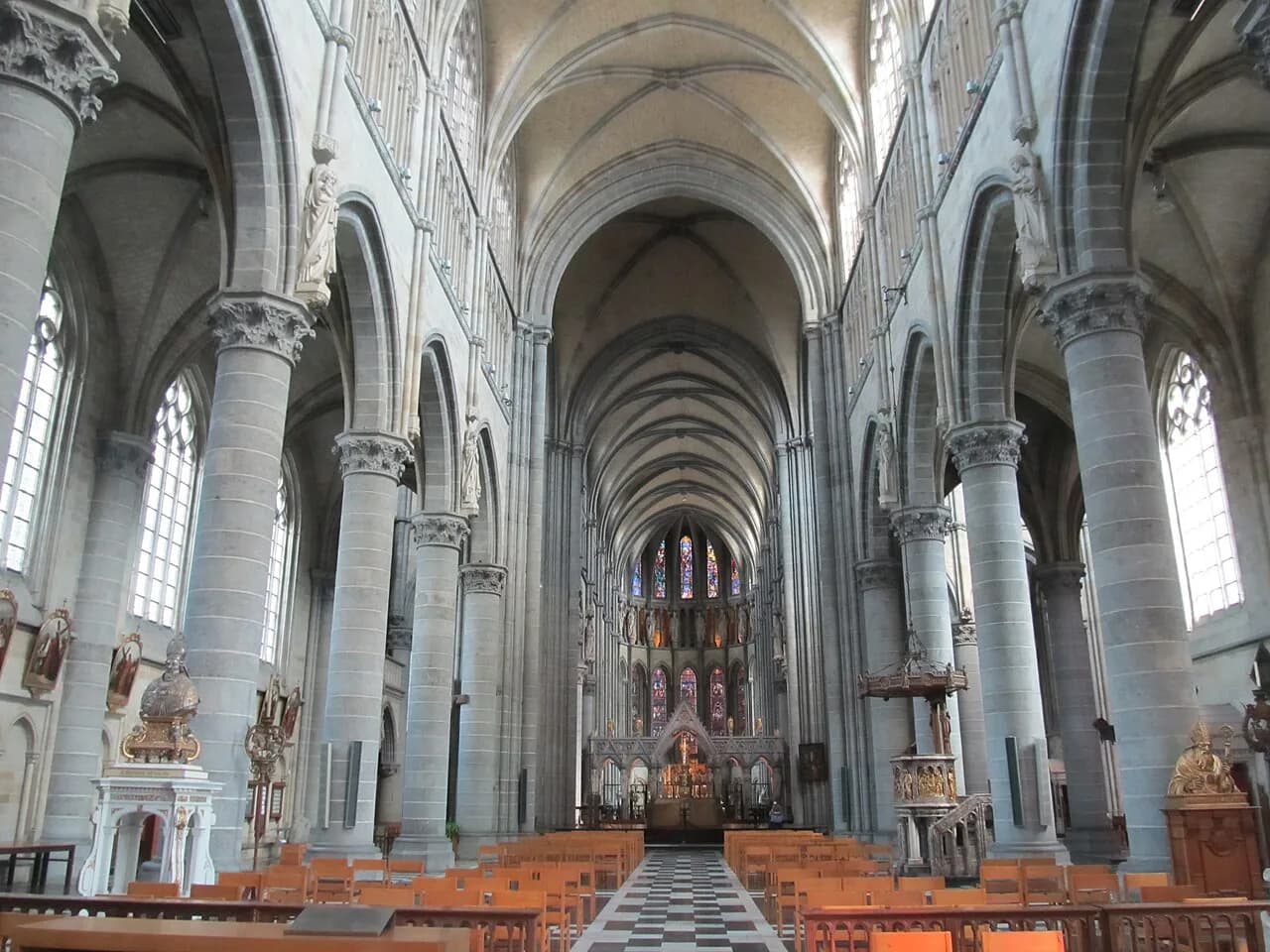
St Martin's Cathedral is impossible to miss: its spire reaches 102 metres, making it one of the tallest church towers in Belgium, and you can see it from well outside town. The Gothic building was reconstructed after the war, and its interior provides a quiet counterpoint to the museums.
The cathedral sits a short walk from the Grote Markt, so it slots naturally between the Cloth Hall and the Menin Gate. Allow half an hour for the interior, longer if an exhibition is running.
The Menin Gate (Menenpoort) memorial
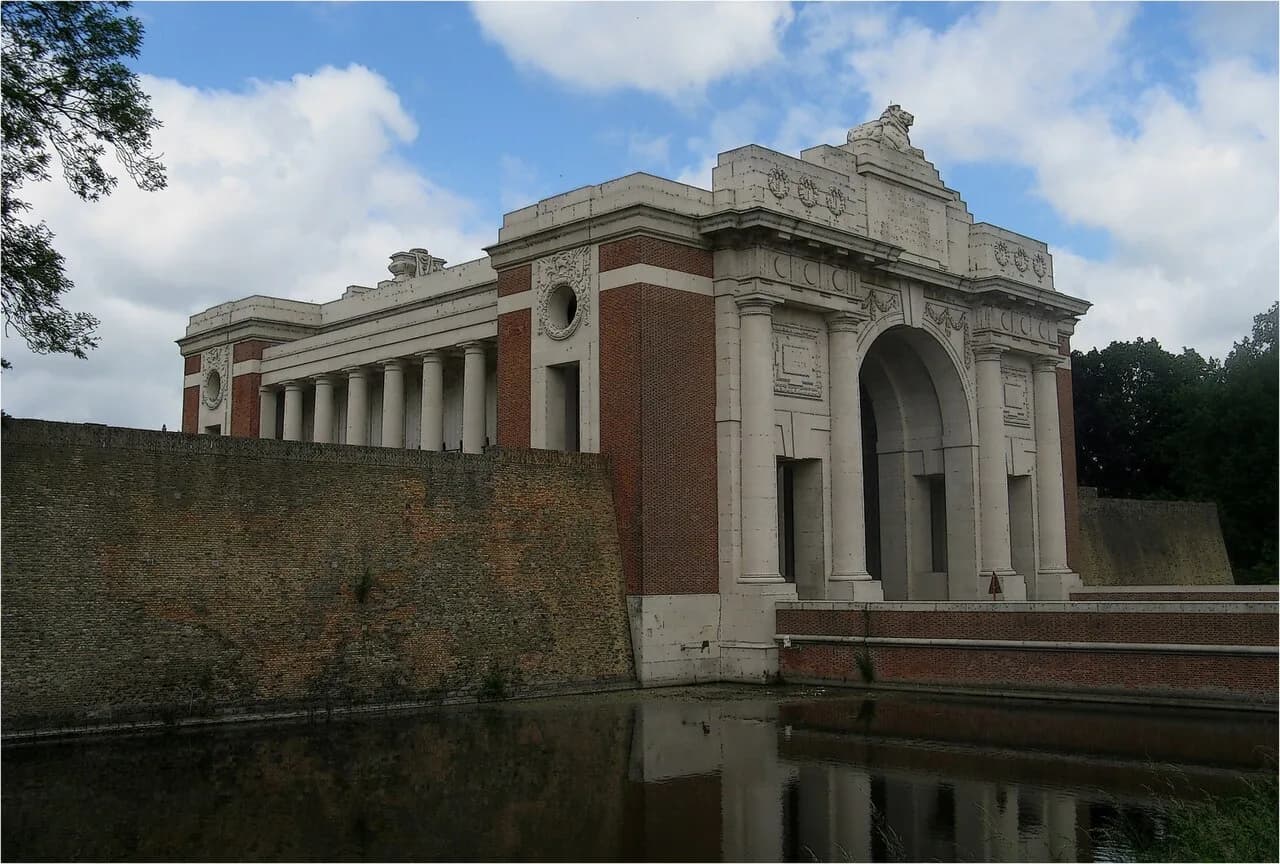
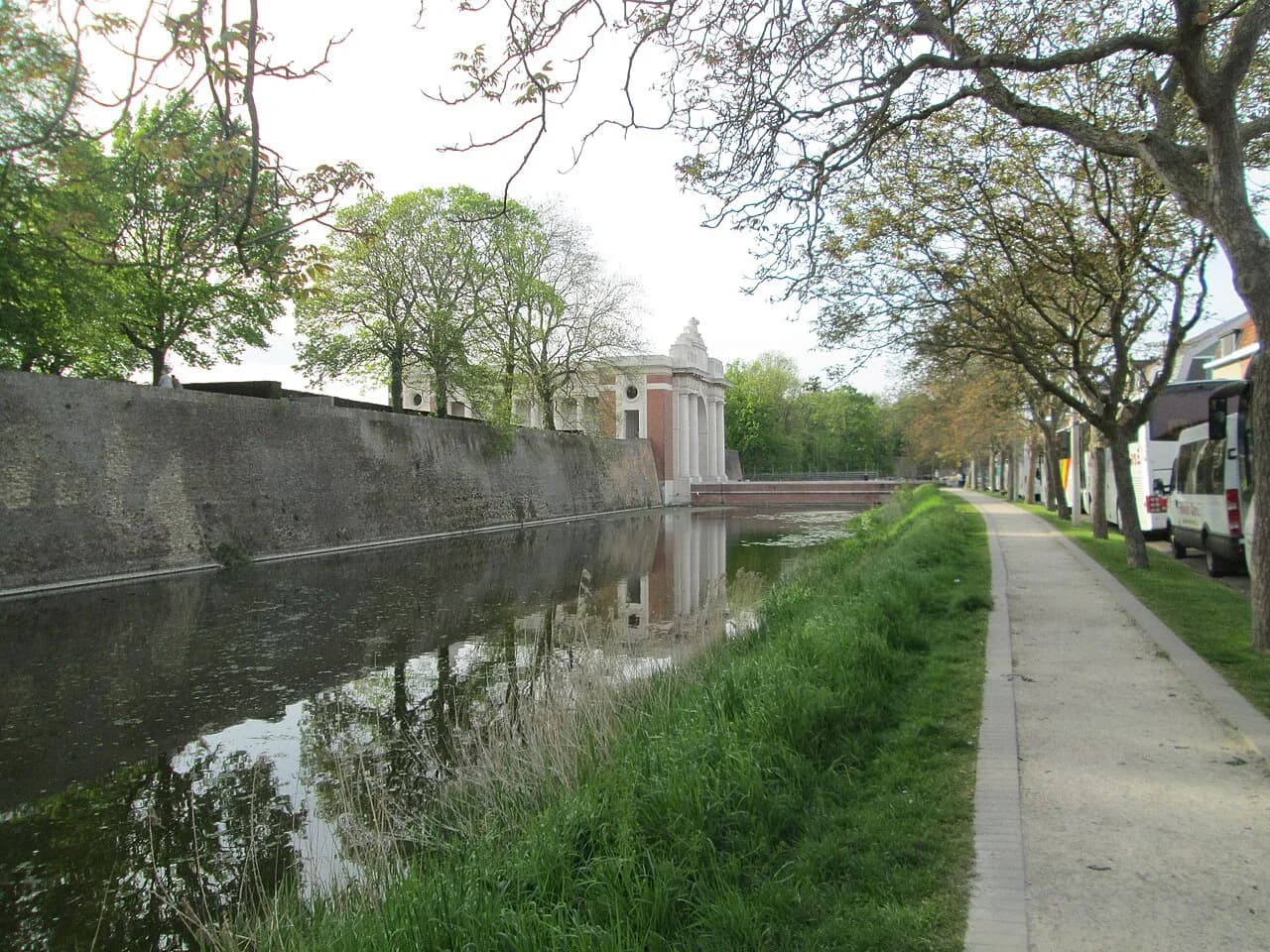
The Menin Gate is a memorial arch to Commonwealth soldiers killed in the Ypres salient with no known grave, designed by Sir Reginald Blomfield. It stands a short walk from the Grote Markt, and its name panels cover vast numbers of the missing.
The gate is the reason many visitors give a chunk of their day to the memorial rather than to the town. Arrive early if you want to see the panels properly and stand close to the arch rather than at the back of a crowd.
Treat the gate as a memorial rather than a photo stop: read a few names, keep voices low, and give way to others doing the same. The same courtesy applies at every cemetery and memorial in the salient.
Ypres Reservoir Cemetery and the Commonwealth cemeteries in and around town
Ypres Reservoir Cemetery sits on the edge of the town centre on Haiglaan, a Commonwealth War Graves Commission burial ground established in 1915 and used by field ambulances and front-line units for most of the war. It holds the graves of 2,615 soldiers, many from across the Commonwealth, and was designed by the same architect as the Menin Gate.
Walk in quietly, read a few headstones and their regimental insignia, and then continue into town. Early morning, before Ypres Reservoir Cemetery fills with tour groups, is a good time to come.
Cemeteries large and small are scattered through the surrounding fields, and Tyne Cot near Passchendaele is the largest of them. If you are touring independently, plan a route that links a few rather than trying to see every one.
Memorial Museum Passchendaele and Tyne Cot Cemetery
Memorial Museum Passchendaele at Zonnebeke explains the 1917 offensive and the conditions soldiers faced in the salient, and it pairs naturally with a visit to Tyne Cot Cemetery nearby. Outside town, both need transport or a guided battlefield tour to reach comfortably.
Tyne Cot is a memorial and cemetery first: rows of headstones with a memorial wall behind them for the missing. Give it time and treat it with the quiet that the setting asks for, particularly if you are visiting as part of a larger tour group.
A private Flanders Fields battlefield day tour, listed by TUI Musement at nine hours, covers the salient from a base in Ypres and takes away the transport problem. A full-day Flanders Fields tour from Brussels, listed at 13 hours, is the alternative if you are based in the capital.
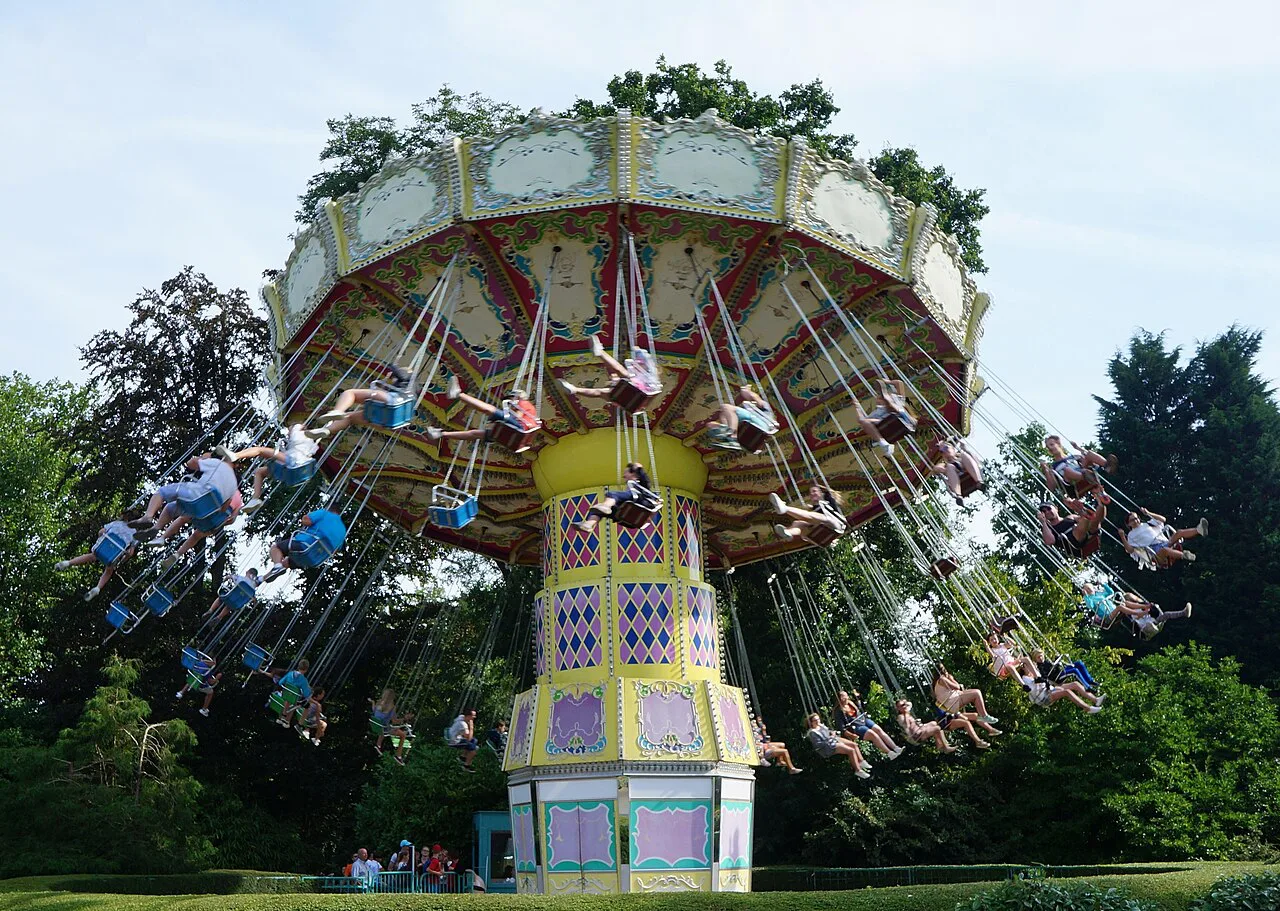
Bellewaerde Park and Bellewaerde Aquapark for a non-WWI day
Bellewaerde Park is a theme park, and Bellewaerde Aquapark adds a water-based day out. Both give families or repeat visitors an alternative to a second day of war history, and both appear as bookable tickets through TUI Musement.
Tickets for the park and aquapark are listed with flexible duration, which leaves room to fit either around the rest of your trip.
Ypres with one day: the centre and the memorials
With one day, start at the Cloth Hall and In Flanders Fields Museum in the morning, when your attention is freshest for the interpretation. Then walk to St Martin's Cathedral and through the rebuilt streets back to the Grote Markt.
In the afternoon, visit Ypres Reservoir Cemetery on Haiglaan before returning to the centre for the Menin Gate. Stop for a beer or chocolate in the Grote Markt area in between rather than trying to add another museum.
Treat the gate as the closing act of the day rather than squeezing it in before lunch, and give it time for quiet reading of the names. Everything else in the centre sits within a few minutes' walk.
Two days in Ypres: town plus the salient
Day one stays in town as above. Day two heads into the salient: Memorial Museum Passchendaele at Zonnebeke in the morning, then Tyne Cot Cemetery, and on the way back any smaller cemetery or memorial that catches your attention.
If you are driving, plot the sites on a map before you set out, because the roads between them are country lanes rather than a neat circuit. If you are not, a battlefield tour with a guide saves a great deal of time.
Keep some slack in the day: memorial sites reward unhurried time, and a rushed schedule across three or four locations feels crass. One museum and one large cemetery make a better second day than a checklist.
How the town is laid out and what you can walk
The centre is compact and flat. The Grote Markt holds the Cloth Hall and the belfry, the cathedral is a couple of minutes away, and the Menin Gate is a short walk out along the road towards the old front.
Between them are the reconstructed shopping streets, the market square, and the usual Belgian town furniture of chocolate shops and beer cafés. Chocolate shops in Ypres cluster around the Grote Markt and the streets running off it, so you will pass several without planning to.
The market square is part of the compact centre, so a wander through it slots easily between the Cloth Hall and the cathedral. A slow morning around the square, the Cloth Hall and the cathedral makes an easy, low-mileage day.
Pronouncing Ypres and Ieper
Ypres is pronounced roughly 'ee-pra' in English, and the Flemish name is Ieper, which is what you will see on station signs, street signs and maps in town. Both names refer to the same place, so use whichever the sign uses.
The surrounding area is called the Ypres Salient, a term for the bulge in the front line around the town in the First World War. It is used on museum panels and tour descriptions, so it is worth knowing the phrase before you arrive.
Where Ypres sits for trips to nearby towns
Ypres is in West Flanders near the French border, which puts it within reach of Bruges, Ghent and Ostend by train, and of the coast for a change of scene. It is close enough to Bruges for a comparison, but the two towns feel entirely different.
Antwerp is further east and makes a different kind of city break, with its own Grote Markt and a cathedral on a much larger scale. If you are stringing together several Belgian towns, Ypres works best as the historical counterweight to them. For the city itself, see these things to do in Antwerp before deciding how many days to give it.
How many days does Ypres deserve?
Give Ypres two days: one for the Cloth Hall, In Flanders Fields Museum, St Martin's Cathedral and the Menin Gate, and one for Passchendaele, Tyne Cot and the smaller cemeteries. One day is workable if you keep to the centre.
Stay overnight if you can, so your time at the Menin Gate is not a dash for a train. Book any battlefield tour before you travel, and leave the rest of the day loose enough to spend real time at the memorials.
Explore more Ypres guides
Frequently Asked Questions
What happened in Ypres during the First World War?
Ypres stood at the centre of a salient, a bulge in the Allied front line surrounded on three sides by German positions, and was fought over throughout the war. The town was reduced to ruins and rebuilt afterwards to its medieval street plan, which is why the centre looks old but is largely reconstruction. In Flanders Fields Museum and the surrounding memorials explain the fighting and its human cost.
How do you pronounce Ypres and Ieper?
Ypres is said roughly as 'ee-pra' in English. Ieper is the Flemish name for the same town and is what appears on local signs and maps, pronounced 'ee-per'. Both names are used interchangeably in the town.
Which towns are near Ypres for a longer Belgian trip?
Ypres sits in West Flanders near the French border, within reach of Bruges, Ghent and Ostend by train, and close to the coast. Antwerp is further east and makes a different sort of city break. Ypres works best as the historical part of a multi-town itinerary.
Sources
Useful notes for your next trip
Optional updates to our guides.
You might also like
Continue reading
More guides you'll find useful