Museums in Ypres: In Flanders Fields and Hooge Crater
Museums in Ypres range from the In Flanders Fields Museum in the Cloth Hall to the private Hooge Crater out at Zillebeke. Here is what each holds and how to choose.
On this page
Two museums carry a short break in Ypres: the In Flanders Fields Museum in the Lakenhalle (Cloth Hall) on the Grote Markt, and the Hooge Crater Museum at Zillebeke, a private museum east of the centre. The first is the essential one, because it explains the Ypres Salient and the city that was rebuilt from ruins; the second rewards anyone with a spare half-day and an interest in trenches and equipment. This guide sets out what each holds, how the two differ and how to fit them into the same visit.
What Ypres museums cover: the Salient, the ruined city and the rebuilding
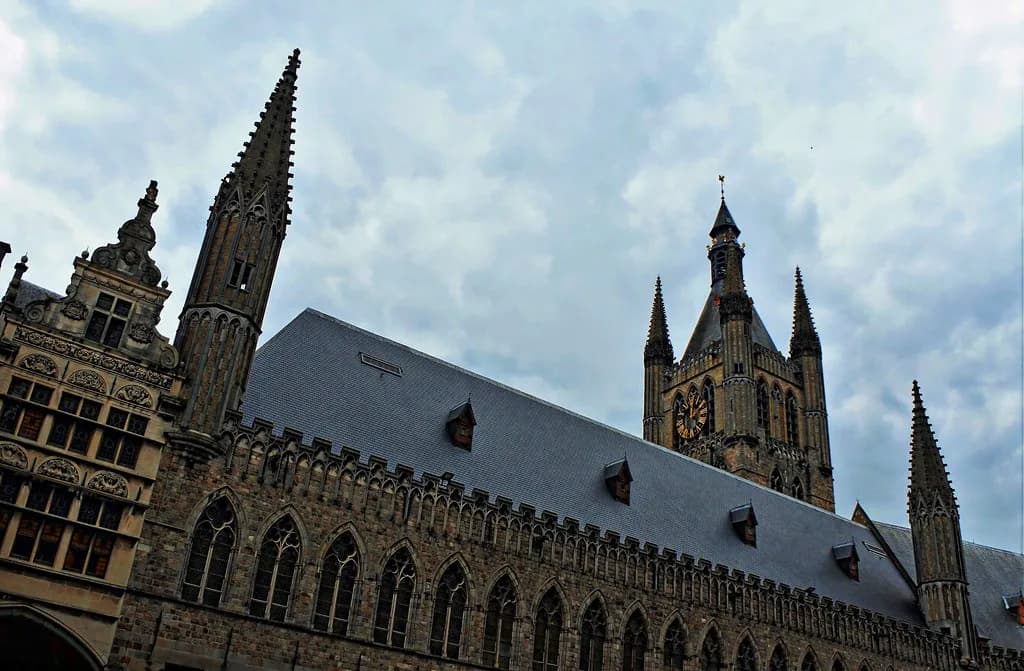
Ypres sat at the centre of the Ypres Salient, the bulge in the front line that British and Commonwealth forces held for most of the First World War. The city was shelled to rubble, and what you walk through today is largely a post-war reconstruction, with the Lakenhalle rebuilt on its medieval footprint. That double story — the war and the remaking of the city — is what the museums here explain, and it is why a museum morning makes the streets legible afterwards.
Both museums treat their collections as memorial material rather than spectacle, so expect names, photographs and personal stories alongside the objects and reconstructions. Plan a museum visit early in your stay if you can, then walk the Grote Markt with a better sense of what was lost and rebuilt.
In Flanders Fields Museum in the Lakenhalle (Cloth Hall)
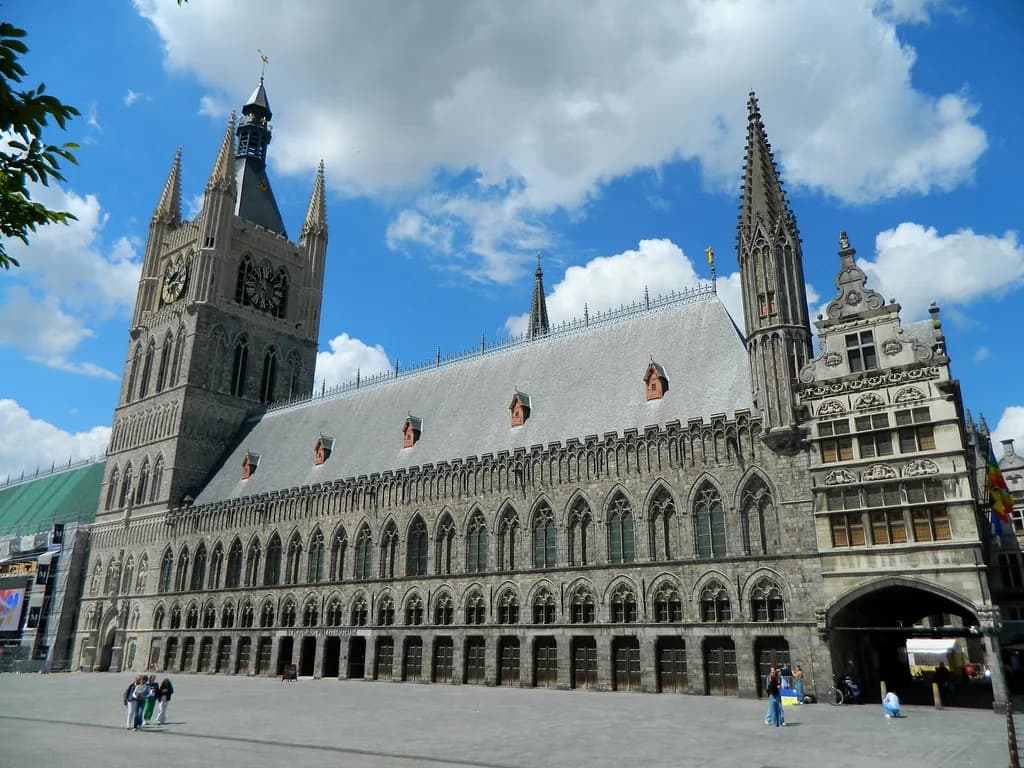
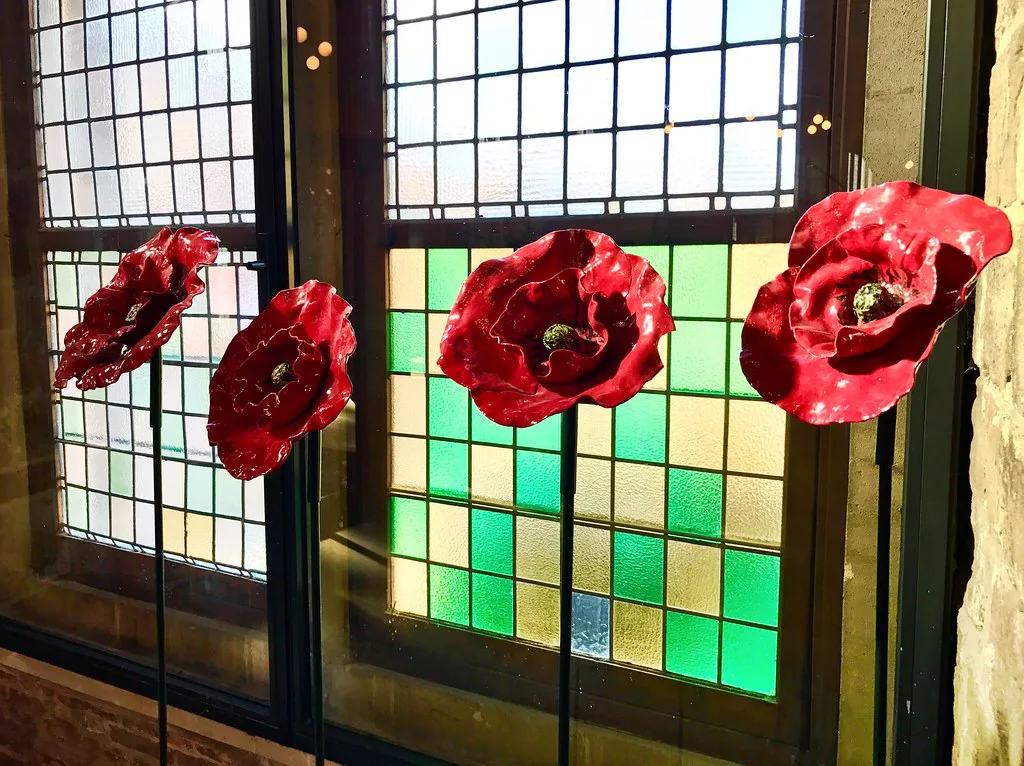
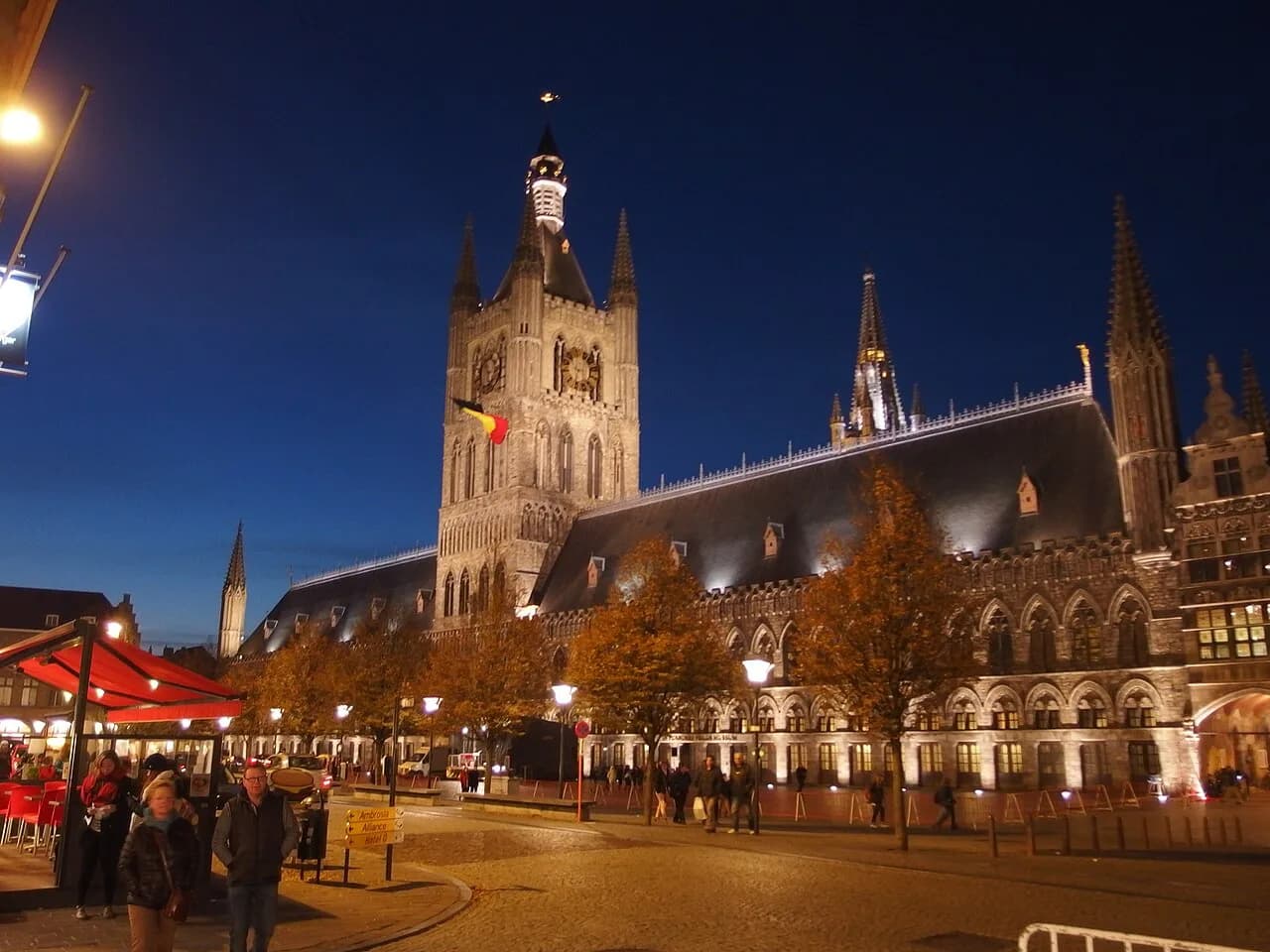
The In Flanders Fields Museum occupies the rebuilt Cloth Hall at Grote Markt 34, 8900 Ieper, which makes it the natural first stop on any visit. Its permanent exhibition works through the war in Flanders Fields with a strong emphasis on individual lives, and the museum's own site describes its aim as sharing history and learning war and peace rather than simply displaying objects. Its List of Names and personal stories are a central part of that approach, tying the collection to named people caught up in the fighting.
Because the museum sits on the main square, it pairs easily with the rest of the centre: the rebuilt Cloth Hall itself, the cathedral nearby and the shops and cafés around the square. Treat it as the anchor of a morning rather than a quick diversion, and book an individual visit through the museum's own site before you travel if you want a fixed slot.
How long to allow at In Flanders Fields Museum
Give the In Flanders Fields Museum at least half a day if you want to read the personal stories properly; a rushed hour will get you through the galleries but not much more. The museum's site gives an opening window of 10:00 to 17:30 with tickets sold until 16:30, so a late-afternoon arrival leaves too little time to do it justice. Arrive in the morning and you can come out into the Grote Markt with the rest of the day intact.
Individual visits can be booked in advance through the museum's website, which is worth doing for a short break when your days are fixed.
Hooge Crater Museum at Zillebeke
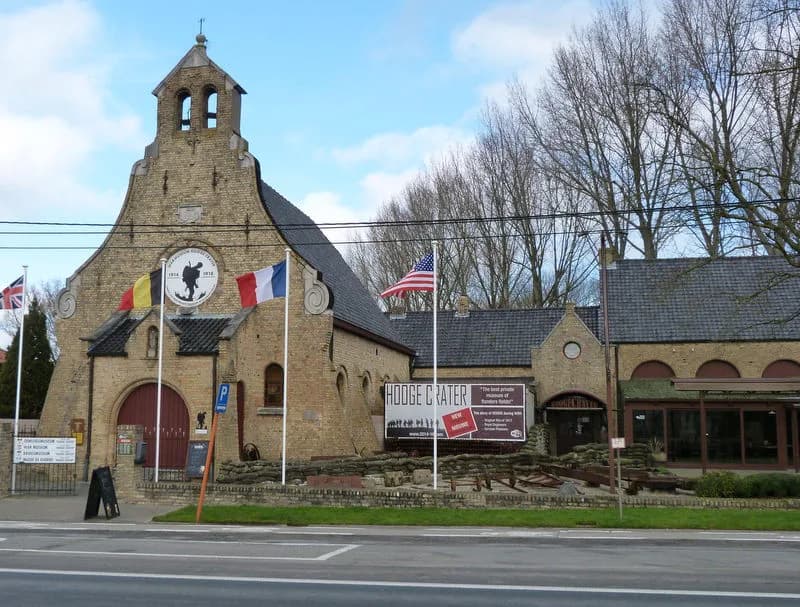
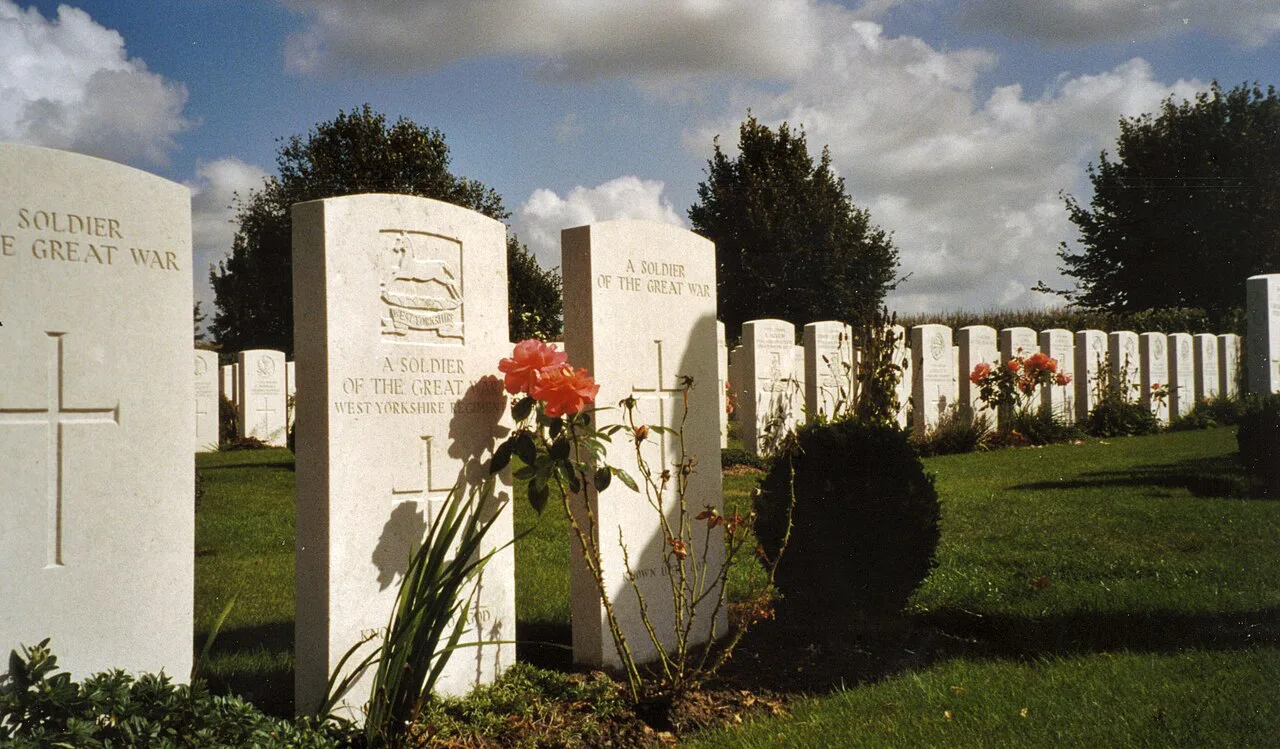
The Hooge Crater Museum is a private museum on the Meenseweg at 8902 Zillebeke, east of Ypres, housed in a chapel built in the early 1920s directly opposite Hooge Crater Cemetery. Its appeal is physical: life-size reconstructions of First World War battle scenes, a large collection of weapons, equipment and photographs, and vehicles including an original 1916 Ford T ambulance and a replica Fokker Dr.I. Where the Cloth Hall museum explains, Hooge Crater shows, and the two work well as a pair rather than as rivals.
The museum's published hours are Wednesday to Saturday 10:00 to 18:00 and Sunday 10:00 to 21:00, with Monday and Tuesday closed. A theme café sits next to the museum, which makes it a sensible lunch or coffee stop in the middle of a day out in the Salient rather than a dash back into town.
Getting to Hooge Crater from central Ypres
Hooge and Zillebeke lie outside the city centre, on the road towards Menin, so the museum does not slot into a walk around the Grote Markt. Most visitors reach it by car, taxi or bicycle, and the ride out through the flat Flanders Fields landscape is part of the experience. If you are cycling, sort your bike before the day itself; the Ypres cycling guide covers where to pick one up in town.
The sensible way to use Hooge Crater is as one stop on a loop that takes in the cemeteries and memorials east of the city, saving the centre for the evening. Keep the museum's Wednesday-to-Sunday pattern in mind when you build that loop, since a Monday arrival rules it out entirely.
Which museum to pick if you only have one day in Ypres
With a single day, choose the In Flanders Fields Museum and skip Hooge Crater. The Cloth Hall museum gives you the full arc of the Salient and the city's destruction in one place, on the square you will be walking anyway, and it leaves time for the Menin Gate and a proper look at the centre. Hooge Crater is the better choice only if you have already done the central museum or your interest is specifically in trenches, kit and vehicles.
If your day is a fixed itinerary with an early start, the Cloth Hall opens at 10:00, so a pre-museum walk around the rebuilt streets is the obvious filler. A structured Ypres walking tour can fill that first hour and give you the layout before the galleries add the detail.
Pairing a museum visit with the Menin Gate (Menenpoort) and the Grote Markt
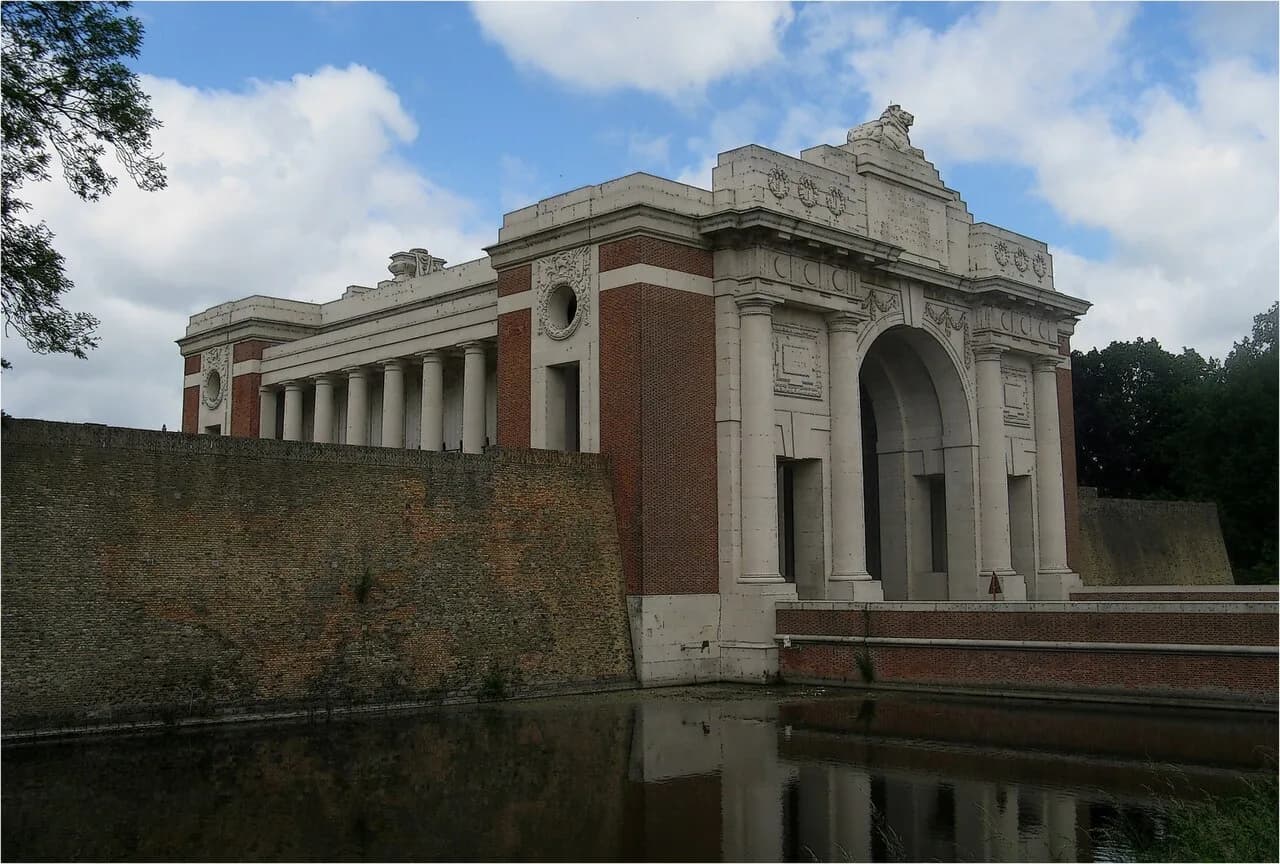
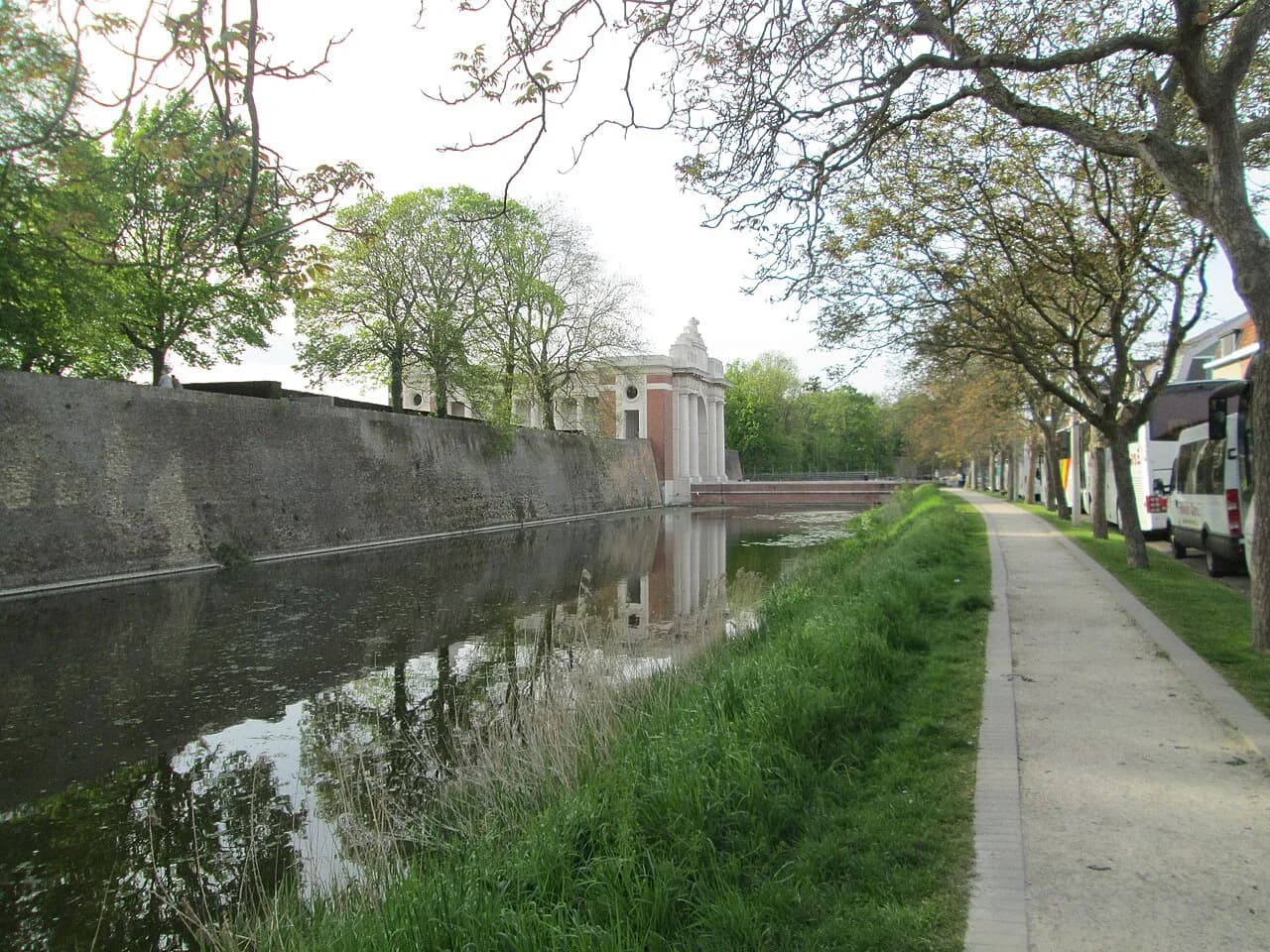
The Menin Gate (Menenpoort) stands at the eastern edge of the old centre, a short walk from the Grote Markt, and it is the natural close to a museum day. The gate carries the names of the missing from the Salient, so give it time in daylight before returning for the evening ceremony, when the Last Post is sounded. The Menin Gate ceremony draws crowds, and arriving early is the simplest way to see it properly.
Around the square, the market and the chocolate shops give the day a lighter counterweight to the museums, and both are within a couple of minutes of the Cloth Hall doors. If you are weighing up whether the city justifies the trip at all, the honest answer is that the museums plus the gate make a strong two-day break, and a single day only if you focus.
Choose your museum before you book the trip
For most visitors the In Flanders Fields Museum is the one to build the break around, with Hooge Crater added if you have a second day and transport out to Zillebeke. Book your Cloth Hall slot before you travel, keep Wednesday to Sunday free for the Zillebeke museum, and leave the evening for the Menin Gate.
If you are still shaping the itinerary, the wider things to do in Ypres guide puts the museums alongside the squares, the beer and the walks so you can see how the days fit together. Book the central museum first and the rest of the plan falls into place around it.
Explore more Ypres guides
Frequently Asked Questions
Do I need to book the In Flanders Fields Museum in advance?
The museum takes bookings for individual visits through its own website, which is the simplest way to fix a slot on a short break. Use the booking calendar for your date.
Is Hooge Crater open on Mondays?
No. The museum publishes Wednesday to Saturday 10:00 to 18:00 and Sunday 10:00 to 21:00, and closes on Monday and Tuesday. Plan it for the middle or end of a short break rather than your arrival day if you travel on a Monday.
Sources
Useful notes for your next trip
Optional updates to our guides.
You might also like
Continue reading
More guides you'll find useful