Is Ypres Worth Visiting? An Honest Answer for a Short Break
Yes, Ypres is worth visiting if WWI remembrance and a rebuilt medieval centre appeal to you. Here is what to see and how long the city needs.
On this page
Yes, Ypres (Ieper) is worth visiting if you want First World War remembrance and a compact, rebuilt medieval centre in the same trip. The city is the unofficial capital of Flanders Fields, and it commemorates the war daily at the In Flanders Fields Museum and beneath the Menin Gate (Menenpoort). If you are planning a short break, this guide sets out what you actually see, how many days it needs and who will get the most from it, with a fuller list in our guide to things to do in Ypres (Ieper).
What you actually see in the centre
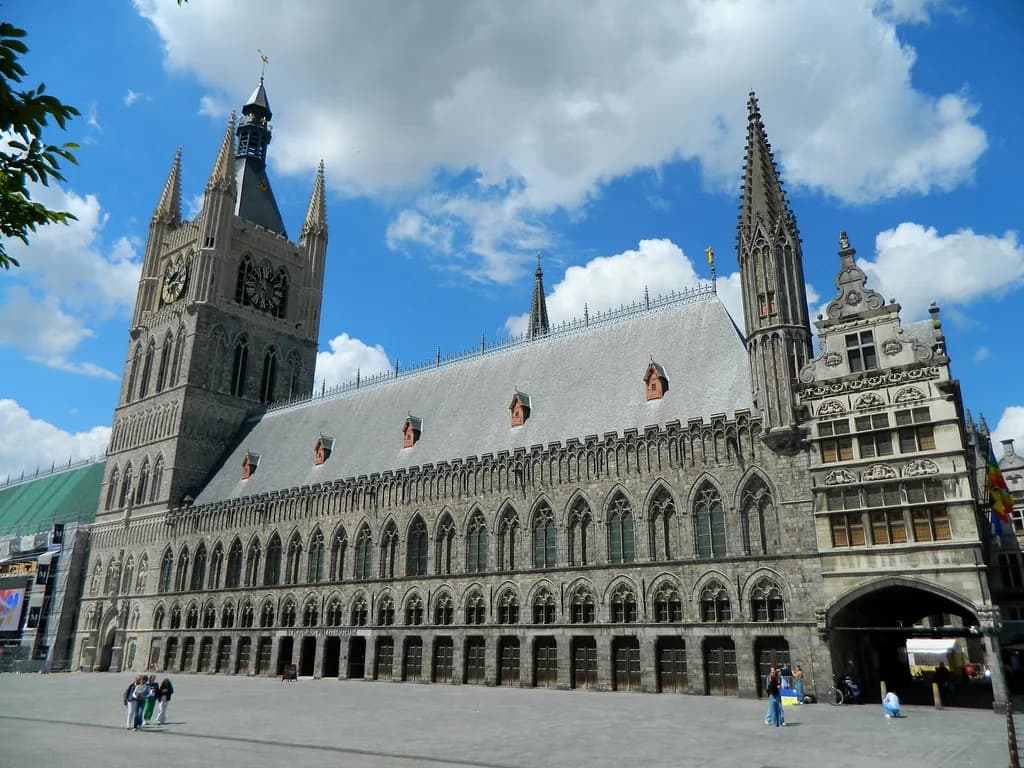
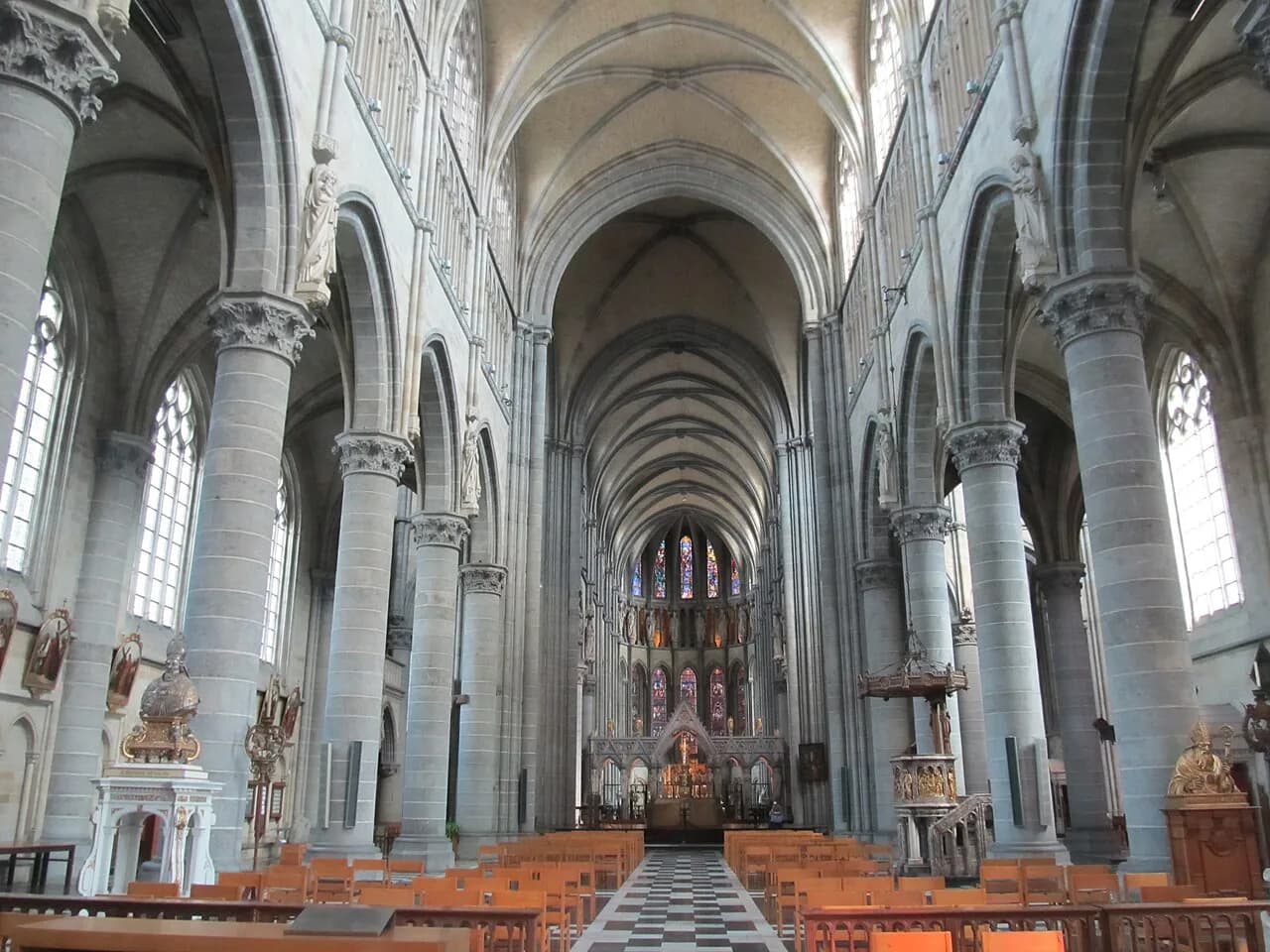
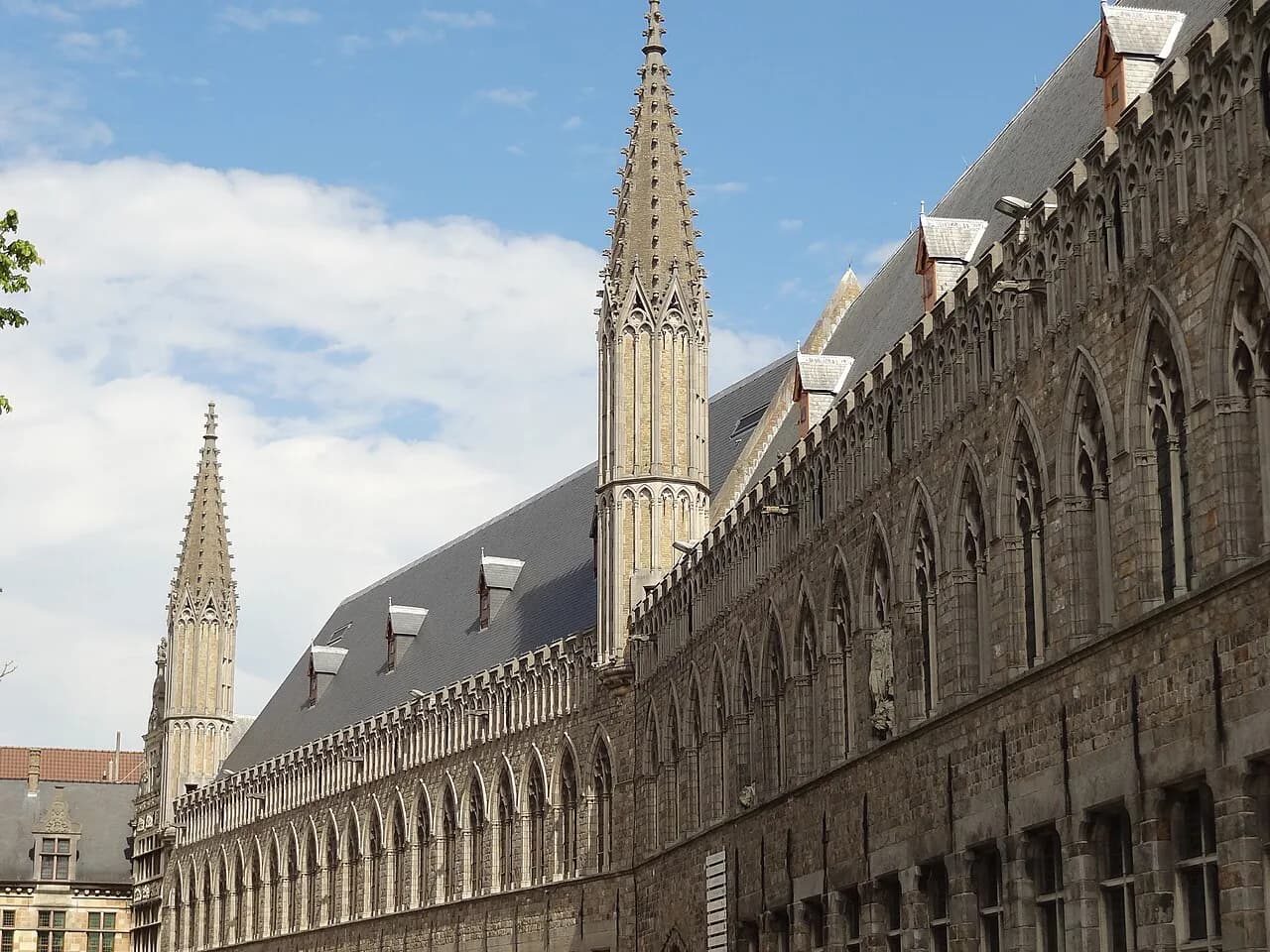
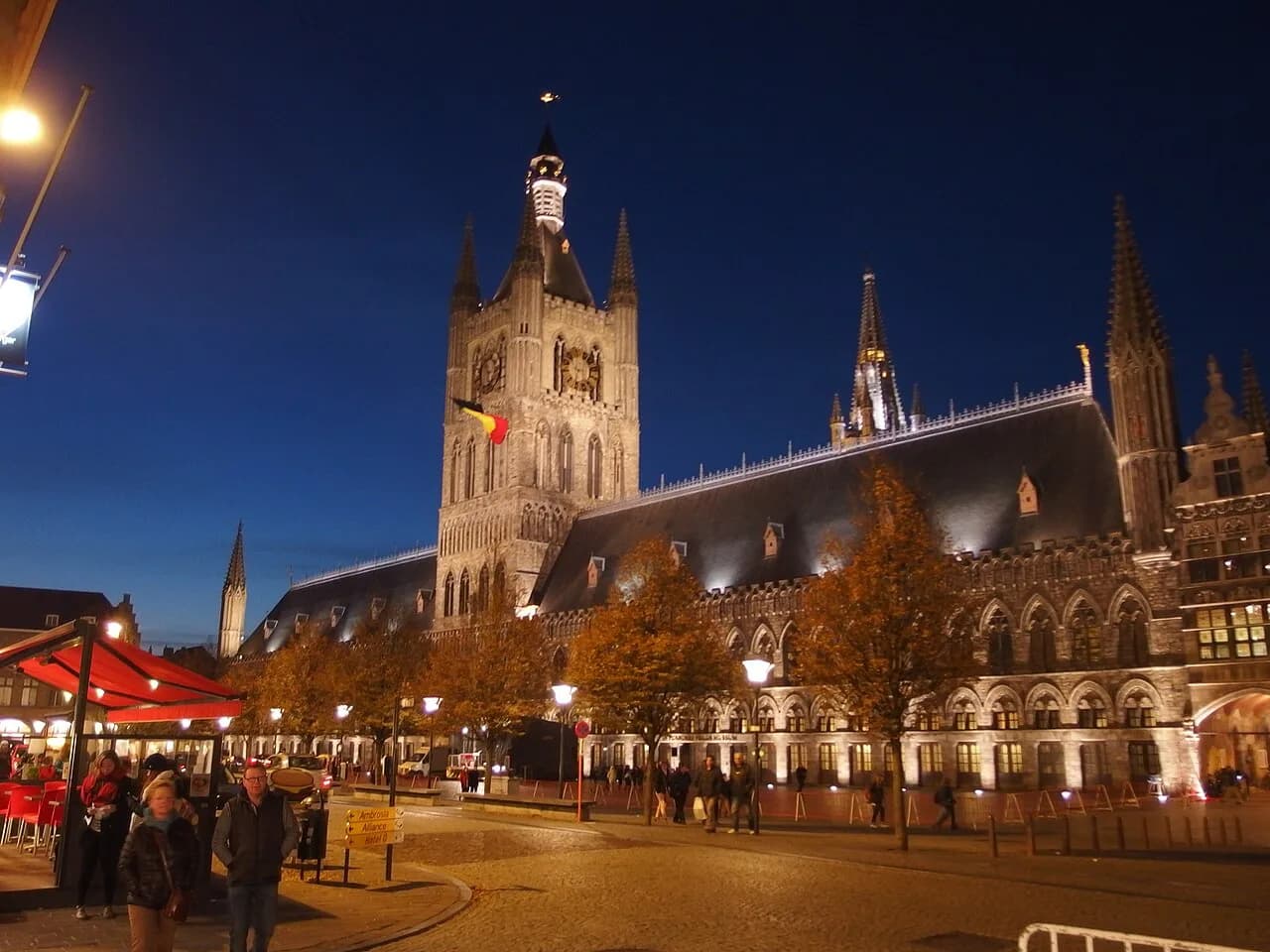
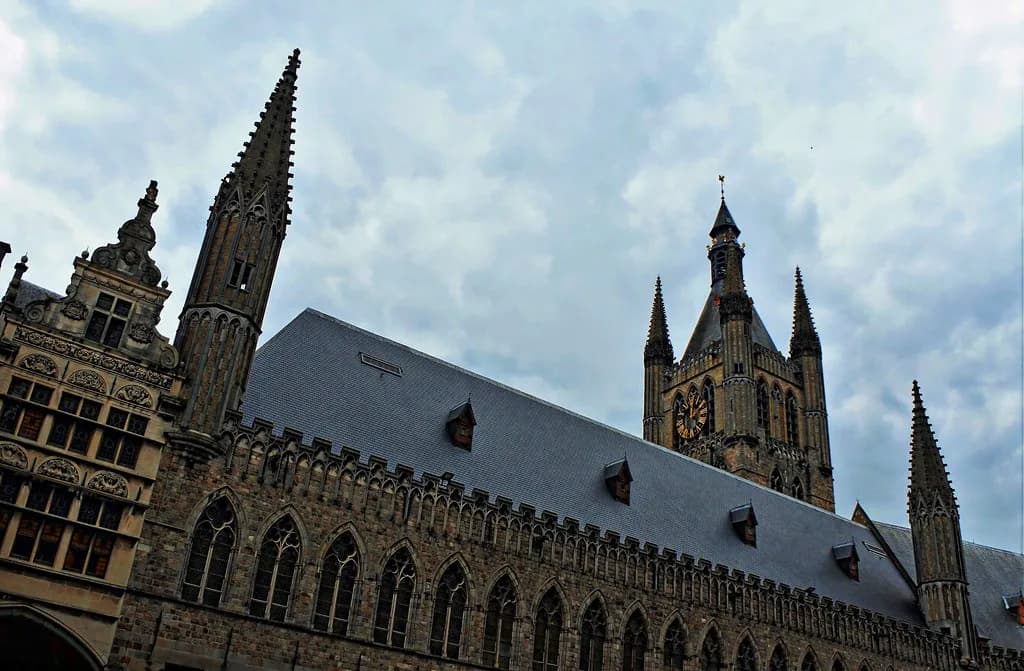
The heart of Ypres is the Grote Markt, a broad square lined with rebuilt guild houses and dominated by the Lakenhalle (Cloth Hall). The Cloth Hall was one of medieval Europe's great commercial buildings, reduced to ruins in the war and reconstructed afterwards, and it now houses the city's main museum. St Martin's Cathedral (Sint-Maartenskathedraal) stands alongside, its tall spire visible across the flat West Flanders plain.
Both buildings are reconstructions, and that is part of the point: the centre tells the story of a city rebuilt from nothing after 1918. Walk the surrounding streets and the scale becomes clear, because the whole historic core fits within a short loop. If you want the detail laid out street by street, a Ypres walking tour is the efficient way to see it.
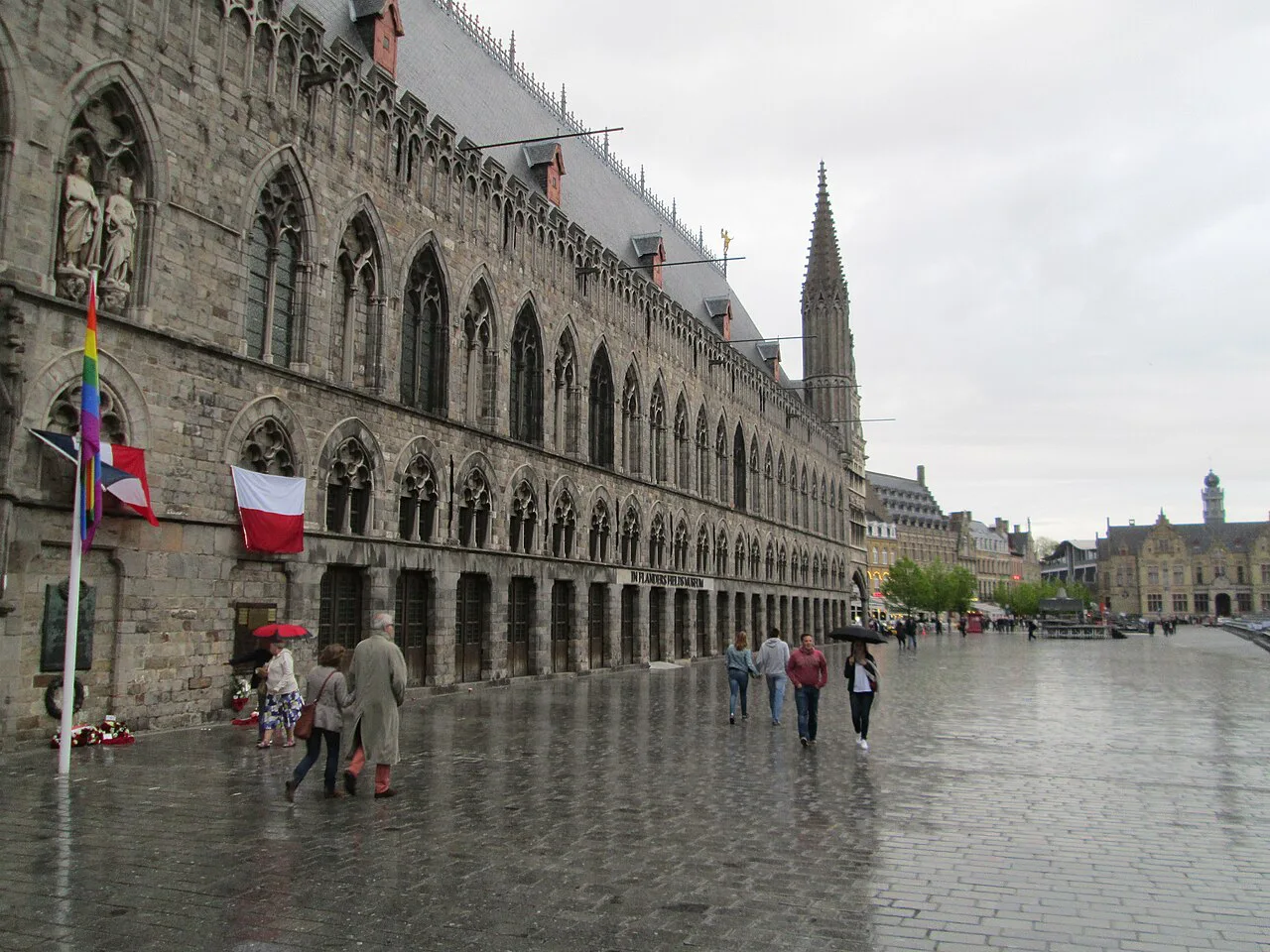
The In Flanders Fields Museum inside the Lakenhalle
The In Flanders Fields Museum occupies the Cloth Hall on the Grote Markt and covers the war through personal stories rather than a march of dates. It is the single strongest reason to give Ypres a full day rather than an afternoon, and it sets up everything you see in the surrounding countryside. The museum publishes its own ticketing and visiting information, including opening hours and access details, which is the place to confirm arrangements before you travel.
Give the museum two to three hours and go early in the day if you plan to combine it with a walk to the Menin Gate. Groups and school parties pass through the galleries, so a morning slot leaves the afternoon free for the battlefields. For the wider choice of collections in the city, see museums in Ypres.
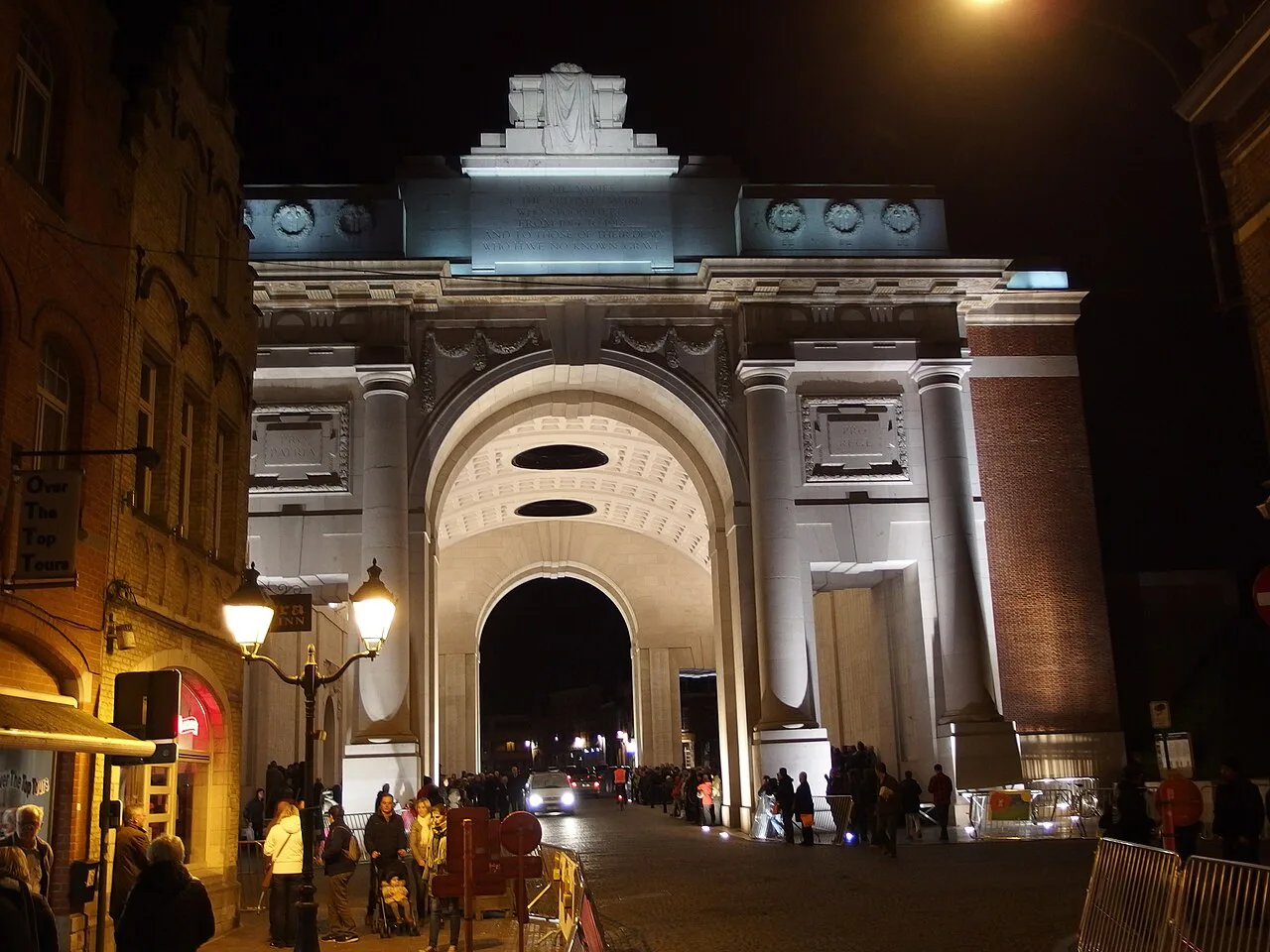
The Last Post ceremony at the Menin Gate
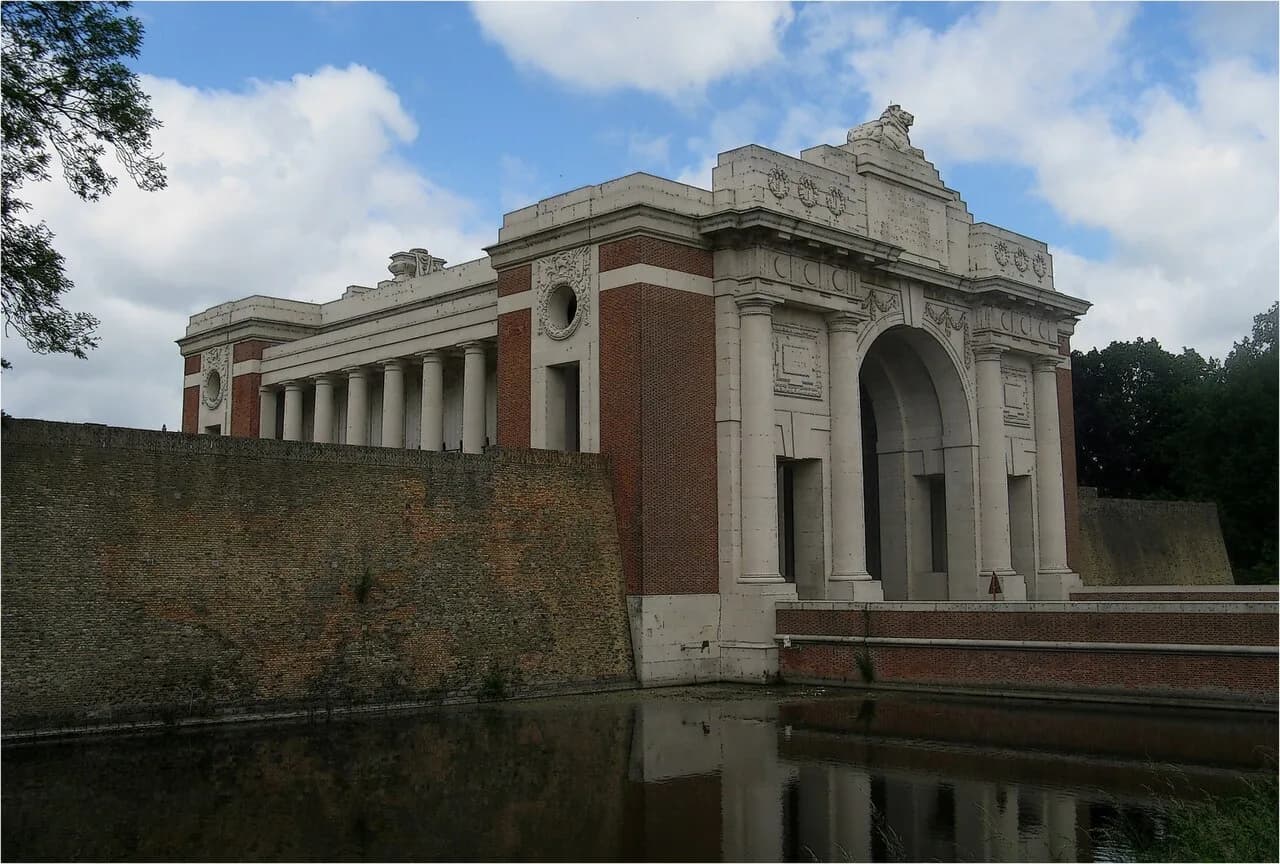
The Menin Gate (Menenpoort) is the memorial arch on the road out of the city towards the old front line, and the Last Post is sounded beneath it in honour of the soldiers of the former British Empire and its allies who died in the Ypres Salient. It is a daily act of remembrance, not an attraction to slot into a schedule: arrive early, stand quietly and let the ceremony do its work.
Because the ceremony is short and repeated nightly, it fits easily around a museum day, but it also anchors an evening in the city in a way no other sight does. Treat it as the fixed point of your itinerary and build the rest of the day around it.
Flanders Fields around the city
Beyond the rebuilt centre lies the reason most British and Commonwealth travellers come: the cemeteries, memorials and preserved ground of the Ypres Salient. The city is the practical base for this landscape, and 27 First World War memorial sites across Flanders Fields hold Unesco World Heritage recognition. This is a memorial landscape rather than conventional sightseeing, and it rewards a slower pace than a checklist allows.
Tyne Cot Cemetery and the Memorial Museum Passchendaele sit within the wider Salient, and the Ypres Reservoir Cemetery lies on the edge of the town centre itself. Visiting any of them takes time, transport and a certain temperament, so decide in advance how much of the landscape you want to cover. A Ypres walking tour stays within the rebuilt centre rather than the battlefields, so plan the two parts of the trip separately.
How many days Ypres needs
One day covers the centre comfortably: the Grote Markt, the Cloth Hall, St Martin's Cathedral and the In Flanders Fields Museum, finished with the Last Post at the Menin Gate. That is a full day rather than a rushed one, and it is the right shape for a stop between Bruges and the coast.
Two days is the better answer if the battlefields matter to you. Day one stays in the city; day two takes you out to the cemeteries and memorials of the Salient, which cannot be folded into an afternoon without losing what makes them worth the journey.
Who Ypres suits and who it does not
Ypres suits travellers who want a small, walkable city with a serious subject at its centre, and particularly those with a family or personal connection to the First World War. The compact centre makes it easy to cover on foot, and the museum gives context to everything beyond the walls. If you are choosing between Belgian cities, our round-up of things to do in Ypres shows how much the city packs into a small area.
Ypres does not suit travellers looking for a conventional sightseeing break of galleries, shopping and long evenings out. The register is sombre, the evenings are quiet, and the city's appeal rests on remembrance and reconstruction rather than on spectacle. Anyone wanting Gothic squares and canal views without the weight of the war should look at Bruges or Ghent instead.
When to go and how the seasons change the visit
Spring and autumn are often the most comfortable seasons for walking the cemeteries and the town, with workable ground and long daylight. High summer brings the most reliable weather but also the largest numbers at the Menin Gate and in the museum galleries.
Winter trims the daylight and makes the battlefields a bleaker, more exposed walk, though the city itself remains compact enough to cover between showers. The Armistice period draws large commemorative crowds, so it is worth confirming accommodation and any concert arrangements early if you plan to be in the city then.
Practical trade-offs: a small city, a heavy subject
Ypres is small enough to cross on foot in half an hour, which is its great convenience and its main limitation: the centre holds perhaps a day of conventional sightseeing. The trade-off is that you spend less time travelling between sights and more time in the places that matter.
The second trade-off is the subject itself. A visit here asks for attention and quiet, and the most memorable parts of the trip are the least entertaining. Accept that, plan the battlefields properly, and Ypres delivers more per square mile than almost any city of its size.
Is Ypres worth the journey for you?
Come to Ypres for the combination: a rebuilt medieval centre around the Lakenhalle and a memorial landscape that begins at the edge of town. Book two days if the First World War is the reason for the trip, one day if you mainly want the city.
Explore more Ypres guides
Frequently Asked Questions
Is one day in Ypres enough?
One day covers the Grote Markt, the Cloth Hall, St Martin's Cathedral and the In Flanders Fields Museum, plus the Last Post at the Menin Gate. Add a second day if you want to reach the cemeteries and memorials of the Ypres Salient, which sit outside the centre.
What was the Ypres Salient?
The Salient was the bulge in the Allied front line around Ypres during the First World War, exposed on three sides and the scene of prolonged fighting. The cemeteries and memorials scattered across the surrounding countryside today mark that ground.
Do I need a car to see Flanders Fields?
The town centre is entirely walkable and the Menin Gate is a short walk from the Grote Markt. For Tyne Cot and the wider Salient, transport is the practical constraint, so decide between a car, a guided tour or public transport before you arrive.
Sources
Useful notes for your next trip
Optional updates to our guides.
You might also like
Continue reading
More guides you'll find useful