Ypres Walking Tour: A Self-Guided Route Through Ieper
Walk Ypres on foot: the Grote Markt, the Lakenhalle and Cloth Hall, St Martin's Cathedral and the Menin Gate, with stops in order and what to see at each.
On this page
A walking tour of Ypres covers the centre comfortably in half a day, because the historic core is compact and the main stops sit within a few minutes of each other. The route below runs from the Grote Markt through the Lakenhalle and St Martin's Cathedral to the Menin Gate, ending where the Last Post sounds, and you can fold a museum visit into the middle without changing the line. Our Museums in Ypres guide covers the indoor stops in more depth.
Ypres (Ieper) is the unofficial capital of Flanders Fields, the ground fought over throughout the First World War, and the town rebuilt its medieval centre after the war. That gives the walk its shape: a medieval square, a rebuilt Lakenhalle holding the In Flanders Fields Museum, a cathedral, and a memorial gate carrying the names of the missing. Plan the walk so you reach the gate in the evening.
Start at the Grote Markt: the medieval square at the heart of Ieper
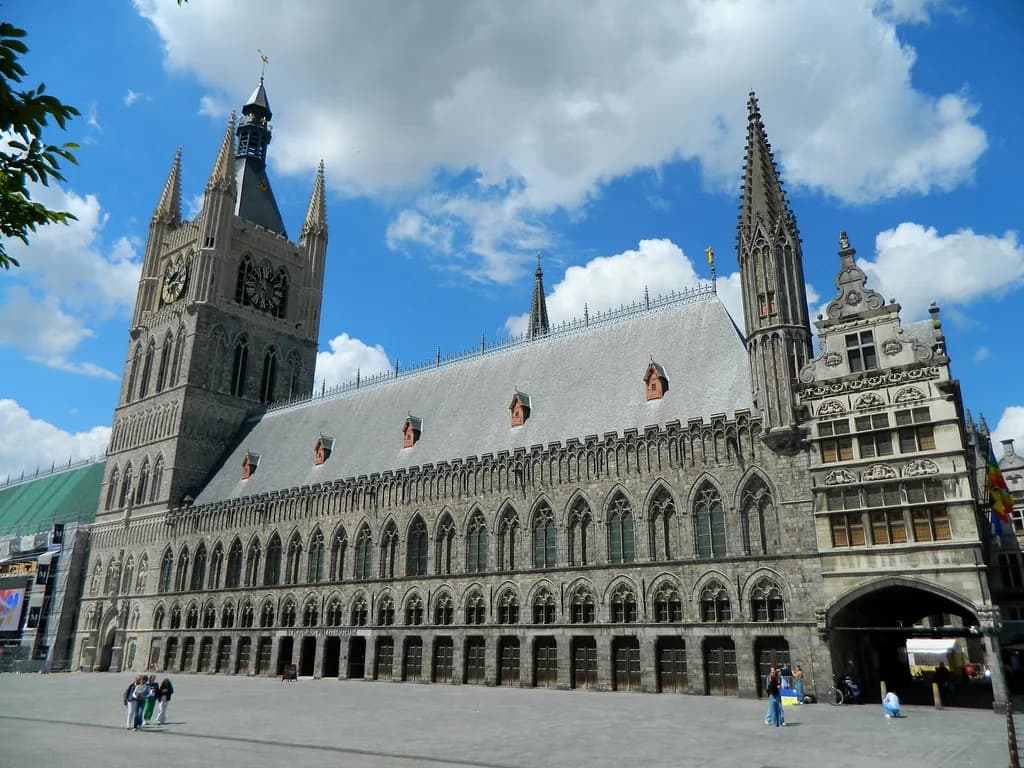
Begin on the Grote Markt, the square that anchors the centre and the natural point of arrival for anyone coming on foot from the station. Step back towards the middle of the square to take in the whole west front of the Lakenhalle, the Cloth Hall, and the cathedral spire rising behind it. Cafés line the edges of the square, so a coffee before the walk proper is easy to arrange.
The square is also where Ypres reads as a working town rather than a memorial site, with shops facing the Cloth Hall and the market holding its ground nearby. If you are in town on a market day, time the loop so you browse before the museum opens rather than doubling back later; our guide to Ypres markets sets out what is sold and when.
The Lakenhalle (Cloth Hall) and the In Flanders Fields Museum inside it
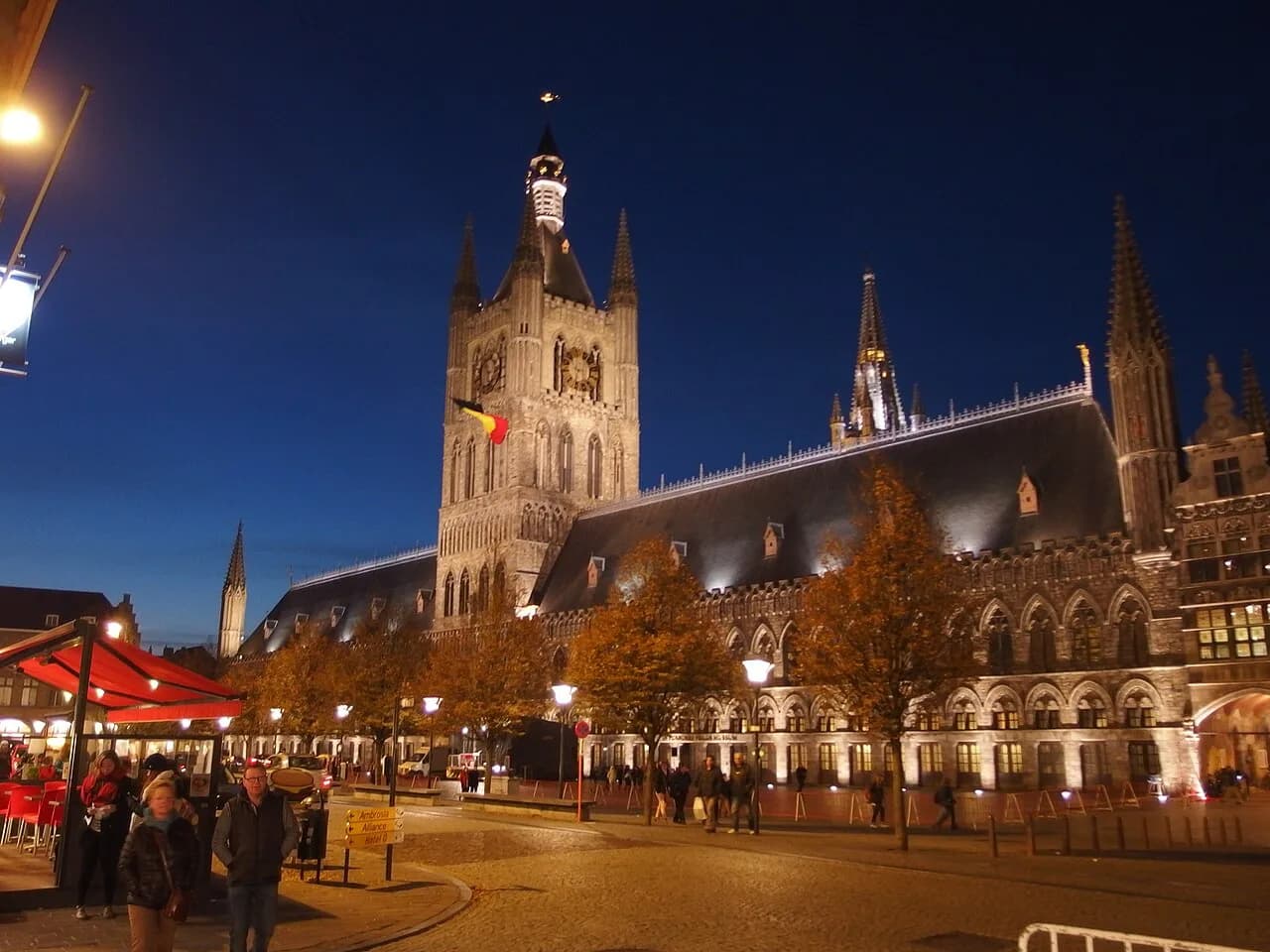
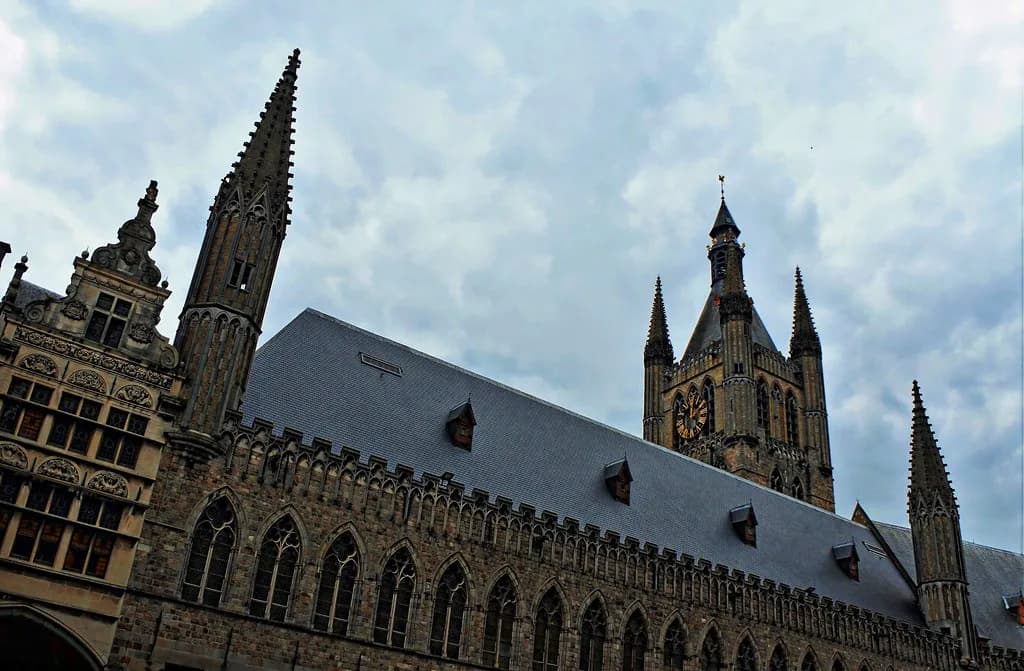
The Lakenhalle is the walk's first real stop, a medieval cloth hall that ranks among the largest commercial buildings of its kind in Belgium and was rebuilt after the war. Its arcaded ground floor and steep roof are best seen from the square rather than from directly underneath, so walk the length of the facade before going in.
The In Flanders Fields Museum occupies the upper floors of the Lakenhalle, which makes the building and the museum visit a single stop on the route. Exhibits at Grote Markt 34 trace the war through soldiers' and civilians' stories, and the museum is the one indoor element worth building the rest of the day around.
Give the museum proper time rather than treating it as a corridor, because it sets up everything you see later in the day. Museum visitors receive a poppy wristband that carries a personal story through the displays, a detail worth knowing before you set off.
Sint-Maartenskathedraal (St Martin's Cathedral) beside the Cloth Hall
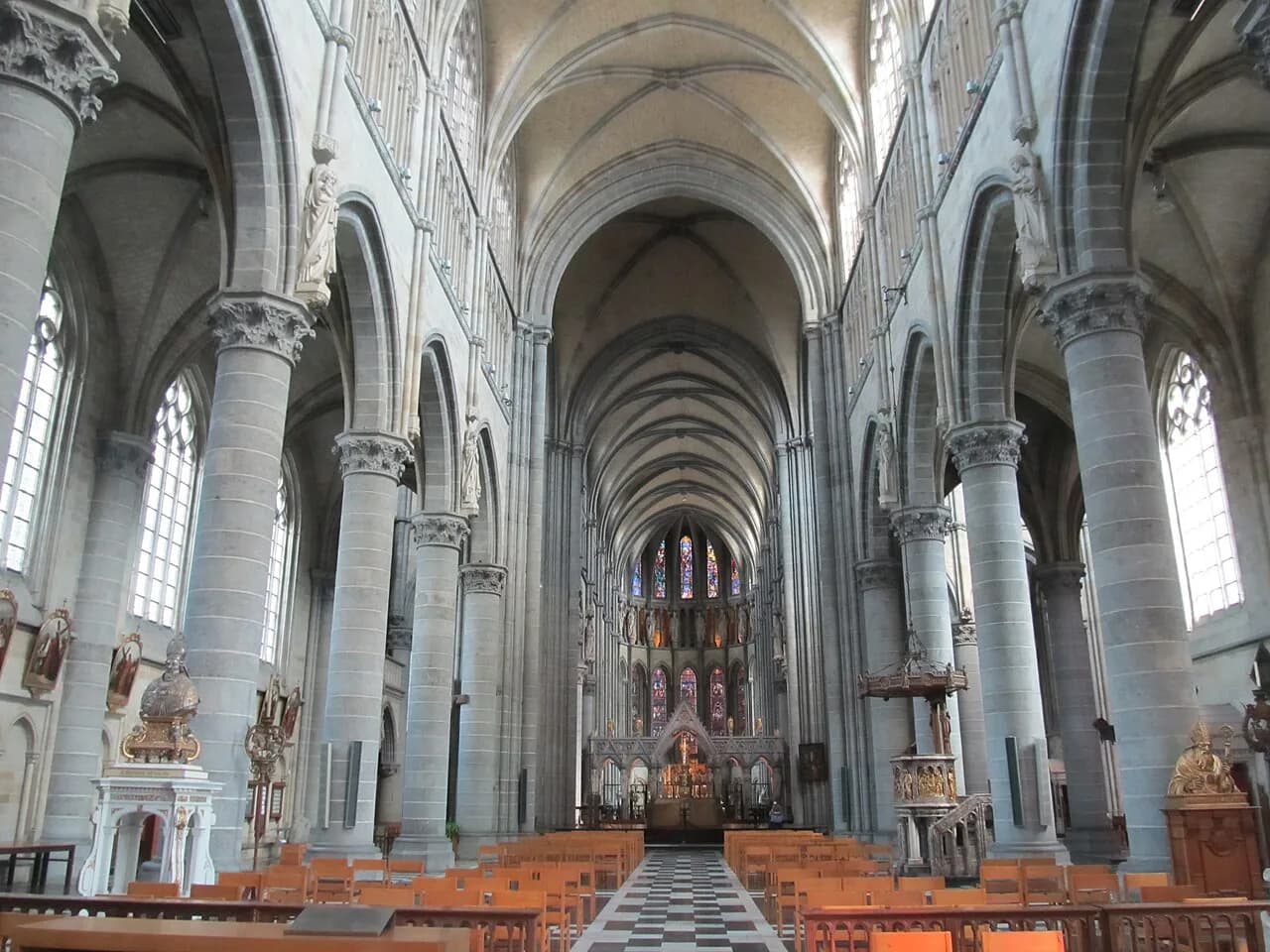
St Martin's Cathedral (Sint-Maartenskathedraal) stands almost next to the Lakenhalle, so you leave the museum and cross to it in a couple of minutes. The Gothic church was rebuilt after the First World War, and its spire rises high above the rooftops of the centre, making it the easiest landmark to steer by for the rest of the walk.
Step inside for the scale of the nave and the war memorials, then walk round the outside to see how closely the cathedral and the Cloth Hall sit together. The cathedral is also the setting for the annual Great War Remembered concert on Armistice Day, an event tied to the Last Post Association's commemorative work rather than to the walk itself.
Walk to the Menin Gate (Menenpoort) for the Last Post ceremony
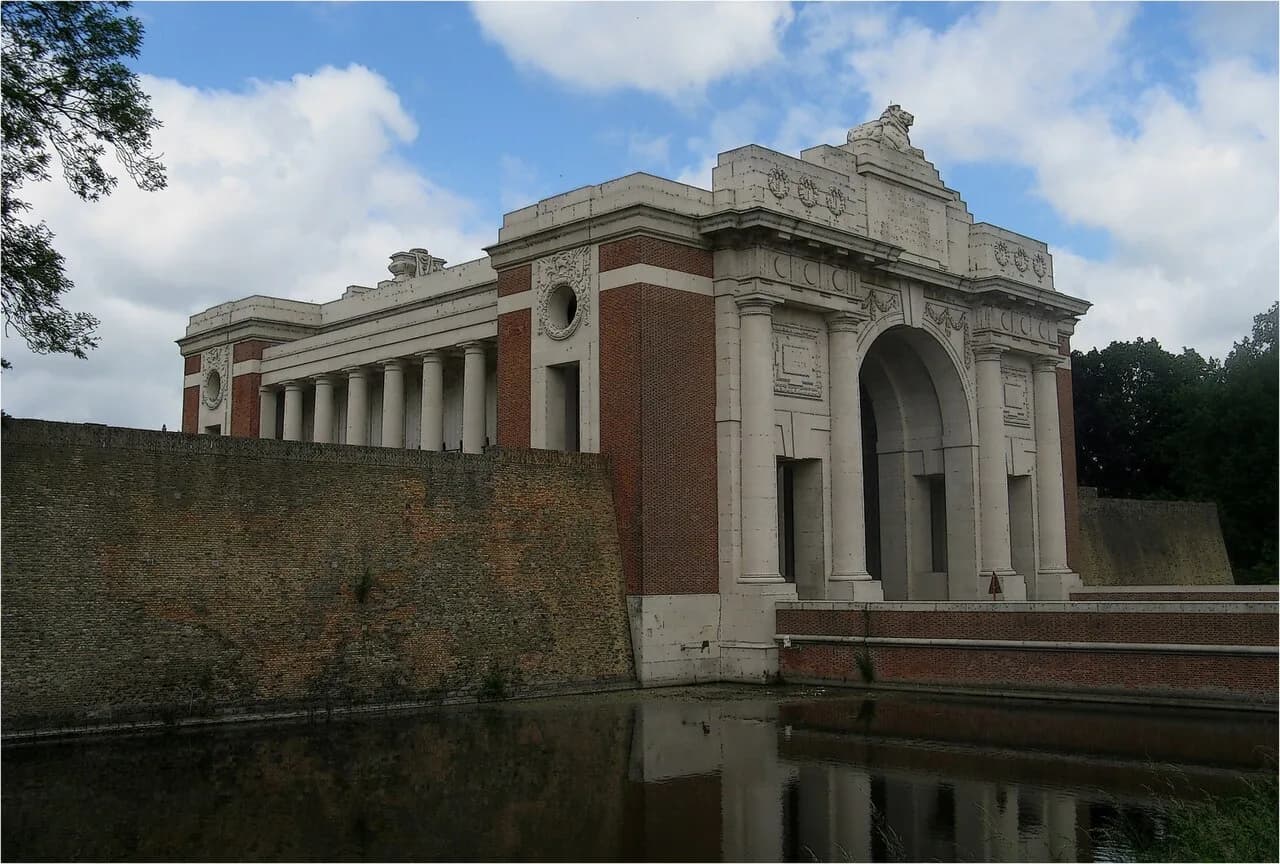
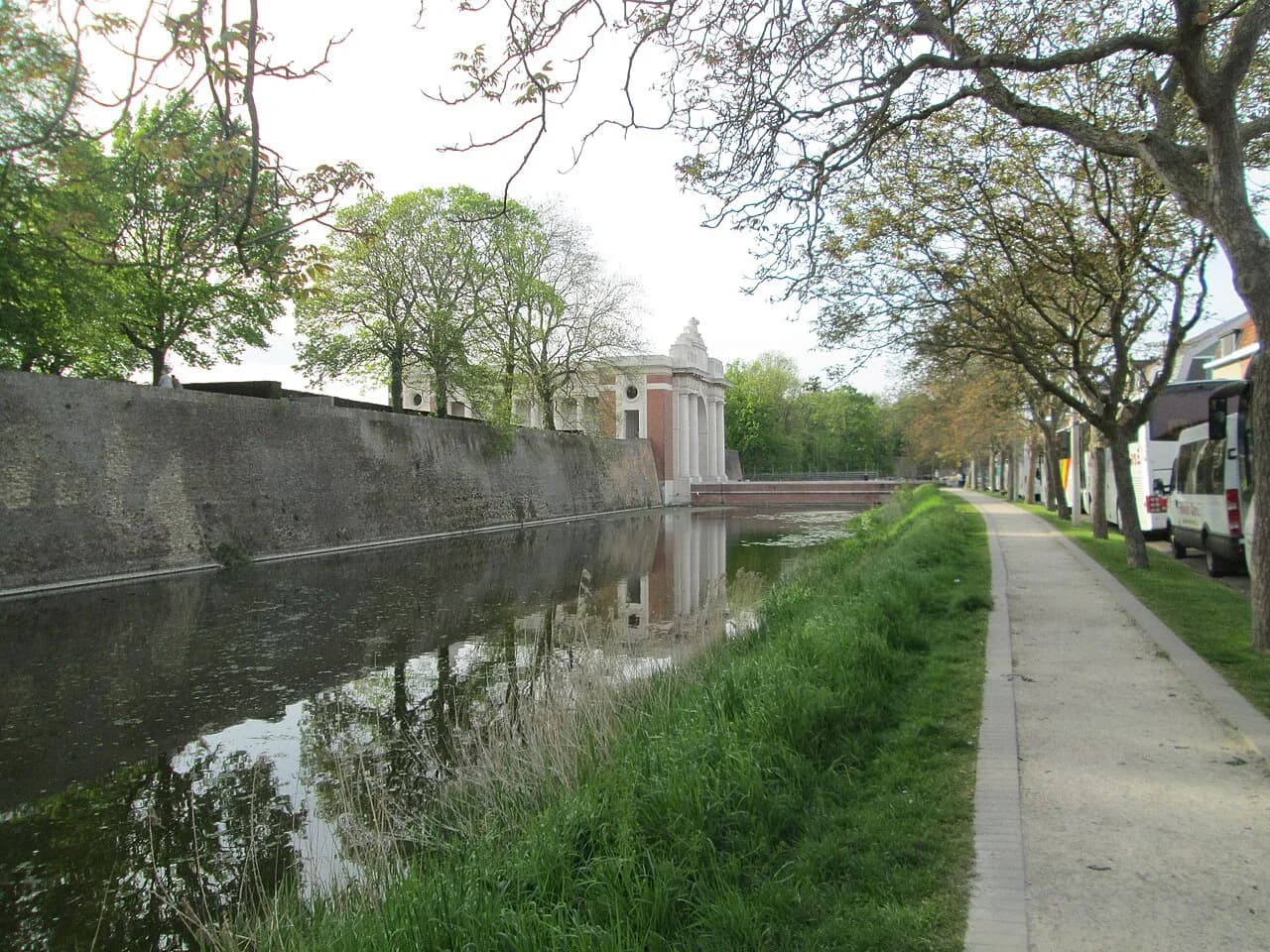
From the cathedral, head through the centre towards the Menin Gate (Menenpoort), the memorial arch that marks the eastern exit from the old town. The gate carries the names of soldiers of the former British Empire and its allies who died in the Ypres Salient and have no known grave, so it rewards slow reading rather than a quick photograph. Our Things to Do in Ypres (Ieper) guide covers the wider sights around the centre.
The Last Post is sounded under the gate every evening in tribute to the war dead, which is the reason to put the Menin Gate last on the route. Arrive early enough to read the panels in daylight, then hold your position for the ceremony instead of trying to see the town afterwards.
Treat the ceremony as a commemoration rather than an attraction: stay quiet, keep phones away, and let the sounding finish before moving off. The gate is a memorial, and the walk works best when the day ends there rather than continuing into an evening of sightseeing.
Extend the walk: the Ypres Reservoir Cemetery and the city's edge
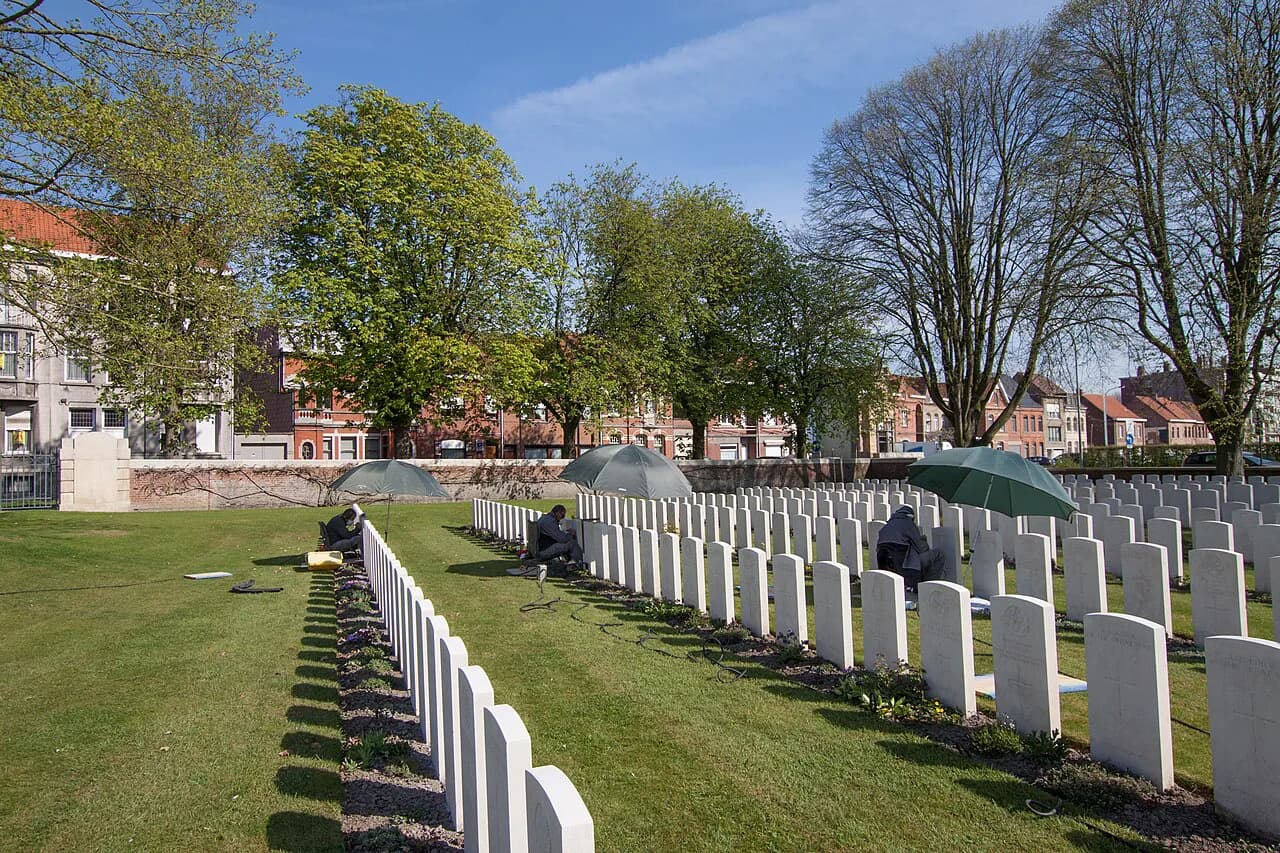
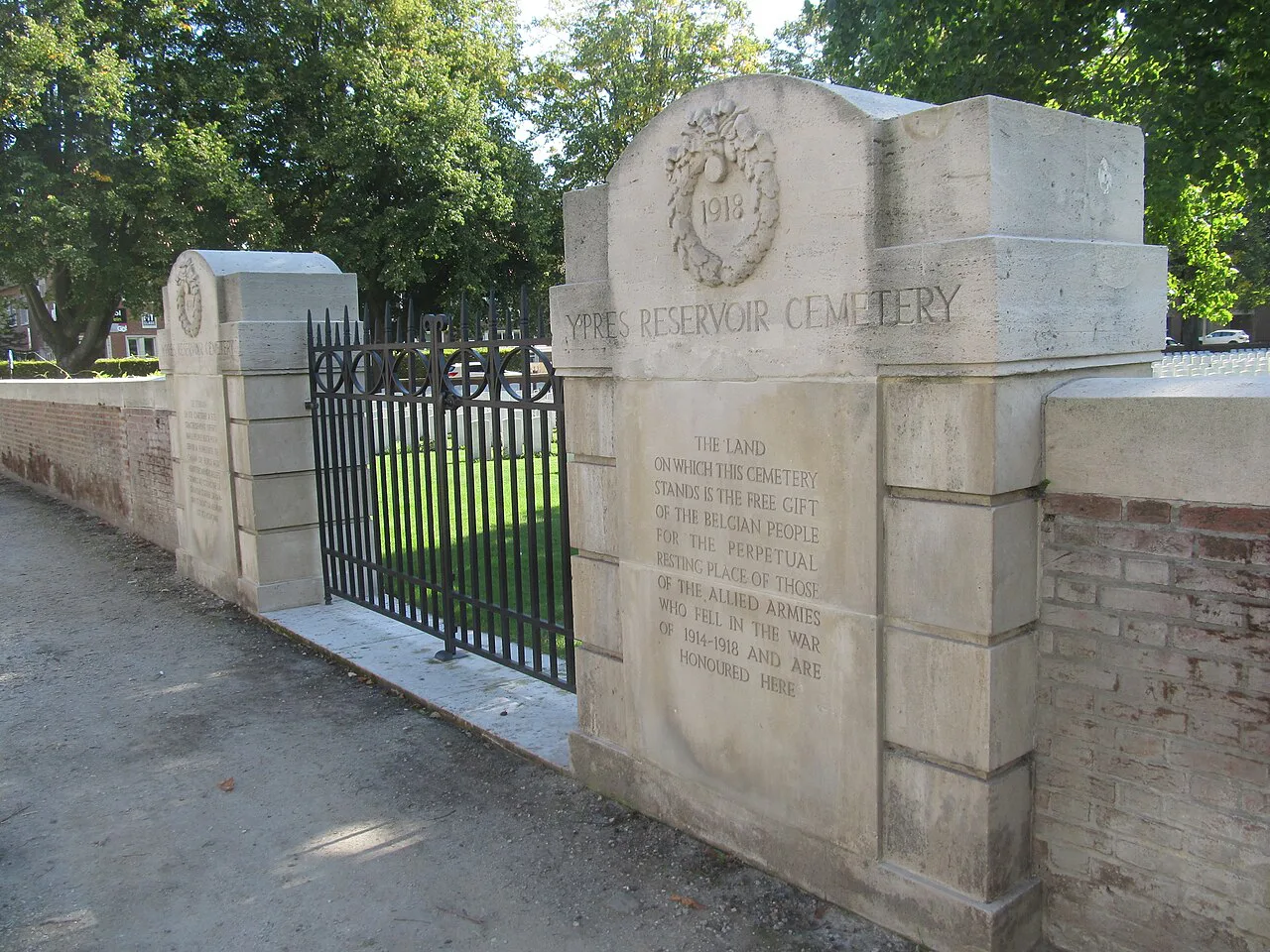
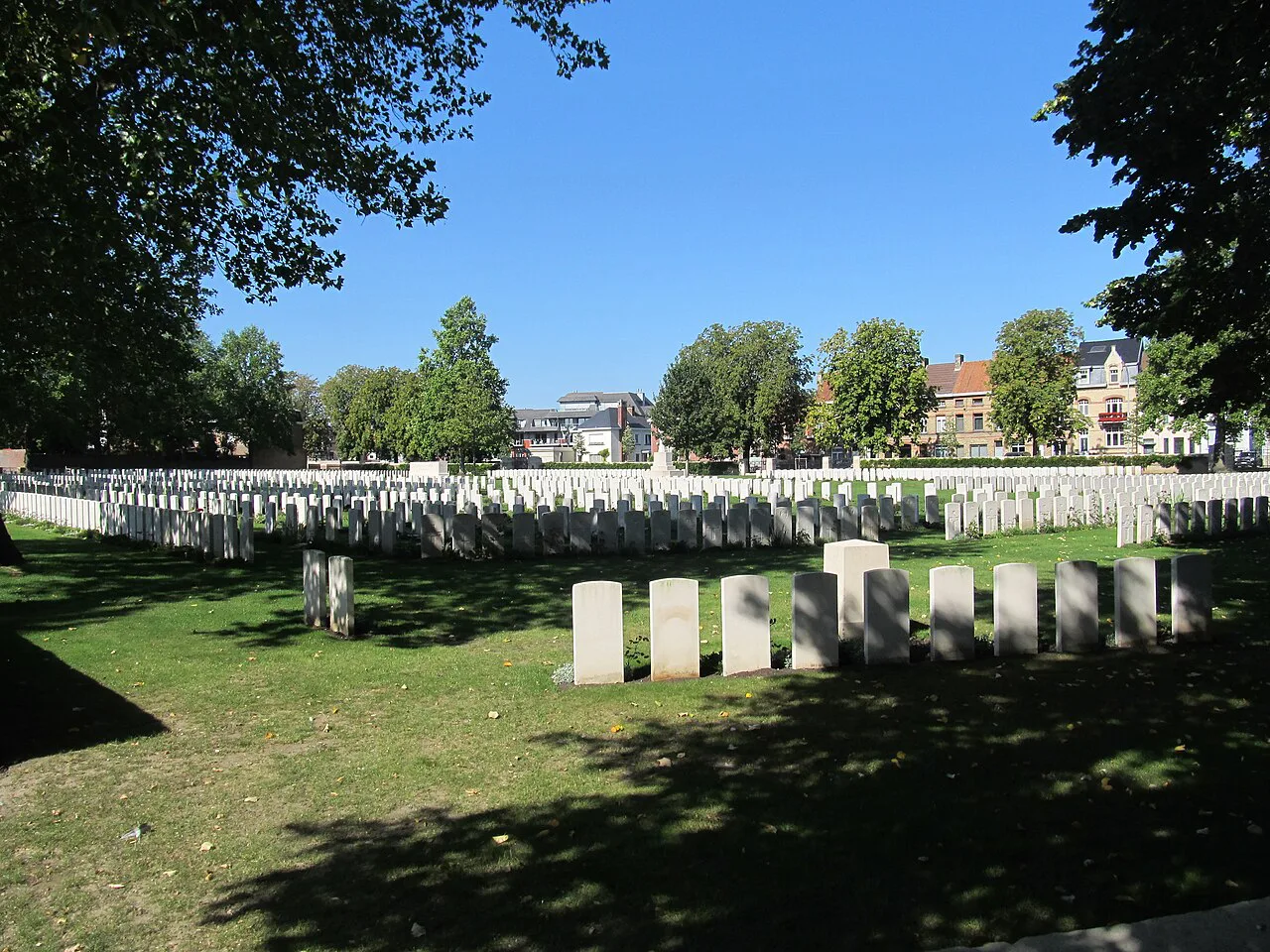
If you have time after the Menin Gate, walk out to Ypres Reservoir Cemetery on the edge of the town centre, a Commonwealth War Graves Commission burial ground used by field ambulances and front-line units from 1915. The headstones carry regimental insignia from across the Commonwealth, and walking the rows gives a different scale from the names on the gate.
This extension takes you out of the rebuilt medieval core and shows how closely the war sits to the town, which is the reason the walk is worth stretching. It is a cemetery, so keep the visit short, quiet and factual.
Beyond the town, the wider memorial landscape includes sites such as Tyne Cot Cemetery near Passchendaele, which need transport rather than shoe leather. Save those for a separate excursion and keep the centre walk on foot.
How long the walk takes and how to break it into a half day
Plan the centre walk as a half day: square, Lakenhalle, cathedral and gate in one continuous line, with the museum as the long stop. The distances are short enough that most of your time goes on looking rather than moving, so the route suits a morning start with the Menin Gate in the evening.
If you want a full day, split the walk in two: the Grote Markt, Lakenhalle and cathedral in the morning, then a break, then the Menin Gate and the cemetery extension later. That split keeps the museum from crowding out the memorials and leaves room for a beer or a chocolate stop without rushing the route.
Anyone weighing up whether the town justifies a short break at all should know that the centre alone fills a day and the surrounding battlefields add more. If your time is tight, the walk above is the core of the visit.
Guided and battlefield tours from Ypres
A guided tour is a different product from this walk: battlefield tours leave the town by vehicle and cover the Salient, cemeteries and trench sites that are too far to reach on foot. Multi-day guided tours, such as three-day itineraries run from the UK, bundle travel with a guide and suit travellers who want the wider ground explained.
For the centre, keep the route self-guided: the town's stops are close together, signposted and easy to sequence, and a guide adds most where the landscape needs interpreting. Book a battlefield tour for the day after the walk, not instead of it.
Bruges is the other obvious Belgian base for this corner of Flanders and works as a comparison for anyone weighing up where to stay, while our Things to Do in Ypres (Ieper) guide is the place to plan the rest of the stay.
Is the self-guided walk enough on its own?
Yes, for a short break: the Grote Markt, the Lakenhalle with the In Flanders Fields Museum, St Martin's Cathedral and the Menin Gate make a coherent half day that ends at the Last Post. Build the museum in as the long stop and the gate as the fixed evening finish, and the route plans itself.
Add the cemetery extension if you have a second afternoon, and keep the battlefield sites for a guided day out of town. That split gives you the rebuilt medieval centre and the war landscape without cramming either.
Explore more Ypres guides
Sources
Useful notes for your next trip
Optional updates to our guides.
You might also like
Continue reading
More guides you'll find useful