Ghent Walking Tour: A Self-Guided Route Through the Old Centre
A self-guided Ghent walking tour through the medieval centre, with stops in order, walking times and what to see at each. Includes guided tour options.
On this page
A Ghent walking tour of the old centre takes roughly half a day and covers the compact medieval core between the Leie and the Belfort: Sint-Baafsplein, the belfry, Graslei and Korenlei, Gravensteen, Sint-Niklaaskerk and St Michael's Bridge. Everything sits within about two kilometres of each other, so the walking itself is easy and the time goes on looking. This route sets the stops in a logical order and points to guided options for anyone who wants commentary.
The backbone is the Visit Gent city walk, a signposted highlights route of 4.2 km and about 5,600 steps that leads from the Castle of the Counts past the Graslei. You can walk it end to end, or use it as a spine and add the stops below.
What a Ghent walking tour covers
Ghent's historic centre is a ring of squares and quays rather than a single street. The two anchor points are the Belfort tower on Botermarkt, topped by its dragon, and the Graslei and Korenlei, the twin quays on the Leie where the medieval port traded. Between them lie Sint-Baafsplein, Sint-Niklaaskerk and the Korenmarkt, and a short walk west brings you to Gravensteen, the castle on the Leie.
Ghent rewards slow walking more than most Belgian cities, because the centre is car-light and the views change at every bridge. Two abbeys in the city hold UNESCO World Heritage status, and St Bavo's Cathedral and Gravensteen are the sights most visitors come for. For the wider picture of what there is to see, work through the things to do in Ghent list before fixing your route.
The route at a glance
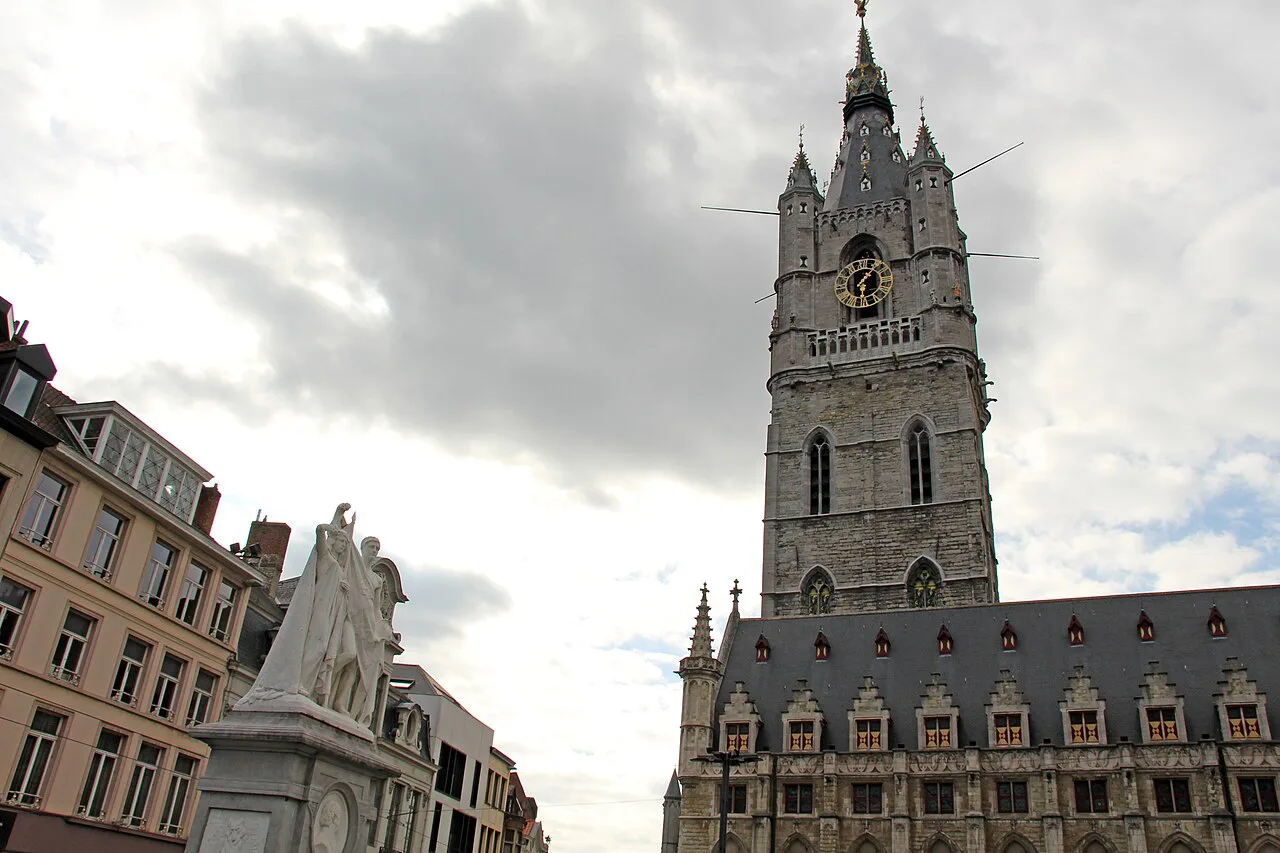
Start at Sint-Baafsplein, in front of the cathedral, and finish on St Michael's Bridge looking back at the three-tower skyline. In order: Sint-Baafsplein and Sint-Baafskathedraal, the Belfort and Lakenhalle on Botermarkt, Graslei and Korenlei, Gravensteen, Sint-Niklaaskerk and the Korenmarkt, then St Michael's Bridge. That is a loop of roughly three kilometres with plenty of stops, and it works in either direction.
The Visit Gent signposted walk puts the Castle of the Counts and the Graslei on the same route and measures 4.2 km, about 5,600 steps, which gives a fair idea of the distances once you add the side streets. Allow three to four hours if you go inside the cathedral and the castle, and about two hours if you stay outdoors.
Stop 1: Sint-Baafsplein and Sint-Baafskathedraal
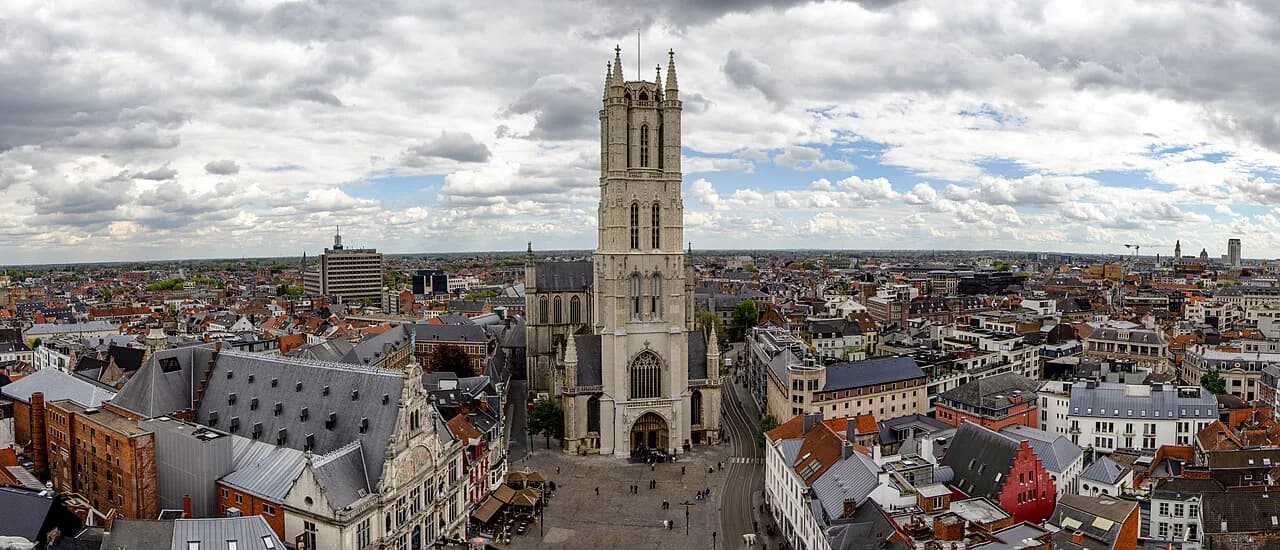
Sint-Baafsplein is the square in front of St Bavo's Cathedral, and the cathedral is the reason to linger. Inside hangs the Ghent Altarpiece, The Adoration of the Mystic Lamb by the Van Eyck brothers, one of the defining works of early Netherlandish painting. Whether the panels are viewable depends on conservation work and the ticket arrangements in place, so plan the cathedral as your first stop and take the rest of the route from there.
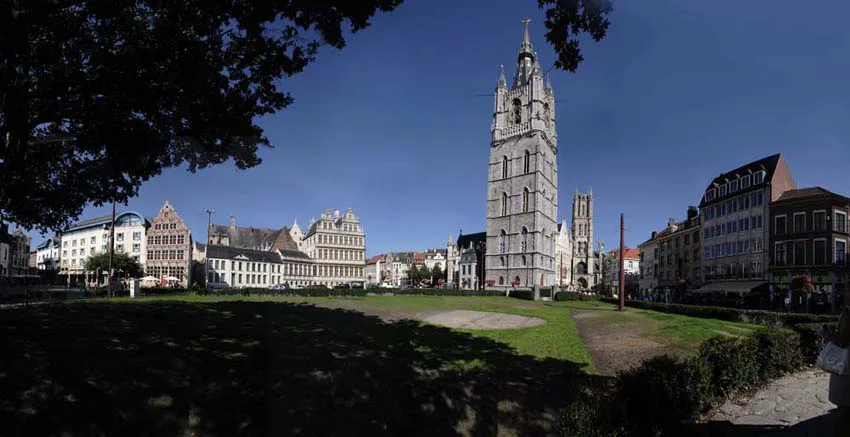
The square itself is a good place to orient yourself: the Belfort stands to the east and the old port area lies a few minutes north-east. Walk out along the side of the cathedral and you will see the belfry before you reach it.
Stop 2: the Belfort and Lakenhalle on the Botermarkt
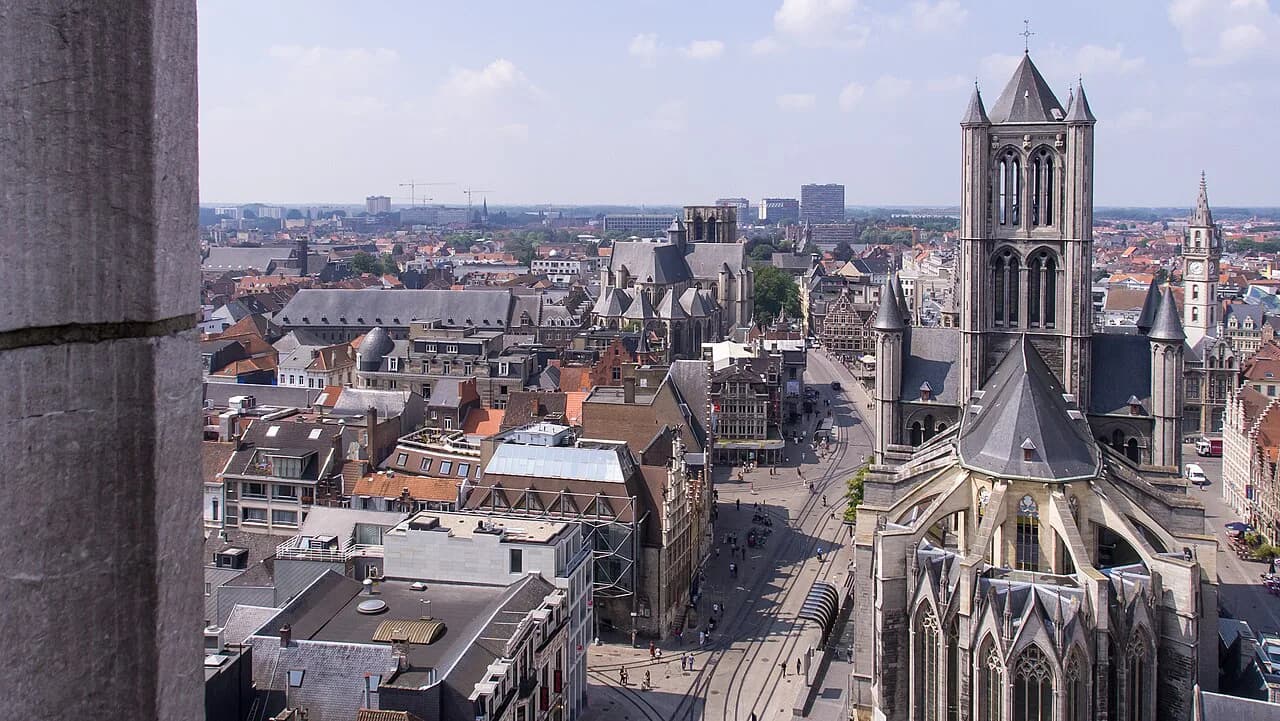
The Belfort rises from the Botermarkt, the old butter market, with the Lakenhalle, the medieval cloth hall, alongside it. The tower is a UNESCO World Heritage belfry and its dragon is the city's emblem; a climb gives the best straight-down view of the centre. The Visit Gent walk passes the tower, and Walkative lists the dragon-topped Belfort Tower among the sights its guides cover on the historic centre tour.
Treat the tower as an optional climb rather than a compulsory stop. If you are short of time, the view from St Michael's Bridge later in the route costs nothing and takes in the same towers.
Stop 3: Graslei and Korenlei quays
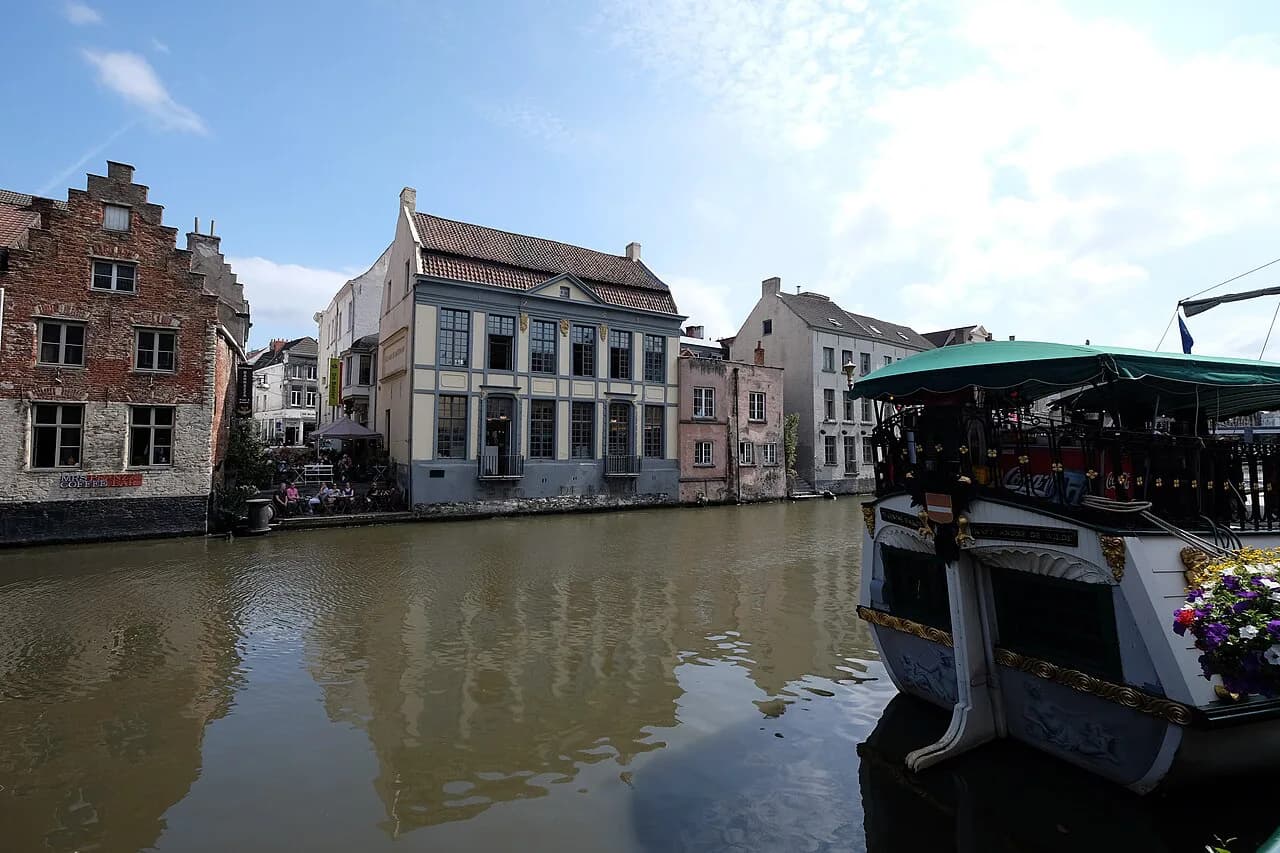
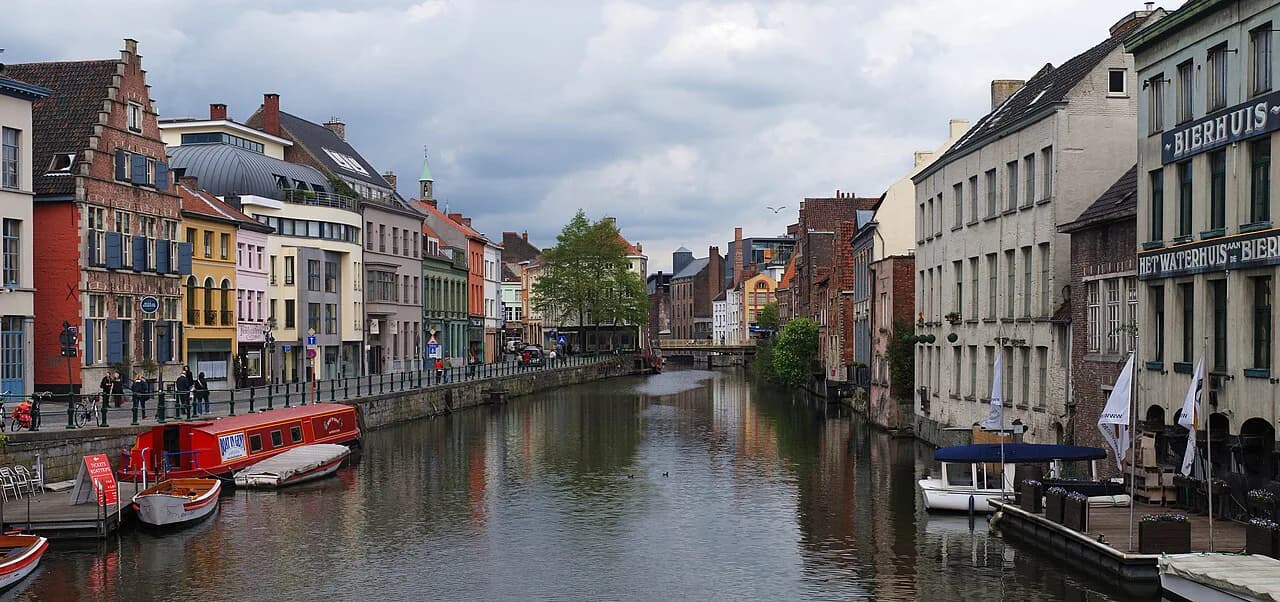
Graslei and Korenlei face each other across the Leie, lined with the gabled guild houses of the medieval port. This is the most photographed stretch in Ghent and also the busiest, so come early or late if you want the quays to yourself. From the Botermarkt it is a few minutes' walk down to the water.
The quays are the natural place to break the walk. A Ghent boat tour runs from the water here, and the view from either bank is free. If you are building a longer day, the canals and boat tours page explains the options on the water.
Stop 4: Gravensteen, the Castle of the Counts
Gravensteen is a moated medieval castle on the Leie, a short walk west of the Graslei through the streets of the old centre. Its walls, towers and inner courtyard make it the most complete castle experience in the city, and Walkative's guides use it as one of the anchors of a historic centre tour. Allow an hour if you want to walk the ramparts and see the collection.
This is the longest single stop on the route and the one most worth planning around. Entrance arrangements change with the season, so sort out your ticket before you walk over rather than turning up and hoping. The Gravensteen guide covers what is inside and how long to give it.
Stop 5: Sint-Niklaaskerk and the Korenmarkt
Sint-Niklaaskerk is the Gothic church that once served Ghent's merchants, and the Korenmarkt outside it is the city's main meeting square. The church and the square sit between the Graslei and the belfry, so you pass them naturally on the way back from the castle. Walkative names St Nicholas' Church as part of the historic heart its tours cover.
The Korenmarkt is where the walking tour turns into a city break: cafés, shops and the tram lines converge here. From the square, the route to St Michael's Bridge runs south-east along the Leie, a walk of about ten minutes from the castle.
Stop 6: St Michael's Bridge and the view back over the towers
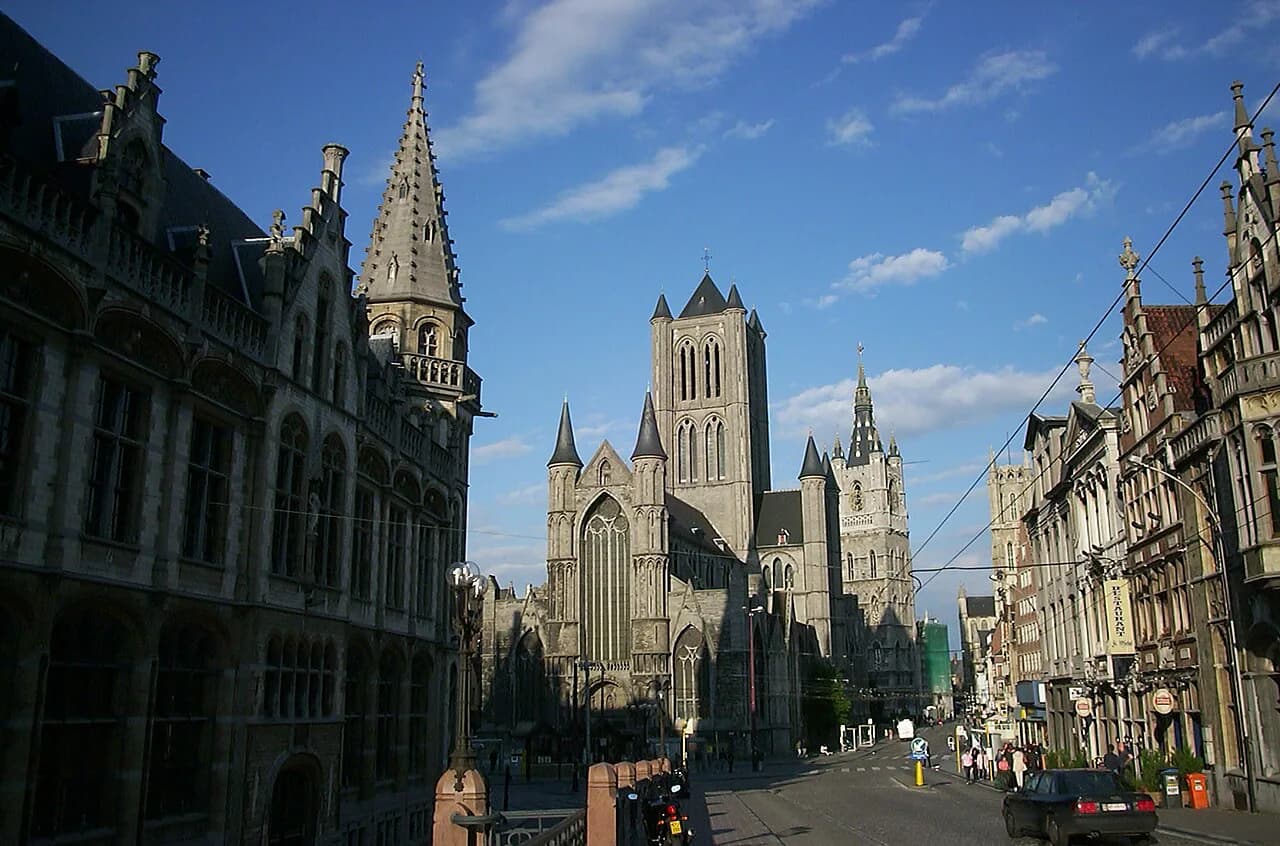
St Michael's Bridge is the classic Ghent viewpoint: from the middle of the span you get the three towers of Sint-Baafskathedraal, the Belfort and Sint-Niklaaskerk in one line. Walkative highlights the bridge as the place to snap the city's skyline. It is a two-minute stop with a camera and a ten-minute stop with a coffee from the nearby streets.
The bridge is where the classic route ends, but it is also a departure point for the quieter southern part of the centre. If you want more viewpoints, the best views in Ghent list the other high points worth the climb.
Extending the walk to the abbeys and the Patershol neighbourhood
With a second day, extend west and north from Gravensteen into the Patershol, the old craft quarter of narrow streets and small restaurants. Beyond it lie the two abbeys that share UNESCO World Heritage status with the belfry. This is a quieter, more local side of Ghent and the natural next leg if the centre felt crowded.
The Visit Gent walk covers 4.2 km and links the Castle of the Counts to the Graslei, so it is a good template for a longer day too. For a change of scene away from the medieval streets, the Ghent graffiti street, Werregarenstraat, is a short detour near the centre and takes minutes to walk through.
Free and paid guided walking tours in Ghent
Guided tours do the storytelling for you, and in Ghent the free model is well established. Walkative runs pay-what-you-wish tours from the historic centre: a two-hour Welcome to Ghent! Historic Centre Guided Tour and a two-hour Dark Stories of Ghent night tour, with departures listed in English, Spanish and French. On the October 2026 schedule, for example, the historic centre tour ran at 10:30 and 13:30 in English.
A guided tour suits anyone who wants context on the belfry, the castle and the abbeys without reading up first, and Walkative's format lets you pay what you think it was worth. The trade-off is that you walk at the group's pace and the route is fixed. Self-guided walking keeps your own timing and lets you stop for chocolate shops in Ghent or a beer along the way.
Schedules and capacities change, so book the tour you want before you travel rather than turning up at a meeting point. Walkative's booking page shows departure times and remaining places.
Ghent walking tour map and self-guided alternatives
The Visit Gent city walk is signposted on the ground, which makes a paper map optional: follow the markers and you will pass the Castle of the Counts and the Graslei. The route is measured at 4.2 km, about 5,600 steps, a useful figure if you are deciding whether to walk it in one go or split it across a morning and an afternoon.
If you would rather cover more ground, cycling in Ghent is easy on the flat streets and lets you reach the abbeys and the outskirts without adding hours. On foot, the centre is small enough that a wrong turn costs you five minutes, not an afternoon.
For a free day in the city, free things to do in Ghent lists the squares, quays and viewpoints that cost nothing, which is most of this route. Use it to fill the gaps between paid sights.
How much time to allow and when to walk
Give the route three to four hours if you go inside the cathedral and Gravensteen, and two hours for the outdoor version. The Visit Gent walk's 4.2 km is the walking distance alone; the stops are what stretch it. Mornings are best for the Graslei and the bridge, when the quays are quieter and the light is on the guild houses.
Ghent's centre is busiest at weekends and during events, and some sights close on Mondays, so build the walk around a day when the cathedral and castle are open. The Visit Gent page for the city walk gives the route and its highlights in one place.
What not to miss if you only have half a day
With half a day, walk Sint-Baafsplein to the Belfort, drop down to Graslei and Korenlei, then cross to St Michael's Bridge for the skyline. That gives you the cathedral, the belfry, the quays and the classic view in about two hours, with time for one detour. Skip Gravensteen if time is tight; the exterior is visible on the route and the interior deserves a fuller visit.
If you want one paid sight in the half-day, make it the cathedral for the Ghent Altarpiece. Everything else on the short route is street-level and free. Finish with a beer at one of the Ghent breweries near the centre if the afternoon is still yours.
Should you walk Ghent with a guide or on your own?
Walk Ghent on your own if you want to set the pace and stop where you like; the centre is compact and the Visit Gent 4.2 km route covers the highlights without a guide. Book a Walkative tour if you want the stories behind the belfry, the castle and the abbeys, and are happy to follow a fixed two-hour route. Either way, start at Sint-Baafsplein and end on St Michael's Bridge.
Sort out the cathedral and Gravensteen tickets before you set off, and leave the rest of the day loose. The old centre rewards wandering between the stops as much as ticking them off.
Explore more Ghent guides
Frequently Asked Questions
Was Harry Potter filmed in Ghent?
There is no evidence that Harry Potter was filmed in Ghent, and the city's fame rests on its medieval centre rather than film locations. Enjoy the belfry, the castle and the quays for what they are.
Is Ghent a tourist trap?
Ghent's centre is a working city with a large student population, and the main squares and quays are genuinely busy in season rather than staged for visitors. Walk a street or two off the Graslei and the crowds thin quickly.
Sources
Useful notes for your next trip
Optional updates to our guides.
You might also like
Continue reading
More guides you'll find useful