Bruges in April: Spring Weather, Crowds and What to Do
Plan a Bruges city break in April: typical spring temperatures, thinner crowds, canal-side walks and the medieval sights worth two or three days.
On this page
April is a good month for a Bruges city break: daytime temperatures sit in the low teens, the crowds are lighter than in high summer, and the whole historic centre is compact enough to cross on foot. Three days lets you cover the Markt and Burg core, the Flemish Primitives collection and the quieter canal end of town without rushing. This guide sets out what April weather typically feels like, how the city is laid out, and how to split one, two or three days, starting with the things to do in Bruges that reward a spring visit.
What April in Bruges is like
Spring arrives properly in April, with typical daytime highs around 13°C and nights near 4°C, and the coastal cities of Bruges, Antwerp and Ghent show less swing between day and night than inland areas. Rain is usually light rather than persistent, so a waterproof layer and a warm mid-layer matter more than an umbrella. Treat these as climate averages rather than a forecast for your dates, and pack for changeable skies.
The payoff is a city that has not yet filled with summer visitors, so the Markt, the Burg and the canal viewpoints are easier to enjoy at a slow pace. April is shoulder season, which generally means more availability and less pressure on the headline sights. Mornings are cool and often the quietest window for photography on the Rozenhoedkaai.
The historic centre is a UNESCO World Heritage site, and that protected core is what shapes an April visit: cobbles, canals and compact streets rather than long tram hops. Good shoes and a light rain jacket do more for a day here than any itinerary app.
How Bruges is laid out
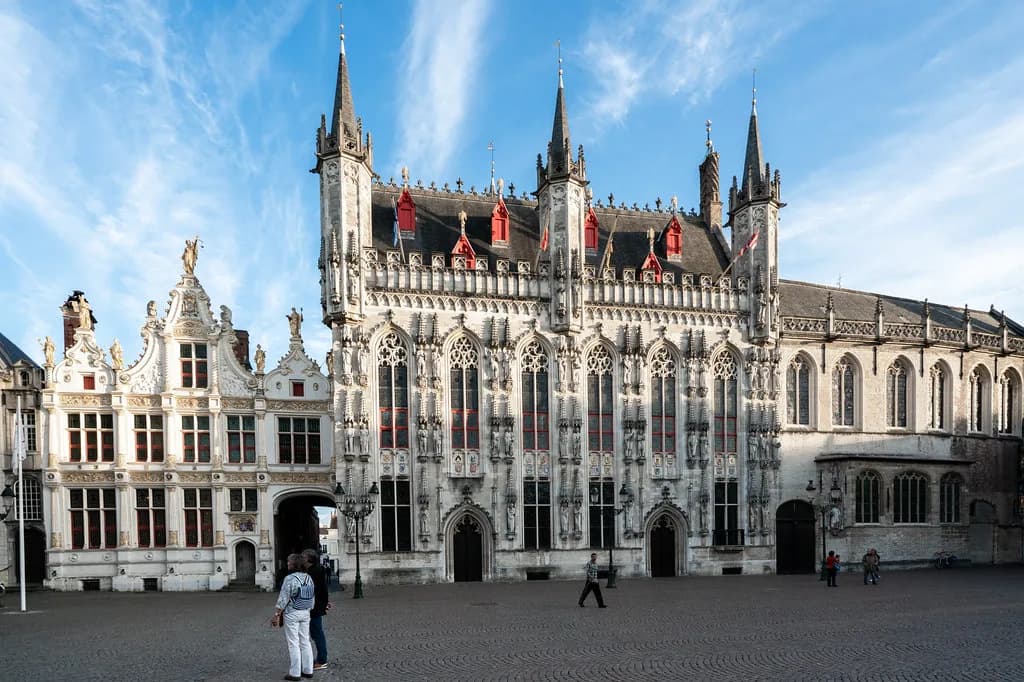
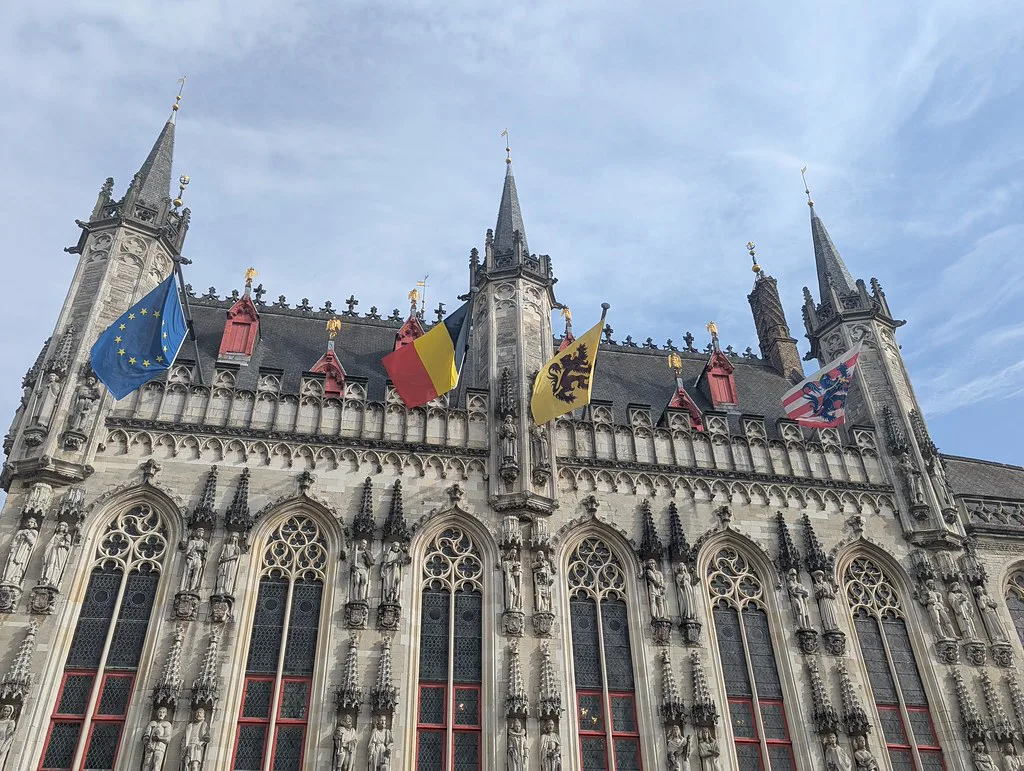
Bruges (Brugge) radiates from two adjoining squares, the Markt and the Burg, with the Belfort rising above the Markt. Almost everything you will want to see sits within roughly twenty minutes' walk of that pair. Start there, pick up a street map at the Visit Bruges Info Point on Markt 1, and work outwards.
From the Markt, the canal quays run north-east towards the Rozenhoedkaai, the most photographed water viewpoint in the city, then on to the canal bends and the windmills at the edge of town. The opposite direction, south past the Minnewater, leads to the beguinage end of the city, which is calmer and greener. Plan your loops so you cross the centre once in each direction rather than doubling back.
A one-day core: Markt, Burg, Belfort and the canals
With a single day, spend the morning on the Markt and in the Burg, climb the Belfort for the view over the tiled roofs, and walk the short stretch to the Rozenhoedkaai. Then take a Bruges canal tour, which runs under the low bridges and past the whitewashed façades in a way you cannot replicate on foot. Boats fill as the day goes on, so an early or late slot is quieter.
A canal cruise through the medieval heart is the classic way to see the city from water level, and it works well in April when the light is soft and the boats are quieter. Leave the rest of the afternoon for the Burg and a slow walk back through the shopping streets.
If you have only one day, drop the museums entirely and treat Bruges as an outdoor city: squares, canals, the Béguinage and the windmills. That gives you the medieval fabric without spending precious daylight indoors, and it leaves a reason to come back.
A second day: Groeningemuseum, the Flemish Primitives and BRUSK
Bruges is the birthplace of the Flemish Primitives, and the Groeningemuseum holds the core of that collection. Give it a slow two hours, then walk ten minutes to BRUSK, the newer art gallery that broadens the city's art offering beyond the medieval. Pairing the two makes a coherent art day rather than a scatter of small museums.
The Groeningemuseum is where the Flemish Primitives can be seen at close range, and the city's own 48-hour itinerary argues Bruges cannot be reduced to a handful of highlights. Use the second day for the art you came for, then spend the late afternoon simply wandering the quieter lanes back towards the Markt.
A third day: Minnewater, the beguinage and quiet canals
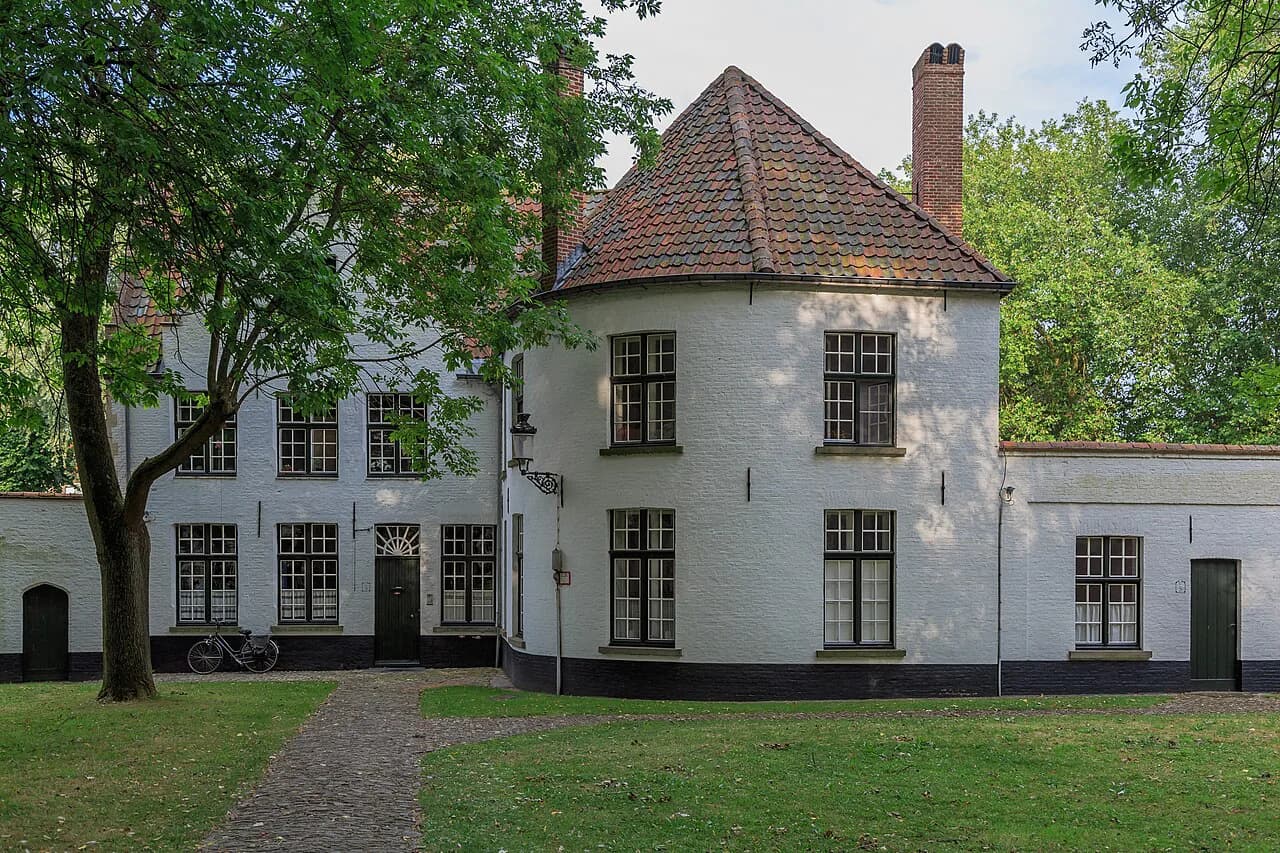
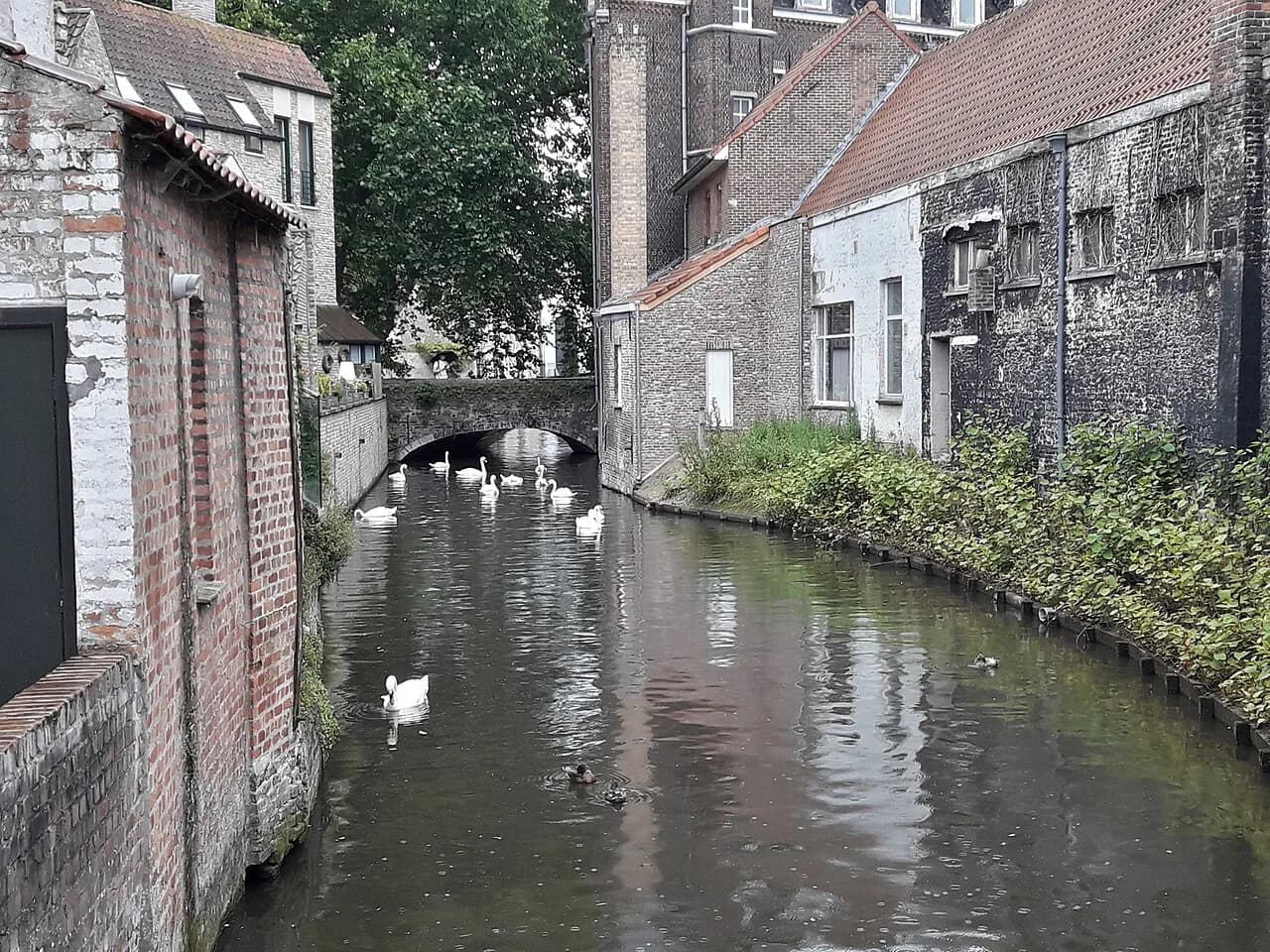
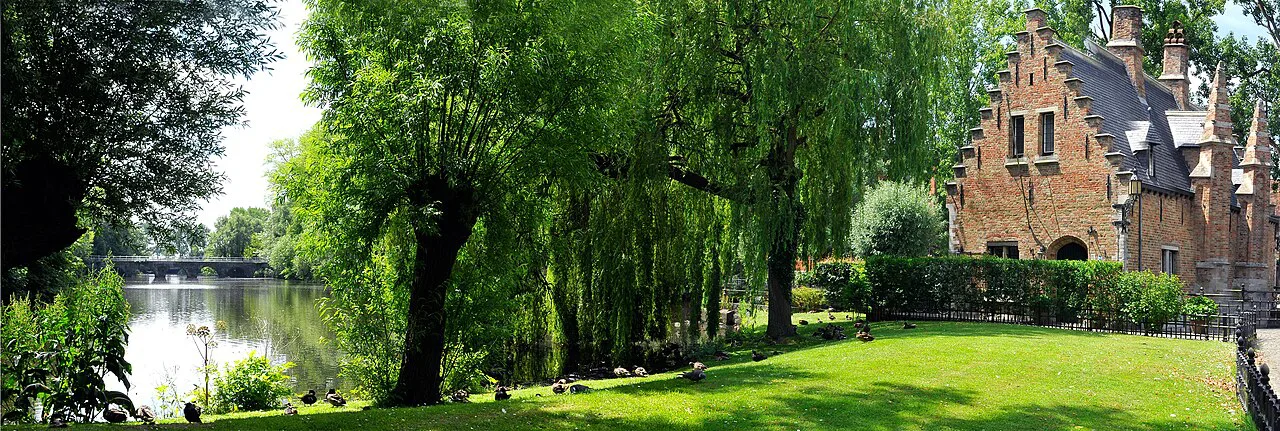
The Minnewater end of Bruges is where the city slows down: a lake, swans, the beguinage and low bridges, all within a fifteen-minute walk of the Markt. Spend a morning here in April, when the trees are in leaf and the paths are largely local. It is the best counterweight to the busy Markt.
Walk back along the Bruges reien, the small canals that thread the residential streets, and stop wherever a bench looks out over the water. This is the day to leave the map in your pocket, because the pleasure is in the wandering rather than a checklist. Finish with a loop out to the windmills on the eastern edge of the old town.
Rainy April afternoons: museums, chocolate and beer
April showers rarely last all day, so the practical approach is to keep one indoor anchor per afternoon rather than rewriting the plan. The Groeningemuseum and BRUSK absorb a wet couple of hours well, and the small museums around the Burg give you a short indoor stop between showers. Chocolate shops are another good bolt-hole, and the windows alone are worth the detour.
For a longer wet spell, a beer café is the right answer: tasting Belgian beer indoors is a Bruges ritual in its own right, and a tasting flight occupies an hour without asking you to walk anywhere. If you would rather plan a brewery visit, Bruges breweries run tours that keep you out of the weather.
Chocolate and beer to take home
Bruges chocolate is best bought in small quantities from a specialist rather than in bulk from a souvenir shop, and the city has a strong cluster of makers within a short walk of the Markt. Buy what you will eat within a week or two, since fresh pralines do not improve with age. A small box makes a better gift than a large novelty one.
Beer travels better than chocolate: bottles from Bruges breweries survive the train home and give you something to open weeks later. If you want a single day anchored around beer, a Bourgogne des Flandres visit fits neatly between the canals and the Markt. Otherwise pick up a mixed case from a bottle shop near the centre.
When in April to go
Early April tends to be cooler and quieter, while late April brings longer evenings and more visitors as the season builds. Public holidays can swell the Markt and the Belfort, so shift your museum and canal visits to the mornings then. Beyond that, the calendar of Bruges events through the year is the place to check what falls during your dates.
If you are weighing April against the next season, Bruges in summer is busier and warmer but the canals are at their liveliest. April trades a little warmth for thinner crowds, which suits a short break. Compare the two and pick the trade-off you want.
How many days Bruges needs in April
Two days covers the Markt and Burg core, the Belfort, a canal tour and the Groeningemuseum without rushing, and three days adds Minnewater and the beguinage comfortably. One day is enough for the outdoor circuit if you accept that you will miss the art. Anything longer than three days in April is better spent using Bruges as a base than filling every hour.
Is April the right month for your Bruges break?
April gives you the medieval centre at its most walkable, with mild days, soft light on the canals and crowds well short of summer levels. Build the trip around the Markt, Burg and Belfort, add a canal tour and one art museum, and keep a third day for Minnewater. If you want heat and long evenings, look at summer instead.
Explore more Bruges guides
Frequently Asked Questions
Is Bruges good in April?
Yes. April brings mild spring days, thinner crowds than high summer and a compact medieval centre that is easy to walk. Pack a waterproof layer for changeable skies and plan one indoor anchor per afternoon.
What is the weather like in Belgium in April?
Spring is fully under way, with typical daytime highs around 13°C and nights around 4°C. Coastal cities such as Bruges show less temperature swing between day and night than inland areas, and rainfall is usually light. These are climate averages, not a forecast.
How many days do you need in Bruges in April?
Two days covers the Markt, Burg, Belfort, a canal tour and the Groeningemuseum. A third day adds Minnewater, the beguinage and the quieter canal walks without rushing.
Sources
Useful notes for your next trip
Optional updates to our guides.
You might also like
Continue reading
More guides you'll find useful