Bruges Events: A Month-by-Month Guide to the City's Festivals
A month-by-month guide to Bruges events, from the Procession of the Holy Blood in May to the Beer Festival in February and the Cactusfestival in July.
On this page
Bruges events cluster in May and July, and planning around one of them changes how the city feels. May brings the Procession of the Holy Blood and the Meifoor fair, while July fills the Minnewaterpark with the Cactusfestival and the Burg with open-air concerts. This guide walks through the recurring calendar month by month, names the square or park each event occupies, and explains how a fixed date should shape a short break.
Everything here is a recurring event rather than a one-off listing, so the months hold from year to year even when the exact days move. Several of the venues sit within a few minutes' walk of each other in the historic core, which means a single event can redirect your route between the Markt and the Burg. Where an event falls on a day you had earmarked for museums, the plan needs reordering rather than abandoning.
Where Bruges events happen
The city's compact centre does most of the work. The Markt, 't Zand and the Burg host the larger gatherings, while the Minnewaterpark and Koning Albert I-park take the green-space events, and the Bruges Meeting & Convention Centre (BMCC) holds the indoor beer festival. Cinema Lumière covers the film programme.
That geography matters when you plan a route. 't Zand sits on the walk between the Markt and the Minnewaterpark, so a fair there puts you in the middle of the crowd on the way south. The Burg, a short step from the Markt, is small enough that a concert series fills it quickly. If your day runs Markt to Graslei and Korenlei, an event on the Burg or 't Zand is the one most likely to slow you down.
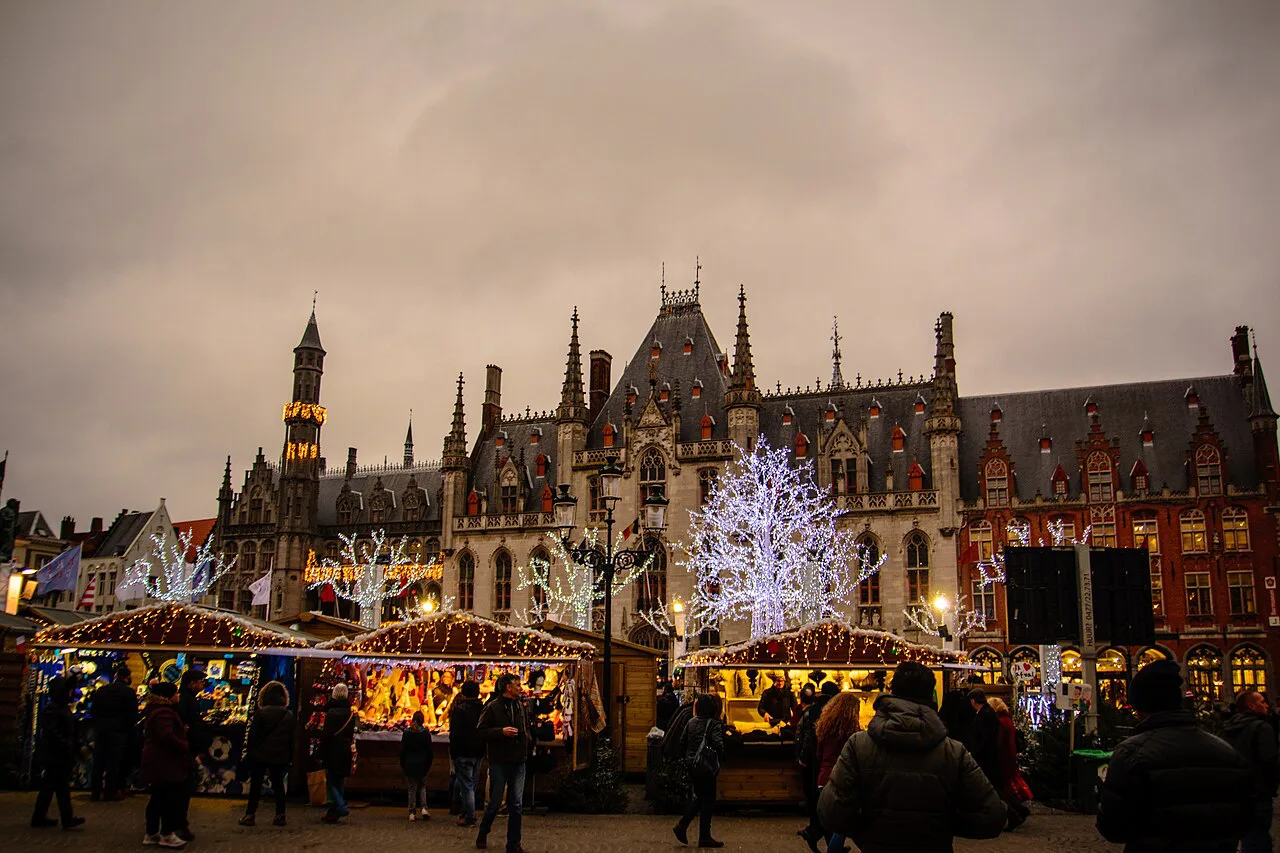
January: the closing days of Winter Glow (Wintergloed)
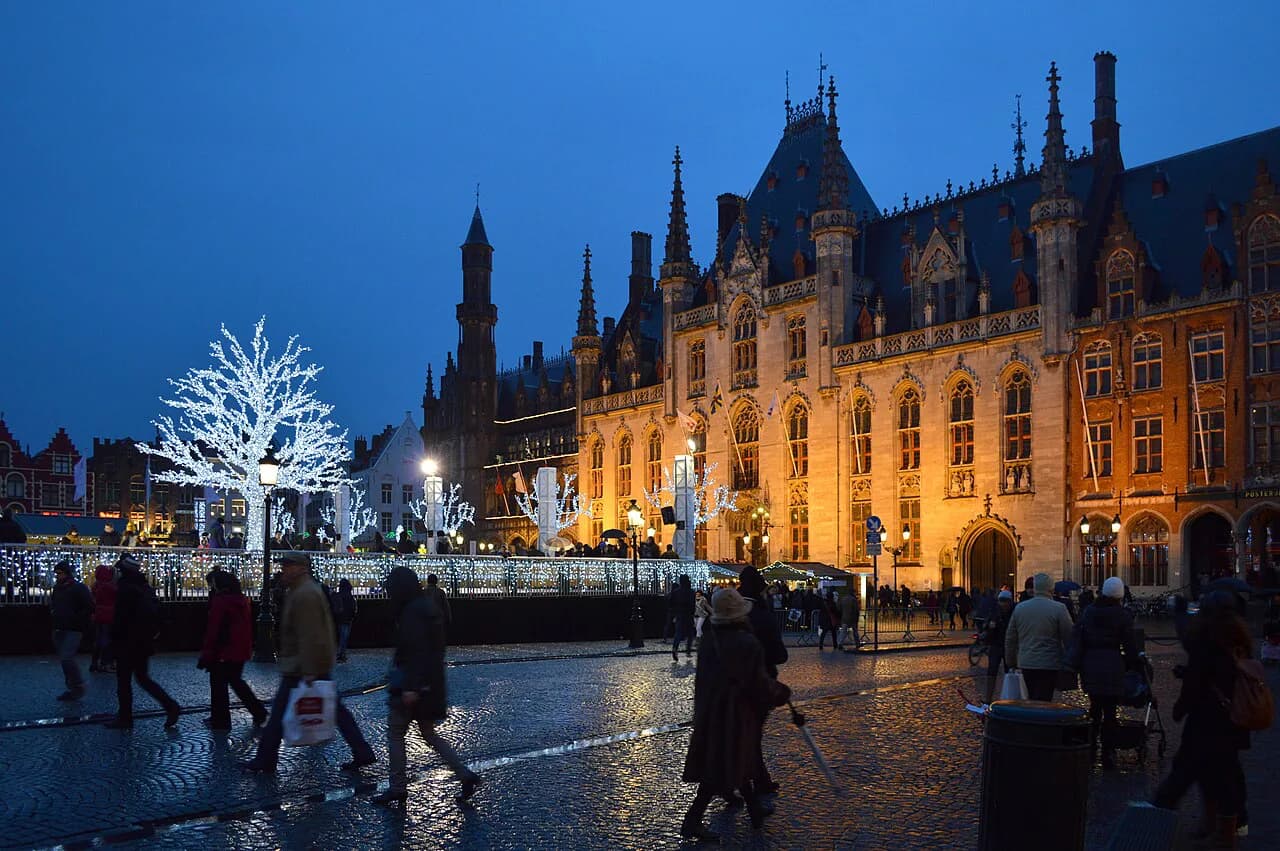
Winter Glow (Wintergloed) closes out in early January, with a light trail through the city centre and 't Zand, ice skating and festive stalls. It is the last of the winter season rather than a reason to plan a January trip on its own, but if you are in Bruges in the first days of the year it gives the dark afternoons a shape.
Outside those closing days, January is the quietest month in the calendar. Canals, museums and the belfry are yours at a slower pace, and the trade-off is early dusk and cold walks between sights. Pair the light trail with an indoor afternoon and the short daylight hours stop mattering much.
February: the Bruges Beer Festival at the BMCC
The Bruges Beer Festival takes place in early February at the BMCC and gathers Belgian breweries for tasting in a professional setting. For anyone serious about Belgian beer it is the strongest single reason to pick a winter date, and it sits indoors, which removes the weather risk.
The festival is a hall-based event rather than a pub crawl, so build the rest of the day around it: a morning in the historic core, the tasting in the afternoon, and a short walk back to the centre afterwards. February is otherwise a low-season month, so accommodation and the main sights are calmer than in spring.
March: Lumière Cinema Spotlights
Cinema Lumière runs its Spotlights programme through March, a curated run of independent European film with discussions attached. It is an indoor, evening-weighted event, which suits a month when the weather can still turn.
Treat the cinema as your evening and keep the daylight for the city. March is quiet enough that you can see the Groeningemuseum and the Church of Our Lady without much queueing, and a film gives the day a natural end. Check the cinema's own programme for what is screening and when, since the selection changes.
April: Erfgoeddag, when heritage sites open up
Erfgoeddag, Heritage Day, falls in late April, when museums and heritage sites across the historic centre offer special access and activities. The point of the day is the material normally kept behind the scenes: archives and objects brought out for the occasion, alongside the regular collections.
Because the programme is spread across many locations, a Heritage Day visit rewards a loose plan rather than a fixed route. Pick two or three participating sites near the Markt and Burg, then let the rest of the day fill in on foot. Elsewhere in April the city is warming up and the crowds are still modest, which makes it one of the better shoulder months.
May: the Procession of the Holy Blood, the city's defining event
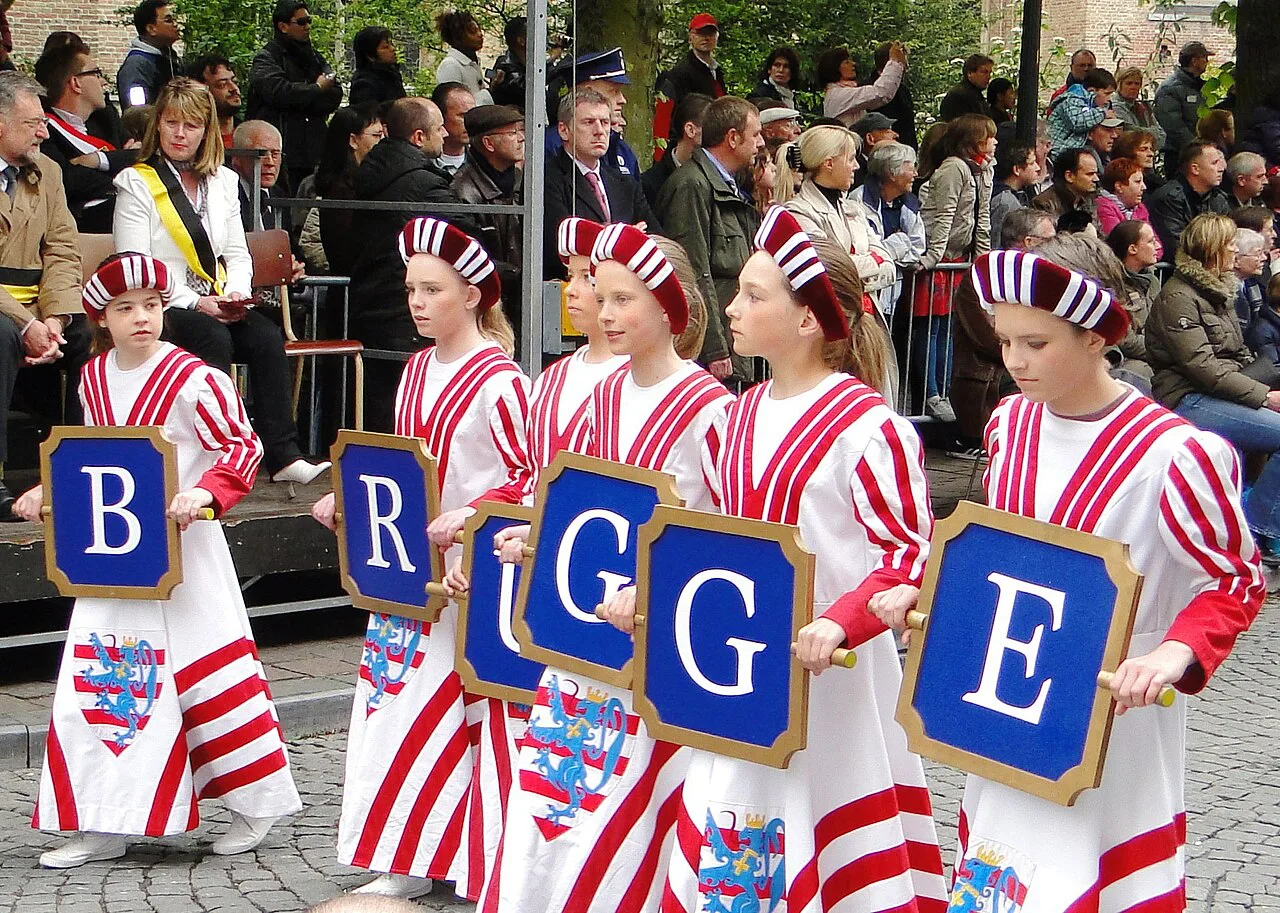
The Procession of the Holy Blood is Bruges at its most itself: a religious parade tracing back to the thirteenth century, with biblical scenes and historical re-enactments through the historic centre, recognised by UNESCO. It is held in May, and it draws spectators from well beyond Flanders.
The trade-off is straightforward. A procession day gives you something no ordinary visit offers, but it also puts the centre at its fullest and makes a relaxed walk along the canals harder. If you want both the procession and quiet canal views, take a Bruges canal tour early in the day before the route fills.
If you would rather avoid the crush, May either side of the procession is a fine month: longer days, museums open, and space on the streets. The procession itself runs on a date set for each year, so confirm the day with the organiser before booking travel around it.
May: Meifoor, the fair that takes over 't Zand and Koning Albert I-park
Meifoor is a traditional funfair that has visited the city for centuries, running through May at 't Zand and Koning Albert I-park, with rides and local snacks. It is a fixture of local social life and marks the arrival of the warmer season, rather than a visitor attraction in the museum sense.
For a short break, Meifoor's effect is practical: 't Zand is a working fairground and the park is busier than usual, so plan your walk south to the Minnewaterpark with that in mind. The upside is an evening of noise and lights a few minutes from your route. Combine it with a morning at the Bruges market and the day covers both halves of the city's life.
June: Fête de la Musique on the city squares
Fête de la Musique arrives in mid-June, with free concerts across various city squares tied to the summer solstice. Because the music is free and spread out, it is the least disruptive of the big events: you can wander between squares and still see the sights.
June is a strong month overall: long evenings, warm-enough walking weather, and a festival that adds atmosphere without demanding a ticket. Use the squares as a moving base and drop into a chocolate shop between sets.
July: Cactusfestival in the Minnewaterpark
The Cactusfestival takes place in early July in the Minnewaterpark, an alternative music festival with a relaxed reputation set in the park around the Lake of Love. It draws an international crowd and is one of the reasons July is the busiest festival month in the city.
The Minnewaterpark sits at the southern edge of the centre, so festival days push foot traffic along the approach from 't Zand. If you are in Bruges for the festival, sightseeing works best in the mornings before the park fills. If you are not, July before or after the festival weekend still gives you long days and everything open.
Late July and August: Moods! concerts on the Burg
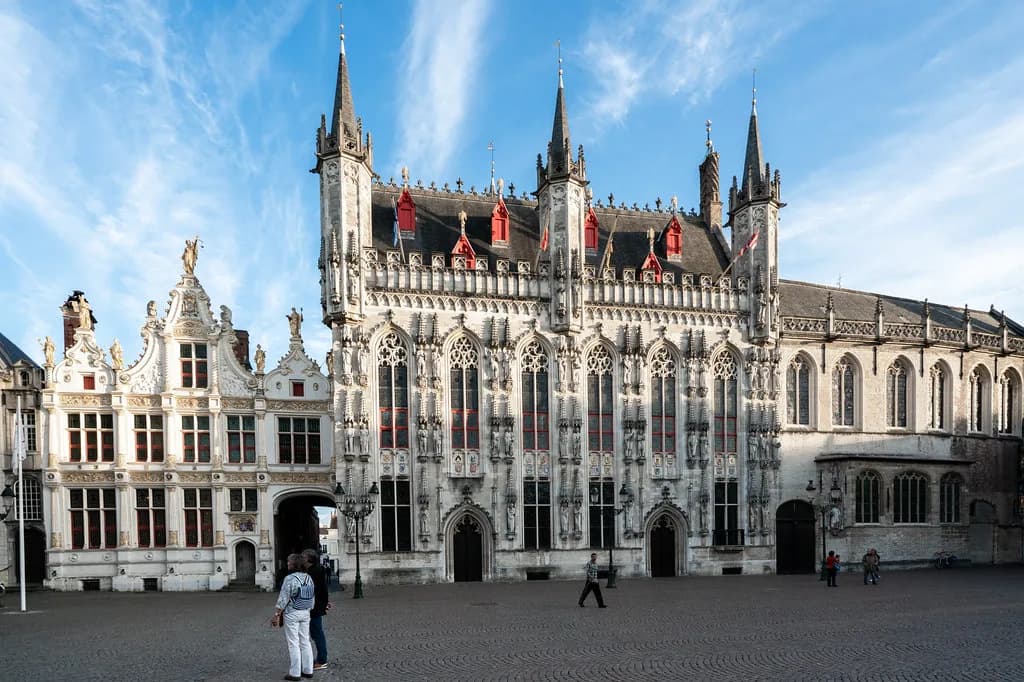
Moods! runs from late July into August on the Burg, with outdoor concerts spanning jazz and world music in the square between the Basilica of the Holy Blood and the Stadhuis. It is the most atmospheric of the summer series because of the setting rather than the scale.
Evening concerts leave the days free, so August visitors lose nothing in planning terms: mornings at the Groeningemuseum, afternoons along the canals, and a concert on the Burg to finish. Do book canal trips and the belfry for the morning, when demand is easier to manage.
How a big event changes your days: crowds, walking routes and booking ahead
The events that change a trip most are the Procession of the Holy Blood in May and the summer pair of Cactusfestival and Moods!. On those days the centre and its squares are given over to spectators and stages, so walking routes between the Markt, Burg and Graslei and Korenlei need adjusting. Spring and autumn, by contrast, are described as a more relaxed pace for museums and galleries.
Book accommodation and any timed entry before you fix an event date, not after. Confirm start times and any ticketing with the event organiser before you commit. If your dates are flexible, choosing a shoulder month either side of May and July gives you the same city with far more room.
Fitting a museum visit around an event day, bearing Monday closures in mind
Belgian museums often close on Mondays, so an event day that falls at the start of the week needs checking before you build a plan. Put the museum on a Tuesday to Saturday and leave the event day for the streets, the squares and the crowds.
On a procession or festival day, indoor sights are a useful refuge when the route outside is blocked. The Museum of the Church of Our Lady, with its Michelangelo Madonna, is the sort of indoor stop that keeps a disrupted afternoon productive. Check each museum's own page for its weekly closing day before you rely on it.
Laying out one to four days around a fixed event date
For one day, anchor everything on the event and keep the rest within a short walk: the Procession gives you the centre, Meifoor gives you 't Zand, and Moods! gives you the Burg in the evening. Two days lets you take the event on one and the museums and canals on the other, which is the more comfortable split.
Three days allows an event day, a full museum day and a slow morning on the water. A canal tour works best early, before the day's event takes over, and a bike covers the outer edges of the centre when the core is busy. Four days lets you add a half-day outside the city or simply repeat the parts you liked at a slower pace.
Should you build your trip around an event?
Yes, if the event is the Procession of the Holy Blood, Meifoor, Cactusfestival or Moods!. Each gives a day in Bruges a character that ordinary sightseeing cannot, and each occupies a specific square or park you can plan around. Winter Glow, the Beer Festival, Lumière and Fête de la Musique are reasons to pick a month rather than a day.
No, if what you want is quiet canals and unhurried museums. Aim for late spring or early autumn, keep the event calendar as background, and the city is still there: the Markt, the Burg, the belfry and the water. Either way, fix your dates against the organiser's published programme rather than a third-party listing.
Explore more Bruges guides
Frequently Asked Questions
How many days is enough for Brugge?
Two days cover the historic core, the canals and a museum or two at an easy pace, and three give you room for an event day plus a slower morning on the water. If you are timing a visit to the Procession of the Holy Blood or the Cactusfestival, add a day so the event does not crowd out the rest of the city.
Do I need tickets for Bruges events?
It depends on the event. The Fête de la Musique concerts in mid-June are free and spread across the city squares, while a parade or a ticketed festival programme is a different matter. The organiser publishes what is ticketed and what is open to all, so confirm before you book travel around a date.
Are the Procession of the Holy Blood dates the same every year?
No. The procession falls in May but the day is set for each year, so check the organiser's published date rather than assuming a fixed weekend. If you want May without the crowds, the weeks either side of the procession are calmer and the museums are open as usual.
Sources
Useful notes for your next trip
Optional updates to our guides.
You might also like
Continue reading
More guides you'll find useful