Best Views in Bruges: Belfry, Rooftops, Bridges and Canals
The best views in Bruges, from the Belfry climb to canal-level quays, windmills and quiet bridges, with what each viewpoint gives you and its trade-offs.
On this page
The best views in Bruges come from either the Belfry or the canals, because the city is flat and its skyline stays low. Climb the tower for the one true panorama, then spend the rest of the day at water level on the bridges and quays.
Almost everything here sits inside the compact Bruges Historic Centre, a UNESCO World Heritage Site, so you can link three or four viewpoints on foot in a single day. This guide groups them by walking order rather than by ranking, and says plainly what each one gives you and what it costs you in time or crowds.
A flat city with one high viewpoint
Bruges owes its look to a low skyline: brick house fronts, church towers and a ring of canals rather than tall buildings. That shapes the whole search for a view, since almost every vantage point is either ground level or the Belfry. Plan around one climb and a slow canal walk instead of hunting for rooftop bars.
On foot the distances are short, and the obvious chain runs from the Markt through Rozenhoedkaai and the Dijver to the Minnewater. If you want the links spelled out turn by turn, the Bruges Walking Tour covers the same ground in a set order.
Belfort (Belfry) on the Markt: the highest panorama
The Belfry on the Markt is the view that justifies a climb, rising above the city halls and carrying UNESCO status in its own right. The ascent is a long run of stairs, and the official visitor site is the place to confirm how entry works on your dates.
From the top you look down on the Markt, the red roofs and the surrounding towers, which is the one place to see the city as a whole. The trade-off is effort and company: this is the busiest viewpoint in Bruges, and a grey or rainy day flattens the view you came for. If stairs are a problem, stay at ground level and put your time into the canal route instead.
The Markt from ground level: the classic frame
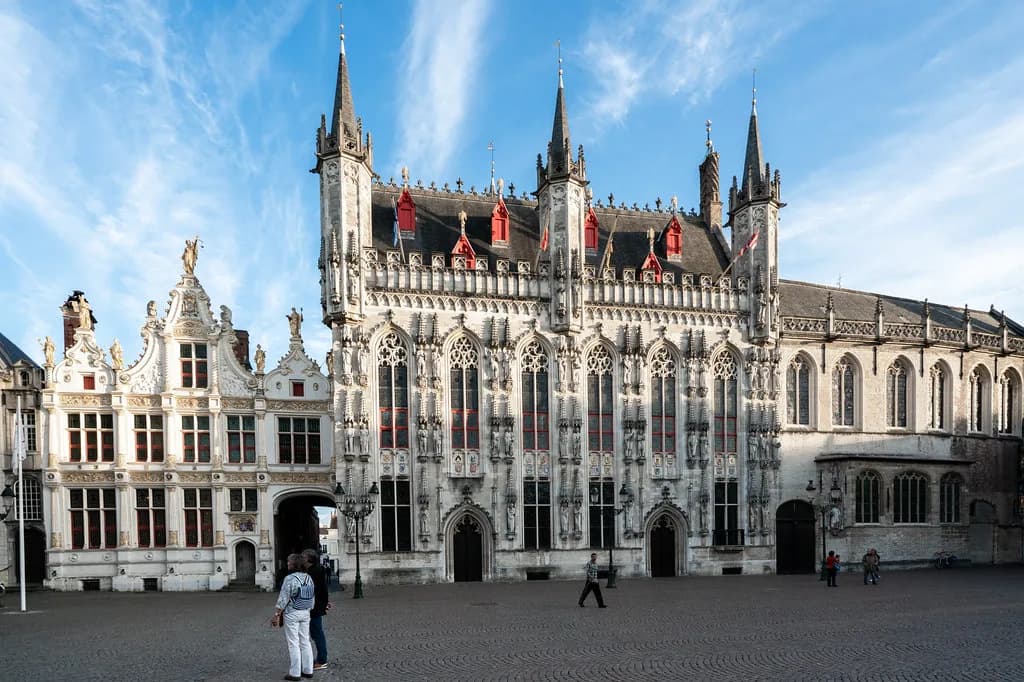
The Markt is where every street in the centre seems to meet, with colourful house fronts, the Belfry above and the statue in the middle of the square. Stand back towards the far side of the square to get the Belfry and the gabled roofline into one frame.
This is the easiest view in the city to collect, since you pass it on almost any route through the centre. Treat it as a five-minute stop rather than a destination, and save your patience for the canal corners where the composition is stronger.
Rozenhoedkaai: the postcard canal view
Rozenhoedkaai is the canal corner that appears on most Bruges postcards, with the water, stepped gables and the Belfry lining up in one shot. It is also the most photographed spot in town, so daytime brings a crowd along the quay. Come at night for a quieter view with the lights on the water, when the same composition takes on a different mood.
If you only have time for one canal view, make it this one, then walk on rather than lingering. The Dijver and Groenerei close by repeat the formula with fewer people.
Bonifaciusbrug and the Church of Our Lady
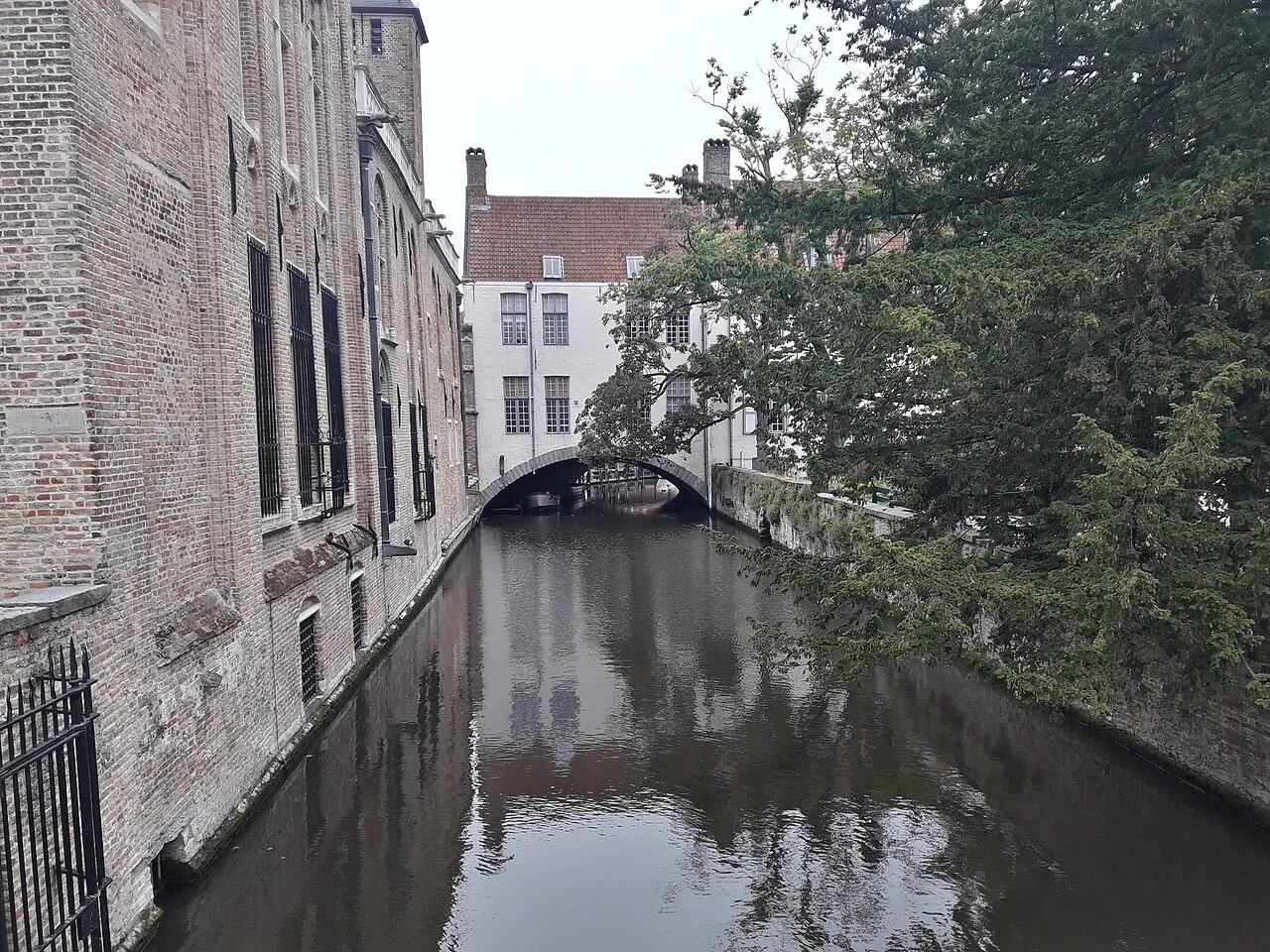
Bonifaciusbrug is a small stone bridge over a canal bend near the Church of Our Lady, and the view from it pairs the brick arch with the church tower behind. It is a short, low viewpoint rather than a panorama, and it rewards an early start before the foot traffic builds.
The Church of Our Lady itself holds a Michelangelo sculpture, which gives the southern part of the centre a second reason to linger beyond the bridge. Keep the two together in one loop rather than crossing town twice.
Minnewater and the Sashuis: the walk in from the south
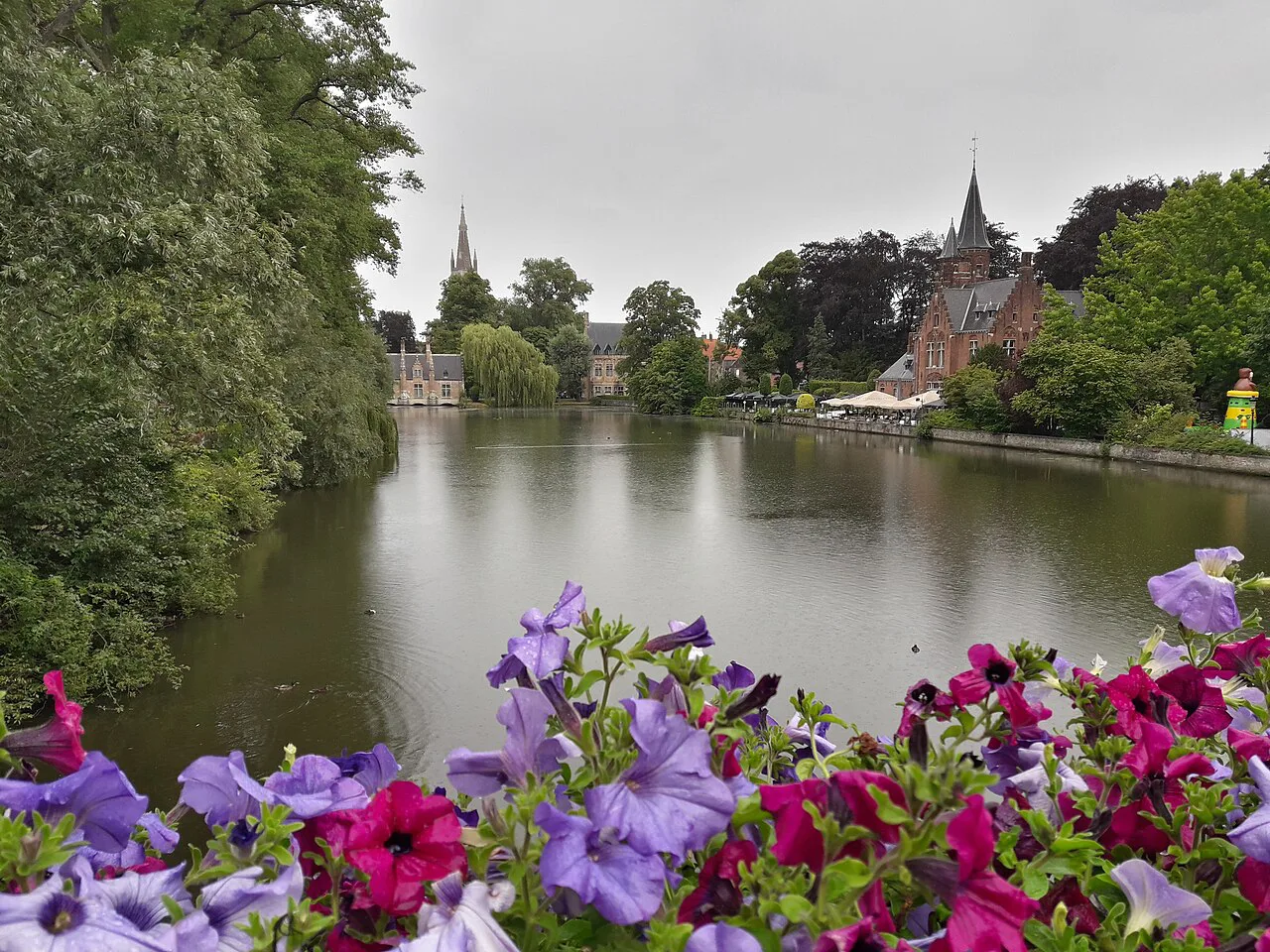
The Minnewater, or Lake of Love, sits beside the Begijnhof and makes the most romantic water view in Bruges, with the Sashuis and swans on the lake. The walk in from the south along this stretch gives you the city gradually rather than all at once.
Pair it with the peaceful garden of the Begijnhof next door and you have a quiet half-hour away from the Markt crowds. In spring the convent garden fills with flowers, so mind where you step in the beds.
Begijnhof (Beguinage): the convent garden
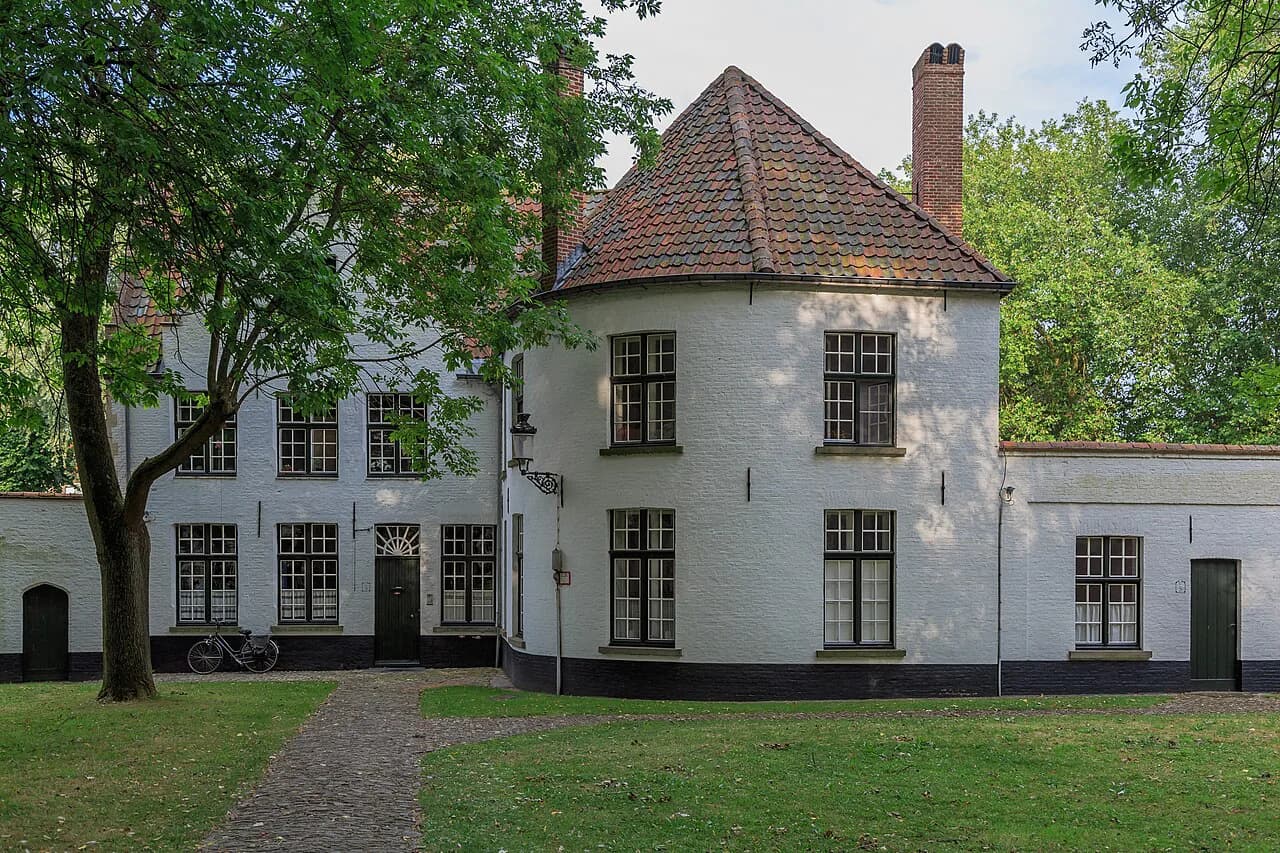
The Begijnhof is a former convent with white house fronts around a serene garden, and it has kept a quiet atmosphere despite appearing on every itinerary. The official visitor site marks eight centuries of history here, which explains why it feels older and quieter than the surrounding streets.
It is a place of worship rather than a viewpoint, so walk quietly and leave the flower beds alone. The view is the enclosed garden and the white fronts, best in soft light and without a group arriving behind you.
The windmills on the city edge
Four surviving windmills stand on the edge of the centre, and the walk out to them gives an open view back over the rooftops with hardly anyone around. This is the photogenic, crowd-free side of Bruges, and the best option when the Markt feels too full.
Allow a proper stroll rather than a dash, since the mills sit beyond the main sights. The reward is space and a low horizon rather than height.
Groenerei and the canal-side quays
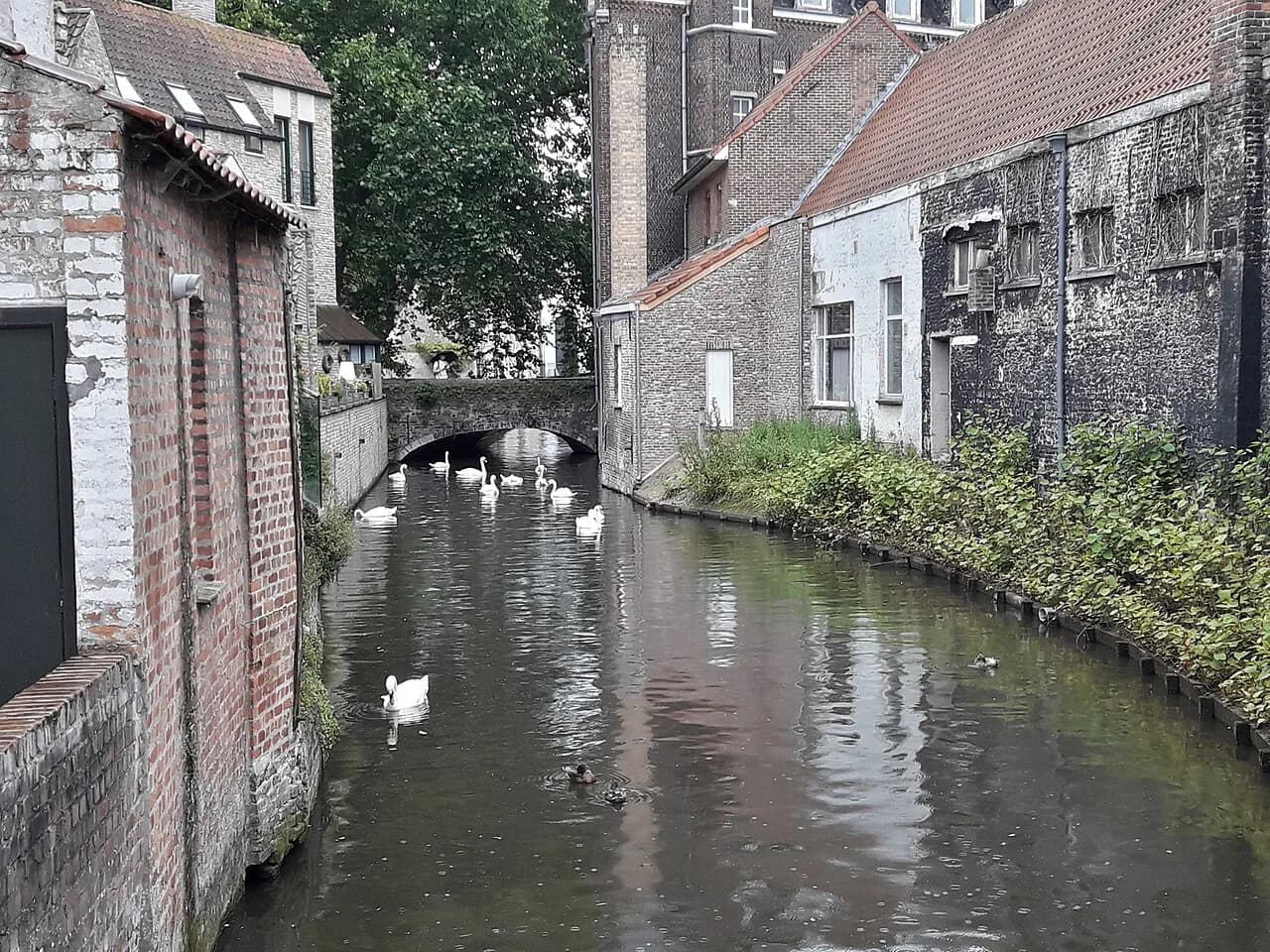
The Groenerei and the quieter canal quays give you water-level views for nothing more than a walk, with reflections, moored boats and old walls. These low viewpoints suit a slow hour when you would rather not queue for anything. The official canal-boat departure point at Huidenvettersplein is the place to start if you want the water view from a boat instead.
Boat trips run from the canals in the centre, and the official visitor site presents a canal trip as part of the Bruges experience rather than a side attraction. Choose the quays when you want to linger, and the boat when you want the same architecture from the water.
Hof Arents: the Dijver garden frame
Hof Arents is a small garden on the Dijver with a framed view of the Church of Our Lady, which the official visitor site sums up as minimum space but maximum view. It is the handiest high-value stop between the canal quays and the southern end of the centre.
Sit for a few minutes rather than treating it as a sight, since the point is the composition of church tower and greenery. It pairs naturally with the Dijver walk and the Groenerei beyond.
Jan Van Eyckplein and the eastern canals
Jan Van Eyckplein and the canals on the eastern side offer the same brick-and-water views with far fewer people. The square takes its name from the painter and gives you a wide, open frame of house fronts and water without a queue in sight.
Use this area when the postcard corners are packed, or as a calm end to a day of walking. It is a detour rather than a headline sight, and worth it for the quiet.
Walplein and Oud Sint-Jan: a stop on the way in
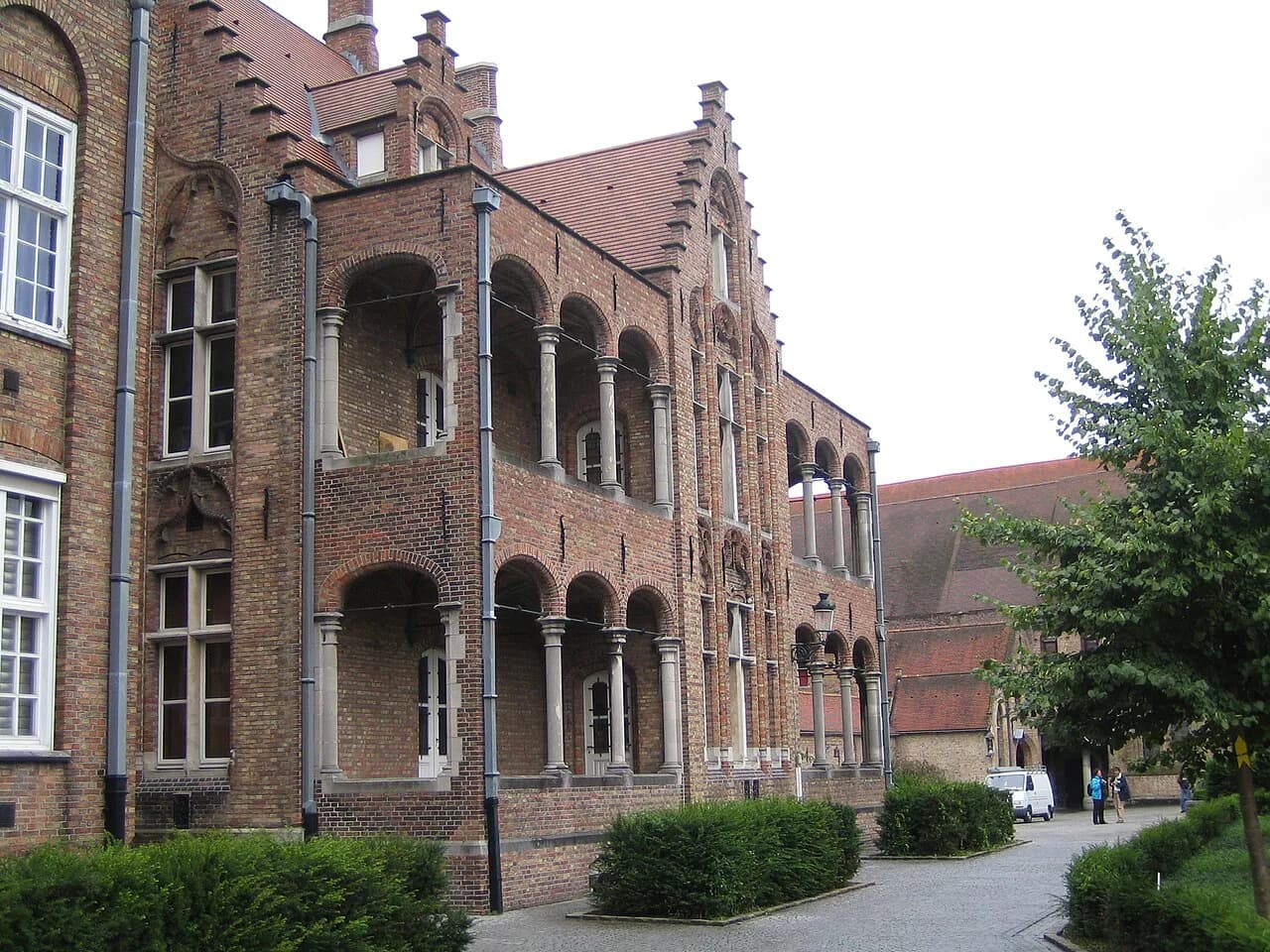
Walplein is a small, pleasant square on the route between the Minnewater and the centre, and Oud Sint-Jan is the former hospital that now serves as an event and congress centre. Neither is a dramatic view, but both break up the walk and give you a seat between water stops.
Treat them as pauses rather than destinations, and keep your camera ready for the canal bends between them.
Which viewpoint to choose on a short break
With one day, climb the Belfry first thing and then follow the canal route through Rozenhoedkaai, the Dijver and the Minnewater. That gives you the one true panorama and the postcard view in a single unbroken walk. Use the Belfry page to fix the entry details before you go.
Skip Hof Arents, Walplein and the eastern canals if you are pressed for time, and save them for a return. If crowds bother you more than heights, reverse the priority: take the windmills and Jan Van Eyckplein for the view without the queue.
Climb the Belfry or stay by the water?
Choose the Belfry if you want the city laid out below you once, and accept the climb and the company at busy times. Choose the canals, bridges and windmills if you want the Bruges that appears on the postcards, at your own pace and without a queue.
Either way, keep the two ideas in the same day: height in the morning, water in the afternoon. That is the shape of the best views in Bruges, and it needs no more than a pair of comfortable shoes.
Frequently Asked Questions
Which viewpoints in Bruges are worth seeking out?
Climb the Belfry on the Markt for the one true high panorama, then take in the canal views at Rozenhoedkaai, the Dijver and Groenerei, the small garden at Hof Arents on the Dijver, and the water-level view at Minnewater beside the Begijnhof. The windmills on the city edge and Jan Van Eyckplein give you open or quiet views away from the crowds.
What is Bruges famous for?
Bruges is known for its medieval centre, a UNESCO World Heritage Site, its canals and stepped-gable houses, the Belfry on the Markt, and its chocolate and beer. The low skyline and intact street plan are what make it look unlike other Belgian cities.
Is the Belfry climb worth it?
Yes, if you want the only true high panorama in a flat city and can manage the stairs. Numbers may be limited at busy times, so plan the tower for early in the day. If stairs are a problem, the canal-level views give you the classic Bruges scene instead.
Sources
Useful notes for your next trip
Optional updates to our guides.
You might also like
Continue reading
More guides you'll find useful