Bruges Belfry (Belfort): The Climb, the Carillon and the View
What the Bruges Belfry is, why it stands on the Markt, what the climb involves, how to budget for it and how to slot it into a day in the old centre.
On this page
The Bruges Belfry, the Belfort, is the one sight most travellers put first: a civic bell tower at Markt 7 with the city halls beneath it, standing over the square that still works as the city's front room. It is not a church tower, and knowing that changes how you read the Markt. This guide covers the building, the climb, the carillon, the ticket options and a walking loop that takes in the Burg, the Dijver quays and the museums nearby.
What the Bruges Belfry is, and why it stands on the Markt
The Belfry, at Markt 7, is a UNESCO World Heritage Site, and Visit Bruges describes it as a building that has watched over the city for centuries, with the City Halls below it. That pairing is the point: medieval Bruges ran its trade, weights and proclamations from here, so the tower is a statement of civic wealth, not religious devotion. Stand on the Markt with the tower at your back and the gabled guild houses in front, and the square reads as a commercial stage rather than a cathedral close.
Because it is a belfry rather than a spire, the Belfort belongs to a family of towers across Belgium and northern France that towns built to hold their bells and charters. Read the Markt as the place where those civic functions met the market, and the surrounding streets make more sense: the Burg next door was the administrative and religious core, while the Markt handled money. Give the tower a proper ten minutes from the square before you decide about climbing.
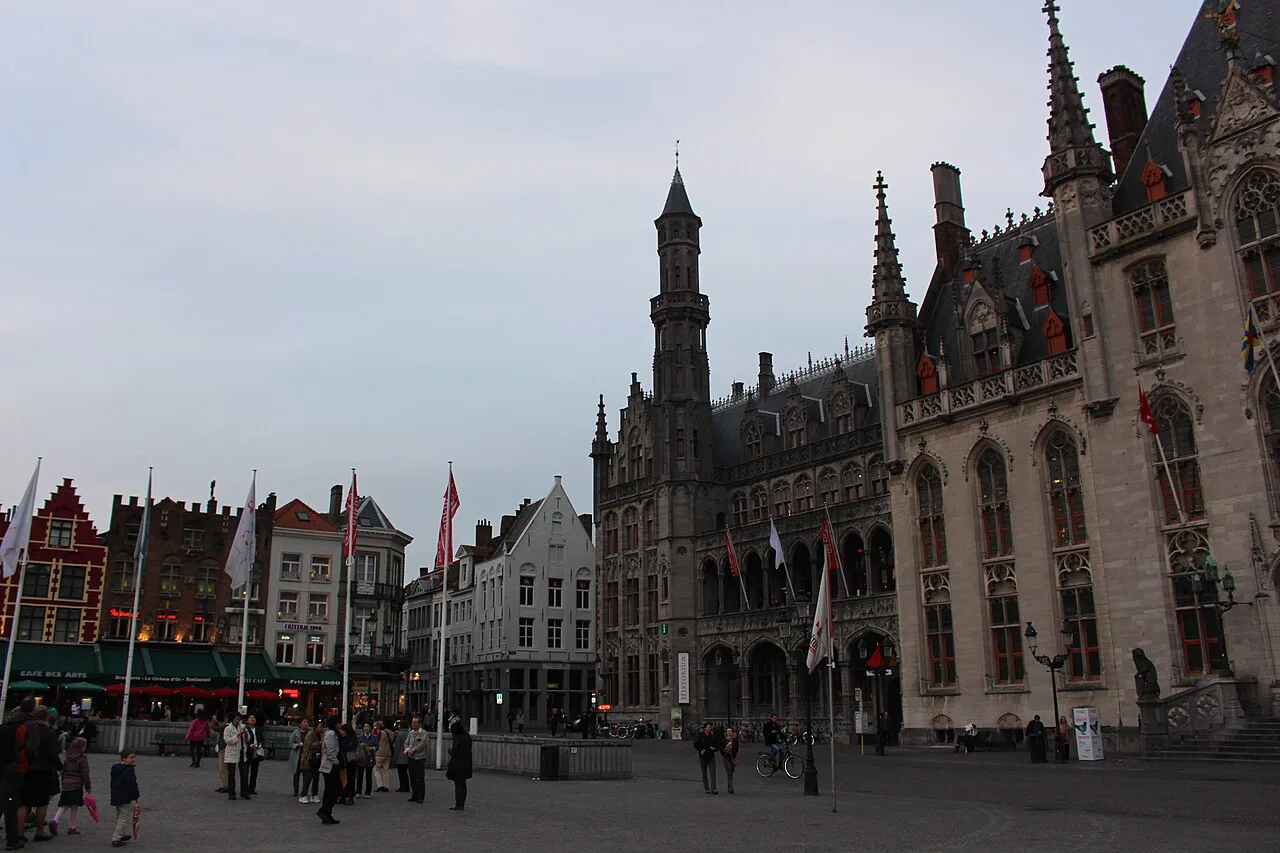
The Belfort and the Lakenhalle: one building, two histories
The Belfry and the Lakenhalle, the cloth hall, stand as one composition on the Markt, and the cloth trade is the reason Bruges could afford anything so ambitious. Visit Bruges lists the Belfort among its headline sights and calls the whole building a UNESCO World Heritage Site. When you look up, separate the two functions: bells and civic authority in the tower, commerce in the halls below.
That distinction is useful on the ground because the Markt is busy and the building is easy to photograph without really seeing it. Step back towards the west side of the square, where the façade opens up, then walk beneath the arcade to feel how the halls scale down the tower above. If the queue at the entrance is longer than you want, return another morning.
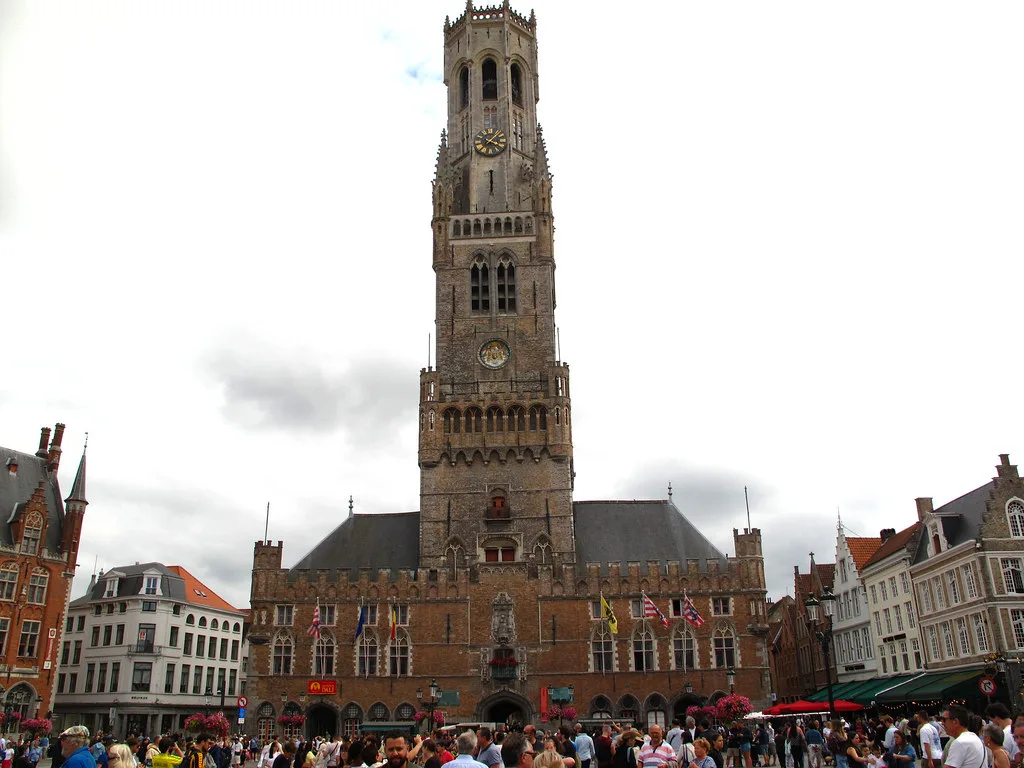
The climb: steps, narrow stairs and what the effort buys you
Treat the ascent as a proper climb rather than a lift ride: the reward at the top is the view over the Markt and the surrounding roofs, and the effort is part of the experience. Anyone with a fear of enclosed spaces, shaky knees or a tight schedule should weigh it honestly. If stairs are a problem, the Church of Our Lady, with the world's second-highest brick church tower, gives you a different high point without committing to the Belfry.
Visit Bruges lists the Belfort among the Bruges headline sights it promotes, so it pays to decide on your day and time before you arrive on the Markt. Allow an unhurried hour for the climb and the look-out rather than squeezing the tower between two museums.
The view from the top: Markt, the canals and the polder beyond
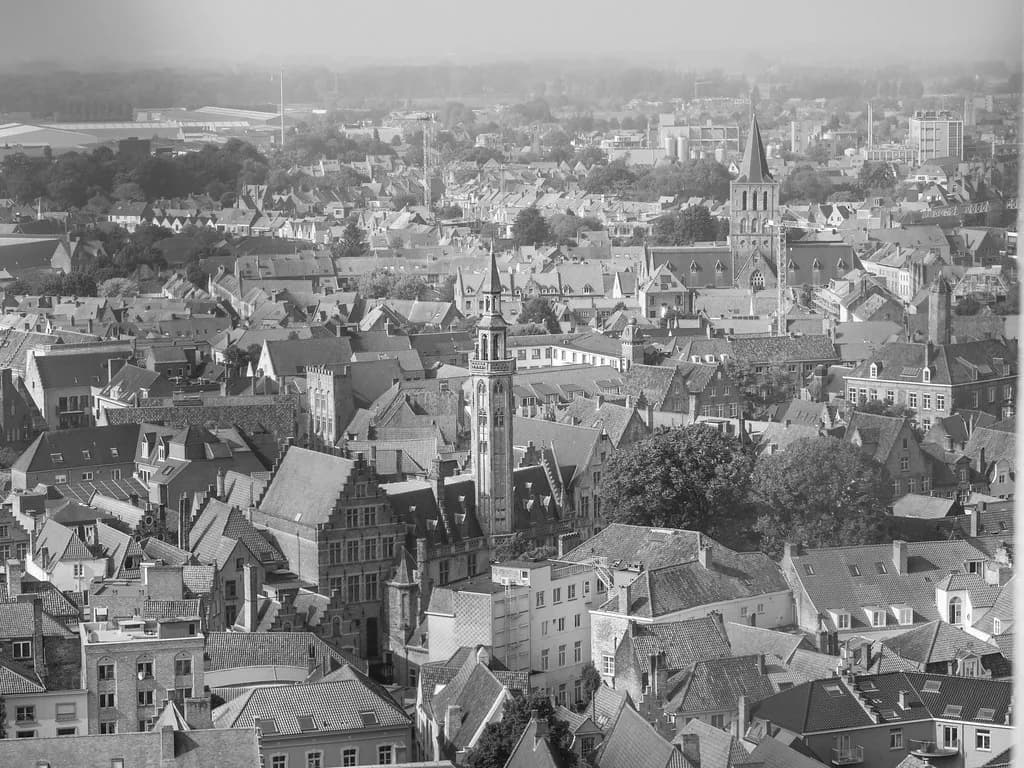
From the look-out the Markt sits directly below, and beyond it the roofline of the historic centre spreads out towards the canals and the towers that mark the Dijver and the Burg. Those landmarks map your next hour of walking. This is one of the best views in Bruges, and it is worth timing your climb for a clear day.
The climb is not the only way to get above the streets: Hof Arents, on the Dijver, gives an open view towards the Church of Our Lady without a ticket for the Belfry. Use it as a contrast on the same walk, and save the Belfry for the day you want the Markt from above.
The carillon and its concerts
Bells are the reason the tower exists, and the carillon is what turns a monument into something you hear across the Markt. The Belfry's bells carry across the square, so arrange your walk to pass through the Markt more than once and catch them from below. Hearing the bells costs nothing and is often more memorable than the climb itself.
If you plan the day around the tower, combine a morning climb with a mid-afternoon return to the Markt, when the square is at its liveliest. That rhythm also gives you a reason to pass the Belfort twice, once inside and once simply listening.
Tickets, the Musea Brugge Card and museumPASSmusées
The Musea Brugge Card gives 72 hours of access to the open Musea Brugge locations for a reduced price, and museumPASSmusées covers more than 200 museums in Belgium for a year. Visit Bruges publishes both as options at the Groeningemuseum, which is part of the Musea Brugge group, and notes that the Musea Brugge Card is sold at the box office or online. If you plan to see two or three Musea Brugge sites, price the card against the individual tickets before you buy.
For scale, the Groeningemuseum charges adults €15, seniors 65+ €15, ages 18 to 25 €13 and 13 to 17 €7, with under-13s free, and a combined Groeningemuseum and Historium ticket costs €32. A guided Bruges Bike Tour with a rental bike is €24 per adult, or €9 with your own bike, and the 60-kilometre E-Bike Border Tour is €38. Those published figures let you budget the museums and bike ride alongside your time at the Belfry rather than treating the trip in isolation.
When to go: time of day, crowds and the season
The Markt fills up through the middle of the day, so an early start gives you the square before the tour groups settle in. Bruges is a compact city and the Belfort sits at the centre of it, which means you can arrive on foot from almost anywhere in the historic centre. If the square looks busy, do the Burg and the Dijver first and come back later.
Pairing the belfry with the Burg, the Basilica of the Holy Blood and the Gruuthuse Museum
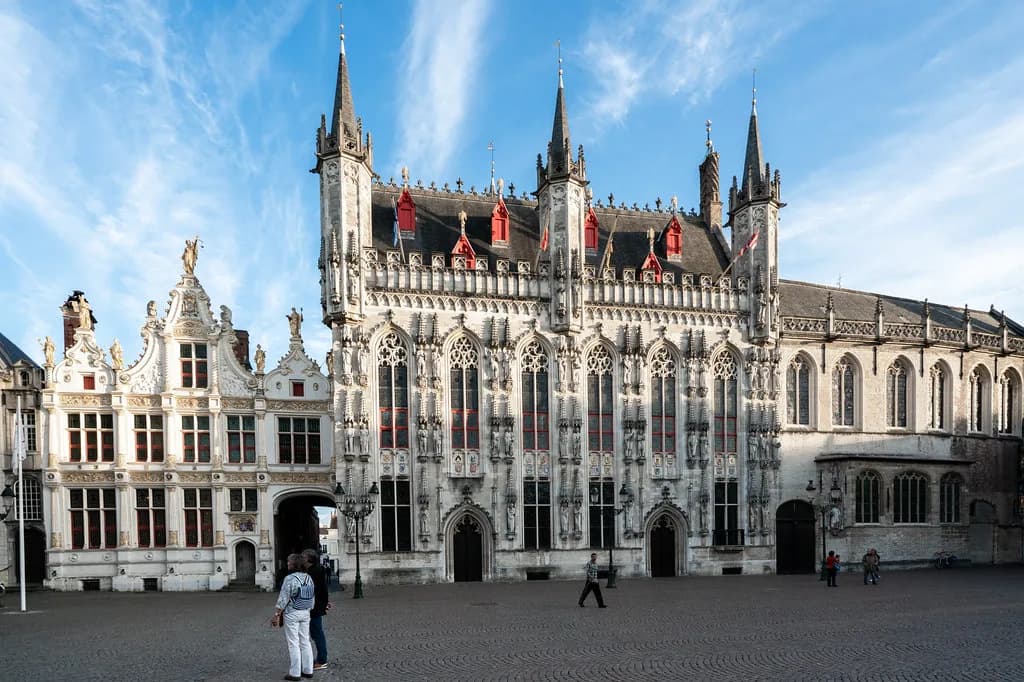
From the Markt, walk through the short passage under the arch into the Burg, where the city's civic and religious buildings face each other across a small square. The Basilica of the Holy Blood is the devotional stop there, and it is a one-minute link in the walk rather than a separate outing. Carry on towards the Dijver and the Gruuthusemuseum, which Visit Bruges describes as a journey through three key periods of Bruges history, including its Burgundian heyday.
The Gruuthusemuseum sits at Dijver 17C beside the canal, so the walk from the Belfry comes with a change of scene from crowded square to quiet water. Allow an unhurried half-day for the Markt, the Burg and one museum, and treat the rest as a bonus.
A short walk from the belfry: Dijver, the Groeningemuseum and the canal quays
The Dijver is the obvious next stop: the Groeningemuseum at Dijver 12 holds the Flemish primitives, including Jan van Eyck's Madonna with Canon Joris Van der Paele and Hans Memling's Moreel Triptych, and it sits within a few minutes of the Markt. Plan around a closure: Visit Bruges states that the Groeningemuseum closes from 11 January 2027 for a four-year refurbishment, and that from March 2027 the heart of the collection moves to the BRUSK art gallery.
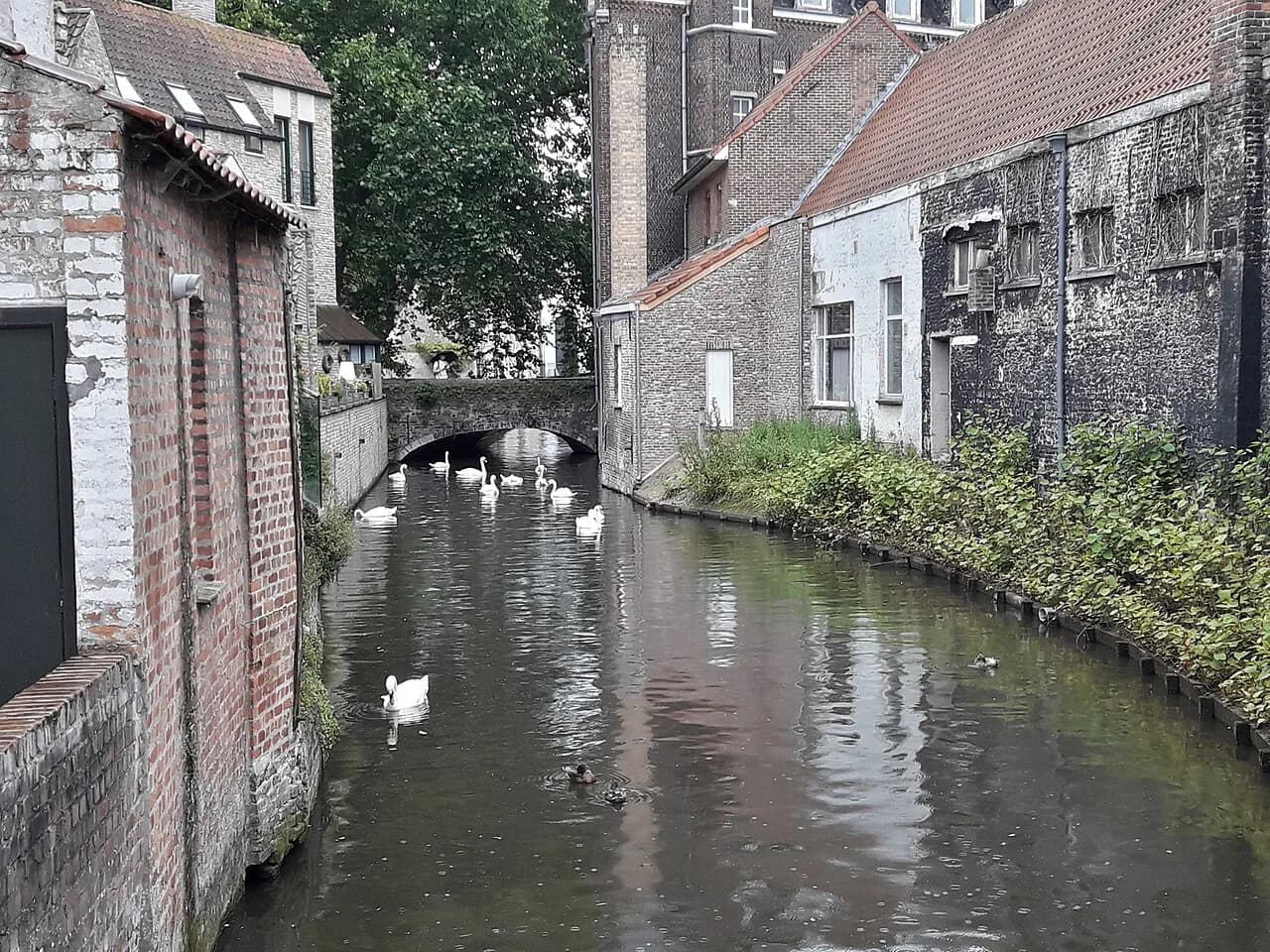
From Dijver the canal quays take over, and a boat trip from Huidenvettersplein 13 is the easiest way to see the city from the water. Visit Bruges treats a canal trip as part of the Bruges experience, with swans and low bridges along the route. Pair it with the Belfry on the same day only if you start early, since both eat into a short break.
Bruges in one to three days: where the belfry fits
With one day, do the Markt and the Belfry, walk through the Burg to the Dijver and take a canal trip; that gives you the historic centre's core without racing. With two days, add the Groeningemuseum or the Gruuthusemuseum and spend an evening on the Markt for the bells. With three, use the extra day for the Church of Our Lady, Hof Arents and a bike ride out of the city, with the Belfry already behind you.
If museums are the priority, put the Belfry first on your list and buy the Musea Brugge Card when two or more sites are in play, since the Groeningemuseum alone costs €15 for adults. Then take the Ben's Bike tour, at €24 with a rental bike, to see the outskirts from a different angle. Either way, the Belfry anchors the middle of the day rather than the whole of it.
Should the belfry be your first stop?
Yes, if you want the Markt to make sense from the start: climbing the Belfort gives you the whole historic centre in one view, and the rest of the walk falls into place from there. Skip the climb if stairs are a problem, and use the Church of Our Lady or Hof Arents for the view instead. Either way, budget for the Belfry alongside the Groeningemuseum and a bike tour so the day stays realistic.
Explore more Bruges guides
Sources
Useful notes for your next trip
Optional updates to our guides.
You might also like
Continue reading
More guides you'll find useful