Bruges Walking Tour: A Self-Guided Route Through the Old Town
Plan a Bruges walking tour through the medieval centre: a self-guided route past Markt, Burg and the Lake of Love, plus free guided walks and how long to allow.
On this page
A Bruges walking tour is the best way to see the city because the whole UNESCO-listed core is compact enough to cross on foot in an afternoon. The classic self-guided route runs from Markt to Burg, then south past the Fish Market and St John's Hospital to the Lake of Love, covering about 1.6 km in 60 to 90 minutes without stops. This guide sets out the stops in walking order, explains what to look for at each, and compares doing it yourself with joining a free or paid guided walk.
What a Bruges walking tour covers
The walled centre of Bruges (Brugge) is small, flat and largely car-free, so walking is the natural way to move between the squares, canals and churches. Almost everything on a first visit sits within the old town, which makes a single loop practical even on a one-night stay. The walk below stays inside the historic centre and links the sights in a logical order rather than zigzagging back and forth.
Plan the walk for the morning if you want quieter squares, and keep the middle of the day for museums or a canal-side pause. The route is short enough to split: walk the northern half around Markt and Burg, break for lunch, then continue south to Minnewater. Cobbles are uneven in places, so comfortable shoes matter more than distance.
The route at a glance
Start at Markt, cross the short distance to Burg, then head south through the Fish Market area towards St John's Hospital and finish at the Lake of Love and Bridge of Love. The self-guided version of this route covers roughly 1.6 km of the centre and takes 60 to 90 minutes at a steady pace, though most people spend considerably longer with stops.
Treat the timings as a floor rather than a target. Add twenty minutes at the Belfort if you climb it, and more around the Lake of Love, where benches and swans slow everyone down. The walk ends near the Begijnhof and Gruuthuse Palace, which makes a natural point to stop or loop back through the centre.
Stop 1: Markt and the Belfort
Markt is the wide, gabled main square and the obvious place to begin. The Bruges Belfry (Belfort) rises from the centre of the square, and its tower is the landmark you will orient by for the rest of the day. Stand back towards the west side for the full row of stepped gables and the hallen beneath the tower.
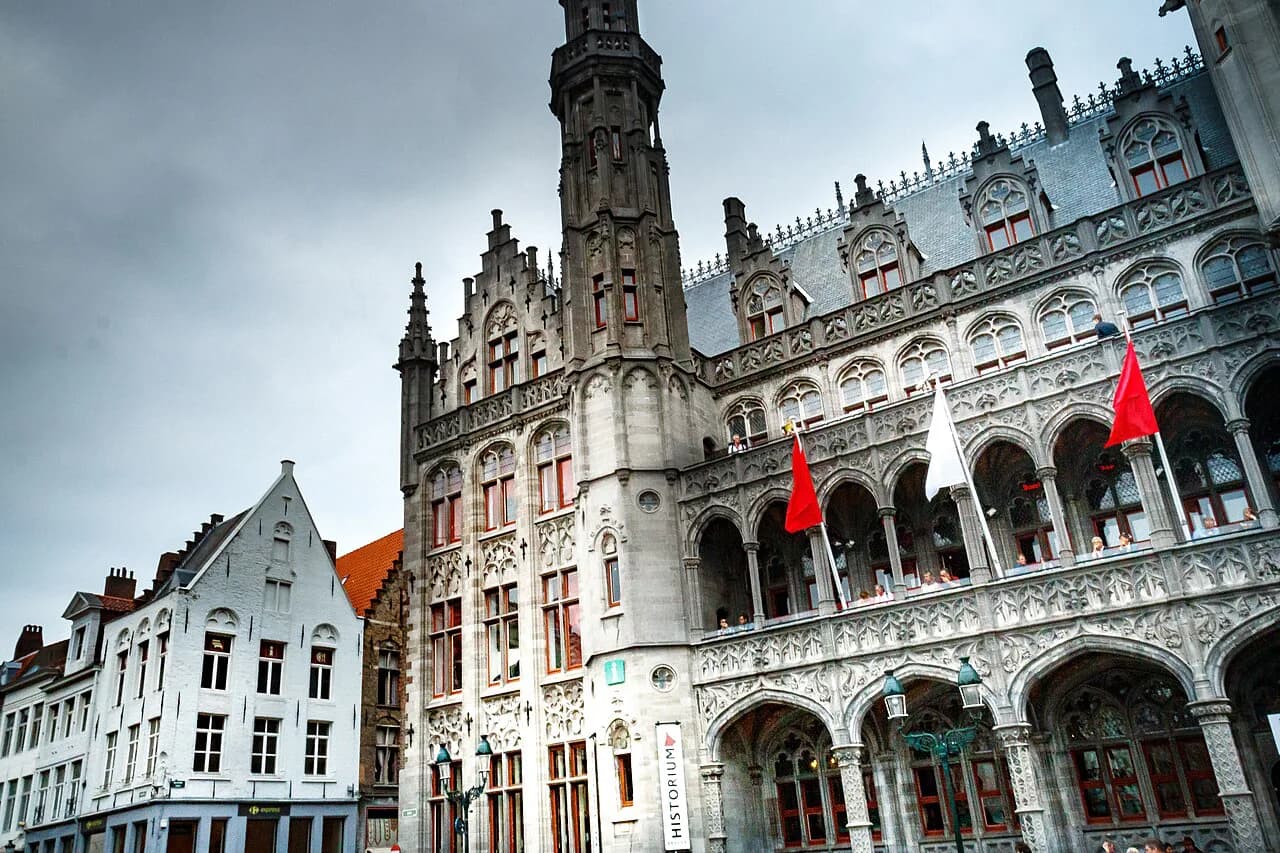
The square is also the busiest point in the city, so arrive early or accept crowds. Cafés line the edges, and the Historium Brugge sits on the south side, which makes it an easy indoor stop if rain sets in. From Markt, Burg is barely two minutes away on foot.
Stop 2: Burg and Burgh Square
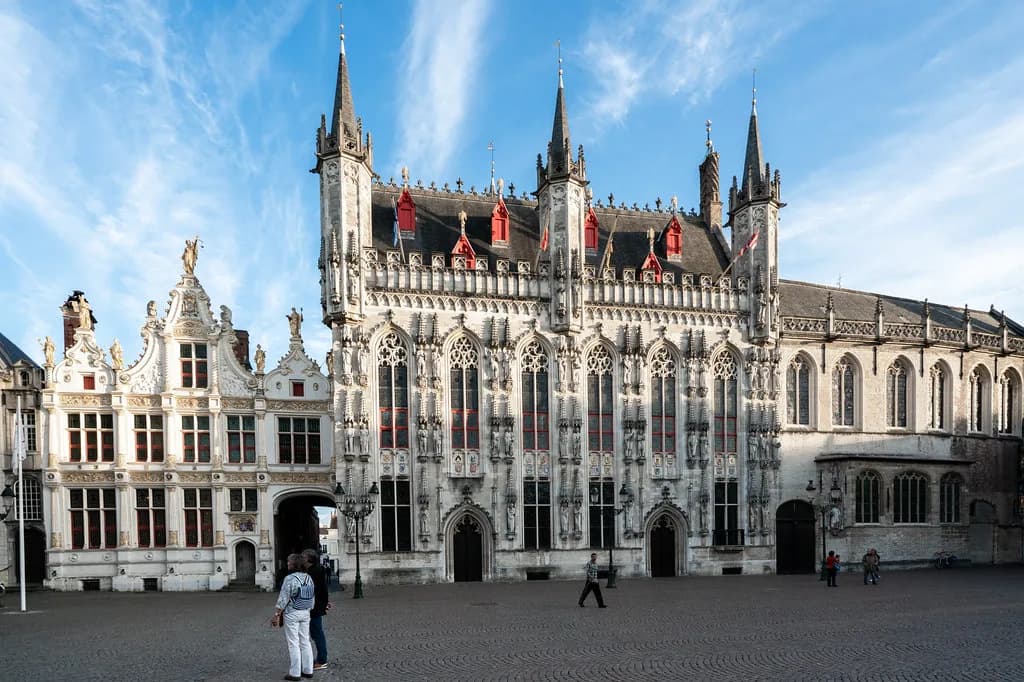
Burg is the old administrative heart of Bruges and sits immediately east of Markt. A corner chapel, the Stadhuis and the former records office frame the square in pale stone. The contrast with Markt is the point: one square for trade and display, the other for civic power.
Cross Burg slowly and look up at the facades rather than hurrying through. From the far side, lanes lead south towards the canal spine of the city. This is where the walk shifts from open squares to narrower streets and water.
Stop 3: Fish Market and the canal-side streets
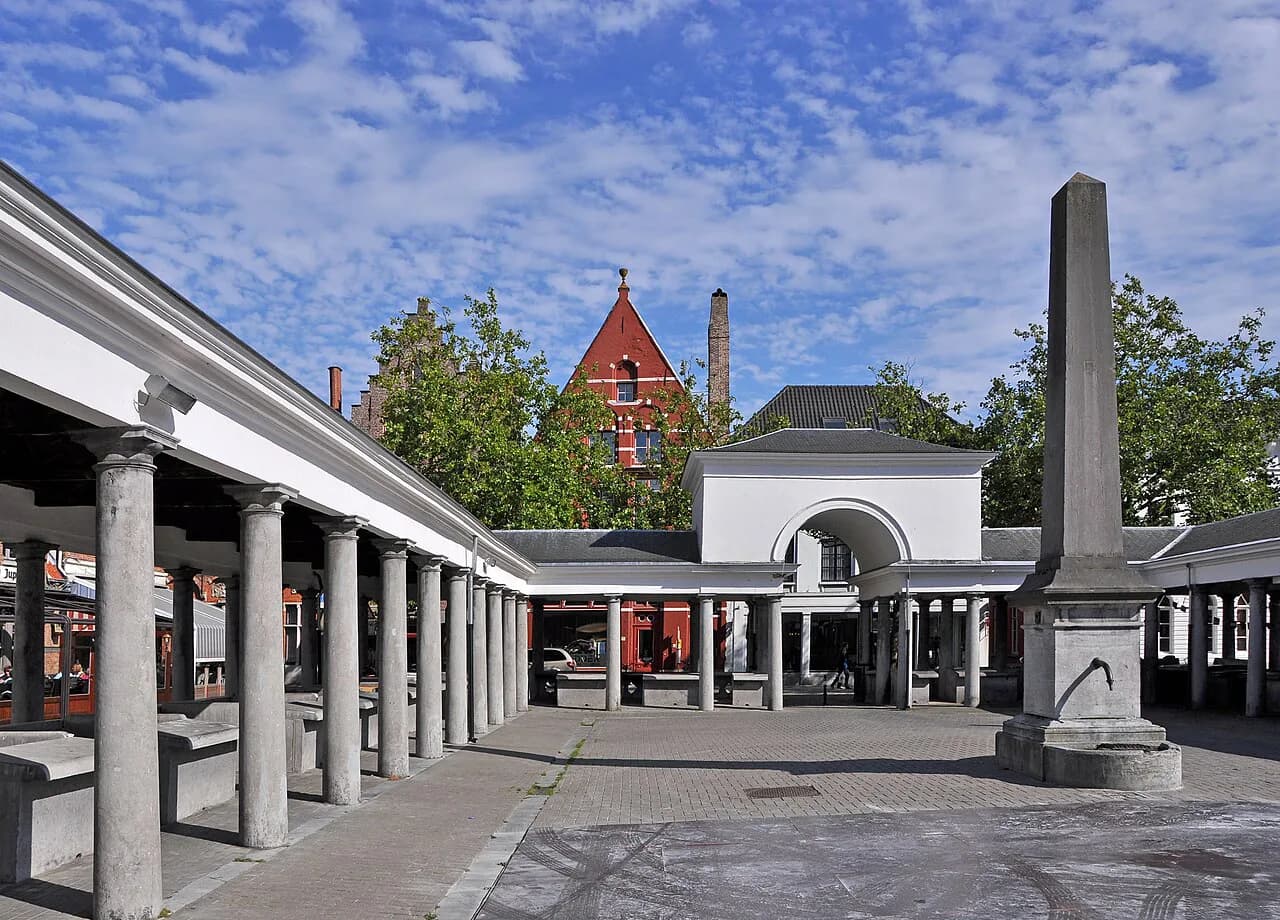
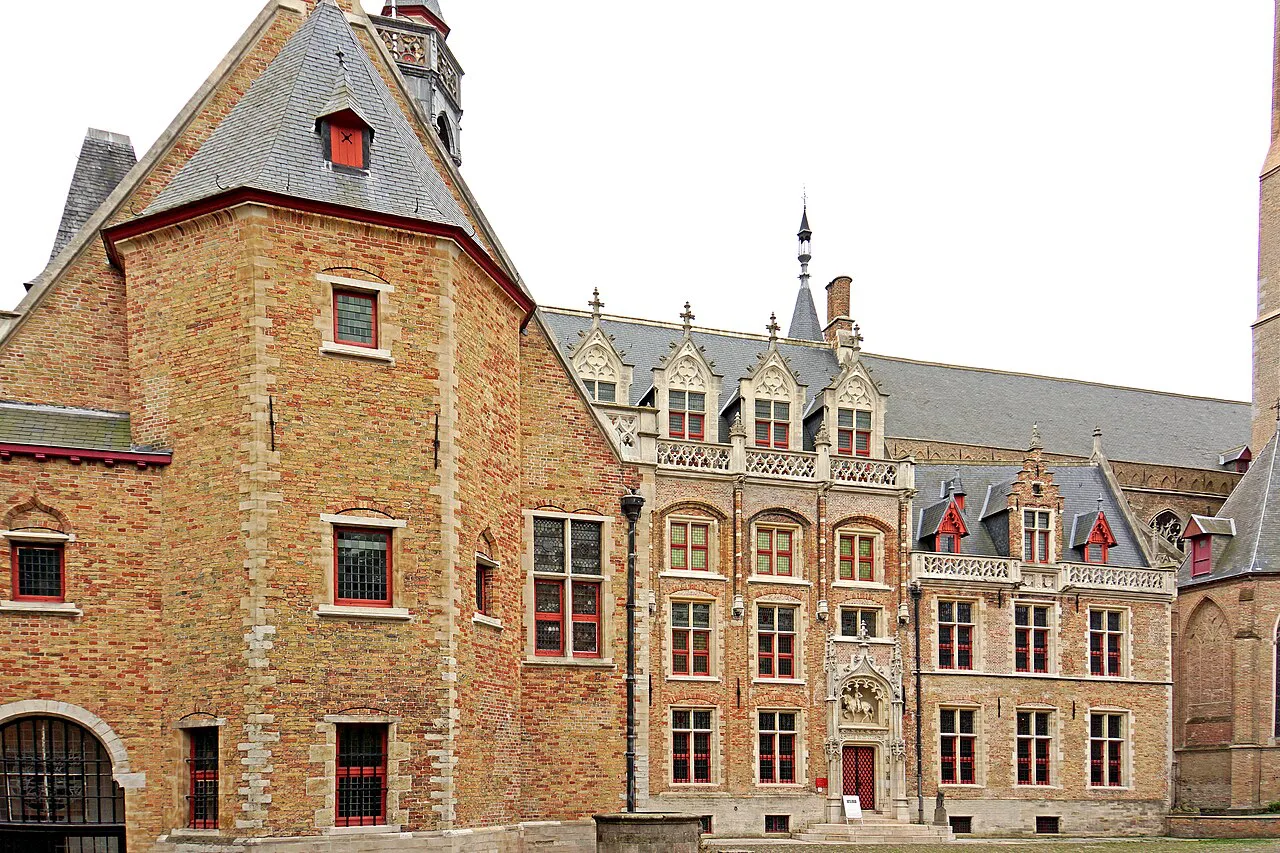
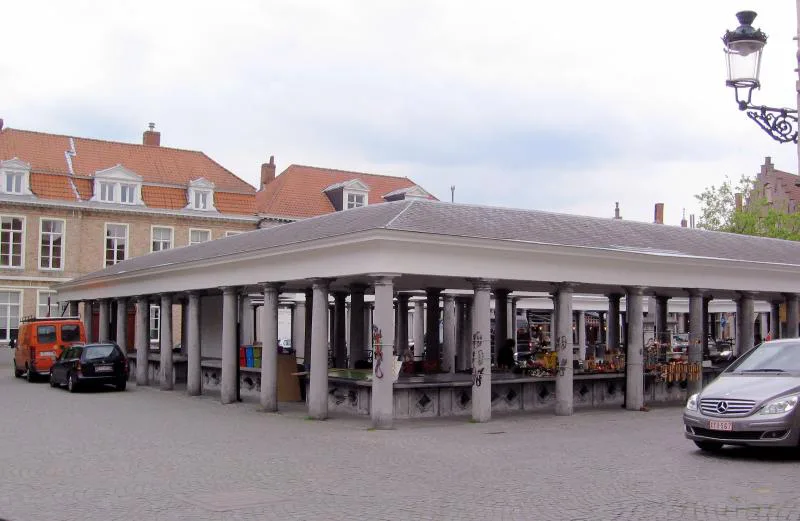
South of Burg, the Vismarkt (Fish Market) sits along a canal with a colonnaded arcade, and it marks the start of the waterside stretch. From here the walk follows canal-side streets towards St John's Hospital, the long medieval complex with a painted timber gable. The hospital is one of the oldest surviving such buildings in Europe and makes a strong visual anchor on this leg.
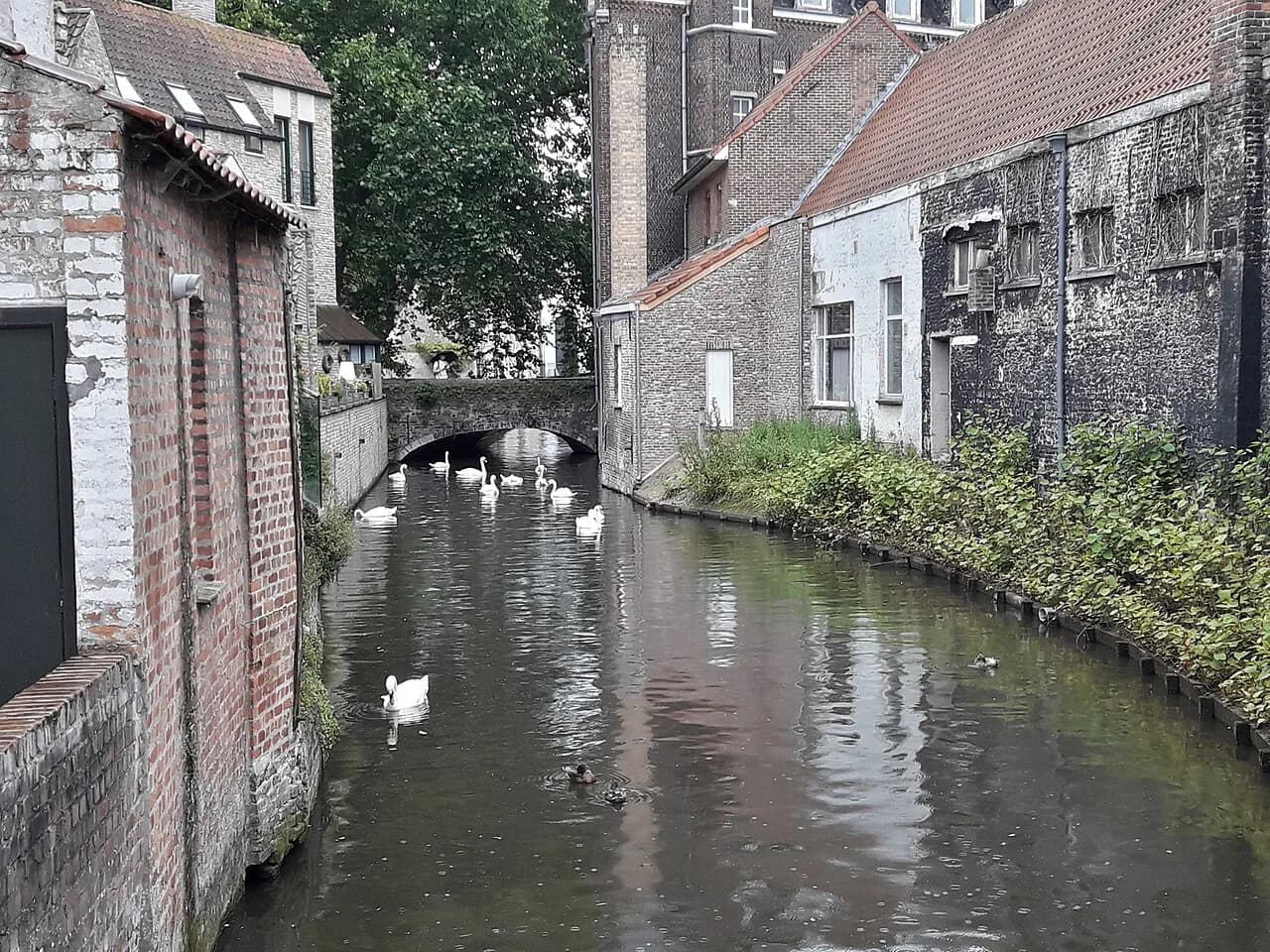
This section is where a Bruges walking tour earns its keep: the streets are narrow, the canal bends, and the views change every minute. Keep the water on your left where you can and drift onto the quieter side streets when the main path fills up. Photographers should allow extra time here, especially on clear mornings when the reflections are still.
Stop 4: Lake of Love and the Bridge of Love
The walk finishes at the Minnewater, the Lake of Love, a long, tree-lined stretch of water at the southern edge of the centre. The Bridge of Love crosses near the Begijnhof and is the spot most people photograph, though the view back along the lake is arguably better. Swans, low brick buildings and the quiet make this a calm end to the route.
The Lake of Love is also the best place to sit down. Benches face the water, and the park strip around it is a natural rest stop before the return walk. For other green pauses in the city, see Parks in Bruges.
Optional add-ons near the route
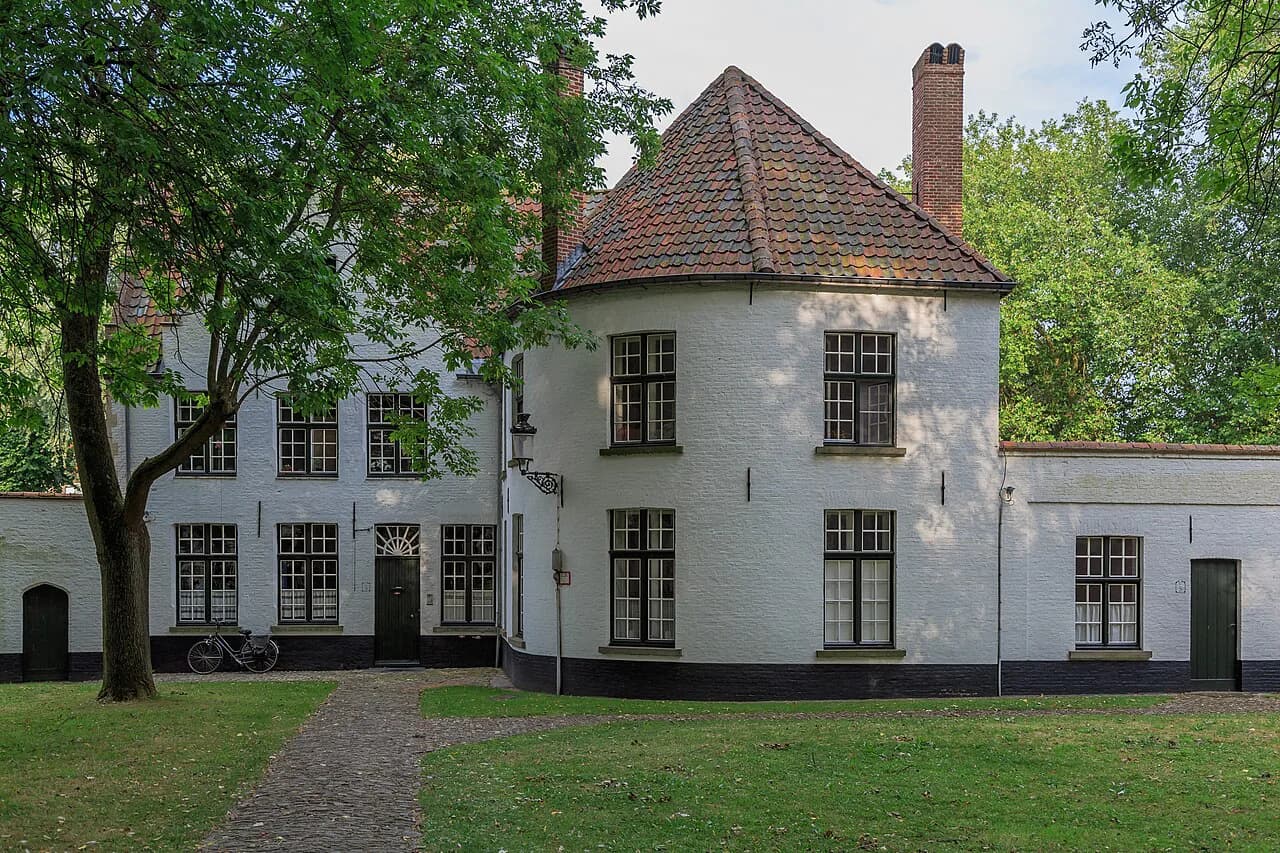
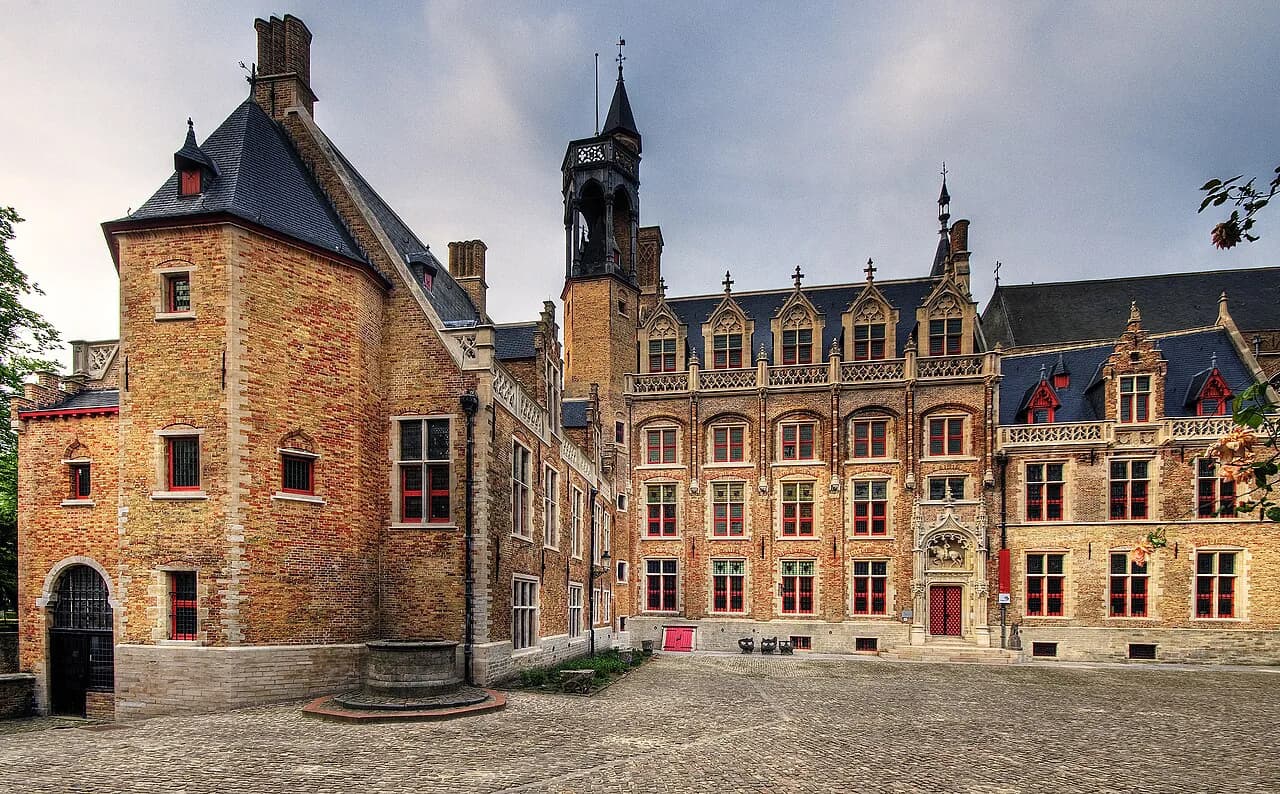
Three sights sit within a few minutes of the southern end and justify extending the walk. The Gruuthuse Palace, a merchant's house turned museum, stands beside Onze-Lieve-Vrouwekerk, whose brick tower dominates the skyline. The Begijnhof, a walled community of white houses, is a short walk beyond the Bridge of Love.
If you want a raised view of the route you have just walked, the tower of Onze-Lieve-Vrouwekerk and the Belfort both deliver. See best views in Bruges for how the two compare before you commit to the stairs.
Free guided walking tours of Bruges
Pay-what-you-like walking tours run daily in Bruges and cover much of the same ground as this route, with a guide supplying the history and stories. The model means no fixed ticket: you tip what you think the walk was worth at the end. A secondary guide to the city's tour options, Free Tours by Foot, reports that online reviews put the usual range at about €10 to €15 per adult.
Free walks run for roughly two hours and cover Markt, Burg, St John's Hospital, the Lake of Love and the Fish Market, so they compress the self-guided route into a guided loop. The trade-off is group size: free tours can get crowded in high season, which is when paid small-group options become worth the money.
Food tours and the night legends walk
If you would rather taste Bruges than walk its history, a free food tour covers chocolate, waffles, fries and beer, and several operators also run a legends and ghosts walk in the evening, which shows a darker side of the same streets after dark. Civitatis lists a free food tour, a chocolate museum ticket and a brewery visit among its Bruges tours, though it is a retailer rather than the venues themselves.
These alternatives work best as a complement to the daytime route rather than a replacement. Do the self-guided walk first so you know the layout, then join an evening walk when the squares empty out and the lighting changes.
Free guided walk, paid small-group tour or doing it yourself
The self-guided route costs nothing, sets its own pace and lets you stop at Choco-Story, the Historium or Bourgogne des Flandres without negotiating with a group. The trade-off is that you supply the context yourself and may miss the stories that make the squares come alive. It suits anyone with limited time or a strong preference for wandering.
A free guided walk gives you a guide, a route and the anecdotes for a tip, but comes with a fixed start time and a larger group. A paid small-group tour is quieter and easier to hear, and private walks let you shape the route around your interests. Choose the free walk for value, the small-group tour for calm, and the self-guided route when your schedule is tight.
Where the walk fits into a one to four day trip
On a one-day visit, do the self-guided walk in the morning and pick one indoor sight for the afternoon, such as the Belfort climb or Gruuthuse Palace. Two days allow the walk plus a canal boat trip and a brewery or chocolate museum. Three or four days let you repeat the southern stretch at a slower pace and add a food tour or night walk.
The walk also works as an orientation exercise on arrival day. Once you have walked Markt, Burg and the Lake of Love, the rest of the city clicks into place and later trips to museums or churches need no map.
Crowds, timing and fitting the walk around canals
The centre is at its busiest from late morning through mid-afternoon, and the Markt and Burg stretch suffers most. Walking early, or starting from the Lake of Love and finishing at Markt, spreads the crowd exposure differently. Canal-side wandering is the natural filler between stops, and the walk deliberately follows water for the middle third.
Allow more time than the 60 to 90 minute figure suggests if you plan to stop for photographs, coffee or a museum. The walk is short, but Bruges rewards dawdling. The self-guided route stays inside the historic centre, so use the Bruges Attractions hub to choose which stops deserve a proper visit.
Which walk should you book?
Start with the self-guided tour of the historic centre. It is the simplest and cheapest option, takes 60 to 90 minutes at a steady pace, and gives you the shape of the old town before you commit to anything else. If you want stories and company, add a free pay-what-you-like walk the same day or the next morning.
If crowds are a concern, book a paid small-group or private tour instead and pay for the quieter experience. Both options fit easily inside a one- or two-day Bruges break.
Sources
Useful notes for your next trip
Optional updates to our guides.
You might also like
Continue reading
More guides you'll find useful