Parks in Bruges: Minnewaterpark, the Lake of Love and the Green Ramparts
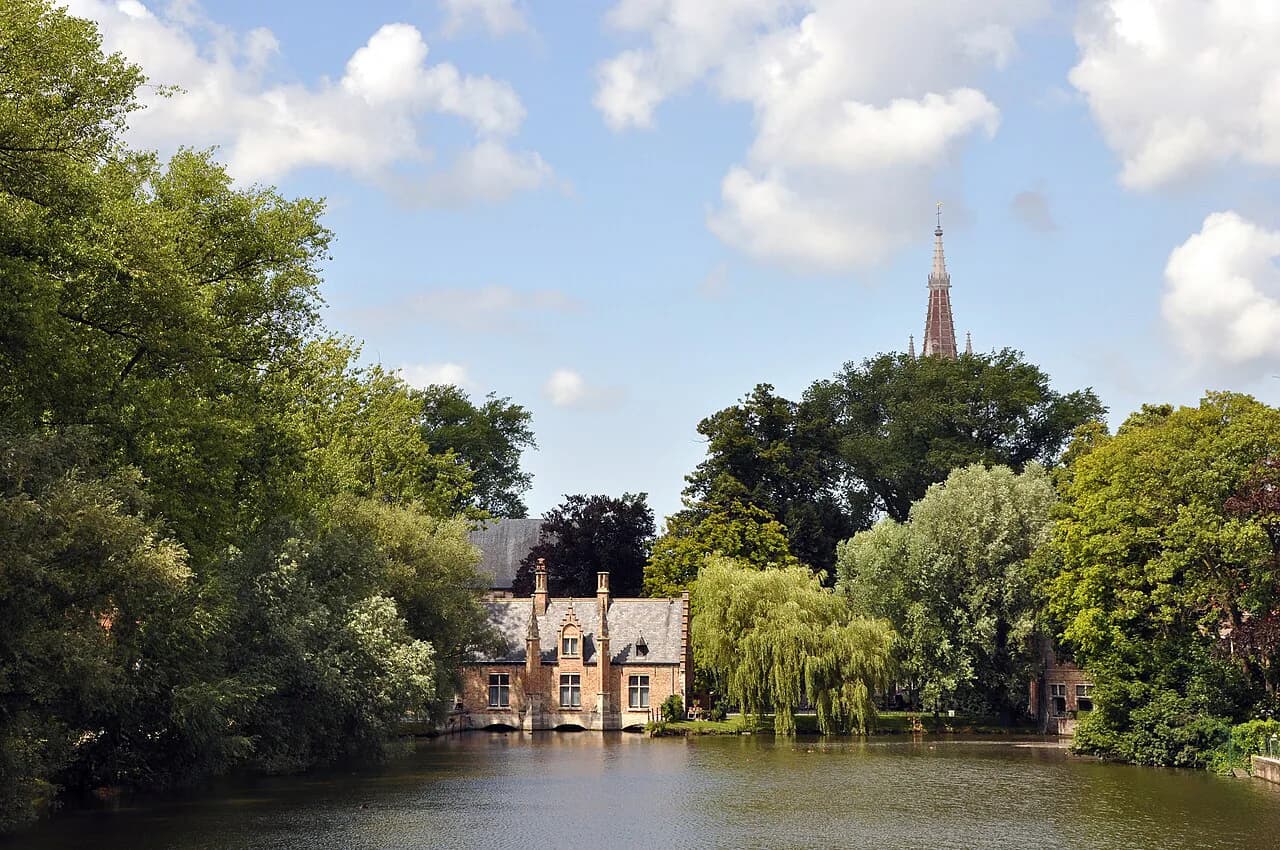
Minnewaterpark is Bruges' loveliest park, tucked between the Lake of Love and the green ramparts, a short stroll from the Begijnhof and the station.
On this page
Minnewaterpark is the park worth planning around in Bruges: a compact green strip between the Lake of Love and the old ramparts, ten to fifteen minutes on foot south of the Markt. It works best not as a destination in itself but as the southern end of a walk that takes in the Begijnhof, the Gunpowder Tower and the quiet lanes back into the centre.
Most visitors arrive from the station at the south, which puts the park on their way in rather than out of it. Come from Markt and you enter past the Begijnhof; come from the station and you hit the lake side first. Either direction, the whole circuit is short enough to fold into a half-day.
Where Minnewaterpark sits and how you reach it
The park lies at the southern edge of the historic centre, pinned between the green ramparts and the water of the Lake of Love, with the Beguinage garden a short stroll away. Its address is Minnewater 1, and the nearest bus stop, Brugge Bargeplein, sits on the park's own doorstep. Arriving by train means a walk of around a quarter of an hour from Station Brugge, straight up through the Minnewater axis.
That layout matters when you plan the day. Coming from the station or the Bargeplein car parks, you meet the park before the crowds and before the Markt; coming from the Markt, the Begijnhof leads you in almost without noticing. Treat it as the hinge between the station end of town and the historic centre, not as an excursion.
What you actually find in Minnewaterpark
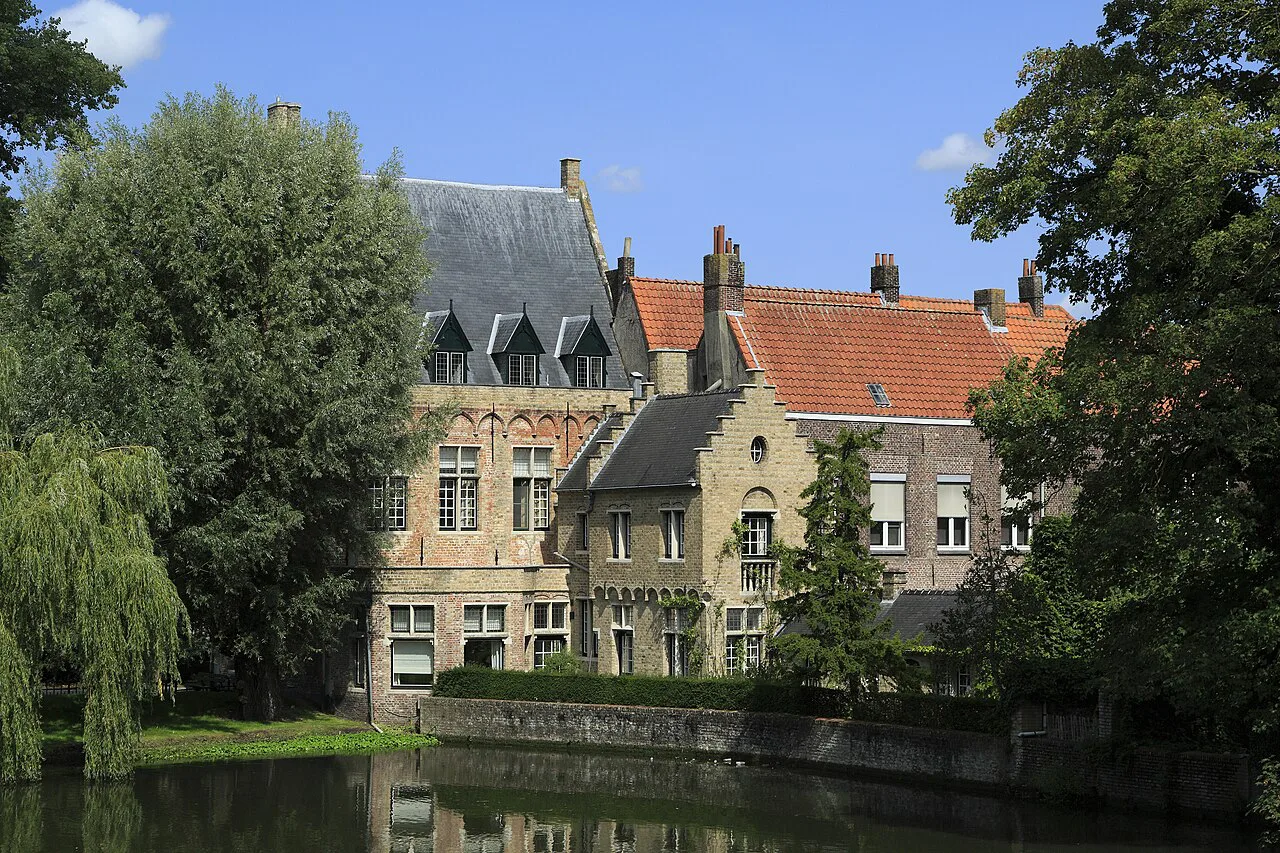
The park is not a formal garden with fountains and bedding displays. The city describes a place tucked between ramparts and lake, full of intimate garden spaces that make it feel as though the park is yours alone. Expect grass, mature trees, water and long views rather than attractions.
Where is Minnewaterpark and how do you reach it? Minnewaterpark lies at the southern edge of Bruges' historic centre, between the green ramparts and the Lake of Love, at Minnewater 1. The nearest bus stop is Brugge Bargeplein on the park's doorstep, and Station Brugge is a walk of around a quarter of an hour up through the Minnewater axis.
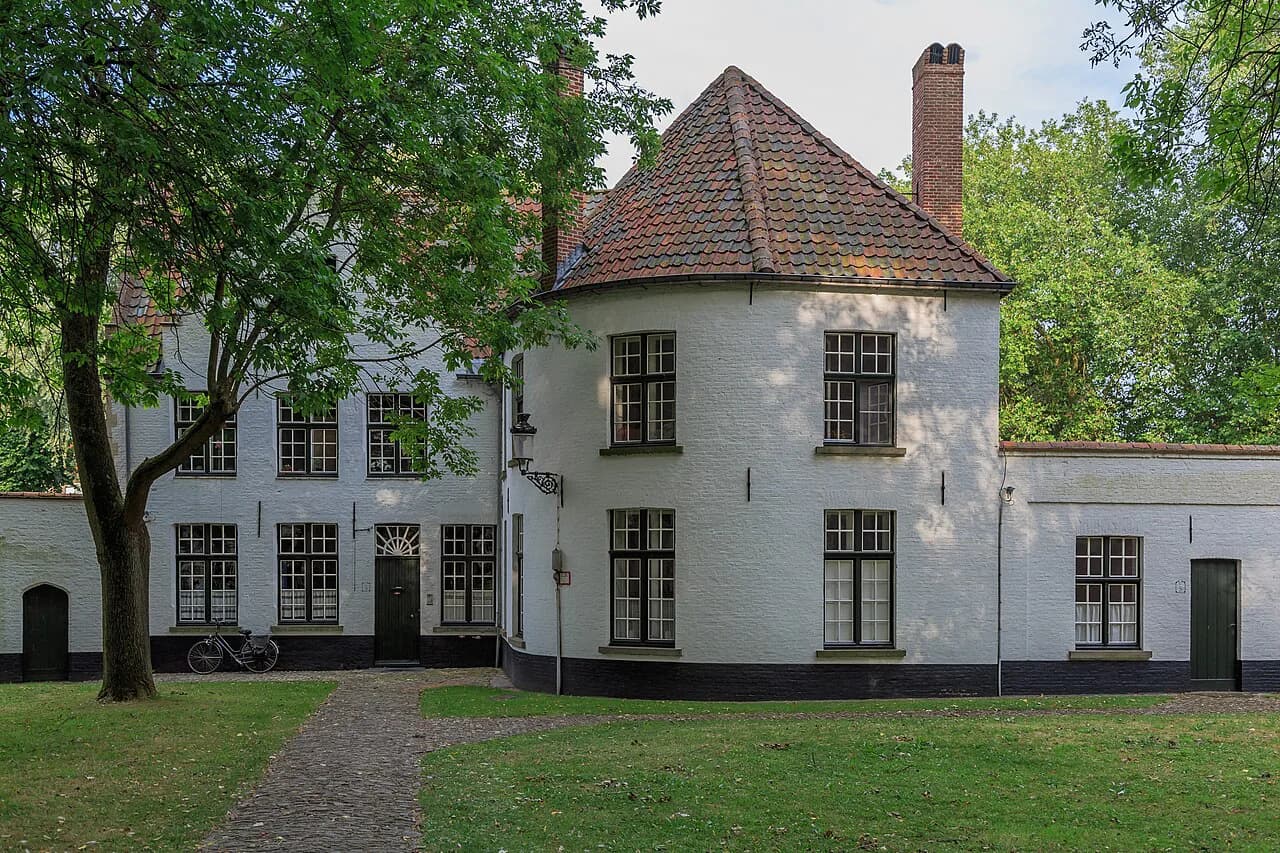
How old is the Begijnhof near the park? The Princely Beguinage Ten Wijngaerde, with its white house fronts and convent garden, was founded in 1245 and sits a short stroll from Minnewaterpark. Its tranquillity makes it a natural part of the same walk rather than a separate visit.
Is there free parking near the park end of Bruges? The city lists several free peripheral and Park & Ride car parks, including the Boogschutterslaan Park & Ride by the Sint-Kruis church, the Coiseaukaai car park with 75 spaces and the Magdalenastraat car park beside the Magdalena concert hall. These sit on the edge of town rather than in the centre, so you walk further in exchange for no charge, and all parking in the centre itself is paid.
That makes it the right stop for a slow hour: sit, walk the water's edge, and use it to break up a day of churches and museums. Put it at the end of the afternoon rather than squeezing it between sights, because its value is the contrast with the brick and cobbles further north.
The Lake of Love and the story behind the name
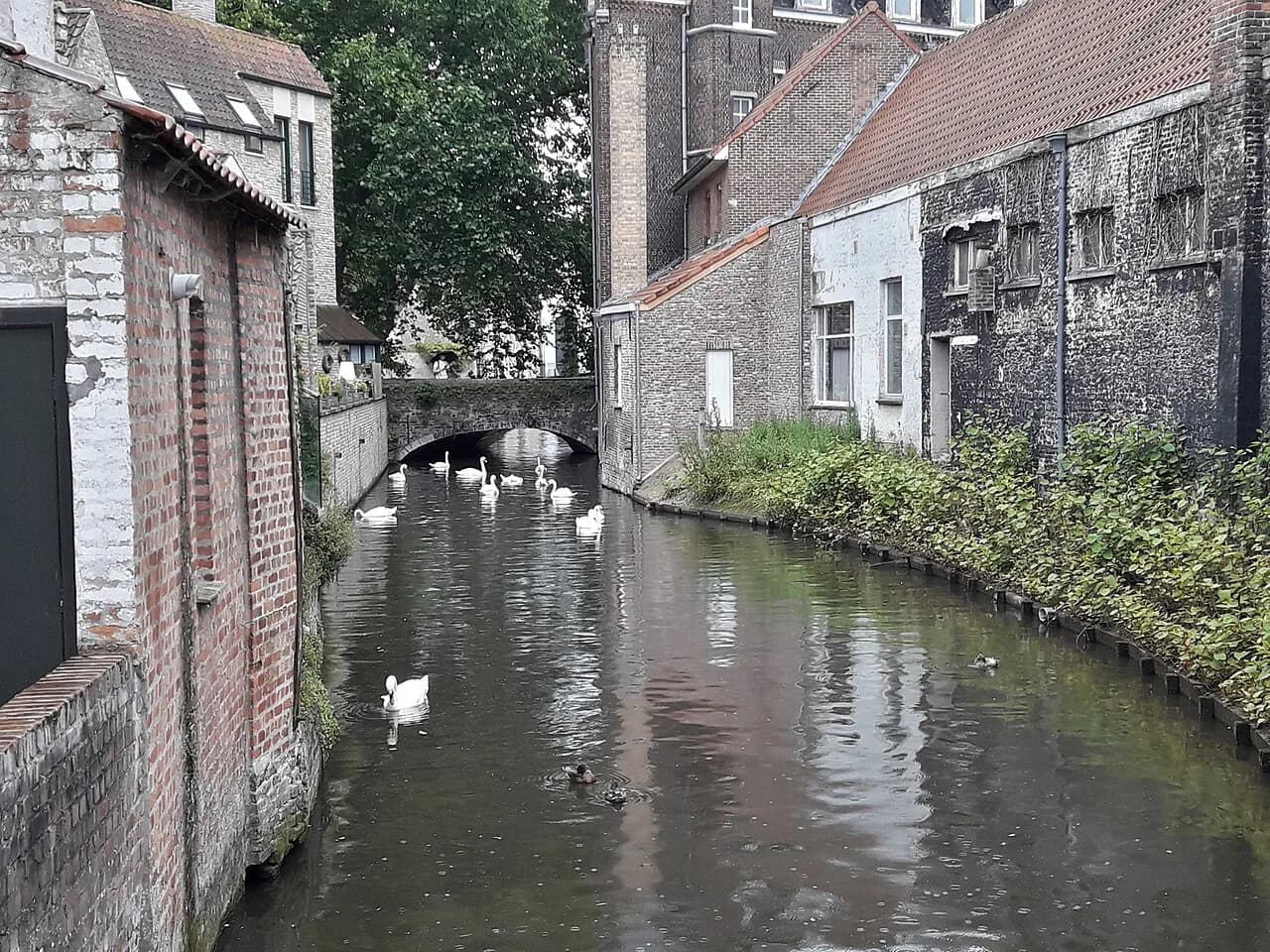
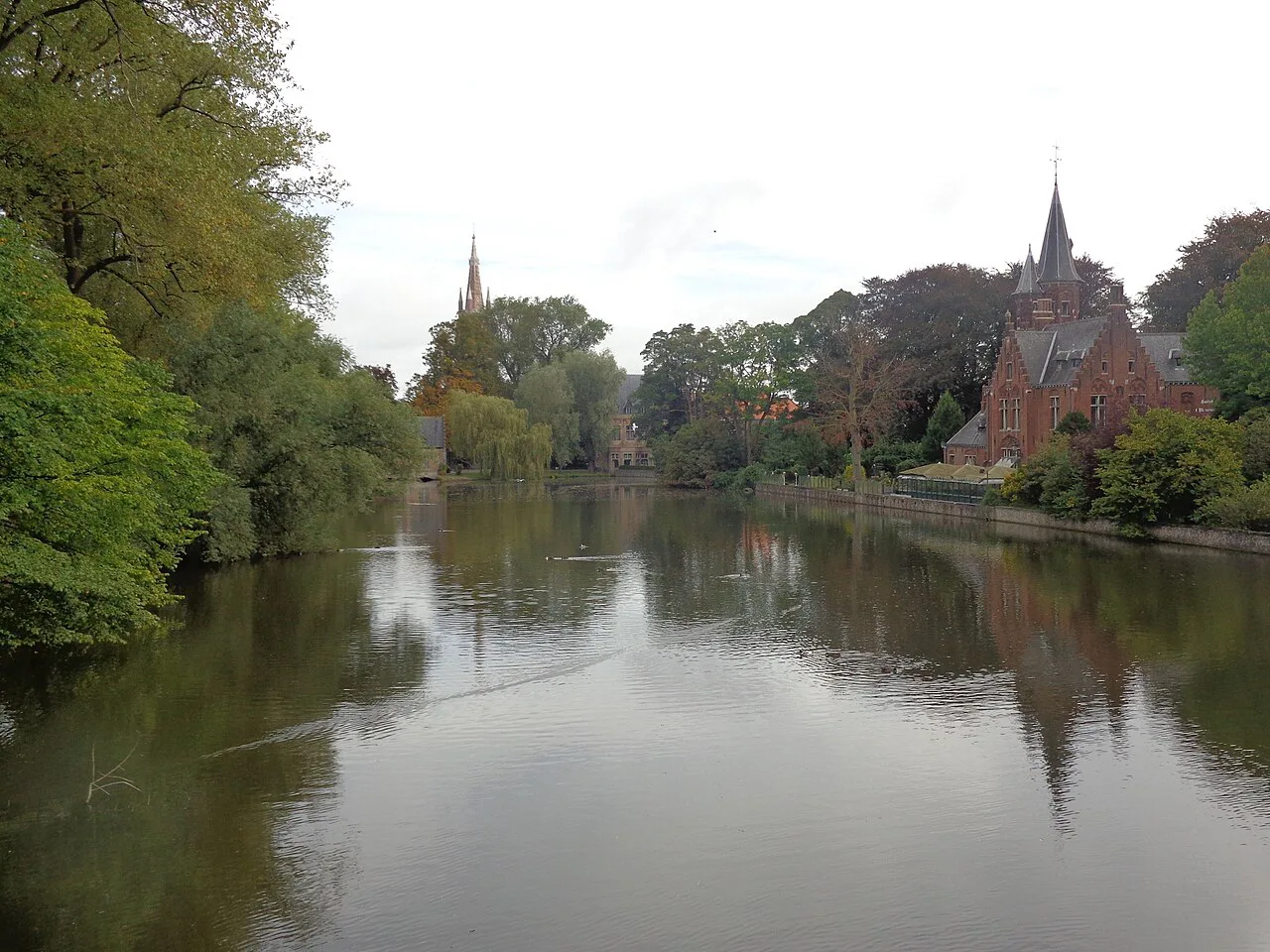
Minnewater, the Lake of Love, is the water at the heart of the park and a romantic landmark in its own right. People once believed that water nymphs — 'minnen' in Dutch — lived here, and that belief is how the lake acquired its reputation. The swans and the low bridge over the water are what most people photograph.
Read the park as two halves: the lake side, open and reflective, and the rampart side, enclosed and shady. Cross between them via the paths near the water rather than walking the perimeter road, and you get the version of the park that feels removed from the city. It is also the easiest place in Bruges to escape the tour groups without leaving the centre, and a natural point on the Bruges Walking Tour: A Self-Guided Route Through the Old Town.
Walking in from the Begijnhof
The Princely Beguinage Ten Wijngaerde, with its white house fronts and convent garden, was founded in 1245 and sits only a short stroll from the park. Its tranquillity is the reason to fold it into the same walk rather than visiting separately. Approach from Wijngaardplein, then let the path take you south into the park, so the contrast from enclosed courtyard to open water lands properly.
This is the sequence to keep in mind: Begijnhof, then the lake, then the ramparts. It runs downhill in effort and uphill in atmosphere, ending on the green edge of town with the option of continuing along the ramparts or turning back for the Markt.
Poertorenpark and the Gunpowder Tower
On the city ramparts close to the Lake of Love stands a striking round tower, the Gunpowder Tower, the anchor of Poertorenpark. It is the extension most visitors skip, because the path continues past the lake instead of looping back, but it gives you the rampart walk at its greenest. The tower is a landmark to look at rather than an attraction with displays, so budget minutes rather than an hour.
Combine it with the lake for a simple figure-of-eight: water first, then tower, then back along Begijnenvest. Walkers who want a longer stretch of green can follow the ramparts north or south, but the park-to-tower stretch is the part with the most shade and the least traffic.
How long the loop takes and how it fits the centre
The Minnewaterpark circuit on its own is a half-hour stroll. Add the Begijnhof on the way in and the Gunpowder Tower on the way out and it becomes a comfortable hour to ninety minutes without rushing. That fits neatly at the start of a first day, when you are walking in from the station anyway, or at the end of a second day when the museums are done.
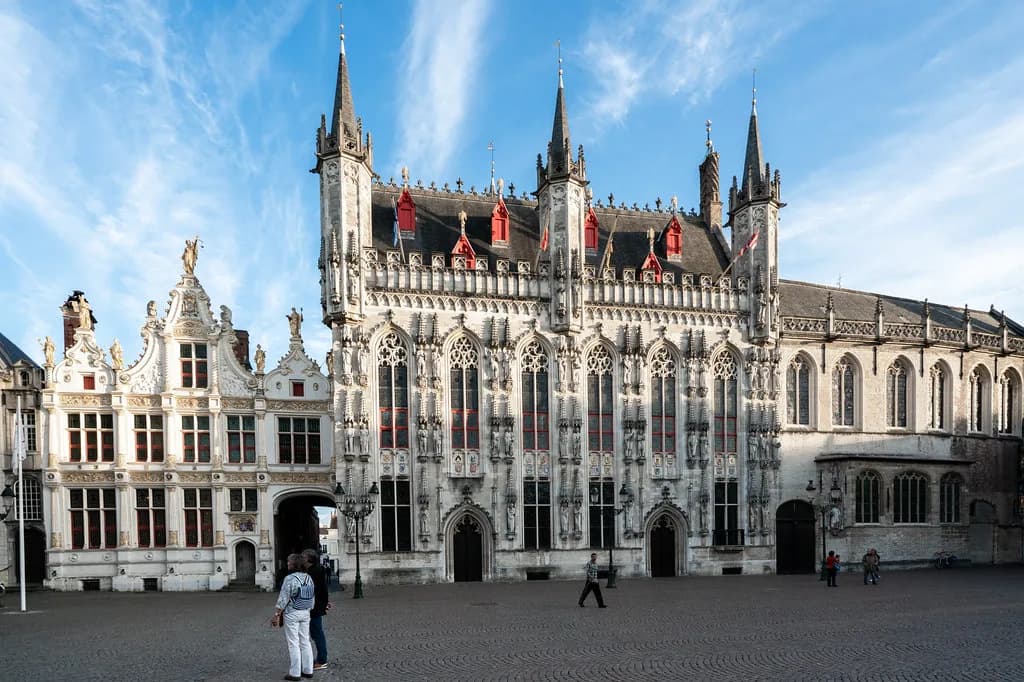
For a one-day visit, use the park as the southern bookend to a route through the Markt, Burg and the canals. Our guide to the Bruges Historic Centre: What to See in the Old Town sets out the core sights; the park simply gives that route a calm way in and out.
Climbing the Bruges Belfry belongs to a different half-day anyway, so keep the two apart rather than trying to do both before lunch.
The park's lake bridge is a modest viewpoint, free and immediate rather than a tower climb; compare it with the best views in Bruges if you are collecting them across the trip.
Parking at the southern end of Bruges
Drivers coming from the coast road reach the park before the centre, and the city's parking page is the sensible starting point. Parking throughout the centre is paid, and the sites on the city's list are tagged for facilities such as monitoring, lifts, electric charging and a free bus ticket to the centre, so match the car park to what you need rather than to distance alone.
Three sites this end of town are listed as free: the Boogschutterslaan Park & Ride by the Sint-Kruis church, the Coiseaukaai peripheral car park with 75 spaces, and the Magdalenastraat car park next to the Magdalena concert hall. All three are on the edge rather than in the centre, which is the trade-off: a longer walk in exchange for no charge.
Centrum-Station, with 1,690 spaces next to the station, is the easiest paid option if you are arriving by car and want to switch to public transport, since all De Lijn buses stop there.
Parking throughout the centre of Bruges is subject to payment, and on-street parking is charged every day, so a street space rarely beats a car park for a day out. For cyclists, Bicycle parking Markt is free, underground and the most central option, with 180 spaces including cargo bike bays.
Rates are set locally, so the car-park tariff boards at the entrance are the ones to read before you leave the car.
Best time of day for the park
Early morning is the park at its best: the lake is still, the paths are quiet, and you can walk from the Begijnhof to the Gunpowder Tower without overtaking anyone. Late afternoon gives you softer light on the water and a natural end to a day of sightseeing. Avoid the middle of the day in high season, when the lake bridge becomes a bottleneck.
Spring and early autumn suit the park best, because the trees and the rampart greenery are the point and the walking is comfortable. High summer is fine if you come early, and winter strips the park back to bare branches and water, which has its own appeal if you are dressed for it. The park is free and open to walk through, so the season changes what you see rather than whether you can go.
Any viewpoint worth the detour on a Bruges trip is usually a tower or a bridge, but the lake bridge here earns its place simply by being free and immediate. Compare it with the best views in Bruges if you are collecting them across the trip.
Is the park worth building your morning around?
Yes, if you use it as the start or end of a walk rather than a standalone stop. Minnewaterpark, the Begijnhof and Poertorenpark together give you an hour and a half of quiet water, green ramparts and one good tower, all reachable on foot from the station. Skip it only if your trip is a single rushed day and the Belfry queue is your priority.
If you have two days, put the park at the front of day one and the museums at the front of day two, and you get the contrast the city does best. Bruges Attractions: 7 Visitor Guides covers the rest of the shortlist if you want to build the days around named sights.
Frequently Asked Questions
Where is Minnewaterpark and how do you reach it?
Minnewaterpark lies at the southern edge of Bruges' historic centre, between the green ramparts and the Lake of Love, at Minnewater 1. The nearest bus stop is Brugge Bargeplein on the park's doorstep, and Station Brugge is a walk of around a quarter of an hour up through the Minnewater axis.
How old is the Begijnhof near the park?
The Princely Beguinage Ten Wijngaerde, with its white house fronts and convent garden, was founded in 1245 and sits a short stroll from Minnewaterpark. Its tranquillity makes it a natural part of the same walk rather than a separate visit.
Is there free parking near the park end of Bruges?
The city lists several free peripheral and Park & Ride car parks, including the Boogschutterslaan Park & Ride by the Sint-Kruis church, the Coiseaukaai car park with 75 spaces and the Magdalenastraat car park beside the Magdalena concert hall. These sit on the edge of town rather than in the centre, so you walk further in exchange for no charge, and all parking in the centre itself is paid.
Sources
Useful notes for your next trip
Optional updates to our guides.
You might also like
Continue reading
More guides you'll find useful