Museums in Bruges: Which Ones Are Worth Your Time
The Bruges museums worth your time, from the Groeninge's Flemish Primitives to the Belfry climb, with what each holds and how long to allow.
On this page
For a first visit, four Bruges museums justify the time: the Groeningemuseum for Flemish Primitives, Museum Sint-Janshospitaal for Memling in a medieval hospital, the Gruuthusemuseum for the city's Burgundian centuries, and the Belfry for the climb and the view. Allow a half-day for the three on Dijver and Mariastraat, and a separate hour for the tower. This guide covers what each collection holds, how long to allow, the ticket prices published for the Groeninge, and the two museum passes that cover these sites.
Which museums in Bruges are worth your time
The Groeningemuseum is the one to prioritise if you care about painting: it holds Jan van Eyck's Madonna with Canon Joris Van der Paele and Hans Memling's Moreel Triptych, alongside Renaissance, Baroque and Flemish expressionist work. Museum Sint-Janshospitaal pairs Memling panels with the wards of one of Europe's oldest preserved hospitals, and now sets contemporary pieces by artists such as Berlinde De Bruyckere and Patricia Piccinini against the medieval interior. The Gruuthusemuseum, at Dijver 17C, walks you through three periods of the city's past.
The Belfry on the Markt is a museum visit with a staircase attached: 366 steps up a medieval tower that is a UNESCO World Heritage Site, with a historical collection and the clock mechanism on the way. Treat it as an hour of effort rather than a gallery, and decide before you book whether the climb suits your legs and your schedule.
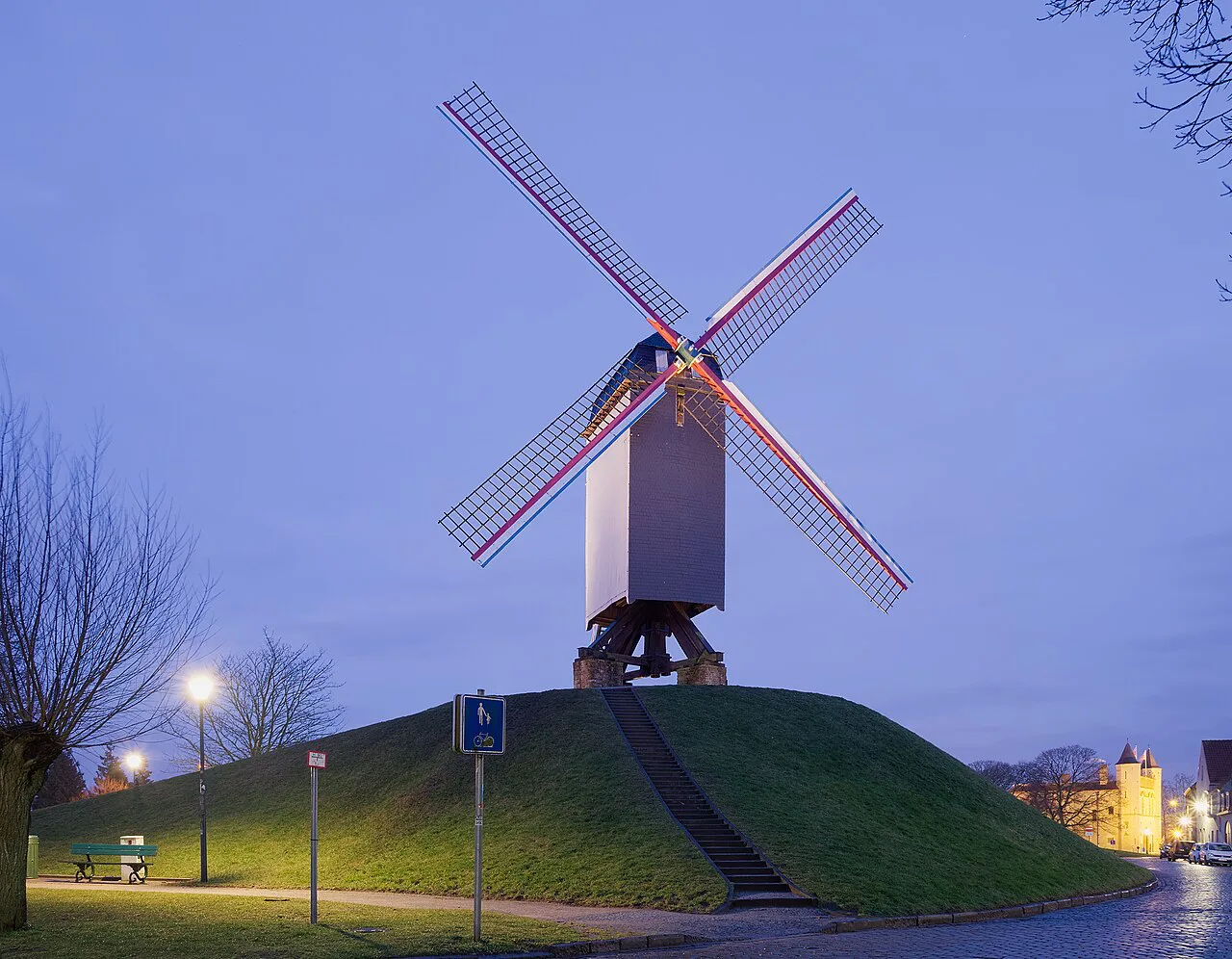
The Groeningemuseum: Van Eyck, Memling and the Flemish Primitives
The Groeninge's core is the world-class group of Flemish Primitives, with Van Eyck's Madonna with Canon Joris Van der Paele and Memling's Moreel Triptych as the headline panels. Beyond those, the rooms run through Renaissance and Baroque masters, Bruges neo-classical canvases from the 18th and 19th centuries and Flemish expressionism, so the visit gives you a compressed history of Belgian visual art rather than a single period. It sits at Dijver 12, on the canal side of the museum quarter.
Plan the Groeninge for 2026 or earlier if the Van Eyck and Memling panels are your reason for coming. The museum closes its doors from 11 January 2027 for a four-year complete refurbishment, and from March 2027 the heart of the collection moves to the BRUSK art gallery. That timing is the single most useful fact for anyone booking a Bruges trip well ahead.
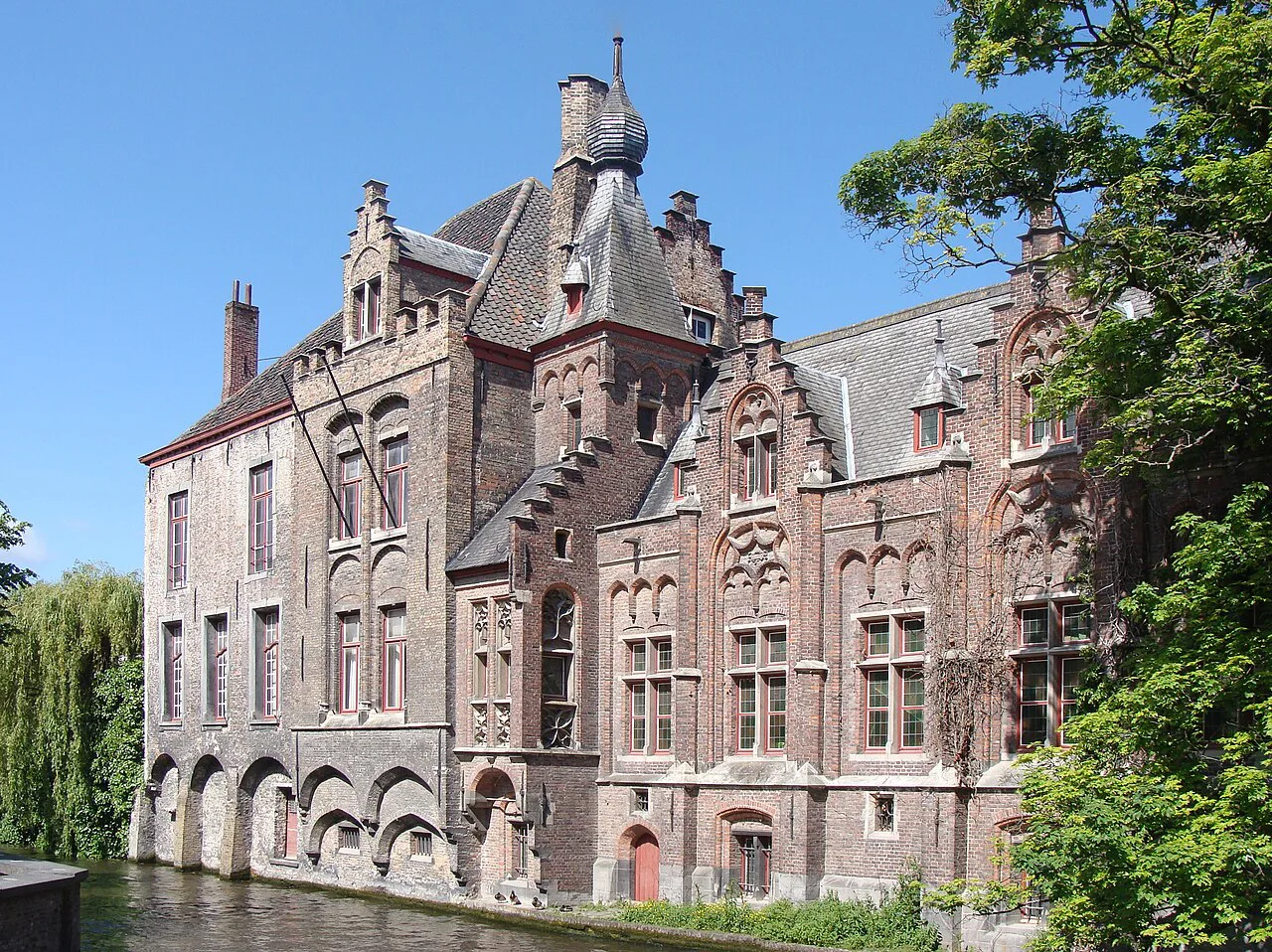
BRUSK art gallery on Dijver: what the 2026 opening adds
BRUSK opened on 8 May 2026 at Dijver 12, the Groeninge's address, as a new gallery for changing exhibitions of historical and contemporary art. The ground floor is free to visit and holds Bar BRUSK, event spaces and a museum shop, with monumental Laure Prouvost frescoes in the stairwell. Upstairs, two large exhibition spaces charge admission, so the free ground floor is a sensible stop even if the paying show does not appeal.
For the Bruges art circuit, BRUSK does two jobs: it gives the city a contemporary venue next to the historic collections, and it becomes the home of the Groeninge's core works during the refurbishment. If your trip falls after March 2027, build your art morning around BRUSK rather than the closed Groeninge.
Museum Sint-Janshospitaal: Memling in the medieval wards
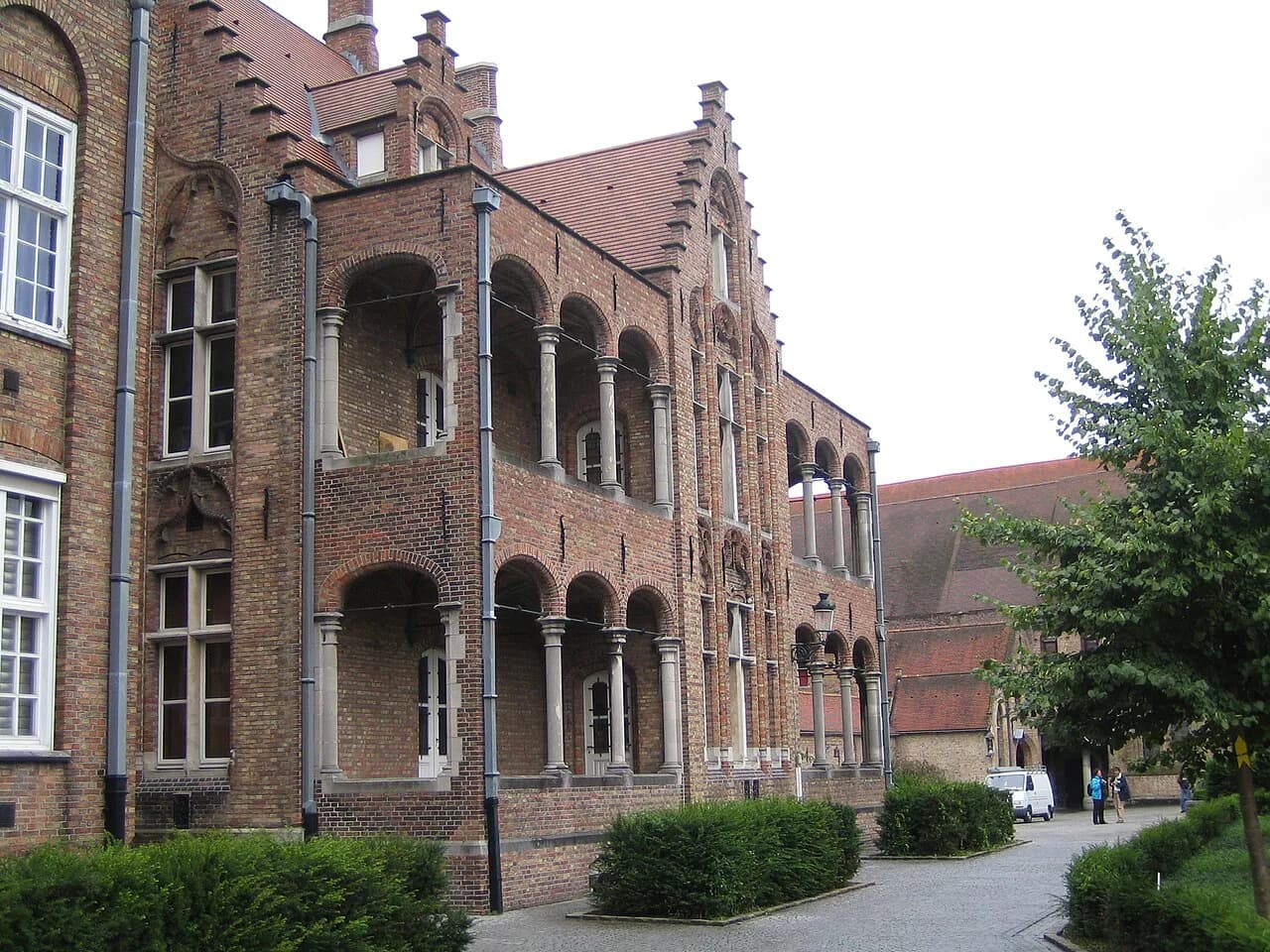
Museum Sint-Janshospitaal at Mariastraat 38 occupies one of the oldest preserved hospital buildings in Europe, and the medieval wards are as much the exhibit as the art. The collection includes masterpieces by Hans Memling, old medical instruments and religious objects, with contemporary works by Berlinde De Bruyckere and Patricia Piccinini threaded through the historic rooms. Hospitality and care are the themes that tie the displays together.
This is the museum to choose if you want one place that explains medieval Bruges and shows you a Memling rather than doing either in isolation. It sits a short walk from the Groeninge, which makes the pair a natural morning. For the city's religious buildings more broadly, our guide to Churches in Bruges covers what stands where.
Gruuthusemuseum: three periods of Bruges history
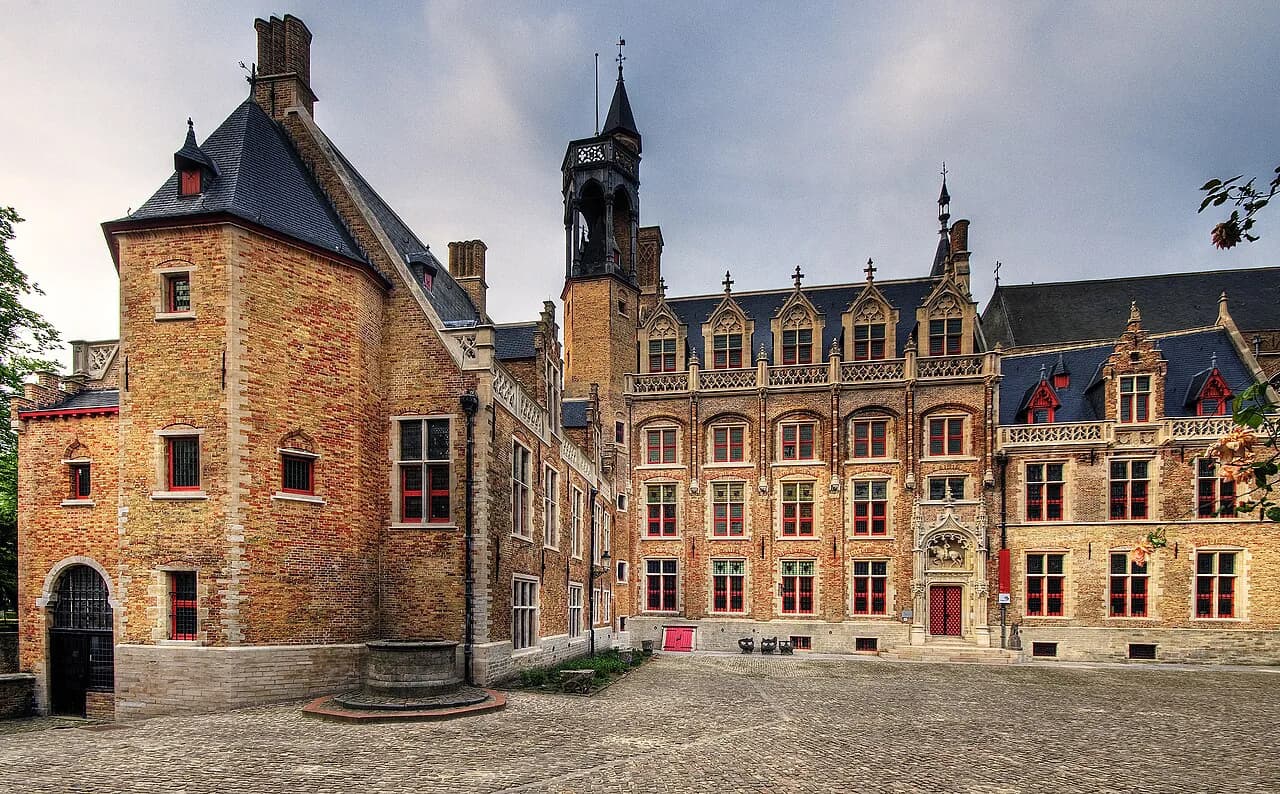
The Gruuthusemuseum at Dijver 17C takes you through three crucial periods of Bruges history, starting with the city's Burgundian heyday. The building itself, with its carved details and canal-side position, carries much of the story. It rounds out the Dijver cluster as the history counterpart to the Groeninge's paintings.
Allow around an hour here if you are pairing it with the Groeninge and Sint-Janshospitaal in one morning, and longer if you read the displays properly. The reward is context: the Burgundian court, the city's trade and the later centuries that shaped the streets you walk afterwards. Readers who want the buildings explained should look at our Bruges architecture guide.
Het Belfort: the 366-step climb over the Markt
The Belfry at Markt 7 is a 366-step climb up a medieval tower, with a historical collection and the clocks inside and a view over the Markt and the surrounding roofs at the top. It is a UNESCO World Heritage Site and one of the city's defining buildings, so the trade-off is simple: an hour of stairs for the best look at the medieval street plan from above. Skip it if stairs in a confined tower are not for you, and spend the hour in the Gruuthuse instead.
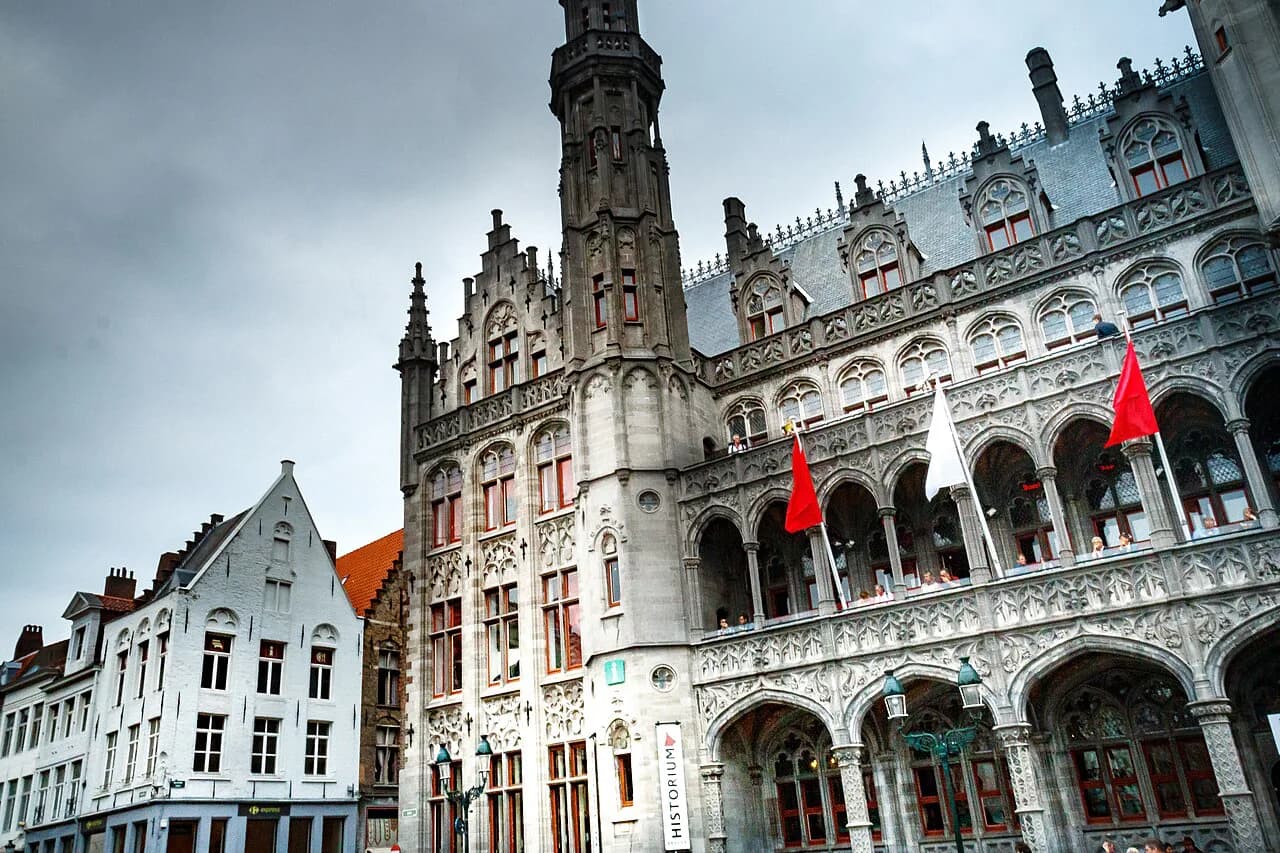
Pair the climb with the Markt sights at ground level, including Historium Brugge at Markt 1, an interactive reconstruction of medieval Bruges with an exhibition on daily life, trade and culture. It suits anyone who wants the medieval city explained through staged scenes rather than glass cases, and it is the obvious add-on if you are already on the square.
Choco-Story on Wijnzakstraat
Choco-Story at Wijnzakstraat 2 tells the story of chocolate from its history through production to flavour, with a tasting of chocolate made on site at the end. It is a compact, popular museum and a reasonable slot if chocolate is part of why you came to Belgium. Decide on it as a 45-minute to one-hour stop near the Markt rather than a half-day.
Bruges Beer Experience near the Markt
The Bruges Beer Experience at Breidelstraat 3 covers brewing with historical equipment, old advertising material and a walk-through of the process and its ingredients, finishing with a tasting of several Belgian beers. It is a short visit in the middle of the centre, useful in wet weather or as an afternoon break between the Markt and the Dijver museums. Anyone more interested in the art than the brewing should put the Groeninge first and treat this as optional.
Ticket prices for the Groeningemuseum
The published Groeninge prices cover adults and seniors aged 65 and over, ages 18 to 25, and ages 13 to 17; entry is free for children under 13. A combination ticket with the Historium is available. Group and school rates are exceptions to these prices.
Budget by age band rather than by headline price: a family with teenagers pays far less than four adults, and under-13s enter free. Note that these figures are the Groeninge's own and are not a city-wide price list, so other museums set their own.
The Musea Brugge Card and museumPASSmusées
The Musea Brugge Card gives 72 hours of access to the Groeninge and all other open Musea Brugge locations at a reduced overall price, and you can buy it at the box office or online. If you plan to see the Groeninge, the Gruuthuse and Sint-Janshospitaal within three days, the card is usually the simpler buy. The museumPASSmusées instead covers more than 200 museums across Belgium for a year, with permanent collections included and temporary shows free or discounted.
Choose the Musea Brugge Card for a short Bruges break and museumPASSmusées only if Belgium's wider museum scene is on your itinerary. Comparison shopping between the two is rarely worth the effort for a three-day trip.
How long each museum takes and how to pair them
For a workable half-day on Dijver, start at the Groeningemuseum, walk the few minutes to the Gruuthusemuseum at Dijver 17C, then finish at Museum Sint-Janshospitaal on Mariastraat. The Groeninge rewards the longest stop, the Gruuthuse fits around an hour, and the hospital museum sits between the two. Doing all three in a morning leaves the afternoon free for the Markt and the Belfry climb.
Keep the Historium and Choco-Story for a second day or a wet afternoon, since both sit close to the Markt rather than the museum quarter. The Bruges Beer Experience works as a late-afternoon break. That split keeps the art and history together and stops the trip turning into a tick-box run.
Getting to the museum quarter
The museum quarter clusters around Dijver, with the Groeninge and BRUSK at Dijver 12, the Gruuthuse at Dijver 17C and Sint-Janshospitaal at Mariastraat 38, all within a short walk of each other. The nearest bus stop is Brugge Dijver, and drivers can use the Pandreitje car park. If you are comparing Bruges with other Belgian cities, our guides to museums in Antwerp and Liège museums show the alternatives.
Which Bruges museums should you book first?
Book the Groeningemuseum first if paintings are the point of the trip, and add Sint-Janshospitaal and the Gruuthuse for the same morning on Dijver. Add the Belfry climb if the stairs and the view appeal, and keep Choco-Story, the Beer Experience and the Historium as fillers around the Markt.
If you are travelling after January 2027, plan around the Groeninge closure and put BRUSK at the centre of your art morning instead. Either way, the Dijver cluster is where a Bruges museum day works best.
Explore more Bruges guides
Frequently Asked Questions
Which Bruges museums are free to visit?
Children under 13 enter the Groeningemuseum free, and the ground floor of BRUSK, including Bar BRUSK and the museum shop, is free to visit. Other museums set their own concessions and entry rules.
Is the chocolate museum in Bruges worth it?
Choco-Story on Wijnzakstraat covers the history and production of chocolate and ends with a tasting, which makes it a sound 45-minute to one-hour stop if chocolate interests you. Treat it as an add-on near the Markt rather than the centrepiece of a museum day.
What happens to the Groeningemuseum in 2027?
The museum closes from 11 January 2027 for a four-year refurbishment, and from March 2027 the heart of the collection can be seen at the BRUSK art gallery on Dijver.
Sources
Useful notes for your next trip
Optional updates to our guides.
You might also like
Continue reading
More guides you'll find useful