Bruges History: The Periods That Shaped the City
Bruges history for visitors, from medieval trade and the Belfry to canals and Flemish art. See which period each sight belongs to before you walk the centre.
On this page
Bruges (Brugge) packs its history into a compact old centre you can cross on foot in a morning, and the fastest way to read it is by period: medieval trade around the Belfry, water trade along the canals, civic pride in the Markt and Burg, religious wealth in the churches, and Flemish painting in the Groeninge Museum. This guide ties each surviving sight to the era that produced it, so a short break gains a timeline rather than a scatter of photogenic streets.
The city is small enough that one full day covers the core sights, and a weekend lets you walk the walls and parks as well. Bruges is also a workable base for comparing other Flemish cities, with Ghent about 30 minutes away by train and Antwerp roughly 90 minutes.
Bruges in brief: the answer
Bruges is a medieval port city whose historic centre is a UNESCO World Heritage Site, and it is often called the Venice of the North for its canals. The wealth that built the brick warehouses, churches and belfry came from trade, and the old centre has kept its shape closely enough that visitors read the city's history directly off the streets.
Treat the centre as a single historic zone rather than a set of separate attractions: the Belfry, the Markt, the Burg, the canals and the Groeninge Museum all sit within easy walking distance of each other. That compactness is why a history-focused visit fits comfortably into a day or two without transport.
Why the city is Bruges in English and Brugge in Flemish
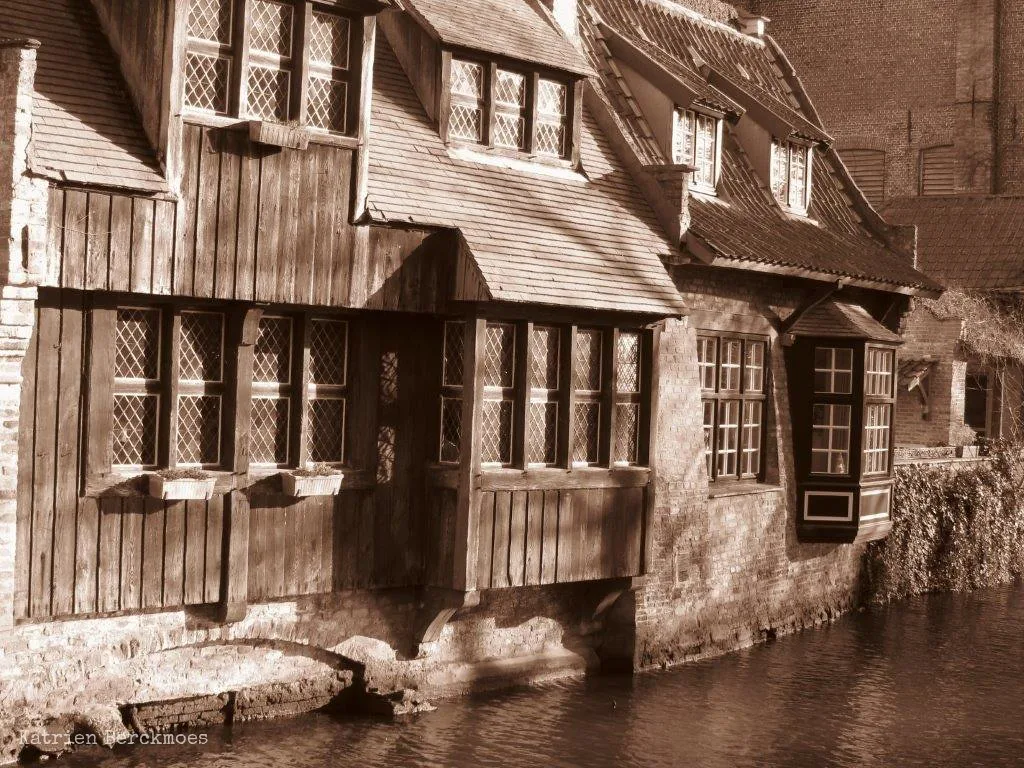
Bruges is the English and French spelling, while Brugge is the Flemish one, and you will see both on station signs, maps and shop fronts. Belgium has French-, Flemish- and German-speaking regions, so spellings shift depending on who is writing; neither version is wrong.
For planning it helps to search both forms, since official Flemish sources usually use Brugge and English-language ones use Bruges. Local names such as Markt, Burg and Belfort are worth learning once, because that is what you will see on the ground.
The medieval trading city and the Belfry
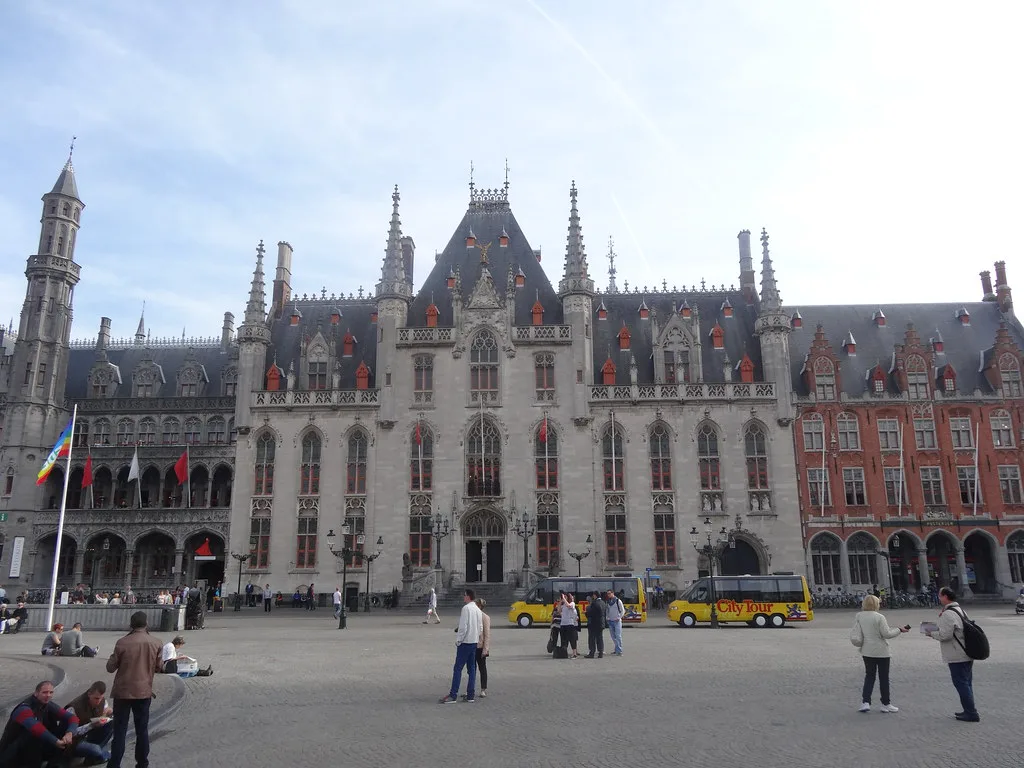
The Belfry on the Markt is the city's emblem and the clearest surviving symbol of medieval civic power, when communal bells governed working life before clocks were common. A tower is thought to have stood on the site since 1240, and the structure has been destroyed and rebuilt several times, with an octagonal tower completed in 1486 and a lightning strike in 1741 causing further damage.
The climb to the top runs to 366 stairs, with a wide view over the rooftops and a close look at the bells as the reward. Build the rest of a history day around the tower climb, since the view and the interior take longer than the stair count suggests.
Bruges is often described as holding some of the best-preserved medieval buildings in Europe, and the Gothic churches, market squares and merchant houses show why. Read the brickwork and stepped gables as commercial architecture: many of these were warehouses and trading houses before they were scenery, and Bruges architecture rewards a slow look at the details.
Canals and the Groenerei and Gouden-Hand Rei
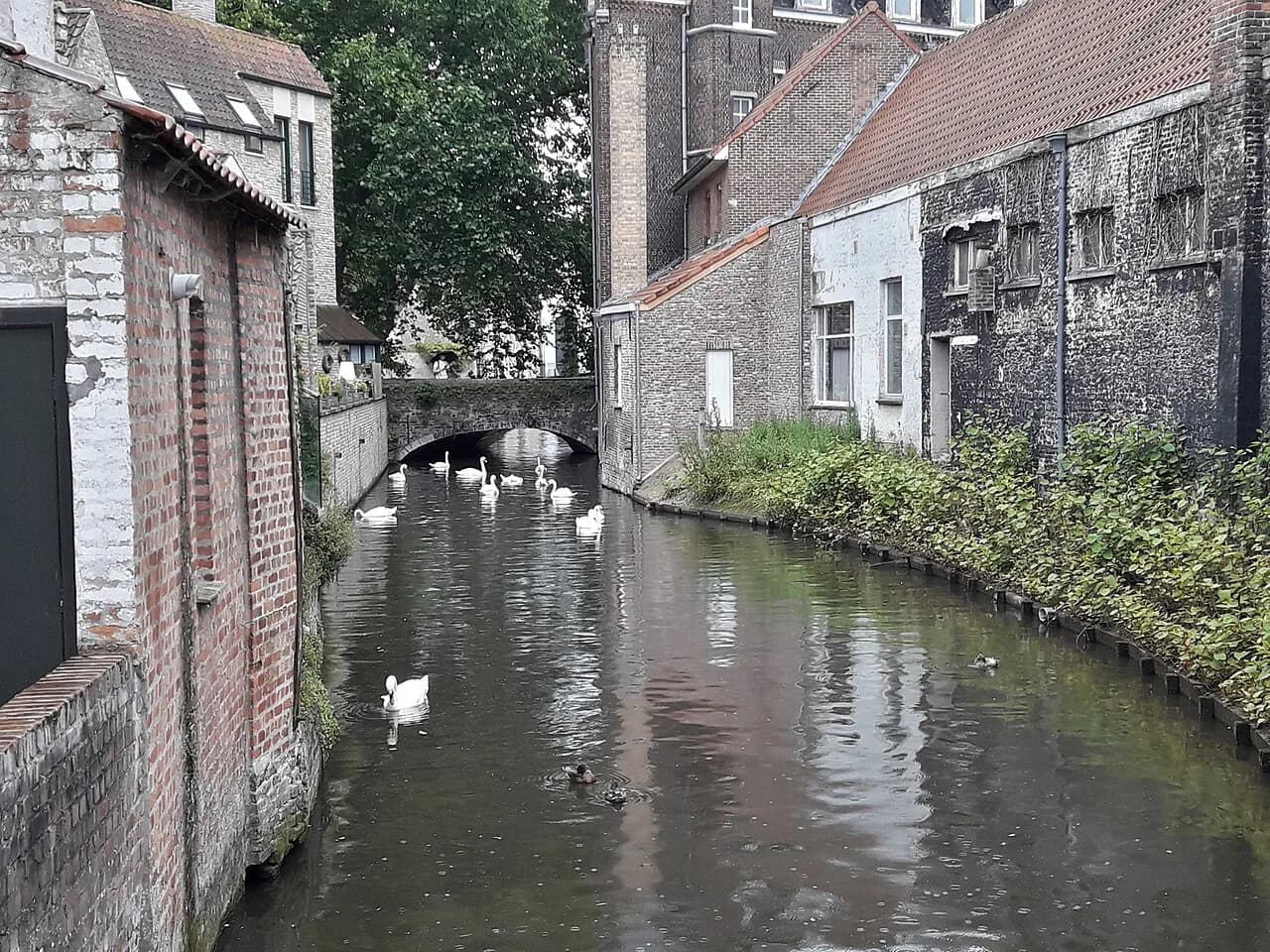
The canals were cut for defence and transport, and some waterways have existed since the ninth century, though most were put in place around the twelfth. The Groenerei is the loveliest of them, winding through the heart of town with trees along its banks, while the Gouden-Hand Rei runs along the foot of the old fortified medieval walls and was once home to the painter Jan van Eyck.
Rozenhoedkaai, the Rosary Quay, takes its name from the rosary sellers who once worked there and is now the classic view of the canals and stepped roofs. A boat tour shows a different face of the city and points out architectural detail you would miss at street level, which makes it a reasonable use of an hour for anyone following the water trade story.
The Markt and Burg squares
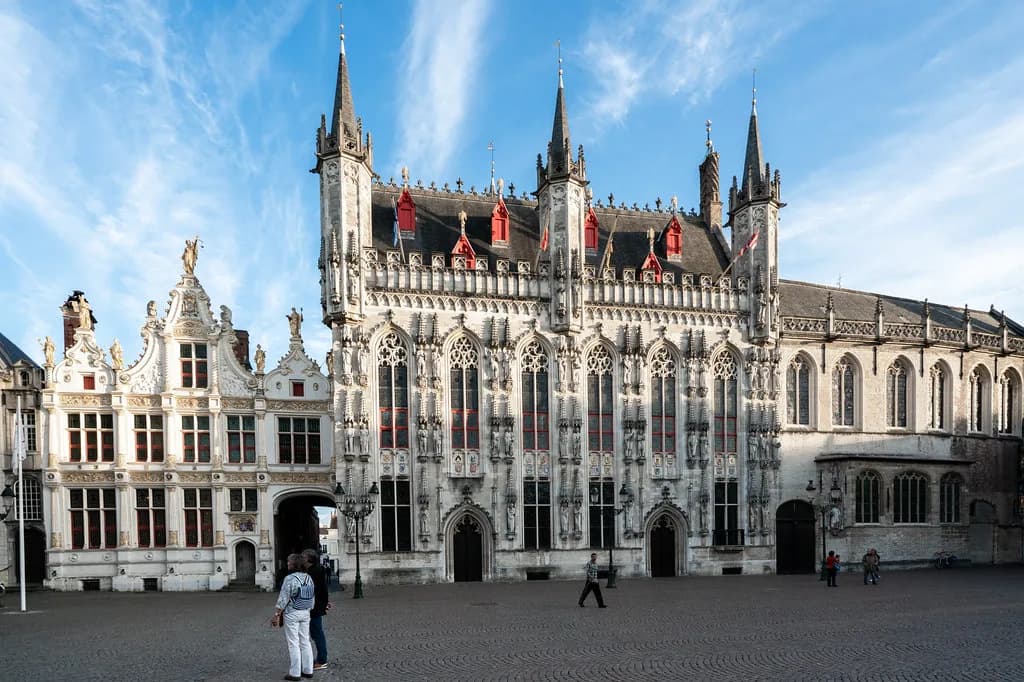
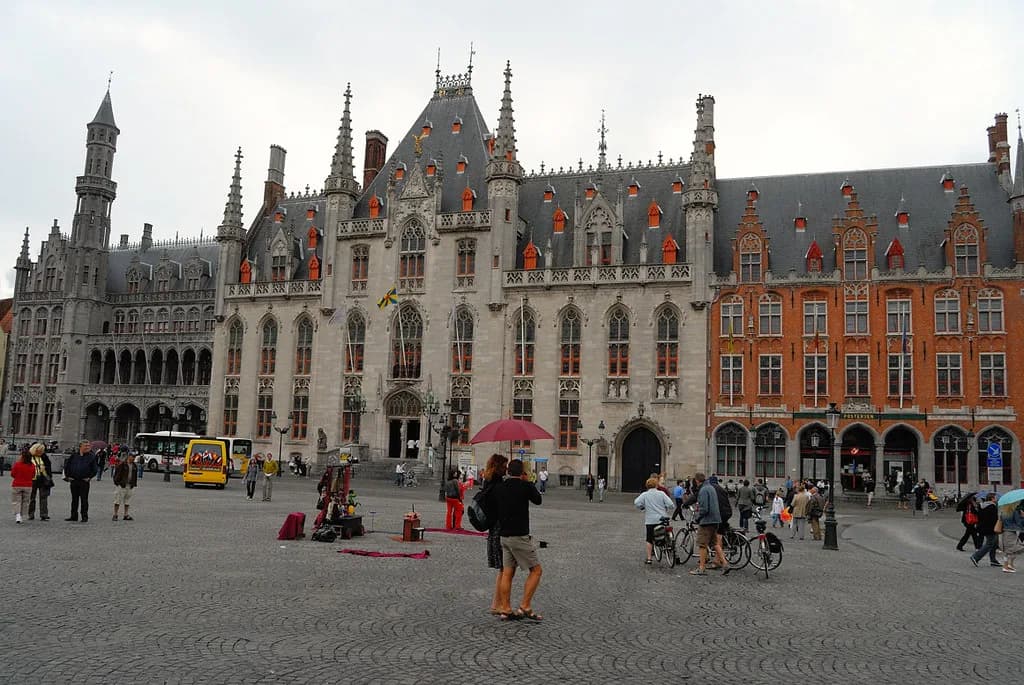
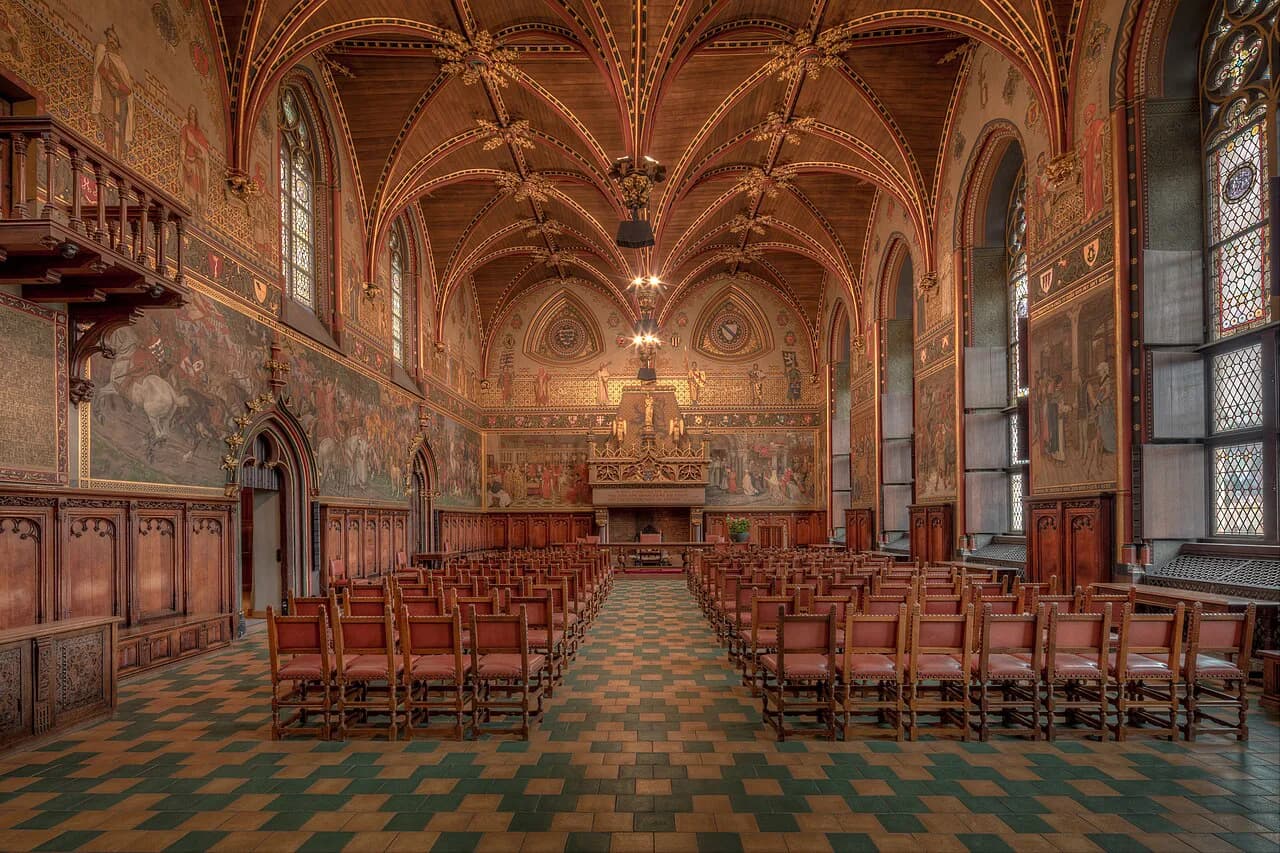
The Markt is the central square, ringed by historic buildings and horse-drawn carriages, and it is where most visits begin. The Burg next door is the civic counterpart, and together the two squares show how trade and government sat side by side in the medieval city, with the civic buildings around the Burg the place to look for the most confident medieval architecture.
Both squares are pedestrianised and busy, so early morning is the calmest time to read the facades. Cafés and pubs cluster around the Markt, which makes it a natural pause between the Belfry climb and the Burg.
Churches and basilicas in the old centre
The old centre holds magnificent churches and basilicas, and each carries a different slice of the city's religious and commercial history. They are working buildings as well as monuments, so visit quietly and respect any notices at the entrance.
For a focused route through the ecclesiastical buildings, the guide to Churches in Bruges sets out which are worth the detour and what to look for inside. One of the most rewarding stops combines a church with a medieval hospital ward, and the guide to Museums in Bruges covers that pairing alongside the city's other collections.
The Groeninge Museum and Flemish art
The Groeninge Museum is the place to see Flemish painting in Bruges. Go after you have walked the canals, so that the paintings of the city and its water trade sit alongside what you have just seen on foot.
Pair the Groeninge with the city's other collections using the guide to Museums in Bruges, which covers what each one holds and how they fit together. If painting is your main interest, plan the museums first and the squares second, since the galleries take the longest.
Jan van Eyck lived along the Gouden-Hand Rei, which links the art directly to a specific canal bank you can walk. For a wider look at galleries and painting in the city, the guide to Bruges art picks up where the Groeninge leaves off. The churches and basilicas sit within the same compact centre, so a single morning can cover the main religious buildings if you plan the order.
Kruispoort and the old city walls
The Kruispoort is one of the city's surviving medieval sights, and the line of the old walls still frames the centre. The Gouden-Hand Rei runs along the foot of those old fortified medieval walls, so a walk taking in the gate and the canal bank covers the military and the mercantile sides of the story in one stretch.
The cobbles on the quieter streets are uneven, so wear shoes you can walk in for an hour or two. End the walk near Minnewaterpark, where the old water approach into the city is still readable without joining a boat.
Minnewaterpark and the Lake of Love
Minnewaterpark, the Lake of Love, sits at the southern edge of the centre and marks the old water approach into the city. Swans on the water make it one of the quietest places to end a history walk, and it pairs naturally with the canal-side streets on the way back to the Markt.
It is also the easiest spot to see the medieval water system without joining a boat, which matters if you are visiting on a tight schedule. The lakeside paths stay calmest late in the afternoon.
What UNESCO World Heritage status covers in Bruges
The UNESCO listing covers the historic centre rather than the whole modern city, which is why the boundary between old and new Bruges is worth noticing as you walk. Inside it, the Belfry is the city's symbol, a 272-foot tower at the heart of the Markt that experts believe has stood on its site since 1240.
Practically, the listing explains why so much survives intact: the medieval street plan and building stock were protected rather than redeveloped. For a visitor, that means the history you read about is largely the history you see.
How long the historic centre takes to walk
The old centre is entirely walkable, and the attractions sit mostly within it, so a full day covers the essentials and a weekend covers the city properly. Aim for one day for the Belfry, squares, canals and one museum, and add a second for the walls, Minnewaterpark and a second gallery.
Spring and autumn give better weather without peak-season crowds, while summer is busiest. If you want the full set of sight guides in one place, start with Bruges Attractions: 7 Visitor Guides and pick the ones that match your interests.
Where to taste the city's food and beer heritage
Bruges is known for waffles, chocolate and Belgian beer, and traditional pubs and cafés cluster around the pedestrianised Markt. Frieten, the thick-cut double-fried chips served with mayonnaise or any of a dozen sauces, are a local point of pride and a good way to eat between sights.
Beer cafés are the place to taste Belgian beer rather than to make a night of it, and a single well-chosen glass beside the Markt fits neatly into an afternoon of sightseeing. Chocolate shops cluster in the centre, so buy as you walk rather than planning a separate trip.
Which sight to see first for the clearest sense of Bruges history
Start at the Belfry on the Markt, because the tower, the square and the nearby Burg give you the medieval trading city in one compact block. From there walk the Groenerei and Rozenhoedkaai to read the water trade, then finish at the Groeninge Museum to see the wealth those merchants commissioned.
If you have a second day, add Kruispoort, the old walls and Minnewaterpark to close the loop on the city's boundaries. Bruges Attractions: 7 Visitor Guides covers the sights this history touches, so you can match the rest of your time to the periods that interest you most.
Sources
Useful notes for your next trip
Optional updates to our guides.
You might also like
Continue reading
More guides you'll find useful