Antwerp Cathedral: Rubens, the Tower and What to Expect
A visitor's guide to Antwerp Cathedral of Our Lady, from Rubens paintings to the Gothic spire. What's inside, how long to allow and what to see nearby.
On this page
Antwerp Cathedral of Our Lady (Onze-Lieve-Vrouwekathedraal) is worth an hour of any Antwerp short break, and it is the one sight that combines the city's two signatures in a single building: Gothic stonework and Rubens. Its tower rises 123 metres over the old town, making it the largest Gothic church in Belgium, and the interior holds paintings by Peter Paul Rubens including The Descent from the Cross. This guide covers what to look for inside, where the cathedral sits in the old-town walk, and how to weigh it against Antwerp's larger art collections.
What the Cathedral of Our Lady is and why it draws visitors
The Cathedral of Our Lady is Antwerp's most recognisable landmark, a Gothic church whose spire lifts clear of the rooftops near Groenplaats (its address is Groenplaats 21). The cathedral's own site describes it as one of the masterpieces of Gothic architecture, and the combination of soaring architecture, stained glass and baroque painting gives visitors more than a single photo stop. If you only have time for one interior in the old town, this is the one that repays it.
Its scale is the first thing to register. The cathedral is the largest Gothic church in Belgium, with a tower of 123 metres, which explains why it dominates the skyline from the Scheldt quays as well as from the square below. Look at how the spire sits above the crossing and how the surrounding step-roofed houses at Grote Markt frame it from a few minutes away.
Antwerp is a Catholic city in a country where Catholic and Protestant history sit close together, and the cathedral remains an active place of worship rather than a museum piece. Treat the nave accordingly: keep voices low near anyone praying, and leave large bags behind where you can. The atmosphere is part of the visit, not an obstacle to it.
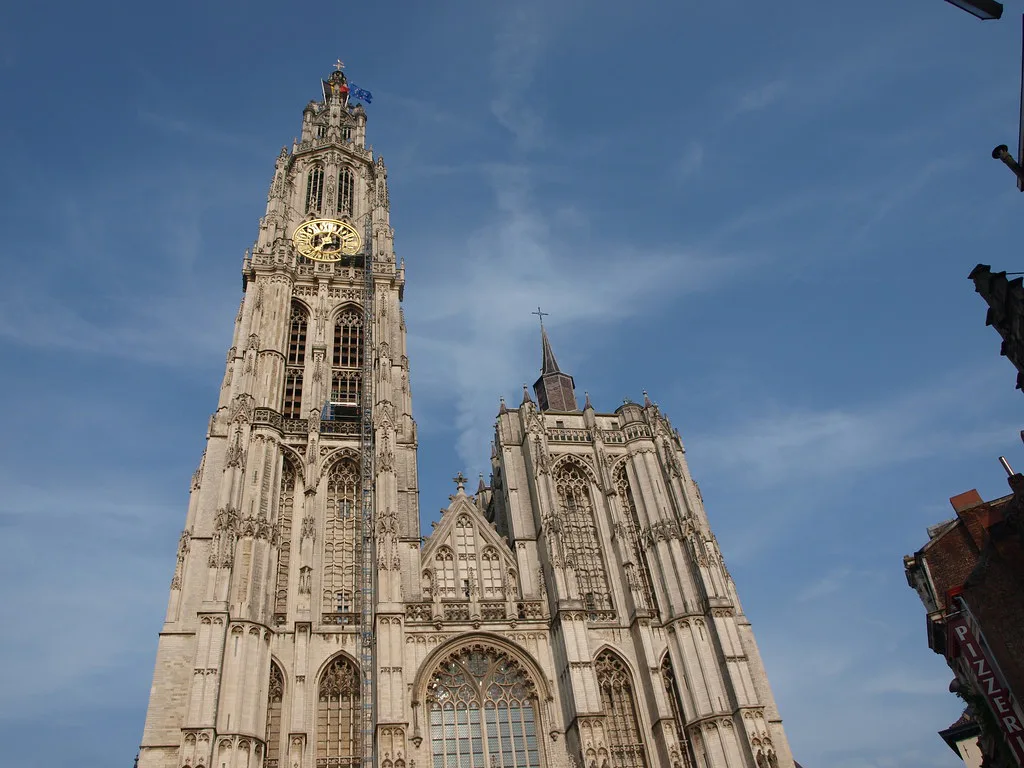
Where it sits between Grote Markt and Groenplaats
The cathedral sits a short walk from Grote Markt and fronting the old town near Groenplaats, which makes it easy to fold into a single loop. Start at Grote Markt, where the Brabo fountain shows the Roman soldier throwing the severed hand of the giant Antigoon into the river, the legend from which the city's name is said to derive. The hand motif turns up everywhere in Antwerp, down to chocolates and biscuits, so the fountain is a useful primer before you look at the cathedral's own stonework.
From the Markt it is a couple of minutes on foot to the cathedral's west front, and from there a few more to the Scheldt. That compact geography is what makes the cathedral a natural hinge in a half-day walk rather than a separate excursion. If you want to understand the buildings you pass on the way, the wider story of Antwerp architecture is worth an hour of reading before you go.
Antwerpen-Centraal station is about a 20-minute walk from the city centre, so travellers arriving by train can drop bags and reach the cathedral on foot without public transport. That makes a late-afternoon arrival and an early cathedral visit the next morning an efficient way to start a short break.
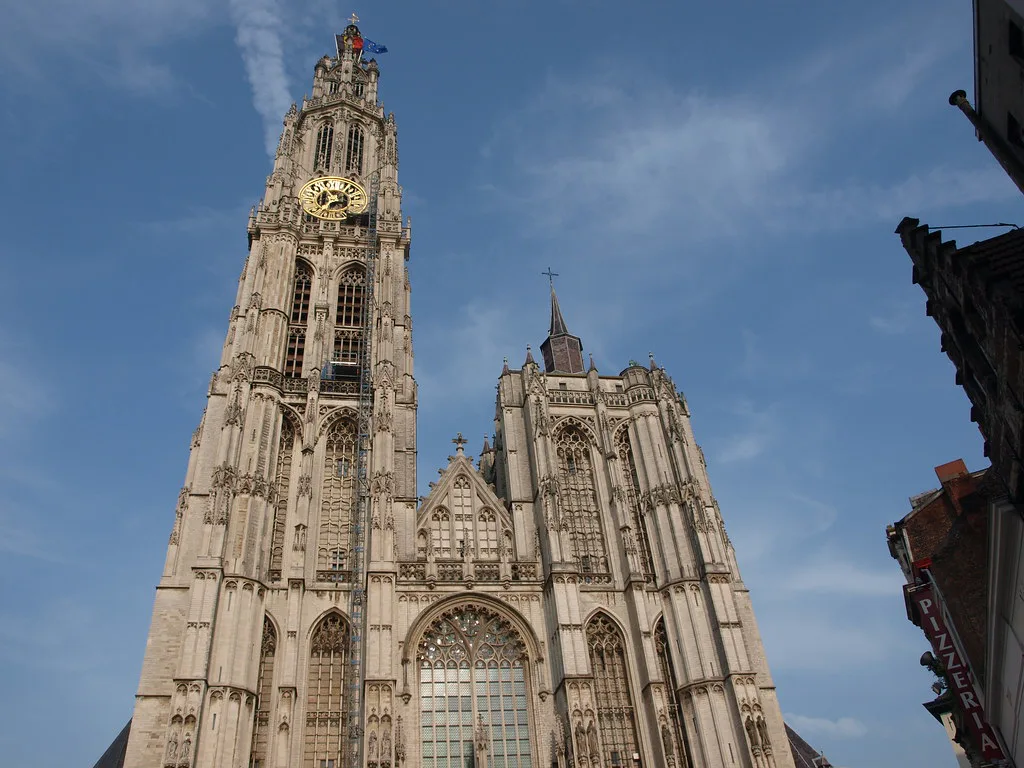
The 123-metre spire and the Gothic architecture to look for
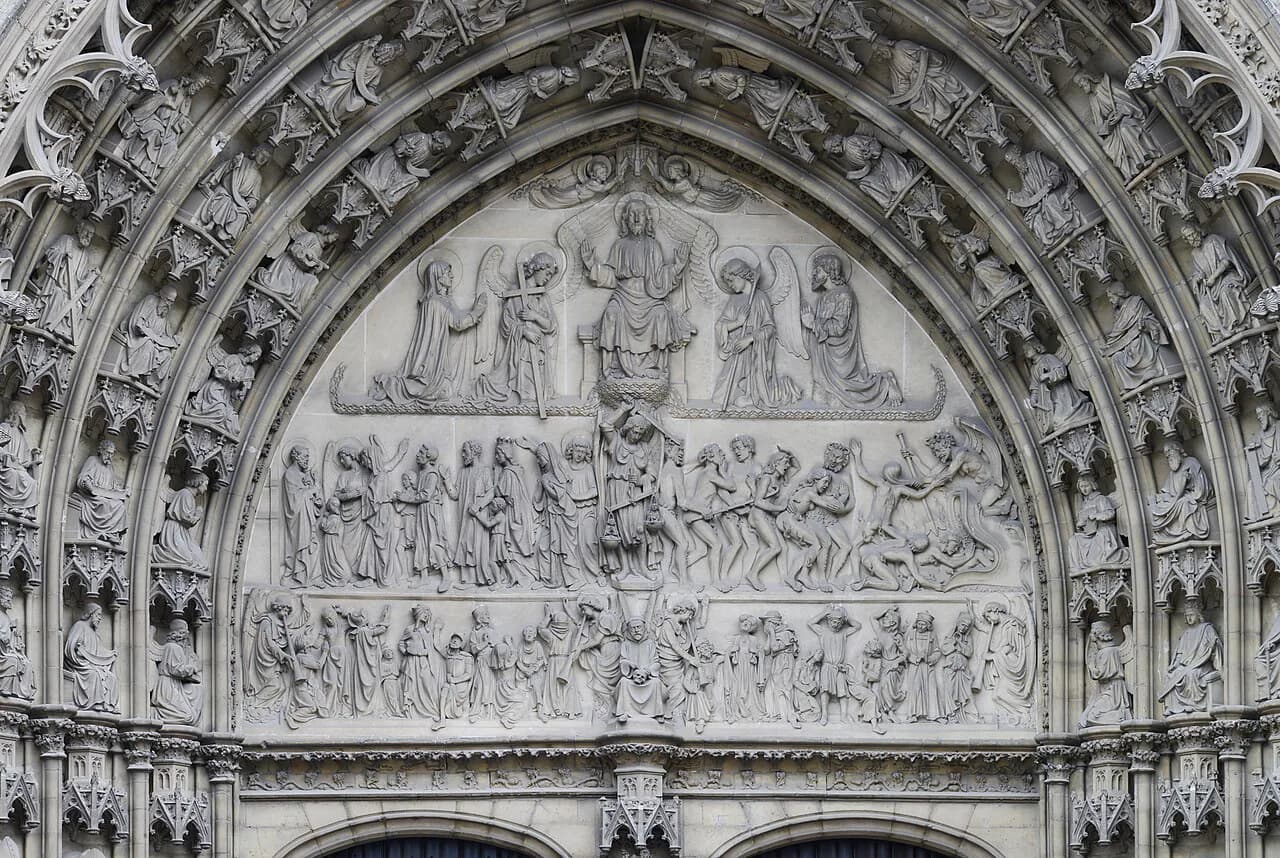
From the square, look up first at the spire: 123 metres of open Gothic stonework, the tallest Gothic church tower in the Low Countries and the feature that gives the cathedral its silhouette. Walk round to the west front to see how the portal and the rose window set up the interior, and follow the building round to read the change in masonry and detailing.
Inside, look for the height of the nave, the clustered columns and the stained glass rather than trying to read every label. The architecture itself is the main exhibit, and the paintings hang within it rather than in separate rooms. If Gothic churches are a theme of your trip, Antwerp pairs well with the belfries and cathedral towers elsewhere in Belgium, but the Antwerp example is the one with the paintings.
Rubens inside the cathedral: The Descent from the Cross and the other masterpieces
The cathedral holds masterpieces by Peter Paul Rubens, including The Descent from the Cross, and these are the reason many visitors come inside. The triptychs are hung in their original church setting rather than a gallery, so you see them as they were meant to be seen: lit by the windows above and framed by carved stone. Give the paintings twenty minutes rather than five.
Rubens is Antwerp's defining artist, and the cathedral is the most concentrated place to see his work outside a museum. If you want more, the Royal Museum of Fine Arts (KMSKA) holds seven centuries of art including Rubens and van Eyck, and the Museum Plantin-Moretus covers the printing trade that made the city rich. The cathedral is small enough to fit alongside one of these on the same day; the trade-off is depth against atmosphere.
If painting is the point of your trip rather than the backdrop, weigh the cathedral against Antwerp's dedicated art collections before you fix a schedule. The art galleries Antwerp keeps are strongest in the Zuid neighbourhood, where KMSKA and the photography and contemporary museums sit close together. A morning in the cathedral and an afternoon in Zuid is a workable split.
The cathedral tower: the climb and the view over Antwerp
The tower is the part of the visit that divides people. The cathedral's visitor information sets out what is open on the day, including access to the tower, so check that page before you build a climb into your plan. If the tower is open when you visit, the reward is a view over the old town towards the Scheldt and out across the rooftops; if it is closed, the nave alone still justifies the stop.
For a free high view, the roof terrace of MAS in the Eilandje docklands looks back over the city and the port, and the museum's glass boulevard up through the building is open to visitors. That is the practical alternative when the cathedral tower is not available, and it sits a short walk north of the old town.
Rooftops aside, plan the rest of your museum time around which days things open. Many Antwerp museums close on Mondays, which is why it pays to look at the city's museum calendar before locking in a short break. The museums in Antwerp guide sets out the main collections and how they fit together.
Entry, tickets and how long a visit takes
The cathedral is a ticketed visitor site as well as a working church; fares and concessions are set by the cathedral, so check the visitor page before you go. An hour is enough for the nave, the Rubens triptychs and a walk round the side chapels; allow longer if you add the tower. Group the cathedral with Groenplaats and Grote Markt rather than treating it as a standalone outing.
If the weather turns, the cathedral is one of the best indoor stops in the old town, and it is close enough to other covered options to string together a wet afternoon. The indoor activities Antwerp list is a useful place to start when rain changes the plan.
Concerts and services in the cathedral
The cathedral is a working church, so services continue around visitors throughout the week. If you want to attend rather than just look, the cathedral's own site is where the current schedule is set out, including any concerts. Do not plan a visit around an event without checking that page first, because times change with the liturgical calendar.
Visiting during a service is possible but different: you will be asked to stay at the back and keep quiet, and photography may be restricted. If you want the Rubens triptychs without that constraint, aim for a mid-morning slot between services. Otherwise, treat a service as a chance to hear the building as it was designed to be heard.
Other churches and stops on the same walk
The cathedral is the centrepiece of an old-town walk that takes in Grote Markt, Groenplaats and the Scheldt waterfront within an afternoon. Add Het Steen, the medieval fortress on the river, and the Sint-Anna tunnel foot passage under the Scheldt if you want a different angle on the city. The walk works best as a loose loop rather than a fixed route.
For the city's deeper past, the MAS in the Eilandje documents Antwerp's history as a port, and the story of how the Scheldt made the city rich explains much of what you see around the cathedral. If the cathedral has whetted your appetite for the city's past, the Antwerp history guide is the natural next read.
Beyond the cathedral, Antwerp's other churches and religious buildings reward a slower walk, and the Antwerp Attractions guides set out what to see in each part of the city. Use them to decide where the cathedral fits in a one- or two-day plan. The cathedral is the anchor; the rest of the old town is the walk around it.
Should the Cathedral Be Your First Stop in Antwerp?
Yes, if you want the city's two signatures in one place. The cathedral delivers Gothic architecture and Rubens in under an hour, and it sits within a few minutes of Grote Markt and Groenplaats, so it slots naturally into a first morning. Pair it with MAS or KMSKA in the afternoon if you want more art, and check the visitor page before you go for current entry details.
Sources
Useful notes for your next trip
Optional updates to our guides.
You might also like
Continue reading
More guides you'll find useful