Antwerp Architecture: What to See and Where to Find It
Antwerp architecture from the Gothic guildhalls on the Grote Markt to the Art Deco Boerentoren, with the squares, streets and buildings to see on foot.
On this page
Antwerp is a port city whose architecture runs in layers: Gothic guildhalls and a cathedral spire at the centre, a monumental 1905 station at the eastern edge, and a dockside museum of 2011 out by the Eilandje. Almost everything worth seeing sits within a walkable ring, so a day spent on foot between the Grote Markt and the Scheldt covers most of it. This guide groups the buildings by area and period so you can link them without criss-crossing the city.
The centre is compact enough to see the Gothic core, the Art Deco Boerentoren and the riverside tunnel entrances in one afternoon, while the docks and the southern museums each take a separate half-day. Pick the periods that interest you rather than chasing every address.
Antwerp architecture in one page: what the city is known for
Three things define Antwerp's built character. First, the Gothic core of the Grote Markt and the Cathedral of Our Lady, where the city's medieval trading wealth shows in stone. Second, the grand nineteenth-century set pieces, above all the station known as the Railway Cathedral. Third, the twentieth-century layer: Antwerp has a strong run of Art Deco buildings from the 1920s and 1930s, several of them a short walk from the main shopping street.
Architecture here rewards looking up and looking closely at doorways, shopfronts and entrance halls rather than only at façades. A morning in the centre and an afternoon around the docks give a fair sample, but the city is dense enough that three days lets you add the southern museums and the left bank.
Grote Markt: the guildhalls and the Brabo fountain
The Grote Markt is Antwerp's showpiece square, an enchanting example of the ornate Gothic architecture the city is known for. Read as architecture, it is the clearest statement of the city's late-medieval commercial confidence: tall, narrow façades grouped tightly around the open space. Come early or late in the day when the square is quieter and the façades are easier to study.
Treat the square as the starting point of any architectural walk: the cathedral, the Meir and the riverside are all within roughly ten minutes on foot. The buildings around it set the tone for the medieval core, and walking out through the surrounding lanes shows how the Gothic and later fronts sit side by side.
Cathedral of Our Lady and the Gothic core
The Cathedral of Our Lady is the centrepiece of the Gothic core, its spire visible across the old town and its presence shaping the lanes around the Groenplaats and the Handschoenmarkt. The surrounding streets hold smaller Gothic and Baroque fronts worth a slow circuit, and the building itself is the reference point for judging every other church tower in the city.
The cathedral is a proper stop rather than a glance from the pavement, so give it time and pair it with the museums nearby if you want the interior side of the city's art and church architecture.
Central Station: the 'Railway Cathedral'
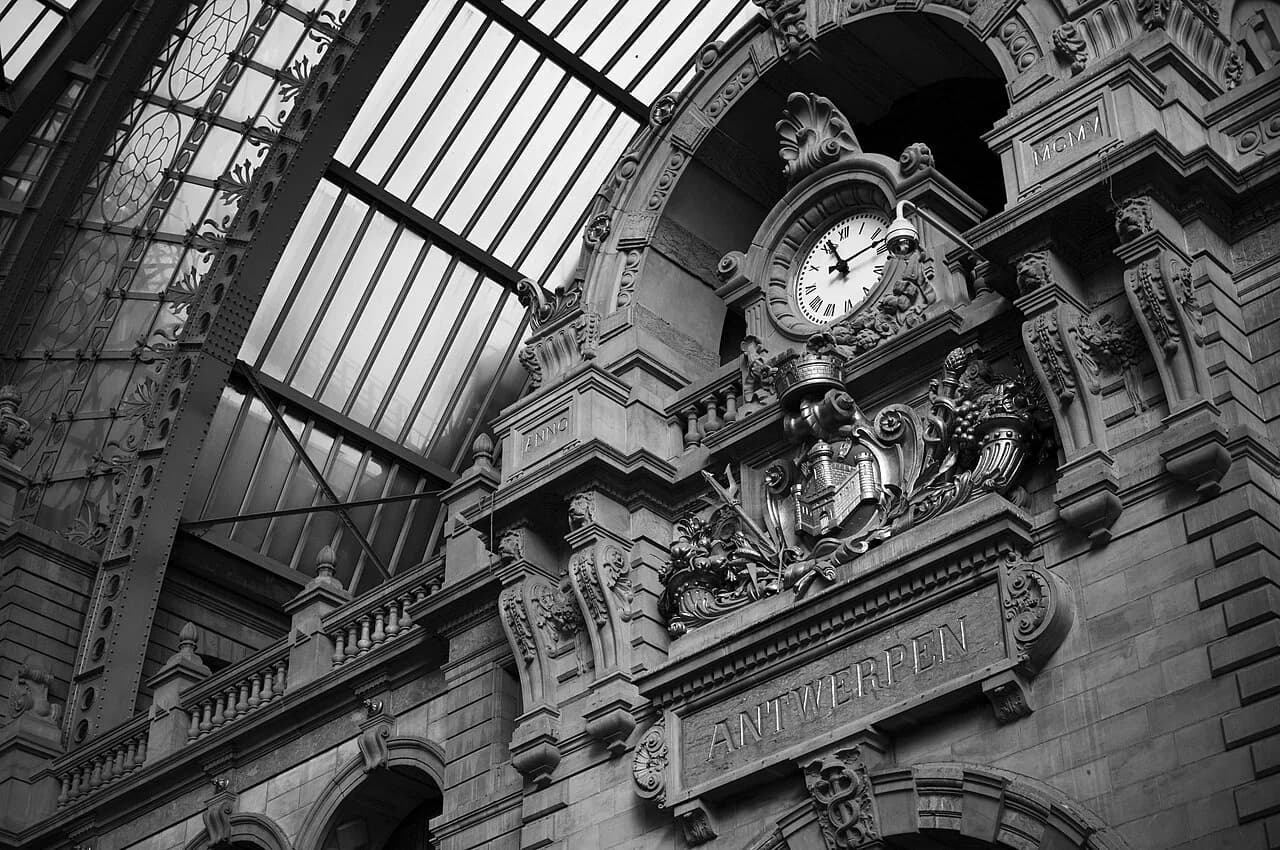
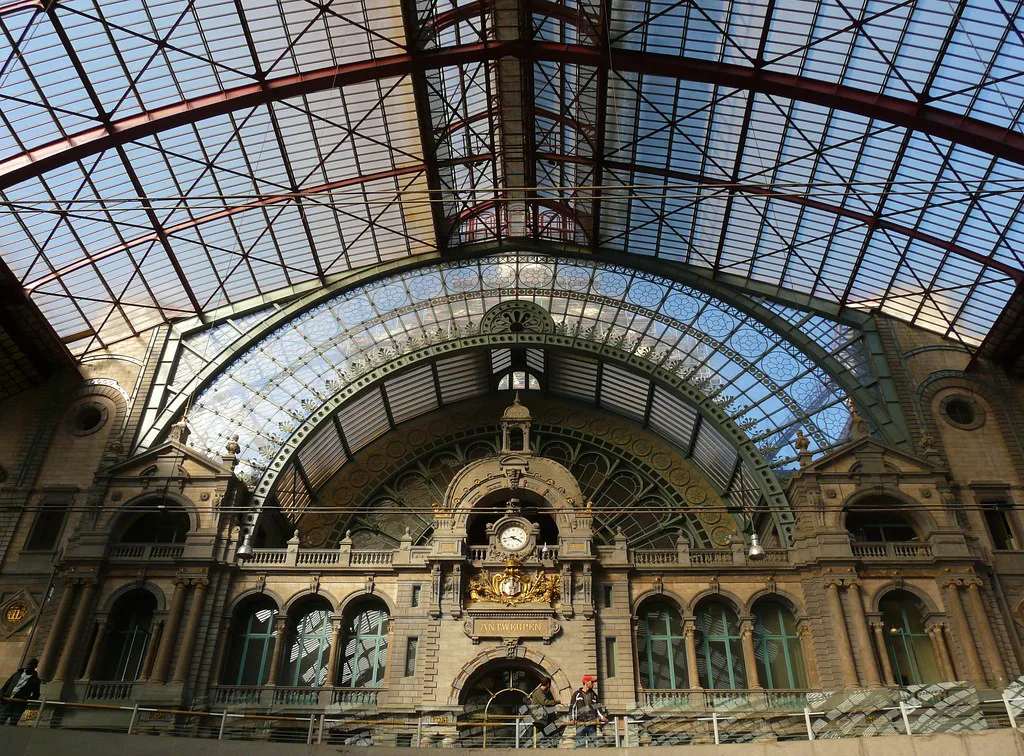
Antwerp's Central Station was built between 1895 and 1905 and is known locally as the Railway Cathedral – a fair description for a station whose stone façade, dome and layered platforms read like a church nave turned transport hub. Architectural Digest's Antwerp guide gives the address as 7 Koningin Astridplein and credits the station's nickname to its cathedral scale.
Because it sits at the eastern edge of the centre, the station works best as a first or last stop: arrive, spend twenty minutes on the main hall and the levels, then walk south-west toward the old town. It is a working railway, so the drama is in the hall and the escalators between levels rather than anything behind a ticket barrier.
Museum aan de Stroom (MAS) and the Eilandje docks
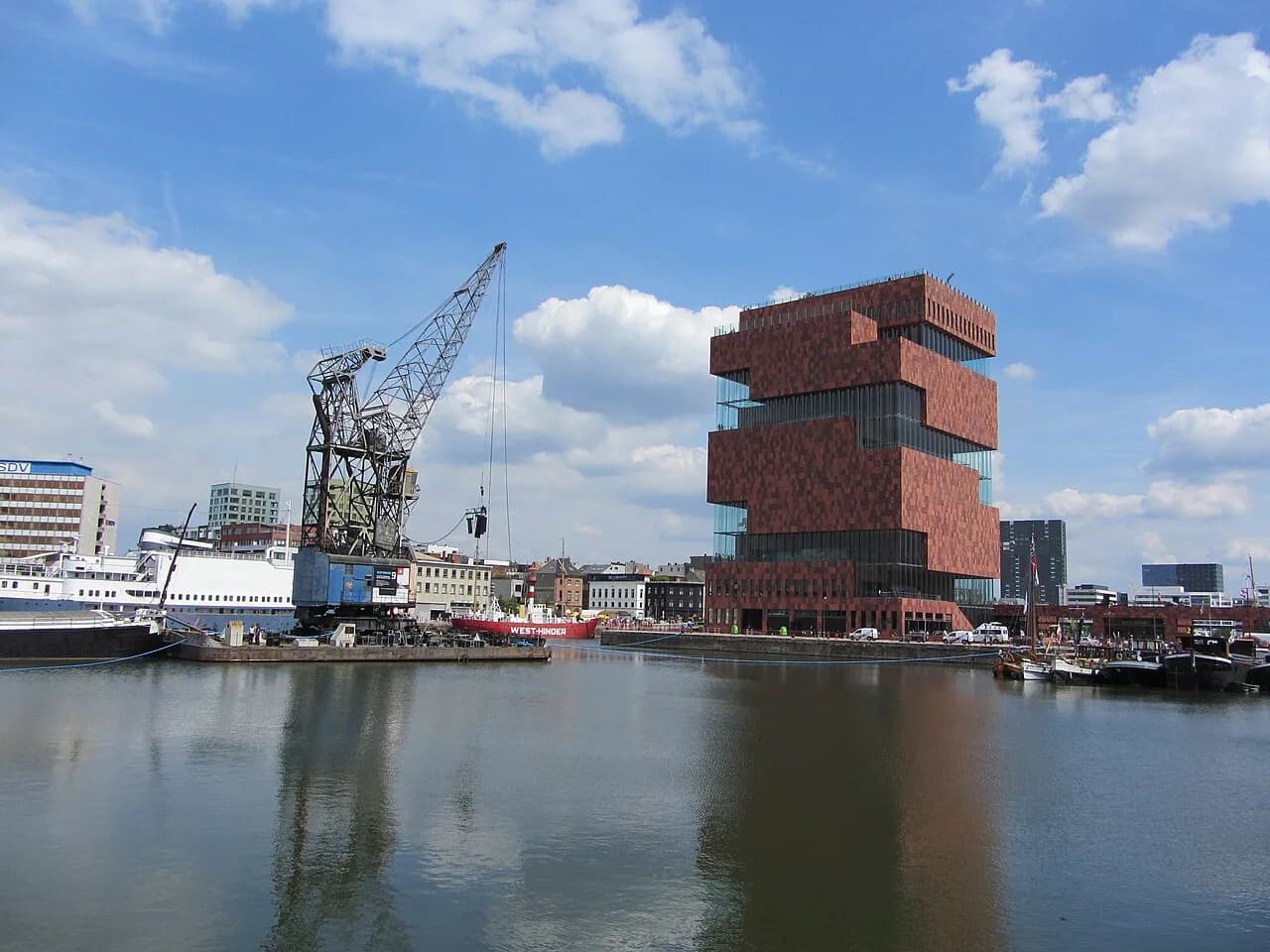
The Museum aan de Stroom opened in 2011 in the dockside Eilandje neighbourhood, a red sandstone tower of stacked, shifted boxes that has become the emblem of modern Antwerp. Its address is Hanzestedenplaats, and the building's spiral roof terrace gives a view back over the docks and the city – the strongest single vantage point for understanding how Antwerp's port and centre fit together.
The Eilandje around it is a redeveloped dock quarter, so the walk from the centre takes you through water basins and warehouse conversions that put the old port architecture next to the new. Allow half a day: the MAS, the dockside walk and the surrounding streets are the point, not a single building.
Boerentoren: Europe's first skyscraper and Antwerp's Art Deco
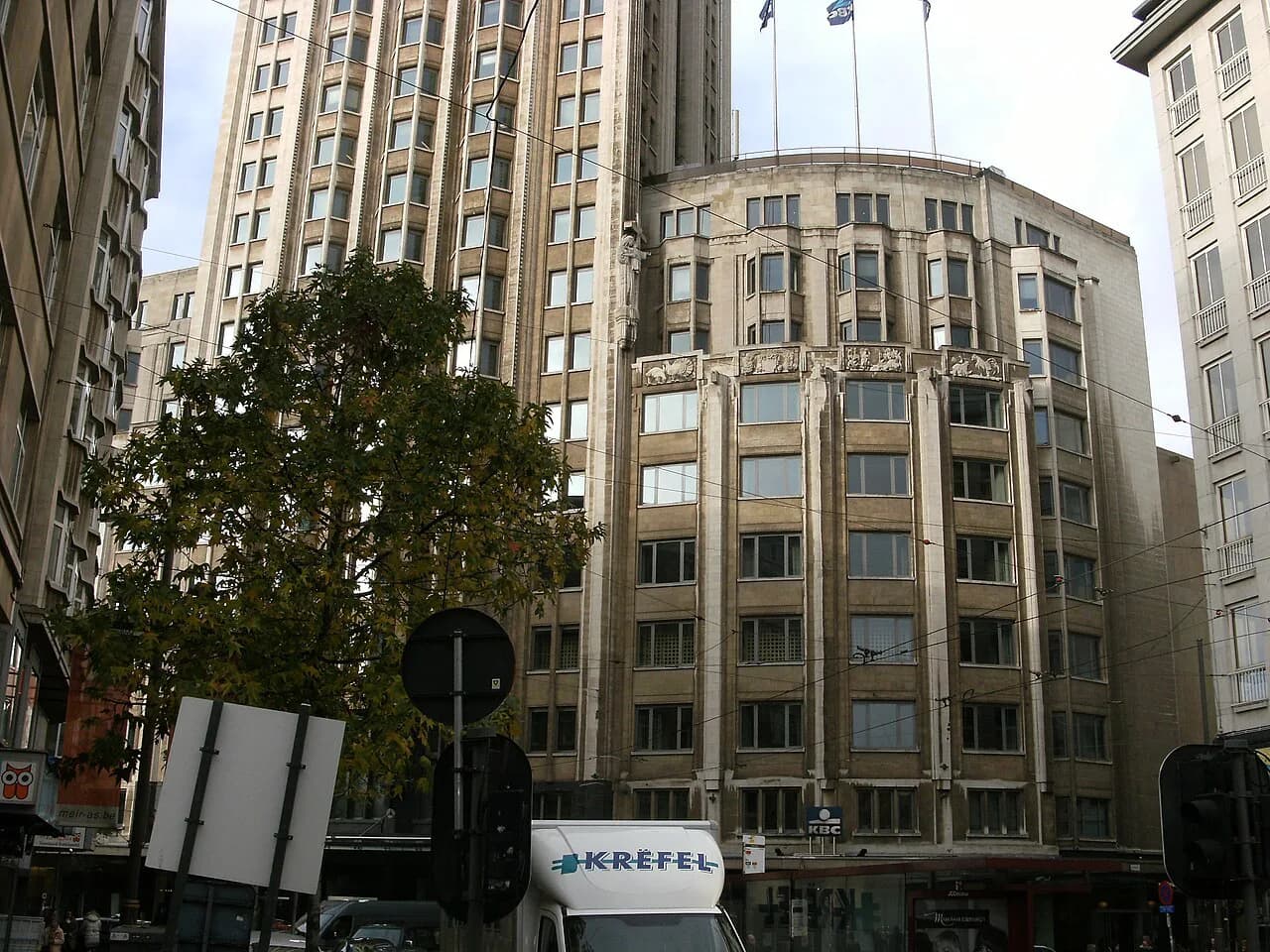
The Boerentoren, or Farmer's Tower, stands at Schoenmarkt 35 and was built between 1929 and 1932 to designs by Emiel Van Averbeke, Jan Vanhoenacker and Jos Smolderen. Its current height of 95.8 metres made it one of the tallest buildings in Antwerp, and it is described as Europe's first skyscraper. Look for the stepped massing and the Art Deco detailing at street level rather than expecting a viewing platform.
Art Deco in Antwerp is a style of clean, uncluttered lines with refined detailing, sometimes borrowing nautical or pre-Columbian motifs – a deliberate break from the floral curves of Art Nouveau before it. The Boerentoren is the biggest statement, but the style is best seen in the smaller shopfronts and entrance buildings nearby.
Shop Tilquin on the Meir
Tilquin, a shop for cutlery, silverware and crockery, stands at Meir 99 and asked architect Joseph Selis to design its premises in 1933. The shop moved on after sixty years, and the building, including the apartments above, was renovated between 2002 and 2004 by the architects Driesen, Meersman and Thomaes. As a piece of architecture it shows how Art Deco reached the shopping street in the form of a single refined frontage.
The Meir is Antwerp's main shopping axis, so this is a look-from-the-street stop on the walk between the Grote Markt and the station rather than a destination in itself. Combine it with the Boerentoren at Schoenmarkt 35, which is a few minutes away.
The Sint-Annatunnel entrance buildings
The Sint-Annatunnel, known to everyone as the Voetgangerstunnel or pedestrian tunnel, was built between 1931 and 1933 to link the left and right banks of the Scheldt. Its entrance buildings at Sint-Jansvliet on the right bank were designed by Emiel Van Averbeke and are typical of the era in which it was built.
Walking through the tunnel puts you on the left bank with a view back at the city skyline, which is the best way to read Antwerp's relationship with its river. It is also a practical crossing rather than a detour, so fit it into the end of a centre walk.
How to walk the main architectural set pieces in a day
Start at the Grote Markt and the Cathedral of Our Lady, then take the Meir east for Shop Tilquin, the Boerentoren at Schoenmarkt and the shopping streets around them. From there, either continue to Central Station or turn back west through the old town toward the Scheldt and the Sint-Annatunnel entrance at Sint-Jansvliet. That route strings the Gothic, Art Deco and riverside layers into one continuous walk with no need for transport.
Keep the Eilandje and the MAS for a separate half-day, since the docks are north of the centre and reward unhurried wandering. If the weather turns, the tunnel and the old-town streets give you something to do while you wait it out, and there is plenty to fill a wet afternoon in the city.
Where to see Antwerp's architecture beyond the centre
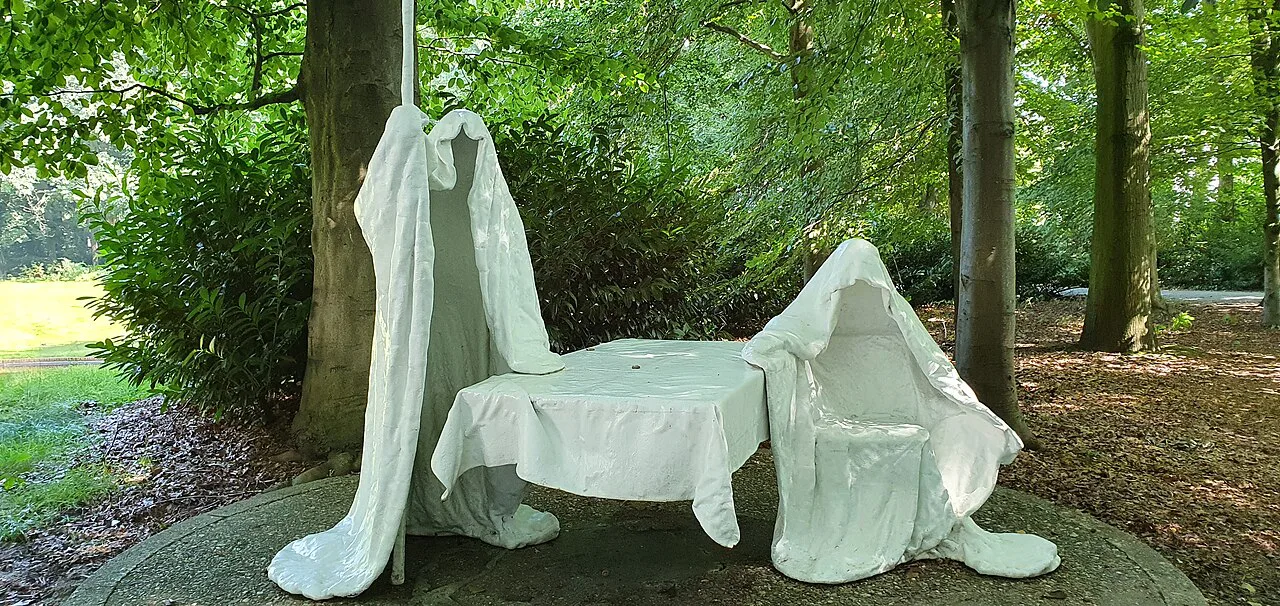
South of the centre, the Middelheim Museum spreads sculpture through a park, a different kind of experience built around open-air art rather than façades. It suits a slower day when you want the city's modern and contemporary side after the medieval core.
Pair the Boerentoren with the smaller Art Deco shopfronts and entrance buildings within a short walk of the main shopping street, and link the street walk with the museums in Antwerp, where the collections sit inside historic and converted buildings.
Which Antwerp architecture walk suits your day?
If you have one day, take the centre route: Grote Markt, the cathedral, the Meir for Shop Tilquin, the Boerentoren and the Sint-Annatunnel, ending with the view back from the left bank. If you have two or three days, add the MAS and the Eilandje docks and a sculpture walk at the Middelheim Museum, which together show the port city's newer architectural identity.
Explore more Antwerp guides
Frequently Asked Questions
What kind of city is Antwerp architecturally?
Antwerp is a port city with a dense medieval Gothic core around the Grote Markt and the Cathedral of Our Lady, grand nineteenth-century set pieces such as Central Station, and a strong twentieth-century layer of Art Deco buildings including the Boerentoren and the Sint-Annatunnel entrances. Most of the centre can be covered on foot in a day.
Who are the architects behind Antwerp's best-known buildings?
The Boerentoren was designed by Emiel Van Averbeke, Jan Vanhoenacker and Jos Smolderen, and Van Averbeke also designed the Sint-Annatunnel entrance buildings. Joseph Selis designed the Tilquin shop on the Meir in 1933.
Sources
Useful notes for your next trip
Optional updates to our guides.
You might also like
Continue reading
More guides you'll find useful