Ghent Architecture: A Walking Guide to the City's Key Buildings
Ghent's architecture runs from the Belfort and Sint-Baafskathedraal to the Graslei guildhouses. See the key buildings, squares and quays on a walking route.
On this page
Ghent's architecture is best understood as a compact medieval core you can cross on foot in under half an hour: the Grote Markt with its Belfort, the Burg next door, the Graslei and Korenlei quays, the Gravensteen castle and the Vleeshuis by the old harbour. Almost everything worth looking at sits inside that loop, which is why one well-ordered day covers the essentials and a second day lets you slow down. This guide reads the city square by square and quay by quay, explains what each building was for, and sets out a walking order with realistic times.
The trade-off is depth against distance. Ticking off the five headline sights takes about three hours at an unhurried pace; reading the guildhouse facades one by one and stopping at the cathedral adds most of another day. The route below is built so you can stop after any section without stranding yourself far from the centre.
Ghent's architecture in one answer
The city's architectural signature is civic and commercial rather than royal: a belfry that signalled guild independence, a square lined with guildhouses, and a castle planted in the middle of a trading town. The Belfort on the Grote Markt is the emblem, Sint-Baafskathedraal on the Burg is the spiritual counterweight, and the Graslei and Korenlei quays show what the grain and cloth trades built.
Start with those three, then add the Gravensteen and the Vleeshuis, and you have seen the core. Everything else in this guide is either a closer look at one of them or a street that connects them.
The Grote Markt and Belfort: the civic centre
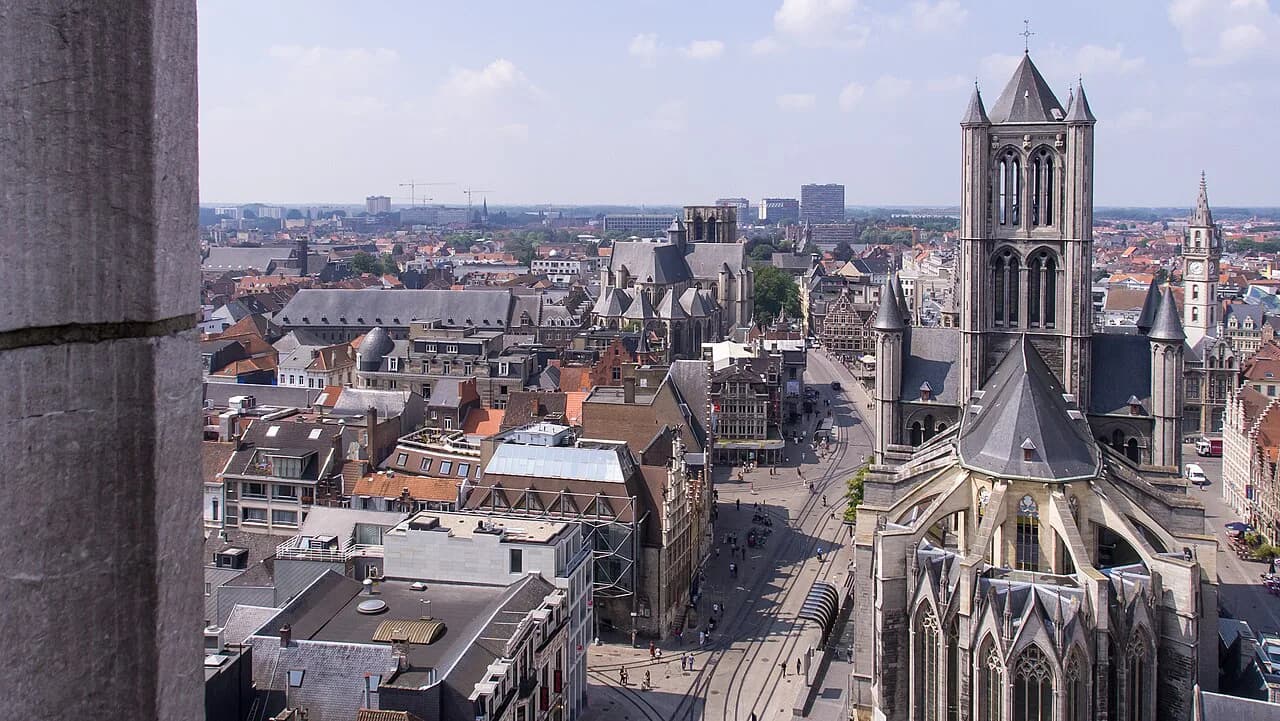
The Grote Markt is the room the city built to show its wealth, and the Belfort is the tallest thing in it. A belfry of this kind held the town bells and the charters that underwrote guild privileges, so it read as a statement of civic self-government as much as a landmark. Stand back towards the square's open side to take in the tower's full height, then walk the perimeter to see how the gabled houses frame it.
Treat the square as a junction rather than a destination. The Burg opens off one corner and the shopping streets run north; note the sightlines now, because the square looks quite different when you return from the quays later in the day.
The Burg: Sint-Baafskathedraal and the square's layers
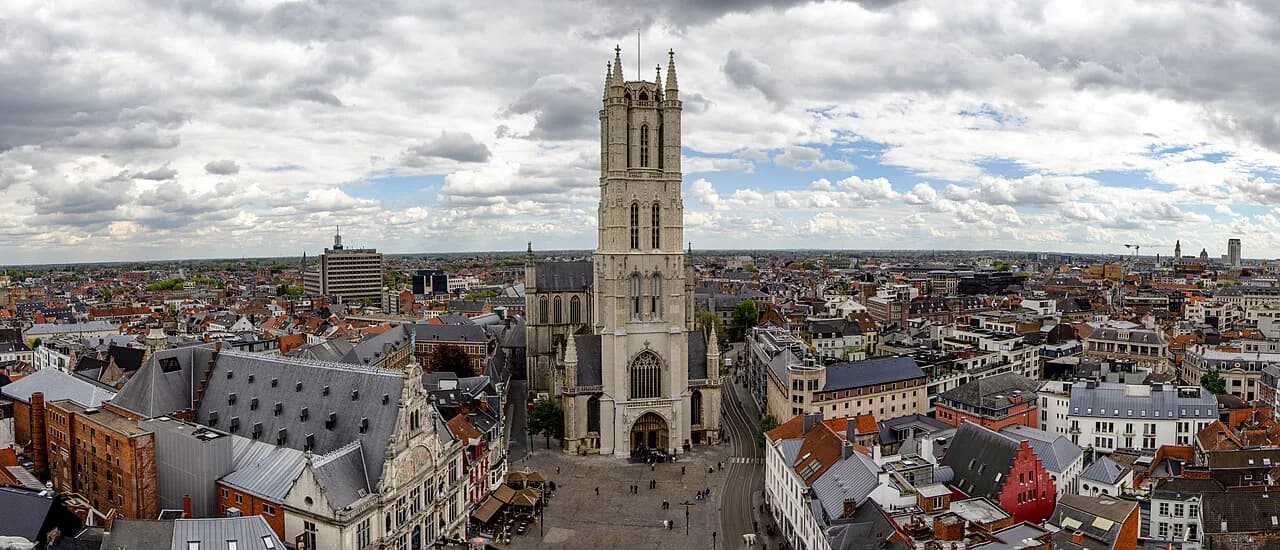
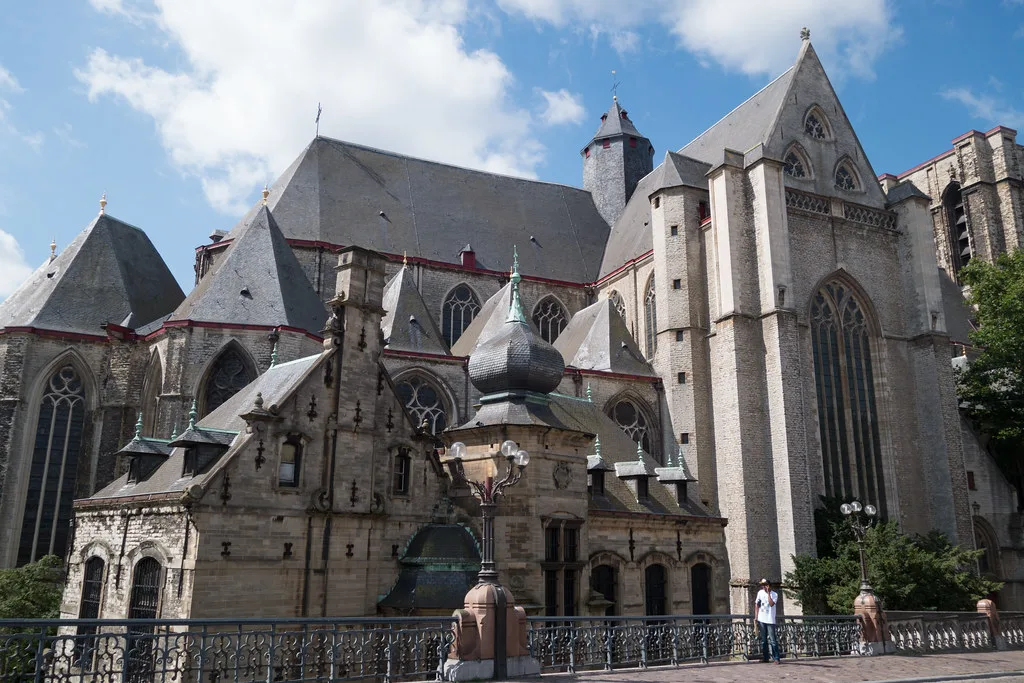
The Burg packs several centuries into a few hundred metres: the cathedral on one side, the old town hall on another, and a corner that later builders filled in their own manner. Walk in from the Grote Markt and the square unfolds in layers, which is why it rewards a slow circuit rather than a quick photo.
Sint-Baafskathedraal is the reason most visitors linger: the cathedral's scale explains why the Burg feels enclosed after the openness of the Grote Markt, and the interior rewards a slow circuit. If painted interiors and church architecture are your priority, plan a separate slot using our guide to the museums in Ghent for the city's collections and our Ghent Cathedral guide for the church itself.
The square's layering is easiest to read on a second pass: look at the bases and windows rather than the rooflines, and you can see where one building campaign stops and another starts.
The Graslei and Korenlei: reading the guildhouses
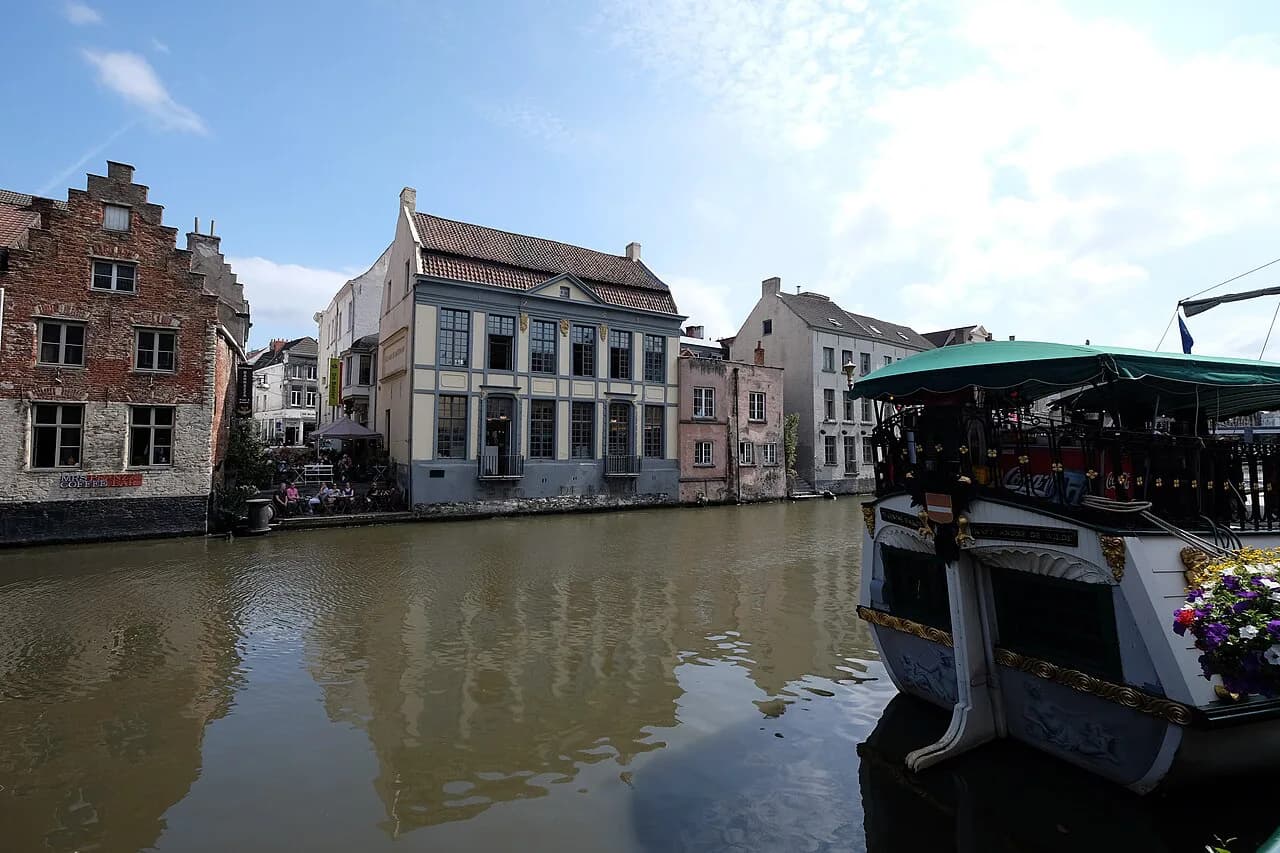
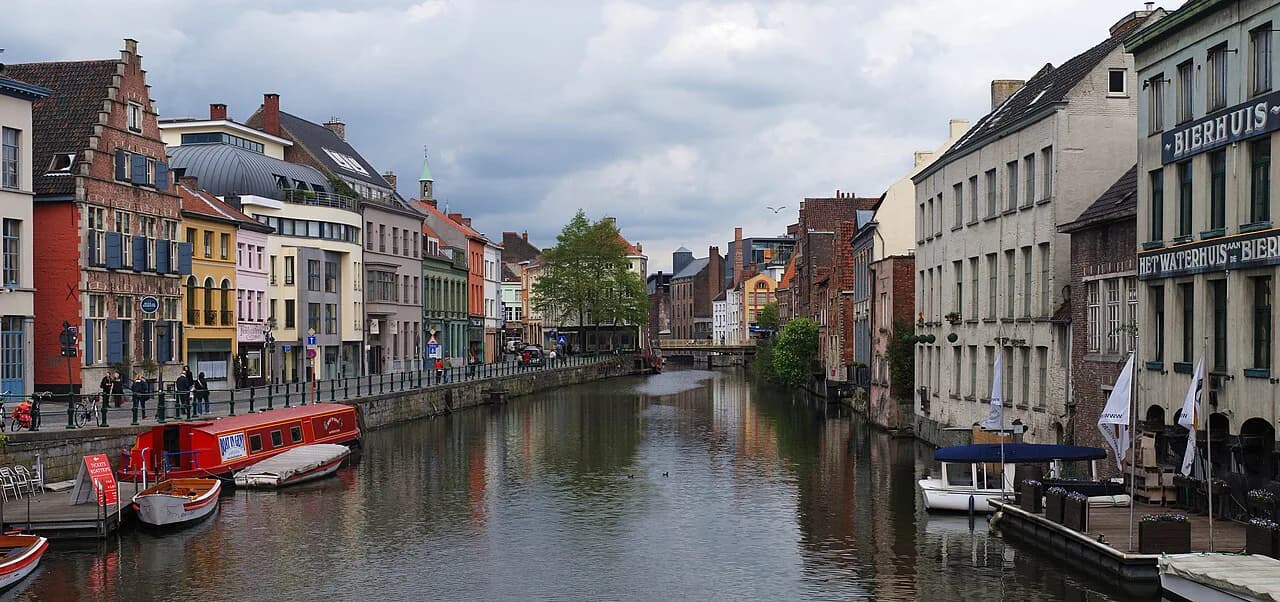
The Graslei and Korenlei face each other across the Leie, and together they form the best single lesson in Ghent's domestic architecture. The Graslei, on the right bank, was the old grain quay; the Korenlei opposite handled the same trade from the other side. Rather than photographing the row as a whole, walk one quay looking only at ground floors, then cross and do the other looking only at gables.
Step gable, bell gable and crow-stepped gable are the shapes to spot, and the differences tell you roughly when a house was refaced. Look for the hoisting beams and loading doors near the waterline, the practical marks of warehouses converted into prestige addresses.
Sit on the quay wall at the Graslei end shortly before dusk: the light comes across the water and picks out the brick and stonework that flat midday light hides. This is also the calmest stretch of the core for simply watching the city work.
The Gravensteen: the castle in the street plan
The Gravensteen sits a few minutes' walk north-west of the Graslei, ringed by a moat and stone walls that make it feel dropped into the surrounding streets. That is the point worth noticing: a castle of this size inside a trading city tells you who held power and where. Walk the outside first, following the moat, to see how the walls turn with the water.
The approach from the quays is the better reveal, because the castle appears gradually between ordinary houses rather than announcing itself. From the Graslei allow roughly ten minutes on foot, longer if you stop at the bridges.
If you have one day, the exterior circuit and the moat walk give you the architectural story without spending time inside. Save the interior for a second visit, when the castle and the quays can each have a proper slot.
The Vleeshuis and the old harbour front
North of the Graslei, the Vleeshuis and the surrounding streets show commercial Ghent in brick and stone rather than the cathedral's carved stone. This was the harbour side of the medieval city, where trade arrived and was taxed, and the buildings still read as warehouses and halls rather than palaces.
Walk from the Vleeshuis back towards the Graslei slowly and look at the street widths: the lanes narrow as you approach the water, the pattern of a working quay district. It is a fifteen-minute stretch at an easy pace, and it makes a natural end to the core circuit before you double back to the Grote Markt.
Where Ghent's architecture is discussed and judged
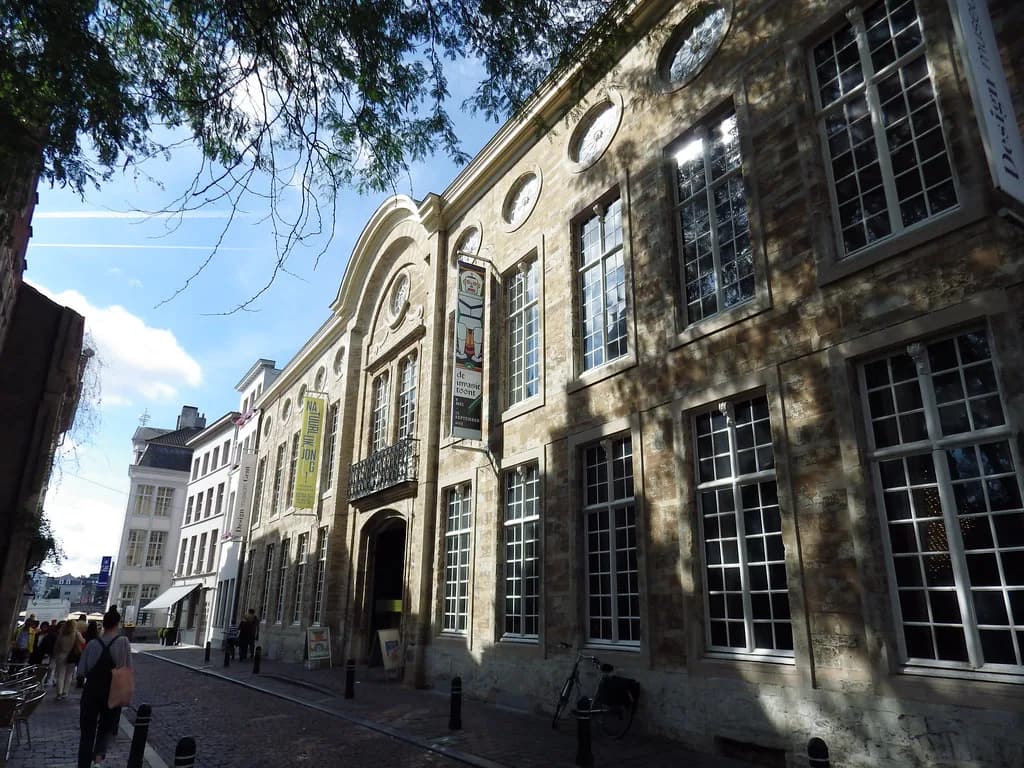
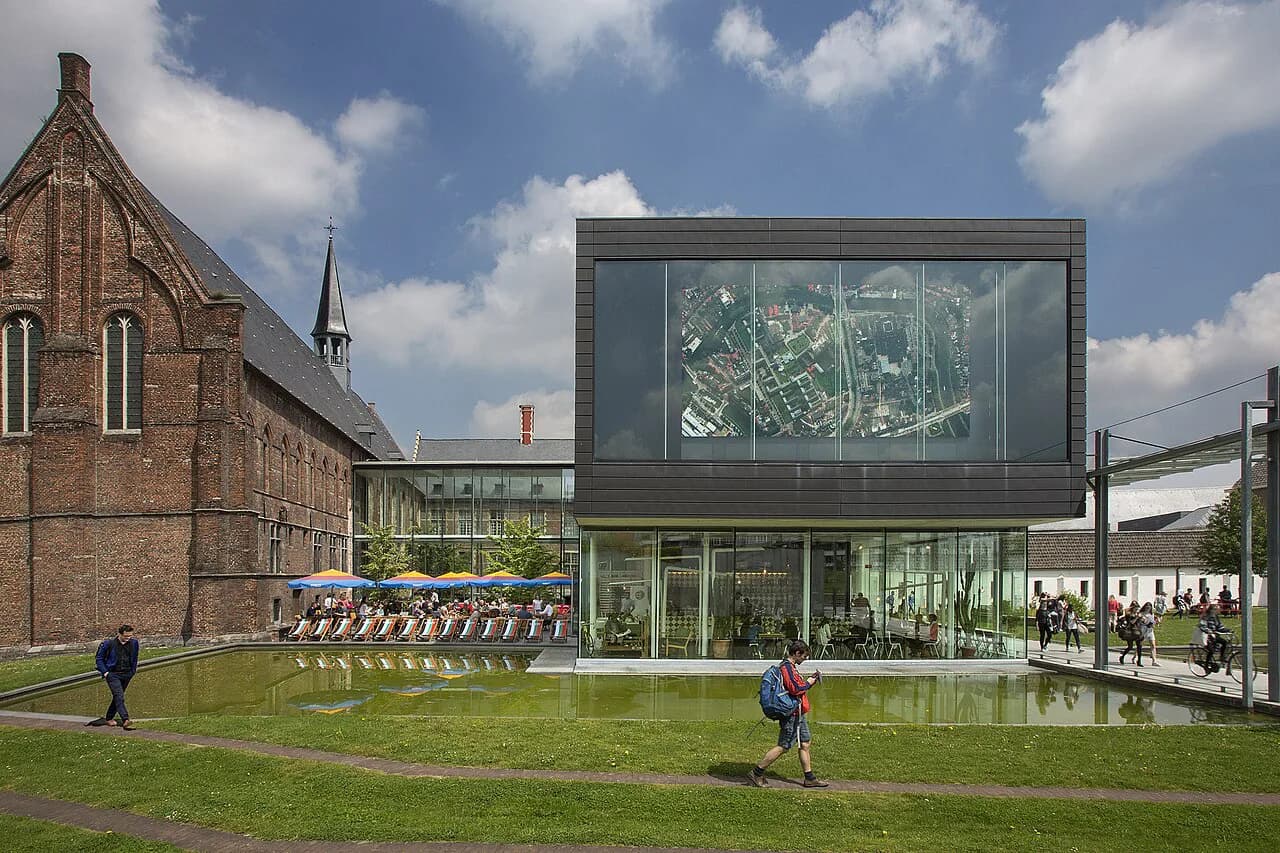
Ghent has a formal way of taking architecture seriously. The city presented a Ghent Architecture Prize for the first time on 17 October 2021, honouring recently completed projects on Ghent territory for strength in design and innovation and for sustainable enrichment of the city. It was awarded under the banner of the Architecture Platform Ghent, a collaboration between the city's stadsbouwmeester, Archipel vzw, the Design Museum, STAM, SOgent and the design departments of KU Leuven, UGent and HOGENT.
That platform frames how the city talks about its built environment: the prize aimed to raise residents' involvement and pride in design quality, and the 2021 award day included guided tours and bicycle tours. If contemporary work interests you, treat the 2021 programme as a one-off marker of the city's architectural culture rather than an annual fixture.
A walking route through the core
Run the route clockwise: Grote Markt and the Belfort first, the Burg and Sint-Baafskathedraal second, then the Graslei and Korenlei, the Gravensteen and the Vleeshuis. Allow about three hours at an unhurried pace with short stops, or five if you go inside the cathedral and the castle.
The distances are small: Grote Markt to Burg is a minute, Burg to the Graslei about five, the Graslei to the Gravensteen around ten, and the Gravensteen to the Vleeshuis another ten. Doing the quays in the middle of the day and the castle late afternoon keeps the sun behind you for most of the walk.
For a wider look at the city's sights beyond architecture, the seven visitor guides in Ghent Attractions cover the ground this route leaves out.
How many days Ghent's architecture needs
One day covers the core: the Grote Markt, the Burg, the quays and a look at the Gravensteen from outside. Two days let you go inside the cathedral and the castle and still walk the harbour streets without rushing. Three days open up the city's museums and the wider neighbourhoods.
On a single day, cut in this order: the Vleeshuis harbour walk first, then the castle interior, then the second quay. Keep the Grote Markt, the Burg and one quay, because those three carry the civic and commercial story that makes Ghent's architecture distinctive.
Anyone wanting the longer view of how the city grew can read the background in our Ghent history guide before walking the route.
Which half-day route suits you?
If you have half a day, take the civic route: Grote Markt, the Belfort from outside, then the Burg and Sint-Baafskathedraal, finishing on the Graslei. It is under two hours at a stroll and gives you the city's two defining buildings and its finest quay.
With a full day, extend west to the Gravensteen and north to the Vleeshuis, and leave the interiors for a return visit. The sequence matters more than the pace: squares first, then quays, then the castle, so each building makes sense against the one before it.
Explore more Ghent guides
Sources
Useful notes for your next trip
Optional updates to our guides.
You might also like
Continue reading
More guides you'll find useful