Ghent History: The Medieval City You Can Still Walk Through
Ghent's history through the periods that shaped it, from medieval trading power to industrial reinvention, with the streets, towers and museums where it survives.
On this page
Ghent history is best read on foot: a medieval trading city built on the Leie and Scheldt, whose wealth shows in its belfry, churches and grain quays, and whose industrial age left the museums that now sit in the old city's cultural quarter. Allow a full day, or a comfortable two if you want the museums as well as the streets. This guide follows the periods in the order you meet them walking, so the medieval economy, the county castle and the altarpiece lead into the nineteenth-century city and its collections.
What Ghent was in the Middle Ages
In the Middle Ages Ghent was one of Europe's richest and most powerful cities, and that power was commercial rather than royal. Its wealth came from the river trade that ran through the Leie and Scheldt and from the trades built on it, which is why the historic centre is compact and water-facing rather than arranged around a palace. Walk from the quays towards the towers and you are following the logic of a merchant city, not a court.
The medieval fabric survives in clusters. The Vrijdagmarkt, a market square in use since the twelfth century, was the place for public events and celebrations; the old St Elizabeth Beguinage and the Rabot, a remnant of the city's fortification wall, sit just beyond the historic core. These are quiet sights compared with the towers, but they show how far the medieval city reached.
Why the Leie and Scheldt made Ghent rich
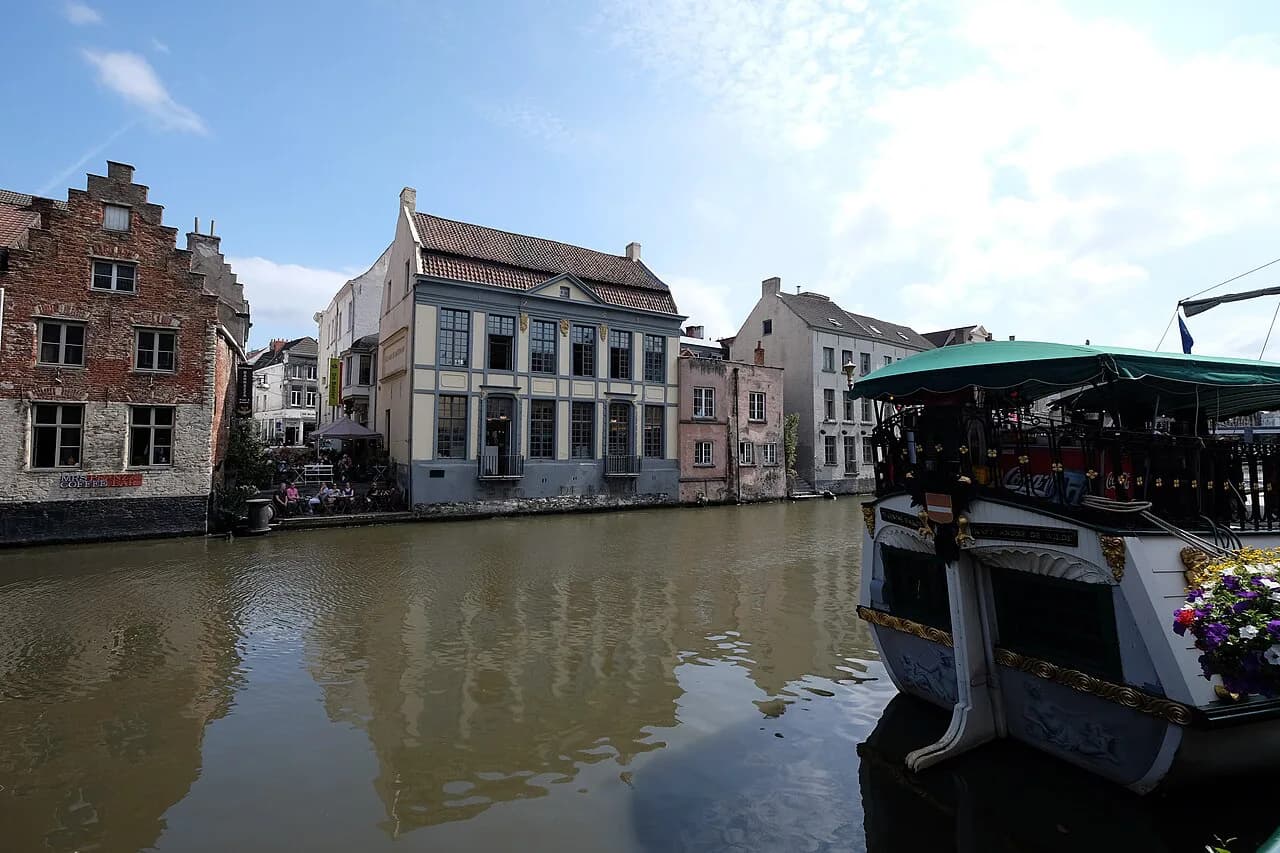
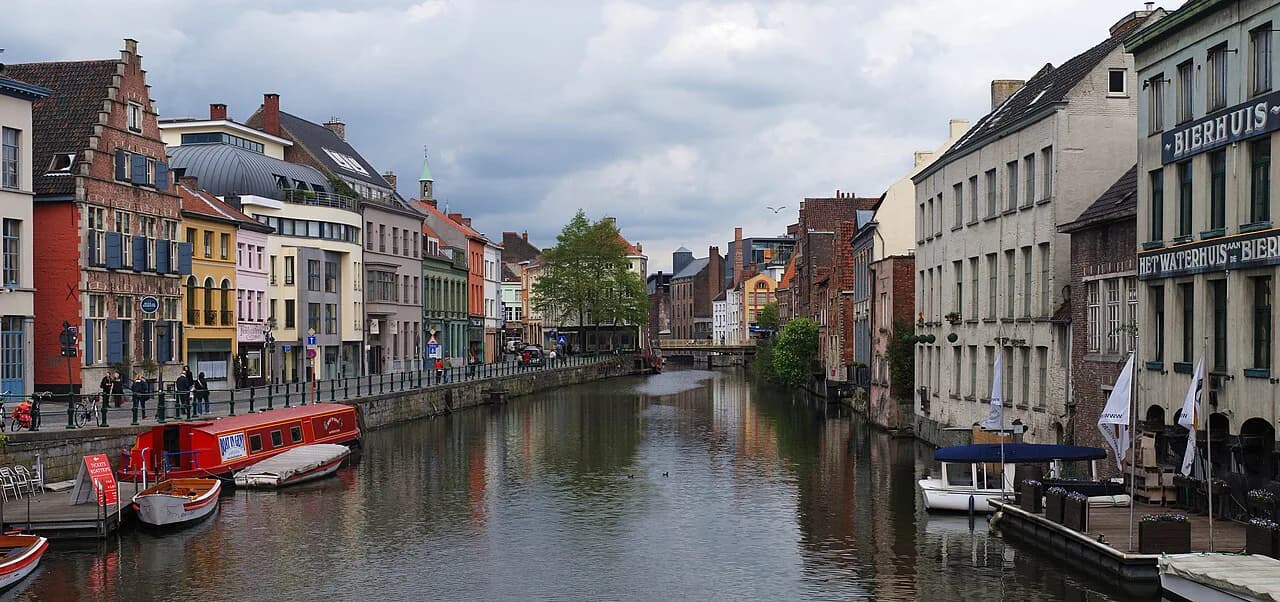
Two rivers meet at Ghent, and the medieval economy ran along them: the Leie and the Scheldt carried goods, and the streets facing the water were the address for traders. The grain trade shaped the quays from the thirteenth century onwards, which explains why the most photographed stretch of the old city is a pair of wharves rather than a square. Keep the water on one side as you walk and the city's layout makes sense.
The three towers: Sint-Baafs, the Belfry and Sint-Niklaaskerk
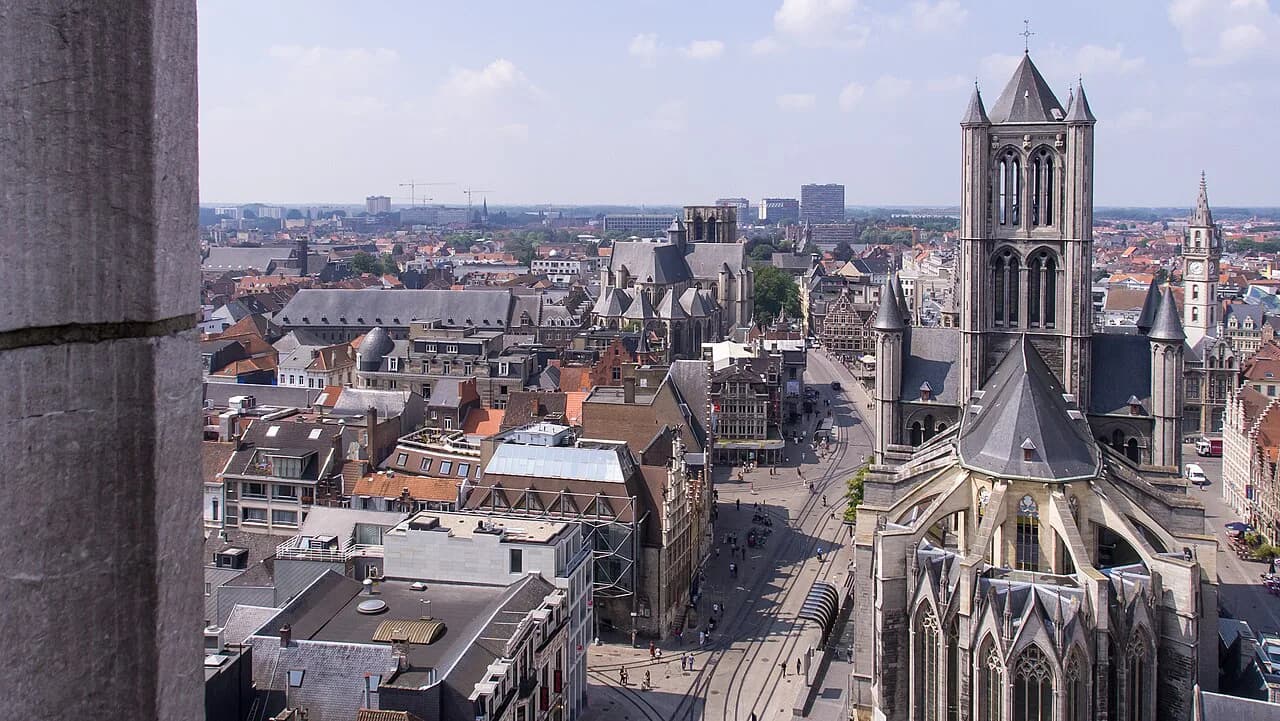
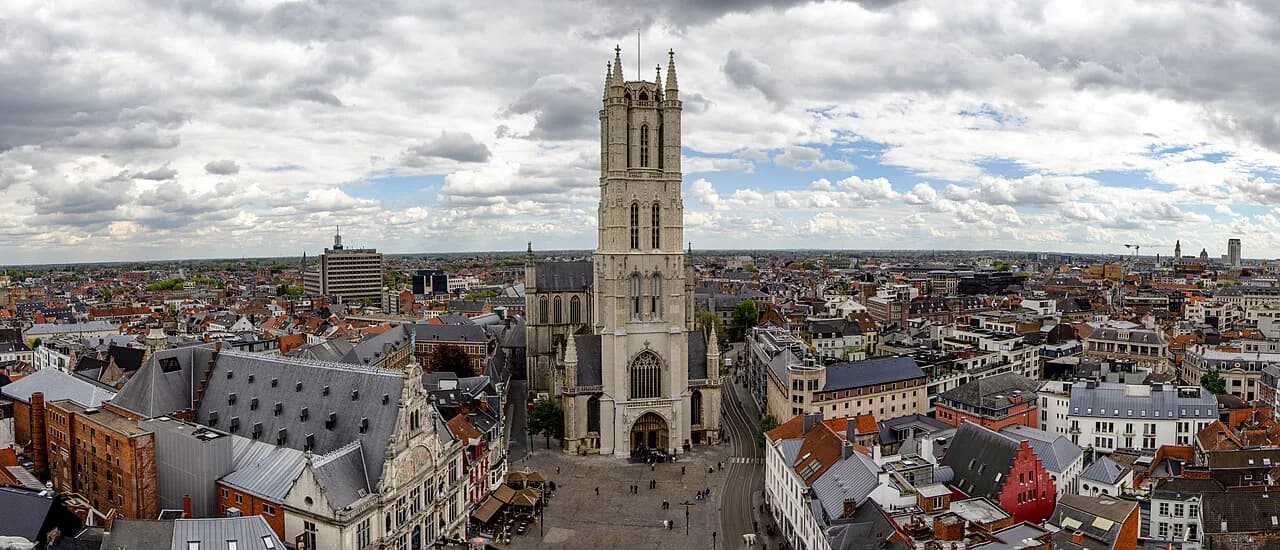
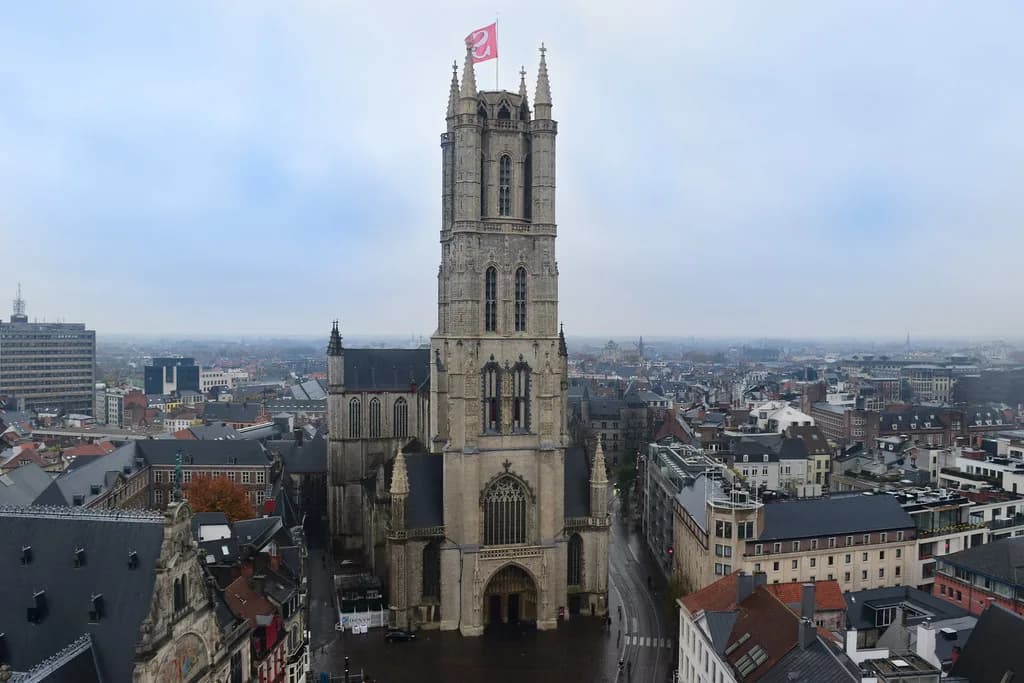
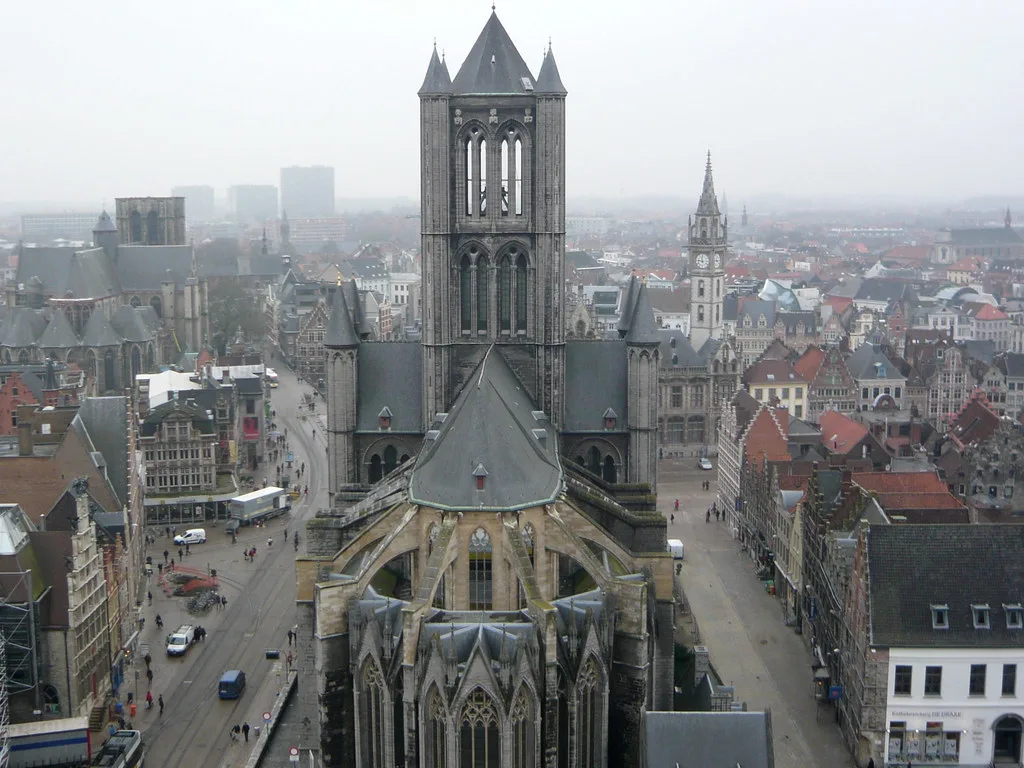
Ghent's skyline is a set of three towers standing close together: Sint-Baafskathedraal, the Belfry and Sint-Niklaaskerk. The Belfry is the civic one and the churches are the religious counterpart, and the point of the skyline is the grouping rather than any single tower, so see them together rather than one at a time.
Sint-Michielsbrug is the viewing point to use. From the bridge you get all three towers in one line, with the Leie and the facades of Graslei and Korenlei on either side, and a bronze sculpture of St Michael at the middle of the span. Go early or late for the clearest light and the thinnest crowds, then cross towards the cathedral.
The staple of the historic centre is not only churches: the Stadshal, the city pavilion of 2012 by Robbrecht & Daem with Marie-José Van Hee, sits beside the Belfry and the churches and is deliberately, conspicuously modern. Some visitors find it a bold contrast; others would rather it were not there. Either way it makes the layers of the centre visible in one view, which is exactly what a short history walk needs.
Gravensteen, the Castle of the Counts
Gravensteen, the Castle of the Counts, anchors the centre at the bend of the Leie, and it is the one medieval sight in Ghent that reads as military rather than mercantile. Boat trips leave from near the castle, and seeing the quays and the castle from the water gives a different reading of the same history. Near Sint-Veerleplein opposite the castle, a street light linked to the city's maternity wards blinks when a child is born.
The Adoration of the Mystic Lamb and Sint-Baafs Cathedral
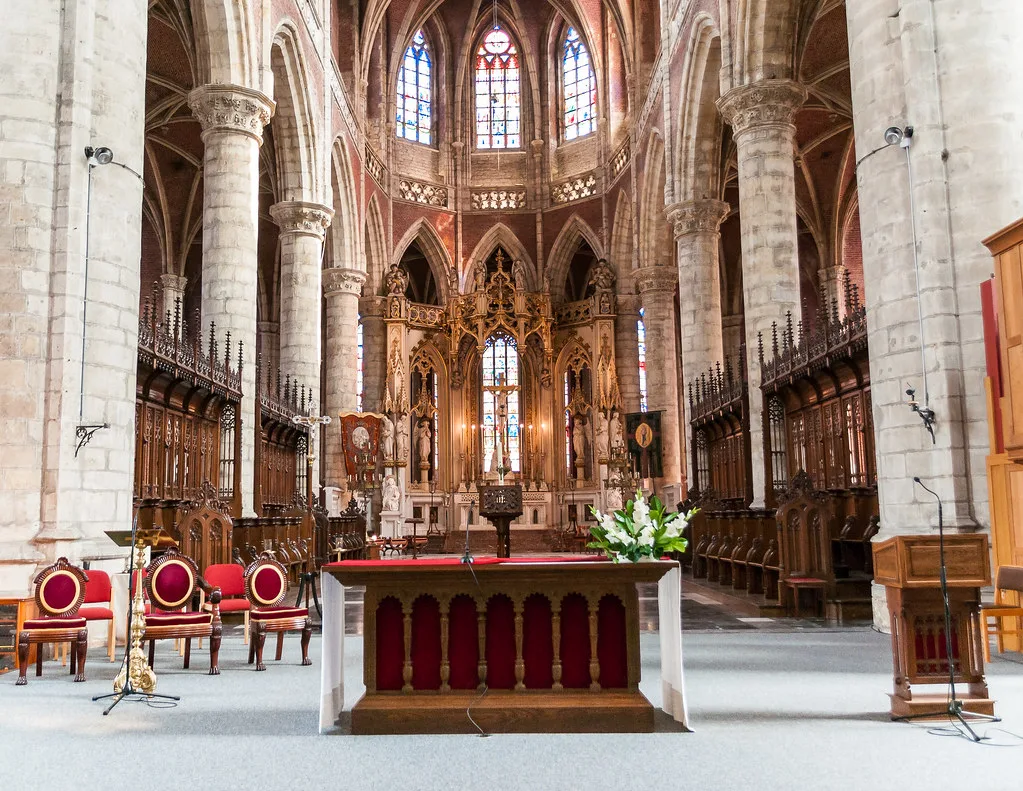
The Adoration of the Lamb of God, the altarpiece by Jan van Eyck, is the reason many travellers give Sint-Baafskathedraal more than a passing look. It is displayed at this cathedral, so see it here rather than treating it as a separate museum stop; the painting and the building belong together. The cathedral sits in the same cluster as the Belfry and Sint-Niklaaskerk, which makes it easy to combine with the skyline walk.
If the altarpiece is your priority, plan the cathedral first and the rest of the centre around it, since the painting rewards unhurried looking. The same visit covers the church's architecture, which is the subject of our guide to the Ghent Cathedral.
Stadshal and the layers of the centre
The centre is unusually legible because its periods are stacked in a small area: the Belfry and the churches, the 2012 Stadshal beside them, the medieval quays a few minutes away and the castle at the edge. That density is why a single morning can cover six centuries without a tram. Use the Stadshal as a landmark and meeting point rather than a destination in itself, and let the surrounding streets do the historical work.
The Industrial Age and the museum quarter
Ghent's modern character comes from industry: the city moved from a rough industrial centre to one of Europe's cultural city breaks, and the old factories gave way to a creative scene with a busy port. VISITFLANDERS calls Ghent Europe's best-kept secret, which is a fair description of how the city feels compared with Bruges. That industrial past is the context for the museum quarter, where the collections explain the city the streets have just shown you.
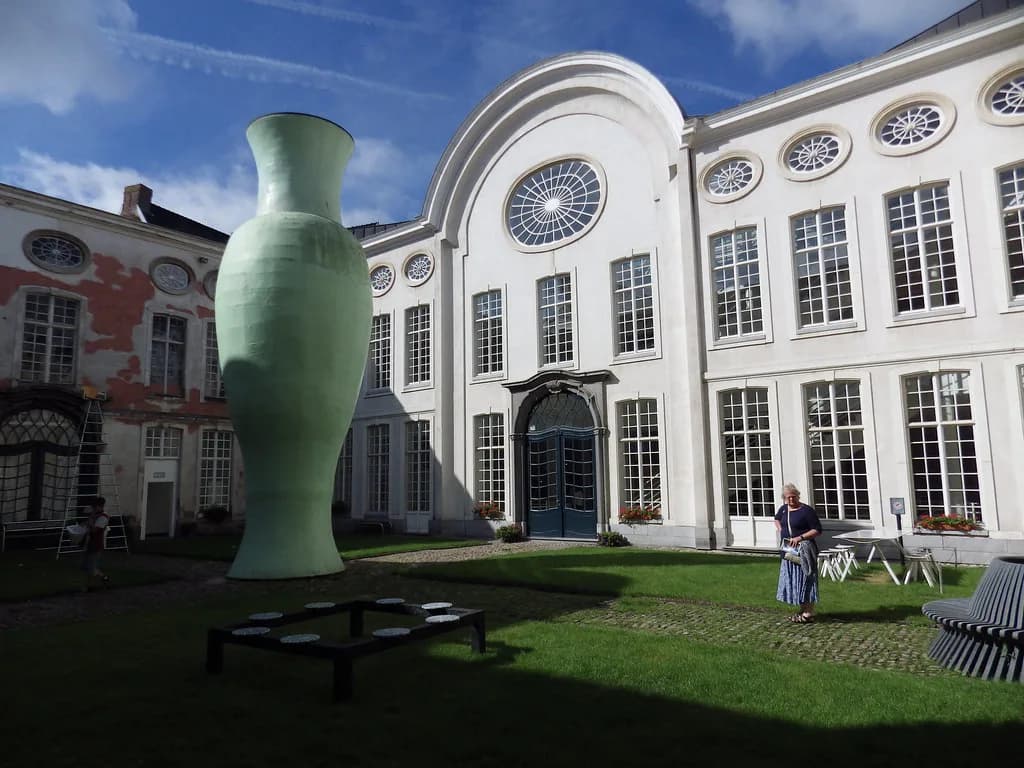
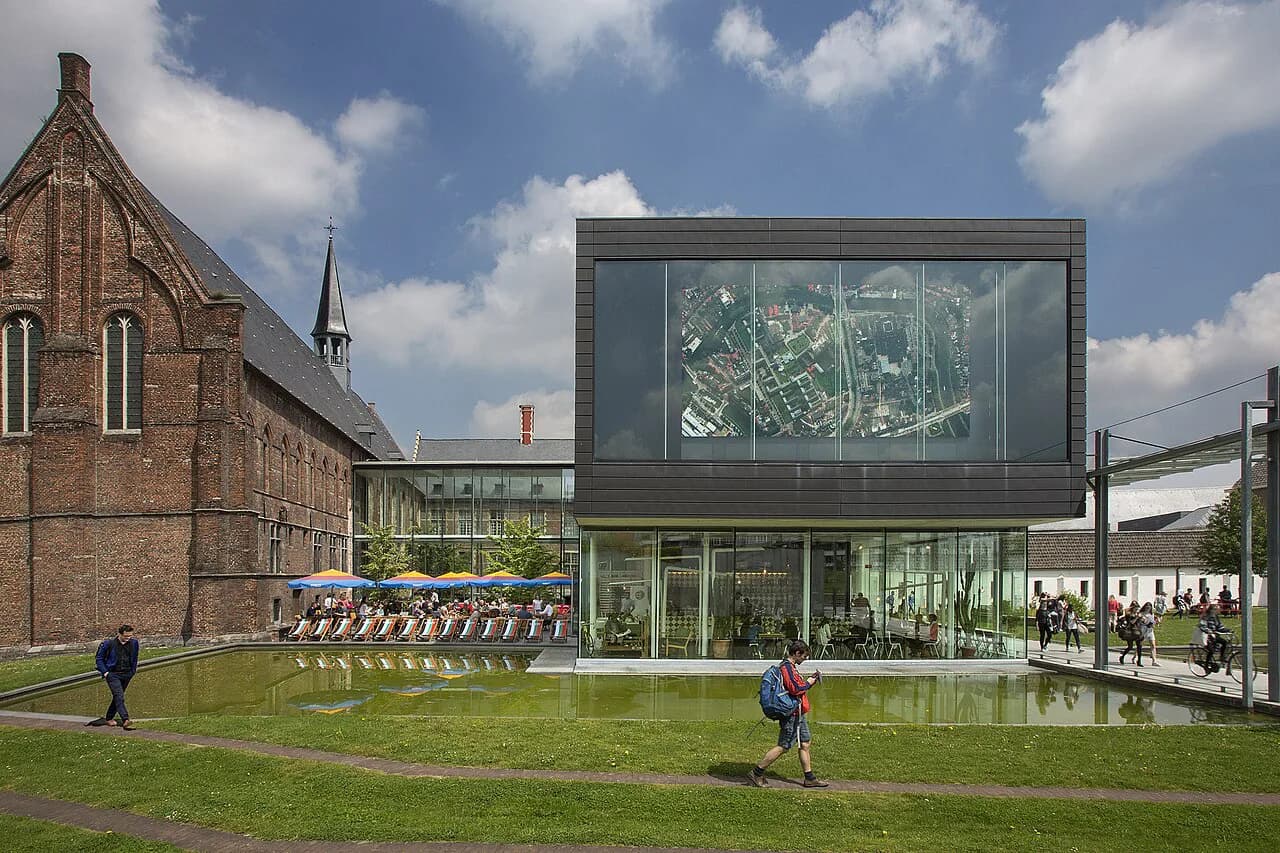
Three museums carry the city's story. MSK holds the fine-art collection, S.M.A.K. the contemporary one, and STAM tells Ghent's own history from the medieval city to the industrial present. If you only have time for one after a walking morning, STAM is the one that ties the streets together; if you want paintings, MSK. The Design Museum Gent, closer to the centre, adds the decorative and design strand, and our guide to the museums in Ghent sets out the choices.
Art-focused travellers can spend a whole day between MSK and S.M.A.K. without leaving the museum quarter, which is why two days in Ghent suits anyone who wants both the streets and the galleries. The Ghent art museum collections reward a slower visit than the historic centre does.
Where to see Ghent's history in a day
Start at Sint-Michielsbrug for the three-tower view and the quays, cross to the Belfry and the two churches, then take in the Stadshal and the surrounding streets before heading west to Gravensteen. From the castle, work back through Sint-Veerleplein and the Vrijdagmarkt, and finish at the Design Museum Gent or, if you have the energy, out at STAM in the museum quarter. That order follows the periods: water trade, civic power, religious art, county castle, industrial city.
One day of streets or two with the museums?
One day in Ghent covers the medieval city properly: the bridge view, the Belfry, Sint-Baafskathedraal with the altarpiece, the Graslei and Korenlei quays and Gravensteen, with the Stadshal and Vrijdagmarkt on the way. Add a second day if you want STAM, MSK or S.M.A.K. without rushing the centre, and put the museums on the day you are least likely to want to be outdoors. The walking order above keeps the history in sequence rather than scattering it.
Explore more Ghent guides
Sources
Useful notes for your next trip
Optional updates to our guides.
You might also like
Continue reading
More guides you'll find useful