Leuven Architecture: What to See and Where to Walk
Leuven architecture for a city break: the Gothic town hall and St Peter's, the Groot Begijnhof, university colleges and where to walk to see them in a day.
On this page
Leuven suits an architecture-focused break because almost everything worth seeing sits within a compact core: the Grote Markt holds the Stadhuis and Sint-Pieterskerk, and the Groot Begijnhof is a short walk south-east. A single day covers the highlights comfortably; two days let you add the university quarter and a slower loop along the begijnhof lanes without rushing. This guide works through the city by square and street, with walking times and honest trade-offs.
Leuven is above all a university town, and that shows in its buildings: colleges, faculty buildings and student housing are woven into the historic streets rather than parked in a separate campus zone. The effect is that you read the city in layers, Gothic stonework, brick courtyards and newer university blocks in the same few minutes of walking.
What Leuven's architecture is known for
The city's reputation rests on two things: a late-Gothic civic core around the Grote Markt, and the brick begijnhof lanes that survive largely intact a few minutes away. Between them sit the old university buildings, which give the centre its working, lived-in character rather than a museum feel. If you have seen Bruges and Ghent, Leuven feels smaller and more student-driven, but the Gothic set pieces hold their own.
For context on how the city grew into this shape, a quick read of Leuven history before you arrive makes the squares easier to decode.
Architecture here is best understood on foot and at street level. Long facades, stepped gables and carved stone details reward slow walking rather than a checklist of addresses, and the distances between the main set pieces are short enough to loop back when the light improves.
The Grote Markt and Sint-Pieterskerk: Gothic Leuven in one square
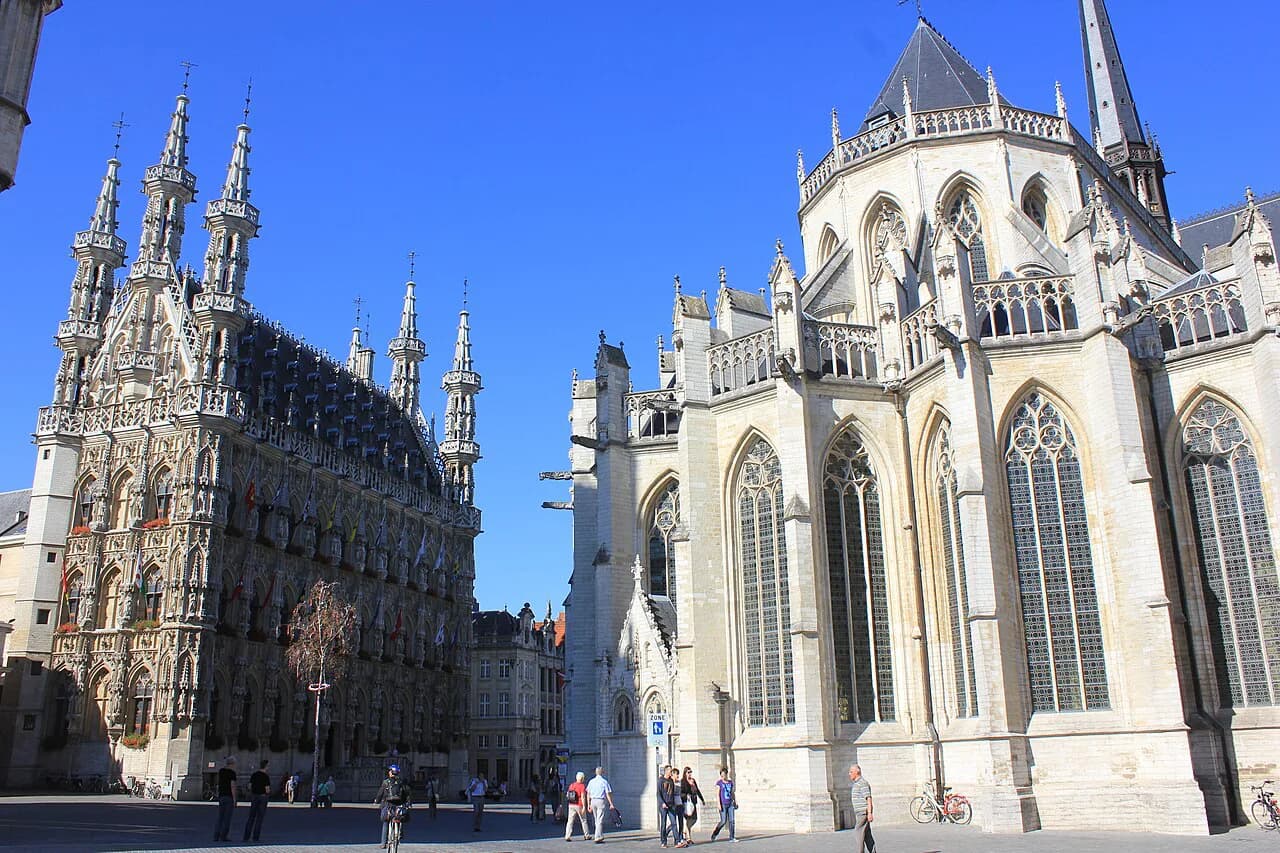
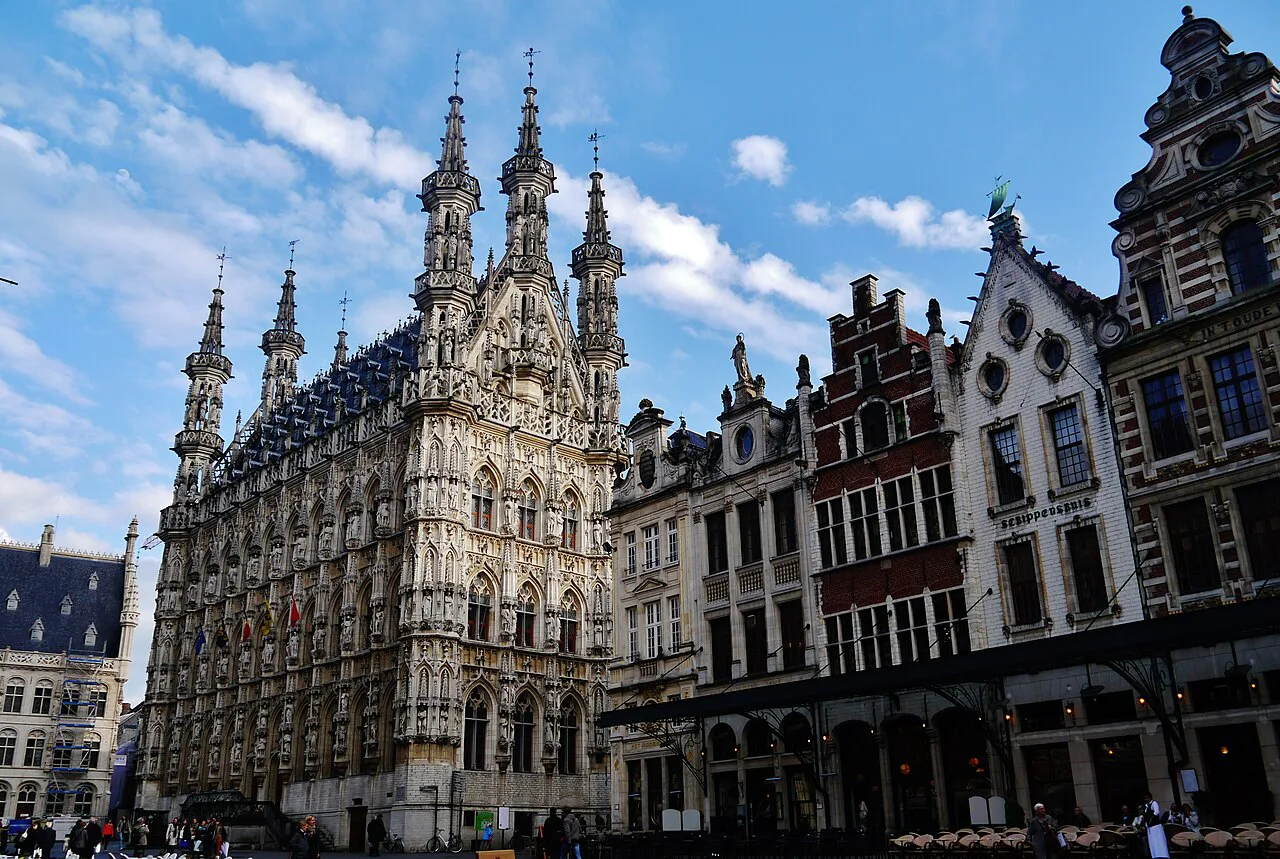
If you have one hour, spend it here. The Grote Markt is the densest concentration of historic architecture in Leuven, with the Stadhuis on one side and Sint-Pieterskerk opposite, both in a Gothic idiom but at very different scales. Stand back towards the square's edge to take in the full facades rather than looking up from directly below.
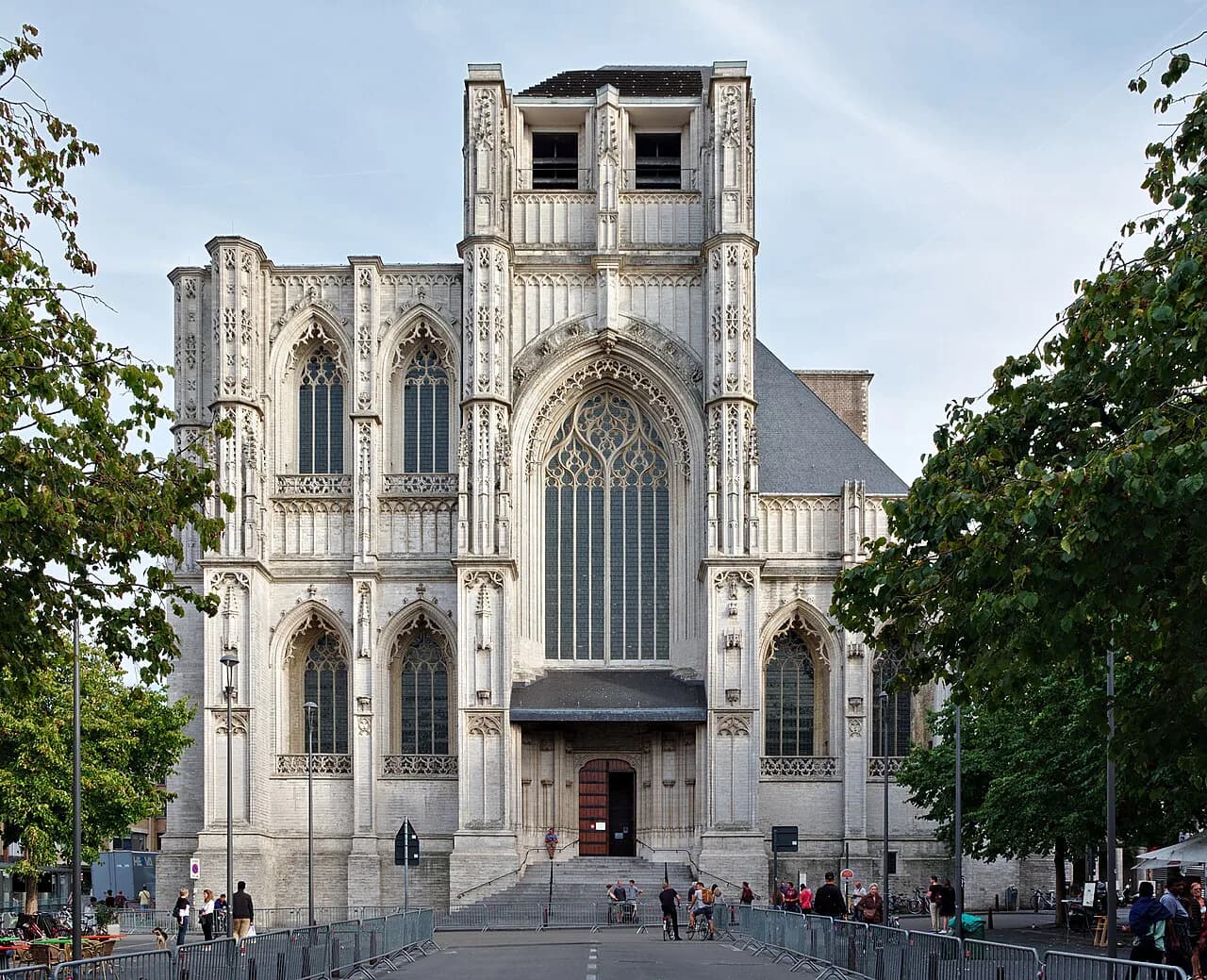
Sint-Pieterskerk, often called the Leuven cathedral in visitor shorthand, is the square's vertical anchor, and its mass is what makes the Grote Markt read as a civic and religious pairing rather than a single showpiece. The square itself is also the natural starting point for any walking route, since every other sight in the core radiates from it.
The Stadhuis and its façade
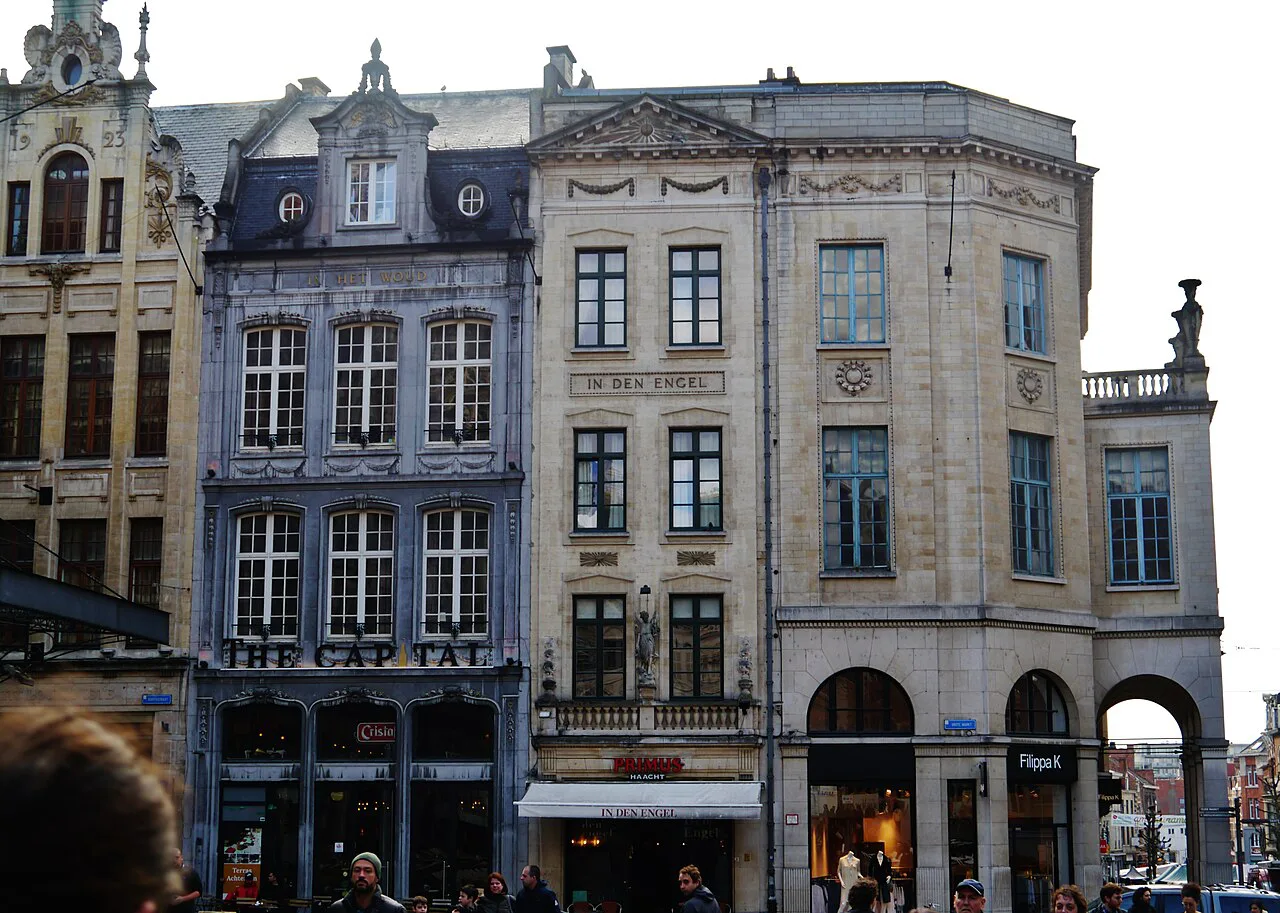
The Stadhuis is the building most visitors photograph, and the façade is the reason: tiers of Gothic windows, statues in niches and a level of carved detail that rewards a slow pass along its front. Walk the length of it once at a distance, then again close up, because the two views show different things.
Treat the exterior as the main event and let the square do the rest of the work. The contrast between the Stadhuis's ornament and the plainer walls around the Grote Markt is what makes the building stand out, and it is legible without any background reading.
The Groot Begijnhof: brick lanes and courtyards
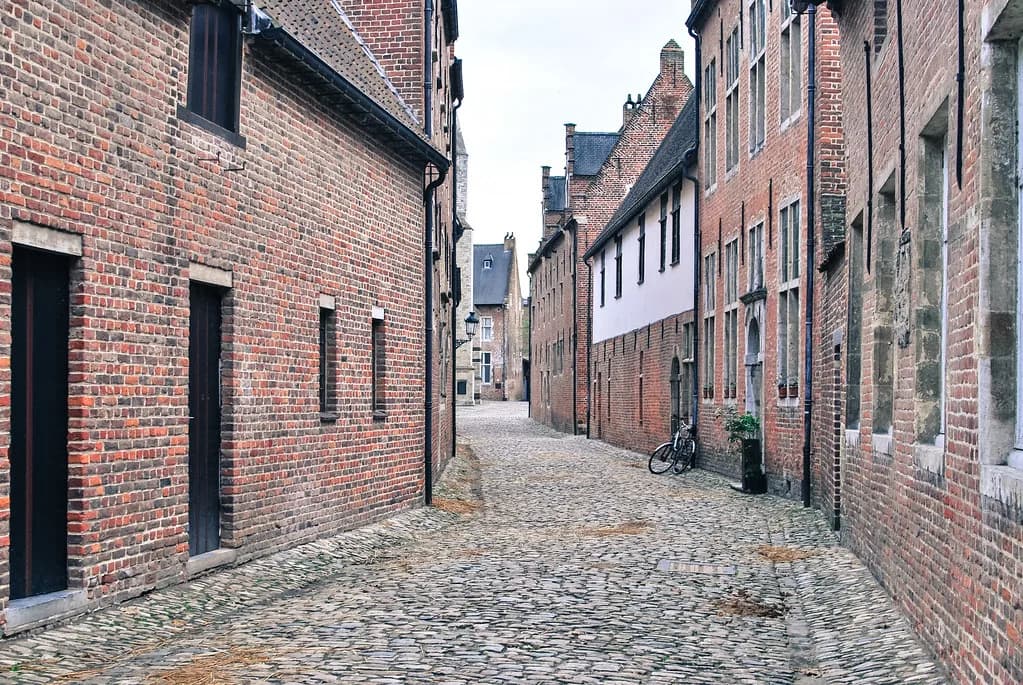
The Groot Begijnhof is the counterweight to the Grote Markt: quieter, lower, almost entirely brick, and organised as lanes and courtyards rather than one grand space. Walk in, take the lanes slowly and look at the repeated gable shapes and the way the houses turn their backs on the street. It is the part of Leuven most likely to stay with you.
The trade-off is time. The Grote Markt gives you the densest architecture in the shortest window, while the begijnhof asks for a slower twenty to thirty minutes to be worth the walk. If your break is only a day, do both in that order and accept that the begijnhof visit will be a skim.
University colleges and the old university quarter
The university buildings are not a separate district you visit so much as a layer you walk through. Colleges, faculty buildings and newer additions sit among the historic streets between the Grote Markt and the begijnhof, so a route linking the two takes you past them anyway. Read them as part of the streetscape: brick and stone fronts, courtyards, and occasional modern insertions that show the university still building.
Architectural press coverage gives a sense of the newer work in the city, including residential and school projects by local practices such as KPW architecten and LAVA Architecten, which sit alongside the historic core rather than replacing it.
For the art side of the same streets, including M Leuven and the Dieric Bouts trail, pair the walk with the city's art collections.
Where to walk: a route linking the square, begijnhof and colleges
Start on the Grote Markt, walk the Stadhuis façade and cross to Sint-Pieterskerk, then head south-east through the university streets towards the Groot Begijnhof. Allow two to three hours on foot with stops, and keep the route one-way rather than looping back, so the begijnhof lanes are the quiet end of the walk.
If you want to add a museum to the day, the museums in Leuven are concentrated enough to slot into the same loop without a detour.
How long architecture-focused sightseeing needs
One day is enough for the core: Grote Markt, Stadhuis, Sint-Pieterskerk and the Groot Begijnhof, with the university streets in between. Two days let you revisit the squares in better light and add a museum or a second pass at the begijnhof. Beyond two days, architecture alone will not fill the time, so plan other interests alongside it.
When to go for daylight and crowds
Leuven's architecture is outdoor architecture, so daylight matters more than season: late morning and late afternoon give the best raking light on the Stadhuis façade, while the middle of the day flattens it. Weekdays in term time bring students into the streets and make the university quarter feel alive; outside term the same streets are noticeably quieter.
Studying architecture in Leuven and Ghent with KU Leuven
KU Leuven's Faculty of Architecture teaches on two campuses, in Ghent and Brussels, not in Leuven itself, so a prospective student visits those cities rather than the Leuven streets described above. The faculty describes its programmes as built on 150 years of design tradition from the Sint-Lucas programmes.
The Master of Architecture is taught in English and can be followed in Ghent or Brussels, which is worth knowing if you are combining a Leuven city break with a campus visit.
Is Leuven worth a break for its architecture?
Yes, if you want a compact, walkable Gothic core with a quieter brick quarter attached and a student city around it. The honest limit is scale: a day covers the best of it, and architecture alone rarely justifies more than two days. Build the break around the Grote Markt and the Groot Begijnhof, and treat the rest as the streets in between.
Explore more Leuven guides
Frequently Asked Questions
What is Leuven most famous for?
Leuven is best known as a university city with a late-Gothic civic core around the Grote Markt, where the Stadhuis and Sint-Pieterskerk face each other, and for the brick lanes of the Groot Begijnhof a short walk away. The university buildings threaded through the centre give the city its working, student-driven character.
Can you see Leuven's main architecture in one day?
Yes. The Grote Markt, the Stadhuis façade, Sint-Pieterskerk and the Groot Begijnhof fit into a single day on foot, with the university streets covered on the way between them. Allow two to three hours of walking with stops, and keep the route one-way so the begijnhof is the quiet finish.
Sources
Useful notes for your next trip
Optional updates to our guides.
You might also like
Continue reading
More guides you'll find useful