
Basilica of the Holy Blood (Heilig-Bloedbasiliek), Bruges

The Basilica of the Holy Blood (Heilig-Bloedbasiliek) is a small Roman Catholic church on the Burg in central Bruges, and it takes about 30 to 45 minutes to see properly. Entry to the church is free, the museum and treasury cost 5 EUR, and the relic itself is shown at fixed times in the afternoon. This guide covers where the basilica sits, how the two chapels differ, what the visit costs and how to fit it into a morning or afternoon around the Markt.
What the Basilica of the Holy Blood is
The basilica is a Roman Catholic church in the historic centre of Bruges, built around a relic of the Holy Blood that it houses and venerates. It is a place of active worship rather than a museum with a turnstile: Mass, confession and Adoration run on a weekly rhythm, and during services the lower or upper basilica is open only to those attending. That single rule shapes how you plan a visit.
The dedication follows directly from the relic: the church is named for the Holy Blood it keeps, and the museum and treasury explain the tradition around it. Approach it as a place of devotion first and a sight second. The building is compact, so the interest lies in the two chapels, the relic and the treasury rather than in scale.

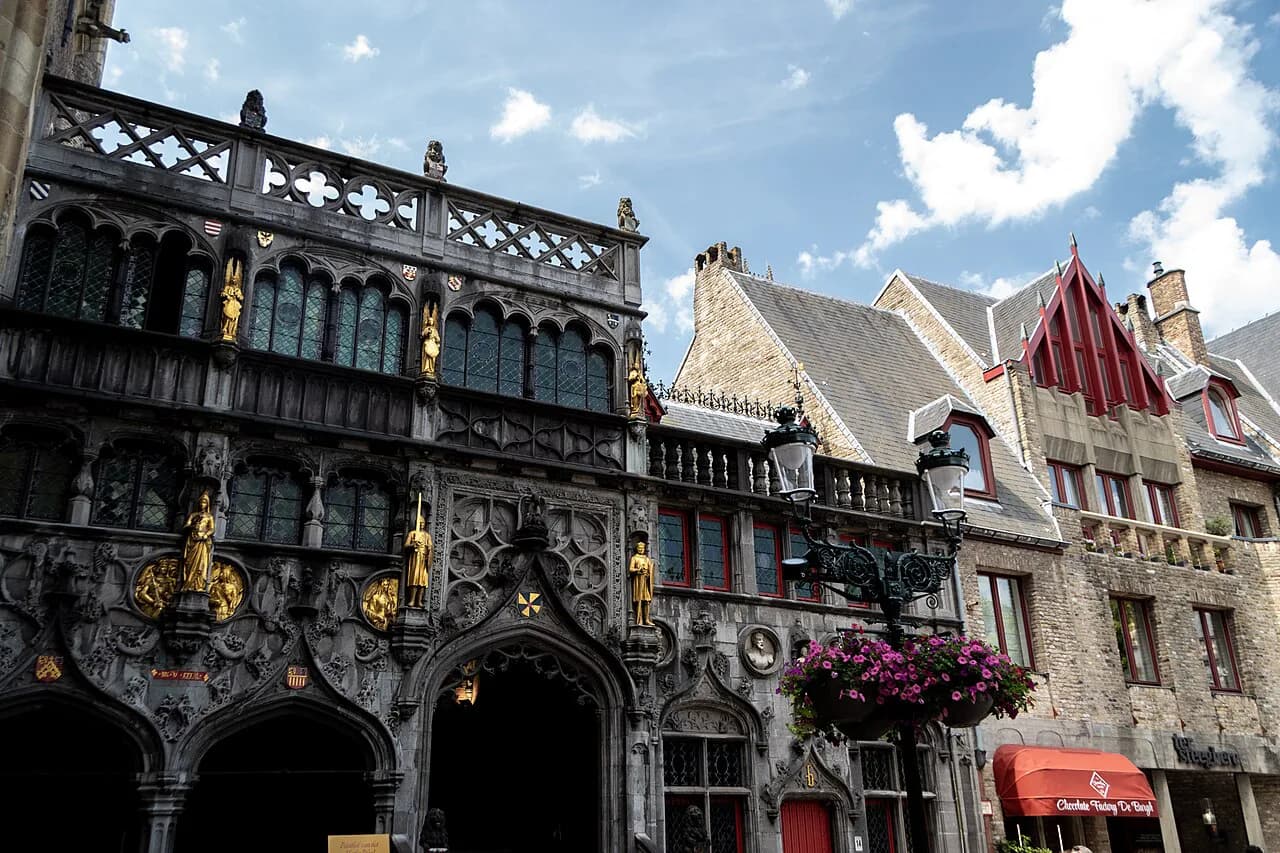
Where it is on the Burg, beside the Town Hall
The address is Burg 13, Bruges, on the Burg, the square just south of the Markt. The Town Hall faces you across the square and the Belfry is roughly a two-minute walk away through the Markt, so the basilica slots into a route between the two squares. From the canal-side corner at the Rozenhoedkaai it is a short walk north-east.
The Burg is pedestrian and sits inside the ring of canals that encloses the centre, so you reach it on foot from the Markt, the Burg or the quays. Treat the basilica as one stop on a walking loop rather than a separate excursion. The square is small and busy, and the chapel front beside the Town Hall is easy to miss if you are looking at the facade.

Entry: free to the church, 5 EUR for the museum and treasury
Access to the basilica is free, while the museum and treasury cost 5 EUR, with entry free for children under 12. Budget for the museum if you want the context behind the relic, and skip it if you only have time for the chapels. The church itself costs nothing to enter.
Splitting the visit this way lets you decide on the spot: step into the church, see how much time you have left in the day, then pay for the treasury only if it appeals. That keeps the cost of a single sight low and leaves budget for the Groeningemuseum.
Opening hours and the annual January closure
The basilica opens every day, and it closes for a week in January, with this season's closure running from Monday 12 to Saturday 17 January. Plan around that week if the basilica is a priority. Because the building is in religious use, services can also restrict which chapel you can enter.
Because the church is free, you can drop in twice in a day: once in the morning for the chapels and once in the afternoon for the veneration of the relic. That flexibility suits the building better than a single fixed slot. Allow the basilica to be a short stop you can repeat rather than a timed appointment.
The lower basilica and the upper basilica
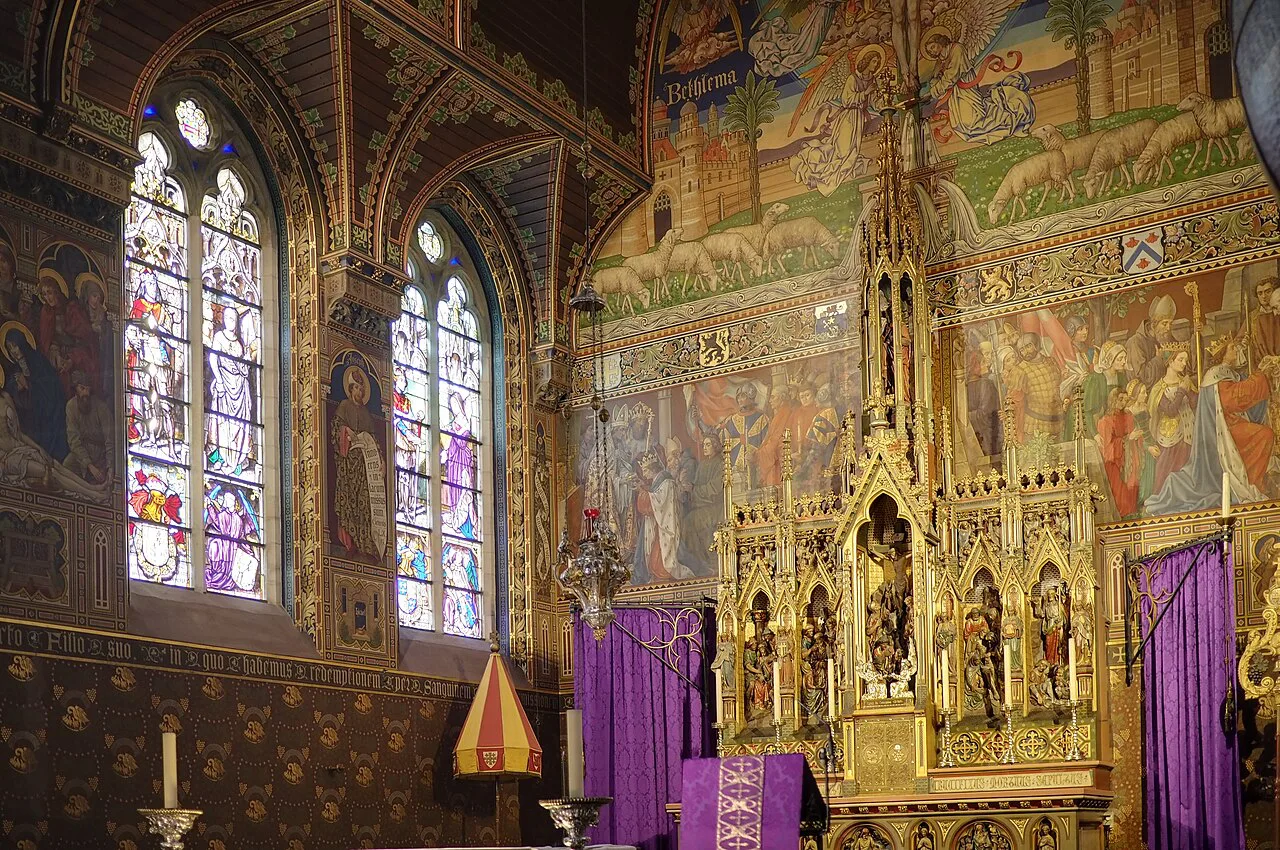
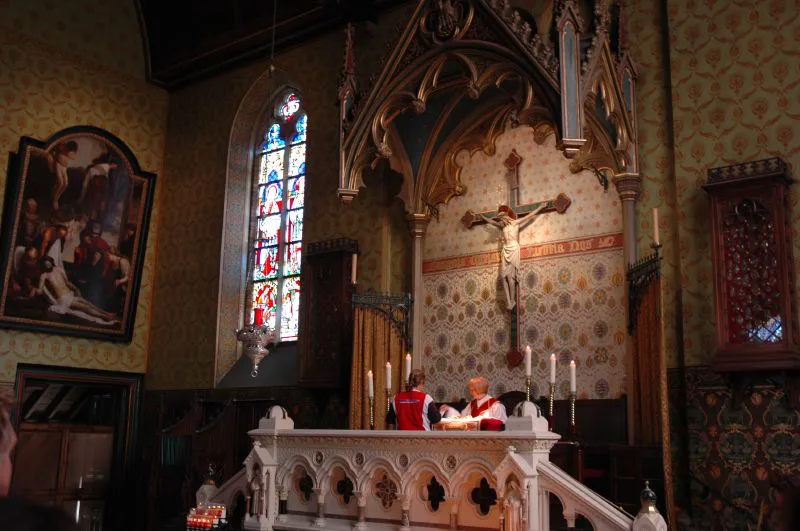
The church is split into a lower basilica at street level and an upper basilica, where the relic is venerated. Visit both if you can: the lower chapel feels quieter and older, while the upper chapel is where the devotional life of the church centres. During services only those attending may enter the chapel in use, so the two-level layout directly affects what you can see when.
Neither chapel takes long, so walk through both and then linger where it feels right. Keep your voice low and your pace slow, because people come here to pray as well as to look. The contrast between the dimmer lower chapel and the brighter upper one is the heart of the visit.
The relic of the Holy Blood and how it is venerated
The church houses a relic of the Holy Blood, and the tradition attached to it is what draws pilgrims and visitors alike. Treat the question of its origins as a matter of faith and tradition rather than something a visitor can settle. What you can observe is the devotional practice: the relic is exposed for veneration at set times rather than permanently on view.
Veneration of the Holy Blood runs every day, and on Fridays there is an earlier opportunity, separate from the daily afternoon window. If seeing the relic matters to you, build your day around the afternoon window and arrive on the upper level in good time. Outside the veneration windows you can still see the church and the museum, but the relic is not displayed for veneration.
Services, Mass and when the chapels are closed to visitors
Eucharist is celebrated every day except Monday, and confession is heard on Wednesday and Friday, and on Saturday, with Adoration on Wednesday and Saturday. During any of these services the chapel in use is open only to those attending, so aim for a slot between services.
The church also hosts special services and concerts through the year, which can close parts of the building. Check the day's schedule on the basilica's own page before a special trip, especially around feast days. Otherwise, the ordinary weekday pattern is predictable enough to plan around.
How long to allow and when in the day to go
Give the basilica 30 to 45 minutes if you see both chapels and the museum, or 15 to 20 minutes for the church alone. It is a small building on a busy square, so the visit works best as a pause between the Markt and the Burg rather than a half-day in itself. Pair it with the Belfry and the Markt for a morning.
The most rewarding timing is the early afternoon, when you can see the chapels and then stay for veneration. Arriving shortly after opening also works, though the Eucharist runs on most days. Whatever the hour, a crowd of a dozen people changes the atmosphere of a building this small.
Dress, quiet and behaviour inside an active church
This is a working Catholic church, so dress respectfully with shoulders and knees covered and keep voices low, particularly in the lower chapel. Keep photography discreet and never during prayer or veneration, and silence your phone. If a service is under way, either join it properly or wait outside until it ends.
The museum and treasury sit alongside the devotional spaces, so the same courtesy applies there even though you have paid to enter. Visitors of any faith or none are welcome, but the building asks for a slower register than the Markt outside. A few minutes of stillness in the lower chapel is often the part people remember.
The Procession of the Holy Blood
The Procession of the Holy Blood is the basilica's great public event, and the next one published is Thursday 6 May: lauds at the basilica, the relic carried to St Saviour's Cathedral, Mass there, the procession and a closing celebration on the Burg. If you are in Bruges that week, plan around the crowds rather than through them.
Outside that date, the annual rhythm of the church is the everyday one of Mass, veneration and the museum. Treat procession day as a separate reason to visit rather than the norm, and expect the Burg and the streets around it to be busy. Book nothing tight around the route if you are travelling that week.
Nearby: Burg Square, the Belfry, the Markt and the museums
The Burg itself is worth a few minutes: the Town Hall and the basilica face each other across a small, enclosed square that is one of the oldest corners of Bruges. Walk through it to the Markt and the Belfry, where the tower is the city's best-known landmark. The canal quays are a short walk south.
For a fuller day, the Groeningemuseum holds Flemish Primitives, the Church of Our Lady, Bruges (Onze-Lieve-Vrouwekerk) is a short walk south, Historium Bruges on the Markt recreates the medieval city, and Choco-Story Bruges covers the chocolate story. Pick two of these alongside the basilica rather than trying to fit them all in.
Beer travellers can round off the day at De Halve Maan Brewery, Bruges, a working brewery in the city. It sits a short walk south-west of the Burg, so the basilica, the brewery and the canal quays make a natural half-day loop. Book the brewery visit if you want the tour rather than just the tasting room.
Is the basilica worth an hour of your Bruges trip?
Yes, if you want a quiet, free stop that explains a great deal about Bruges' religious life and sits right on your route between the Markt and the Burg. Go in the early afternoon so you can see both chapels and stay for veneration, and pay the museum charge only if the relic's story interests you. It is a 30-minute visit that earns its place in a one- to four-day trip.
Explore more Bruges guides
Frequently Asked Questions
Is the Holy Blood in Bruges real?
The basilica houses a relic of the Holy Blood, and the church venerates it as such. Whether the relic is authentic is a matter of faith and tradition rather than something a visitor can verify. The church presents it for veneration and the museum provides the historical context.
Why is it called the Basilica of the Holy Blood?
The name comes from the relic of the Holy Blood that the church keeps and venerates. The dedication follows the relic rather than a patron Saint, which is why the building and its museum focus so closely on that single object of devotion.
Is the Basilica of the Holy Blood free?
Entry to the church is free, while the museum and treasury carry a charge, which is waived for children under 12. You can see the chapels and attend services without paying, and choose the museum on the day. The basilica's own website lists the current prices.