
WW1 Sites in Belgium: Where to Go in Flanders Fields
Plan a visit to Belgium's WW1 sites, from the Menin Gate and Tyne Cot to the Yser front, with routes, memorials and museums that fit a short break.
On this page
Belgium's WW1 sites are concentrated around Ypres (Ieper) in West Flanders, where the Ypres Salient held the Allied line for most of the war. Three days is enough to see the Menin Gate, Tyne Cot, the Passchendaele ground, the Hooge Crater and a museum; two days covers the essentials. This guide groups the sites by type, then sets out how to reach them by car, bike or tour and how to order a short break.
Why the Western Front ran through Flanders
Belgium was invaded in 1914, and the fighting settled into a line that cut across the country from the coast near Nieuwpoort to the French border. The Ypres Salient was the bulge in that line around Ypres, which meant the town and its surrounding villages were fought over for four years. That is why the memorials, cemeteries and museums here are so densely packed within a short drive of one another.
The flat, low-lying farmland of Flanders Fields shaped the war: drainage ditches and canals became obstacles, and the polders near the coast could be deliberately flooded. The name Flanders Fields comes from the poem by the Canadian medical officer John McCrae, written in 1915 and now tied to the cemeteries and poppy imagery across the region.
The Ypres Salient: the main cluster of sites for a short break
Almost every site on a short battlefield break sits within a ring of villages around Ypres. The Menin Gate faces the road east out of town, Tyne Cot stands near Passchendaele to the north-east, Hooge Crater and Hill 60 lie east and south-east, and Polygon Wood sits to the east. Base yourself in Ypres and none of these is more than a short drive away.
Are Americans buried in Flanders Fields? The cemeteries around Ypres are chiefly Commonwealth burial grounds, with British, Canadian, Australian, New Zealand and South African graves alongside them. American war dead from the First World War are commemorated in separate cemeteries maintained by the American Battle Monuments Commission elsewhere in Europe, so do not expect a large US section in the Salient.
What was Belgium's role in WW1? Belgium was invaded in 1914, and most of the country was occupied for the rest of the war. The Belgian army held the Yser line in the west, while the Ypres Salient was defended largely by British and Commonwealth forces.
What is the biggest WW1 memorial in the world? Tyne Cot is the largest Commonwealth war cemetery in the world, and its memorial wall records the missing from the Passchendaele offensive. Whether it counts as the biggest memorial overall depends on how you define a memorial, so treat the claim as a Commonwealth cemetery record rather than a universal ranking.
This compactness is the argument for choosing the Salient over the wider Western Front: you can see a gate, a cemetery, preserved ground and a museum in a single day without long transfers. The trade-off is that the sites reward slow visiting, so packing too many into one day flattens the experience. Pick two or three anchors per day and leave room to walk the ground.
The Menin Gate (Menenpoort) and the Last Post
The Menin Gate is Ypres's own memorial to the missing: a vast gate across the road out towards the front, inscribed with the names of soldiers who have no known grave. It is the natural first stop on any visit because it frames the town's relationship with the war, and it sits within walking distance of the Grote Markt and the Lakenhalle (Cloth Hall).
The Last Post ceremony is the other reason travellers come to the gate, and it gives a short break a fixed evening anchor. The gate is an outdoor memorial and a working part of the town rather than a museum, so treat it as a place to stand quietly and look at the names rather than a sight to tick off. Build your day around an evening here and let it set the mood for the rest of the visit.
Tyne Cot Cemetery and the Passchendaele battlefield
Tyne Cot is the largest Commonwealth war cemetery in the world, laid out across the gently rising ground near Passchendaele, and it holds the Tyne Cot Memorial to the missing at its far end. The scale is the point: rows of headstones stretch away beneath a low wall of names, and the ground itself tells the story of the 1917 offensive that became synonymous with mud and attrition.
Reading Passchendaele as a landscape helps: the ridge on which Tyne Cot sits was the objective of the 1917 campaign, and the surrounding fields were taken and retaken at terrible cost. Walk the cemetery first, then look out over the fields towards the village to see why this ground mattered. It is a memorial and a cemetery, so keep the visit factual and quiet rather than treating it as a battlefield thrill.
Hooge Crater: the crater, the cemetery and the private museum
Hooge Crater brings three things together at one stop: the crater area itself, the Hooge Crater cemetery opposite, and a private museum housed in a chapel built in the early 1920s. The museum has life-size reconstructions of trench scenes, collections of weapons and equipment, and a 1916 Ford T ambulance and a replica Fokker DR1 among its displays. It is a compact, personal museum rather than a state institution, which is part of its appeal.
Hours are limited, so plan Hooge Crater around them: the museum is closed on Mondays and Tuesdays, opens Wednesday to Saturday from 10:00 to 18:00 and Sunday from 10:00 to 21:00, and closes annually from 19 December 2026 to 2 February 2027. A new exhibition is scheduled to run from 31 March 2026 to 20 December 2026, so build the day around those dates.
The museum sits on the Meenseweg in Zillebeke, on the road east from Ypres towards the Salient, so it pairs naturally with Hill 60 and Polygon Wood in the same afternoon. If your short break falls on a Monday or Tuesday, put Hooge Crater on another day rather than arriving to a closed door.
Hill 60 and Polygon Wood: preserved ground and cemeteries
Hill 60 and Polygon Wood are sites where the ground itself is the exhibit: cratered, uneven and preserved as a memorial landscape rather than rebuilt over. Both are quiet, small-scale stops that reward a slow walk and a look at the information panels, and both sit close enough to Hooge Crater to be visited in the same loop.
These are not museums and have no exhibits or facilities to speak of, so they suit travellers who want to see the terrain and read the names rather than follow a display. Allow twenty to thirty minutes at each unless you plan to walk more widely. The contrast with a formal cemetery like Tyne Cot is instructive: one preserves the disturbed earth, the other orders it into rows.
In Flanders Fields Museum and the Lakenhalle (Cloth Hall) in Ypres
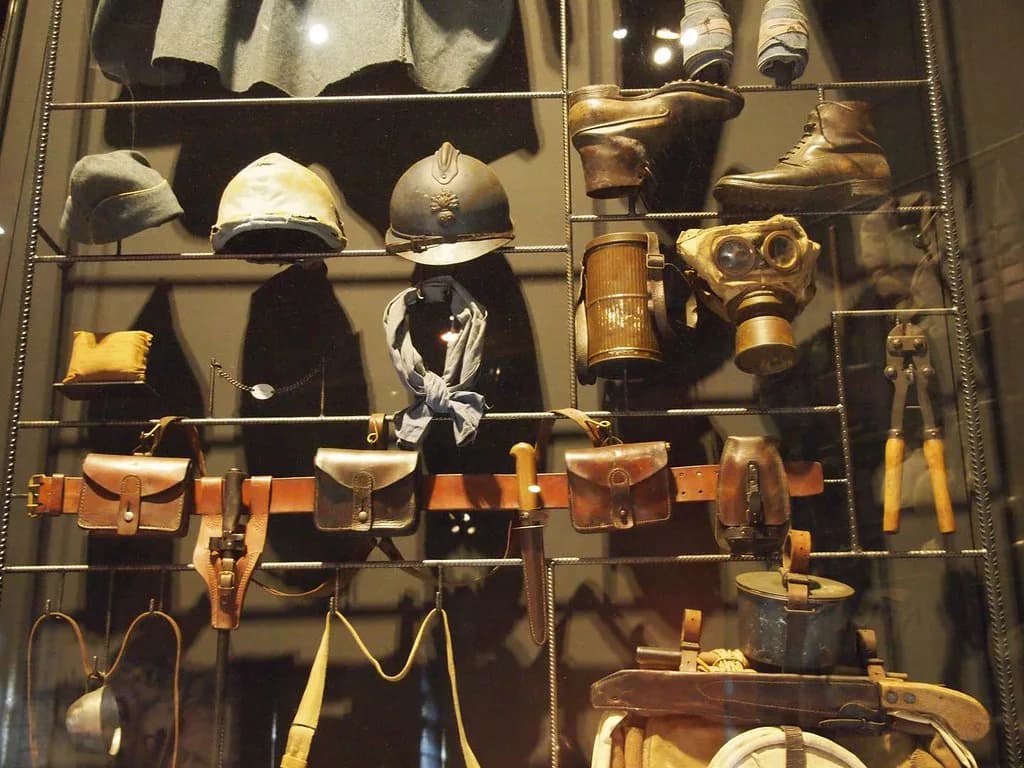
The In Flanders Fields Museum occupies the upper floors of the Lakenhalle on the Grote Markt in Ypres, the vast cloth hall rebuilt after the war. It is the best place to start a visit because it sets the political and human context for the sites you will see outside town, from the invasion of 1914 to the occupation and the rebuilding. The building itself is part of the story: the hall's reconstruction is a monument to the town's determination to rise again. If the rebuilt medieval architecture draws you further, the belfries of Belgium guide covers other UNESCO towers worth climbing.
The Lakenhalle also anchors the town centre: the Grote Markt is the square to orient yourself by, and Saint Martin's Cathedral is a short walk away. Do the In Flanders Fields Museum on your first morning and the outdoor sites afterwards, so the names on the gate and the headstones in the cemeteries have somewhere to land.

The Yser front: Nieuwpoort, the flooded polders and the Trench of Death at Dixmude
The Yser front is the northern end of the Belgian line, running from Nieuwpoort on the coast inland to Dixmude (Diksmuide). Near Nieuwpoort the polders were deliberately flooded in 1914 to halt the German advance, and the water became a permanent barrier for the rest of the war. The Trench of Death at Dixmude preserves a section of Belgian trench beside the river, and it is the most direct way to see what a front-line position looked like.
This cluster is more spread out than the Salient and sits further from Ypres, so it works best as a separate half-day or full day by car rather than a bolt-on to a Tyne Cot morning. If you have only two days, choose either the Salient or the Yser front and do it properly; trying to cover both leaves little time to stand still at either.
Waterloo and Mons: the other battlefields in Belgium
Belgium has battlefields beyond the Western Front. Waterloo, about 30 kilometres south of Brussels, was fought on 18 June 1815 and ended Napoleon's career; the main sights are the Lion's Mound, a panoramic painting of the battle and a visitors' centre. It is a completely different war and landscape from the Ypres Salient, and it is best treated as a separate outing rather than folded into a Flanders itinerary.
Mons, in the French-speaking south, is associated with the war's opening and closing phases, and the region also holds sites from the Second World War. For a short break built around the Western Front, keep these as comparisons: Waterloo tells you how nineteenth-century warfare looked, while Mons and the Ardennes spread your time thin if the Salient is your real interest. Choose one extra battlefield at most.
Getting around: car, bike or guided tour from Ypres
A car is the most efficient way to link the Salient's sites, especially if you want to combine Tyne Cot with Hooge Crater and Hill 60 in one day. Driving also lets you reach the Yser front and Waterloo without depending on sparse connections. The trade-off is that parking near the smaller sites is limited and you will still walk the ground at each stop.
Cycling suits the Salient well because the distances between Ypres, Hooge and Polygon Wood are short and the terrain is flat, and it keeps you close to the landscape between sites. A guided tour removes the navigation problem and adds interpretation, which helps if you are visiting for the first time and want the sites put in order. Many travellers into Belgium arrive by ferry and drive down, which is why operators such as DFDS publish battlefield routes alongside their crossings.
How many days you need and how to order the sites
Two days is the minimum for a coherent visit: day one for Ypres itself, with the In Flanders Fields Museum and the Menin Gate in the evening, and day two for Tyne Cot, Passchendaele and Hooge Crater. Three days lets you add Hill 60, Polygon Wood and a slower walk around the Salient without rushing. Four days gives you room for the Yser front or Waterloo as a separate outing.
Order the days from context to ground: museum first, then the gate and ceremony, then the cemeteries and preserved ground, then any wider excursion. That sequence means each outdoor site builds on what you learned indoors, and it leaves the most affecting stops, the cemeteries, for when you have time to be quiet. This is a practical pick rather than a fixed route; adapt it to the days Hooge Crater is open.
Where the Salient sits in the wider story of Belgium in WW1
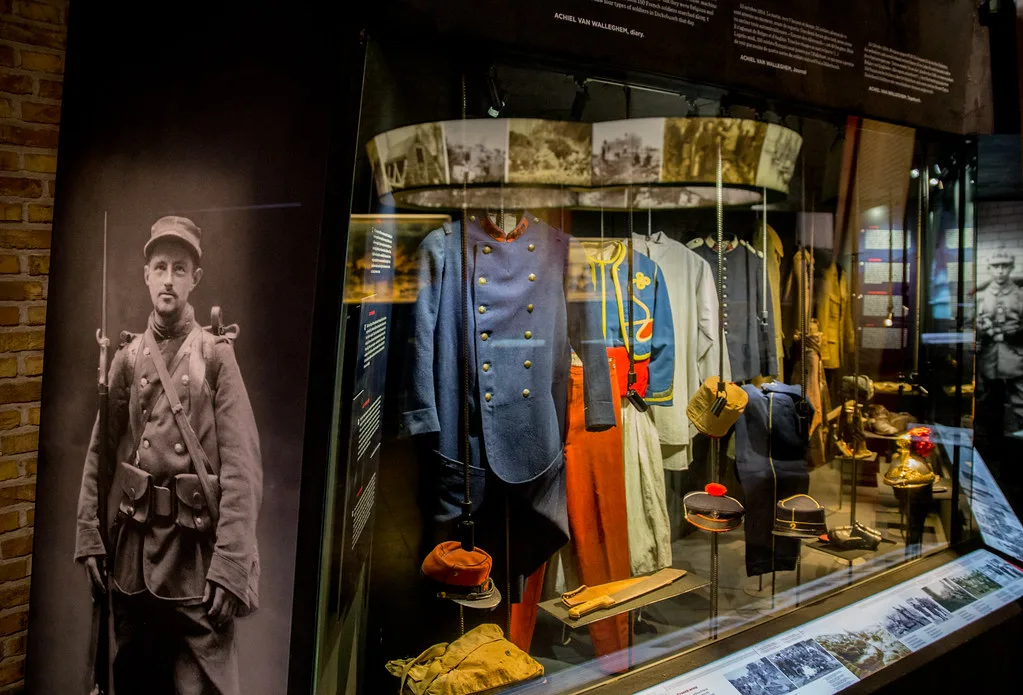
Belgium's role was not confined to the Salient: the country was invaded, largely occupied, and its army held the Yser line for four years while civilians lived under occupation. The sites around Ypres record the British and Commonwealth effort in the Salient, while the Yser front records the Belgian army's war on its own soil. Seeing a little of both gives a fuller picture than one cluster alone.
The cemeteries themselves are part of that story. The Commonwealth War Graves Commission and its architects, including Sir Reginald Blomfield, shaped how the dead are commemorated, and that design language repeats across the region from Tyne Cot to the smaller plots. Recognising it helps you read each site as you move between them.
Which cluster should you build your trip around?
Build a short break around the Ypres Salient unless the Yser front is your specific interest: it packs a gate, a museum, the largest Commonwealth cemetery and preserved ground into a few kilometres, and it suits two or three days. Add the Yser front or Waterloo only if you have a fourth day and a car.
The one fixed point to plan around is Hooge Crater Museum, which closes on Mondays and Tuesdays, so set your itinerary to avoid arriving on those days. Beyond that, let the sequence run from museum to gate to cemetery, and give the memorials the quiet they ask for.
Explore more Belgium guides
Frequently Asked Questions
Are Americans buried in Flanders Fields?
The cemeteries around Ypres are chiefly Commonwealth burial grounds, with British, Canadian, Australian, New Zealand and South African graves alongside them. American war dead from the First World War are commemorated in separate cemeteries maintained by the American Battle Monuments Commission elsewhere in Europe, so do not expect a large US section in the Salient. Check the individual cemetery registers for who is buried where.
What was Belgium's role in WW1?
Belgium was invaded in 1914, and most of the country was occupied for the rest of the war. The Belgian army held the Yser line in the west, while the Ypres Salient was defended largely by British and Commonwealth forces. The sites around Ypres and along the Yser record those two different experiences.
What is the biggest WW1 memorial in the world?
Tyne Cot is the largest Commonwealth war cemetery in the world, and its memorial wall records the missing from the Passchendaele offensive. Whether it counts as the biggest memorial overall depends on how you define a memorial, so treat the claim as a Commonwealth cemetery record rather than a universal ranking.
Sources
Useful notes for your next trip
Optional updates to our guides.
You might also like



Continue reading
More guides you'll find useful



