Flanders Fields: The Poem, the Battlefields and How to Visit from Ypres
Flanders Fields is the First World War landscape around Ypres and the title of John McCrae's 1915 poem. Here is what it means and how to see it from Ypres.
On this page
Flanders Fields is the First World War battlefield landscape around Ypres (Ieper) in West Flanders, and it is also the title of the poem John McCrae wrote there in May 1915. The phrase covers both, which is why searches for it turn up verses, maps and cemetery names in the same breath. This guide separates the three things people mean by it — the poem, the historical ground, and the modern memorial landscape — and then sets out how to see the named sites on a city break based in Ypres.
What Flanders Fields refers to: the ground around Ypres
The battlefield area took its name from the flat, low-lying land of West Flanders around Ypres, where British and Commonwealth forces held a salient that bulged into German-held territory for most of the war. Ypres itself was reduced to ruins and rebuilt afterwards, so the town you walk through today is largely reconstruction around a medieval core. The phrase therefore points to a district rather than a single field or a ticketed site.
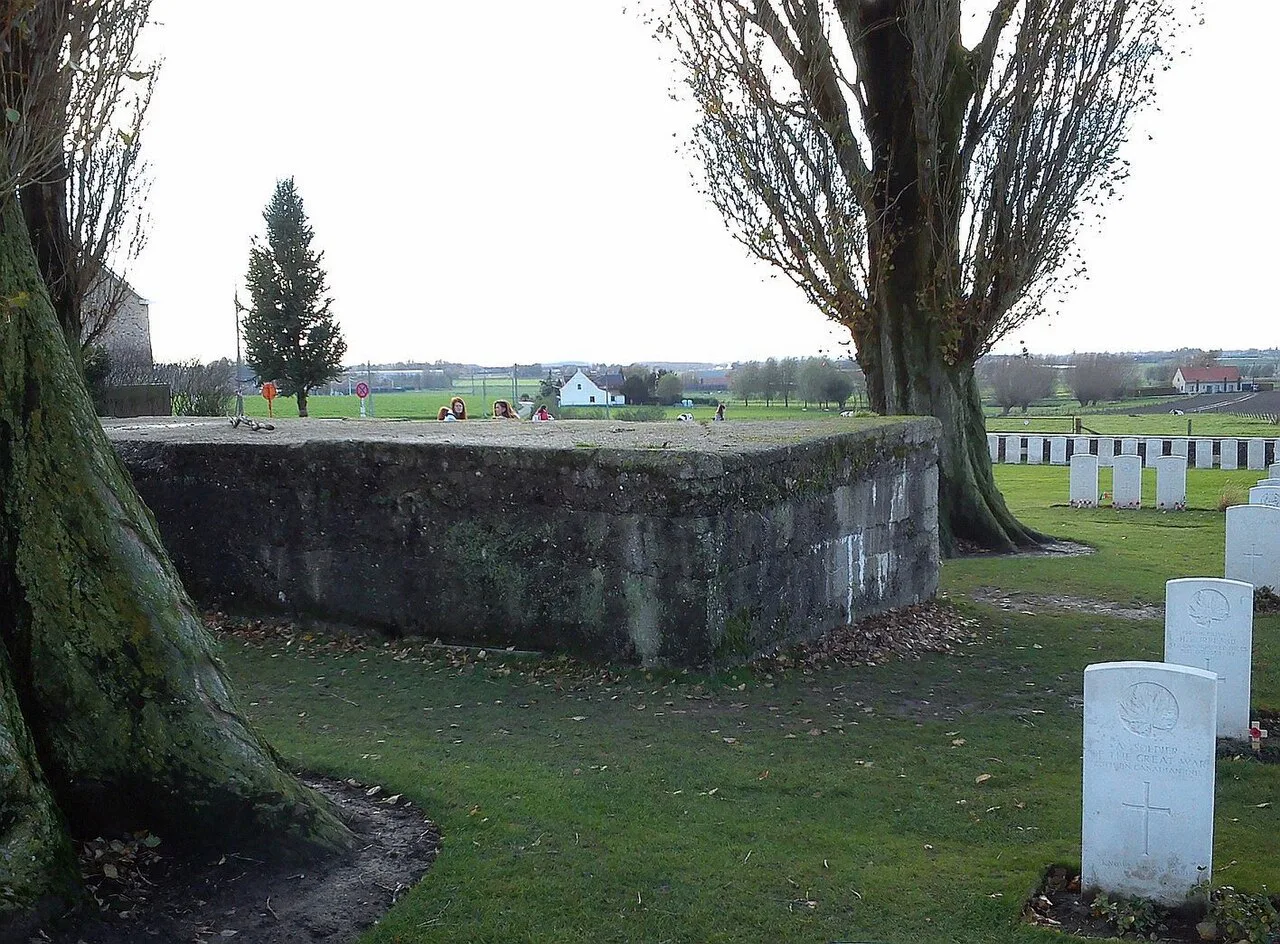
In practice, a Flanders Fields visit is a loop of cemeteries, memorials and preserved ground within easy driving distance of Ypres, with Tyne Cot, Langemark, Essex Farm and the Menin Gate as the anchors most travellers build an itinerary around. The landscape is gentle: low ridges such as the Messines ridge and the Passchendaele heights gave attackers very little cover. That flatness explains much of the war's character here, and it shapes how you read the ground today.
Why poppies grew on the battlefields
Poppies colonise disturbed, lime-rich soil, and shelling and reburial turned the Flanders clay and its chalky subsoil over on a vast scale. The flower was therefore a botanical consequence of the fighting rather than a symbol chosen in advance. McCrae's opening image of poppies blowing between the crosses row on row fixed the association in the public mind.
The Royal British Legion traces how the poppy became the emblem of remembrance that is worn each November, and the flower still marks remembrance events and appeals today. For a visitor, that history is the reason artificial poppies appear at graves and memorial panels across the salient.
John McCrae and the writing of 'In Flanders Fields'
McCrae was a Canadian doctor serving on the Western Front, and he composed the poem in May 1915 after the death of a close friend and colleague. The Royal British Legion records that it was being celebrated as one of the great poems of the age by the end of that year. McCrae continued to serve and died of pneumonia in January 1918 while commanding No. 3 Canadian General Hospital at Boulogne.
He is associated with Essex Farm cemetery and dressing station, where he worked and where the poem is traditionally placed in the landscape. Visiting Essex Farm is the most direct way to connect the text to a place, because the famous opening line belongs to a working burial ground rather than a museum case. Read it there, quietly, before moving on.
The first line and the 'quarrel with the foe'
The poem is a rondeau, and its final stanza hands the torch to the living and urges them to take up the quarrel with the foe. That call to arms reads differently now from how it read in 1915, when the war was young and the recruiting argument was urgent. Many visitors today read the closing lines as a plea for remembrance and for making the sacrifice mean something, while others hear a bitterness that sits awkwardly with a memorial visit.
Both readings are part of the poem's history, and neither needs resolving to visit the ground. The verse that most people know by heart is short enough to read aloud at a grave or a memorial panel. Take the text with you rather than relying on the panels at each site.
Reading the poem at Essex Farm and the Menin Gate
Essex Farm cemetery sits on the canal road north of Ypres and holds the dressing station where McCrae worked; it is a small, intimate site that suits a short stop of perhaps half an hour. The Menin Gate (Menenpoort) is the opposite: a monumental arch on the eastern edge of Ypres, carved with the names of the missing and the focus of a daily act of remembrance. The two together give you the poem and the ceremony in a single day's loop.
The Last Post ceremony at the gate is the set piece of a Flanders Fields visit, so confirm the current arrangement before you build an evening around it. The ceremony takes place beneath the arch, so arrive early enough to find a place, and remember that this is a ceremony, not a performance. The atmosphere is quiet and formal.
Seeing the ground itself: the salient and the rebuilt towns
The Ypres salient was a bulge in the line held around the town, overlooked on three sides by higher ground, which is why the fighting here was so persistent. Driving or cycling the roads out towards Passchendaele and Messines gives you the scale of it: gentle rises, wide fields, and villages that were rebuilt after the war. The rebuilt towns of the Ypres area are part of the story rather than a distraction from it.
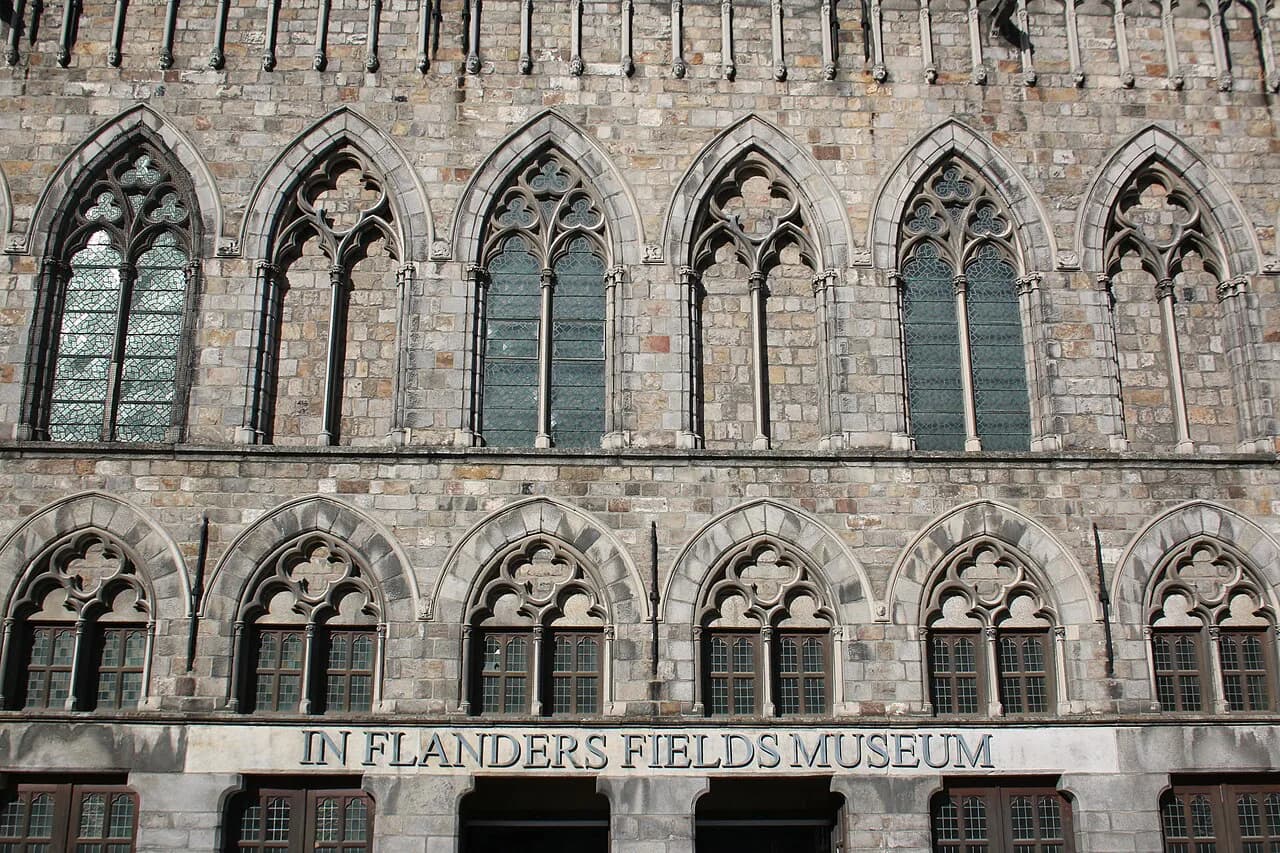
A useful way to read the landscape is to pair a cemetery with a viewpoint. Tyne Cot, on the ridge above Passchendaele, makes the overlooked ground obvious in a way that a flat field cannot. Pair it with a stop in Ypres itself to see how the town was rebuilt around the Lakenhalle (Cloth Hall), which now houses the In Flanders Fields Museum.
Cemeteries and memorials that anchor a visit
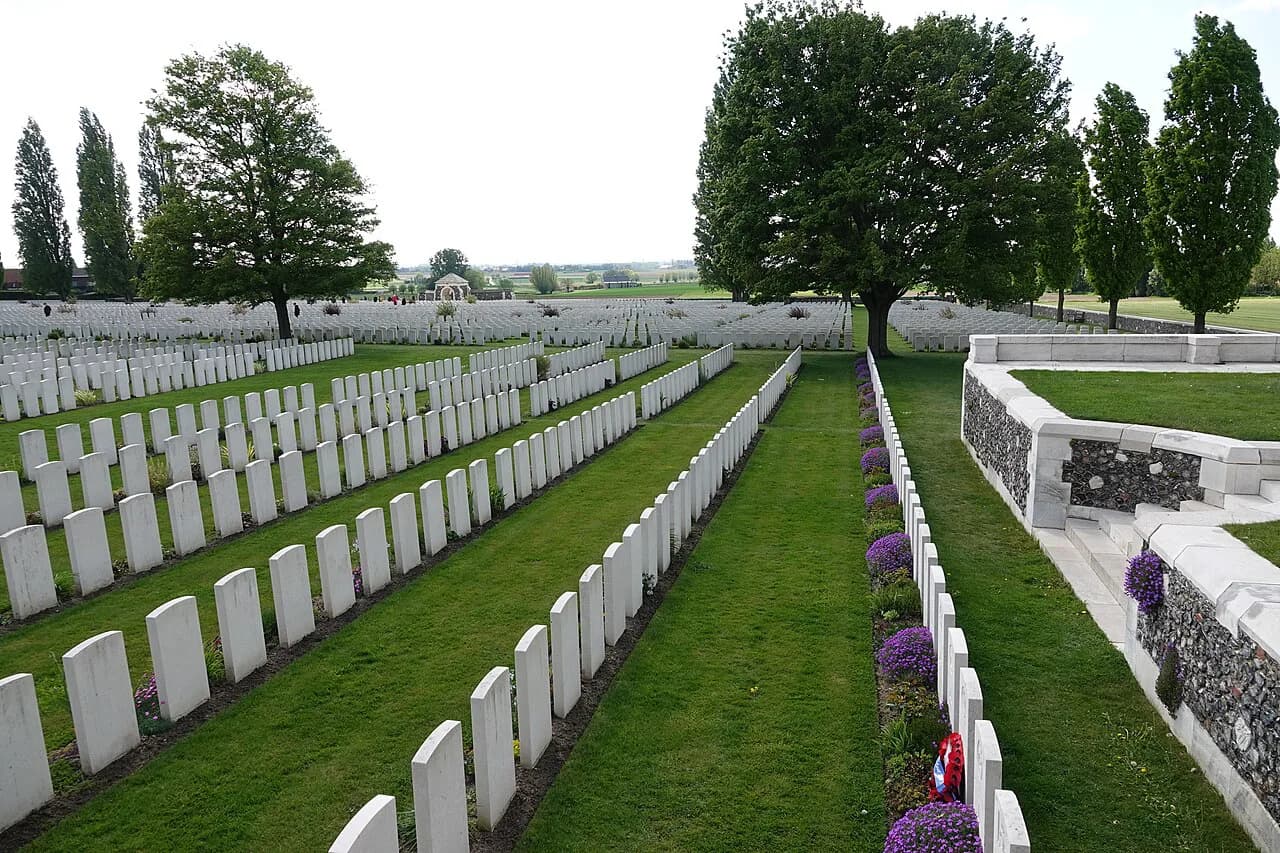
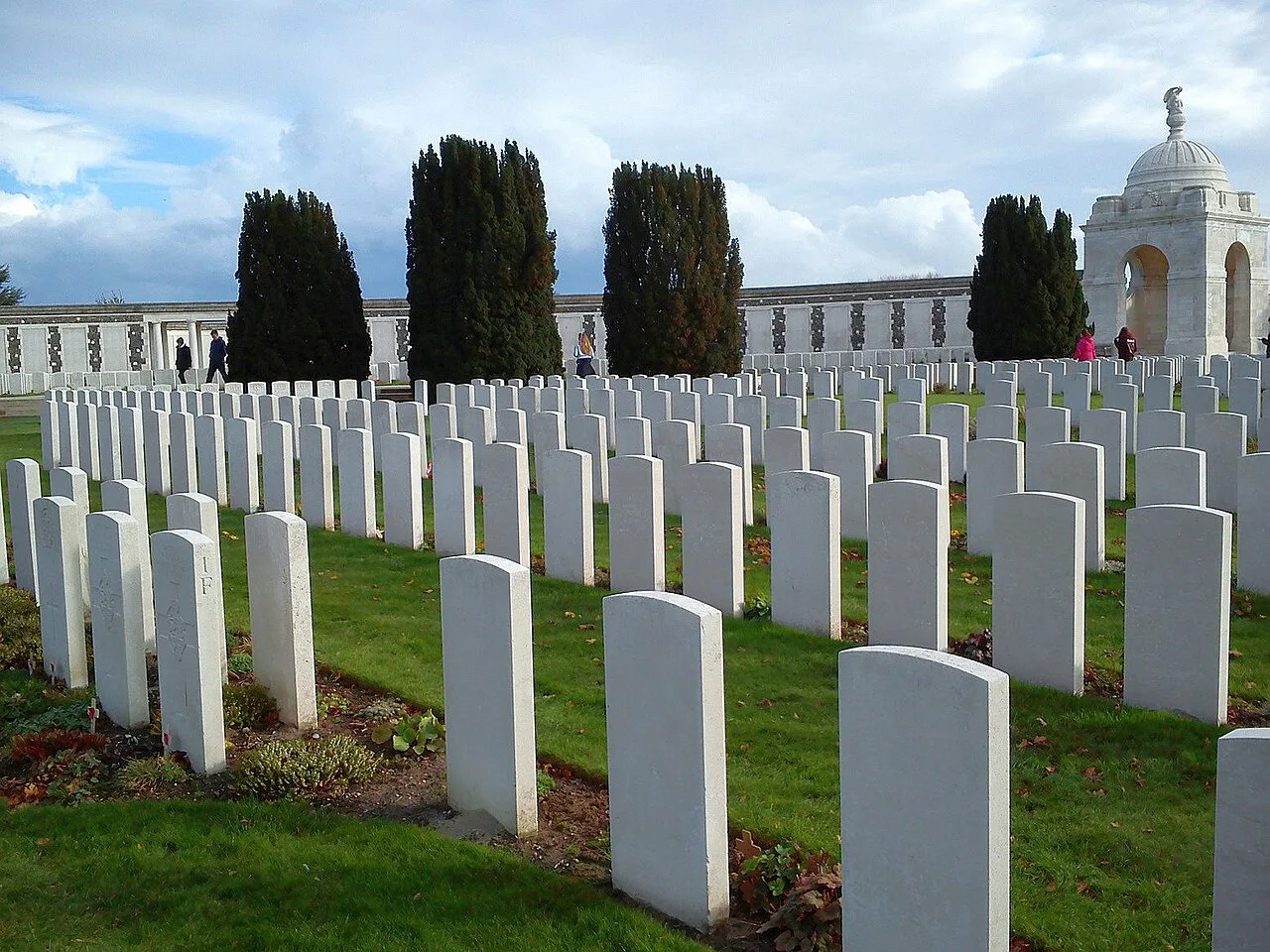
Tyne Cot Cemetery is a vast Commonwealth war cemetery, and its memorial wall records the names of the missing from the Ypres salient. It sits on the Passchendaele ridge, so it combines scale with a view over the ground the armies fought for. Allow an hour or more, and walk the rows slowly.
Langemark, north-east of Ypres, is the German cemetery, and it is deliberately different: dark crosses, mass graves and a sombre, wooded enclosure. It is the counterweight to Tyne Cot and worth the detour for anyone trying to understand that the salient was fought over by several armies, not one. Essex Farm and the Menin Gate complete the core four, and together they reward a full day rather than a rushed one.
Using Ypres as a base for one, two or three days
Ypres is the natural base because it sits at the centre of the salient, with Essex Farm, the Menin Gate and the In Flanders Fields Museum within the town or a short ride out. One day covers the town museum, the gate and Essex Farm; two days add Tyne Cot and Langemark with time to walk the ground; three days let you spread out to smaller cemeteries and the Messines ridge without rushing. A car or a bike gives you more freedom than tour buses.
If you are coming from Bruges or Ghent, Ypres is reachable by train with a change, which makes it feasible as a long day out, though an overnight stay is far better for the evening ceremony at the gate, and is the only way to combine the ceremony with a full day in the salient. The In Flanders Fields Museum, in the rebuilt Cloth Hall, is a sensible first stop before you head into the landscape. See also [WW1 Sites in Belgium](/ww1-sites-in-belgium) for the wider picture.
Laying a poppy and marking remembrance
At the cemeteries, visitors leave poppies, wooden crosses and small stones at headstones. The registers at the cemetery entrance are the place to look up a name, so bring the details with you. The Tyne Cot memorial wall records the names of those with no known grave.
Etiquette is simple: keep voices low, do not walk across grave plots, and photograph headstones rather than posing with them. At the Menin Gate, the ceremony is the point, so stay for it rather than treating the arch as a photo stop. These are memorials and cemeteries first, and the tone of a visit should follow from that.
Fitting Flanders Fields into a Belgian city break
Flanders Fields works best as a two-night add-on to a city break rather than a day trip bolted onto Bruges or Ghent, because the evening ceremony and the spread of the sites reward an overnight stay. From Ypres you can reach the salient's main sites in a day, and the town itself has enough for a slow morning before you travel on. Pair it with Ghent or Bruges for a week that mixes medieval cities with the battlefields.
Where to find 'In Flanders Fields' in full
The full text is widely reproduced, including by the Royal British Legion, which also sets out McCrae's biography and the poem's place in remembrance. The Poetry Foundation carries the text as well, and it is the version to use if you want to read it before you travel. Take a copy on paper too, so you have it to hand.
Is Flanders Fields worth the detour?
Yes, if you give it at least a full day and an evening, based in Ypres rather than passing through. The poem gives the landscape its name, but the ground, the cemeteries and the ceremony give it its weight. Build your days around Essex Farm, Tyne Cot, Langemark and the Menin Gate, and leave room for the In Flanders Fields Museum before you head out.
Explore more Belgium guides
Frequently Asked Questions
Where is the real Flanders Fields?
It is the First World War battlefield area around Ypres (Ieper) in West Flanders, not a single field. The main sites — Essex Farm, Tyne Cot, Langemark and the Menin Gate — sit within a short drive of the town.
Why did poppies grow In Flanders Fields?
Poppies colonise disturbed, lime-rich soil, and the shelling and reburial of the Flanders ground created exactly those conditions. The flower was a consequence of the fighting before it became the symbol of remembrance.
Can you visit Flanders Fields from Bruges or Ghent?
Ypres is reachable by train from both with a change, but a day trip leaves little time for the sites and the evening ceremony at the Menin Gate. An overnight stay in Ypres is the better plan.
Sources
Useful notes for your next trip
Optional updates to our guides.
You might also like
Continue reading
More guides you'll find useful