Lijssenthoek Military Cemetery: Belgium's Second-Largest CWGC Site
Lijssenthoek Military Cemetery near Poperinge is Belgium's second-largest Commonwealth cemetery, with a visitor centre and records. Here is what to see.
On this page
Lijssenthoek Military Cemetery is the second-largest Commonwealth war cemetery in Belgium, laid out on the flat ground just outside Poperinge where casualty clearing stations stood behind the Ypres battlefields. Allow around an hour for the graves and the visitor centre, or ninety minutes if you want to work through the records for a name. This guide covers the site's origins, its scale and designer, the American burials, and how to reach it from Ypres (Ieper).
Where Lijssenthoek sits on the road to Poperinge
The cemetery stands at Lijssenthoek, a hamlet on the road between Ypres and Poperinge in West Flanders. During the war this was the main communication line between the Allied bases in the rear and the fighting front, which is precisely why the site was chosen. It is a short detour off the route most visitors take between Ypres and the Poperinge area, and it pairs naturally with the town's other wartime sites.
Why the site matters: clearing stations behind the Salient
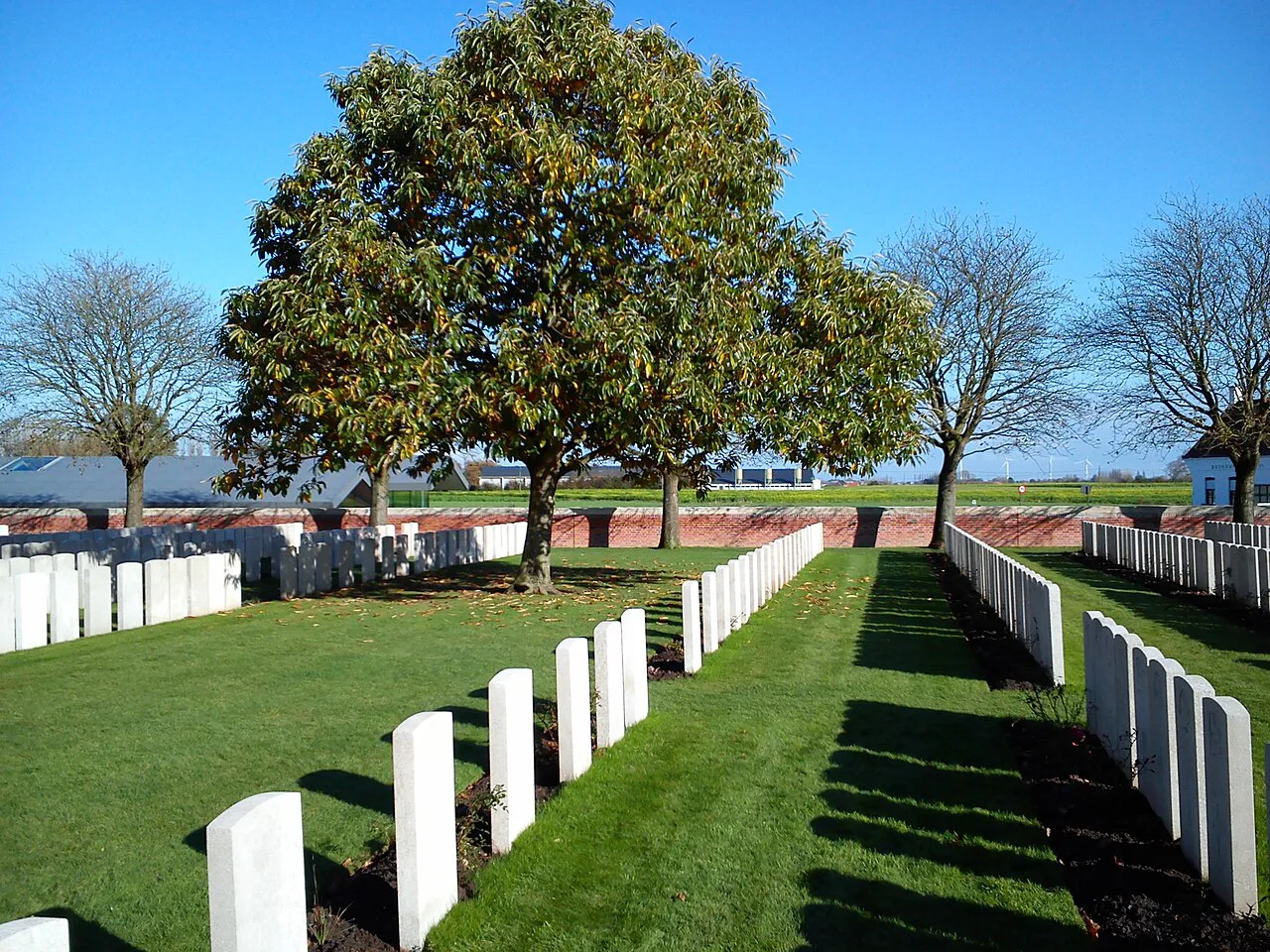
Lijssenthoek grew out of medical necessity rather than commemoration. French forces first used the ground in June 1915, and Commonwealth casualty clearing stations then took it over, burying the men who died of wounds close to where they were treated. The position was near the front but beyond the extreme range of most German field artillery, so it was a practical place for hospitals to work. Between April and August 1918 the clearing stations fell back before the German advance and field ambulances took their place.
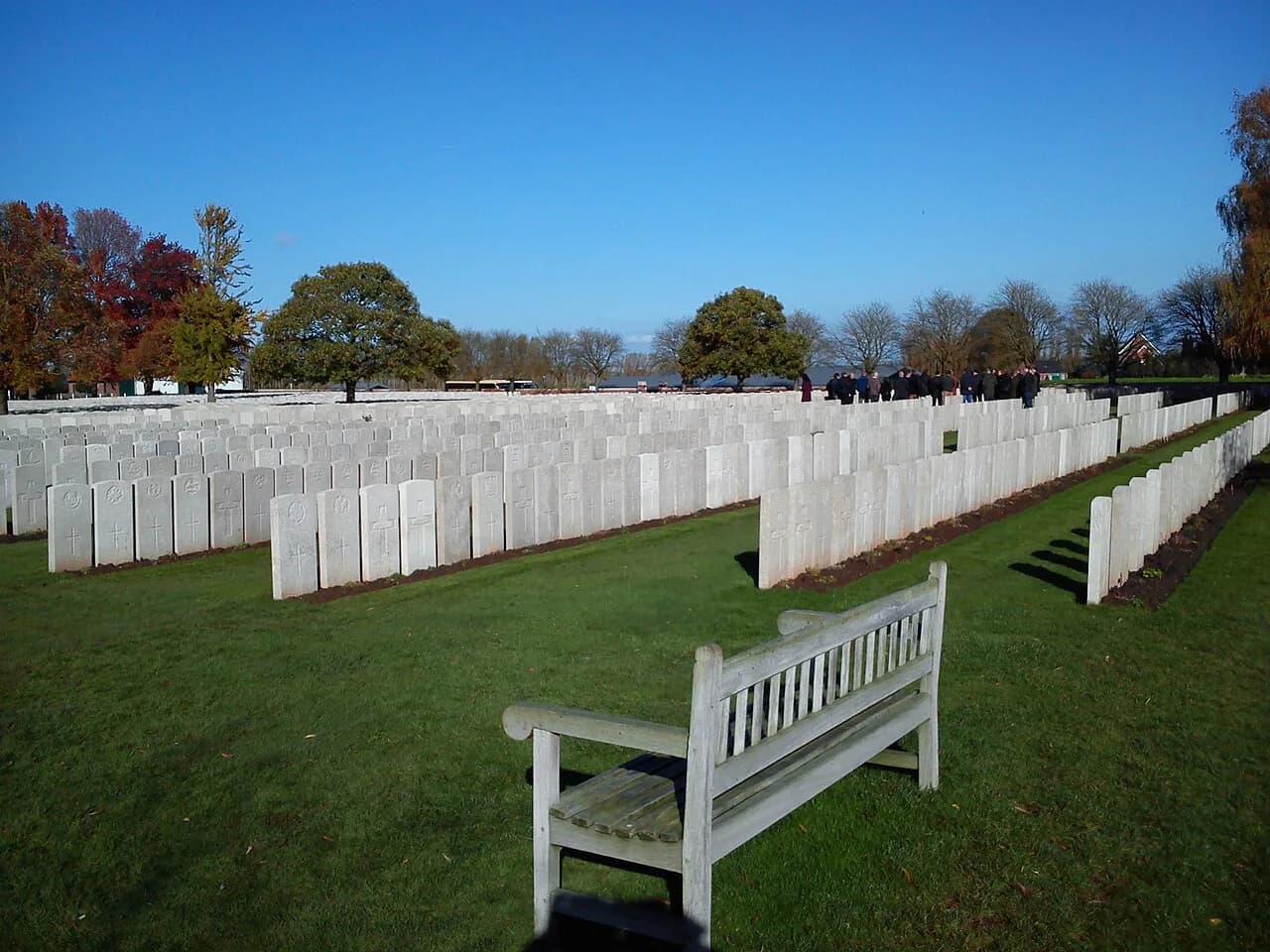
That origin shapes what you see: rows of graves that accumulated month by month through the war, many of them men who reached a hospital but not a home. Reading the dates on the headstones gives a sense of the rhythm of the Salient's fighting. For a wider look at the WW1 sites in Belgium across this landscape, the WW1 sites in Belgium guide is a useful starting point.
How big it is, and who designed it
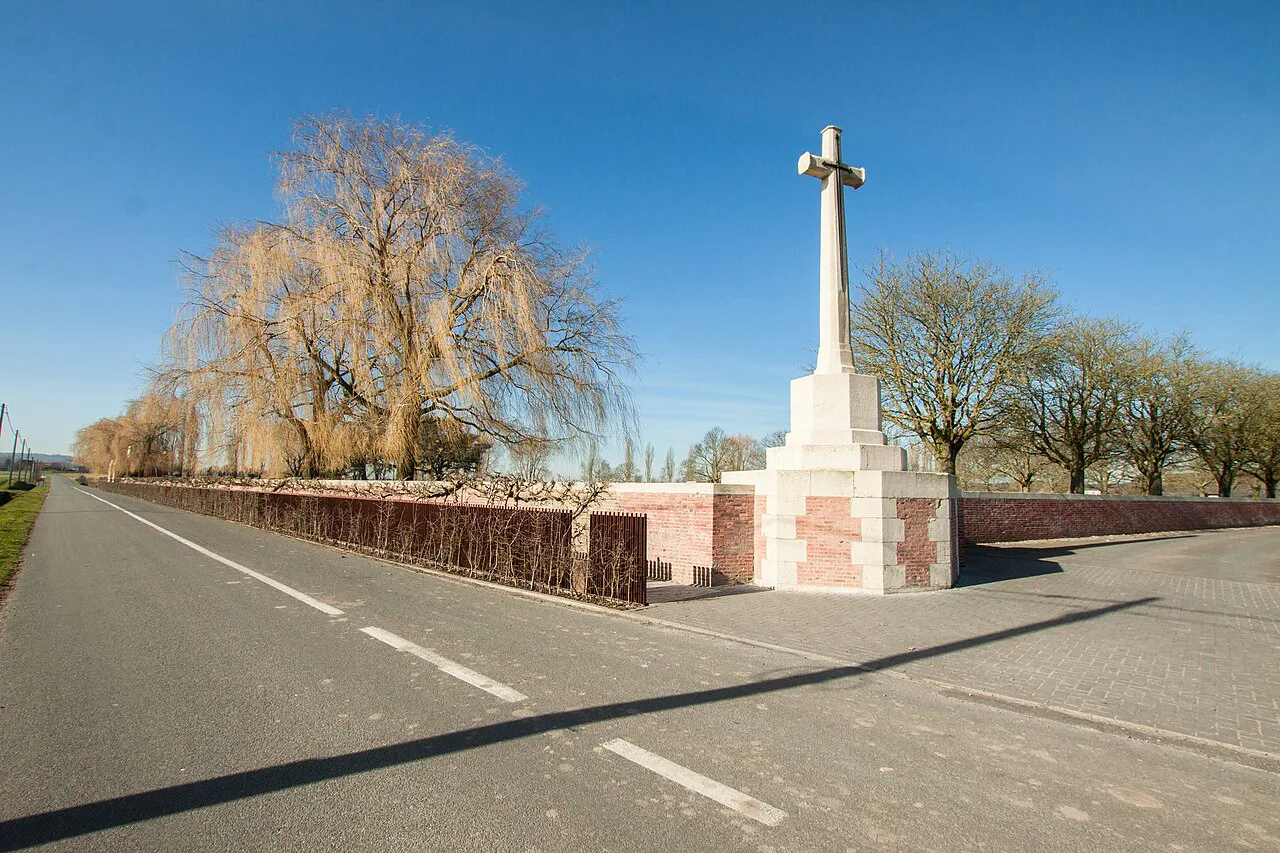
Lijssenthoek is the second-largest Commonwealth cemetery in Belgium, a fact worth knowing before you arrive so the scale does not come as a surprise. The layout was designed by Sir Reginald Blomfield, the architect behind several of the Commission's most recognisable cemeteries. Its size reflects the volume of casualties that passed through the clearing stations here rather than any single battle.
If you are comparing stops on a Salient itinerary, Tyne Cot is the larger and busier counterpart, while Lijssenthoek is quieter and easier to take in slowly.
The visitor centre and cemetery records
A visitor centre at Lijssenthoek explains the site's hospital origins and holds records that let you trace an individual name. If you are following a family connection, look the person up before you arrive, so you know which row and plot to head for. The centre's displays are the best context you will get on site for understanding how the clearing stations functioned.
American burials at Lijssenthoek
Three American First World War graves sit among the isolated burials here: Sergeant David Stanley Beattie, Private First Class Harry Arthur King and 1st Lieutenant James Aaron Pigue. The AOMDA has looked after these graves since 2004, and the stories behind them are documented. Two of the families asked explicitly that their men stay where they fell rather than be repatriated.
King's case is the most unusual. He was first buried at the Argonne American Cemetery, but when his mother learned that Lijssenthoek would be her son Reggie's resting place, she asked for Harry to lie near his brother. His remains were moved here in October 1921.
The wider story of the 41 Americans
Forty-one Americans are buried at Lijssenthoek in total, and twelve of them served under the British flag. Many were born English, Irish or Scottish, emigrated to America and returned to their homeland when war broke out; others went to Canada specifically to enlist. Because the United States was neutral until April 1917, Americans who joined a foreign army lost their citizenship at the time, and Congress later restored it retroactively in the 1920s.
Walking the rows: what to look for
Walk slowly; the headstones reward close reading, with ages, regiments and family inscriptions that make the scale personal. Look for the stones of men who died in the clearing stations in the weeks around the great offensives, and for the small cluster of American graves that carry the story above. The cemetery is a place of burial, so keep voices low, stay on the paths between rows and leave flowers or stones only where the Commission allows.
Getting there from Ypres (Ieper)
Lijssenthoek lies a few kilometres west of Ypres on the road towards Poperinge, practical to combine with the town's wartime sights. A car gives you the most flexibility for linking Lijssenthoek with the other cemeteries and memorials on the Salient in a single day.
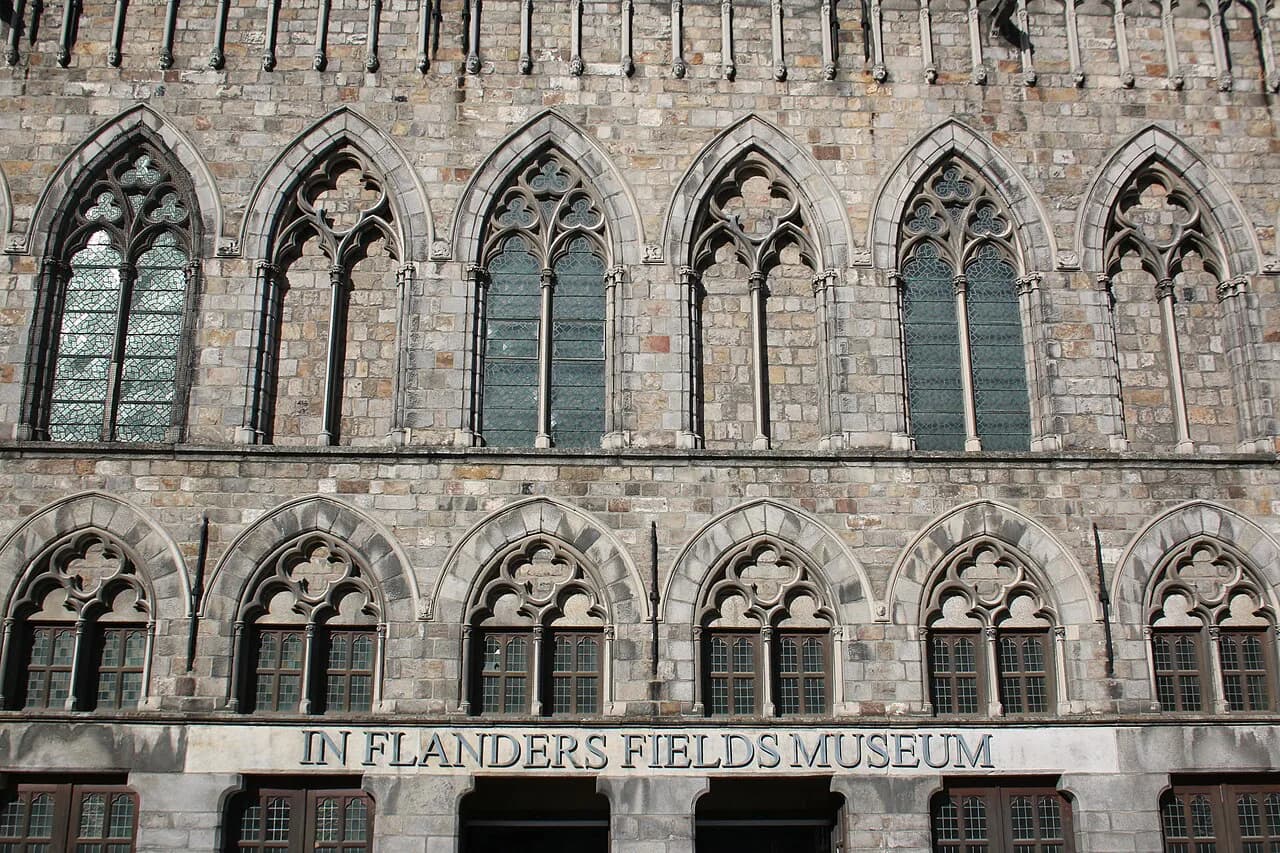
For a full day, many visitors pair it with the In Flanders Fields Museum in Ypres for context, and with the Menin Gate for the evening ceremony. The Flanders Fields story, including John McCrae and the poem that gave the name to so much of this landscape, runs through the surrounding sites. Building a route around Lijssenthoek, Poperinge and the Salient cemeteries gives you a coherent day without rushing.
Respectful visiting
These are graves and memorials, not attractions, and the tone of a visit should reflect that. The Commission maintains the grounds so that families and visitors can come to remember, and that purpose takes precedence over photography or sightseeing. Keep to the paths, avoid climbing on headstones or low walls, and remember that other visitors may be there for a personal reason.
Is Lijssenthoek worth the detour?
Yes, if you want a quieter, more intimate counterpart to Tyne Cot and a clear sense of how the medical chain behind the Salient worked. Give it an hour, look up a name in the records before you go, and treat it as a stop on a wider route through the Flanders Fields landscape. It rewards travellers who come prepared to read rather than simply photograph.
Explore more Belgium guides
Frequently Asked Questions
Are Americans buried at Lijssenthoek Military Cemetery?
Yes. Forty-one Americans are buried at Lijssenthoek, twelve of whom served under the British flag. Three First World War American graves are marked as isolated burials: Sergeant David Stanley Beattie, Private First Class Harry Arthur King and 1st Lieutenant James Aaron Pigue.
How long should I spend at Lijssenthoek?
Allow around an hour for the cemetery and the visitor centre, and up to ninety minutes if you want to trace a name through the records. It is smaller and quieter than Tyne Cot, so it suits a slower, more reflective stop.
Can I find a specific grave in advance?
Search the name in the Commonwealth War Graves Commission's online records before you travel, then use the cemetery register on site to locate the row and plot. Knowing the plot in advance saves time and lets you focus on the visit.
Sources
Useful notes for your next trip
Optional updates to our guides.
You might also like
Continue reading
More guides you'll find useful