Belgian Towns Worth Visiting: Beyond the Big Cities
Belgian towns worth a trip beyond the big cities, from Mechelen and Lier to Dinant and Poperinge, with what each is best for and the trade-offs.
On this page
Belgian towns are the answer when Bruges and Ghent feel booked out: pick one with a strong anchor, such as Mechelen's belfry or Tournai's cathedral, and it carries a full day. This guide covers eleven towns between the big cities, groups them by what each does best, and sets out the trade-offs on rail connections.
Antwerp and Ghent were the most populous municipalities in Belgium in 2022, with Charleroi and Liège each around 200,000 residents, so the famous quartet absorbs most short-break traffic.
What a Belgian town gives you that the big cities don't
The smaller towns put one or two monuments within a few minutes' walk of the station or the main square, so a day has a clear shape: arrive, climb or tour, eat, wander, leave. Mechelen pairs its belfry with a Grote Markt, while Lier stacks a belfry, a beguinage and a clock tower into a compact centre.
The trade-off is range. Bruges and Ghent justify three days of canals and museums; most towns here fill one full day comfortably and two if you add a museum and a slow lunch. Rail is the practical way in, but regional lines often mean a change at a hub such as Ghent, Antwerp, Brussels or Liège, so check the connection before committing to a town as a base.
Mechelen: a belfry and a broad Grote Markt
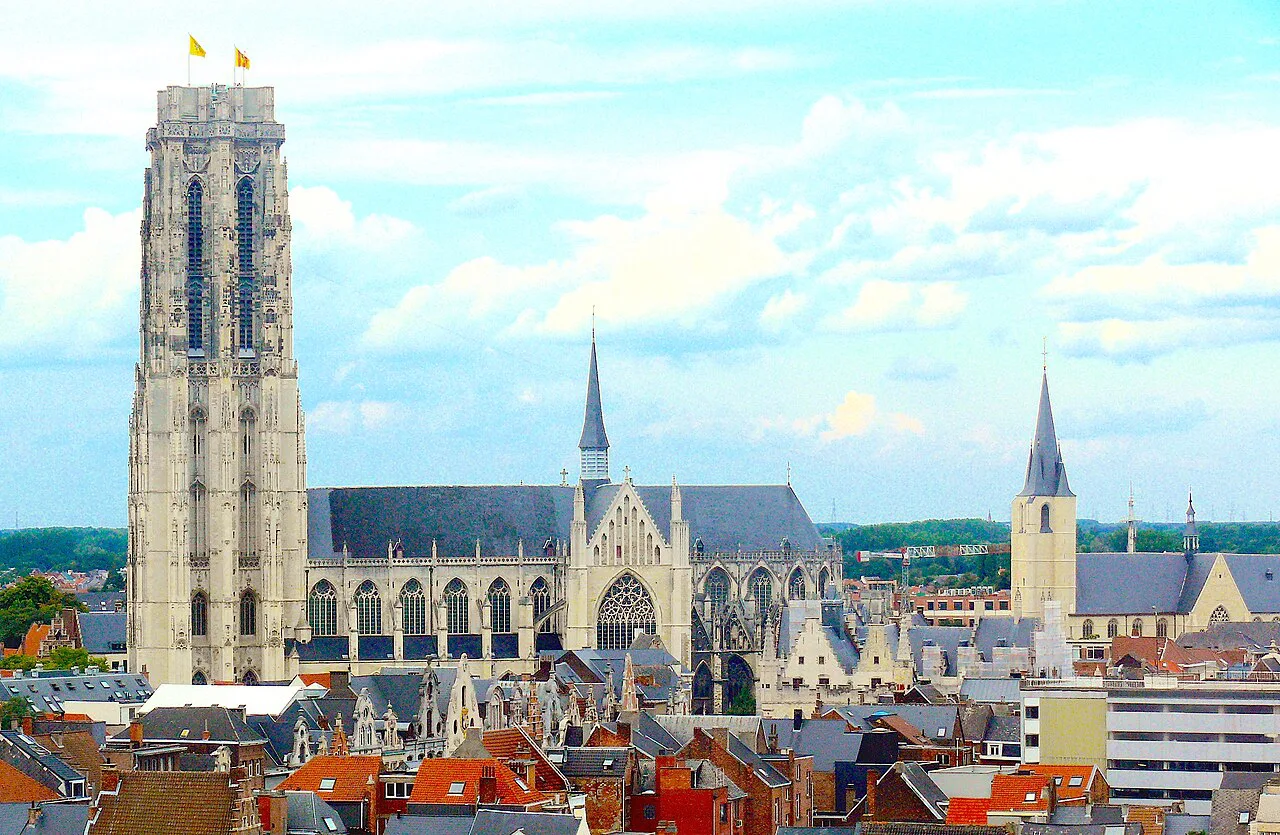
Mechelen sits between Brussels and Antwerp and works as a good single introduction to the small-town formula. The Belfort rises above a broad Grote Markt, and St Rumbold's Tower is part of the same central cluster.
What are the top 10 cities in Belgium? Population figures usually put Antwerp and Ghent at the top of the municipal table, followed by Charleroi and Liège, with Brussels measured as a region of 19 municipalities rather than a single city. The famous names cover the big cities, but the small towns on this page are viable short-break destinations in their own right.
It is best for travellers who want a belfry, a handsome square and a cathedral in one walkable circuit, and it suits one full day. See how the streets connect in this guide to Mechelen in a Day or a Weekend before you fix dates.
Lier: a small town with a belfry, a beguinage and a clock tower
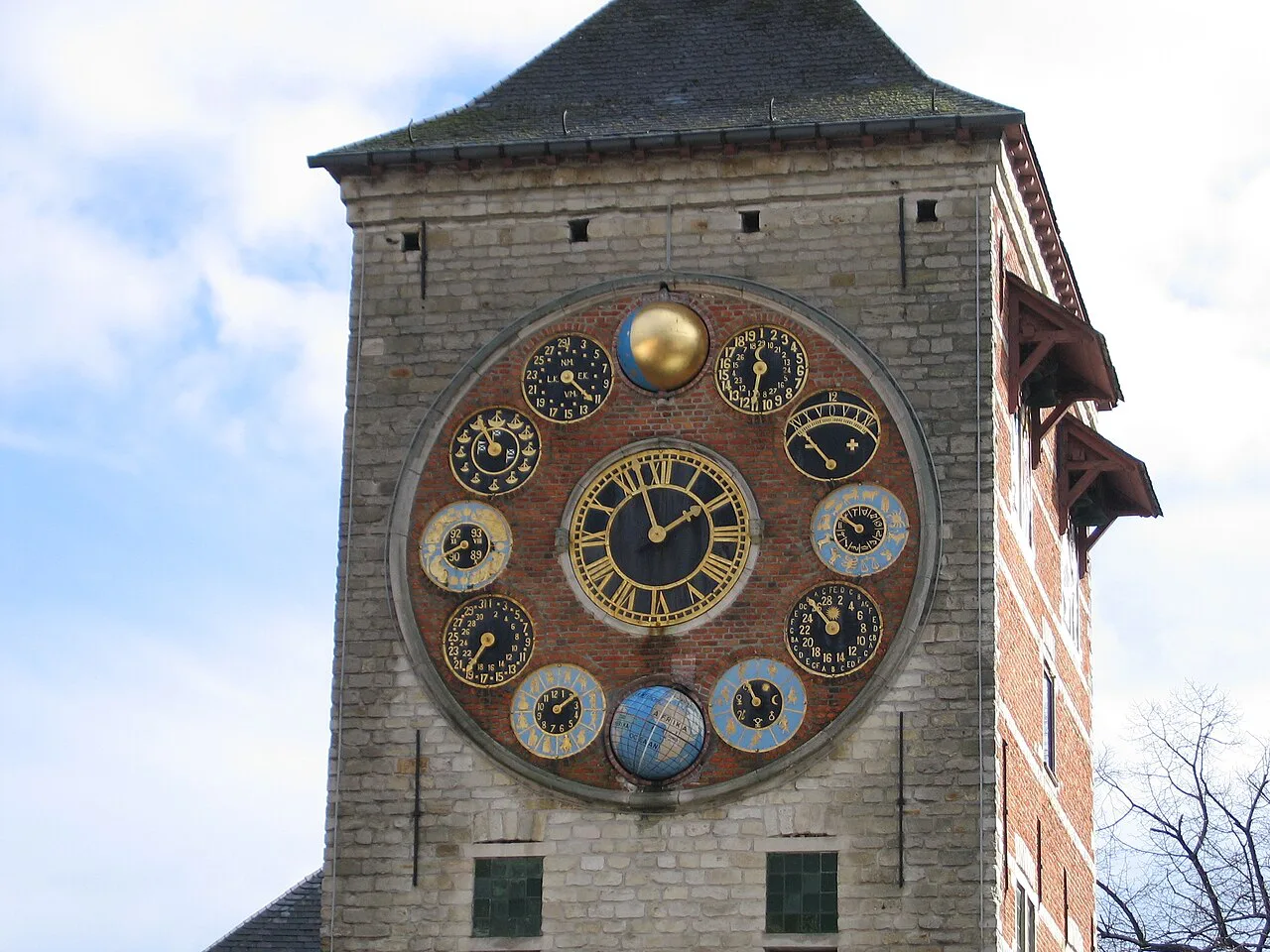
Lier, a short hop from Antwerp, packs an unusual amount into a small centre: a belfry, a beguinage of quiet whitewashed alleys, and the Zimmer Tower with its clock. It is best for a half-day to a day of slow wandering rather than a tick-list visit.
The trade-off is scale: Lier is a complement to Antwerp, not a substitute for it, and works well as a morning out before an afternoon back in the city. The Zimmer Tower is the one fixed point to build the visit around.
Oudenaarde: a Flemish town of squares and museums
Oudenaarde is a Flemish town with a strong town square and a museum, and it works as a day out from Ghent. It is best for anyone who wants a historic centre and a sense of the Flemish Ardennes in a single day.
Allow a full day if you want the town centre and the surrounding area, or an afternoon if you stay on the Markt and in the nearby museums. The trade-off is that the countryside lies outside the centre, so you need time to reach it.
Kortrijk: a compact centre with a beguinage
Kortrijk, in West Flanders, has a compact centre, a beguinage and the Broel Towers guarding the Leie. It is best for travellers combining a town visit with the battlefields and memorials of the wider region.
Give it a day: the centre is compact, and the beguinage rewards a slower walk away from the shopping streets. Kortrijk is a practical stop between Ghent and Tournai rather than a destination on its own for most short breaks.
Tournai: a cathedral town in French-speaking Hainaut
Tournai is one of Belgium's older towns, in French-speaking Hainaut, and its Notre-Dame cathedral is the reason to come. The Grand-Place, with its gabled houses and cloth hall, gives the town a second anchor within a few minutes' walk.
It is best for travellers who want a French-speaking contrast to Flanders and a cathedral that ranks among the country's finest. A full day covers the cathedral, the Grand-Place and the riverfront; see Tournai: What to See, How Long You Need and How the City Fits Together for the walkable layout.
Mons: the climb from the Grand-Place
Mons, in Hainaut, is built on a slope, with the Grand-Place below the climb to the belfry and the higher town. The town keeps a calm face for most of the year, with its feast weekend the busiest moment.
It is best for a day of climbing, squares and heritage rather than a canal-side stroll, and the slope means good shoes matter. Pair it with Tournai if you are touring Hainaut, but keep each town to its own day rather than trying to see both in one.
Tongeren: a town with a Roman past
Tongeren, in Limburg, has a compact centre and a Roman past that gives the town its character. It is best for history-led travellers and works as a day out from Hasselt or Liège, but the reward is scholarly rather than scenic. A half-day covers the centre; with a museum it becomes a full day.
It is best for history-led travellers and works as a day out from Hasselt or Liège, but the reward is scholarly rather than scenic. A half-day covers the centre; add the museum and it becomes a full day.
Hasselt: the Limburg town known for its jenever
Hasselt is the capital of Limburg and has a compact centre and a reputation built on jenever rather than on canals or belfries. It is best for a relaxed day that mixes a tasting with a wander.
Give it a full day if you want the museum and a proper tasting, or a long afternoon if you are passing through. The trade-off is that Hasselt is further from the Bruges-Ghent-Antwerp axis, so it works better as part of a Limburg loop with Tongeren.
Dinant: a riverside town under the citadel in the Meuse valley
Dinant stacks its colourful houses along the Meuse beneath a citadel that you reach by a long stair. The setting in the Meuse valley is the reason to come, and the town is compact enough to walk in an afternoon.
It is best for travellers who want a change of scenery from the Flemish towns, with cliffs and river rather than canals and belfries. It works as a day trip on the rail line along the Meuse, but check the citadel's access arrangements and the river-level paths before you build the day around them.
Durbuy: a small Ardennes town
Durbuy is a small town with an old centre of stone lanes below a castle and a rocky outcrop. It is best for a slow half-day: the pleasure is the setting and the walk, not a list of museums.
The trade-off is that Durbuy is in the Ardennes, far from the main rail corridors, so it suits travellers with a car or those staying in the region. Treat it as a rural stop rather than a city break and the small scale makes sense.
Poperinge: a hop town tied to the Ypres Salient
Poperinge, west of Ypres, is a hop-growing town whose centre includes Talbot House, the wartime soldiers' club, and the hop fields that still supply Belgian breweries. It is best as a base for the Ypres Salient memorials, including Lijssenthoek Military Cemetery, rather than as a standalone city break.
Approach the memorial sites with care: they are cemeteries and places of remembrance, and the visit should be quiet and unhurried. A day is enough for the town and one or two sites; two nights let you see the salient properly.
Which towns work on a one- or two-night trip
For a single night, pick one town with a strong anchor and a direct rail link: Mechelen from Brussels or Antwerp, Tournai from Brussels, or Poperinge if the memorials are the point of the trip. For two nights, pair a town with a bigger city so you get range: Lier with Antwerp, Oudenaarde with Ghent, or Kortrijk with Ghent and Tournai.
Skip the smallest places if you have only a day and no car: Durbuy and the Ardennes reward time you probably do not have on a first short break. Rail is the backbone, so build the plan around lines that connect rather than around a wish list of towns.
How the towns compare for a UK or US city-break traveller
If you are coming from the UK or the US for three or four days, use Brussels, Antwerp or Ghent as a base and add one or two small towns rather than switching hotels every night. Mechelen is the easiest add-on because it sits between the big two and has a belfry and a square; Lier is a half-day from Antwerp.
For a French-speaking contrast, take Tournai or Mons; for Roman layers, take Tongeren with Hasselt; for the Meuse, take Dinant. Beer travellers should look at the broader Belgian beer landscape before choosing a town, since the famous abbey brews such as St. Sixtus Abdij lie outside these centres.
Which Belgian town should you pick first?
Choose Mechelen for a first small-town day from Brussels or Antwerp, Lier if you want a half-day of beguinage alleys, and Tournai if you want a cathedral big enough to carry the trip. Add Dinant or Poperinge when you have a second day and a specific reason to travel further.
Explore more Belgium guides
Frequently Asked Questions
What are the top 10 cities in Belgium?
Population figures usually put Antwerp and Ghent at the top of the municipal table, followed by Charleroi and Liège, with Brussels measured as a region of 19 municipalities rather than a single city. The famous names cover the big cities, but the small towns on this page are viable short-break destinations in their own right.
Sources
Useful notes for your next trip
Optional updates to our guides.
You might also like



Continue reading
More guides you'll find useful