
Mons, Belgium: A Short City Break Guide to the Grand-Place and Belfry
Plan a short break in Mons, Belgium: the Grand-Place, the UNESCO belfry, the Doudou festival, Van Gogh's Borinage trail and how many days the city needs.
On this page
Mons is worth one full day, and two days if you want the Borinage and the surrounding memorial landscape as well as the historic centre. The city is the capital of Hainaut province in Wallonia and sits west-northwest of Brussels, making it an easy day trip from the Belgian capital.
This guide covers the Grand-Place and the streets around it, the belfry and its UNESCO listing, the Doudou festival that made the city famous, the museums, and the Van Gogh and First World War trails that spread out from the centre. It also sets out how many days to give Mons, how it fits with the other Belgian towns on a short break, and how to reach it from Brussels and Namur.
Where Mons sits in Hainaut
Mons is the capital of Hainaut, a province of Wallonia, and the centre of a tourist territory that stretches across thirteen municipalities, including the Borinage towns to the west. The historic core is compact, so the main sights cluster within a short walk of the Grand-Place.
The city was European Capital of Culture in 2015, a year that reshaped its cultural offer and gave it a stronger claim on a city-break itinerary than its size alone would suggest. That makes Mons a natural partner to the bigger Belgian towns on a longer trip, and a straightforward addition to a route through the region.
If you are building a wider itinerary, the Belgian Towns pages cover the belfry cities that pair well with Mons on a four-day loop. The wider region also holds other Walloon towns within reach by train or car.
Is Mons worth a city break?
Yes, with a clear caveat: Mons rewards travellers who care about heritage, folklore and twentieth-century history more than those hunting a dense restaurant or shopping scene. The centre is small enough to walk in an afternoon, and the belfry, the Grand-Place and the Doudou give it a distinctive identity rather than a generic Belgian square.
The honest trade-off is scale. Antwerp, Ghent and Bruges offer more hours of sightseeing, so treat Mons as a one or two-day stop rather than a week-long base, or as a contrast to the Flemish art cities. What it lacks in volume it makes up for in the way the Borinage and the memory sites extend the story beyond the ring road.
The Grand-Place and the streets around it
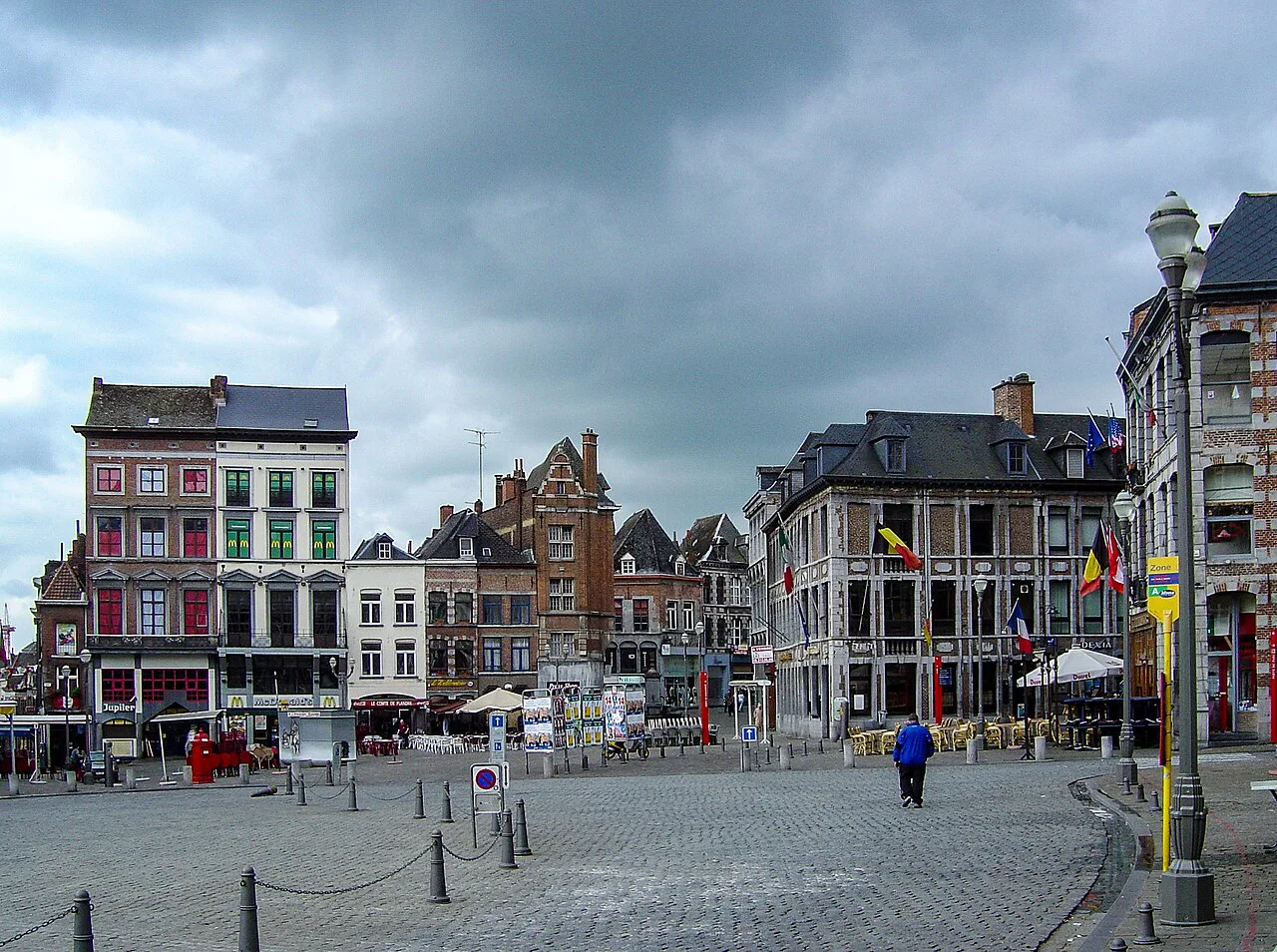
The Grand-Place is the natural starting point: a square lined with tall, narrow townhouses. Look up at the façades rather than across the square, because the detail is in the gables, the brickwork and the carved stone.
From the square, the streets climb towards the belfry and the collegiate church, and the historic core forms a walkable loop that takes in the market streets and small squares. Use the centre as a compass: the tourist office is at Grand Place 27, and the surrounding lanes are where the city's shops and cafés sit.
If you enjoy comparing Belgian squares, the Grote Markt of Mechelen and the market squares of neighbouring Walloon towns make a useful contrast, each with its own civic architecture.
The belfry and its UNESCO listing
The belfry is the city's emblem and one of the towers inscribed on the UNESCO list of Belfries of Belgium and France. Its listing reflects the role belfries played as symbols of civic independence, which is why the tower rather than a cathedral is the image Mons uses on its own tourist material.
For travellers collecting belfry towns, the belfries guide runs through the other towers in the same UNESCO group, from Tournai through to Mechelen, so you can line up a comparable tower in each city.
On the ground, the surrounding squares are where to see the tower at its best, and the old town's lanes give you the full view as you approach. If you want the city's own perspective, the VisitMons pages cover the heritage strand alongside the region's other sites.
The Doudou and what it means for Mons
The Doudou is the city's defining festival and the reason many Belgians know Mons at all. VisitMons calls Mons the city of the Doudou, and the festival's imagery is woven into everyday signage and shop fronts.
VisitMons keeps the programme and timing on its agenda pages, so it is worth checking the festival dates there before booking a trip around it. Outside festival time the story is told in the city's museums and heritage displays, a calmer way to understand the tradition.
Collegiate church and historic centre
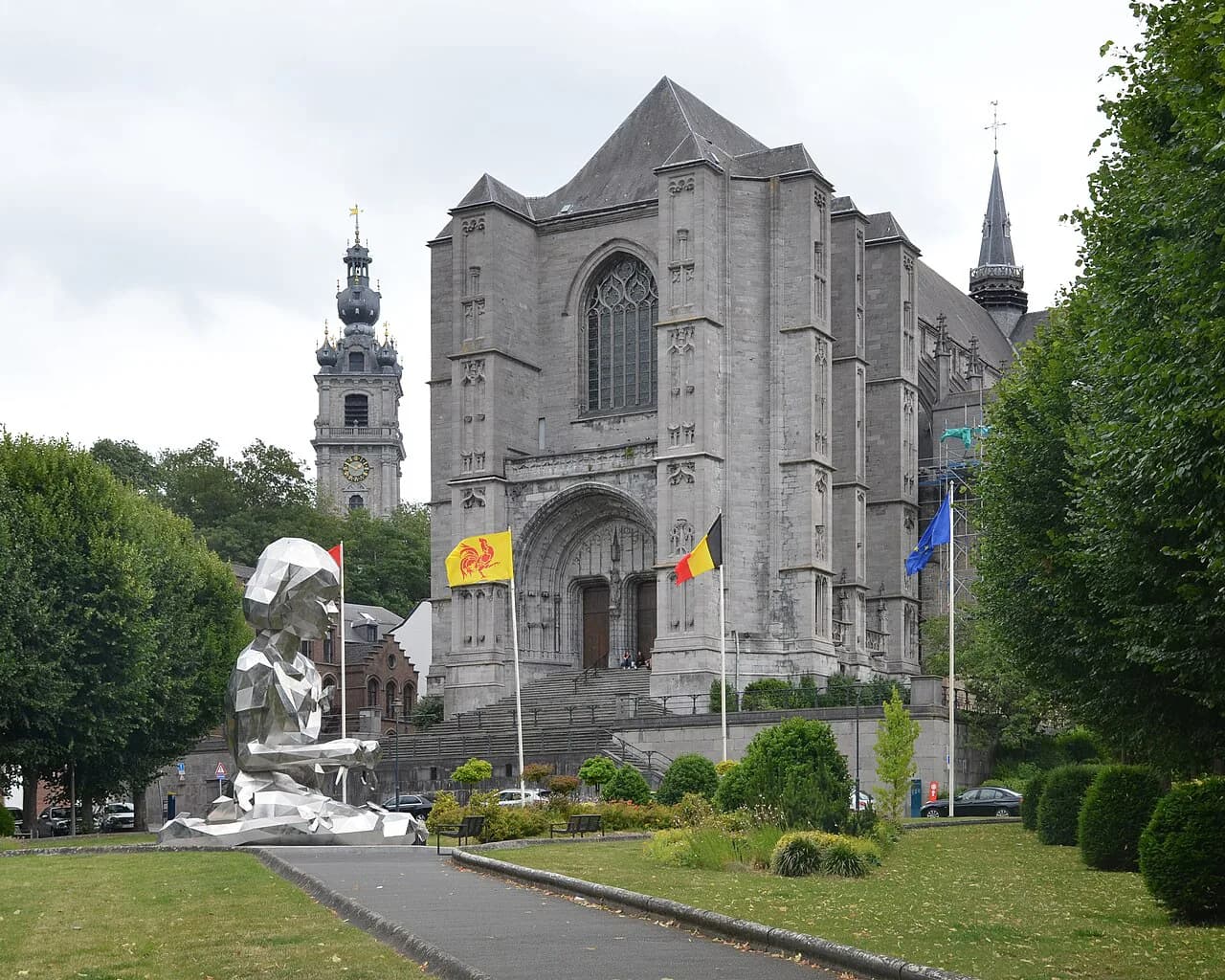
The Collegiate Church of Saint Waltrude, known in French as Sainte-Waltrude, is the other major building to see in the centre. It is one of the sights to combine with the belfry and the Grand-Place in one walk around the old town.
Pick the streets between the Grand-Place and the church rather than the ring road, and you will see more of the historic fabric. A slow walk between the squares pays off, so leave time for the lanes rather than treating the centre as one quick circuit.
The Mons Card: 24 or 48 hours of sightseeing
VisitMons sells a Mons Card, a sightseeing pass available for 24 or 48 hours that it presents as the way to make the most of a stay in the region. The pass is the clearest decision point for a short trip: pick the 24-hour version if you are concentrating on the centre, and the 48-hour card if the Borinage, Van Gogh sites or the surrounding towns are on your list.
Before buying, match the card against the museums and sites you actually intend to visit, since the value depends on how many entries you will use in the time window. It makes most sense for a tightly paced two-day trip rather than a single afternoon on the Grand-Place.
Van Gogh in the Borinage
The Borinage is the former coal-mining district west of Mons where Van Gogh lived and preached in the late 1870s, an early chapter in his life that preceded the paintings he is famous for. VisitMons runs a Van Gogh au Borinage route following the painter's footsteps, and it is the strongest reason to add a second day to a Mons trip rather than treating the city as a single stop.
The landscape is defined by terrils, the spoil heaps left by coal mining, which now form a distinctive outdoor heritage route across the region. Pair the two: the Van Gogh sites give the human story, and the terrils give the industrial geography that shaped it.
Reach the Borinage from Mons by local transport or by car, and plan the route as a half day rather than squeezing it before a train home. The route pages from VisitMons list the individual stops, which is where to build the itinerary.
The BAM and the city's art museums
The BAM is one of Mons's art venues, a contemporary and modern art space that anchors the city's exhibition scene. Its programming changes through the year, and VisitMons lists current and forthcoming exhibitions alongside other cultural events, so check the agenda when you plan the dates rather than assuming a permanent display.
VisitMons lists a show on political posters marking fifty years of the Triennials (11 July 2026 to 2 May 2027) and a Marc Chagall exhibition on his materials (10 October 2026 to 14 February 2027), both worth checking against your travel dates if the subjects interest you.
For a fuller day of art, combine the BAM with the historic centre rather than seeing them as separate outings. If your priority is the great Flemish collections instead, the Grote Markt cities such as Mechelen offer a different, denser art day.
Memory tourism: the First World War around Mons
Mons is a city of memory, and VisitMons groups its First World War heritage under a memory tourism strand that takes in the battles around the city, the cemeteries and the memorials. For British visitors this is one of the most resonant parts of the region.
Treat these sites as memorials and cemeteries rather than attractions: visit quietly, and allow time to read the registers and headstones instead of rushing between stops. VisitMons sets out the sites it includes under the memory tourism strand, which is the right place to plan a respectful route.
How many days does Mons need?
One day covers the Grand-Place, the belfry, the collegiate church and a museum, and that is enough to feel you have seen the city rather than passed through it. Two days add the Borinage and Van Gogh trail alongside the centre, which is where the trip starts to justify the journey. Three days suit travellers who want the exhibitions, the First World War sites in the surrounding area and the terrils landscape without rushing any of it.
If you have only time for one Belgian city on a short break, the bigger Flemish names will give you more raw sightseeing; Mons earns its place as a second or third stop, or as a Walloon counterpart to a Flemish itinerary. The Belgian towns Worth Visiting pages will help you slot it into a longer route.
Getting to Mons from Brussels and Namur
Mons sits on the rail line south from Brussels and is one of the easier Walloon cities to reach without a car. Brussels is the usual gateway for UK and international arrivals, and Namur is the other Walloon city that pairs naturally with Mons on a two-city trip.
The centre is compact once you arrive, so you will not need local transport for the Grand-Place, belfry and church, though the Borinage route and the outlying memorial sites need their own plan.
When to go
Spring and early autumn are the most comfortable seasons for walking the centre and the Borinage trails, and VisitMons highlights autumn as a good time to see the city in softer light. Summer brings the bulk of the cultural calendar and longer days, while winter is quieter and focuses attention on the museums and the streets around the Grand-Place.
The Doudou is the single biggest calendar event of the year, so check the dates on VisitMons and book accommodation well ahead if you want to be there for it. Framing the trip around an exhibition at the BAM is the other reliable way to pin down dates.
Should Mons be your next Belgian stop?
Mons earns a place on a Belgian itinerary when you want heritage rather than volume: the belfry, the Grand-Place, the Doudou tradition and the Borinage give it a story that the bigger cities do not tell in the same way. Give it two days, take the 48-hour Mons Card if you plan to use the museums, and keep a morning for the Van Gogh sites and the memory tourism trail outside the centre.
If you are deciding between Walloon and Flemish stops, compare Mons with a belfry city of similar scale before you commit, since the character of the two halves of Belgium differs sharply in architecture and atmosphere.
Explore more Belgium guides
Sources
Useful notes for your next trip
Optional updates to our guides.
You might also like



Continue reading
More guides you'll find useful





