
Mechelen in a Day or a Weekend: What to See and Do
Plan a day or weekend in Mechelen: the Grote Markt, St Rumbold's Tower and Dijle-side walks, and an easy hop from Brussels and Antwerp.
On this page
Mechelen suits one full day, and two if you want to see it without rushing. It is a small city on the Dijle between Antwerp and Brussels, in the province of Antwerp, and the old centre is compact enough to cross on foot. This guide sets out what to see, how the streets fit together and how to decide between a day trip and a weekend.
The city sits on the Dijle between Antwerp and Brussels, in the province of Antwerp. Mechelen makes a sensible counterweight to Bruges (Brugge): a smaller Flemish centre with the same brick and belfry skyline, and a calmer pace.
Why Mechelen Fits a One-to-Two-Day Break
Mechelen is the Belgian city to choose when you want cathedral scale without a big-city trudge. The historic core is walkable end to end, so you spend your time looking rather than navigating trams or checking maps. That compactness is also the honest limit: if you want world-class art museums stacked one after another, Antwerp or Bruges does it better. Bruges, for instance, holds the Flemish primitives of Jan van Eyck and Hans Memling at the Groeningemuseum, St John's Hospital, St Saviour's Cathedral and the Church of Our Lady.
Its position does the heavy lifting for short breaks. The city sits on the Antwerp–Brussels corridor, so it works as a stop between the two rather than a separate expedition. If you are weighing Belgian towns more broadly, the Belgian Towns guide sets out which cities reward a day and which need two.
The trade-off is depth versus calm. Bruges packs the Groeningemuseum's Flemish primitives, the Church of Our Lady and the Belfry into a UNESCO-listed centre, and it feels it in high season. Mechelen offers a tower, a market square and a working brewery tradition, with breathing room between them.
How Mechelen Is Laid Out
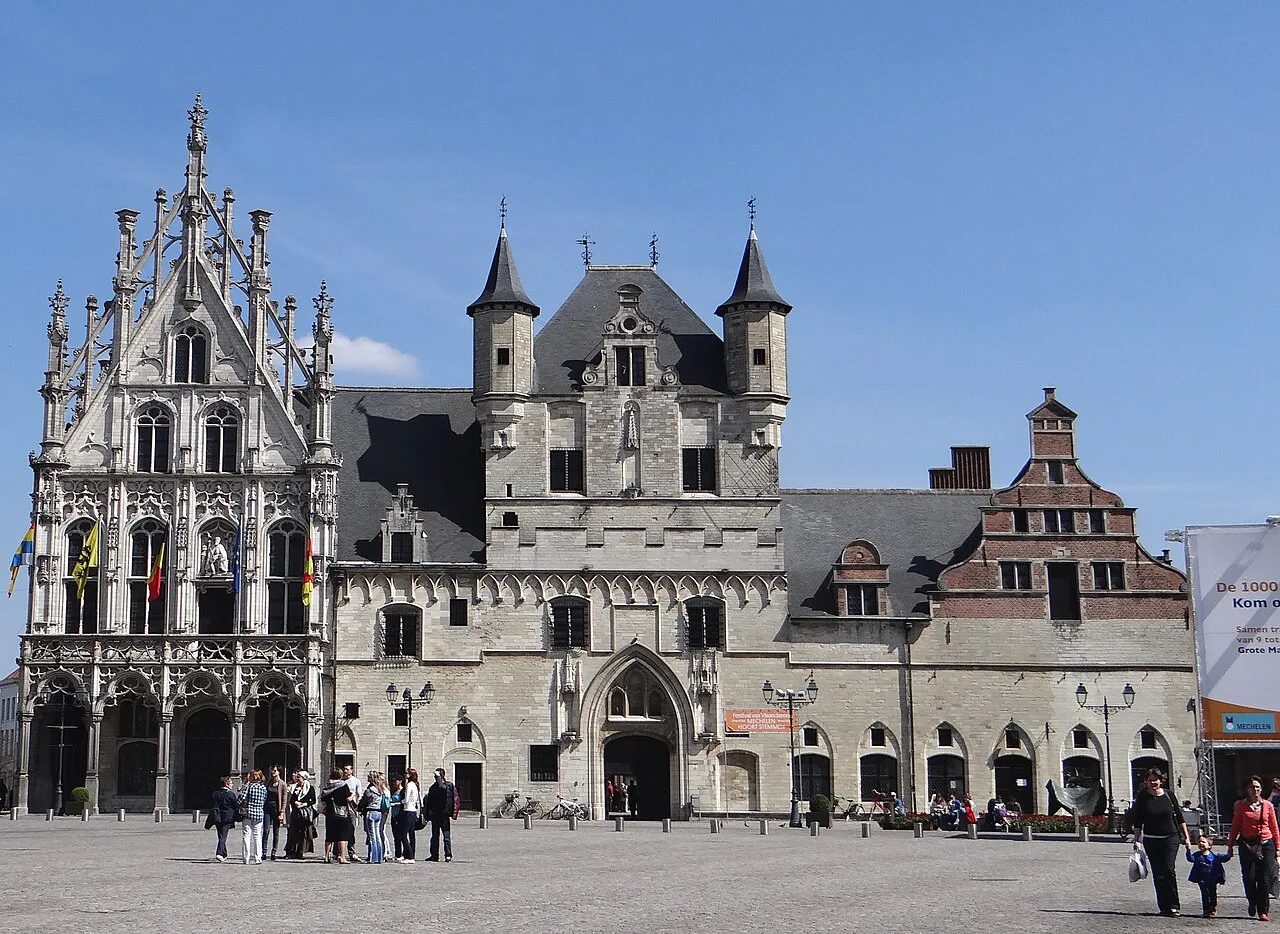
The old centre is small and walkable, so it pays to think in a loop rather than a checklist: the Grote Markt first, then the streets around it, then the river.
The Dijle is the spine of the walk. Paths follow the water past old warehouses and low bridges, and give the river an hour and you have seen the side of Mechelen that photographs best.
If you are touring belfry towns generally, the pattern repeats: a market square, a tower, a church or two and a river. Oudenaarde pairs a late-Gothic town hall with a riverfront, and Lier, a short hop away, runs on the same formula with its Zimmer Tower. Mechelen's version is bigger and busier, with the cathedral as its anchor.
St Rumbold's Tower: The Climb, the Views and the Carillon
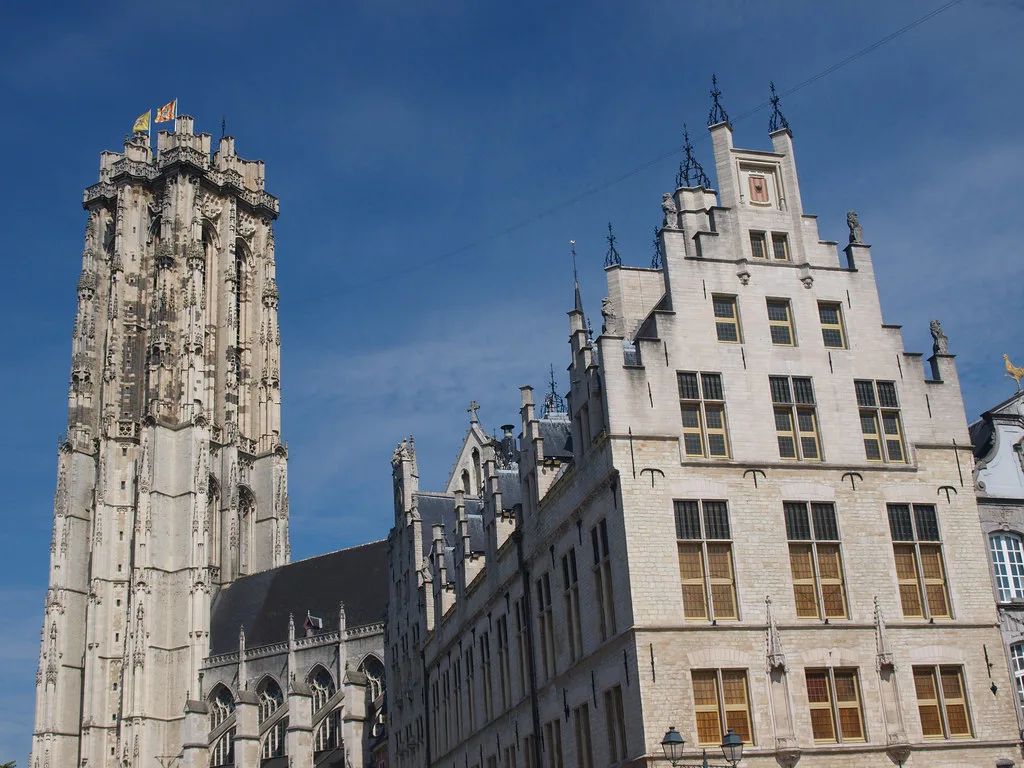
St Rumbold's Tower (Sint-Romboutstoren) is the headline sight above the Grote Markt. Plan the tower for clear weather and for early in the day, when the stair is quieter.
If you are deciding how to spend a limited budget of time and energy, the climb and a museum rarely both fit a single day comfortably. Climbers get the geography of the whole city in one look; museum-goers get objects and stories. Choose one and do it properly.
The cathedral below the tower, Sint-Romboutskathedraal, is the other half of the visit, and it is worth stepping in whether or not you go up. Treat the tower as the fixed point of your day and build the rest of the walk around it, rather than trying to reach it last when your legs are tired.
The Grote Markt and the Streets Around It
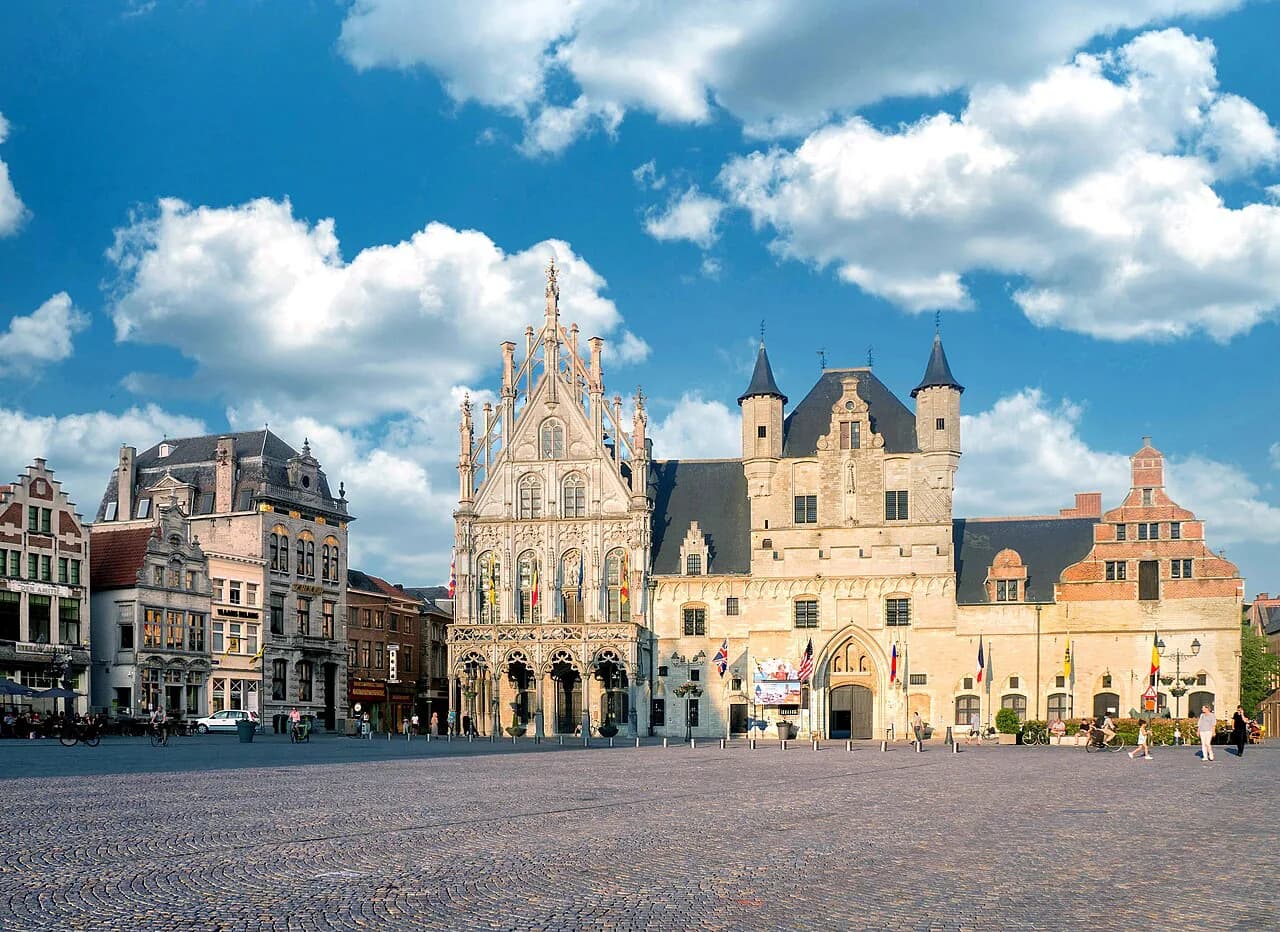
The Grote Markt is Mechelen's front room: wide and cobbled, with the cathedral on one side. Sit at a café table for ten minutes and the city's scale becomes obvious, because everything worth seeing is visible from where you are sitting. The streets leading off the square are where the shops and cafés begin.
From the market square, walk the streets that lead south into the shopping heart of the city. Kortrijk, another Belgian belfry town, uses the same trick of a market square feeding into a tight commercial street, with its Broel Towers guarding the river beyond.
The square is also the place to eat lunch, simply because it is where you will be at midday. Mechelen is small enough that returning to the Grote Markt later costs you five minutes, so there is no reason to chase a specific address across town.
Church Interiors Worth Your Time
Beyond the cathedral, Mechelen has a dense set of churches for a city of its size, and stepping into two or three costs little. The appeal is atmosphere rather than blockbuster art: whitewashed naves, carved pulpits and the particular dim calm of a Flemish church on a wet afternoon. Pick the ones on your route rather than making a church crawl of it.
If you want a comparison, the churches of Bruges hold the heavyweight works — Michelangelo's Madonna and Child in the Church of Our Lady, and Memling and van Eyck in the Groeningemuseum. Mechelen's churches are quieter and quicker, which is exactly why they suit a short break.
Which Mechelen Museums Earn a Slot
On a one-day visit, one museum is realistic and two is ambitious if you are also climbing the tower. Choose by subject rather than reputation: if the tower has already given you the city's history in stone, a museum that covers a different subject keeps the day varied.
For travellers comparing Belgian cities, museum depth is where Bruges and Antwerp pull ahead. Bruges alone offers the Groeningemuseum and St John's Hospital within a few minutes of each other. Mechelen's advantage is that you can see its centre properly in half a day and still have an afternoon for beer.
Het Anker and Mechelen's Beer
Het Anker is Mechelen's brewery, and a visit is the most distinctly Mechelen thing you can do with an afternoon.
If you cannot get onto a tour, the beer itself is still worth the walk. Treat it as a beer café stop rather than a night out.
The Dijle and the Beguinage Quarter
The Dijle walk is the part of Mechelen people remember after the tower. Paths run beside the water past brick warehouses and small bridges, and the light in late afternoon turns the whole thing golden. Walk it in one direction along the river and return through the streets, so you see both the water and the shopping centre.
Beguinages are a Flemish speciality, and Bruges has its own at the Princely Beguinage Ten Wijngaerde, founded in 1245, with white house fronts and a convent garden. If you want to see one, plan that visit around Bruges rather than assuming Mechelen has an equivalent open to visitors.
If you like the Dijle, Belgium has a whole category of small river towns built on the same idea. Veurne in West Flanders is the quiet version, and Halle, Belgium, south of Brussels, is another compact centre worth a half day. Both are useful additions when Mechelen forms part of a longer itinerary.
Chocolate and Sweets: Mechelen Against Bruges and Antwerp
Mechelen has chocolate shops, but Bruges is the Belgian city built on the stuff. Bruges' centre has a chocolatier on nearly every corner around the Markt, and Choco-Story, the chocolate museum on Wijnzakstraat, walks you through cocoa from the Maya to the present with hand-made chocolate produced on site. Adults pay 16 euros, seniors and students 14 euros and children aged three to eleven 10 euros.
Belgium's big names are the ones to look for in any shop: Neuhaus, Godiva, Leonidas, Mary and Côte d'Or, with more than 320 chocolate shops across the country. Leonidas built its reputation on pralines at accessible prices, Godiva on luxury, and Côte d'Or on the bars in supermarket aisles. Buy a small box in Mechelen rather than hauling chocolate around for the rest of your trip.
One Day in Mechelen: A Walking Plan
Start at the station, walk into the centre and go straight to St Rumbold's Tower. Come down into the cathedral and the Grote Markt for a coffee on the square. That sequence gives you the two best things first, while your legs are fresh and the light is good.
After the market, loop back through the streets and follow the Dijle. Lunch on or near the Grote Markt, then spend the early afternoon at whichever museum you chose, or skip it and walk the river instead. Finish at Het Anker for a beer, then walk back through the market square to the station.
The whole loop is a comfortable day's walk and nothing on it requires a tram or a taxi. If you are comparing plans across Belgian cities, the Tournai: What to See, How Long You Need and How the City Fits Together guide shows how a similarly compact centre works for a single day, with the cathedral and the Scheldt doing the job that the tower and the Dijle do here.
Two Days in Mechelen: What to Add
With a second day, stop choosing between the tower and a museum and do both at a civilised pace. Climb on day one when the weather is clear, then spend day two indoors: the cathedral in the morning, a museum after lunch, and the brewery in the late afternoon. Two days also lets you eat properly on the Grote Markt rather than grabbing a sandwich between sights.
The second day is also when you can leave the centre. Walk the Dijle further out, and take the time to sit in a church you skipped. If you want to add a second Belgian town, Aalst sits between Ghent and Brussels and works as a half-day extension on the way home.
Two days also suits travellers who want a base rather than a checklist. Mechelen's position on the Antwerp–Brussels line makes it a plausible place to sleep and travel from.
When to Go and How Busy It Gets
A weekday visit in spring or early autumn gives you a calmer city, so save the museums for rain and plan the tower for a clear morning.
Because the old centre is small, Mechelen is easy to cross on foot even on a busy day. If crowds are the thing you most want to avoid, Mechelen on a weekday is close to ideal.
Getting There from Brussels and Antwerp
Mechelen sits on the main line between Brussels and Antwerp, which makes it one of the easiest Belgian cities to reach without a car. Check fares and times with the Belgian rail operator before you travel.
The station sits close enough to the centre that you arrive on foot and stay on foot, which is a real advantage over cities whose station lies outside a ring road. If you are arriving from further afield, Eurostar's London to Bruges service takes just over three hours, and Mechelen is a straightforward onward connection from there.
If you are touring the Meuse valley instead, the geography changes: Liège and Namur are hillier, more spread out and less walkable in a day. Mechelen's flat, tight centre is the easier introduction to Belgian city breaks.
Common Mistakes on a First Visit
The most common error is treating Mechelen as a quick photo stop on the way to Antwerp. Give it the day or do not bother. The second error is trying to see the tower, two museums and the brewery in one afternoon; pick two and enjoy them.
The third mistake is skipping the streets off the Grote Markt, which hold most of the city's everyday character and cost nothing to walk. The fourth is arriving without a plan for lunch on a busy weekend, when the square's tables fill quickly.
Should You Give Mechelen a Day or a Weekend?
Give Mechelen a full day if you are passing between Brussels and Antwerp, and a weekend if you want the tower, a museum, the river and a brewery visit without watching the clock. It is the easiest Belgian city to do well in a short time, precisely because it is small.
If you are building a longer Belgian itinerary, treat Mechelen as the calm centrepiece and add a belfry town on either side. Mons, with its Belfry of Mons, works well as a southern counterpart, and the Tournai: What to See, How Long You Need and How the City Fits Together guide covers the western option in detail.
Explore more Belgium guides
Sources
Useful notes for your next trip
Optional updates to our guides.
You might also like



Continue reading
More guides you'll find useful




