Tournai in a Day or Two: Cathedral, Belfry and Grand-Place
Tournai packs a five-towered cathedral, Belgium's oldest belfry and a triangular Grand-Place into a compact centre that suits one full day on foot.
On this page
Tournai needs one full day, not a rushed half-day: the centre stacks a UNESCO-listed cathedral, Belgium's oldest belfry and a triangular Grand-Place within a short walk of each other. Two days lets you add the museums by the City Hall park and a proper stroll along the Scheldt. This guide plans the city by district, from the station end to the river, compares it honestly with Bruges (Brugge), Ghent (Gent) and Mechelen, and shows where it sits among the Belgian towns worth visiting.
What Tournai is and where it sits in Wallonia
Tournai sits in Hainaut, the western province of Wallonia, close to the French border and within easy reach of Lille as well as Brussels. The Dutch name is Doornik, though the French form dominates on street signs and maps. It is one of Belgium's oldest cities, founded by the Romans and for centuries an important episcopal centre that at times rivalled Bruges and Ghent.
Its history explains why the centre feels dense: a Romanesque cathedral, a 12th-century belfry and a textile hall all sit within a few streets of each other, telling the story of a city that grew rich on cloth and then declined from the 17th century. Heavy bombing in the Second World War destroyed parts of the town, and the rebuilding is part of what you see today alongside the medieval core.
How long Tournai needs
A half-day is enough only for the cathedral and the Grand-Place, and it will feel brisk. One full day is the sensible minimum: the cathedral quarter, the belfry, the triangular square and the riverside walk fit comfortably into a relaxed day on foot. Overnight visitors gain the museum quarter at a gentler pace and an evening on the square, which is when the terraces fill.
If you are committing to Wallonia for a short trip, Tournai pairs naturally with Mons, another former capital with its own belfry and UNESCO sights, both reachable without a car. Rail joins the two towns, which makes a two-town break realistic over two or three days.
The layout: station end, cathedral quarter and the Scheldt
Orient yourself around three points: the station in the south-east, the cathedral quarter around Place de l'Evêché, and the Grand-Place to the north-west. Henry VIII's Tower stands near the station in Parc Henri VIII, so it makes sense to see it first or last rather than doubling back. From the station you can walk into the centre in a fairly short stretch, passing the tower on the way.
The Scheldt runs through the city, and the quays give you a softer edge to the day after the stone of the centre. The Pont des Trous bridge stands at Quai Donat Casterman; the original late-13th-century crossing was destroyed in the Second World War and rebuilt afterwards. A riverside stretch between the bridge and the centre is the easiest way to link the historic core back to the station.
Cathedral of Our Lady: the five towers and the Treasury
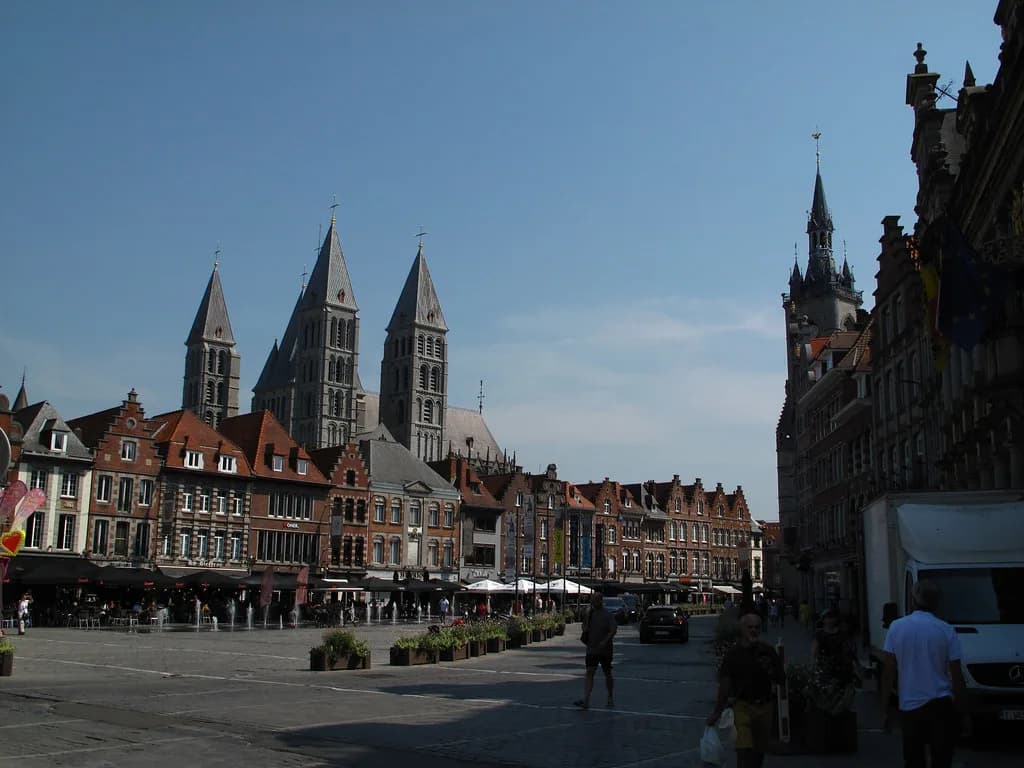
The Cathedral of Our Lady (Notre-Dame de Tournai) is the city's defining sight, unusual for its five towers and for the way Romanesque and Gothic work sit side by side. Look at the nave and the choir as two different buildings joined together: the heavy Romanesque nave reads quite differently from the taller Gothic choir. A tornado hit the city in 1999 and put the building's stability at risk; restoration has been under way since, and much of the exterior has carried scaffolding.
The cathedral itself is free to enter, while the small treasury in one corner charges a modest fee and holds medieval goldsmith work and tapestry, including a cloak associated with Thomas Becket, who stopped in Tournai shortly before his murder in 1170. Across the street, the Tourist Office on Place Paul-Emile Janson shows two short films, one on the city's history and one on how the cathedral was built, which make a useful introduction before you go in.
The Belfry on the Grand-Place
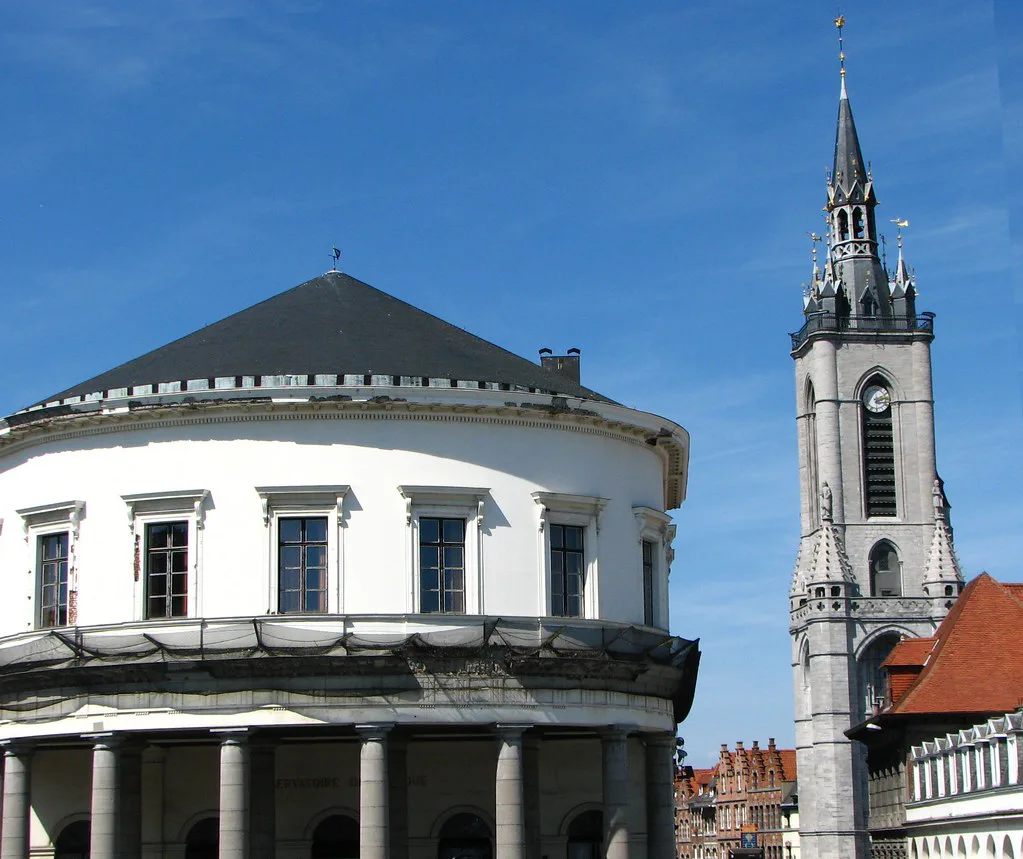
Tournai's belfry, at Grand'Place 15, dates from 1188 and is the oldest in Belgium, the civic counterpart to the cathedral's religious power. Some of the small rooms inside were used as dungeons for the city's prisoners. The tower rises about 72 metres, and its position at the tip of the triangular square is the best place from below to read the layout of the centre.
Access is not guaranteed: the belfry has been closed during works, so plan the climb as a bonus rather than the anchor of your day. The tower still shapes the square whatever the state of the staircase.
The triangular Grand-Place and the Cloth Hall
Tournai's Grand-Place is not square or rectangular but triangular, with the belfry at the narrow tip and a row of cafés and restaurants with terraces along one side. On the south side stands the Cloth Hall (Halle aux Draps), a reminder of the textile trade that made the city rich in the 14th and 15th centuries. The shape makes the square feel less formal than the great market squares elsewhere in Belgium, and easier to cross on foot.
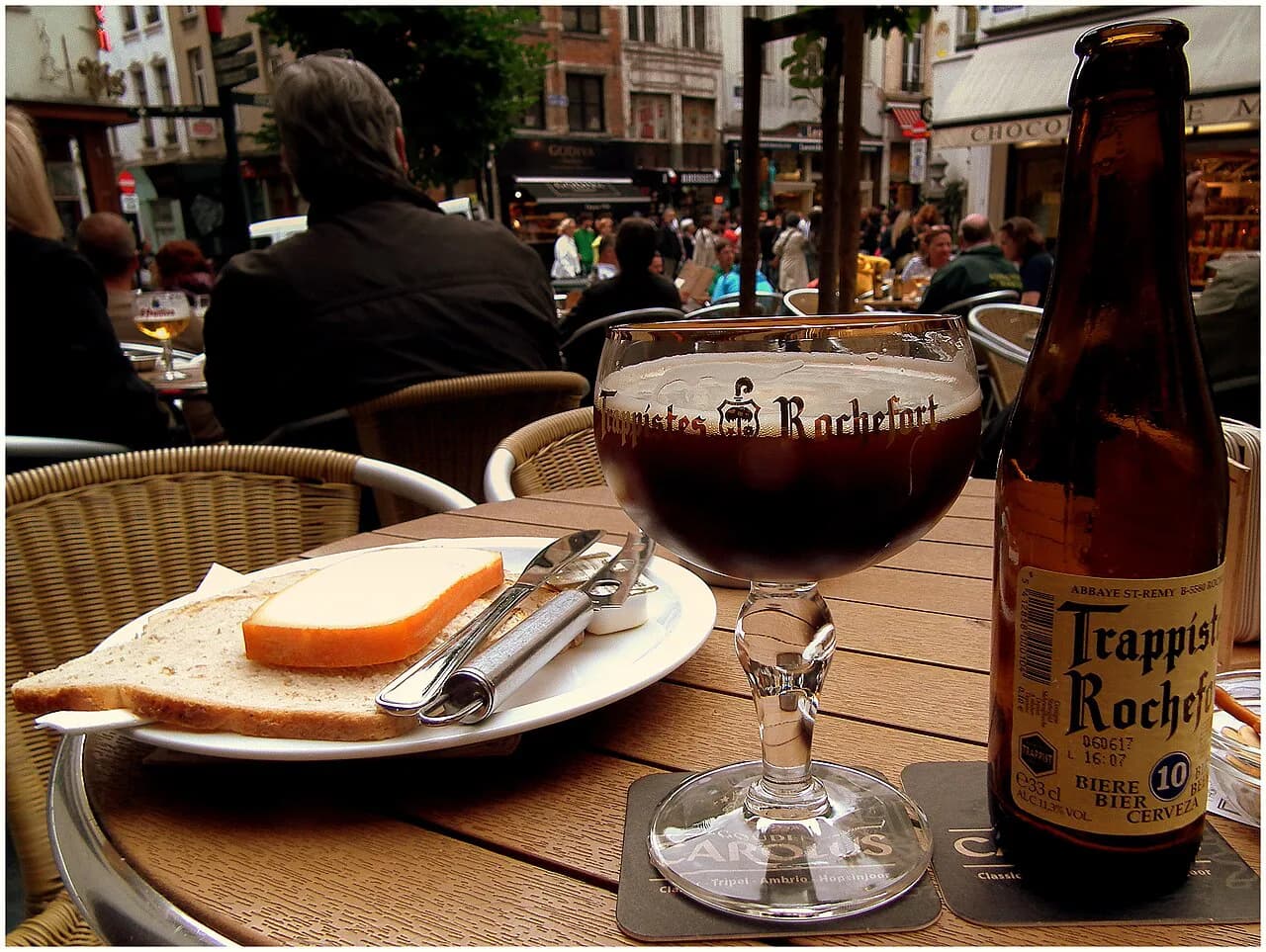
Sit on the terrace side for a coffee or a Belgian beer and you get the square at eye level, which is the point of it. The architecture around the edges does the work: gabled houses, the Cloth Hall and the belfry closing the view.
Pont des Trous and a walk along the Scheldt
The Pont des Trous is the city's third emblem after the cathedral and the belfry, a bridge over the Scheldt at Quai Donat Casterman whose medieval predecessor was destroyed in the war and rebuilt afterwards. It is a reminder that river traffic, not only cloth, built Tournai. Walk the quays for half an hour and you get a different city from the stone streets of the centre.
Henry VIII's Tower and Fort Rouge
Henry VIII's Tower stands in Parc Henri VIII near the station, a roughly 21-metre structure from the 16th century, built when Tournai was briefly under English rule between 1513 and 1519. It is the sight that sits furthest from the medieval core, so see it on arrival or departure rather than in the middle of the day. The tower has been under renovation, so treat the exterior as the draw.
Fort Rouge sits behind the Grand-Place beside a small park, a remnant of Tournai's first city wall dating from the 12th century and named for its red roofs. Both towers are quick stops rather than destinations in themselves, and together they sketch the old defences around the centre.
The museum quarter by the City Hall park
The park next to the City Hall, on Rue de l'Enclos Saint-Martin, shifts the mood from medieval to Baroque and Classicist, with a statue of the Tournai painter Louis Gallait at its centre. Most of the city's museums cluster around this area, which makes it the natural second half of a full day. Across Belgium, comparable collections sit in towns on the Meuse valley and the Flemish plain, but here they are minutes apart.
The Museum of Fine Arts is the strongest single draw, housed in a building designed by Victor Horta and holding paintings and sculpture from the Middle Ages through to modern work. It opens Wednesday to Monday and a ticket is inexpensive. The Natural History Museum and Vivarium, at Rue Saint-Martin 52, splits into skeletons and stuffed animals on one side and endangered species from the Red List on the other.
The Musée de la Tapisserie next door covers Tournai's weaving heritage with antique and contemporary pieces, a good wet-weather stop. It sits directly beside the Natural History Museum, so the two are easy to pair.
Museum days and timing a Monday visit
The Museum of Fine Arts and the Natural History Museum both run Wednesday to Monday, which makes a Monday visit viable but rules out Tuesday for those two collections. If you arrive on a Tuesday, build the day around the cathedral, the square and the river instead. The belfry and Henry VIII's Tower have their own access conditions, separate from the museum timetable.
The Tourist Office holds brochures and maps for self-guided walks of the city, useful for tracing the medieval core and the river in your own order. That single stop on Place Paul-Emile Janson sets you up with a route before you set off.
Saint-Jacques church and the shell markers
Saint-Jacques church, on the pilgrim route across Belgium, sits in Tournai and gives a quieter side of the city away from the Grand-Place. Follow the streets around it and you get a sense of the pilgrim geography that shaped the town. The bronze statue of Martine, a character from a Belgian children's book series, is another small landmark worth spotting as you walk.
Getting to Tournai by train
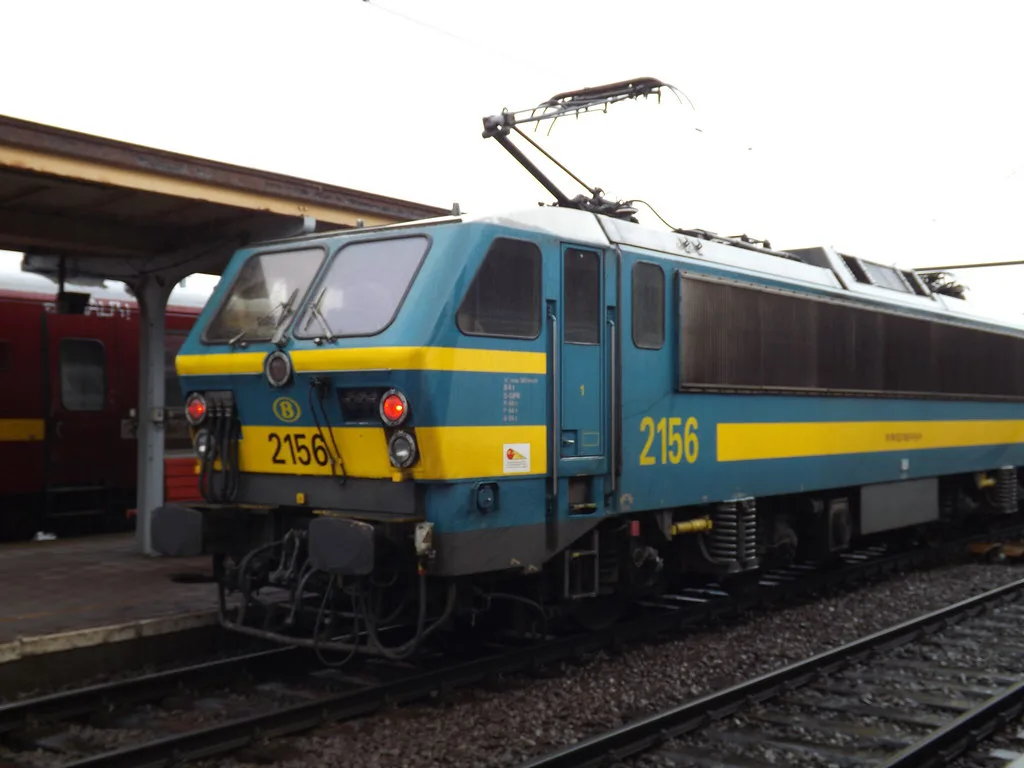
Tournai is easily reached by train from Brussels and from Lille, and the car-free rail route that links it with Mons makes it practical as a city break without a car. The station sits south-east of the centre, a short walk from Parc Henri VIII and Henry VIII's Tower, so the arrival point doubles as the first sight. Wallonia's tourism board promotes Mons and Tournai together as a car-free rail itinerary.
A one-day walking order
Start at the station and walk through Parc Henri VIII to see the tower, then head into the centre to the cathedral and its treasury. From Place de l'Evêché, continue to the Grand-Place for the belfry and the Cloth Hall, then take the short walk to the museum quarter by the City Hall park. Finish along the Scheldt at the Pont des Trous and walk back to the station.
This order keeps you moving in one direction and puts the museums in the middle of the day, when they are most welcome as a break from walking. It also means the riverside stretch comes last, when the light is softer and the quays are quieter.
Tournai versus Bruges, Ghent and Mechelen
Tournai is smaller and less polished than Bruges or Ghent, and its centre carries the marks of post-war rebuilding alongside the medieval core. What it has is concentration: cathedral, belfry and Grand-Place within minutes of each other, with fewer crowds than the Flemish showpieces. If you have already seen Bruges and Ghent, Tournai rewards the detour; if this is your first Belgian city break, the larger towns give you more for the same days.
Mechelen makes the closest comparison in scale and mood, with its own Grote Markt and a belfry you can climb, but it sits in Flemish Brabant rather than on the Scheldt. Tournai trades that Flemish polish for a French-speaking Walloon character and a shorter list of headline sights. The choice comes down to which side of the language border you want to spend your days.
Should Tournai make your shortlist?
Choose Tournai if you want a compact Walloon city where the cathedral, the belfry and the square sit within a short walk, and you value breathing room over crowds. Give it a full day, or two if you want the museums and the river at an unhurried pace. Combine it with Mons for a rail-based Wallonia break, and keep the belfry climb flexible in case works are still underway.
Explore more Belgium guides
Frequently Asked Questions
Where is Tournai located?
Tournai lies in Hainaut, in Wallonia, close to the French border, within easy rail reach of Brussels and Lille. Its Dutch name is Doornik. The historic centre sits north-west of the station, with the cathedral quarter and the Grand-Place at its heart.
How many days do you need in Tournai?
One full day covers the cathedral, the belfry, the triangular Grand-Place and the riverside walk at a comfortable pace. Two days adds the museum quarter by the City Hall park and a slower evening on the square.
Sources
Useful notes for your next trip
Optional updates to our guides.
You might also like
Continue reading
More guides you'll find useful