
Oudenaarde: Town Hall, Tour of Flanders Centre and the Flemish Ardennes
Oudenaarde pairs a late-Gothic town hall and Cloth Hall with tapestry heritage, a beguinage and the Tour of Flanders Centre in the Flemish Ardennes hills.
On this page
Give Oudenaarde half a day for the Markt, the late-Gothic town hall with its Cloth Hall and tapestries, the Beguinage and the municipal museum; add the Tour of Flanders Centre and you have a full day. It is a small town on the Scheldt's left bank in the Flemish Ardennes, and its heritage sits close enough together to walk between sights. This guide covers what to see, how long to allow, the cycling connection and how the town fits a trip built around Ghent.
What Oudenaarde is and why it is worth a stop
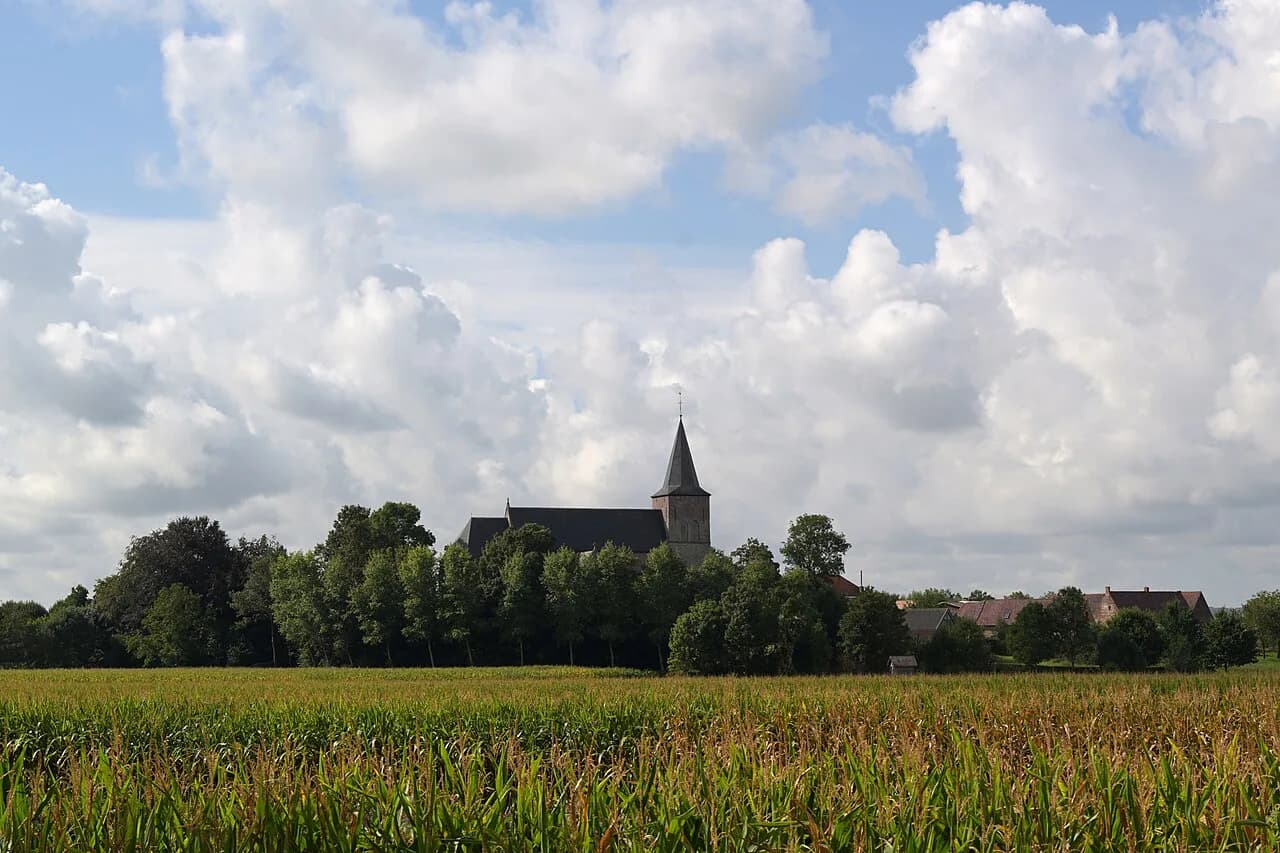
Oudenaarde is a provincial town with a global reputation, built on the Scheldt's left bank in East Flanders and known above all for tapestry production. Its late-Gothic town hall, with a Cloth Hall, is the reason many travellers get off the train, and the town's tapestries carry its weaving fame. The surrounding Flemish Ardennes, a landscape of undulating roads, cobblestones and hills, gives the town a second identity as a cycling centre.
The useful way to read the town is as two layers in one place: a wealthy cloth-and-tapestry past in the centre, and a cycling history written on the hills around it. That combination is what separates Oudenaarde from the bigger art cities, where the heritage is denser but the countryside is further away. If neither tapestries nor bike racing interests you, the centre alone is a short stop rather than a destination.
The Markt and the late-Gothic town hall
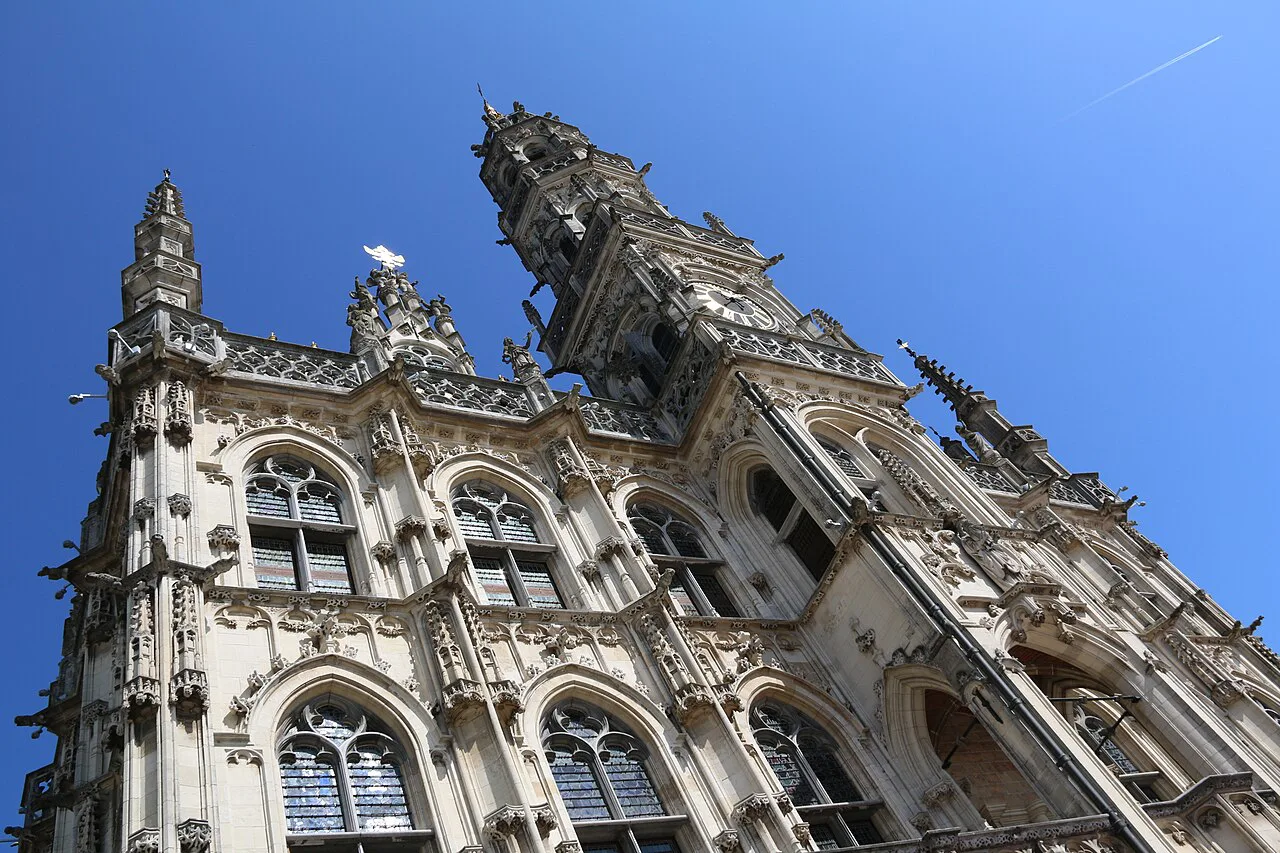
The Markt is the natural place to start, and the town hall on it is the building to look at first: late-Gothic in style, with a Cloth Hall attached and tapestries that carry the town's reputation as a weaving centre. Give the exterior a slow lap before anything else, because the facade and the cloth-hall block set up everything you will see in the museum afterwards. The Visit Oudenaarde info point sits on the Markt itself, which makes arrival straightforward.
Tapestries are the thread to follow through the centre, so treat the town hall ensemble as a single sight rather than ticking off the hall and the Cloth Hall separately. For comparison, the belfry-and-square pattern in a town such as Mechelen is a different scale entirely, with a far larger Grote Markt and a cathedral tower to climb; Oudenaarde's Markt is a compact space you cross in a minute.
MOU, the municipal museum
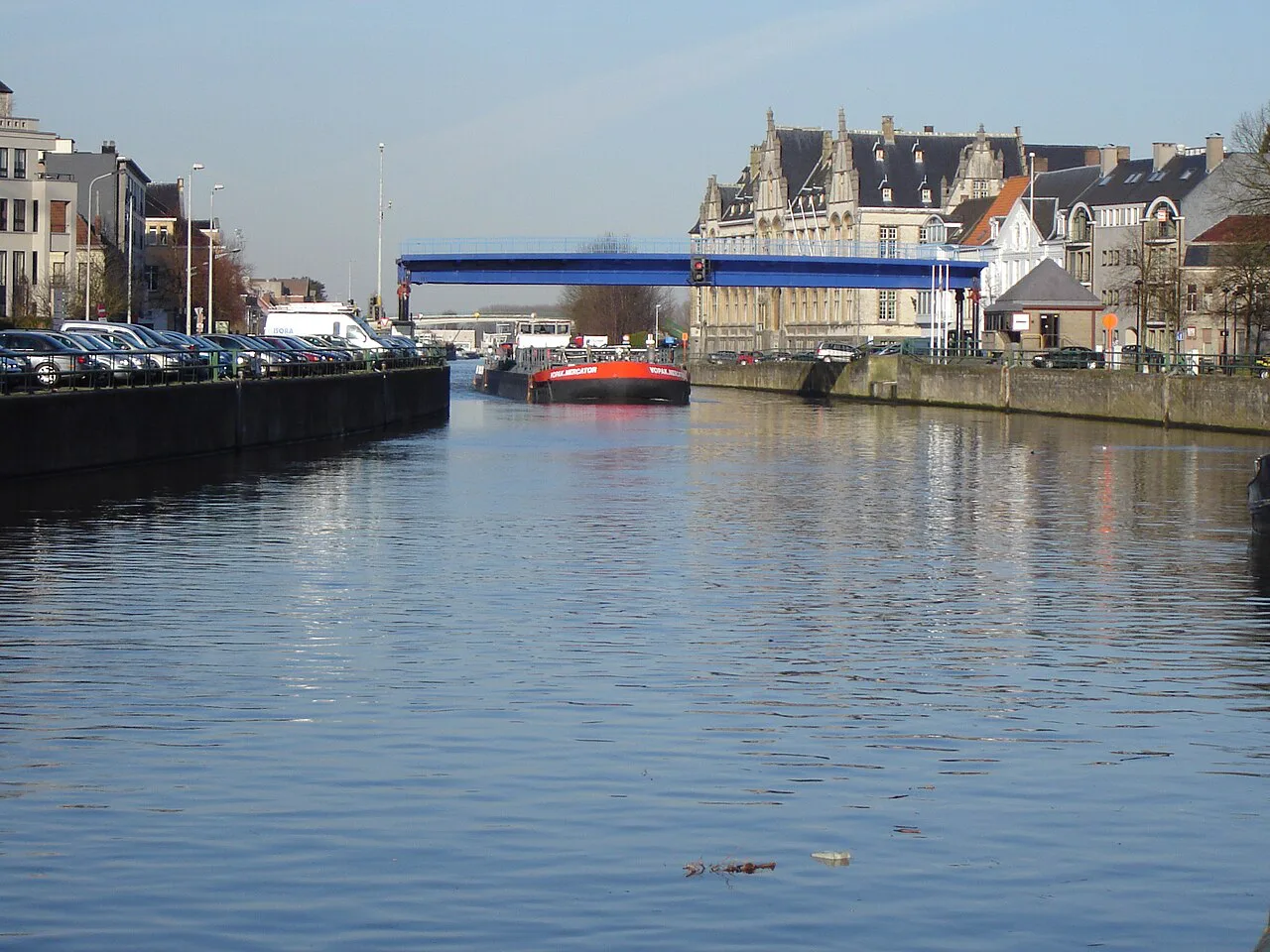
MOU is Oudenaarde's municipal museum and the place to see the collections that sit behind the town hall's tapestry fame. It is one of the three named highlights of the town alongside the town hall and the beguinage, so it belongs in the half day rather than being an optional extra. Budget an hour for it if you want the heritage to make sense, and less if you are saving your museum appetite for Ghent.
If your trip is built around Belgian art cities, weigh the museum against what the larger cities hold: Bruges and Ghent both carry heavier collections, and a small municipal museum is a quieter, quicker visit. The trade-off is time rather than quality, and the town-centre half day only works if you keep the museum to a single focused stop.
The Beguinage and the quiet side of town
The Beguinage is the third of the town's named highlights, and it is the part of Oudenaarde that rewards a slower pace: quiet and a world away from the Markt's civic swagger. Walk there after the town hall rather than before, so the contrast between the cloth-and-civic centre and the enclosed beguinage registers properly. It also gives you a reason to see streets beyond the square, which most short visits skip.
This is where Oudenaarde's half day earns its keep. The Beguinage and the surrounding lanes are the counterweight to the museum, and travellers who only see the Markt leave with a thin impression of the town.
The Tour of Flanders Centre
The Tour of Flanders Centre covers the town's cycling history from start to finish, and it is the single sight that turns a short stop into a full day. Oudenaarde's undulating roads, cobblestones and hills have played crucial roles in Flanders' spring classics for a century, and the centre tells that story rather than displaying bikes for their own sake. Even travellers with no racing knowledge come away understanding why this particular landscape shaped the sport.
Treat the centre as a history museum with a sport at its centre rather than a fan attraction, and it works for companions who are not cyclists. The trade-off is content: if you want a classic Belgian art-city museum, MOU and the town hall will serve you better, and the cycling centre can be skipped in a half-day visit.
The Flemish Ardennes around the town
The Flemish Ardennes are the reason the cycling history sits here and not in a bigger city: the hills, cobbles and narrow roads start at the edge of town and are inseparable from the races. VISITFLANDERS treats the region and bicycle racing as inextricably linked, and walking or riding a short stretch of the surrounding lanes is the best way to see what the museum is describing. Build that into the day rather than adding it as a separate destination.
Anyone planning a cycling weekend in the region should look at the wider set of Belgian towns with strong local identities, from the old cloth towns of the Leie to the larger towns further south, because the Ardennes riding is only one option.
How long Oudenaarde needs
A half day covers the Markt, the town hall with its Cloth Hall and tapestries, the Beguinage and MOU at a reasonable pace. A full day adds the Tour of Flanders Centre and a walk or short ride into the Flemish Ardennes, which is the version worth choosing if cycling brought you here. Staying overnight rarely pays unless you are riding; the town is compact enough that a day trip from Ghent makes more sense.
If you are assembling several small Belgian towns into one trip, treat Oudenaarde as one of them and compare it with towns such as Tournai or Mons, each of which has its own strong central square and heritage set. A day or two in each gives you a richer picture than racing between them.
Oudenaarde from Ghent, and its place between Ghent and the Ardennes
Oudenaarde works best as a day trip from Ghent: the town is close enough that the centre and the cycling museum fit comfortably into one outing. The trade-off is that you give up an evening in Ghent, which has far more to do; the reward is a small town and open countryside the bigger city cannot offer. Base yourself in Ghent and treat Oudenaarde as the countryside day.
The same logic applies to other small Flemish towns on the same line of country: Lier and Halle are easy add-ons if you are collecting towns rather than committing to one. Where Oudenaarde wins is the pairing of a genuine heritage centre with hills you can walk or ride out into.
When to go and what the town is like across the seasons
Spring is the obvious season for cyclists, when the Flemish Ardennes roads and the spring classics are on everyone's mind, though the races themselves are history the Tour of Flanders Centre interprets rather than a fixture to plan around. Summer brings the best conditions for walking the hills and the beguinage, and the town stays quieter than Bruges or Ghent at any time of year. Autumn and winter are for the museums and the square, with shorter days to plan around.
If you are choosing between small Belgian towns for a short break, consider the seasonality of each: Kortrijk and Aalst, for instance, are year-round town-centre destinations, while Oudenaarde's pull is strongest when the countryside is walkable.
The Visit Oudenaarde info point and arrival
The Visit Oudenaarde info point is at Markt 1, 9700 Oudenaarde, on the central square, so it is the first practical stop after you arrive. Staff there can confirm any detail that varies by season, from museum opening to what is running in the town. Use it to pick up a town map and to check the state of the roads and paths into the Flemish Ardennes before you set out on foot or by bike.
If you are looking for the same kind of small Belgian town to pair with it, Geraardsbergen or Poperinge make natural additions for a longer trip through Flanders.
Half day or full day: what to choose
If your reason for coming is cycling, plan a full day: the Markt and town hall in the morning, MOU and the Beguinage after lunch, and the Tour of Flanders Centre with a walk into the Flemish Ardennes to finish. If you are simply collecting Belgian towns, the half day of square, town hall and beguinage is enough, and you can leave the cycling museum for a return visit. Either way, base yourself in Ghent rather than moving hotels.
Explore more Belgium guides
Frequently Asked Questions
How do you pronounce Oudenaarde?
Oudenaarde is pronounced roughly OW-duh-nar-duh in Dutch, with the stress on the first syllable and a rolled final r that English speakers can soften. Locals also use the French form Audenarde, but the Dutch name is what appears on signs and timetables. Saying the Dutch version slowly is the safest approach.
What is Oudenaarde famous for?
Oudenaarde is known for two things: its tapestry heritage, which built the late-Gothic town hall with its Cloth Hall and famous tapestries, and the surrounding Flemish Ardennes hills, which have shaped Flanders' spring cycling classics for a century. The Tour of Flanders Centre tells the second story, while MOU and the town hall tell the first.
Is Oudenaarde good for cycling?
The Flemish Ardennes around Oudenaarde offer exactly the kind of undulating roads, cobblestones and hills that define the spring classics, so it is a natural base for road riding. The city has also built its identity around the sport, with the Tour of Flanders Centre as the formal starting point for understanding the terrain. Check local route signage and conditions at the info point before setting out.
Sources
Useful notes for your next trip
Optional updates to our guides.
You might also like



Continue reading
More guides you'll find useful





