Essex Farm Cemetery: John McCrae and the Dressing Station Near Ypres
Essex Farm Cemetery near Ypres holds the advanced dressing station where John McCrae wrote In Flanders Fields. Here is what to see and who lies buried there.
On this page
Essex Farm Cemetery is worth a visit because of the ground it sits on rather than its size: this small plot at Boezinge, north of Ypres (Ieper), contains the concrete advanced dressing station where John McCrae wrote In Flanders Fields on 2 and 3 May 1915. Allow about half an hour for the cemetery and the bunker, and pair it with the wider circuit of WW1 sites Belgium preserves around the old Salient. This guide covers the dressing station, the poem, the division memorial, the graves worth finding and the company the site keeps.
What Essex Farm Cemetery is and where it sits in the Ypres Salient
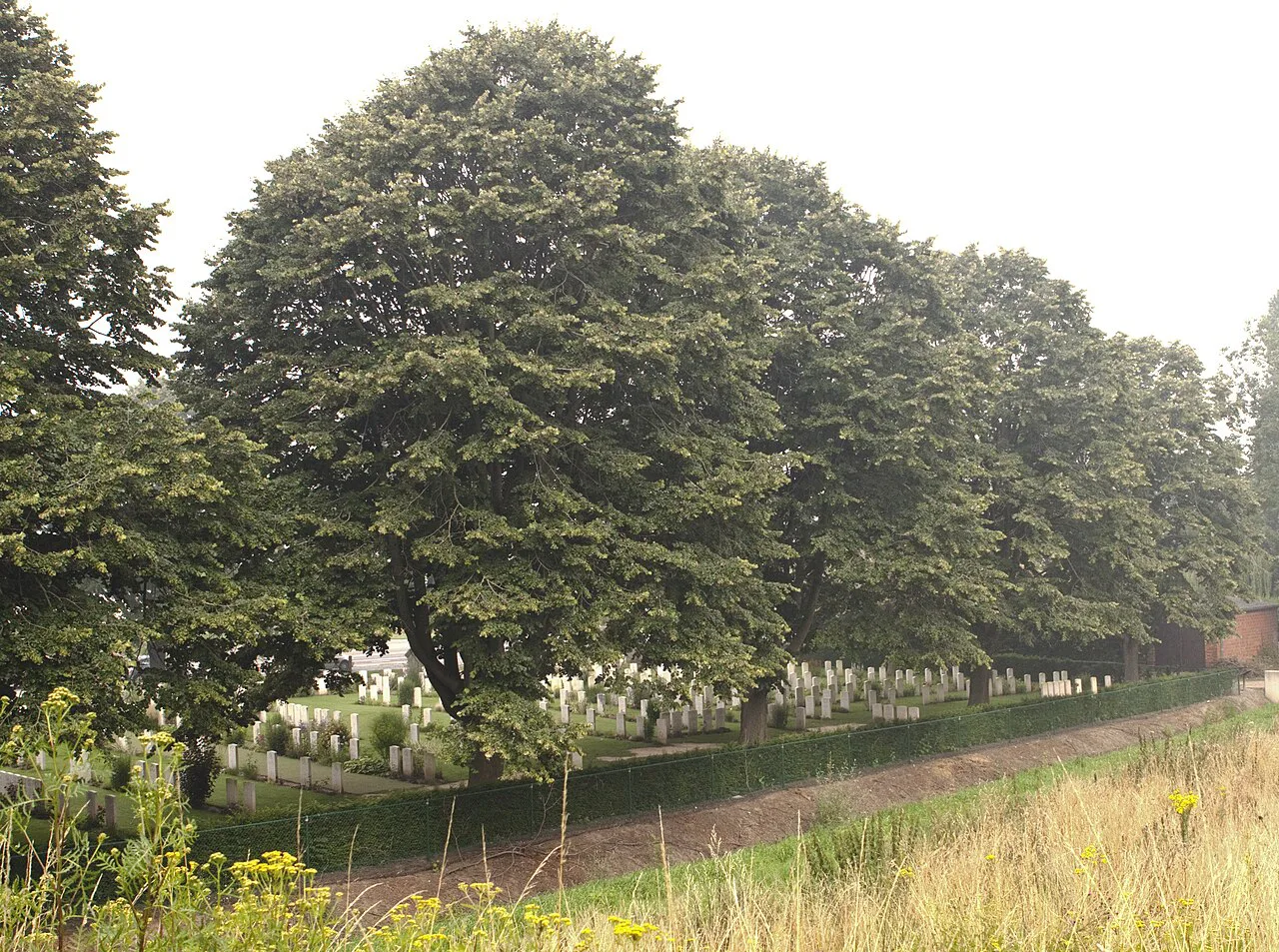
Essex Farm Cemetery stands at Boezinge, a village on the northern edge of the Ypres Salient, in West Flanders. It is a Commonwealth War Graves Commission cemetery, one of many small plots scattered across the flat polder between Ypres and the Yser canal. The Ieper tourist office lists Essex Farm Cemetery and its Advanced Dressing Station among the best-known sites of the Salient, which is a fair summary: people come for the bunker first and the graves second.
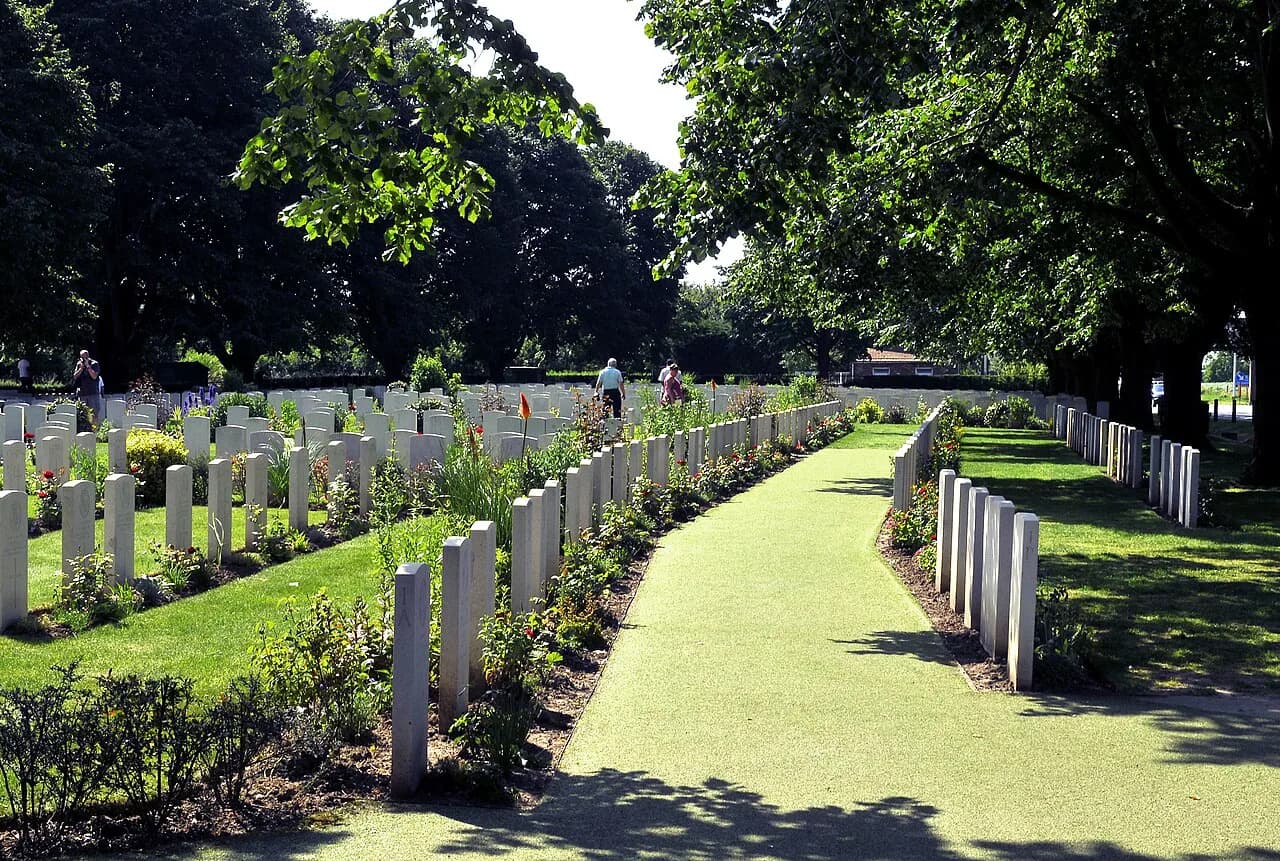
The site is compact, and the whole of it can be read in a single slow walk. The cemetery lies beside the road, the dressing station bunker stands at its edge, and the 49th West Riding Division memorial is part of the same group of monuments. Treat it as a half-hour stop on a day that also takes in other memorials rather than a destination on its own.
The advanced dressing station and John McCrae's two days there
The concrete structure at Essex Farm was an advanced dressing station, a forward medical Post where wounded men were treated before being moved back down the line. It was here, on 2 and 3 May 1915, that John McCrae wrote In Flanders Fields. That fact is the reason the site is on so many itineraries, and it is worth standing at the bunker with the poem in mind rather than treating it as another ruin.
McCrae was a Canadian medical officer, and the dressing station gives his poem a physical anchor that a museum case cannot. The bunker is not large or dramatic, and the surrounding ground is now quiet farmland. The contrast between the setting and what happened here is the point of the visit, so give it a few minutes of quiet rather than a photograph and a move on.
In Flanders Fields: how the poem came out of this ground
In Flanders Fields came directly out of the Essex Farm ground, written between treating casualties in May 1915. The poem's poppies and larks belong to this landscape, and reading it here, with the canal and the flat fields in view, makes the imagery concrete. Readers following the poem across the region will find more in the wider story of the fields of West Flanders and the cemeteries that grew from them.
The poem's afterlife shaped how the war is remembered in Britain and Canada, and the poppy as a symbol of remembrance traces back to these lines. Knowing that before you arrive makes the bunker and the headstones easier to read. If you want the fuller history, the In Flanders Fields museum in Ypres covers the Salient as a whole, but Essex Farm gives you the exact spot.
The war memorial of the 49th West Riding Division at the site
The war memorial of the 49th West Riding Division stands with the cemetery and the dressing station, commemorating a division that served in this sector. It is a separate monument from the graves, and visitors often walk past it on the way to the bunker. Pause at it: the division memorials across the Salient mark where units fought rather than where individuals fell, and they give the small cemetery a wider frame.
Taken together, the cemetery, the bunker and the division memorial make Essex Farm a compact lesson in how the Salient was held and how it was remembered afterwards. That combination is why it rewards more time than its size suggests.
Reading the graves: battlefield cemetery layout and headstones
Essex Farm is a battlefield cemetery. Its dead lie close to where they were buried by their comrades during the fighting, and the permanent headstones were added later, so the rows are irregular rather than the uniform lines of the larger military cemeteries created after the war. Once you notice that, the layout tells you something about how the site was used. The same distinction explains why the big collection cemeteries look so ordered by comparison.
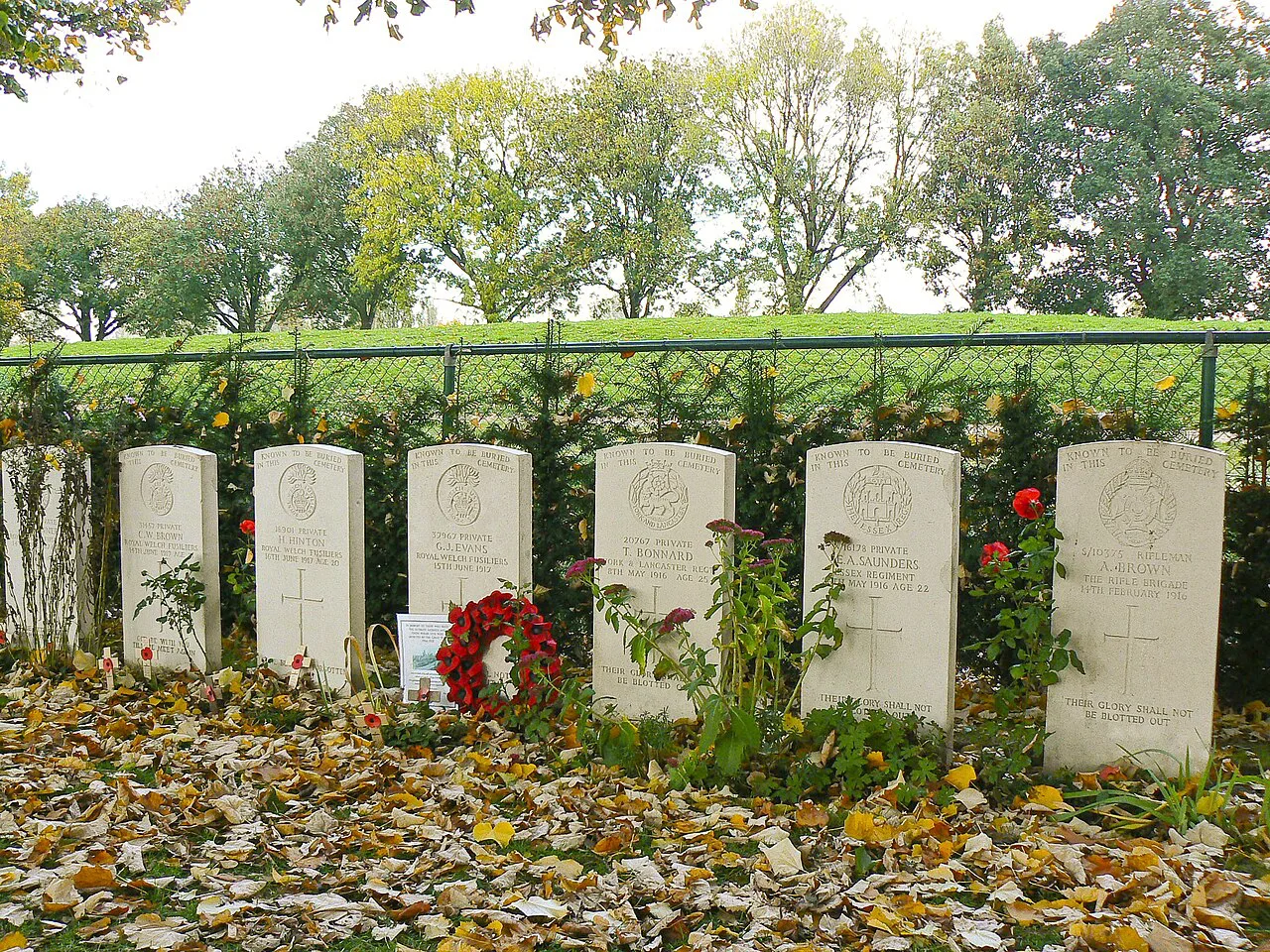
The headstones follow Commonwealth War Graves Commission conventions: regiment, name, date of death, age where known, and a religious symbol where the family chose one. Families could add a personal epitaph at the foot of the stone, paid for by the letter, which is why some stones carry a line of verse and others carry nothing. Look at the bottom of the stones as well as the top.
Rifleman V. J. Strudwick, killed in January 1916 aged 15
One grave visitors seek out is that of Rifleman V. J. Strudwick, recorded as killed on 14 January 1916 at the age of 15. His headstone carries the inscription Not gone from memory or from Love. The age is what stops people: a boy of fifteen in the line is a reminder of how the war reached deep into ordinary families.
His is one among many graves at Essex Farm, and the burial records list others with their dates and, in some cases, their stories. If you are tracing a name, the cemetery register and the Commonwealth War Graves Commission records give the plot and row. Bring the details before you arrive rather than trying to read every stone.
Private Thomas Barratt VC and the Victoria Cross on a headstone
Private Thomas Barratt VC is buried at Essex Farm, and his stone carries the Victoria Cross, the only decoration the Commonwealth War Graves Commission permits on a headstone alongside the regimental badge and the religious symbol chosen by the family. In a cemetery of plain stones, that small emblem stands out. It marks a soldier whose act of bravery was recognised at the highest level.
Looking for the VC, then for Strudwick's age, then for the epitaphs gives a short walk through the cemetery a structure. It is a way of reading a battlefield cemetery rather than drifting between rows.
How Essex Farm sits alongside Tyne Cot and the Menin Gate
Essex Farm is one stop in a much larger memorial landscape. Tyne Cot holds 11,954 graves and commemorates a further 34,959 British and New Zealand soldiers on its Memorial to the Missing, while the Menin Gate in Ypres records 54,896 names, figures worth knowing before you compare the sites. All of these grounds were given in perpetuity by King Albert I in recognition of the sacrifices made in the defence and liberation of Belgium.
The scale differs sharply: Essex Farm is intimate and tied to one event, while Tyne Cot is vast and statistical. The Menin Gate is a civic monument in the middle of Ypres, and the three together cover the personal, the collective and the commemorative sides of the Salient. A day that takes in all three reads the war at three different scales.
Elsewhere in West Flanders, Lijssenthoek military cemetery was a casualty clearing station site and is another useful comparison, while the Vladslo German cemetery shows how the other side buried and mourned its dead. Add one of them if you have a second day in the area.
Getting to Essex Farm Cemetery at Boezinge from Ypres
Essex Farm Cemetery is at Boezinge, a short distance north of Ypres (Ieper), and the usual approach is from the town by road. The Ieper tourist office publishes the site, and Boezinge is small, with the cemetery sitting beside the road rather than in the middle of a town.
Because the site is compact and outdoors, it works well as a first or last stop of a day in the Salient, when you still have the energy to read the stones. It also sits naturally with a visit to Talbot House in Poperinge, which gives the behind-the-lines side of the same war. Plan the order so that the quietest site comes when you can give it attention.
Is Essex Farm worth adding to a Salient day?
Yes, if you want one place where the poem, the dressing station and the graves sit together. It takes little time, and the combination of McCrae's bunker, the 49th West Riding Division memorial and the graves of Strudwick and Barratt gives a concentrated introduction to the Salient before you tackle Tyne Cot.
Build it into a day that also reaches the Menin Gate in Ypres and, if time allows, one of the larger cemeteries, and the small plot at Boezinge will make sense of the rest. Go with names to look for, and the visit will hold.
Sources
Useful notes for your next trip
Optional updates to our guides.
You might also like



Continue reading
More guides you'll find useful