
Tyne Cot Cemetery: Visiting the Ypres Salient's Largest War Cemetery
Tyne Cot is the largest Commonwealth war graves cemetery, near Ypres in Flanders. See what the cemetery and its memorial record, and how to visit from Ieper.
On this page
Tyne Cot is the largest Commonwealth war cemetery, set on rising ground at Zonnebeke in West Flanders, a short drive or bus ride north-east of Ypres (Ieper). Allow about an hour on site: the graves and the Cross of Sacrifice sit in front of a long memorial wall carrying the names of the missing. This guide sets out what the cemetery and memorial each record, and how to place Tyne Cot within a short Salient itinerary.
The place rewards a little preparation. Read the panels before walking the rows and you will understand why some men of the Salient are named here and others at the Menin Gate (Menenpoort) in Ieper.
What Tyne Cot is and where it stands
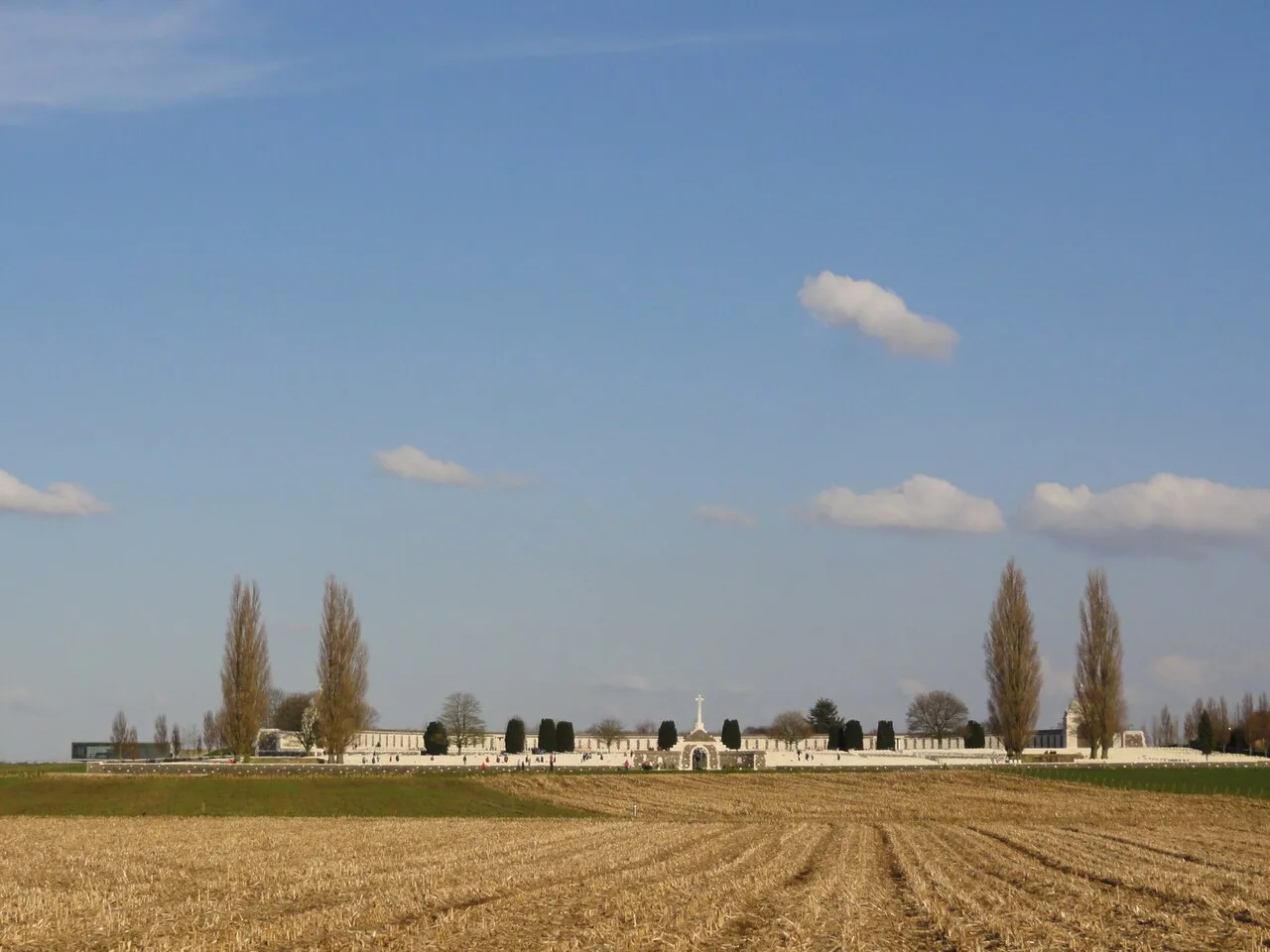
Tyne Cot lies at Zonnebeke, in the open country north-east of Ieper that formed the Ypres Salient. The ground rises gently, which is part of why the site is so legible: from the cemetery you look back across the low Flanders plain toward the town.
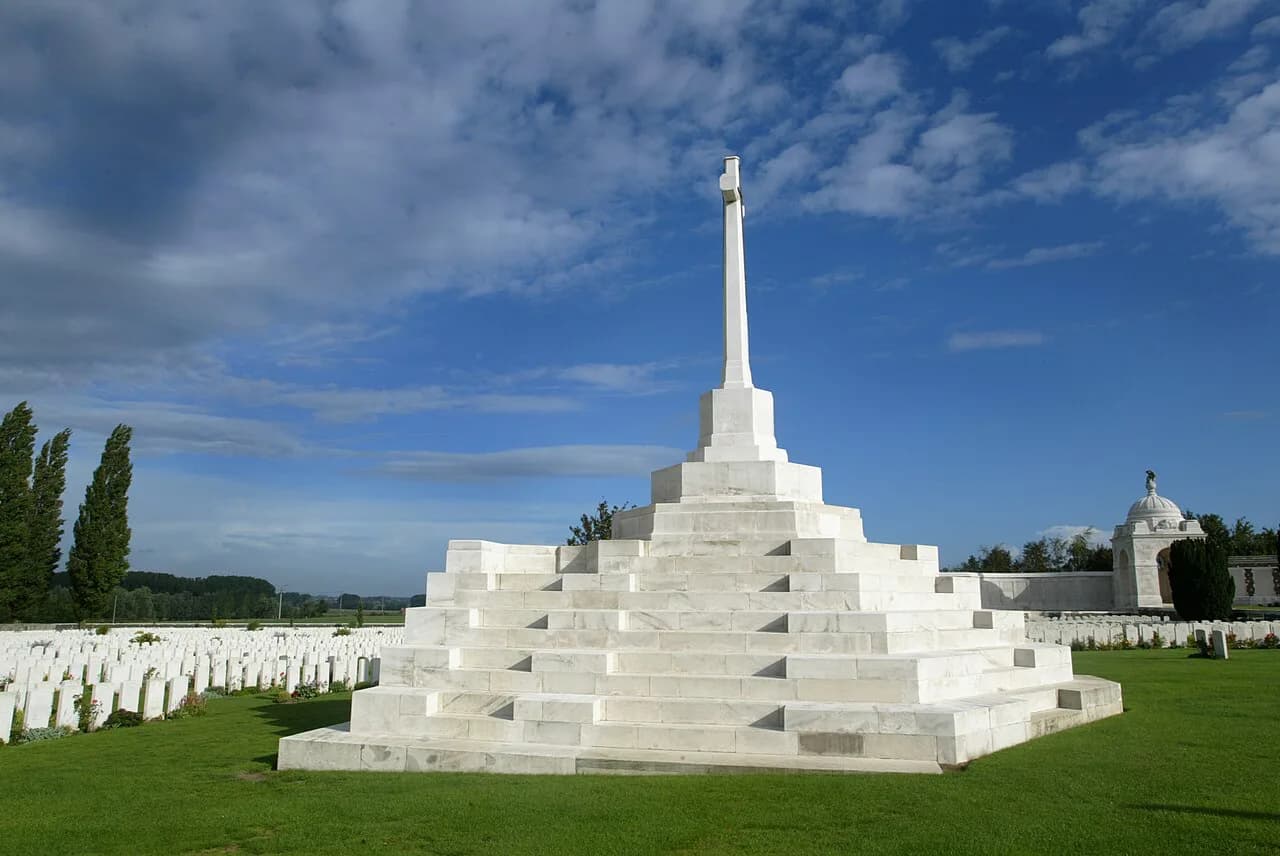
It holds two distinct things that visitors often merge into one. The cemetery contains graves, marked by rows of headstones and the Cross of Sacrifice; the memorial is a run of panels at the rear of the cemetery recording men with no known grave. Knowing which is which changes how you read the place.
Tyne Cot is the largest of the Commonwealth war cemeteries in the area, and it anchors a group of memorial sites across the region. If you are planning several stops, our overview of WW1 sites in Belgium sets out how the cemeteries, museums and gates fit together.
What the cemetery holds: graves, the Cross of Sacrifice and the memorial panels
The Cross of Sacrifice, the tall stone cross on the skyline, is the visual anchor of the cemetery and appears in most views from the entrance. Lijssenthoek military cemetery, west of Ieper, is another Commonwealth site in the Salient worth comparing.
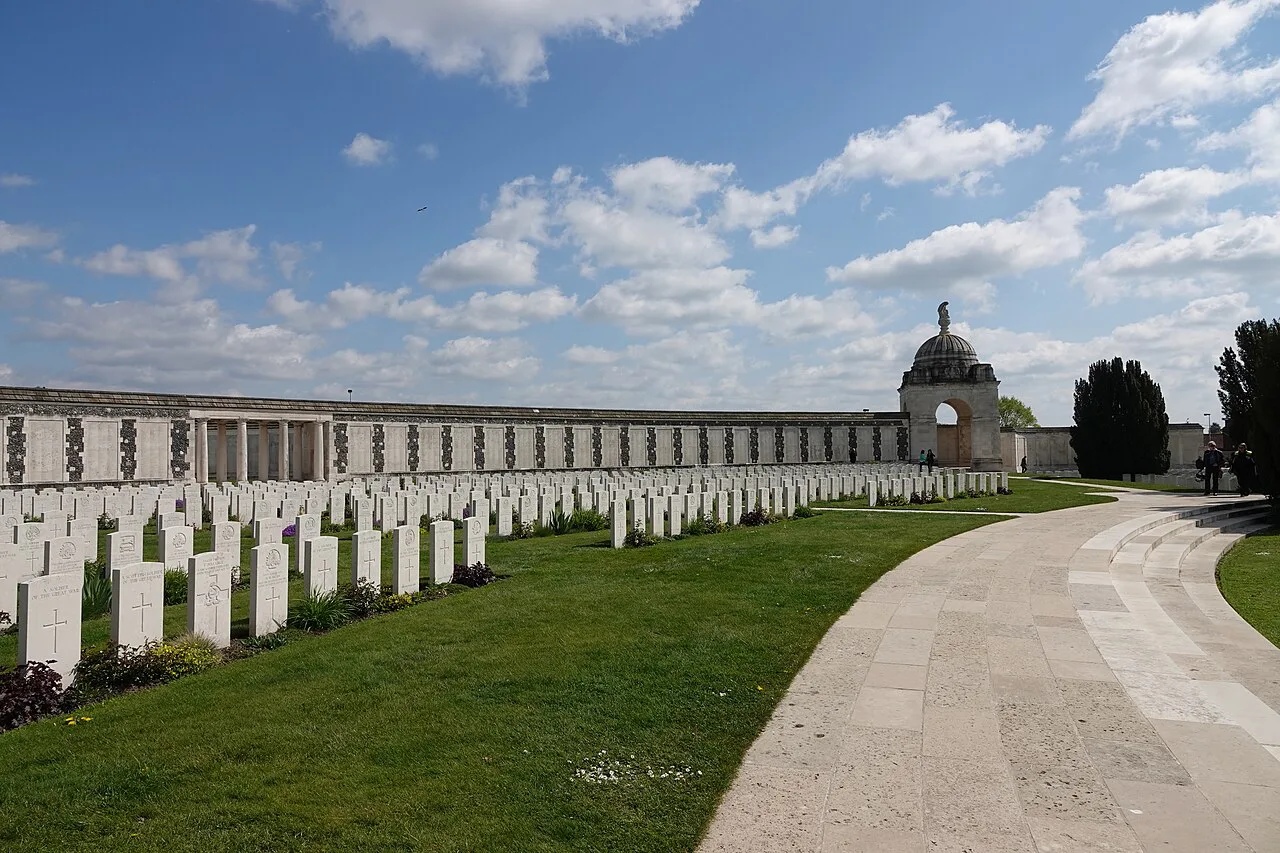
Behind the graves runs the memorial wall, built as a series of panels rather than a single screen. The panels carry names carved in order of regiment, so finding a particular man means knowing his unit as well as his surname.
Because the cemetery and the memorial are laid out together, the simplest route is to walk the grave rows first and finish at the panels. That order makes the scale of the missing easier to take in after the individual headstones.
The Tyne Cot Memorial panels and the names of the missing
The Tyne Cot Memorial records the names of 35,000 men whose bodies were never recovered or were not positively identified in the Ypres Salient. The names are cut into panels at the back of the cemetery, and they stand as a record of the missing rather than as graves.
The scale is easier to grasp through a single county. Rutland Remembers lists 24 Rutlanders named on the panels, among them men from Oakham, Uppingham, Ketton and Exton. Reading a handful of those entries before you go gives the wall a human scale that the total never can.
The memorial is a place for reading rather than photographing. Allow extra time at the panels beyond the hour the graves take if you are tracing a name.
The New Zealand Memorial at the centre of the memorial wall
A New Zealand Memorial stands at the centre of the memorial panels, marking the place of New Zealand forces in the fighting around Passchendaele. It interrupts the run of names and gives the wall a clear midpoint to navigate by.
If you are tracing an individual, the New Zealand Memorial at the centre is the simplest reference point for orienting yourself on a wall carrying tens of thousands of names.
Why names after 16 August 1917 appear here and earlier ones at the Menin Gate
The panels begin with men who died after 16 August 1917, most of them in the Third Battle of Ypres, known as Passchendaele. Those who died in the Salient before that date are remembered instead at the Menin Gate in Ieper.
This cut-off is the fact most visitors misread. If a name is not on the Tyne Cot panels, the place to look is the Menin Gate, not another part of the same wall. Plan the two stops together if you are searching for a specific man.
Walking the cemetery: layout and the rear memorial wall
Enter through the main gate and the graves open out ahead, with the Cross of Sacrifice on the rising ground and the memorial wall beyond. The layout is compact enough to walk in a few minutes, but the rows reward a slower circuit.
Walk the perimeter first to see the shape of the cemetery, then move inward along the rows and finish at the panels. Keep to the grass paths between the headstones rather than stepping over the graves.
Getting to Tyne Cot from Ypres and how long to allow
Tyne Cot sits at Zonnebeke, north-east of Ieper on the edge of the old Salient. It is usually reached by car, by taxi or as a stop on a guided tour of the Salient.
Allow about an hour for the cemetery and memorial at an unhurried pace, and more if you are searching for a name on the panels. The site is on open ground and exposed to weather, so a windproof layer earns its place even on a bright day.
Tour operators run half-day and full-day circuits that pair Tyne Cot with other Salient sites. Book through an operator that states the sites included and the time allowed at each, rather than assuming Tyne Cot gets more than a brief stop.
Visiting respectfully: memorial ground and conduct
Tyne Cot is memorial ground, not a heritage attraction in the leisure sense. Keep voices low, avoid walking on grave borders, and do not leave items on headstones unless they are removed afterwards.
Commemorative ceremonies in the Salient are held at the Menin Gate in Ieper, where the daily Last Post has long been established. Nothing in the record places that ceremony at Tyne Cot, so plan an evening in Ieper if you want to attend.
Photography is permitted but should not intrude on other visitors, particularly around the panels where people are often searching for names. If a service or private commemoration is under way, keep a respectful distance.
Tyne Cot alongside Essex Farm and the Menin Gate
A short Ypres trip can sequence the Salient sites neatly. Start at Essex Farm cemetery north of Ieper, where John McCrae is associated with writing In Flanders Fields, then drive out to Tyne Cot, and finish at the Menin Gate in the evening.
The In Flanders Fields museum in Ieper is the town's main indoor counterpart to the cemeteries. Our guide to the In Flanders Fields Museum, Ypres sets out what the displays hold.
For a wider circuit, Lijssenthoek military cemetery lies west of Ieper and holds a different story of the Salient's medical chain, while Talbot House, Poperinge offers a contrast in scale and mood. Both work as half-day additions rather than substitutes for Tyne Cot.
Which Salient site should you see first?
Begin at Tyne Cot if you have time for only one site: the combination of graves, Cross of Sacrifice and 35,000 names gives the clearest single picture of the Salient. Pair it with the Menin Gate in the evening to complete the story of the missing.
If you are tracing a name, check the date of death before you travel: after 16 August 1917 points to Tyne Cot, earlier to the Menin Gate. Confirm current opening arrangements with the Commonwealth War Graves Commission before setting out.
Explore more Belgium guides
Frequently Asked Questions
What is Ypres called now?
The Belgian town is Ieper in Dutch and Ypres in French and English. Road signs and timetables in Flanders generally use Ieper, while British visitors still say Ypres.
Are soldiers still buried in Flanders Fields?
The cemeteries across West Flanders hold the graves of soldiers who died in the First World War, and Tyne Cot is the largest Commonwealth cemetery in the region. The memorial panels there record men with no known grave rather than burials.
Who is entitled to a Commonwealth war grave?
Commonwealth war graves mark service personnel who died in wartime and whose graves are maintained by the Commonwealth War Graves Commission. The commission sets the criteria, and its records explain which casualties qualify.
What are the main World War I cemeteries in Belgium?
Tyne Cot at Zonnebeke, Essex Farm north of Ieper and Lijssenthoek west of Ieper are among the best known Commonwealth sites in the Salient, alongside the Menin Gate memorial in the town itself. Each holds a different part of the record.
Sources
Useful notes for your next trip
Optional updates to our guides.
You might also like



Continue reading
More guides you'll find useful





