Wellington Museum, Waterloo: the inn that was Wellington's HQ
The Wellington Museum in Waterloo fills the 1705 inn where the duke set up his headquarters in June 1815. Here is what the rooms hold and what to expect.
On this page
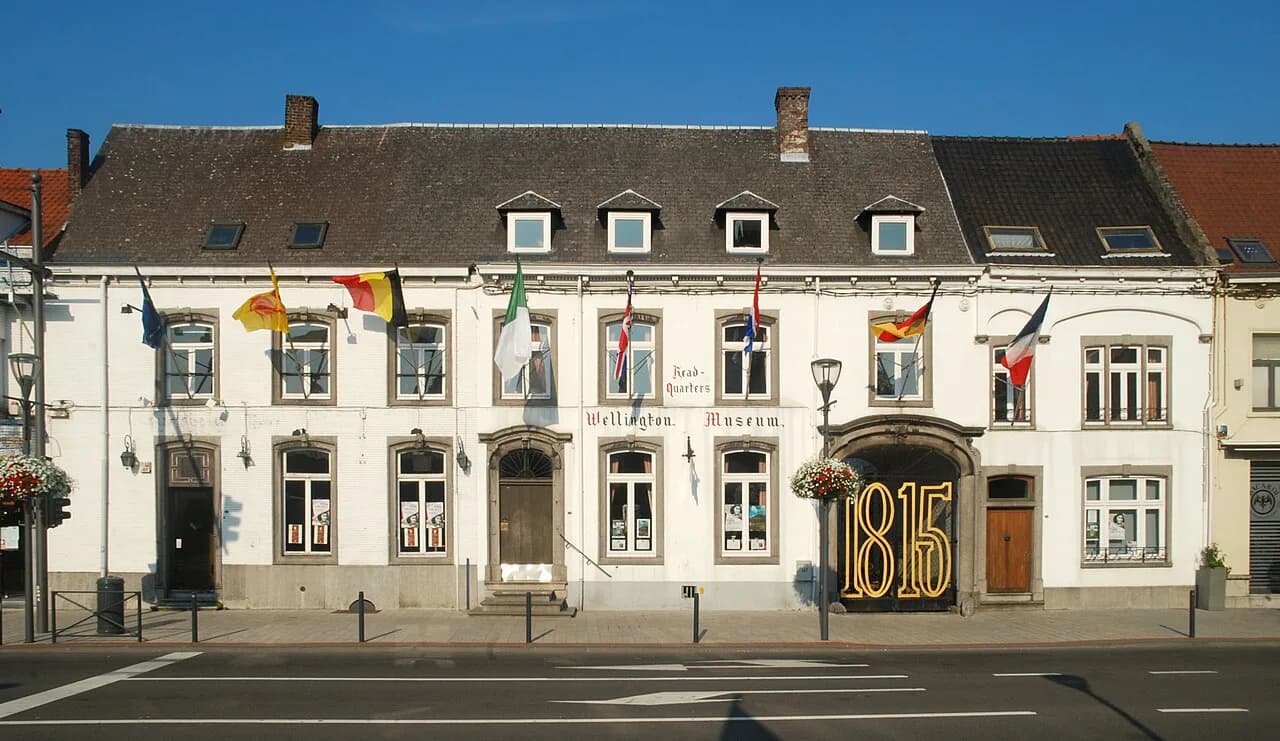
The Wellington Museum occupies the former inn at Chaussée de Bruxelles 147 in Waterloo, the building where the Duke of Wellington established his command on 17 June 1815, the day before the battle. It is a modest town-centre house rather than a battlefield monument, and that is precisely its appeal: you stand in the rooms where the campaign was directed and where the victory dispatch was written. This guide covers what the building was, what the rooms hold, how it fits into a wider Waterloo day and the practical points the museum publishes.
What the Wellington Museum is
The museum is housed in a former coaching inn dating from 1705, a building chosen to serve as headquarters for the allied command. Wellington installed himself here on 17 June 1815 and wrote his account of the victory within these walls, which is how the name Waterloo attached itself to the battle. The rooms now hold authentic souvenirs, weapons and engravings that retrace the campaign and the nations and soldiers caught up in it.
Think of it as a headquarters museum rather than a battle museum. There is no panorama or sound-and-light reconstruction of the fighting; instead you get the domestic scale of a commander's base, with the objects and prints of the period arranged through the house. If you want the ground itself, the positions and monuments, that is a separate stop a few kilometres south of town.
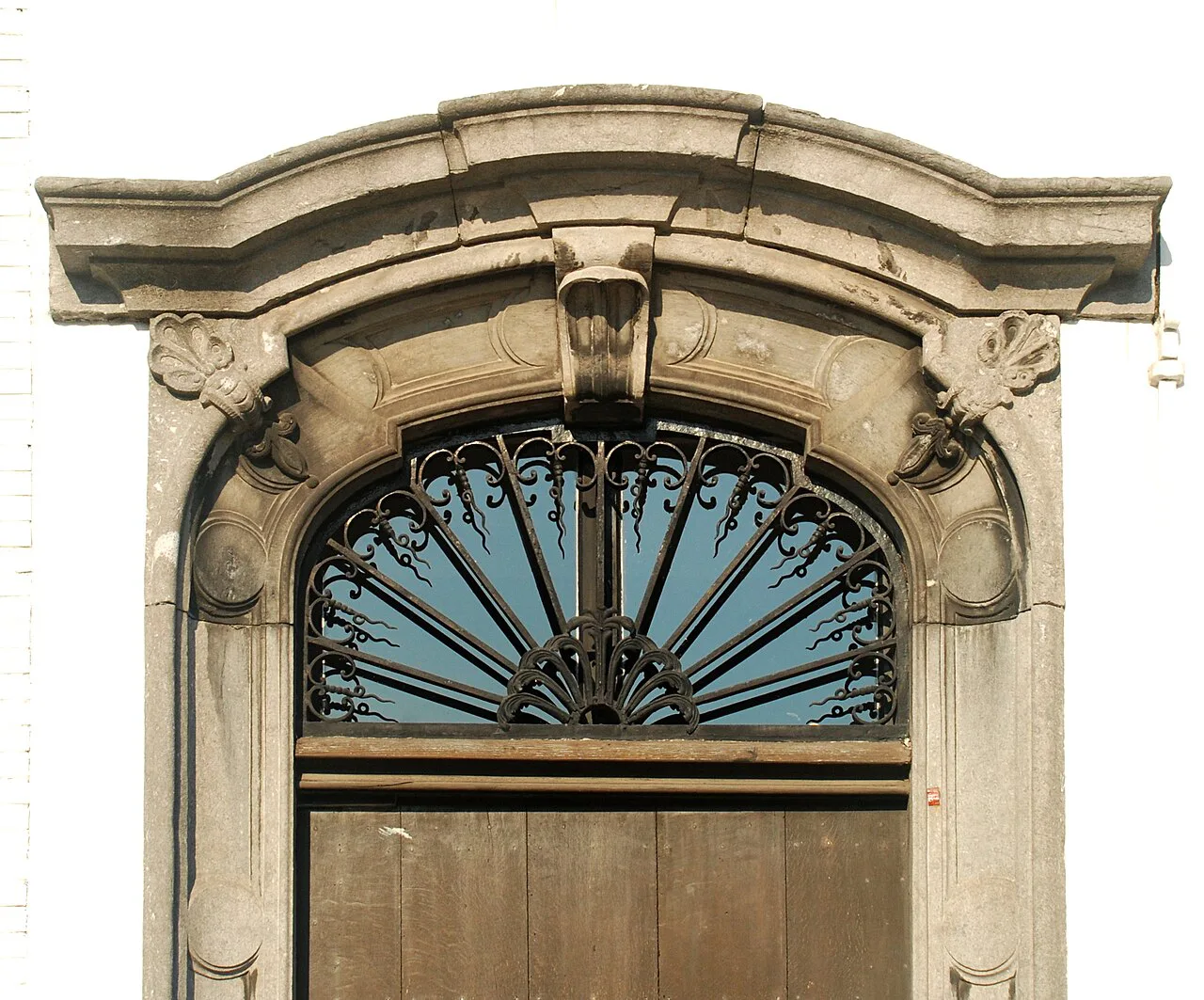
Where it sits in Waterloo town
The address is Chaussée de Bruxelles 147 in Waterloo, on the old road running south from Brussels, in the town centre rather than out on the battlefield ridge. That distinction matters: visitors often arrive expecting the museum to sit beneath the Lion's Mound (Butte du Lion), when in fact the town stop and the battlefield stop are separate parts of the day. Doing the town house first sets up the sequence of the campaign before you walk the ground where it played out.
Coming from Brussels, the museum makes an easy first call before continuing south to the Waterloo battlefield, where the Lion's Mound, the visitor centre and the farms sit within a compact area. Allow for the transfer between town and ridge rather than assuming you can walk from one to the other in a few minutes. Treat the museum as the opening chapter and the ridge as the main text.
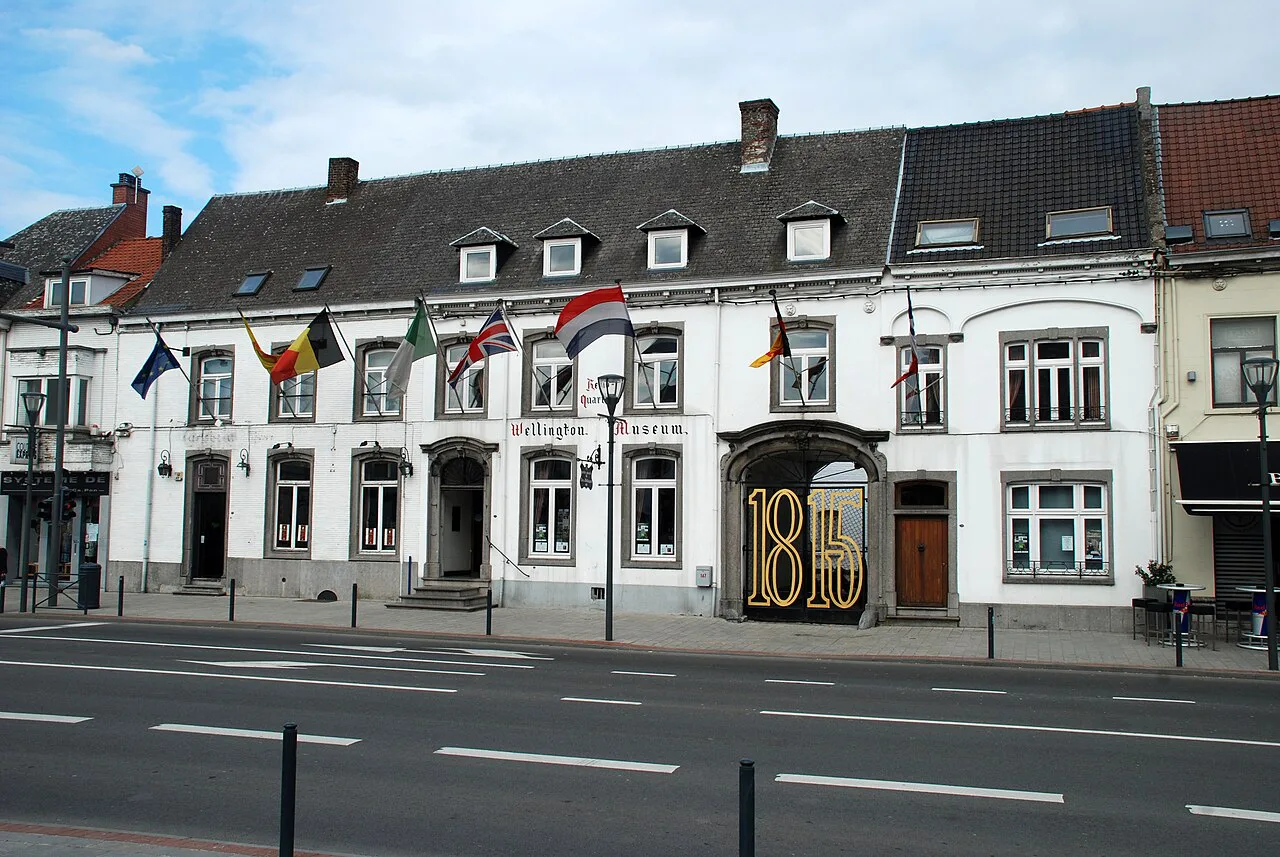
The 1705 building as Wellington's headquarters
The house was already a century old when it was taken over for the staff, and it was selected because it could accommodate a headquarters rather than for any grandeur. Wellington stayed on the nights of 17 and 18 June 1815, and the museum preserves the rooms associated with him and with the officers who worked around him. The building's plainness is part of the point: this is a working command Post, not a palace.
The centrepiece is the room in which the duke wrote his dispatch after the fighting, the document that fixed the name of the battle in the European mind. Seeing the scale of the rooms helps you picture how a coalition army was run from a provincial inn, with orders, messengers and reports passing through a handful of chambers. It is the human, administrative side of Waterloo that most monuments on the ridge cannot show.
What is on display
The collection runs through original memorabilia, arms and engravings, arranged room by room to follow the campaign rather than simply to display trophies. Displays also keep alive the memory of the nations and the ordinary soldiers involved, which balances the focus on the famous commanders. Because the museum is small, the sequence of rooms does most of the storytelling work, so read as you go rather than rushing to a single highlight.
If your interest is the battle itself, the broader Waterloo battlefield tour covers the phases of the fighting, the key positions and the commanders, including Napoleon Bonaparte and his marshals. The museum and the ridge complement each other: one gives you the decision-making and the other the terrain. Doing both in a single day is the most coherent way to understand June 1815.
The temporary exhibition room and special events
A separate room is set aside for temporary exhibitions, and the museum regularly stages special events alongside its permanent displays. That gives repeat visitors something new and lets the museum explore themes beyond the core Waterloo narrative. If a particular exhibition is your reason for coming, confirm what is on before you travel rather than assuming the permanent collection is the whole offering.
Opening times and closures
The museum opens Tuesday to Sunday, public holidays included, from 10.00 to 17.00. It closes on 25 December and 1 January, and on 24 and 31 December it shuts early, at 13.30. A Monday visit will find the doors closed, which is worth planning around if your break starts at the beginning of the week.
Entry is free with the MuseumPass, according to the museum's own site, so a pass already in hand changes the calculation. The museum's home page does not list a standard ticket price, so check admission with the museum directly when you book.
How long to allow, and pairing it with the battlefield
The house is compact, so it works as a focused stop of the kind you can fit into a morning before heading south. Budget by what you want from it: a quick pass through the main rooms, or a slower read of the prints and objects with the campaign narrative in mind. Build the rest of the day around the battlefield rather than the other way round.
The most rewarding pairing is the headquarters in the morning and the ridge afterwards. On the ridge, Hougoumont farm repays time: the walled compound was one of the most contested points of the battle and remains a working memorial site. Standing in its courtyard after seeing the orders that sent men there gives the day a logic that a single site cannot.
The Memorial 1815 at Waterloo is the other anchor of a full day, and it sits with the mound and the visitor facilities rather than in the town. The museum is best judged as the first stop on that circuit, not as a substitute for it. Decide your order before you set out, because the distances between town and ridge eat into a short break.
What the museum adds that a monument cannot
A monument tells you where men fell; the headquarters tells you how the battle was directed. That is the case for giving the town house a slot even on a tight itinerary, especially if you already know the outline of the campaign. The rooms make the alliance concrete: British, Dutch, Belgian and German troops under one command, coordinated from an inn on a chaussée.
The building also carries a personal thread that the ridge cannot. Wellington's dispatch turned a crossroads into a name known across Europe, and the room where he wrote it survives in the town centre. If you have read about the battle, this is where the paperwork of victory becomes tangible.
Should the Wellington Museum be on your Waterloo itinerary?
Yes, if you want the command side of the story and can visit on a Tuesday to Sunday; the house earns its place as the opening stop of a Waterloo day. Skip it if your only interest is the fighting ground, and go straight to the ridge instead. Pair the two and the day makes sense: orders in the town, consequences on the battlefield.
Frequently Asked Questions
Can you visit the Waterloo battlefield?
Yes. The battlefield lies south of Waterloo town and is a separate stop from the Wellington Museum, with the Lion's Mound, the Memorial 1815 and Hougoumont farm among its sites. Plan the town headquarters and the ridge as two parts of one day rather than expecting them to be in the same place.
How much does the Wellington Museum cost?
The museum's own site says entry is free with the MuseumPass but does not list a standard ticket price on its home page. Check admission with the museum directly when you book rather than relying on old figures.
How long do you need at the Wellington Museum?
The house is compact, so judge it by how closely you want to read the prints, weapons and campaign displays. Most visitors see it comfortably before continuing south to the battlefield ridge.
Sources
Useful notes for your next trip
Optional updates to our guides.
You might also like
Continue reading
More guides you'll find useful