Hougoumont Farm, Waterloo: What Happened There and What You Can See
Hougoumont Farm at Waterloo is where the battle's first French attack was stopped in 1815. Here is what happened there and what visitors can see today.
On this page
Hougoumont Farm is the fortified farm complex on the western edge of the Waterloo battlefield where the first French attack of 18 June 1815 was stopped and never dislodged. It is the place to start a Waterloo visit if you want to understand why the Allied right flank held, and it needs roughly an hour of unhurried walking through the courtyard, past the North Gate and out into the orchard and garden ground.
This guide covers what happened in and around the farm, which buildings survived the fire that consumed the château, what the small museum and memorials contain, and how to fold Hougoumont into a half or full day across the ridge. It is a memorial ground as much as a heritage site, so the walking sequence matters as much as the exhibits.
Where Hougoumont sits on the Waterloo battlefield
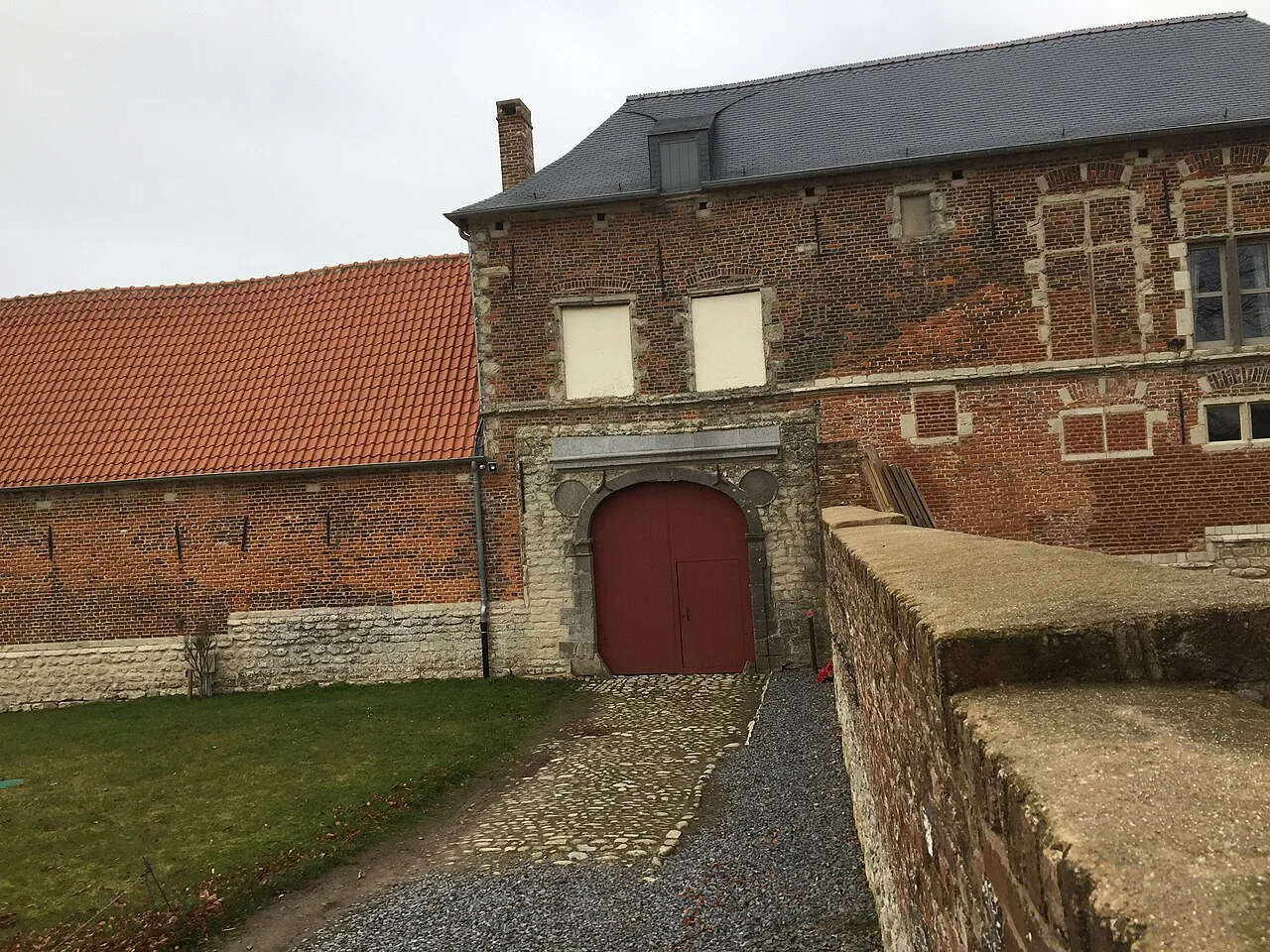
Hougoumont lies at the western end of the Allied line, on ground that Wellington chose partly because the farm and its walled enclosure made a natural strongpoint on his right. The farm stands at Chem. Du Goumont 1, 1420 Braine-l'Alleud, south of Brussels and within the wider spread of villages, ridges and farm sites that make up the battlefield. The position mattered because the French had to clear it before they could roll up the Allied line from that side.
The battle itself was fought over a low ridgeline straddling the Brussels–Charleroi road, with the farm complex, its orchards and gardens forming the linchpin of the Anglo-Dutch right flank. Reading the ground helps: the farm sits forward of the main ridge, so the defenders inside were exposed on three sides and dependent on the walls and the buildings themselves.
Why Hougoumont mattered on 18 June 1815
On 18 June 1815 the French Armée du Nord under Napoleon Bonaparte confronted a coalition of British, Dutch-Belgian and Prussian armies along that ridge. The fight for Hougoumont opened the Battle of Waterloo and drew in French troops repeatedly through the day, men who were needed elsewhere on the field. Hougoumont was not a sideshow: it was the hinge that kept the Allied right in place.
The farm was defended throughout the day by a mixture of British, Hanoverian and Dutch-Nassau light infantry, including several companies of Coldstream and Scots Guards. The French launched their first attack of the battle against this fortification and came back at it again and again without taking the complex.
The fighting in the courtyard and the North Gate
The defence turned on the enclosed spaces: the courtyard, the buildings around it and the North Gate, where French troops broke in and were driven back in close fighting. Archaeology has recovered over a thousand spent musket balls from the area around the farm, which underlines how sustained the fire was rather than a single rush. When you stand in the courtyard today, the walls give you the scale of the problem the attackers faced.
Despite several incursions into the complex, the French never captured the farm. Instead they burned a large part of the château and surrounding buildings, so what you walk through now is a mix of original walls, surviving structures and later restoration.
What the French burning of the château left behind
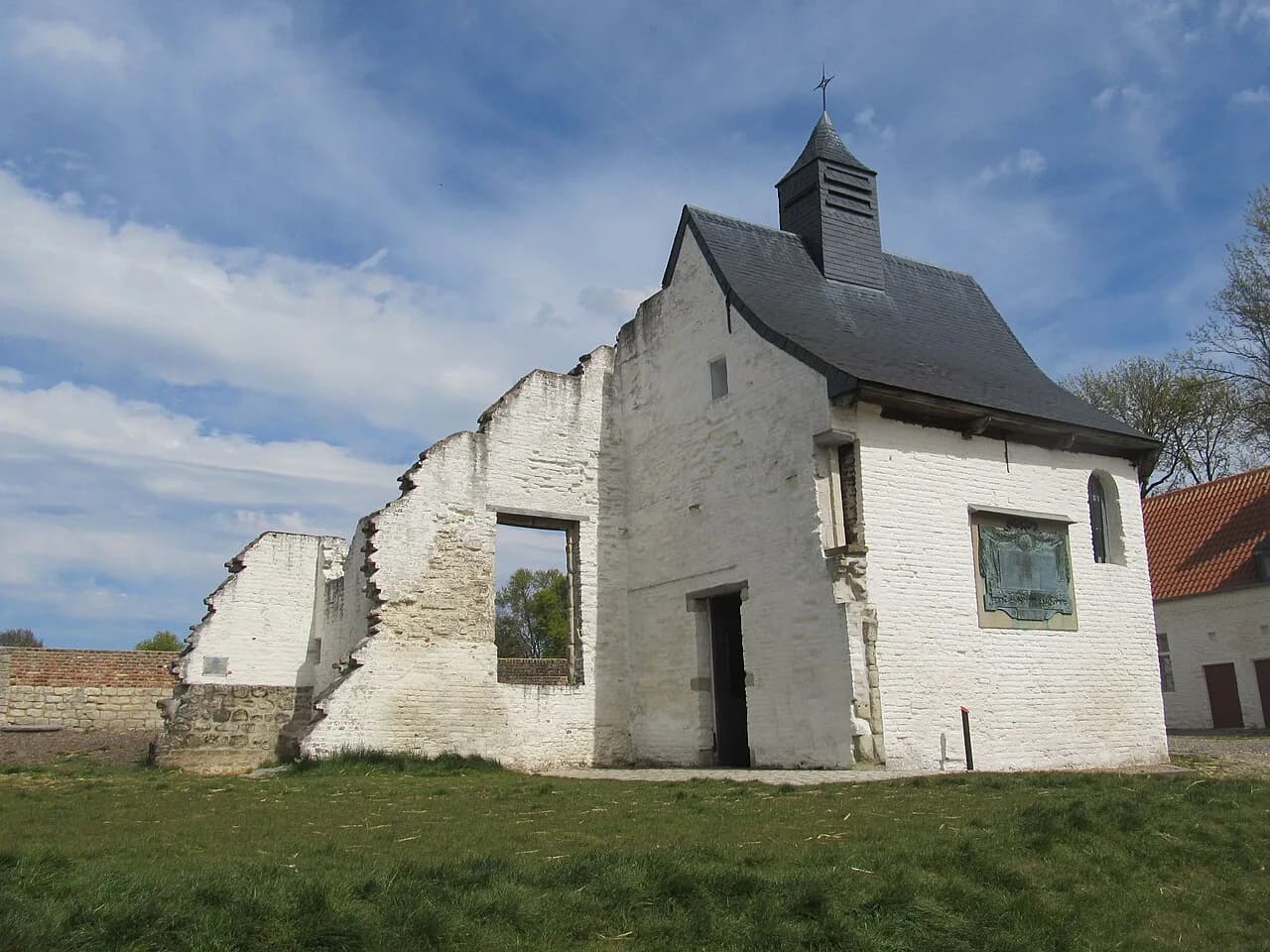
The fire destroyed much of the château itself, and the large barn that sat against the northern wall of the courtyard next to the North Gate was among the buildings lost. That is why the farm reads as a working enclosure rather than a country house: you are looking at the defensive shell that mattered in 1815, with the surviving farm buildings later refurbished for visitors.
For visitors, the practical consequence is that the site rewards slow looking at walls, gateways and outbuildings rather than expecting a grand château. Pair the courtyard with the ground outside the walls, where the orchards and gardens once gave the defenders both cover and a killing ground.
The restored farm buildings and the small museum
For the 2015 bicentenary the surviving farm buildings were refurbished and a small museum was added, and that museum now forms one of the main attractions for visitors to the battlefield. The interpretation connects the buildings to the units that fought here and to the archaeology of the site. Treat the refurbishment as dated history rather than a current programme and look at what the site publishes today if you want the latest on displays.
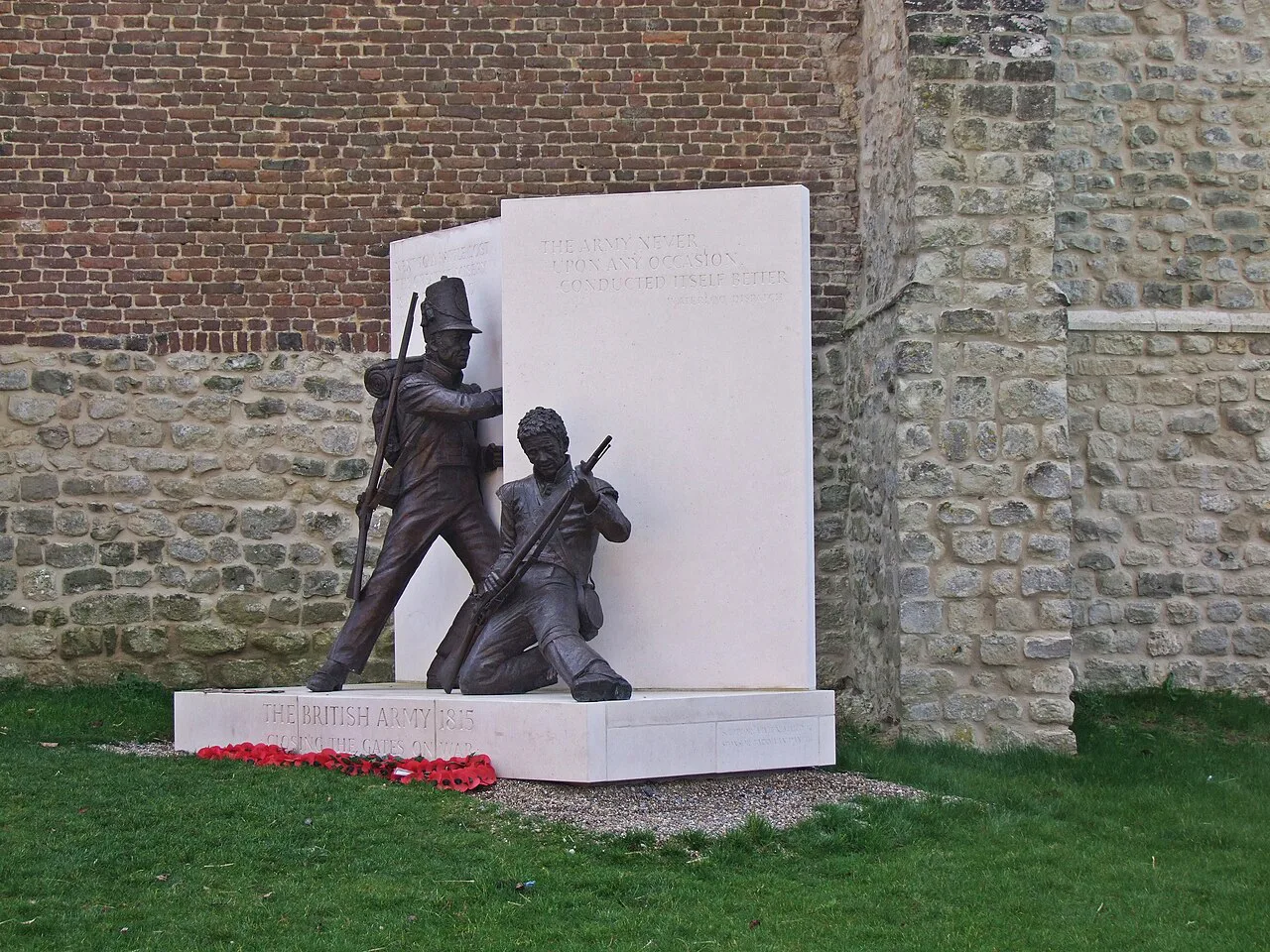
Outside the walls, little has changed in the wider farm setting, though the trees by the approach have had a hard time of it: one has rotted and fallen and is now propped above ground, another is held upright with steel anchor wires, and a third has come back into leaf. A monument has been added to the left of the three trees, dedicated to all who fell in the nearby area.
The British memorials and monuments around the farm
Hougoumont is a memorial ground as well as a museum. The monument beside the trees commemorates all who fell in the surrounding area, and the farm itself functions as the memorial to the guards and light infantry who held it. Walk the outside of the walls before or after the courtyard so the memorial and the defensive ground read together.
Further along the battlefield, the Memorial 1815 at Waterloo covers the wider Allied story and makes a sensible companion stop on the same ridge. If your interest is command rather than the fighting line, the Wellington Museum in Waterloo occupies the inn that served as Wellington's headquarters and balances the view from the farm.
How archaeology at Hougoumont has shaped what we know
Waterloo Uncovered, a registered charity, has combined archaeological survey of the battlefield with a support programme for veterans and serving military personnel. Its 2019 season focused on three farms that shaped the fighting, Hougoumont among them, and the team has worked on the château complex across several years. This is a research and welfare project, not something visitors join.
The recovery of over a thousand pieces of spent musket-ball from the ground around Hougoumont is the clearest physical evidence of the intensity of the fighting there, and it corroborates the written accounts of repeated French assaults. Reading the finds this way turns the courtyard from a pretty enclosure into a measured killing ground.
Walking the courtyard, the North Gate and the orchard ground
Start in the walled courtyard, where the buildings close in on you and the North Gate becomes obvious as the weak point. Then walk the northern side of the complex, where the barn stood and where the wall took the pressure of the attacks. Finish outside the walls by the approach trees and the monument to the fallen, which stands to the left of them.
Allow about an hour at the farm if you read the museum panels and walk the full circuit, longer if the memorials hold you. The ground is uneven in places and much of the visit is outdoors, so weather shapes the experience more than at an indoor museum.
Pairing Hougoumont with the rest of the battlefield
Hougoumont works best as the first stop on a ridge circuit, followed by the Lion's Mound (Butte du Lion) at Waterloo, where the viewing mound rises above the positions held by the two armies. From the top the geometry of the battlefield makes sense: the farm forward on the right, the ridge behind it, the road running through the centre.
A half day covers Hougoumont, the mound and one museum; a full day adds the Memorial 1815 at Waterloo and the Wellington Museum in Waterloo, plus the other farm sites such as La Haye Sainte, Papelotte and Mont-Saint-Jean. Do not try to walk the whole field on foot in one go: distances between the farm sites are longer than they look on a map.
Should Hougoumont be your first stop at Waterloo?
Yes, if you want the battle to make sense. Hougoumont explains why the Allied right held and why the French spent the day attacking a farm instead of breaking the line elsewhere, and the walled courtyard and orchard ground do that job better than any panel.
Build the day around it: courtyard, North Gate and orchard first, then the mound for the view, then a museum for the wider story. If you have only a half day, Hougoumont plus the mound is the pair to choose.
Frequently Asked Questions
Can you visit the Waterloo battlefield?
Yes. The battlefield around Waterloo and Braine-l'Alleud is open ground with Hougoumont Farm, the Lion's Mound and several museums and memorials as the main stops. Hougoumont itself was refurbished for the 2015 bicentenary and has a small museum in the surviving farm buildings.
Why didn't Napoleon win Waterloo?
At Hougoumont the French attacks were held by British, Hanoverian and Dutch-Nassau infantry in a walled farm complex that never fell, which tied down French troops through the day. That failure, combined with the coalition line holding on the ridge and the arrival of the Prussians, decided the battle against Napoleon.
What happened at Hougoumont Farm?
On 18 June 1815 Hougoumont anchored the Anglo-Dutch right flank and took the first French attack of the battle. French troops broke into the complex but were driven back, and although the château and a barn were burned, the farm was never captured.
Sources
Useful notes for your next trip
Optional updates to our guides.
You might also like
Continue reading
More guides you'll find useful