
Memorial 1815 at Waterloo: What's Inside and How to Visit
Memorial 1815 sits beneath the Lion's Mound at Waterloo, with ten galleries and a 4D film. Here is what each part of the battlefield domain involves.
On this page
Memorial 1815 is an underground museum set in the shadow of the Lion's Mound on the Waterloo battlefield, south of Brussels. It is one part of a larger domain that also takes in the mound itself, a giant circular painting and Hougoumont farm, so the ticket is really a pass to four separate experiences. This guide sets out what each one involves, how they are linked and how to decide where to spend your time on a short Belgian break.
The site lies at Braine-l'Alleud in Walloon Brabant, within easy reach of Brussels as a transport hub rather than as part of the visit. Everything sits on or beside the ground where the Battle of Waterloo was fought in 1815, which means the museum, the mound and the farm all interpret the same event from different angles. Allow at least half a day for the main visit route, and a full day if you want the whole domain without rushing.
What Memorial 1815 actually is
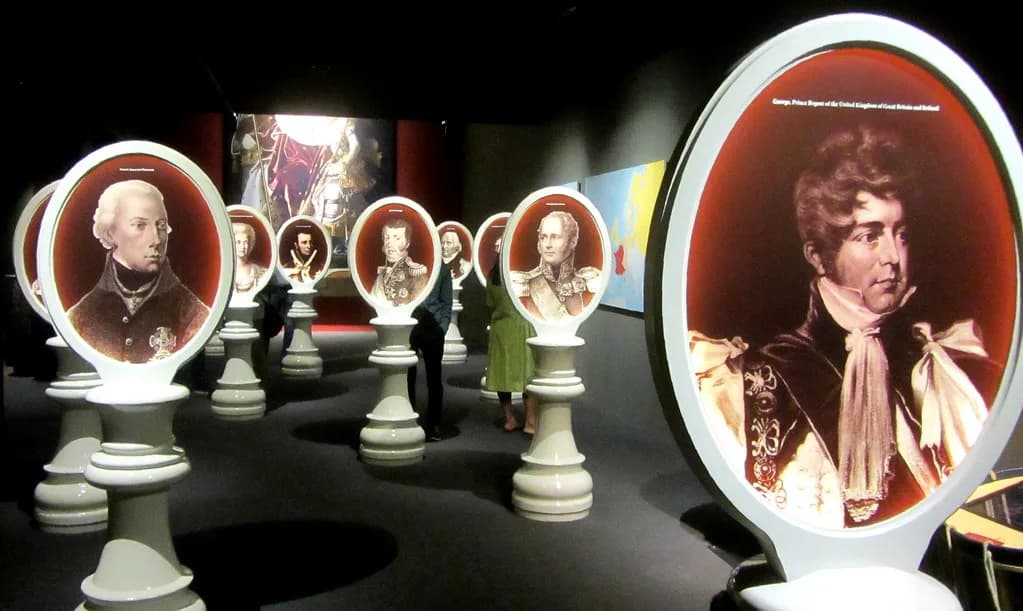
The Memorial is the modern exhibition element of the domain: ten galleries leading you through the campaign and the battle, with an 80-foot curved screen as the centrepiece of the walkthrough. Historical objects, uniforms, interactive maps and multimedia displays carry the story, and a 4D film adds a sensory finale. Because the whole thing is built underground, the exhibition keeps a low profile in the landscape and leaves the mound dominant above it.
Treat the Memorial as the place to get your bearings before you go outside. The galleries explain the armies, the positions and the phases of the fighting, which makes the open ground afterwards far easier to read. If you are travelling with someone who has limited patience for display cases, this is the section to move through briskly so you have more time on the battlefield itself.
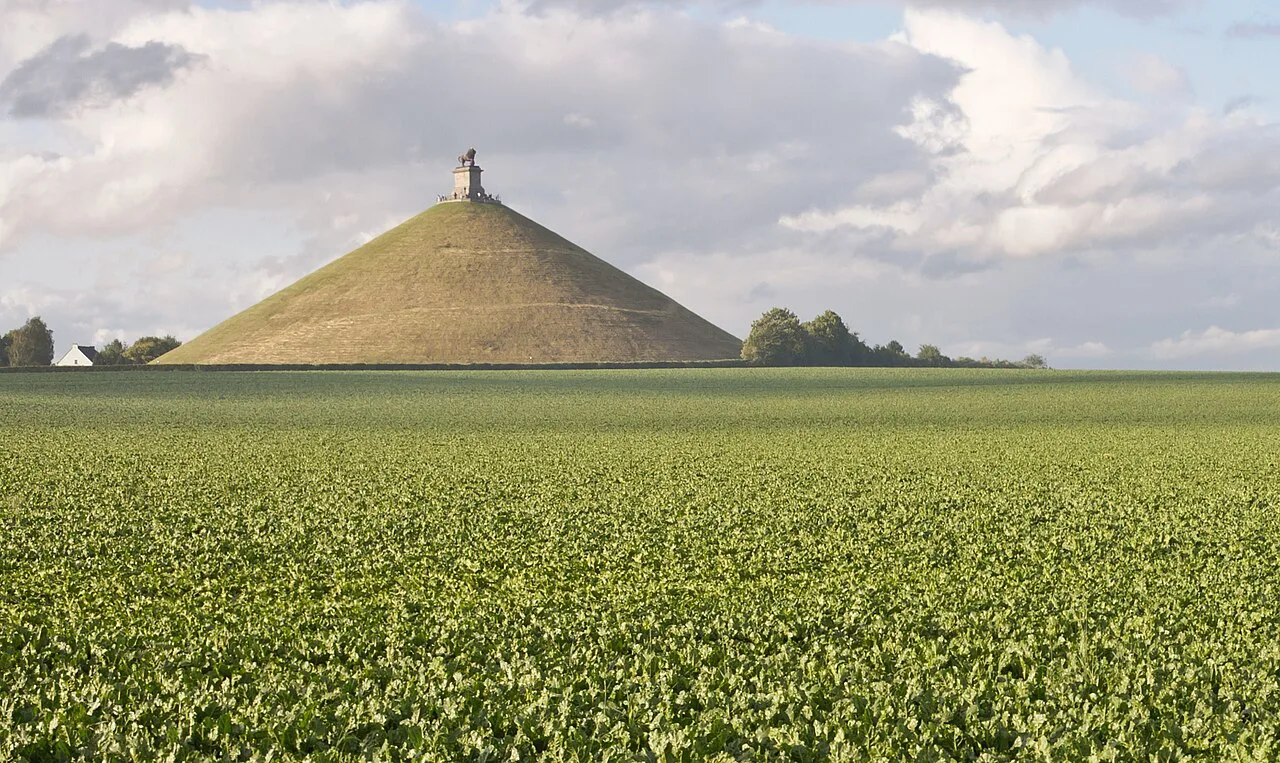
The Lion's Mound above the museum
The Butte du Lion is the artificial hill raised over the battlefield, and climbing it means 226 steps to the top. The reward is a view across the whole field, which is the single clearest way to understand how the opposing armies were arranged. The mound is the domain's icon and the marker by which everything else is found.
The steps are the practical trade-off here: the climb is short but steep, and anyone with knee, heart or breathing difficulties should weigh it up before starting. There is plenty to see at ground level while others go up, and the Memorial entrance sits directly below, so splitting up costs little time. On the day of our visit the weather can close the mound at short notice, so it is worth going up before you settle into the indoor sections.
The Panorama: a 1912 circle of paint
The Panorama is a circular painting 110 metres long and 12 metres high, housed in a building constructed in 1912 and described by the operator as one of the last fully accessible panoramas in the world. You stand in the centre and the battlefield scene wraps around you, with foreground objects blending into the painted distance. It takes perhaps twenty minutes, but it lingers in the memory longer than many larger exhibitions.
That blend of real objects and painted canvas is the reason to include it: the Panorama does something the digital galleries cannot, and it connects the 19th-century way of remembering the battle with the present-day site. If your group is flagging, do this before the Memorial rather than after, because it demands less reading and delivers a quick, strong impression.
Hougoumont: the farm at the edge of the field
Hougoumont is the walled farm that held out during the battle and is the last authentic remnant of the fighting on the site. It now holds a museum of four halls and an immersive light-and-sound presentation, with a tea-room for a pause between sections. Visiting it is a different experience from the museum complex: quieter, more open and rooted in the actual buildings and ground.
Approach Hougoumont as a memorial as much as a sight. The walls, the chapel and the courtyard are the reason to come, and the interpretation supports them rather than replacing them. It is also the part of the domain that rewards a slower pace, so build in time to walk the perimeter rather than treating it as a tick-box stop.
Getting between the parts: the 1815 shuttle
The parts of the domain are spread across the battlefield, and the electric Shuttle 1815 connects the Memorial 1815 with Hougoumont farm. Using it saves a long walk between the two ends of the site and keeps the day manageable if you are visiting on a tight schedule. Check the shuttle's running arrangements when you arrive, since it is the one element that ties your timing together.
If you prefer to walk, the site is open ground and the distances are part of the experience, but factor in weather and footwear. On a wet or windy day the shuttle earns its place, particularly if you have already spent an hour or two on your feet indoors. Ask about the shuttle's running times when you arrive and plan the order of your visit around them rather than drifting between buildings.
One ticket, free parking and free entry for under-10s
A single individual ticket covers all the visitor locations within the Domaine de la bataille de Waterloo 1815, so you are not buying separately for the Memorial, the mound, the Panorama and Hougoumont. The operator also states free entry for children under 10 and free parking on site, with both a main visitor car park and a secondary restaurant car park. Buy through the official ticket page so the current price and conditions come from the operator rather than a reseller.
For a family or a small group, that single-ticket structure makes the domain simpler to budget than a city of separate museums. It also means there is no financial reason to skip a section you are unsure about, so you can sample the Panorama or the mound and leave if it does not suit. Keep the ticket to hand, as the components are spread out across the field.
How long to allow
The operator's own guidance is that the full visit route can take half a day, or a full day for the best experience. In practice, half a day covers the Memorial, the mound and the Panorama comfortably; adding Hougoumont and the shuttle is what pushes you towards a full day. Decide before you arrive which of the four elements you are willing to cut.
A sensible half-day plan starts with the Memorial for context, climbs the mound for the layout, then finishes with the Panorama. A full-day plan adds Hougoumont in the middle and uses the shuttle to bridge the distance. If you are combining Waterloo with a Belgian city break, give it its own day rather than squeezing it between two city stops.
Eating on site
Café-Restaurant Le Bivouac serves visitors within the domain in a setting styled around the period of the battle, and the restaurant's own car park is free. At Hougoumont, a tea-room offers a lighter pause during the farm visit. Between the two you can cover lunch and a break without leaving the battlefield.
The advantage is convenience: once you are on the domain, food is handled, which matters when the alternative is driving back into Waterloo or towards Brussels. The trade-off is that you are eating where the visit takes you rather than choosing freely, so if a proper sit-down meal matters to your day, plan it around the visit rather than in the middle of it.
Scheduled events in 2026 and 2027
The domain publishes a programme of temporary experiences alongside the permanent displays. Mapping: After the Battle is listed for 18 June to 31 December 2026, an immersive piece in which Wellington guides visitors through a century of change after the fighting. A further event is scheduled from 12 August to 4 September 2027. The operator's agenda is the place to confirm dates before building a trip around one.
If your dates are flexible, an event period can add a reason to choose one week over another, but the permanent domain is the dependable core of any visit. For a first trip, plan around the Memorial, mound, Panorama and Hougoumont and treat events as a bonus. Anyone travelling specifically for a scheduled event in 2027 should book accommodation early and check the programme closer to the time.
Waterloo and the wider battlefield
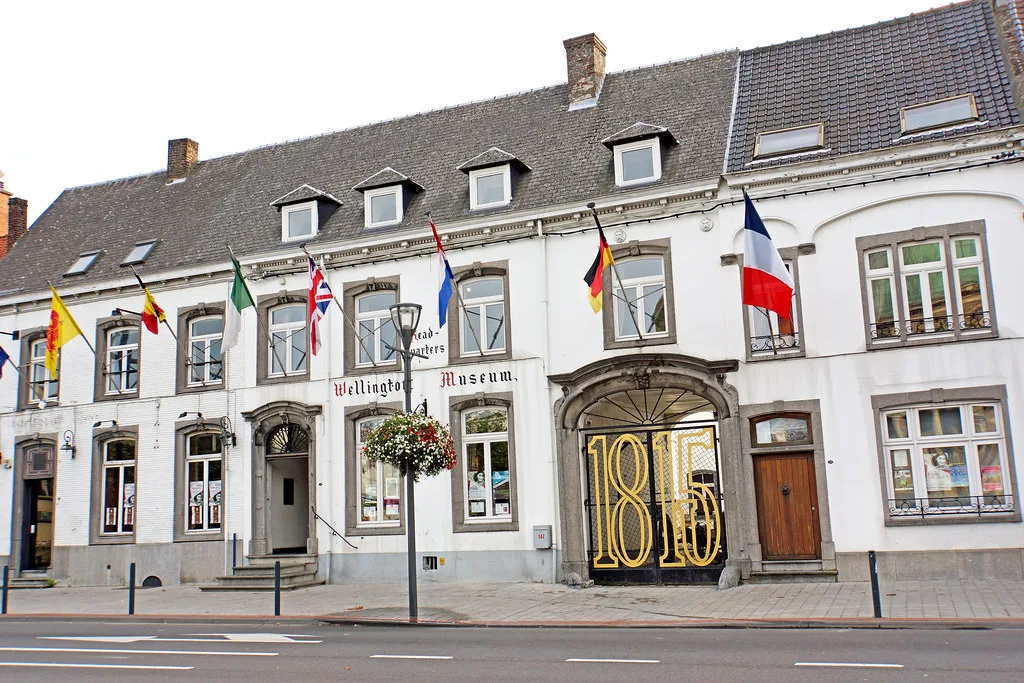
The domain is the centre of the battlefield, but it is not the whole story. The village of Waterloo itself holds the Wellington Museum, which pairs naturally with a morning or afternoon on the field.
For the campaign as a whole, from the politics to the fighting, a guided context helps before you walk the ground. A Waterloo Battlefield Tour can supply that framing, and the story of Napoleon Bonaparte's defeat gives the site its meaning. Build the day so the context comes first and the ground second.
Is Memorial 1815 worth the day?
Yes, if you give it the time it needs. Memorial 1815 works best as the anchor of a full day that includes the 226 steps of the mound, the 1912 Panorama and Hougoumont, all on one ticket and with the shuttle covering the distances between them. Treat it as a day out from Brussels or a stop on a longer Belgian trip, not a two-hour add-on.
Frequently Asked Questions
Can you visit the Waterloo battlefield?
Yes. The Domaine de la bataille de Waterloo 1815 brings together Memorial 1815, the Lion's Mound, the Panorama and Hougoumont farm on a single ticket, with free parking on site and free entry for children under 10.
Why did Napoleon lose at Waterloo?
The Memorial's galleries set out the positions and the phases of the fighting, which together shaped the outcome. Reading them before climbing the mound makes the ground itself legible, and a guided tour adds the political background.
How many died during the Battle of Waterloo?
The site interprets the scale of the casualties in its exhibition galleries and in the Panorama. For figures and interpretation, read the displays on site and the official domain material rather than relying on summary numbers.
Sources
Useful notes for your next trip
Optional updates to our guides.
You might also like



Continue reading
More guides you'll find useful



