
Waterloo Battlefield Tour: What to See and How to Plan It
A Waterloo battlefield tour: what the Lion's Mound, the Panorama and Hougoumont farm cover, whether to take a guide, and how the day fits a Belgian city break.
On this page
A Waterloo battlefield tour needs a full day, not a half one, if you want both the visitor sites and a proper walk over the ground where the fighting happened. The battlefield lies south of Brussels, and the key stops cluster around the village of Waterloo and the ridge at Mont-Saint-Jean, so the visit is about linking scattered sites rather than following one path. This guide covers what the main stops show, the trade-off between a guided tour and a self-guided circuit, a realistic time budget, and how to slot the day into a Belgian city break.
The Battle of Waterloo was fought in 1815, and the ground itself is the best teacher: the ridge, the sunken lane and the walled farm courtyards explain far more than any display case. The Duke of Wellington held the ridge; Napoleon Bonaparte attacked it. Walking from one strongpoint to the next makes the timetable of the day legible in a way that maps alone never quite manage.
What a Waterloo battlefield tour covers
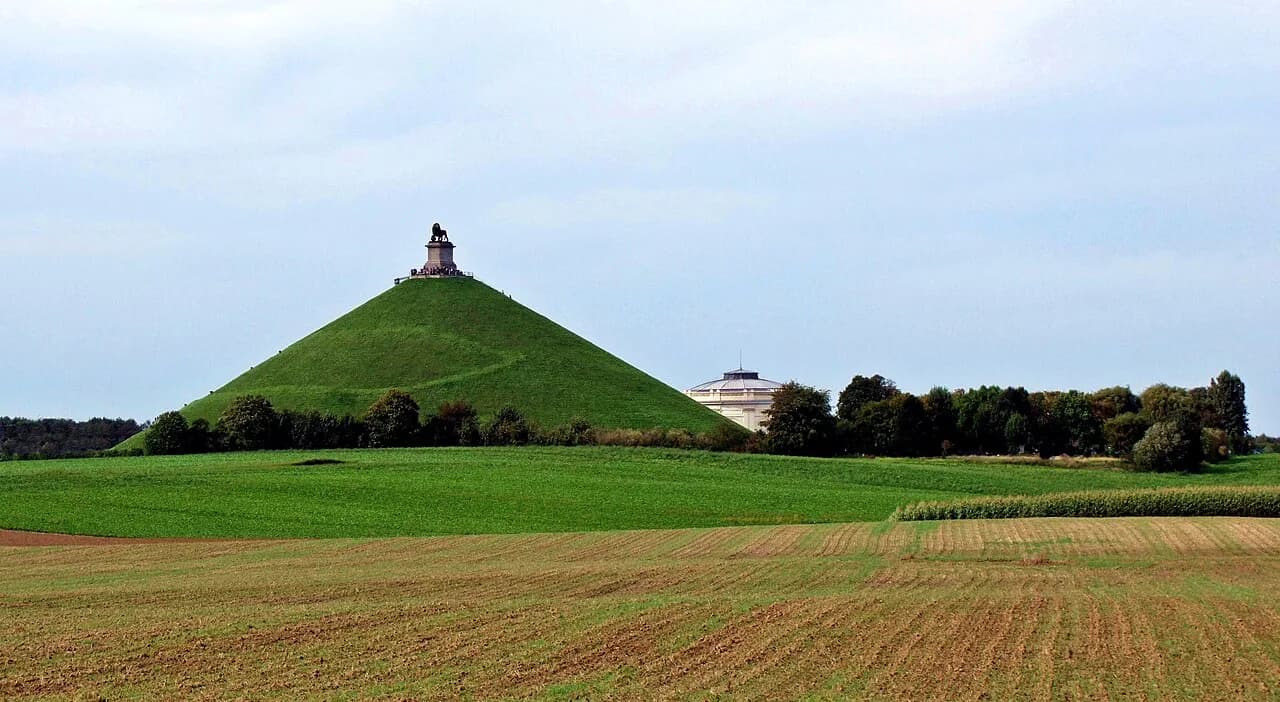
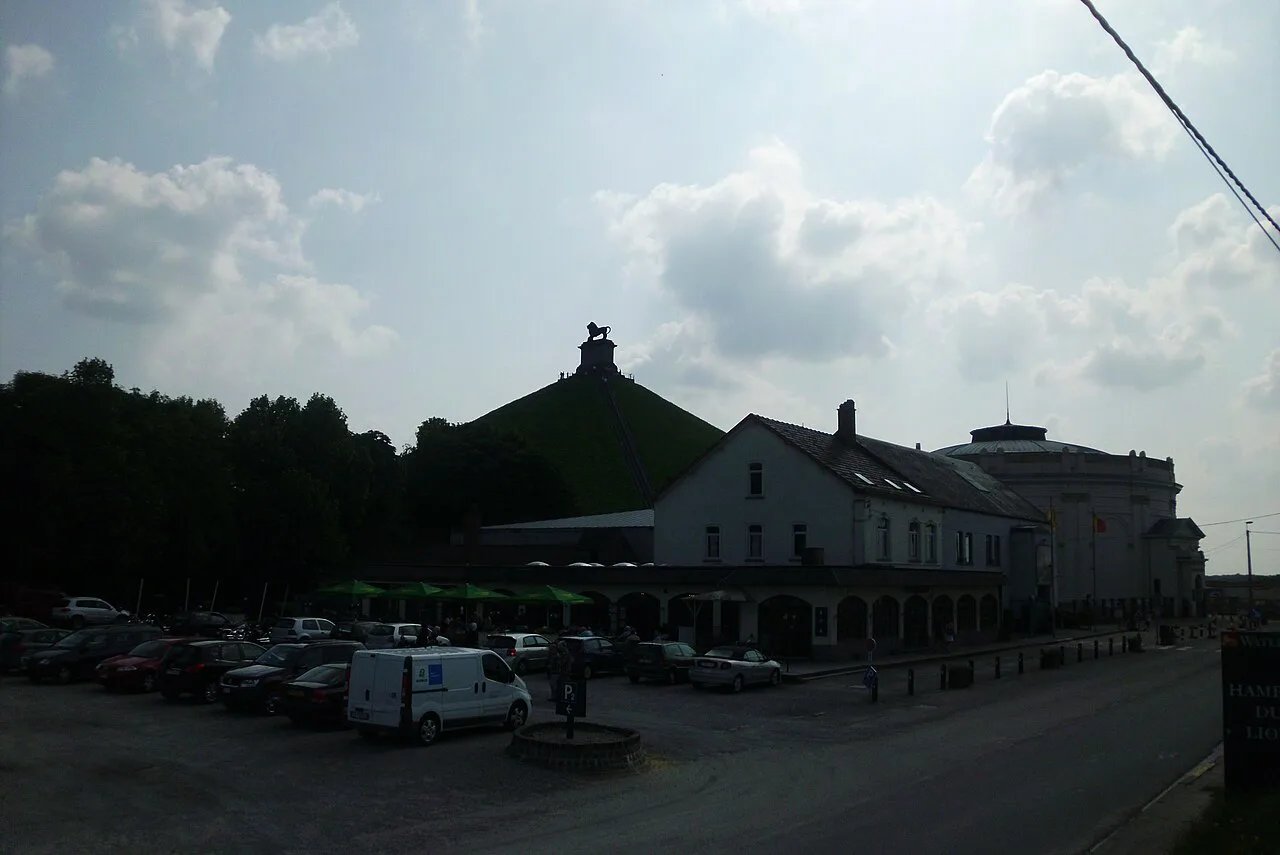
A battlefield visit combines a landscape with a small group of built sites. The Lion's Mound (Butte du Lion) is the obvious orientation point, an artificial hill raised over the field with wide views across the surrounding farmland. Around it sit the visitor buildings, the panorama painting and the museums that explain the armies, the uniforms and the aftermath.
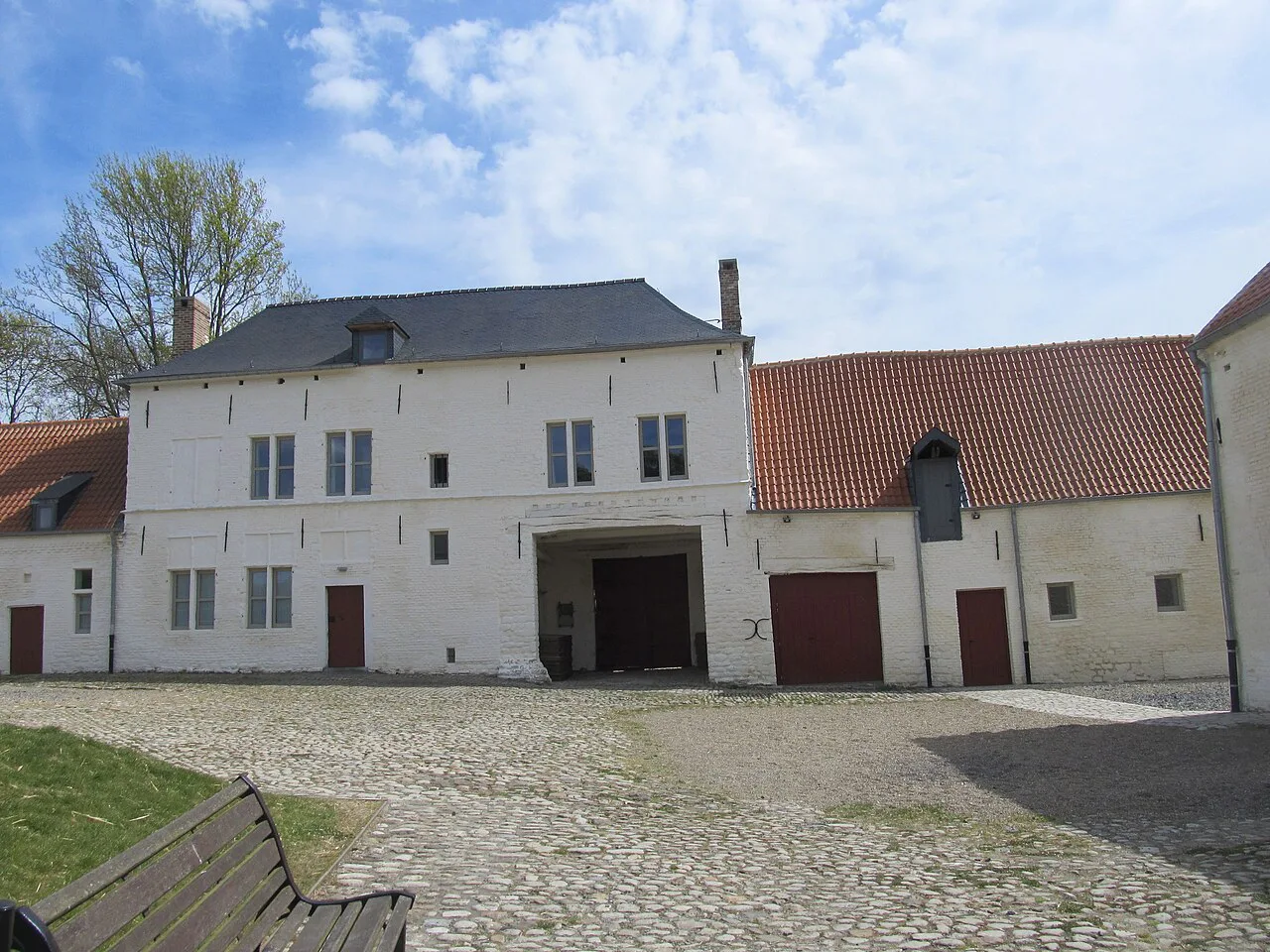
The second anchor is Hougoumont farm, the walled compound on the western end of the line where fighting went on for hours and the defence became one of the defining episodes of the battle. The circuit then runs east along the ridge, past the ground Napoleon's cavalry crossed and the positions of the allied squares. Treat the whole thing as a loop rather than a single ticketed site.
The Panorama is the piece most people remember: a large circular painting viewed from a central platform, showing the battle as a continuous scene with foreground objects blended into the canvas. It is a nineteenth-century way of telling a story, and it does something no flat picture can. Many visitors come for twenty minutes and stay far longer.
Who won the Battle of Waterloo, and why the ground matters
The allied army under Wellington, with substantial Prussian support arriving late in the day, defeated Napoleon Bonaparte at Waterloo in 1815. That result ended Napoleon's return to power and reshaped European politics for a century. The detail worth holding on to is that the battle was not won by a single charge or a single general, but by the timing of reinforcements and the stubborn holding of a few farm compounds.
That is exactly why the walking matters. Standing on the ridge, you can see how close the opposing lines were, how the slope funnelled attacks, and why a walled farmyard could absorb an entire assault. Read the panels at the mound first, then walk the ground, and the sequence of the day becomes clear.
The battlefield is open farmland, much of it ploughed, with long exposed stretches and little shade between the main stops. In wet weather the paths and field edges get heavy, and in summer there is nothing to break the sun. Sturdy shoes matter more than any piece of kit.
Guided tour versus self-guided circuit
A guided tour earns its place when you want the story assembled for you: the order of attacks, the mistakes, the personalities and the small anecdotes that explain why a particular wall or orchard mattered. Operators run battlefield tours that combine the ground with the museum sites, and a knowledgeable guide can compress a confusing day into a coherent narrative. The trade-off is pace and flexibility, since you move when the group moves.
The self-guided option suits anyone who wants to linger at the panorama, walk the full ridge at their own speed, or stop for a long lunch in Waterloo village. You get the sites on your own schedule and can spend forty minutes at one farm and five at another. The cost is effort: you do the reading, you navigate between stops, and you need your own transport or a willingness to walk between them.
My recommendation for a first visit is a hybrid. Use a guide or the site interpretation for the sequence of the battle, then break away and walk the ground alone with that framework in your head. Groups that stay together all day often leave knowing the anecdotes but not the landscape.
Key stops and how long each needs
Start at the Lion's Mound area. Climb the mound for the overview, then work through the visitor displays and the panorama: allow a good two hours for that cluster alone, more if the museum rooms absorb you. From there, drive or cycle west to Hougoumont and give the farm compound an hour, walking the courtyard, the chapel and the outside walls rather than just photographing the gate.
The Waterloo memorial 1815 site, with its museum and audiovisual presentation, is worth an hour if you want the political and military context laid out in sequence. The Wellington museum Waterloo in the village puts the commander's headquarters into the story and takes about forty-five minutes. Spread across a day, these stops add up quickly, which is why a half day only really covers the mound and the panorama.
If you have only half a day, choose the mound cluster and one farm. The mound gives you the view and the story; Hougoumont gives you the texture of the fighting. Skip the smaller museums rather than rushing every site, because a hurried circuit of six stops teaches you less than a slow look at two.
How long a Waterloo visit takes
A full day gives you travel, the mound, the panorama, one museum and Hougoumont without rushing. A half day fits the mound, the panorama and a quick look at the nearest museum, with no time for the western end of the field. Families and casual visitors often prefer the half day; anyone with an interest in military history will want the full one.
The pace changes with the season. Spring and autumn give comfortable walking temperatures and softer light for the landscape, while high summer is hot and exposed on the ridge. The battlefield is farmland in active use, so some field edges will be muddy after rain.
Getting there from Brussels or Ghent
Waterloo sits south of Brussels and is reachable by train from the capital, though the stations near the battlefield leave you a walk or a taxi ride from the sites. A car is the simplest way to link the mound, Hougoumont and the village museums in one day. From Ghent, add roughly an hour by train via Brussels before you even start.
Fitting Waterloo into a city break means treating it as a day out rather than a stop-off. Bruges, for instance, is a compact city whose old centre can be crossed on foot in half an hour, so a Bruges base leaves a full day free for the battlefield. The same logic works from Ghent or Antwerp, both of which connect easily to Brussels by rail.
If your city break is short, put Waterloo on the middle day and keep the arrival and departure days for the city itself. That way a delayed train or a long lunch does not cost you the main sight of the trip. Two nights in Bruges plus a battlefield day is a workable three-day shape for a first visit to Belgium.
Bookings, tickets and group numbers
Guided battlefield tours are usually booked in advance, and group sizes vary by operator, so check the specific tour page for what is included and how many people join. Independent travellers can check each site's own arrangements before travelling. Prices change, so confirm current rates on the official site before you commit.
Anyone with mobility needs should ask about the mound climb and the farm paths before booking, because the terrain is uneven and the climb is steep. A guided tour with a vehicle solves most of the distance problem in one go.
Waterloo in context: other battlefield sites in Belgium
Belgium holds battlefields from several centuries, and Waterloo is the Napoleonic one. The First World War sites around Ypres (Ieper) draw a different kind of visit, with cemeteries, memorials and the Menin Gate (Menenpoort) as the focus. Travellers interested in both should plan separate days rather than trying to combine them, since they sit at opposite ends of the country.
Waterloo itself rewards a little reading before you go. A short history of the 1815 campaign makes the landscape legible, and it turns a walk across fields into a sequence of decisions and consequences. Even a basic map of the allied and French positions will sharpen what you see at each stop.
What to wear and how much walking is involved
Expect several kilometres of walking across grass, track and cobbles, with the mound climb on top. Waterproof shoes, a warm layer and a rain jacket cover most conditions, and a water bottle is essential in summer because the ridge is exposed. Binoculars are a nice touch if you want to pick out the far end of the line from the top of the mound.
The visitor sites themselves are indoors and comfortable, so the day alternates between warm museum rooms and open farmland. That mix is why layering works better than a single heavy coat. Allow more time than you think for the walking between stops, especially at Hougoumont, where the compound is bigger than the gate suggests.
Is Waterloo worth a day of your Belgian trip?
Yes, if you have three days or more in Belgium and any interest in military history. The combination of a walkable landscape, a nineteenth-century panorama and a walled farm that absorbed hours of fighting is hard to match elsewhere. Give it a full day, start at the mound, and finish at Hougoumont.
If your trip is two nights in one city, leave Waterloo for next time and spend the days on the canals, the belfry and the Flemish masters instead. A rushed battlefield visit, squeezed between trains, sells the place short. The ground rewards the people who give it time.
Explore more Belgium guides
Frequently Asked Questions
Can you visit the Waterloo battlefield without a guide?
Yes. The main sites are set up for independent visitors, with interpretation panels, museums and a landscape you can walk at your own pace. A guide adds the narrative and the sequence of the battle, but the ground is legible once you know the basic shape of the day.
How many soldiers died at the Battle of Waterloo?
Tens of thousands were killed or wounded in the fighting, and many of the dead were buried in mass graves on the field in the days afterwards. The scale of the losses is one reason the battle became such a defining event in European memory.
Can you visit the site of the Battle of the Bulge?
Yes, but it is a separate trip in the Ardennes, in the south-east of Belgium around Bastogne and the surrounding forests. It does not combine easily with Waterloo, which sits south of Brussels at the opposite end of the country. Plan them as two different days.
Sources
Useful notes for your next trip
Optional updates to our guides.
You might also like



Continue reading
More guides you'll find useful





