
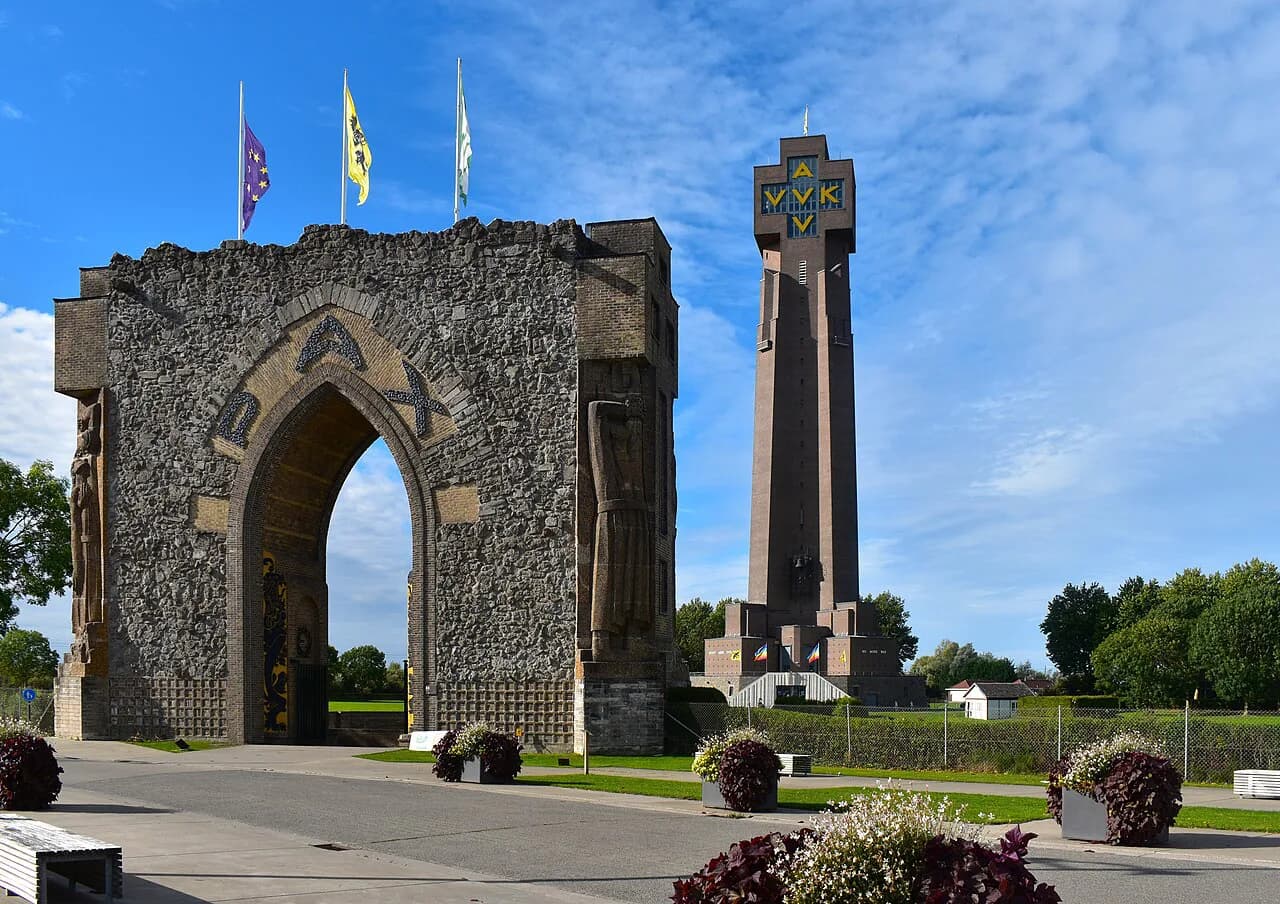
Yser Tower (IJzertoren), Diksmuide: Memorial and Museum Guide
The Yser Tower in Diksmuide is a war memorial and home to the Museum aan de IJzer. Here is what the tower is, why it was rebuilt, and what to see inside.
On this page
The Yser Tower (IJzertoren) is a war memorial on the bank of the Yser at Diksmuide, and it is not the building first put up there: the tower you see went up between 1952 and 1965 as a slightly larger replica of the original, which was destroyed in 1946. It houses the Museum aan de IJzer. This guide covers what the tower is, the two building campaigns and the politics that shaped them, what the museum contains, and whether it fits your time on the Yser front.
Where the Yser Tower stands
The tower stands at Diksmuide, on the bank of the Yser (IJzer) river, in the flat polder country of West Flanders. This is the northern half of the First World War front in Belgium, where the Belgian army held a line along the river for four years. Diksmuide is a small town, and the tower is its dominant landmark: you will see it across the fields well before you reach it, which makes it a natural anchor for a day on this part of the front.
That position matters when you plan. The tower is not in Ypres itself, so build it into a loop that takes in the Yser front rather than treating it as an Ypres stop. If your only fixed point is the Menin Gate in Ypres, expect a separate outing in the car or by public transport, and give the tower and museum a proper half-day rather than an hour.
The first tower, 1925 to 1929, and its destruction in 1946
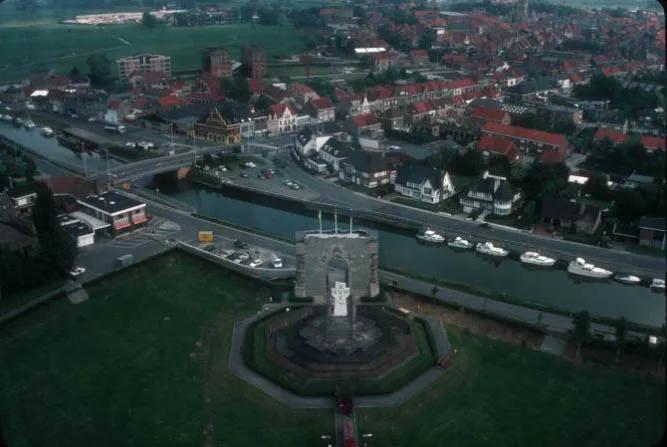
The original IJzertoren was built between 1925 and 1929 as both a war memorial and a monument to Flanders' struggle for political emancipation. From the start it was a charged, divisive symbol in interwar Belgium, and its construction was highly ideological rather than simply commemorative. Visiting the site today means engaging with that double purpose, because the stone was never only about mourning.
The tower's associations with collaboration during the Second World War sharpened that division, and in 1946 it was deliberately destroyed under suspicious circumstances. The arguments that followed were about whether it should rise again, in what form, and who had the right to decide. That question of reconstruction is the hinge of the whole story, and it is the part most visitors arrive knowing nothing about.
The rebuilt tower, 1952 to 1965
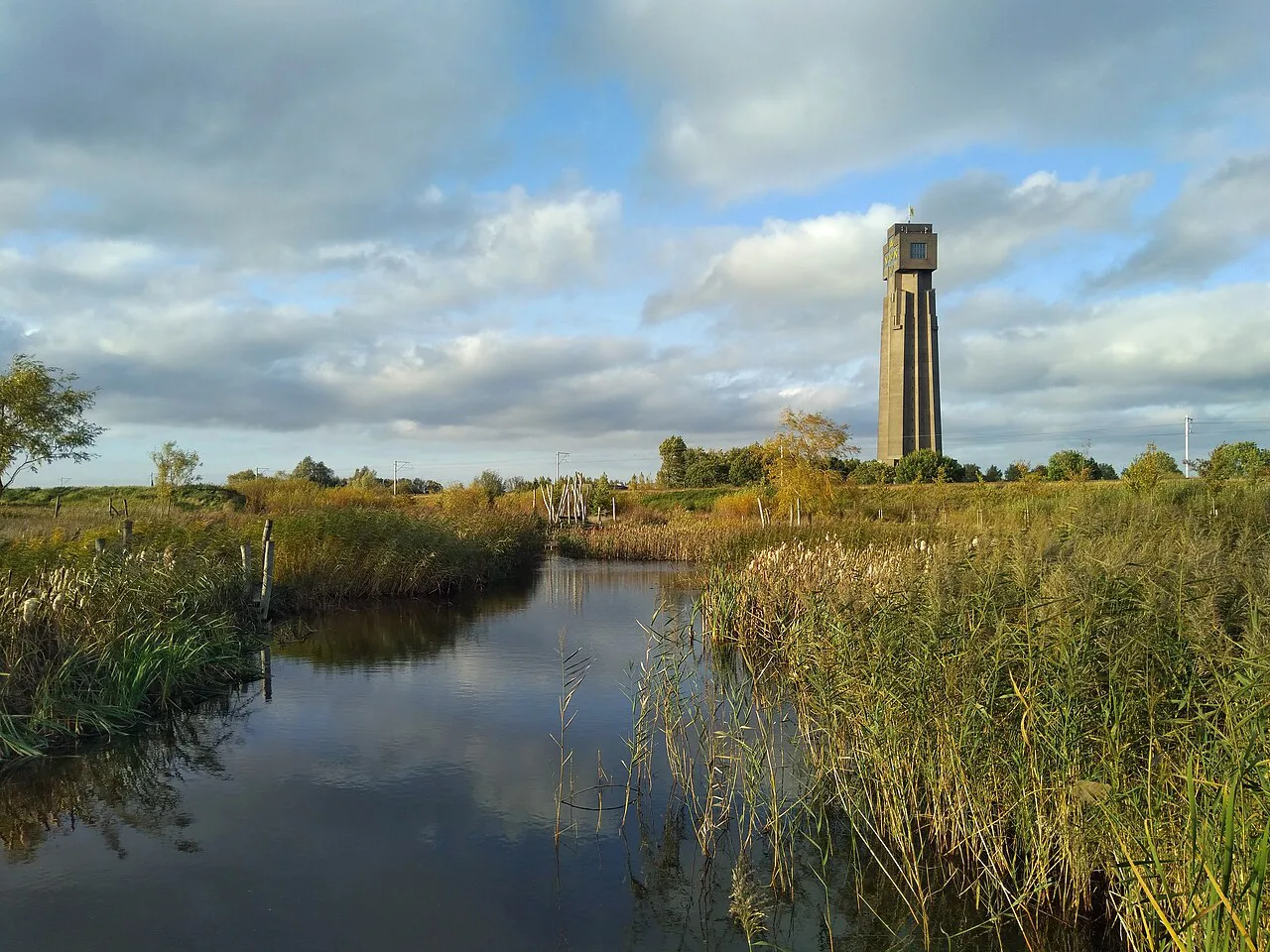
Despite ambitious reconstruction plans for something new, the memorial was eventually rebuilt between 1952 and 1965 as a slightly modified and upscaled copy of the old tower. The designers deliberately rejected modern design references and modern construction methods, so the result is a replica with a difference in scale rather than a fresh architectural statement. Knowing this changes how you look at it: the brickwork is twentieth-century reconstruction of an idea, not a surviving monument.
The long building process was itself used in propaganda and iconography for the annual Flemish nationalist rallies staged on the site while it was under construction. The tower, in other words, was political theatre as well as a building site. That is the candid point about a visit here: the politics is the history, not a footnote you can skip past.
The Museum aan de IJzer inside the tower
The IJzertoren houses the Museum aan de IJzer, a museum of war, peace and Flemish liberation. Its subject belongs to the Yser front specifically, which makes it a complement rather than a substitute for the war museums of the Ypres Salient in Ypres.
Budget for the museum as the core of the visit rather than a warm-up to the view. Because the subject is war, peace and Flemish emancipation together, the displays ask you to hold commemoration and identity politics in the same frame, and that takes attention. If you have already done the Ypres Salient, this is where the Belgian-army and Flemish side of the war comes into focus.
Climbing the tower and the view
The tower is tall enough to be the dominant landmark of the Diksmuide skyline, so treat the visit as a vertical one and pace yourself accordingly. Pair the climb with the museum so you give the whole visit a comfortable half-day, and allow for a pause mid-ascent rather than treating the ascent as a hurdle.
Plan the climb around your energy rather than racing it. If stairs or lift access matter to you, check the arrangements with the museum directly before you travel, since the practical set-up of a tall memorial tower can vary.
The tower in the wider Yser front landscape
The IJzertoren is the tallest marker of a front that runs north from the Ypres salient along the river. Near Diksmuide you can pair it with the preserved trenches at the Dodengang, known in English as the Trench of Death, where the Belgian line ran close to the water. Seen together, the tower and the trenches give you the memorial and the ground it commemorates in one afternoon.
The wider story of the fighting around Ypres is set out in The Battles of Ypres, which explains the salients and the phases of the campaign that pushed soldiers north and south of this stretch of the river. If you are working with a guide for the day, a Ypres battlefield tour will usually cover the Yser front only if you ask for it specifically, so state your interest in Diksmuide when you book.
Who the tower suits and who should give it a miss
The tower suits travellers who want the Belgian and Flemish dimension of the First World War, not just the British and Commonwealth story told around Ypres. It rewards anyone willing to sit with uncomfortable politics: a memorial that was destroyed, rebuilt as a near-copy, and used as a rallying stage for a nationalist movement. If you have a spare half-day on the Yser front, it is the most thought-provoking single stop on this stretch.
Give it a miss if you have one day in Ypres and no transport, or if you want a straightforward Commonwealth cemetery and battlefield experience with no ideological overlay. The tower is also a tall climb, so travellers with limited mobility should confirm access arrangements before committing. Families with small children and anyone allergic to political history will find the Ypres Salient sites easier going.
If your interests run wider, the Messines Ridge sector south of Ypres covers the mines and the ridge fighting, and the Ploegsteert area adds a quieter, different day of cemeteries and memorials. Both work as companions to Diksmuide rather than alternatives to it.
Should the Yser Tower be on your itinerary?
Include the IJzertoren if you have at least a half-day on the Yser front and want the Flemish and Belgian side of the war, with a museum inside the tower and a wide view over the Yser plain at the top. Skip it if you are tethered to Ypres with no transport, or if a politicised memorial will dilute the experience you came for.
Pair the tower with the Dodengang trenches nearby, and read up on the Ypres Salient first so you arrive knowing how Diksmuide fits the line.
Explore more Belgium guides
Frequently Asked Questions
Is the Yser Tower the original building?
No. The tower standing at Diksmuide was rebuilt between 1952 and 1965 as a slightly modified and enlarged copy of the tower first built between 1925 and 1929, which was deliberately destroyed in 1946. The brickwork you see belongs to the reconstruction, even though the design deliberately rejects modern architecture.
What is there to see inside the Yser Tower?
The tower houses the Museum aan de IJzer, covering war, peace and Flemish emancipation. Budget the museum as the main event of the visit rather than a warm-up to anything else in the building.
How do the Yser Tower and Ypres fit together?
They are separate sites. The tower is at Diksmuide, on the northern Yser front, while Ypres and its salient lie to the south. Travellers with a car can link them in a day, but the tower and museum deserve a half-day of their own, and you should ask any battlefield guide in advance whether the Yser front is on the route.
Sources
Useful notes for your next trip
Optional updates to our guides.
You might also like



Continue reading
More guides you'll find useful





