
Fort Breendonk: Visiting Belgium's Nazi Camp Memorial
Fort Breendonk is a preserved SS camp memorial near Mechelen. See what the route covers, how long to allow and how to reach it on a Belgian city break.
On this page
Fort Breendonk is a preserved fort at Willebroek, between Brussels, Mechelen and Antwerp, which the SS used as an Auffanglager during the German occupation of Belgium. The visit is a memorial walk through the fort's gloomy dormitories, forced-labour sites, torture chamber and execution ground, with testimonials, photographs and film footage introducing the people held here. This page covers what the route shows, how the outdoor fort and indoor exhibition divide up, how long to allow, and how the memorial fits a short break based in Mechelen or Antwerp.
Come expecting a place of testimony rather than a museum of objects. The memorial describes the fort as one of the best-preserved witnesses to Nazi atrocities in the Second World War, and the tone follows from that: the fabric of the building carries most of the weight.
Where the fort sits and how to reach it
The fort is at Brandstraat 57 in 2830 Willebroek, a town north of Mechelen and south of Antwerp, in the same industrial belt that fills the gap between the two cities. That position makes it a sensible half-day from either city rather than a trip of its own, and it can also be squeezed between Brussels and Antwerp if the day is already heading north. Willebroek sits on the Brussels–Antwerp corridor, so the approach by rail and then bus is the usual way in from either end.
Public transport and driving both get you to the door, and the memorial sets out the practical details on its visit pages. Booking a slot online removes the queue at reception, which matters if you have a train to catch.
What the visit route covers
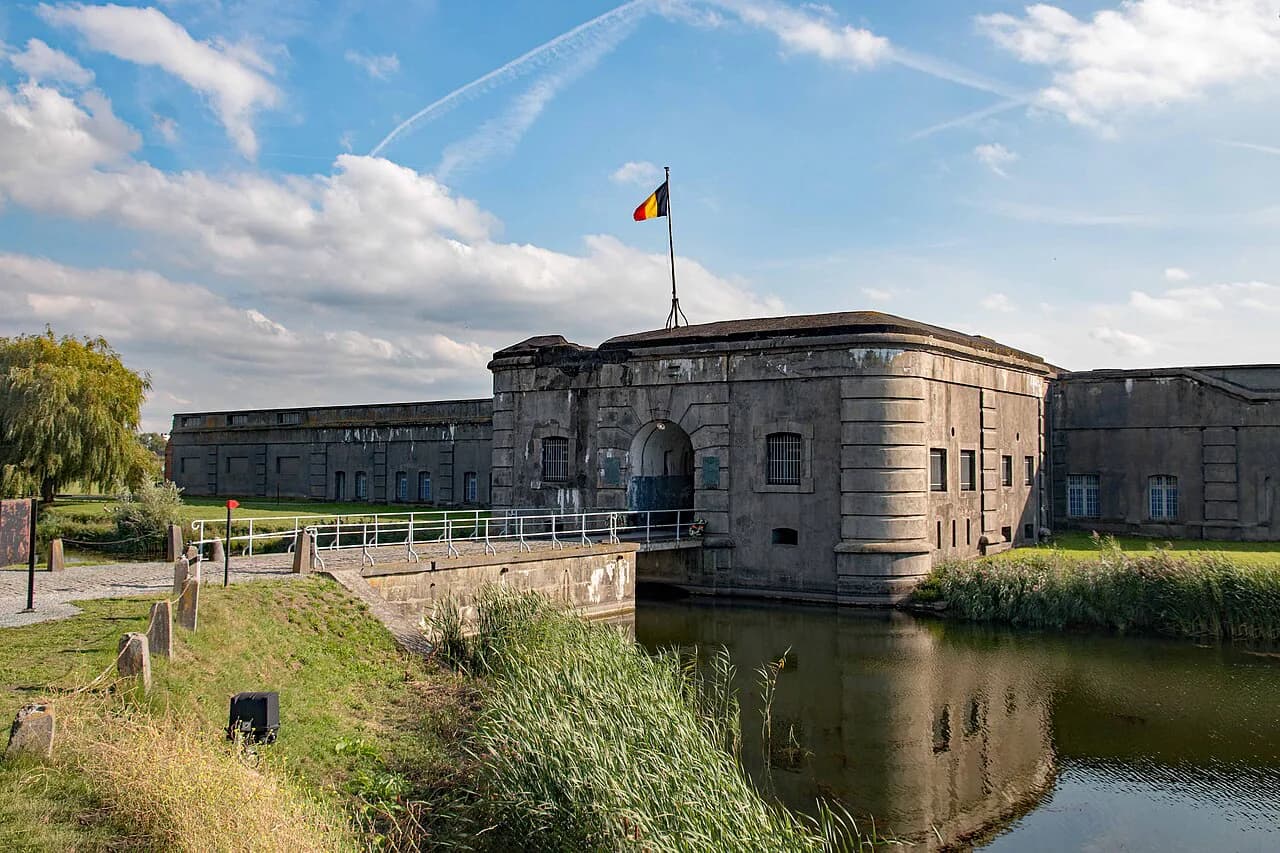
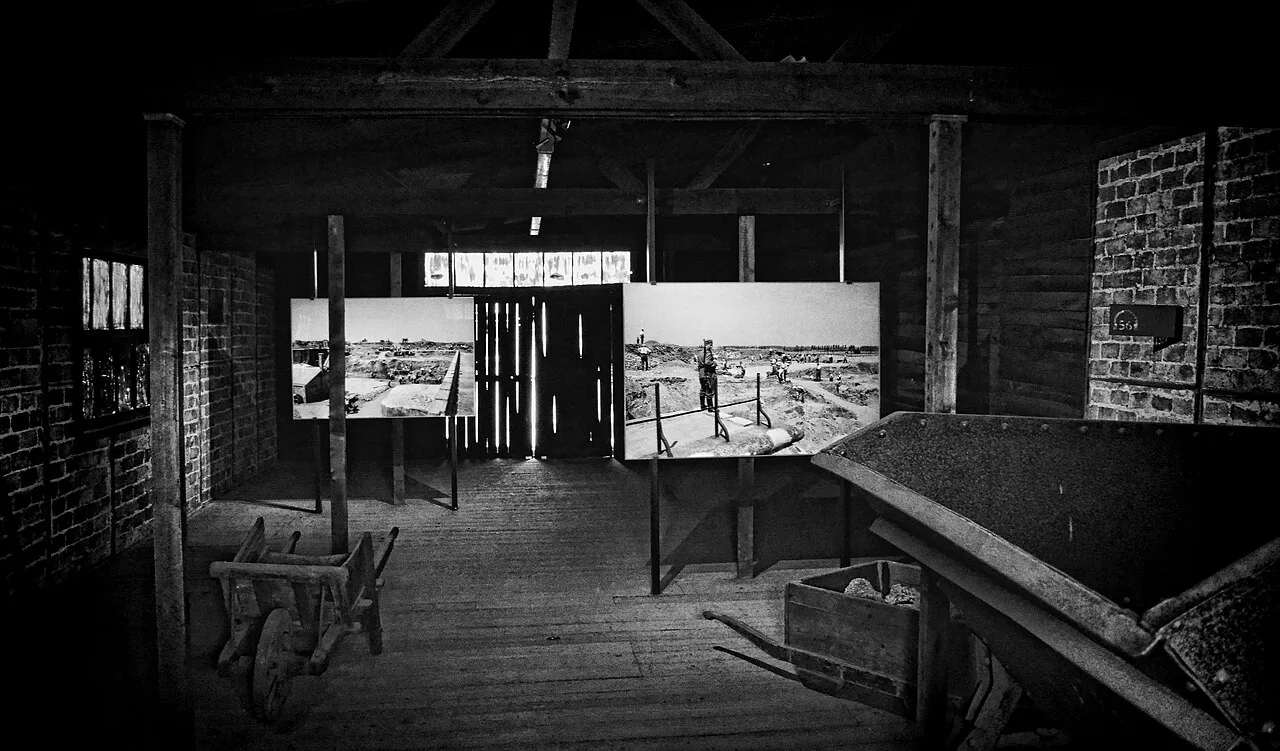
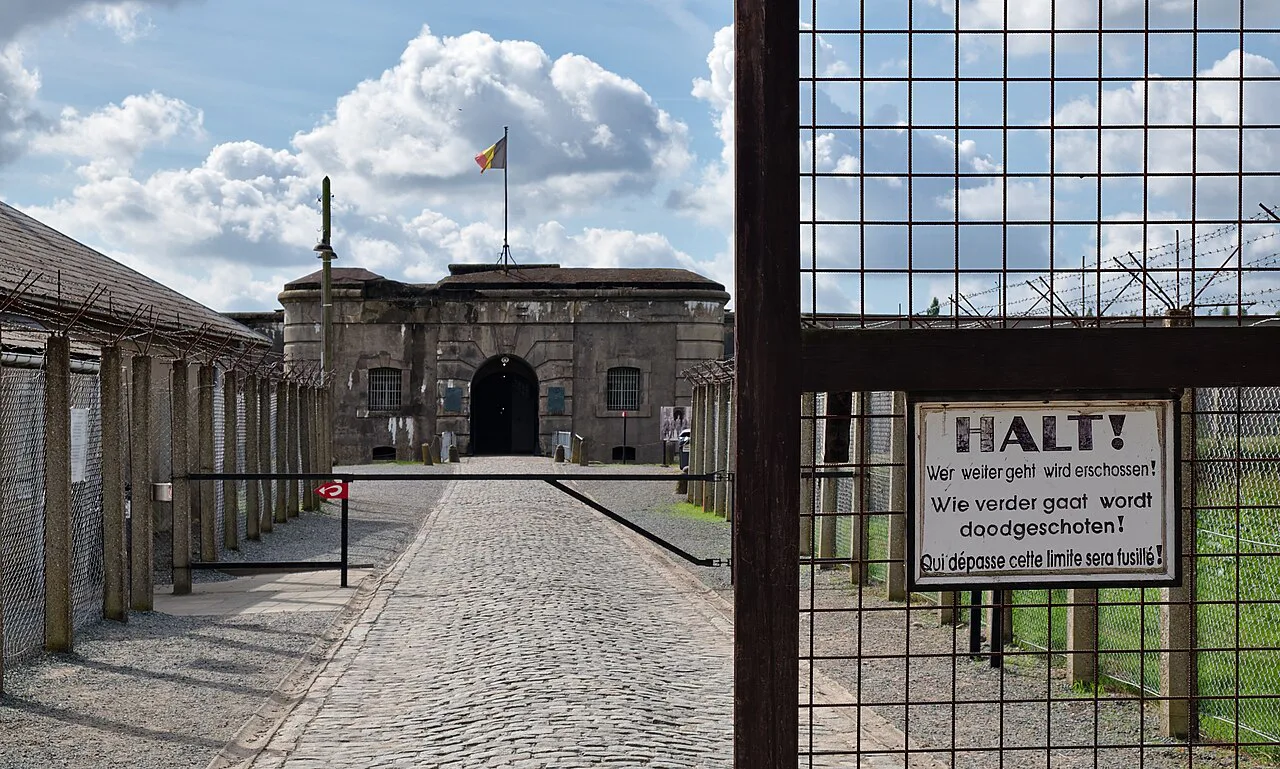
Inside, the route leads through the fort's disturbing fabric: the gloomy dormitories where prisoners were held, the sites of forced labour, the torture chamber and the execution ground. Outside, the fort itself is a low brickwork structure surrounded by its moat, with the sort of austere military geometry that made it easy to turn into a camp. The memorial labels the whole route as a walk through the site's testimonies and history, so it is a sequence of rooms and outdoor corners rather than a single exhibition hall.
Separate the two in your head before you go. The fort's fabric is the point of the visit; the indoor exhibition of testimonials, photographs and film footage is the interpretive layer that helps you understand what you are walking through. Plan on both, because the route together is the memorial, not just the exhibition.
How long to allow
Allow a half-day for Fort Breendonk, including the journey from Mechelen or Antwerp and the walk through the fort and exhibition. The route is not a quick stop: the subject matter requires a slower pace, and the fabric of the site itself takes time to absorb. Two to three hours on site is a realistic figure for an unhurried visit, with the remaining time spent on transport.
Expect a lot of walking, some of it on the fort's outdoor surfaces and on the same level changes that come with any historic military building. Sensible shoes matter more than a guidebook. Leave the rest of the day light if you are also visiting Mechelen's Kazerne Dossin, since the two sit close enough to combine but each asks a good deal emotionally.
Tickets, time slots and the Museum Pass
The memorial sells tickets online with a chosen time slot, which is the reliable way to secure entry on the day; the site lists the visit rates separately. If you are collecting Belgian museum visits across a year, the Museum Pass is the card the fort names, and it is valid for a whole year at participating museums. The pass is sold at reception and online.
The pass price is a national scheme, not a discount invented for this site. Read it as one year of access to participating museums in Belgium, valid whenever they are open and as often as you like. The memorial states the figure on its own page, and that is the version to rely on rather than what any reseller says.
If you only have one or two days in Antwerp or Mechelen, the pass rarely pays unless you are already planning several museum stops. Buy a single timed ticket for Breendonk and keep the money for the rest of the trip.
Accessibility and facilities
The memorial publishes a dedicated accessibility page covering visitors with challenged mobility, so check it before booking if steps or uneven surfaces are a concern. A preserved fort is a historic structure first, and its floor levels follow the building rather than a modern visitor route. The site's accessibility notes are the best guide to what is practical.
If you are arriving by car, the address at Brandstraat 57 is the one to use.
Guided visits, schools and groups
Independent visits are the norm, but the memorial also organises guided visits and runs a schools and groups programme with educational tools. A guide adds context the panels cannot, particularly for the fort's pre-war history and the SS period. Groups should book through the memorial rather than turning up.
For teachers and group leaders, the school programme is distinct from the general ticket, so the booking route is different. The memorial lists both under separate headings on its site. Use the group booking channel to get the right format for your group size.
How the memorial fits a short Belgian break
Base yourself in Mechelen and Fort Breendonk slots neatly into a two- or three-day trip alongside the city's own wartime history. Base in Antwerp and the fort works as a half-day out of the city, leaving the rest of the day for the Grote Markt and the cathedral. Either way it belongs in a wider route of ww2 sites Belgium rather than as a standalone destination.
The memorial is run within the War Heritage Institute, whose other sites include the Royal Museum of the Armed Forces and Military History, the Trench of Death, Bastogne Barracks and Command Bunker Kemmel. That network makes it easy to build a multi-site trip around Belgian military history. The same organisation's Bastogne operations are worth knowing about if your interests run to the Ardennes.
For a different angle on the war in the Ardennes, the battle of the Bulge sites in the south-east of the country cover the winter offensive of 1944–45. The two histories are distinct, and the contrast is instructive. Combining them means a longer trip, but it gives a fuller picture of Belgium under occupation and liberation.
Is Fort Breendonk worth the half-day?
Yes, if you want to understand the occupation through a place rather than through panels alone. Fort Breendonk is a sombre, well-preserved site with a clear route, and it works as a half-day from Mechelen or Antwerp. Book a time slot, allow a couple of hours on site, and leave the rest of the day uncluttered.
Frequently Asked Questions
Is Fort Breendonk the same as a concentration camp?
No. The fort was a military installation that the SS ran as an Auffanglager, a reception and transit camp, during the German occupation. The memorial describes it as one of the best-preserved witnesses to Nazi atrocities in the Second World War, and the visit is presented as testimony rather than as a museum collection.
Is Fort Breendonk suitable for children?
The content is harrowing, with dormitories, a torture chamber and an execution ground shown as part of the route. The memorial's schools and groups programme suggests structured visits work for older pupils. Families with younger children should weigh the subject matter carefully before booking.
Can you visit Fort Breendonk without a guide?
Yes. Independent visits follow the route through the fort and the exhibition, with a timed ticket bought online. The memorial also runs guided visits and a schools and groups programme for those who want a guide's context.
Sources
Useful notes for your next trip
Optional updates to our guides.
You might also like



Continue reading
More guides you'll find useful





