Battle of the Bulge Sites in Belgium: What Happened and Where to Go
The Battle of the Bulge was fought in the Belgian Ardennes in winter 1944–45. Here is what happened at Bastogne and St Vith, and where to see it today.
On this page
The Battle of the Bulge was the German offensive launched through the Ardennes on 16 December 1944, and it ended with Allied victory on 25 January 1945 after six weeks of fighting in snow and deep cold. For a visitor, that means two clusters of ground to plan around: the northern shoulder around St Vith, held by the 82nd Airborne, and the southern crossroads town of Bastogne, where the 101st Airborne Division was surrounded and refused to surrender. This guide covers what happened in each sector, the orders and dates that shaped it, and how to link the two on a drive through the Ardennes.
Why the Ardennes, and why December
The Ardennes is hilly, wooded and thinly populated, with narrow roads that thread between ridges and river cuts. That made it a place where a fast armoured advance could be funnelled and delayed at a handful of road junctions, and it is also why the battle is easier to follow on the ground than on paper.
The timing was chosen for the weather. Attacking in mid-December meant low cloud, fog and snow that would blunt Allied air power and give German armour a head start on the ground.
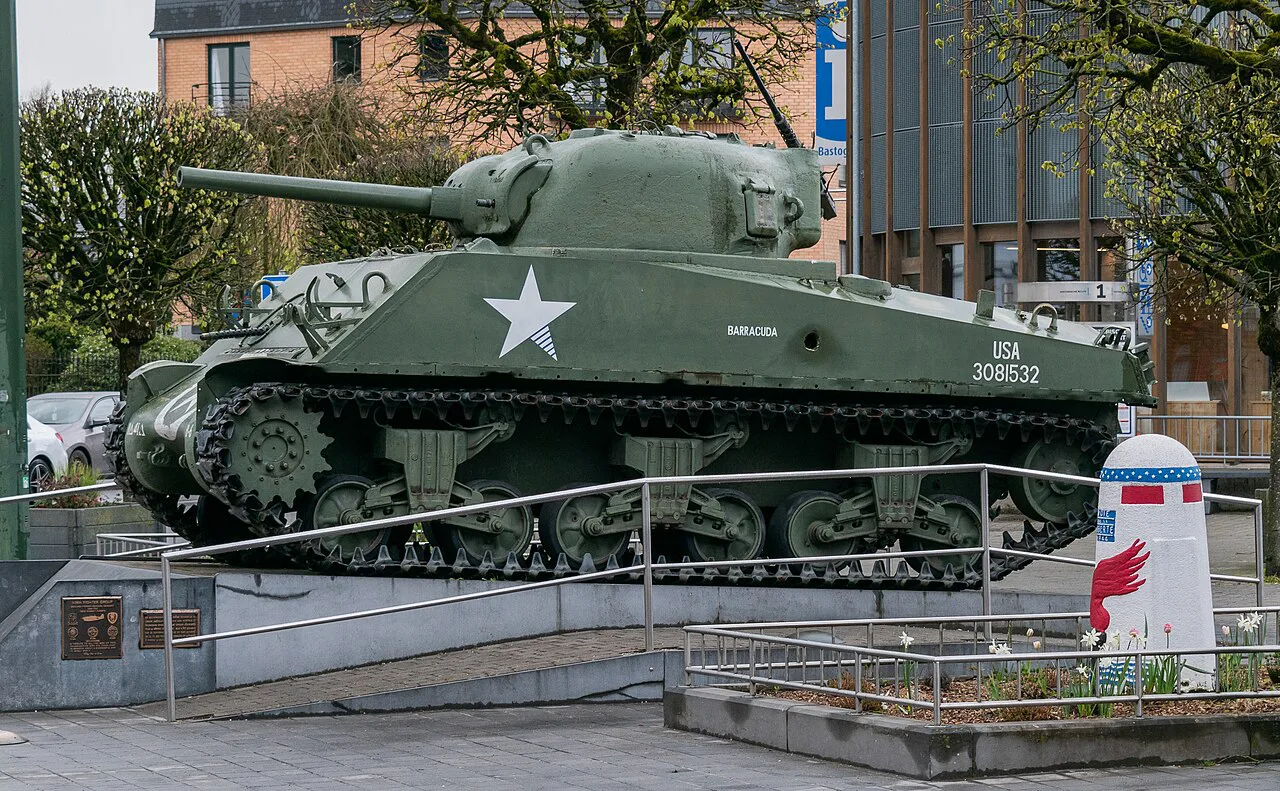
The order to move came on 17 December 1944, when General Eisenhower directed XVIII Airborne Corps to Belgium without delay to help stop a breakthrough that had begun the day before. The 82nd Airborne was sent to hold St Vith, the 101st Airborne Division headed for Bastogne, and the 17th Division was ordered from England to Belgium.
The northern shoulder: St Vith and the 82nd Airborne
St Vith was the northern hinge, and the 82nd Airborne's fight there was as important as anything at Bastogne. German tanks and infantry attacked St Vith and Bastogne heavily from the start, and the 82nd held its ground until First Army ordered a withdrawal.
Why was it called the Battle of the Bulge? The name comes from the bulge pushed into the Allied front line on the map as the German offensive drove west through the Ardennes before being contained and pushed back. The fighting began on 16 December 1944 and ended with Allied victory on 25 January 1945.
How long was Bastogne surrounded? Bastogne was encircled by 22 December 1944 and relieved on 26 December, a siege of ten days. The 101st Airborne Division held the town until American tanks from Patton's Third Army broke through.
Who won the Battle of the Bulge? The Allies won. The German offensive failed to reach its objectives, and the fighting ended with Allied victory on 25 January 1945 after six weeks.
Fighting from new lines after that withdrawal, the 82nd helped turn back the German assault on the northern sector. If you read the battle only through Bastogne, you lose the reason the German timetable slipped in the first place.
For a short trip, put your overnight stay in Bastogne and treat St Vith as a stop on the road between sectors.
Bastogne: the siege and the ultimatum of 22 December
By 22 December, Bastogne was surrounded. That morning a German contingent approached the 101st under a flag of truce and handed a typewritten surrender ultimatum to Major Alvin Jones of the 2nd Battalion, 327th Glider Infantry Regiment, demanding surrender within two hours or shelling would begin. The note warned that the Americans would be responsible for civilian casualties.
Brigadier General Anthony McAuliffe, commanding the 101st Airborne Division and other tank and artillery units in the town, asked what the note said, and when told it was a demand to surrender he laughed and exclaimed 'Aw nuts!'. His staff urged him to send that first remark as the reply, and the note delivered to the German commander read simply: 'To the German Commander: Nuts! The American Commander'. Colonel Joseph H. Harper of the 327th Glider Infantry carried it across the lines.
The 101st, used to operating behind enemy lines, held Bastogne until relieved on 26 December 1944. German artillery and aircraft reduced much of the town to ruins, and after the refusal to surrender the Luftwaffe ran a four-night bombing mission against military and civilian inhabitants.
The relief of Bastogne and Patton's Third Army
The siege was lifted on 26 December, after ten days, when American tanks from Lieutenant General George Patton's Third Army broke through. Patton later decorated McAuliffe with the Distinguished Service Cross, and the town's central sites make sense as a record of those ten days.
The 17th Airborne Division arrived just before Christmas and fought its first combat west of Bastogne, clearing the area of German units. That wider clearing, rather than the relief alone, is what opened the roads south and west of town.
The Ardennes sector is a well-documented part of the wider war on Belgian soil, but it is not the only place to start. If you want the national picture first, the guide to WW2 Sites in Belgium sets out the occupation, the resistance and the liberation alongside the battlefields.
The Ghost Army: deception alongside Patton
As Patton set out to relieve Bastogne, he got help from the 23rd Headquarters Special Troops, a top-secret deception unit known as the Ghost Army. Activated on 20 January 1944, it comprised 82 officers and 1,023 men and could simulate two whole divisions, roughly 30,000 men, using inflatable tanks, sound effects and radio trickery.
The unit staged 22 deception operations in France, Belgium, Luxembourg and Germany, often close to the front, and its own history described it as more theatrical than military. It was dangerous work: three Ghost Army soldiers were killed and dozens wounded carrying out those missions.
Almost none of this leaves a trace in the landscape today, which is worth knowing before you go looking for it. The deception story belongs to the museums and the written record rather than to a viewpoint.
Where the fighting ended: January 1945 and the cost
Six weeks of vicious fighting ended with Allied victory on 25 January 1945. Both sides suffered terrible losses, accounting to almost one hundred thousand in that reckoning, and the Ardennes offensive used up German armoured strength that could not be replaced.
By any measure, the battle was fought in extreme cold with scarce supplies, and the units at the end were shadows of the ones that went in. The 509th Parachute Infantry Battalion had only 55 men left and was inactivated, and the 551st Parachute Infantry Battalion had 100 left and was also inactivated; the survivors transferred to the 82nd Airborne Division.
Visiting the Ardennes today: Bastogne as a base
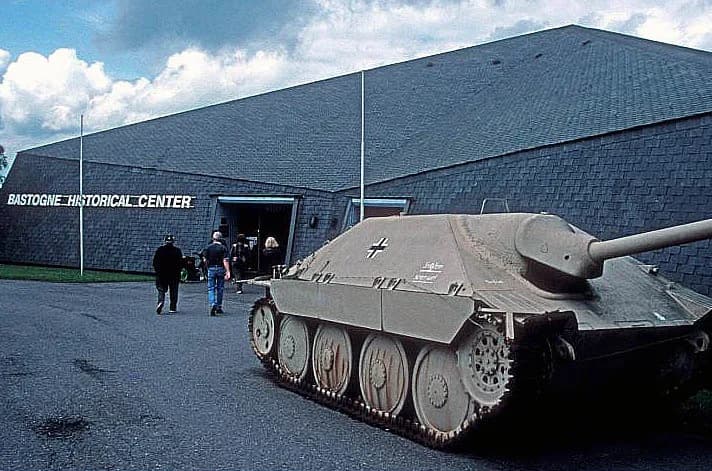
Bastogne is the practical base for the southern sector, sitting at the centre of the siege story with the town's sites within walking distance of each other. The Bastogne War Museum and the Bois Jacques woods are the two names that anchor most itineraries, and the Bastogne War Rooms and the Bastogne barracks add the armour and command side of the same story.
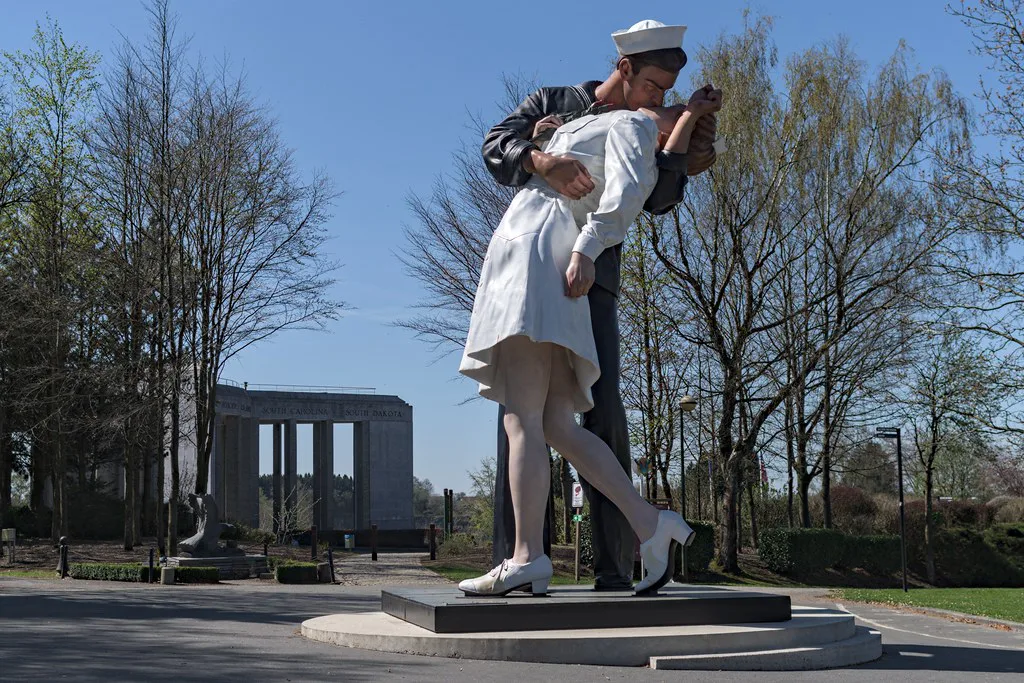
The Mardasson memorial stands outside the town centre and gives the battle its American commemorative frame, with the shape of a star and the names of the states cut into the stone. Allow it a separate slot from the museum rather than folding it into the same hour.
If you want to compare collections before committing a day, the round-up of battle of the Bulge museums in Belgium covers what each one holds and which part of the offensive it explains.
The northern sector and the wider battlefield
North of Bastogne, the December 44 Museum in La Gleize covers the armoured spearhead that aimed for the Meuse, with vehicles and equipment from the fighting around the village. It pairs naturally with a day on the northern shoulder rather than with the Bastogne sites.
West of the Ardennes, the henri chapelle American cemetery holds the graves of many of those killed in the winter fighting and in the advance into Germany. It is a quiet, formal place, and an hour there reads very differently after a day on the battlefields.
The wider WW2 story in Belgium stretches from the 1940 campaign to the liberation of the ports. The battle of the Scheldt, fought in the autumn of 1944 to open Antwerp's approaches, explains why the supply lines behind the Ardennes offensive mattered as much as the front line.
Near Antwerp, Fort Breendonk is a transit camp preserved much as it was left, and it is the sharpest counterweight to a battlefield itinerary. Pair the two only if you have a third day, because each one takes real time.
In Mechelen, Kazerne Dossin occupies the former barracks from which Jews and Roma were deported, and its permanent exhibition is a rigorous account of the machinery of occupation.
Driving between the sectors: a route for a short trip
A workable two-day shape is Bastogne first, with the town's museum and the Mardasson on day one, then the Bois Jacques and the armour collections on the morning of day two. Give the Mardasson a clear hour of its own, since the walk to it and back eats into a museum slot.
From there, drive north and east towards St Vith and La Gleize, using the road junctions as your stops rather than the towns. The distances are short in kilometres but slow in winter weather, so plan three stops rather than six.
A third day can take you back west to Henri-Chapelle, or north to Breendonk and Mechelen if the occupation and deportation story is the part you came for.
Reading the ground: why the junctions mattered
Armoured columns cannot spread across a wooded ridge, so they bunch at crossroads and bridges, which makes those points worth more than the villages around them. St Vith and Bastogne were both fought over because roads met there, not because of anything in the towns themselves.
When you stand at a junction outside either town, the useful question is which way the relief came from and which way the attackers had to go. At Bastogne the answer runs west and south, towards Patton's approaching tanks.
Read the surrender note and McAuliffe's reply before you go, and the town's streets stop being background. The one-word refusal is the moment the siege turned into a legend, and the sites are easier to follow once you know it.
Bastogne first, St Vith second
Choose Bastogne as your base and your first day, because the siege story, the museum and the Mardasson sit within a short distance of each other. Add the northern shoulder at St Vith and La Gleize on a second day, and keep the wider memorials for a third if you have it.
Book the museum slot before you travel and confirm the day's opening hours directly with the site. Then let the road junctions rather than the towns set your stops.
Frequently Asked Questions
Why was it called the Battle of the Bulge?
The name comes from the bulge pushed into the Allied front line on the map as the German offensive drove west through the Ardennes before being contained and pushed back. The fighting began on 16 December 1944 and ended with Allied victory on 25 January 1945.
How long was Bastogne surrounded?
Bastogne was encircled by 22 December 1944 and relieved on 26 December, a siege of ten days. The 101st Airborne Division held the town until American tanks from Patton's Third Army broke through.
Who won the Battle of the Bulge?
The Allies won. The German offensive failed to reach its objectives, and the fighting ended with Allied victory on 25 January 1945 after six weeks. Losses on both sides were severe, accounting to almost one hundred thousand in one reckoning.
Where was the 82nd Airborne during the Battle of the Bulge?
The 82nd Airborne was sent to hold St Vith on the northern shoulder, where it fought German tanks and infantry until First Army ordered a withdrawal. Fighting from new lines, the division helped turn back the German assault.
Sources
Useful notes for your next trip
Optional updates to our guides.
You might also like
Continue reading
More guides you'll find useful