
Bastogne Barracks: The Nuts Cellar and the Vehicle Hall
Bastogne Barracks is a War Heritage Institute site in Bastogne, with General McAuliffe's cellar and a military vehicle collection. Here is what a visit covers.
On this page
Bastogne Barracks is a War Heritage Institute site in Bastogne, the town in the Belgian province of Luxembourg, Wallonia. Most visitors come for the halls of vehicles and armour and for the site's connection to the siege of Bastogne, when General Anthony McAuliffe's US forces held the town. Treat it as half a day rather than a quick stop. This guide covers the vehicle collection, the surrounding siege story, how the barracks relate to the town's other [[Battle of the Bulge Sites in Belgium|Battle of the Bulge]] ground, and how to pace a visit.
What Bastogne Barracks is
The barracks are a War Heritage Institute property rather than a private museum, which sets them apart from most of the town's Battle of the Bulge attractions. The institute runs Belgium's military heritage sites and presents its own visiting rules on its website; the emphasis at Bastogne Barracks falls on military hardware rather than the immersive, personal-story approach of a modern visitor centre. That makes it the natural companion to the town's narrative museums rather than a substitute for them.
Because the site is a state heritage property, the visit is shaped by institutional rules as much as by display design. The institute publishes general visiting regulations covering behaviour, bags, lockers and closing routines, and states that access arrangements vary from site to site: some sites are hard to reach by public transport or lack parking, and some are difficult for visitors with reduced mobility.
Where it sits in Bastogne
Bastogne is a small town in the Belgian province of Luxembourg, in Wallonia, on the Ardennes plateau. The barracks are part of the town's wartime landscape rather than its market square, so pair the site with the centre on the same outing.
The wider story is best understood by stringing sites together. Start with the vehicle halls, then the town's memorial landscape, then a museum of the battle; the [[Mardasson memorial]] and [[Battle of the Bulge Sites in Belgium|the wider battlefield ground around Bastogne]] sit near the museum cluster and put the siege into a broader Ardennes narrative. Elsewhere in Belgium, [[WW2 Sites in Belgium]] gathers the country's other Second World War ground, from occupation and persecution sites to liberation memorials, so Bastogne is not the whole of the country's wartime memory.
General McAuliffe's cellar and the 'Nuts!' reply
The cellar is the space tied to the moment when General Anthony McAuliffe, commanding the US forces holding Bastogne, answered a German surrender demand with the single word 'Nuts!'. The reply became one of the war's best-known refusals, and the siege is why Bastogne carries weight out of proportion to its size. Arrive already knowing the outline of the siege and use the site to give it a physical setting.
Read the cellar as a place of association rather than a recreated set piece, and its power comes from the contrast between the plainness of the space and the scale of what was at stake. Treat the vehicle halls as the other half of the visit rather than an afterthought.
The vehicle collection
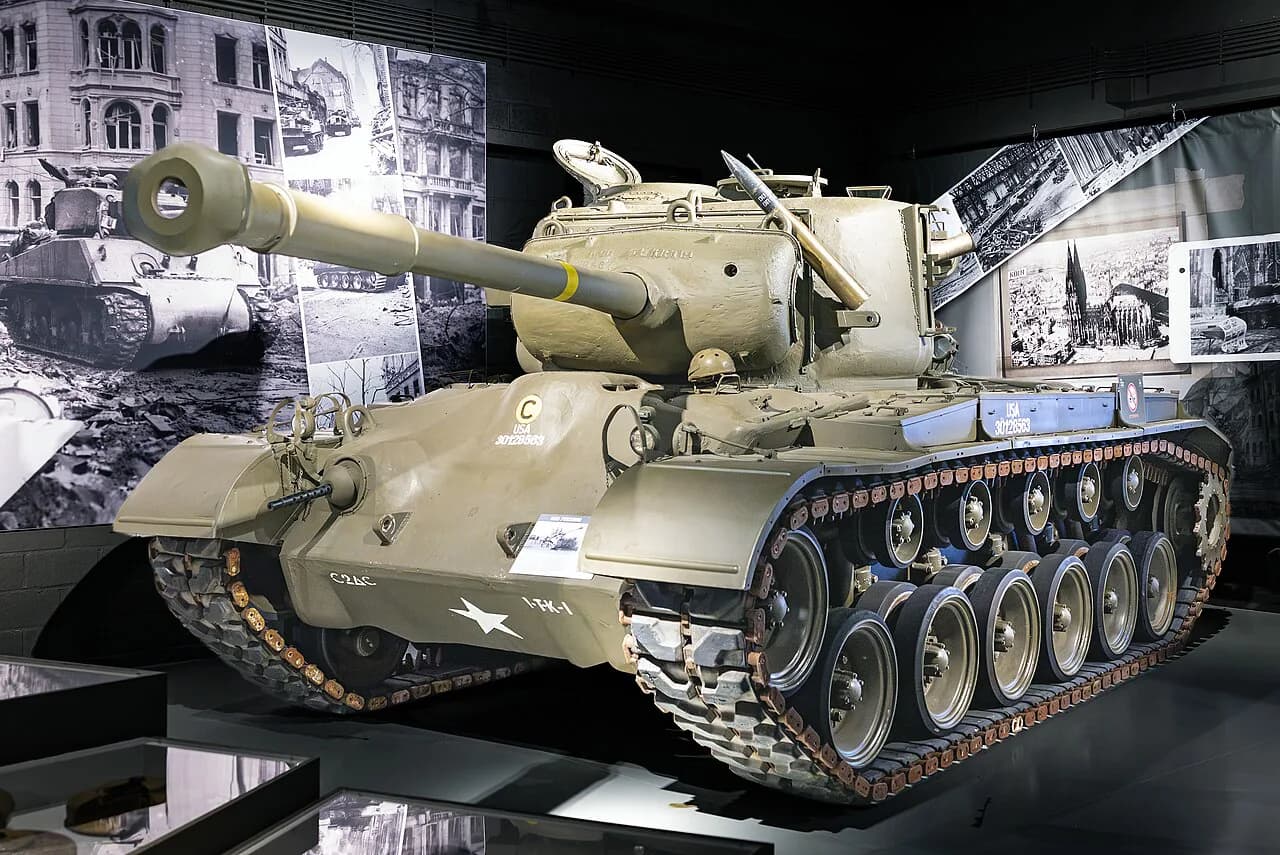
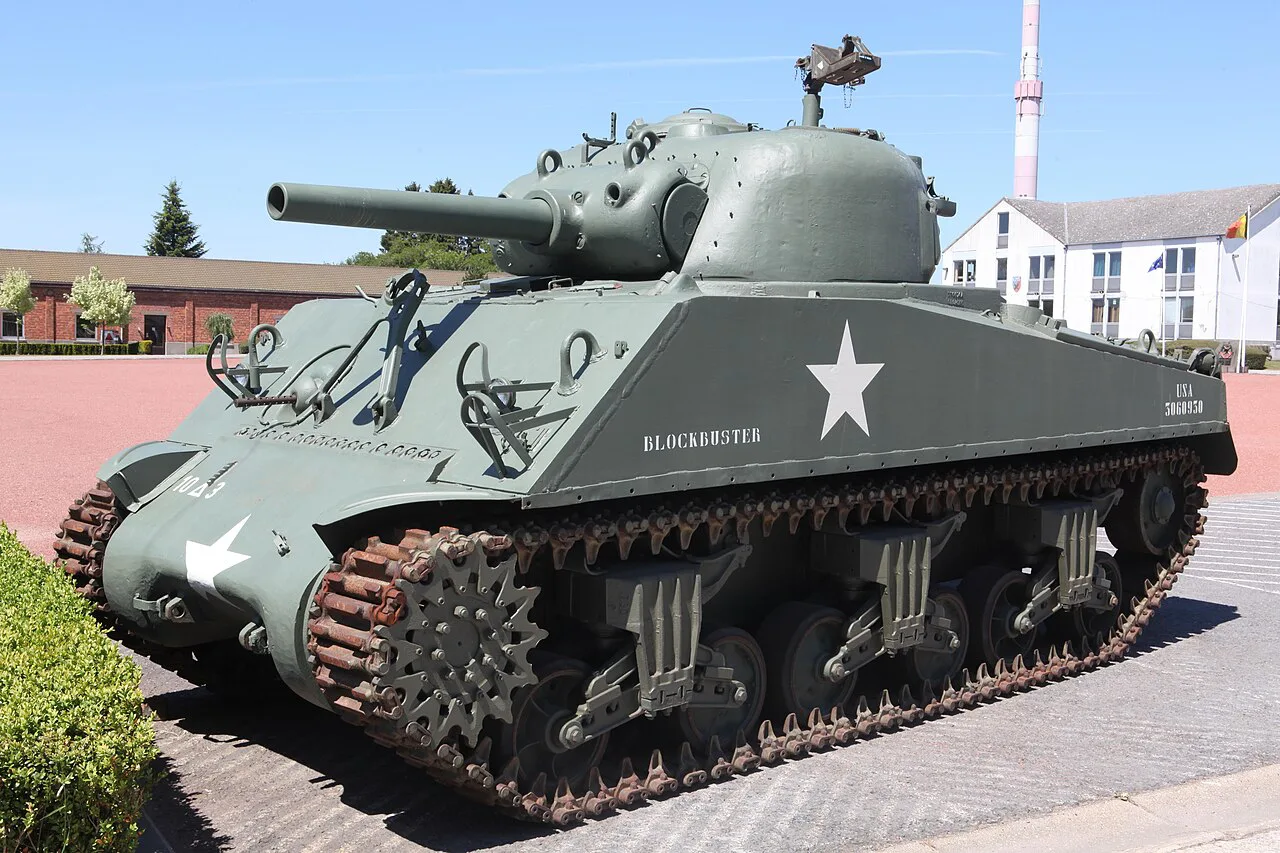
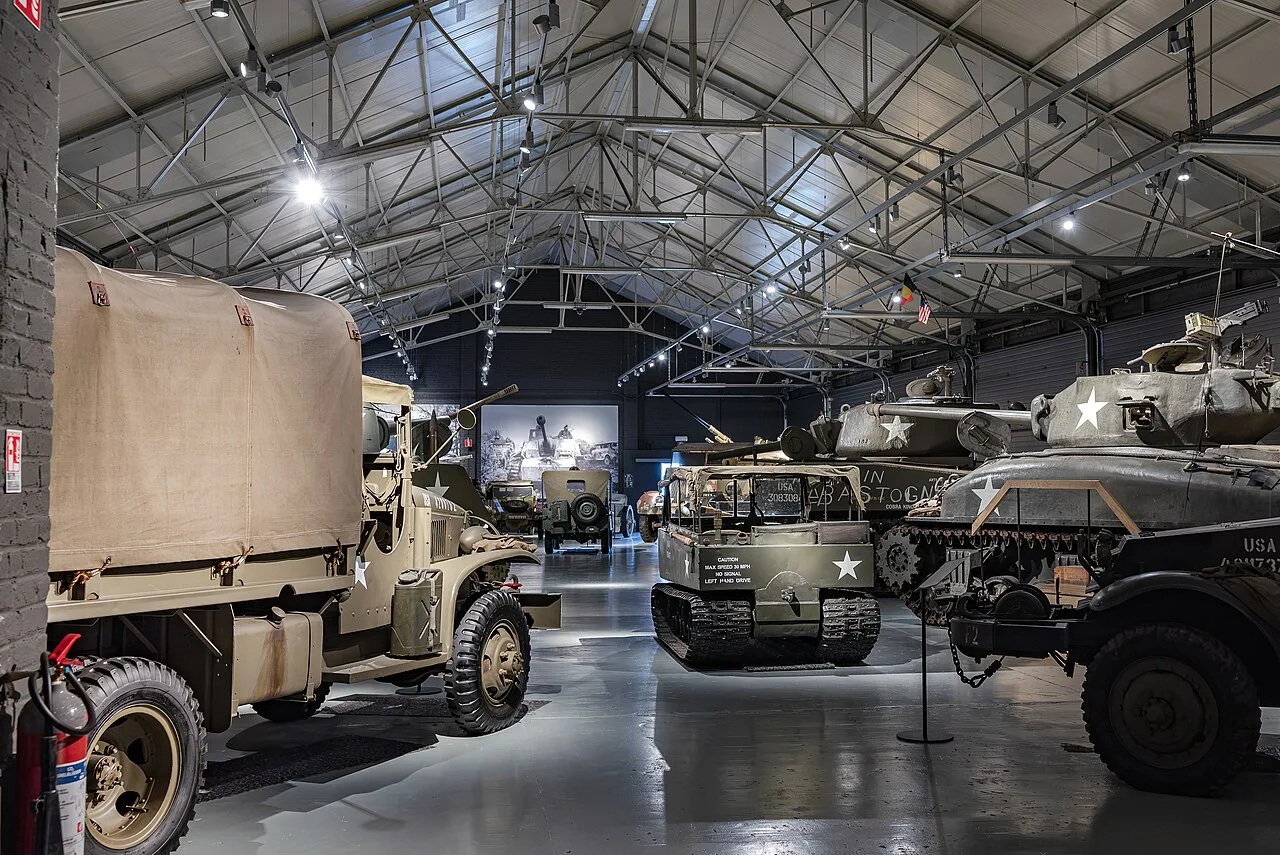
The vehicle halls are the reason many people make the trip, and the setting is a real barracks rather than a purpose-built gallery. The draw is the physical presence of the machines in the long, industrial spaces.
Photography and behaviour in the halls follow the institute's general visiting regulations, which cover touching the collection, food and drink, smoking and movement through the site. Backpacks and luggage go into the lockers provided, and staff may ask to check bags at the entrance.
Guided tours, groups and school visits
The War Heritage Institute organises guided tours, group visits and school visits across its sites, with booking routes for each type of visit. Ask through the site's own channels before travelling rather than turning up and hoping; group leaders are expected to supervise their groups, keep to agreed arrival and departure times and respect other visitors' quiet. Individual travellers can explore at their own pace.
The regulations also state that children under twelve should be accompanied by a responsible adult, and that any unaccompanied child still on site at closing time will involve the police. That tells you the site is treated as a serious heritage property first and a family attraction second. Plan a group around a named leader and a departure time agreed in advance.
How long to allow and how to pace it
Allow two to three hours, giving the cellar and the surrounding story a share and the rest to the vehicle halls at a walking pace. The halls reward slow movement, because the interesting things are the markings, modifications and visible wear on vehicles built for use. Skimping on the cellar and then racing the vehicles leaves you with neither.
Keep a margin between the barracks and your next stop. The institute's rule is that access is interrupted one hour before closing and evacuation begins up to half an hour before final closing, so arriving in the last hour is pointless; treat it as a visit-wide convention.
Pairing the barracks with the Bastogne War Museum
A sound pairing in Bastogne is the barracks in the morning and the town's main battle museum in the afternoon. The [[Bastogne War Museum]], with its Bois Jacques setting, gives the personal, narrative version of the siege that the vehicle halls deliberately do not. Doing both in one day works because they complement rather than duplicate each other: hardware first, human stories second, or the reverse.
With a further day in the Ardennes, push on to the [[December 44 Museum]] in La Gleize, which covers the northern shoulder of the offensive. Together with the barracks and the town museums, that gives a rough triangle of the Bulge's key ground. Build the route around a single overnight stop rather than looping back to a distant base each evening.
Accessibility, bags and site rules
Some War Heritage Institute sites are difficult for visitors with reduced mobility, and the institute asks visitors to consult the accessibility information on the website of the site they intend to visit before travelling.
On the day, expect bag checks at the entrance, lockers for backpacks and luggage, and a prohibition on touching the collection. Food and drink are confined to designated areas, and smoking or vaping is restricted to clearly marked zones. The site is run as a working heritage property, and the rules are enforced by reception and security staff rather than left to goodwill.
Barracks first, museum second
Book Bastogne Barracks as a two-to-three-hour stop and pair it with the town's main battle museum to get both the hardware and the human story of the siege. Arrive in the morning, keep the cellar and the vehicle halls as separate halves of the visit, and leave the last hour of the day free rather than pressing against the site's closing routine.
Explore more Belgium guides
Frequently Asked Questions
Where is Bastogne Barracks and who runs it?
Bastogne Barracks is a War Heritage Institute site in Bastogne, the town in the Belgian province of Luxembourg, Wallonia. The War Heritage Institute owns and operates the site and publishes the general visiting regulations that apply there.
How small is Bastogne?
Bastogne is a small town in the Belgian province of Luxembourg, in Wallonia, and its compact size means most of its sites are within a short drive of each other.
Sources
Useful notes for your next trip
Optional updates to our guides.
You might also like



Continue reading
More guides you'll find useful





