
Messines Ridge: What Happened in 1917 and How to Visit from Ypres
The Battle of Messines opened on 7 June 1917 with mines under the German lines. What happened on the ridge, and what a visitor to Mesen sees today.
On this page
The Battle of Messines was a British attack on the high ground south of Ypres that ran from 7 to 14 June 1917, opened by the detonation of mines beneath the German front line. It is usually remembered for that opening explosion, but the fighting lasted a week and the ridge itself is the reason the ground was fought over. This guide separates the battle from the mines, explains why the ridge mattered, and sets out how Mesen fits into a day in the Ypres Salient.
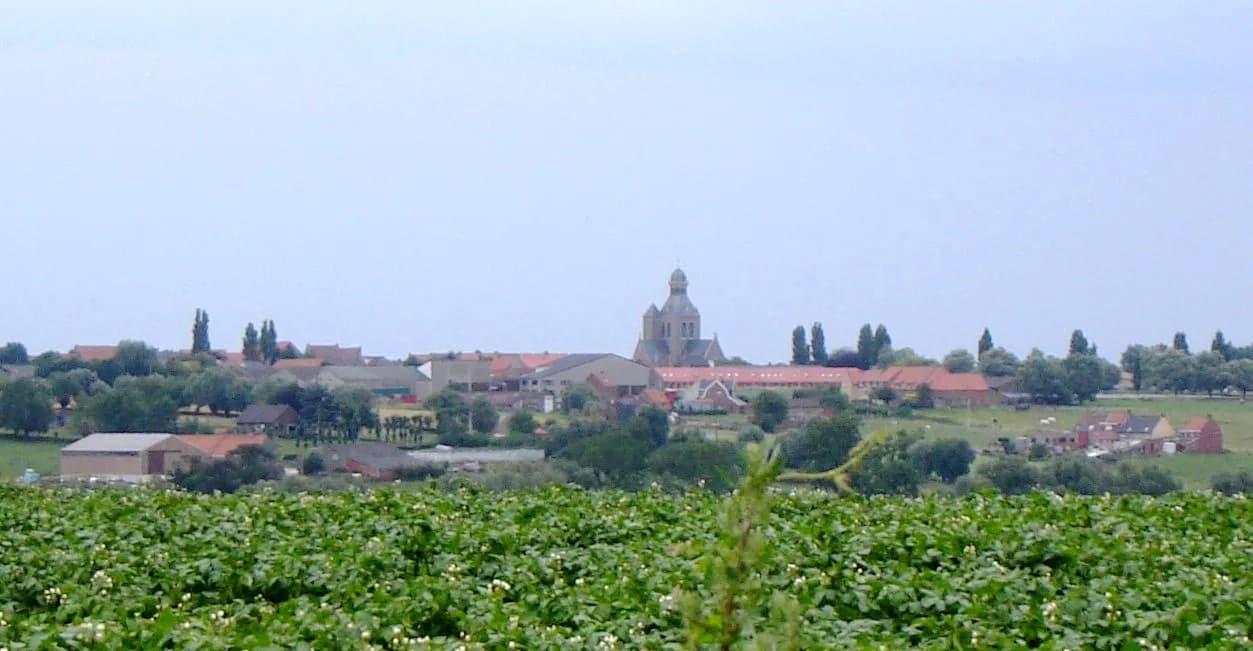
Mesen is a small town in the Belgian province of West Flanders, sitting on the ridge of the same name roughly south of Ypres (Ieper). The name appears in English accounts as Messines, the French form still used for the ridge and the battle. The town is one stop among several on the southern arc of the Salient, so plan it as part of a wider circuit rather than a destination on its own.
What Messines (Mesen) is and where it sits
The town of Mesen occupies the crest of a low ridge that runs roughly east to west across the plain south of Ypres. In flat Flanders even modest height matters. Whoever held the ridge could observe the surrounding low ground, which is why the high ground rather than the town was the objective in 1917.
For a visitor, the geography is the first thing to grasp: you are on the southern shoulder of the Ypres Salient, the bulge in the Western Front around Ypres that was fought over for most of the war. The earlier fighting around the city is a separate story.
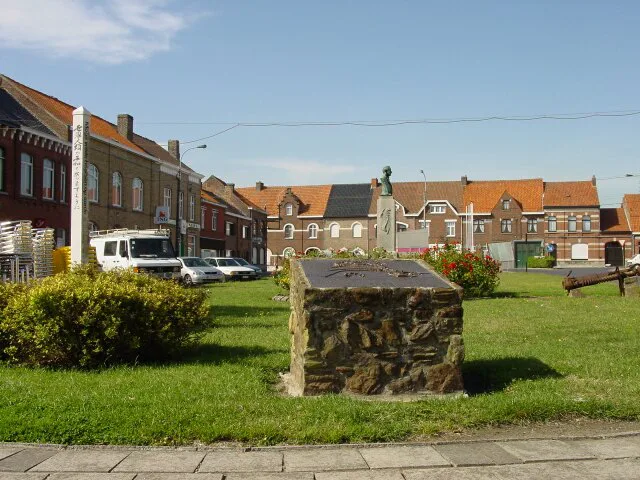
Mesen is small enough to cross quickly, and its centre gives you a base for the ridge. The surrounding landscape is farmland and villages rather than a single consolidated site, so the visit is a short drive or cycle between scattered points rather than a walk around one enclosure. Allow for that when you plan the day.
What happened at the Battle of Messines, 7–14 June 1917
The attack was launched by the British Second Army under General Sir Herbert Plumer against the German-held ridge. It began on 7 June 1917 and continued until 14 June, when the British had taken the ridge and the ground beyond it. The operation was a limited, carefully prepared assault with a defined objective, not a general offensive aimed at a breakthrough.
The Imperial War Museums' account of the battle describes Messines Ridge as having been captured by German forces in 1914 and held until the 1917 assault. That occupation is the context for the preparations: the ridge had been fortified and the British had time to study it. The battle's success is usually attributed to the scale of the planning and the concentration of artillery as much as to the mines alone.
Treat the battle and the explosion as two separate things. The mines opened the assault on the first morning; the fighting for the ridge and the subsequent consolidation ran on for a week afterwards. Readers who conflate the two end up imagining a single blast and a walkover, which does not match the week of operations the dates record.
The mines under the German lines
The opening of the battle was marked by the firing of deep mines dug beneath the German positions on the ridge. The mines were charged with explosives and detonated at the start of the assault, and the resulting explosions are often described as the largest of the war.
The record of the mines in the Battle of Messines sets out how they were dug, charged and fired. That account also notes that the Messines operation represented the high point of mine warfare on the Western Front, and that the last British deep mine of the war was fired on 10 August 1917. In other words, the technique reached its peak at Messines and was not repeated on the same scale.
The craters left by the detonations are part of the battlefield landscape, and some survive as recognisable features. They are not a theme park attraction: treat them as the place where men on both sides were killed, and keep to paths and marked ground rather than climbing into them. The ground around the ridge still belongs to working farms and villages.
Messines Ridge today: what a visitor sees on and around the ridge
On the ridge today you are looking at a working agricultural landscape with the town of Mesen at its centre, plus memorials and cemeteries scattered across the surrounding villages and fields. The ridge is not a single museum site with an entrance; you move between viewpoints, village squares and commemorative ground, often on narrow lanes. A car or a bike makes the circuit far easier than walking between the outlying points.
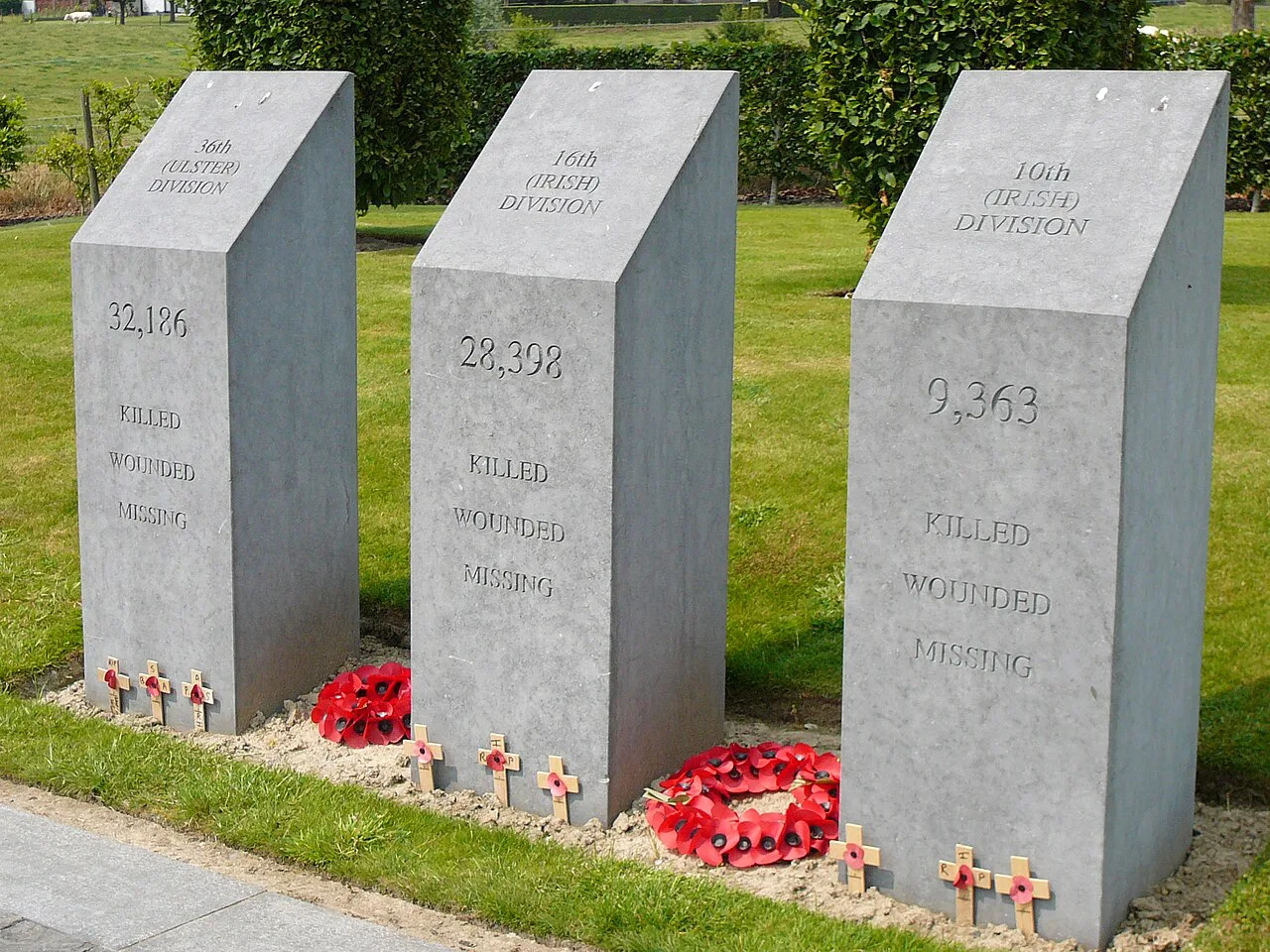
Two national commemorations sit on and near the ridge: the Island of Ireland Peace Park, which commemorates the Irish who died in the First World War, and the New Zealand memorial, which marks the New Zealand Division's part in the 1917 attack. Both are places for quiet reflection rather than interpretation centres, and both are best approached with some knowledge of the battle beforehand.
If you want the wider context of the Salient before you arrive, the In Flanders Fields Museum in Ypres covers the war in Flanders as a whole, including the ground south of the city. It is a sensible first stop on the day you drive out to Mesen, because it turns the ridge from a name into a position on a map. From there, the southern circuit takes in Mesen and the surrounding memorial landscape.
Getting there from Ypres and how long the visit takes
Mesen lies south of Ypres and is reached by road through the villages on the southern edge of the Salient. Most visitors come by car, by bike or on an organised Ypres battlefield tour that includes the southern sector.
Allow half a day for the ridge if you are driving yourself. That covers the town, the two national memorials and a stop or two on the surrounding lanes, without rushing. If you are combining Mesen with the wider southern circuit, including the memorials around Ploegsteert, plan a full day and start early enough to finish before the light goes.
Where Messines sits in a wider Ypres Salient itinerary
The salient is usually covered over two or three days: the city and the Menin Gate first, then the northern and southern arcs on separate drives. Mesen belongs on the southern day, together with the villages and memorials between Ypres and the French border. Doing the southern arc in one direction and returning a different way saves doubling back on the same lanes.
If you are following a self-guided route, the Messines attack is one episode in a long campaign, and the earlier fighting around Ypres is a separate story best read before you go. Reading the battles of Ypres first makes the ridge's position on the southern shoulder easier to picture when you get there.
The Yser Front, further north around Diksmuide, is a different sector with its own memorial landscape, including the Yser Tower (IJzertoren) and the preserved trenches of the Dodengang. Those sites relate to the Belgian army's hold on the flooded plain, not to the British operations at Mesen. Keep the two sectors separate in your planning, because they are a long drive apart.
Is Mesen worth a half-day on your Salient itinerary?
Yes, if you are already spending a day on the southern arc of the Salient. Mesen gives you the ridge itself, the Irish and New Zealand memorials and the landscape that explains the 1917 attack, and it slots naturally between Ypres and the border villages. It is not a substitute for the city's museum and the Menin Gate, but it is the right complement to them.
Skip it if your time is limited to a single day in Ypres. In that case, stay in the city and the immediate Salient, where the In Flanders Fields Museum and the Menin Gate carry the story. Add Mesen when you have a second day and a car, and give the ridge the half-day it deserves.
Frequently Asked Questions
What was the biggest underground explosion in the First World War?
The mines fired beneath the German lines at Messines on 7 June 1917 are generally described as the largest explosions of the war, and the operation is regarded as the peak of mine warfare on the Western Front. The last British deep mine of the war was fired on 10 August 1917, so the technique was not repeated on the same scale.
Sources
Useful notes for your next trip
Optional updates to our guides.
You might also like



Continue reading
More guides you'll find useful





