
Dodengang: Visiting the Trench of Death near Diksmuide
The Dodengang is the preserved Belgian trench on the Yser near Diksmuide. See what survives, what the visitor centre holds and how to reach the site.
On this page
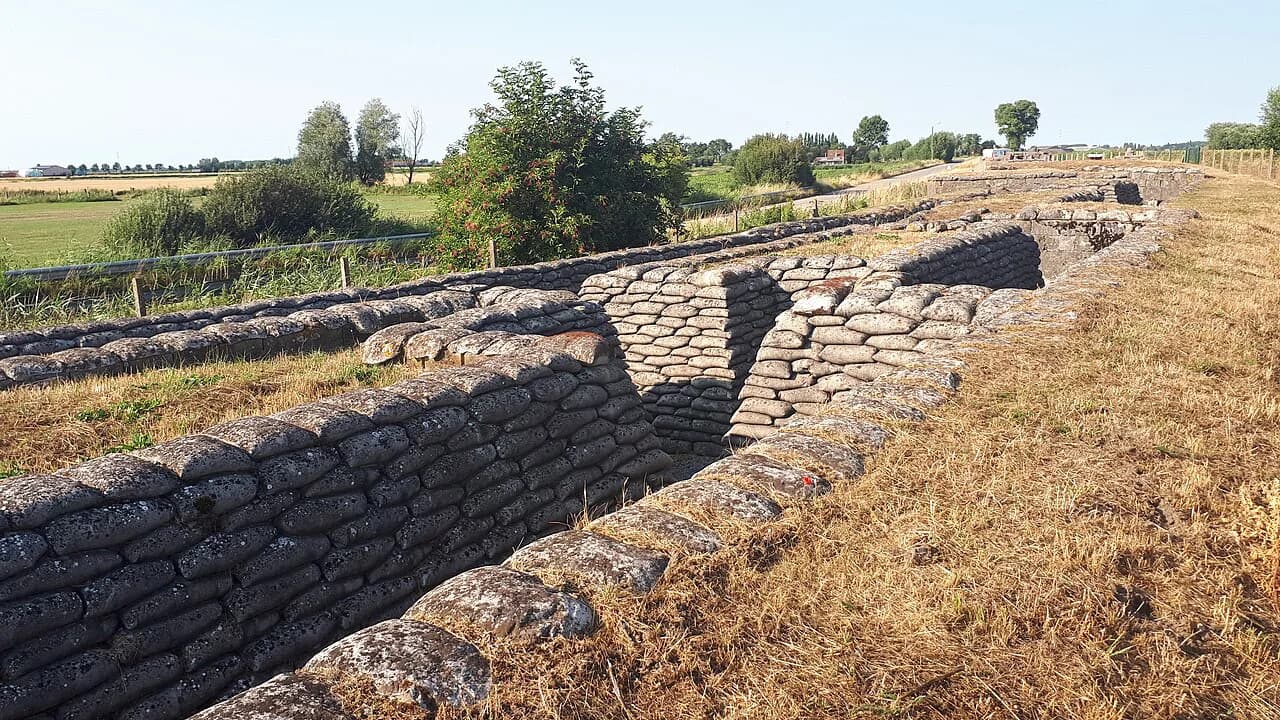
The Dodengang, the Trench of Death, is the preserved Belgian front-line trench beside the river Yser just outside Diksmuide, and it is the most direct way for a visitor to stand in a First World War trench in Belgian Flanders. The site holds the Belgian position outdoors and adds a visitor centre with film footage, interactive displays and more than a hundred original artefacts. This guide covers what survives, why the position was so lethal, and how to fit it into a route along the Yser Front.
A Belgian approach trench dug beside the Yser in 1915
The Belgian army dug the Trench of Death in 1915 as an approach trench running towards the German positions, and the Germans dug a matching trench on their own side of the river. The site is therefore a Belgian story first, which makes it a useful counterweight to the British and Commonwealth narrative that dominates most visits to the Ypres salient. The preserved section runs alongside the river Yser on the IJzerdijk outside Diksmuide.
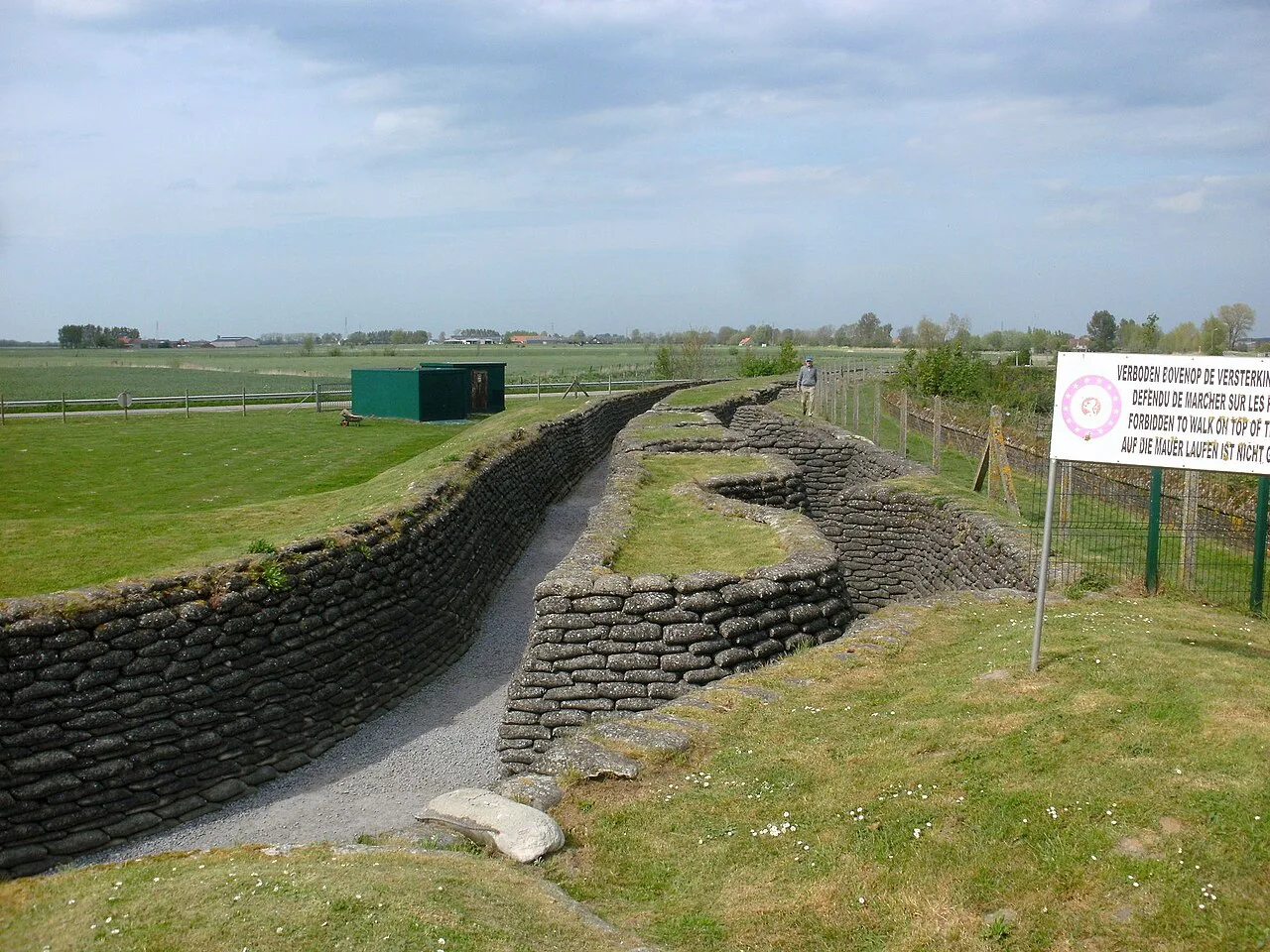
The preserved trench itself is a short stretch of front line, described in summary accounts as roughly a 300-yard or 270-metre section of the original position. Treat that figure as an indication of scale rather than a survey measurement: the value of the visit lies in the close quarters, not in the distance covered. Allow time to read the panels along the way rather than walking it as a loop.
Why it was called the Trench of Death
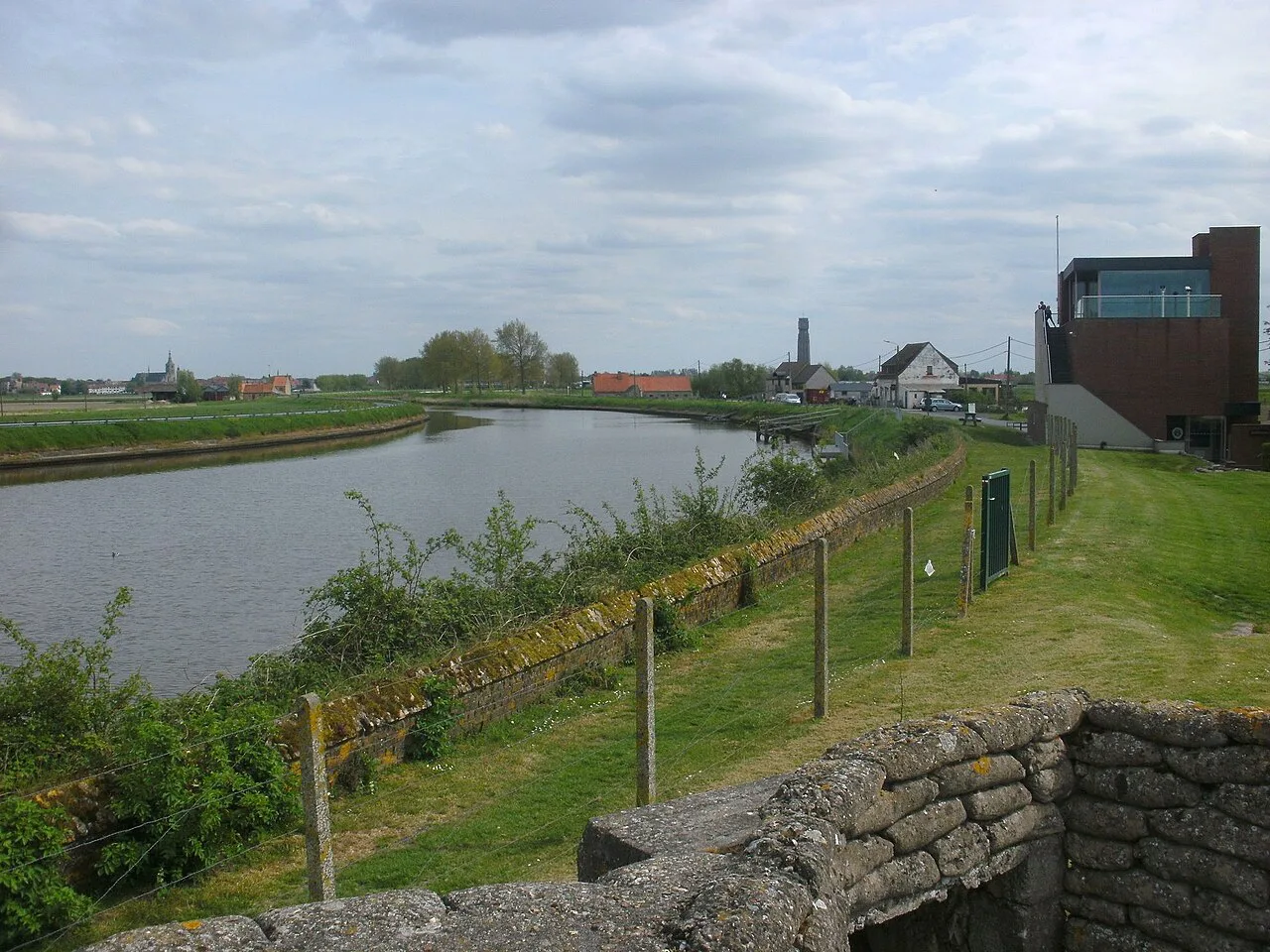
After a period of heavy fighting, the Belgians breached the Yser dyke, and the resulting strip of water left the two front lines separated by only a narrow channel. Each side then fortified its bank with concrete bunkers, trenches and firing posts, and the stalemate held at close range for three years. That geography, rather than any single engagement, is what gave the position its name.
Read the site as a place where soldiers were killed in a cramped and exposed line, and keep the visit quiet and unhurried. The story of the Belgians and the Germans on either side of the water is told on site in both the outdoor position and the indoor displays. If you are building a wider picture of the fighting around Ieper, the Ypres salient is the natural starting point before you come here.
What survives outdoors
Two things outdoors make the Dodengang distinctive: the preserved Belgian position with its trench, concrete bunkers and firing posts, and an advanced German bunker that also survives. Seeing both banks of the same narrow water in one visit is the reason to come, because it shows how little ground separated the two armies. The trench is an outdoor site on the dyke, so weather shapes the visit more than it would in a museum hall.
Stand at the water's edge and look from the Belgian parapet across to the German concrete, then walk the length of the preserved trench and back. The scale is small enough that a slow hour outdoors covers it comfortably, and the bunkers repay a second look once you have read the panels. Sturdy shoes matter on wet ground along the dyke.
The visitor centre and its hundred artefacts
The visitor centre carries the interpretation that the outdoor trench cannot: interactive applications, photographs, film footage and more than a hundred original artefacts. Go inside first if the weather is poor, then walk the trench with the story in mind. Budget about an hour indoors if you read the panels properly.
The site is run by the War Heritage Institute, the Belgian body that also manages the Royal Museum of the Armed Forces and Military History and other sites, so the interpretation follows a national rather than a British line. That framing is worth knowing if your trip has so far been built around Commonwealth cemeteries. A temporary exhibition, Metaalstrijd, is listed for 20 October to 15 November 2026, and it should be treated as closed outside those dates.
How much time to allow
Plan on around two hours on site: roughly an hour outdoors on the trench and dyke and an hour in the visitor centre, longer if you read every panel or the temporary exhibition is running. The visit is compact, so it works as a half-day outing from Diksmuide rather than a full day in itself. Pairing it with the town gives the morning or afternoon a shape.
The site is a preserved front line rather than a large open-air museum, so do not expect to fill a whole day here. If you want the wider context of the fighting around Ieper and the Belgian army's war on the Yser, read up before you arrive so the short walk carries more weight. Visitors with limited time should choose between the trench outdoor and a longer stop at a larger museum rather than rushing both.
Who the Dodengang suits
The Dodengang suits travellers who want the Belgian army's war on the Yser Front, not just the British and Commonwealth story, and who are willing to trade scale for intimacy. It also works well for anyone who has already seen the larger sites around Ieper and wants to understand why the flooded Yser plain mattered so much. The site is on open ground with uneven surfaces and concrete remains, so consider mobility before committing.
Readers with a passing interest may find a guided Ypres battlefield tour a better use of a day, because a guide stitches the scattered sites together and handles the driving. Come to the trench independently if you prefer to linger, or if the Belgian line is the specific thing you want to see. It is also worth reading about the battle of Ypres to place the Yser fighting in the wider campaign.
Combining the Dodengang with Diksmuide and Ieper
Diksmuide is the obvious base for the Dodengang, and the town itself holds the IJzertoren and the wider Yser Front story. From Ieper, the site is a manageable excursion by car across the flat polder, and it pairs naturally with a stop in Diksmuide rather than a rushed return. Use Ieper for the salient's cemeteries and museums and Diksmuide for the Belgian line.
For a route that balances the two, give Ieper a full day and Diksmuide a half day with the trench as its centrepiece. Visitors tracing the British effort may also want Messines Ridge, where the mine craters and the Irish and New Zealand memorials sit close together on the same low ridge. Keep the driving short and the stops few, because the flat landscape makes distances deceptive.
Getting there and practical access
The Dodengang stands at IJzerdijk 65, B-8600 Diksmuide, on the dyke beside the river Yser, and the site's own contact line is +32 (0)51 50 53 44. It is reached by road from Diksmuide, and the flat polder makes it easy to combine with the town in the same half day. There is no station at the trench itself, so plan the final leg from Diksmuide.
Admission, opening days and any seasonal closures are published by the War Heritage Institute, and the site's own pages are the place to confirm them before setting out. The Trench of Death also appears on broader battlefield itineraries, such as those collected by Webmatters, which can help place it among the Belgian, French and Commonwealth sites of the region.
Should the Dodengang be on your Yser Front route?
Yes, if you want to understand the Belgian army's war on the Yser and to stand in a preserved trench where the two front lines were separated by a narrow strip of water. The combination of the outdoor position, the German bunker and a hundred artefacts indoors gives you more than the short walk suggests. Give it two hours and pair it with Diksmuide rather than trying to bolt it onto a packed Ieper day.
Skip it if you have only one day and have not yet seen the salient's main sites, because the trench's value depends on context. If you do go, read the visitor centre first, walk the trench slowly, and keep the visit quiet out of respect for the men who died there.
Explore more Belgium guides
Frequently Asked Questions
Can you visit First World War trenches in Belgium?
Yes. The Dodengang near Diksmuide preserves a stretch of Belgian front-line trench beside the river Yser, with concrete bunkers, firing posts and an advanced German bunker on the far bank. The War Heritage Institute runs the site and its visitor centre.
What was the Trench of Death?
It was a Belgian approach trench dug in 1915 towards the German positions on the Yser. After the Belgians breached the dyke, only a narrow strip of water separated the two armies, and both sides fortified their banks with bunkers and firing posts through three years of stalemate.
What side was Belgium on in the First World War?
Belgium was on the Allied side and fought on its own soil, with the Belgian army holding a line along the Yser after the retreat from the rest of the country. The Dodengang tells that Belgian story, which is distinct from the British and Commonwealth narrative around Ieper.
Sources
Useful notes for your next trip
Optional updates to our guides.
You might also like



Continue reading
More guides you'll find useful





