
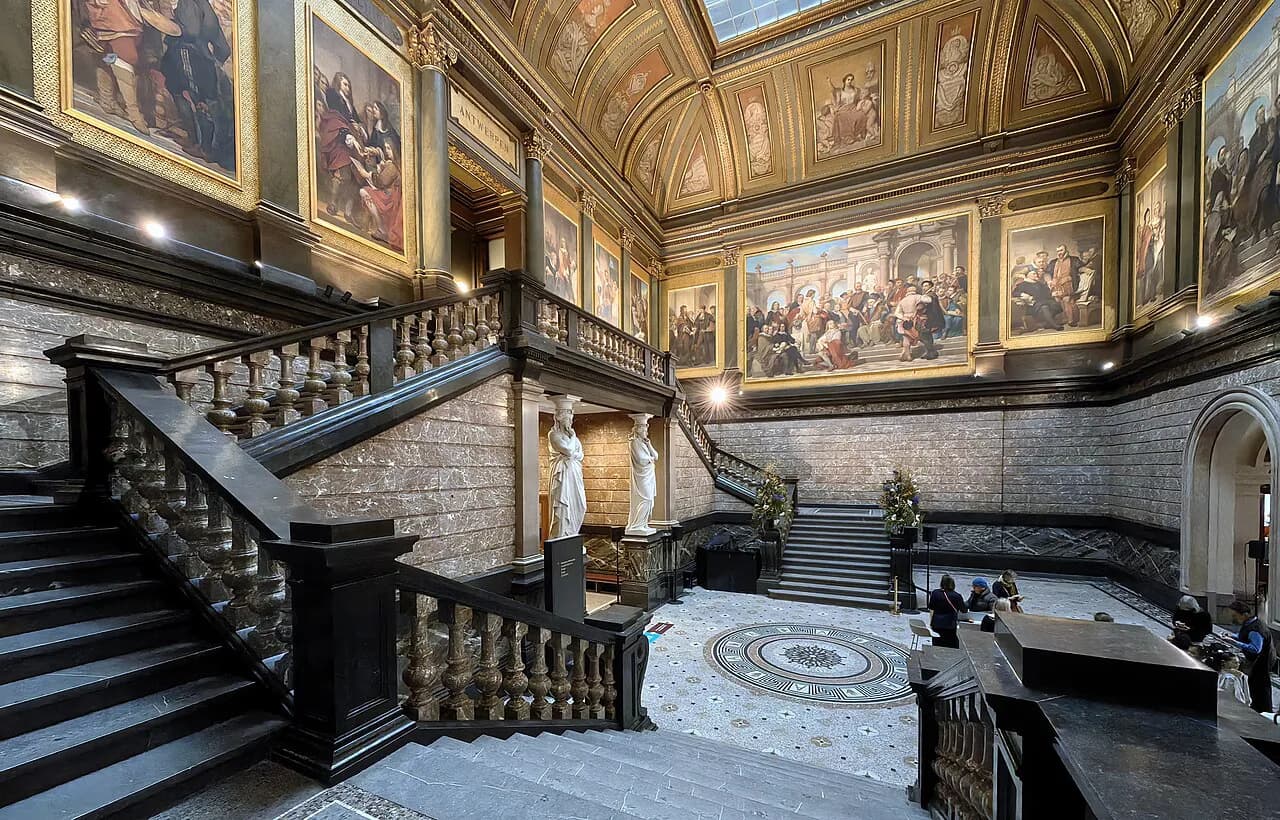
Flemish Primitives: Where to See Van Eyck and Memling in Belgium
The Flemish Primitives were 15th-century painters of the Southern Low Countries. Here is what the term means and where to see Van Eyck and Memling in Belgium.
On this page
The Flemish Primitives are the painters of the 15th and early 16th centuries in the Southern Low Countries, and the best places to see them are Bruges, Ghent, Antwerp and Leuven. Their craft lay in oil painting refined to a new pitch, with the visible world reproduced in exhaustive and often jewel-like detail.
This guide covers what the label means, who fits under it, and the specific museums and churches where you can stand in front of the panels. It separates paying museum collections from free church visits, and it keeps the Flemish Primitives apart from the later masters so you book the right ticket.
What the Flemish Primitives were
The painters of the 15th and early 16th centuries in the Southern Low Countries represent a brilliant high point in Western art. Their working method was oil on panel, built up in translucent layers that allowed a refinement of surface and a closeness of observation that earlier tempera could not match.
That realism was put at the service of religious imagery, and the result carries an intensity of devotional feeling that was new in painting. Commissions came from courts and religious institutions, but also from cities and their citizens, and for the first time the painter held a prominent place in society.
The style travelled: through contacts between Flanders, northern Italy and other regions, this painting influenced artistic practice across Europe. For a visitor, that means the panels you see in Bruges and Ghent sit at the start of a line that runs through European art for centuries.
Why 'primitive' is not a judgement on skill
In art-historical use, primitive signals an early stage, the first flowering of a tradition, not clumsiness. The painters themselves were regarded as masters of a demanding craft, and their reputations rested on technical control as much as on piety.
What does Flemish mean in art? In this context it refers to the Southern Low Countries in the 15th and early 16th centuries, the region that is now largely Belgium. The painters working there are called the Flemish Primitives, and their refined oil-on-panel technique influenced painting across Europe.
What are some examples of Flemish Primitive portraits? Jan van Eyck's Portrait of Margareta van Eyck hangs at the Groeningemuseum in Bruges, and his Man with a Roman coin is at the Royal Museum of Fine Arts Antwerp. Both are small panels built on close observation of the face.
What is the difference between Dutch and Flemish art? The Flemish Primitives worked in the Southern Low Countries in the 15th and early 16th centuries, while the Dutch Golden Age painters of the Northern provinces came later, in the 17th century. The split follows both geography and period, so the two labels describe different regions and different generations.
Reading the word in this older sense keeps expectations straight. You are not looking at beginner work but at the foundation of Netherlandish painting, made by artists whose workshops supplied courts, churches and town corporations.
Who counts: Van Eyck, Van der Weyden, Memling and the rest
Jan van Eyck, Rogier van der Weyden, Hans Memling, Dieric Bouts, Hugo van der Goes, Gerard David, Petrus Christus and Jheronimus Bosch are the names most often gathered under the label. Any list of this kind involves choices about where to draw the line, and the painters represented in Flemish public collections form a practical working set for a trip.
If Van Eyck is your priority, plan at least a day around Ghent and Bruges, where his most famous panels hang. A dedicated look at Jan van Eyck's surviving works in Belgian collections is the fastest way to decide which city deserves the longer stay.
Memling is the other name that shapes itineraries, with a concentration of work in Bruges that rewards slow looking rather than box-ticking.
Where to see them in Bruges (Brugge)
Bruges has four places where the Flemish Primitives can be seen, split between museums and churches. The Groeningemuseum, Museum Sint-Janshospitaal, Sint-Salvatorskathedraal and the Church of Our Lady between them account for the core of the city's 15th-century painting.
The Groeningemuseum on Dijver carries the strongest concentration, with Van Eyck's Madonna with Canon Joris van der Paele and the Portrait of Margareta van Eyck among its holdings. The same museum also holds The Dormition, which makes a single ticket cover several of the key names.
Museum Sint-Janshospitaal on Mariastraat is the second museum stop, and its setting in a former hospital gives the panels a context of care and devotion. The Memling collection in Bruges is split between this building and the Groeningemuseum, so the visit doubles as a look at how these works were commissioned for a working institution.
Sint-Salvatorskathedraal, Bruges' oldest parish church, holds medieval tombs and a rood loft with an organ alongside its paintings. The Church of Our Lady, whose brick tower is among the tallest of its kind, is the other church on the list and holds Michelangelo's Madonna and Child.
Where to see them in Ghent (Gent)
Ghent's headline work is the Adoration of the Mystic Lamb, the Van Eyck polyptych in Sint-Baafskathedraal. Seeing it in the cathedral means seeing it where it was made for, which is a different experience from a gallery wall, and it justifies giving Ghent a full day of its own.
The painting has been studied more closely than almost any other in Europe, down to macro photography and laboratory analysis of its surface. That research history is worth knowing before you stand in front of it, because it explains why conservators and scholars keep returning to the same few square metres of panel.
The Museum of Fine Arts in Ghent adds Christ Carrying the Cross to the city's holdings, giving you a second stop if the cathedral has absorbed your morning. Our guide to the Ghent Altarpiece covers the panel itself in more detail.
Antwerp (Antwerpen), Leuven (Louvain) and beyond
The Royal Museum of Fine Arts Antwerp holds Van Eyck's Man with a Roman coin, a small panel that repays close attention in a city better known for later painting. Antwerp is also where the Flemish Primitives give way to Rubens and his contemporaries, so the two strands sit within a short walk of each other.
If your taste runs to the Baroque rather than the 15th century, Rubens in Antwerp is the city's other great artistic draw and a natural pairing with the museum quarter.
M Leuven holds the Triptych of Saint Erasmus, which makes the university city a worthwhile half-day addition for anyone based in Brussels. Museum Mayer van den Bergh in Antwerp adds a further collection, and the Friedländer database is the reference tool if you want to check which painter made a particular panel before you travel.
Flemish Primitives in situ: churches, hospitals and civic buildings
Much of this art was made for a specific altar, chapel or ward, and a surprising amount is still in the building it was commissioned for. Sint-Baafskathedraal, the Church of Our Lady and Sint-Salvatorskathedraal in Bruges, and Museum Sint-Janshospitaal all keep their works in an architectural setting rather than a neutral gallery.
That continuity is the strongest reason to build a Bruges break around the panels rather than treating them as one stop among many. The city's civic buildings reinforce the point: the Stadhuis on Burg, built between 1376 and 1421, is one of the oldest town halls in the Low Countries and stands a few minutes from the Groeningemuseum.
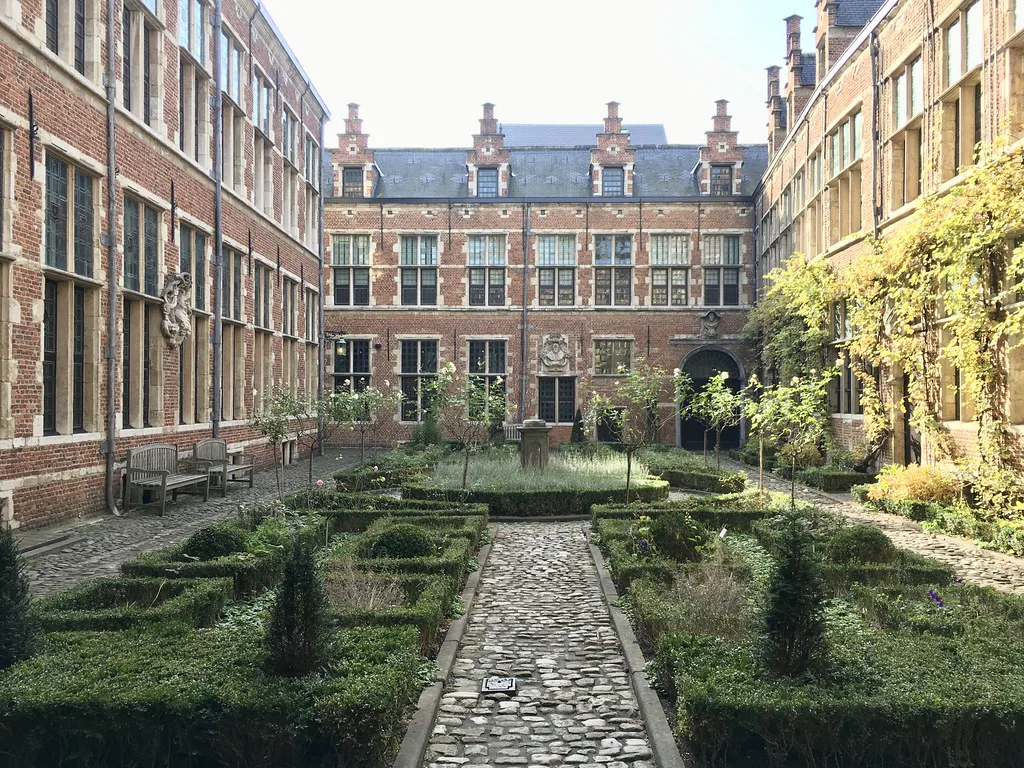
The Adornesdomein, a cobbled courtyard estate in the city, and the Begijnhof with its white house fronts and convent garden show the same medieval fabric that framed these commissions. None of these is a gallery, which is exactly why they help the paintings make sense.
Building a one- to three-day break around these collections
With one day, choose Bruges and do the Groeningemuseum in the morning and Sint-Janshospitaal in the afternoon, with the Church of Our Lady as a short walk between them. That combination covers Van Eyck, Memling and Gerard David without any travel between cities.
With two days, add Ghent for the cathedral polyptych and the Museum of Fine Arts, travelling between the two cities by train. With three days, Antwerp or Leuven becomes viable: Antwerp for the royal museum and the Rubens collections, Leuven for the Triptych of Saint Erasmus at M Leuven.
The Flemish Primitives are one thread in a larger story, and Belgium's belfries are the civic counterpart, with the Grote Markt squares of Bruges and Ghent framing both the art and the town halls that commissioned it. Our guide to the belfries of Belgium shows which of these towers you can climb.
How the Flemish Primitives fit with later Flemish art
Travellers sometimes book a museum expecting Rubens and find 15th-century panels, or the reverse. Keep the periods separate: the Primitives belong to the 15th and early 16th centuries, while the Baroque masters of Antwerp worked a century and more later.
Seeing both in one trip is straightforward in Antwerp, where the royal museum and the city's Rubens holdings sit close together. In Bruges and Ghent, the Primitives dominate, and the later work is best treated as a secondary strand.
Which city should you book for the Flemish Primitives?
Book Bruges if you want the widest choice of venues in one walkable centre, mixing museum panels with churches and a hospital that still holds its original commissions. Book Ghent if the Adoration of the Mystic Lamb is the reason for the trip, and add Bruges for a second day.
Antwerp and Leuven work as add-ons rather than bases, useful when you are already in Belgium and want a specific panel without crossing to Bruges. Whichever you choose, decide before you travel whether you are going for the Primitives or for Rubens, because the two sit in different museums and different centuries.
Explore more Belgium guides
Frequently Asked Questions
What does Flemish mean in art?
In this context it refers to the Southern Low Countries in the 15th and early 16th centuries, the region that is now largely Belgium. The painters working there are called the Flemish Primitives, and their refined oil-on-panel technique influenced painting across Europe.
What are some examples of Flemish Primitive portraits?
Jan van Eyck's Portrait of Margareta van Eyck hangs at the Groeningemuseum in Bruges, and his Man with a Roman coin is at the Royal Museum of Fine Arts Antwerp. Both are small panels built on close observation of the face.
What is the difference between Dutch and Flemish art?
The Flemish Primitives worked in the Southern Low Countries in the 15th and early 16th centuries, while the Dutch Golden Age painters of the Northern provinces came later, in the 17th century. The split follows both geography and period, so the two labels describe different regions and different generations.
Sources
Useful notes for your next trip
Optional updates to our guides.
You might also like



Continue reading
More guides you'll find useful



