
Rubens in Antwerp: House, Church and Cathedral Art Guide
Plan a Rubens day in Antwerp: the Rubens Experience on Hopland and Rubens's grave in St James' Church, with a walking route through the old centre.
On this page
A Rubens day in Antwerp comes down to two addresses: Hopland 13 for the Rubenshuis and its Rubens Experience, and Sint-Jacobstraat 9 for St James' Church, where the painter is buried. Both sit inside the old centre, so you can pair an audiovisual introduction to his life with the marble chapel that holds his grave in a single unhurried half-day. This guide explains what each stop contains, which works to look for and how the walk between them fits a one- to three-day trip.
The two stops do different jobs. The Rubens Experience tells the story of the man and his Europe through screens, sound and interactive zones, while St James' Church gives you the finished art in the setting it was made for, including a Rubens altarpiece above his own tomb. Seeing both in one day makes sense of the painter as a public figure and as a parishioner of a wealthy city.
Where to start in Antwerp with Rubens: a short route from Hopland to Sint-Jacobstraat
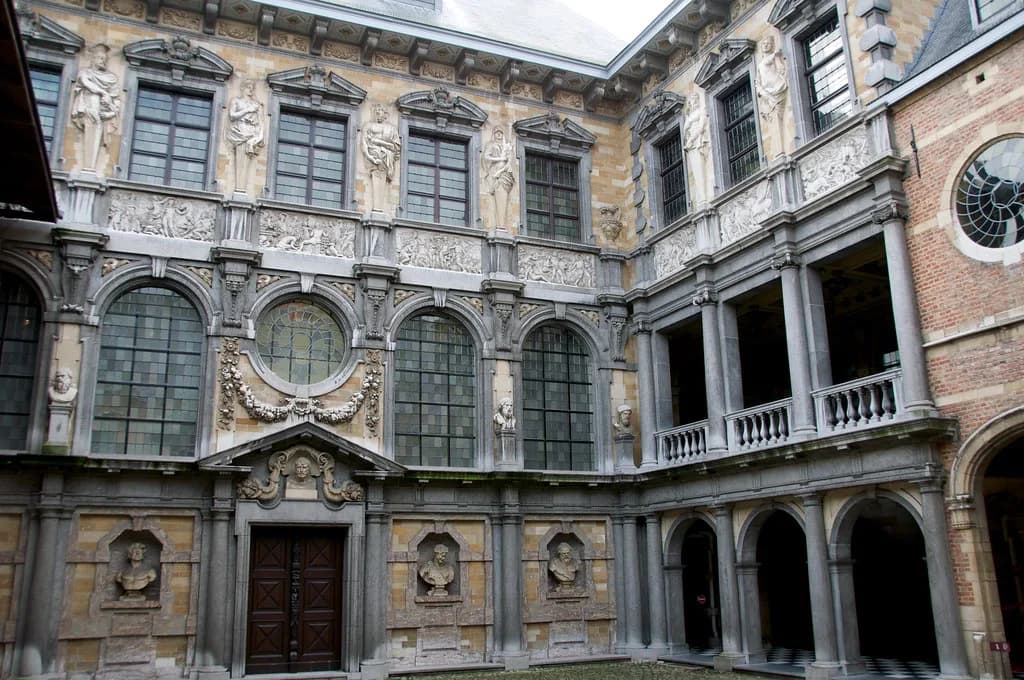
Begin on Hopland, the street where Rubens bought a city house in 1610 and where the Rubenshuis stands today at number 13. From there the route runs south through the historic centre towards Sint-Jacobstraat, the street of St James' Church in Antwerp's student district. Walk it on foot and use the streets as your map rather than timings, because the pleasure is in passing the Meir, the Palace on the Meir and the ordinary façades of a merchant city that Rubens helped shape.
The order matters more than the distance. Take the Rubens Experience first for the narrative, then walk to St James' Church for the artefacts, because the church rewards a visitor who already knows what Rubens's altarpieces were for. If you only have time for one, choose the church: it holds original works and the grave, and admission is free. The Rubens Experience is the stronger choice for anyone travelling with a companion who needs the story before the art makes sense.
The Rubenshuis and Rubens Experience on Hopland: what the high-tech studio adds
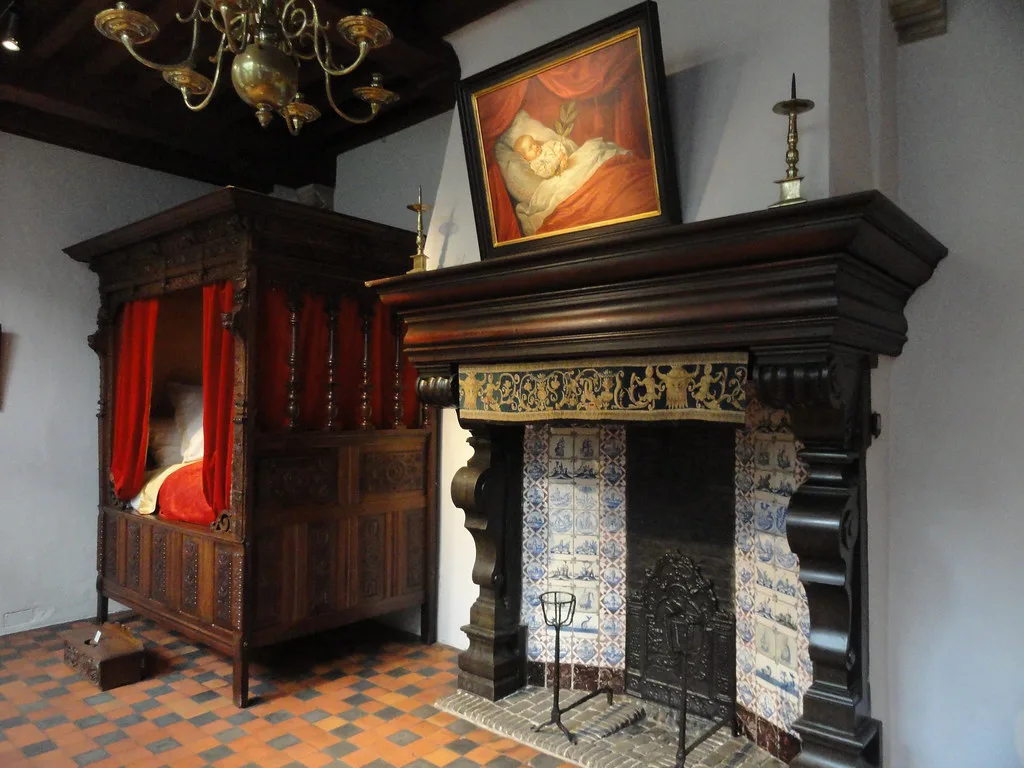
The Rubenshuis occupies the painter's own house and studio, and the Rubens Experience is an underground studio, reached within the same visit. It is not a suite of period rooms: it is a modern attraction built around screens, an audiovisual show and interactive tools, with Rubens's self-portrait as its anchor. Go in expecting a produced introduction to his world rather than a walk through his workshop, and it works well as the first hour of a Rubens day.
Because the Experience is a constructed show, its value depends on how much you enjoy interpretation. The underground setting is dark and screen-led, which suits a rainy Antwerp afternoon and anyone who wants context placed around the paintings. If you prefer to meet old masters directly, spend your time in the church instead and treat the house as an optional extra. Ticket prices and opening times are published by the Rubenshuis on its own visit pages, so check those before you set out.
Inside the Rubens Experience: the Assumption of Mary, the Van der Geest gallery and the self-portrait
Several moments inside the Experience are worth seeking out. A large wall shows works by Rubens beside the Italian artists who inspired him, shifting between life-size and close detail, and a giant version of the Assumption of Mary, a painting Rubens made for Antwerp Cathedral, lets you zoom into individual brushstrokes. That enlarged treatment is the point: you are being taught how to look at a Rubens before you meet one at full scale.
In a side gallery, artworks from the Rubenshuis collection are set against Willem van Haecht's painting The Gallery of Cornelis van der Geest, and you are invited to find where the originals appear in the picture. Elsewhere you come face to face with Rubens's self-portrait, where he presents himself as an elegant gentleman rather than a working painter. Interactive panels cover questions such as how assistants contributed to his masterpieces and how a fake Rubens is told from a genuine one.
St James' Church (Sint-Jacobskerk): Rubens's grave and the Rubens Chapel
St James' Church was built between 1490 and 1656 and was clearly the parish church of well-off citizens, with Baroque marble furnishings and 24 altars inside its Gothic shell. Rubens was buried here in 1640, in the Rubens Chapel, beneath a monumental marble altar carrying his painting Madonna Surrounded by Saints. The church opens Monday to Sunday from 14.00 to 17.00 and closes on Christmas Day and New Year's Day, with the published note that hours can vary.
The painting arrived late and by design. It was probably begun around 1630 for a commission that was never collected, stayed in Rubens's studio where he reworked it, and was placed on the altar of his burial chapel around 1650, after his death. Knowing that sequence changes how you read it: the altarpiece is not simply a famous painting hung in a church but the centrepiece of a tomb Rubens planned for himself. Allow twenty to thirty minutes here to look properly.
Art in St James' Church: Madonna Surrounded by Saints and the Mater Dolorosa
Alongside the Rubens altarpiece, the chapel holds a Mater Dolorosa attributed to Lucas Faydherbe, made around 1650. Faydherbe lived in Rubens's household for the last three years of the painter's life, mostly carving ivory figures after his drawings, and Rubens kept this sculpture in his own collection before designating it on his deathbed for this altar. Look for the detail the story turns on: Mary turns away from the sword piercing her chest and looks upward while two angels hold a crown above her head.
The church's art extends well beyond this one chapel. Funerary monuments, church furniture and a treasury are part of the visit, and the Quellinus family left several works here, including altarpieces by Erasmus II Quellinus and his son Jan-Erasmus. Treat the Rubens Chapel as the climax and give the rest of the nave and side chapels a slow circuit afterwards. A printed guide or the church's own information will help you identify what you are looking at.
Quellinus and the Chapel of Our Lady at St James' Church
In the Chapel of Our Lady, beside rather than on the main altar, stands Artus I Quellinus's Pietà on its pedestal, placed there in 1650. It was inaugurated on 6 March 1650, the first Sunday of Lent, carried in procession around the church the following Sunday and then set before the chapel's altar, with a Stabat Mater sung to organ accompaniment. The sculpture shows Mary holding her dead son under the shroud, dignified and self-possessed rather than theatrical.
The Quellinus presence runs deeper into the church. Artus II Quellinus was buried here in front of the chancel end but with a view of the main altar, where his own Sint-Jacobus forms the centrepiece. This is the kind of detail that makes St James' a place to read rather than scan: burials, altars and sightlines were all arranged by families with reputations to protect.
Walking the route: Hopland to Sint-Jacobstraat and the cathedral quarter
The walk from Hopland to Sint-Jacobstraat is short and mostly flat, threading through streets of shops and cafés in the old centre. Nearby, the Flemish Masters in Situ listings place the Palace on the Meir, the Rubenshuis and St Charles Borromeo's Church within the same visitors' circuit, so you can build a morning or afternoon around them without crossing the city. Keep the cathedral quarter for the end of the walk, when you can slow down.
If you want more Flemish painting after Rubens, Antwerp is one stop on a wider trail of the Flemish primitives and their successors in Belgian cities. Ghent's Adoration of the Mystic Lamb and the Memling museum Bruges reward a separate day, and the best museums in Belgium outside Brussels include enough old masters to fill a longer trip. Planning two cities back to back lets you compare how Bruges, Ghent and Antwerp each display their painting heritage.
How much time to give the Rubens sights in a one- to three-day Antwerp trip
On a one-day visit, give the Rubens Experience an hour to ninety minutes and St James' Church half an hour, splitting them across a morning and an afternoon. That leaves room for the Grote Markt, the cathedral exterior and a beer café without rushing. On a two- or three-day trip, add the Rubens links around the historic centre and treat the church as a return visit rather than a tick-box stop.
One practical caution: some Belgian museums and churches close on Mondays, and St James' Church only opens in the afternoon. Build your day so the church falls after 14.00 and keep the morning flexible for the house. If you are travelling with a fixed itinerary, confirm the two sites' current opening arrangements before you commit to a sequence, since those details change.
Tracing Antwerp's other Rubens links around the historic centre
Beyond the two main stops, Rubens is woven into the centre. The Rubenshuis's own Visit Antwerp page points visitors towards the historic city centre, the cathedral and its masterpieces, which is useful for building a self-guided wander. St Charles Borromeo's Church is a marble-and-gold Baroque interior closely tied to the same artistic circle, and it sits within easy reach of the Meir.
For context on what came before, the Flemish primitives who worked a century earlier give Rubens his starting point; Jan van Eyck and Rogier van der Weyden shaped the traditions of oil painting and portraiture that he inherited. Reading a short overview before you go makes the Rubens Experience's comparisons land better, and it turns the sights into a story rather than a list of addresses.
Should you see the house or the church?
Choose both if you have a full day, but if you must pick one, choose St James' Church for original art and Rubens's grave, and the Rubenshuis for context. Together they give you the painter as a public figure and as a man buried in his own parish, which is a better Antwerp day than either alone.
Explore more Belgium guides
Frequently Asked Questions
Is St James' Church free to enter?
Yes. St James' Church is free to enter according to the Flemish Masters in Situ listing, which also gives opening hours of 14.00 to 17.00 Monday to Sunday and closure on Christmas Day and New Year's Day. Hours can vary, so confirm before a special trip.
Do I need to book the Rubens Experience in advance?
The Rubenshuis sells tickets for the Rubens Experience through its own site, where you can book ahead. Advance booking is the safest approach for a fixed itinerary, especially at busy periods, but the official pages are the place to confirm availability and current arrangements.
Can I see the Rubens paintings in Antwerp Cathedral on the same day?
The Assumption of Mary that Rubens painted for Antwerp Cathedral appears inside the Rubens Experience as a large, zoomable display, which is where this guide treats it. For what is on view in the cathedral itself, check the cathedral's own information rather than relying on second-hand lists.
Sources
Useful notes for your next trip
Optional updates to our guides.
You might also like



Continue reading
More guides you'll find useful


