
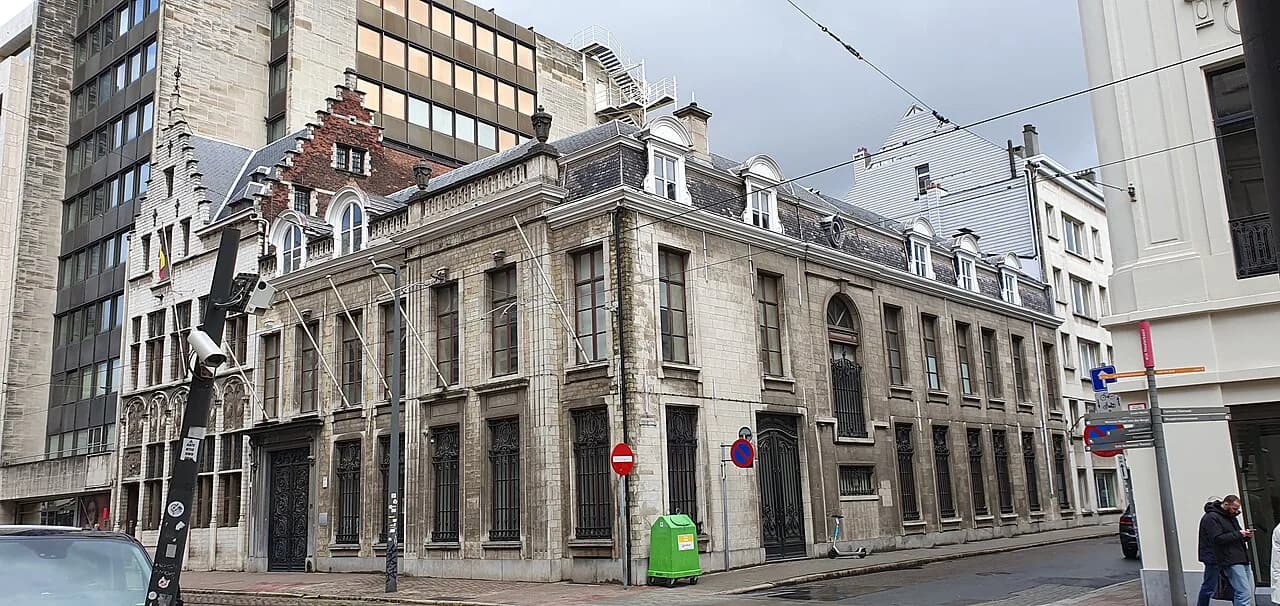
Where to See Bruegel Paintings in Belgium: Antwerp and Brussels
Bruegel paintings in Belgium mean Antwerp and Brussels, with the strongest Elder works abroad. What to see, which Bruegel painted it, and how to plan the stop.
On this page
If you want Bruegel paintings, base yourself in Antwerp or Brussels and accept that the best-known works by Pieter Bruegel the Elder hang outside Belgium. The painter was born in Brussels and worked in Antwerp, so the family story is genuinely Belgian even where the canvases are not. This guide separates Pieter Bruegel the Elder from his sons Pieter Brueghel the Younger and Jan Brueghel the Elder, then shows how to fit each into a short city break.
What 'Bruegel paintings' means: the Elder and his two painter sons
Three painters share almost the same name, and the spelling is the only clue most visitors get. Pieter Bruegel the Elder is the sixteenth-century master of peasant scenes, proverbs and landscape; Pieter Brueghel the Younger, born around 1564 in Brussels, ran a large Antwerp workshop that produced many copies of his father's compositions and earned him the nickname 'Peasant Brueghel', as recorded in Sotheby's biography of the artist. Jan Brueghel the Elder, born in Brussels in 1568, was the younger brother, a painter of flowers, landscapes and small figures who later served as court painter in Brussels.
Watch the spelling before you commit. The father is usually written Bruegel; his sons and their descendants generally used Brueghel, which is why museum labels, auction catalogues and guidebooks all spell the family differently. When you read a label, check the dates and the first name before you decide you have found the painting you came for.
Where Bruegel paintings are in Belgium: Antwerp and Brussels at a glance
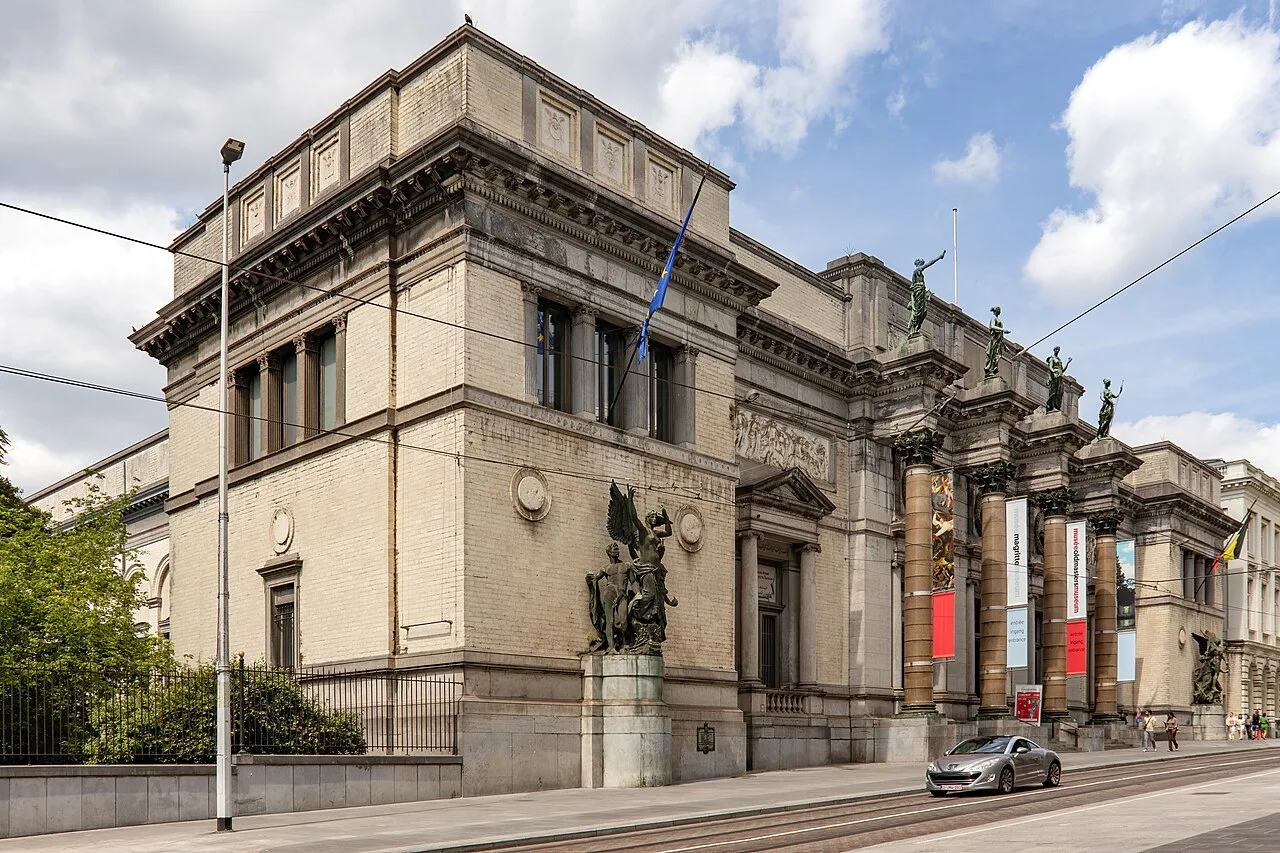
Antwerp holds the workshop story and Brussels holds the court story, and both cities sit within about 45 minutes of each other by frequent train, which makes a two-city art weekend straightforward. Antwerp is where the Guild of Saint Luke registered Pieter Brueghel the Younger as a master between 1584 and 1585, and where he married and took on apprentices. Brussels is where Pieter Bruegel the Elder was born and where Jan Brueghel the Elder later worked at court.
Who was Brueghel? The name covers a family of painters. Pieter Bruegel the Elder is the sixteenth-century master of peasant scenes and landscape; his son Pieter Brueghel the Younger ran a large Antwerp workshop that copied many of his father's compositions and was nicknamed 'Peasant Brueghel'; and his younger son Jan Brueghel the Elder painted flowers, landscapes and small figures and became court painter in Brussels.
How many Bruegel paintings are there? There is no reliable single count, because the Elder's surviving works, his sons' output and the many workshop copies are catalogued separately and attributions shift with research. Treat any round number you see online with caution and check the holding museum's own catalogue entry for the painting in front of you.
When did Jan Brueghel the Elder work in Brussels? The National Gallery records that Jan trained in Antwerp, worked in Italy from 1589 to 1596, became a master in the Guild of St Luke in 1597, had a short stay in Prague in 1604, and served as court painter in Brussels from 1606 for Archduke Albert and Infanta Isabella Clara Eugenia. He painted flowers, landscapes and small figures, often collaborating with Rubens.
The trade-off is honest: if you have one day only, pick Antwerp for the city that shaped the family business, or Brussels if you also want the wider Belgian collections around the Royal Museums of Fine Arts. Neither city promises a single blockbuster room of Elder masterpieces, so plan the day around one or two focused museum stops and leave time for the streets and squares the family actually knew.
Antwerp: the museum quarter and the city Bruegel knew
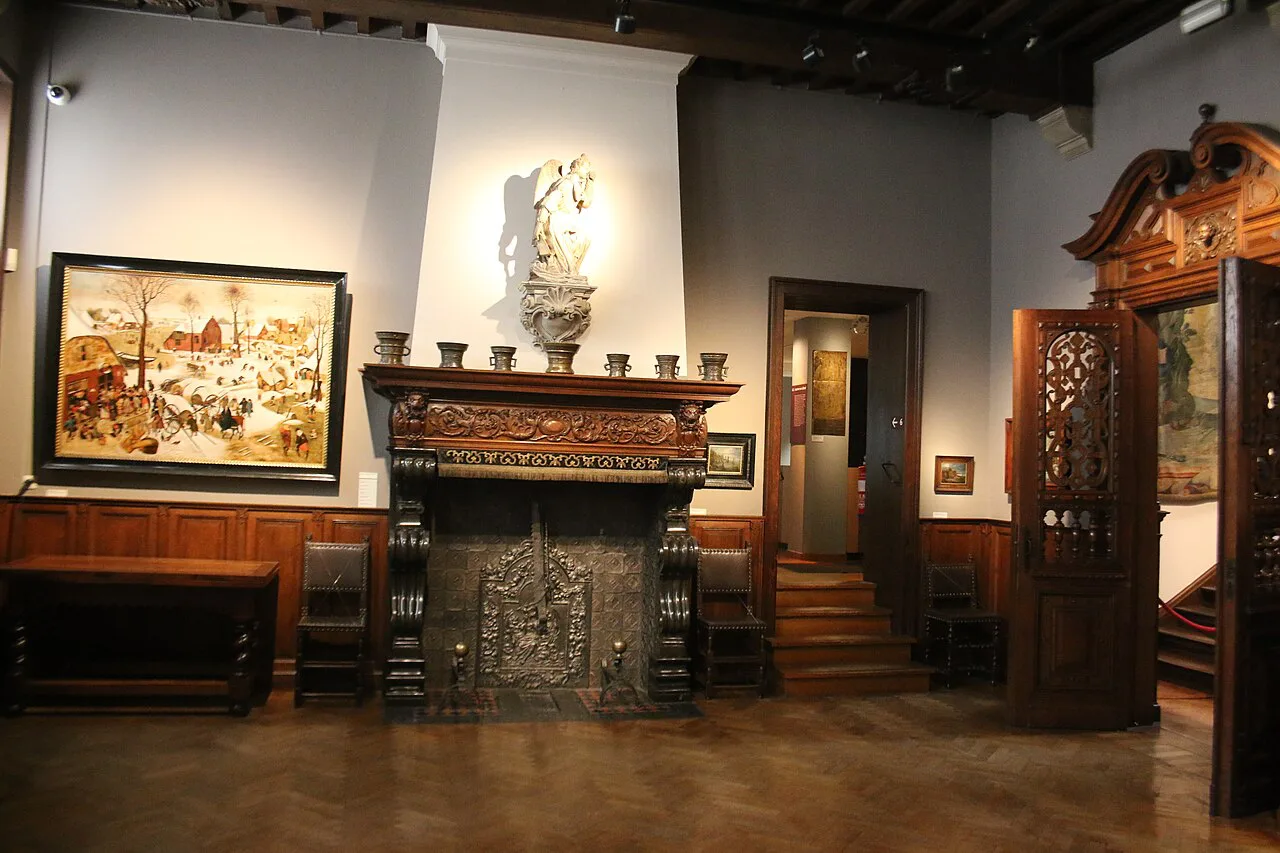
Antwerp's merchant city centre and its museum collections are the backdrop for the Brueghel story. Pieter Brueghel the Younger trained in the family circle, then settled here, married Elizabeth Goddelet in 1588 and took nine apprentices in the same year, a sign of how busy the workshop was. Walking the old streets between the Grote Markt and the cathedral gives you the scale of the city that bought this work.
For the fuller Antwerp picture, pair a Brueghel stop with the city's other great painterly draw: the Rubens in Antwerp trail covers the churches and studio sites tied to the generation that followed. Allow a half-day for the museum quarter and another for the cathedral and Grote Markt, because the distances are walkable but the collections are dense.
Brussels: the Royal Museums of Fine Arts and the Bruegel collection
Brussels rewards anyone chasing the Elder's world, because the city is where Pieter Bruegel the Elder was born and where the Royal Museums of Fine Arts sit on the Mont des Arts. Jan Brueghel the Elder was also born here in 1568, the son of Pieter Bruegel the Elder, according to the National Gallery's biography, and returned to Brussels from 1606 as court painter to Archduke Albert and Infanta Isabella Clara Eugenia.
The practical shape of a Brussels day is a morning in the museums around the Mont des Arts, a walk through the lower town, and an afternoon for the Grand-Place and the streets behind it. Museum rooms and hanging change, so treat any list of individual pictures as a starting point rather than a guarantee, and build the day around the collection rather than one canvas.
Pieter Brueghel the Younger: the Antwerp workshop and the copies of his father's compositions
The Younger is the reason so many 'Bruegel' paintings exist at all. His studio was prodigious, producing many copies of his father's works alongside its own genre scenes and landscapes, which is why versions of the same village festival or winter scene turn up in collection after collection. Sotheby's notes that his workshop output was large and that he faced ongoing financial difficulties despite the popularity of his work.
For a visitor, this is useful rather than disappointing. A painting labelled Brueghel the Younger is a window into how a sixteenth-century family business worked: designs were repeated, assistants copied, and buyers across Europe wanted the same familiar compositions. Look at the label, then look at the handling of faces and foliage, which is where a workshop copy usually shows its hand.
Jan Brueghel the Elder: flowers, landscapes and the court in Brussels
Jan is the brother whose career went international. The National Gallery records that he trained in Antwerp, worked in Italy from 1589 to 1596, became a master in the Guild of St Luke there in 1597, spent a short stay in Prague at the court of Rudolf II in 1604, and then served as court painter in Brussels from 1606. He painted flowers, landscapes and small figures, often collaborating with other artists, including Rubens.
His flower pieces reward close looking: each bloom is arranged like a botanical specimen, which is exactly how the National Gallery describes the approach in a vase painting of 1609. In Brussels, seek him out alongside the Elder rather than instead of him, since a single museum visit can cover both generations in an hour or two of careful looking.
The major Bruegel works that are not in Belgium
Set expectations before you book: the strongest holdings of Pieter Bruegel the Elder are abroad. Sotheby's lists family works in the Hermitage in St Petersburg, the Louvre in Paris, the Rijksmuseum in Amsterdam and the National Gallery of Art in Washington. Vienna's Kunsthistorisches Museum is the other collection most often named for the Elder, and it is a natural add-on to an Austrian trip rather than a Belgian one.
If a specific painting is the reason for your trip, check the holding museum's own website before you travel and search by the painting's title rather than the artist alone, since workshop copies share titles with originals. That one step prevents the common disappointment of arriving in the wrong city for the wrong picture.
How to read a Bruegel: peasants, proverbs and landscape
Bruegel's crowded scenes are built to be read slowly, like a page of illustrations. Start with the foreground figure doing something odd, then follow the diagonals into the middle distance, where the joke or the moral usually sits; the same method works for a village kermesse, a harvest scene or a winter landscape. Rural life and commoners are exactly what gave the family its nickname, so expect peasants rather than saints.
Context helps. The Bruegels belong to the same Netherlandish tradition as the earlier masters, and a little grounding in the Flemish primitives makes the later realism easier to see; the Flemish painters overview covers the line from Jan van Eyck and Rogier van der Weyden onwards. If you are building an art itinerary across cities, that wider Flemish masters art guide is the place to start.
Fitting Bruegel into a one-day or two-day Antwerp or Brussels stop
For one day in Antwerp, give the morning to the museum quarter and the afternoon to the Grote Markt, cathedral and riverfront, which puts the Brueghel workshop story in the streets it came from. With two days, add a half-day for the churches and the Rubens sites, and keep the evening free for a beer café rather than another gallery.
For Brussels, spend the first morning at the Royal Museums of Fine Arts, then walk down through the Mont des Arts to the Grand-Place for the afternoon. A second day gives you room for the Belgian comic-strip centre or a half-day out to another city; Ghent is under 40 minutes by train and its cathedral holds the Ghent Altarpiece, which sits at the head of the same Netherlandish tradition the Bruegels inherited.
Which city should you pick for Bruegel?
Choose Antwerp if you want the workshop and the commercial city that produced so many Brueghel paintings, and Brussels if you want the Elder's birthplace, the court of Jan Brueghel the Elder and the Royal Museums of Fine Arts. If a single famous Elder canvas is your goal, check which museum holds it before booking, because the strongest group sits outside Belgium in Vienna, Paris, Amsterdam, St Petersburg and Washington.
Explore more Belgium guides
Frequently Asked Questions
Who was Brueghel?
The name covers a family of painters. Pieter Bruegel the Elder is the sixteenth-century master of peasant scenes and landscape; his son Pieter Brueghel the Younger ran a large Antwerp workshop that copied many of his father's compositions and was nicknamed 'Peasant Brueghel'; and his younger son Jan Brueghel the Elder painted flowers, landscapes and small figures and became court painter in Brussels.
How many Bruegel paintings are there?
There is no reliable single count, because the Elder's surviving works, his sons' output and the many workshop copies are catalogued separately and attributions shift with research. Treat any round number you see online with caution and check the holding museum's own catalogue entry for the painting in front of you.
When did Jan Brueghel the Elder work in Brussels?
The National Gallery records that Jan trained in Antwerp, worked in Italy from 1589 to 1596, became a master in the Guild of St Luke in 1597, had a short stay in Prague in 1604, and served as court painter in Brussels from 1606 for Archduke Albert and Infanta Isabella Clara Eugenia. He painted flowers, landscapes and small figures, often collaborating with Rubens.
Sources
Useful notes for your next trip
Optional updates to our guides.
You might also like



Continue reading
More guides you'll find useful





